Find Us:
77 Fernvale Rd
Brassall QLD 4305
(07) 3201 8630
Open:
Tue-Sun 9am - 4pm

Time to Reconsider Coleus
Discover the beauty and resilience of Australia’s native Coleus and Plectranthus species. From the fragrant Plectranthus graveolens to the charming Cockatoo Bush, these tactile, aromatic plants bring depth, texture, and scent to any garden. Perfect for shaded, waterwise, and subtropical Australian landscapes.
Guest Post by Robert WilsonThe Case for Native Australian Species in Garden Design.
Love them or hate them, whether they are Coleus or Plectranthus, whether they feel nostalgic or a little bit "Granny garden", it’s time to take a fresh look at this diverse and under-appreciated genus.
Coleus has a broad distribution across Tropical and Sub-tropical regions of the world, but a special mention should be made for the charm, toughness, tactility and interest of our little native species (more on those later).
Let’s start with the familiar face: Coleus scutellarioides, the Painted Nettle. Spread throughout South East Asia and parts of Northern Australia, this is the garden variety we love (or don’t). It’s loud, it’s loveable(!) and when you look for it, it’s everywhere! Dayglo colours, wild leaf patterns, velvet textures, exotic leaf shapes. There is a cultivar to suit every palette. They are fun to collect, easy to propagate, accessible on any budget, and forgiving under most conditions. Garish or kitsch? Or A bold, herbaceous infill plant that emphasizes tropical plants with almost year round colour and interest! A winner in Brisbane, tolerates a range of conditions but for best colour, plant in dappled light and prevent flowering by dead-heading regularly. A minor few display good foliage colour in full sun (one of these is pictured). They can be standardized, pruned hard, plaited, heeled and generally forced into horticultural submission. For cheap, impactful, full, fast growing, tolerant, tough and vibrant bedding displays; get a hold of some “Painted Nettle” today!
I want to make a bigger case, one that speaks further to scent, texture, and mood in our gardens.
Australia’s native Coleus/Plectranthus species are not only beautiful: they’re powerfully sensory, and critically underused. Unlike their bright exotic cousins, native Coleus don’t shout. They enhance the pomp and circumstance of their big brothers and sisters in the garden. They support bold colour (or enhance earthen tones), radiate scent, and invite touch. They offer subtle leaf shapes, aromatic foliage, ease of maintenance, and floral displays that surprise in the dappled light. These aren’t feature plants; they’re the glue in a planting design. A skilfully selected and beautifully designed frame will enhance any artwork. They deserve far more love.
Let’s explore a few that bring scent, tone, and tactility into the spotlight:

Coleus argentatus (Silver Coleus)
This soft, silvery shrub shimmers in the shade. The foliage has a suede-like feel that begs to be touched, and its tall spikes of white, mauve, or soft blue flowers make it a beautiful alternative to lavender, especially in subtropical beds where lavender may fail. It’s cooling, calming, and quietly luminous. With its bright foliage and reliability in lower light conditions- perfect for brightening a shady or dull corner of the garden!

Coleus graveolens (Bush Basil)
A plant of surprising depth. Thick, textured leaves with a bright lime green tone and a strong, resinous aroma, somewhere between basil, mint, and native herbs. The foliage feels almost succulent under the fingers, while its purple-blue flowers rise up on soft stems. It brings density, texture, and fragrance to native garden designs. Large, intricately veined leaves provide the perfect foil to bold native wildflowers such as Grevillea or Hibiscus.

Plectranthus nitidus EN (Nightcap Plectranthus)
A small, endangered rainforest species that absolutely glows in low light. Glossy green leaves with maroon undersides and stems, a crisply toothed margin, and elegant leaf venation make it one of the most beautiful bedding plants for shady areas. Its flowers are like tiny chandeliers, twinkling purple and white across the understory. Want to see it? Gold Coast Regional Botanic Gardens has it planted in sweeps and mounds beneath rainforest trees; an absolute masterclass in subtle beauty.
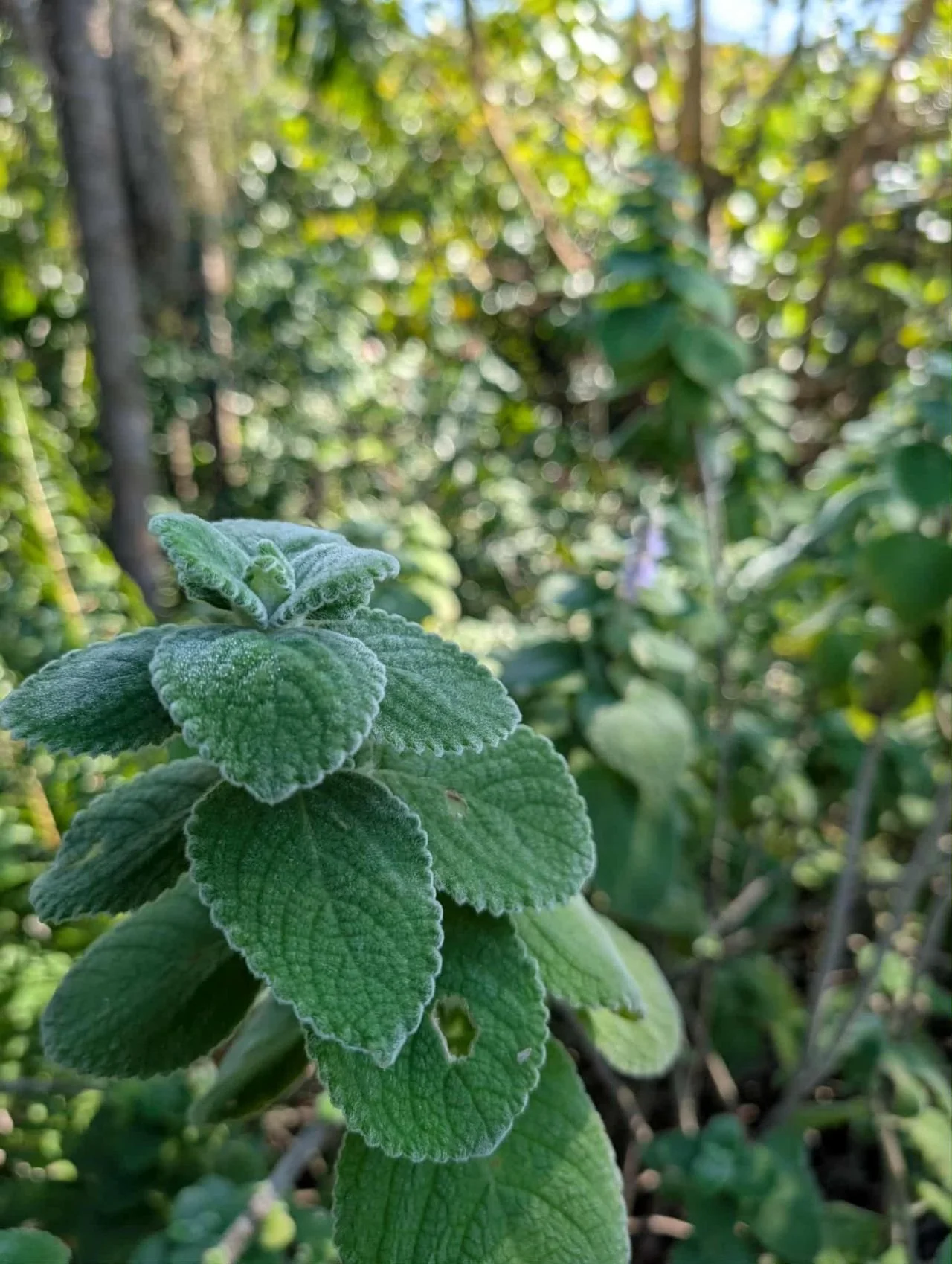
Coleus bellus Rare (Coleus “Mount Carbine”)
Tall, tactile, and bursting with lemon-sherbet scent. Its velvety leaves carry a rich citrus aroma that releases as you brush past. This is a plant for people who understand gardens as spaces to feel as well as look. It makes a fantastic sensory border, cut it back hard, enjoy the soft flushes of new growth, and let it do the work lambs ears can’t do in the tropics and sub-tropics. Or let it standardise for a quivering display of electric green texture in the back of a bed. While not a showy flowerer, C. bellus sports a delightful and reliable sky blue flower.

Coleus alloplectus EN (Slenderleaf Hullwort)
This is my favourite; tough, bronzed, and full of personality. Its new growth bursts in tones of gold, copper and bronze, it sets the stage for bold spikes of purple flowers. It thrives under pressure, responds beautifully to pruning, and pairs exquisitely with native garden design tones: olive, parchment, drab, stone, silver and dun. It’s a complementary gem with year-round interest.

What Seed Do I Buy
Buying open pollinated, no chemical treatment, bio dynamic seeds is ‘the best option’ for starting your thriving vegetable garden. We have chosen Eden Seeds as they are a great Australian company with an ethos we align with. They stock both Organic and no chemical treatment, Bio dynamic seeds and we try to stock a good range of both.
When we bought Trevallan nearly 24 years ago our experience with seeds was minimal.
My grandfather always reused his own seed and that was considered normal.
When we bought Trevallan we had three different seed companies in stock and within a few short months most of our complaints came about due to seed issues.
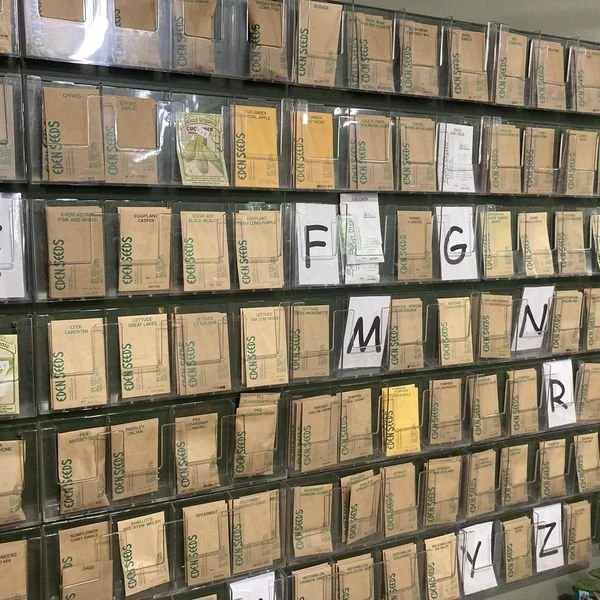
So started a research project into something entirely new for us, using customer recommendations and my grandfather as our test subject!
Very quickly we converted to Eden Seeds.
Very quickly our seed problems diminished and demand for seeds grew until now where we have the Great Seed Wall!
So what were our problems with some of the seeds we used to stock.
Low germination rates (by experienced growers)
What grew wasn’t exactly the same as what it was marked as
Problems with growing past a certain point
Major problem was not being able to collect seed reliably for future cropping. This was something my grandfather always did. It was very important
We discovered Eden Seeds. Eden Seeds states “aim is to distribute old traditional open pollinated varieties of vegetable seed, preferably old Australian varieties and organically or bio-dynamically grown where possible. We believe they are more nutritious and better tasting, hardy and easier to grow for the home gardener. Old varieties produce over an extended period. Home gardeners obtain relaxation, enjoyment and quality from a most rewarding hobby. Our seeds are the old traditional open pollinated non-hybrid varieties and have no chemical treatment, and no genetic engineering.”
This sounded great to me but first I needed to understand what that all meant!
Hybrid Seeds
Hybrid seeds are produced through careful pollination of two specific varieties by human intervention. Normally, this highly selective plant breeding is done to bring together two traits in each of the chosen varieties so that the resulting seed has both of the traits
An example may be a cabbage that grows huge but is susceptible to disease. A smaller-growing cabbage is very disease resistant. They combine the two and boom a large cabbage head that is disease resistant. Usually, you can’t reseed these plants as the seeds may not contain the characteristics of the hybrid plant.
Positive of Hybrid Seeds Hybrid seeds are believed to have better disease resistance and perform better in terms of more fruits, flowers and vegetables produced.
Negative of Hybrid Seeds Hybrid seeds tend to be more expensive to buy due to the specialized pollination process and the seeds you collect from them will not grow the same plant next year and, in some cases, have been bred so that no plant at all can grow from the seeds of a hybrid plant.
Non-Hybrid
Non-hybrid seeds, or open-pollination seeds, are naturally pollinated naturally (bird, insect, wind). They come in a wealth of different varieties and produce seeds that grow into plants with similar characteristics as the original plant. Over successive generations, non-hybrid plants may also adapt to local growing conditions, making them stronger plants, and ultimately less susceptible to local pests and disease.
Using non-hybrid seeds has another advantage: you’re helping preserve the biodiversity of our food supply. Many of the rarer “heirloom” and “heritage” seed varieties would be extinct were it not for the efforts of non-hybrid gardeners and farmers
Genetically modified organisms (GMO)
GMO seeds are produced by genetic engineering, altering the genetic material of an organism. This is different from hybrid seeds that are produced by cross-breeding of two varieties through artificial mating
Organic vs Non Organic
You can buy Organic hybrid seeds and organic non hybrid seeds You can not buy organic GMO seeds. Many people tell me that they buy their fruit and vegetables organically so they just reseed their garden from that. You can buy hybrid organic vegetables and seed. This means while your seed is organic your vegetables may not regrow true to the plant you purchased.

Australian Organic Laws are very strict, always look for the Australian Organic Certification stamp when buying organic products. In Australia, the Australian Certified Organic (ACO) standards require organic seed producers to use organic practices and to undergo an annual certification process. The certification process for organic seeds involves ensuring the land is free from synthetic chemicals, using organic methods for seed production, and processing the seeds without synthetic chemicals.
No Chemical Treatment
Untreated seed is classed as ‘clean’ seed and has not been treated using any chemical, biological, or physical method. While untreated seed can be grown under organic conditions, the seed crop was not grown under Certified Organic Conditions. As the Certification process can be lengthy and costly many farmers choose the no chemical treatment option. Untreated seed is a popular alternative to organic seed.
Bio-dynamic
Bio-dynamic seed crops are grown in living soil within a diverse thriving ecosystem. Not a sterile environment such as under growing houses or single crop acres. Seed produced from this growing environment is bred to thrive in organic/bio-dynamic growing conditions.
Best Seed?
A lot of information to cover there but as you can see buying open pollinated, no chemical treatment, bio dynamic seeds is dare I say it ‘the best option’ for starting your thriving vegetable garden.
Eden Seeds
We have chosen Eden Seeds as they are a great Australian company with an ethos we align with. They stock both Organic and no chemical treatment, Bio dynamic seeds and we try to stock a good range of both. Our Great Wall of Seeds is constantly changing and evolving to supply you with not only the best seed but the best diversification so we all aren’t stuck growing just beans!
Choosing what seed to grow… Well that is another story!
How Do I choose what Seeds to Plant?
Sharing my vegetable gardening experiences with you so hopefully you don't make the same mistakes as me.
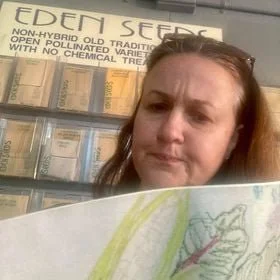
Me looking extremely perplexed about what to plant!
I remember reading my first ever Eden seeds catalogue. I think I had ever second seed variety highlighted. We were going to grow five different types of beans … I hate beans... I think I thought if I grew them, I’d eat them!
What I ended up with was a seed draw full of seeds, an over grown vegetable patch and too much produce all at once.
I’m a little bit wiser now, little bit!
I thought I’d share some of my vegetable gardening experiences with you so hopefully you don't make the same mistakes as me.
My first piece of advice is realising I am not Annette McFarlane, Claire Bickle, Jerry Colby-Williams or Jamie Oliver. Yes, I want to plant all the edibles but really am I going to cook, preserve and then eat all the edibles. Do I even have the space, time or know how?
Realisation, I do not enjoy cooking or preserving. Nor do I have the capacity to store a lot of those things.
I need to make sure I plant mainly what I can eat and cook with and maybe one different thing every season to broaden my horizons
Some of you think you want to cook and preserve but just make sure you’ve attempted this before or at least know what’s involved. Thinking you are going to be that person that makes a huge batch of tomato sauce or chutney, is a lot different to the person who is in a kitchen doing it all day long. I did this as a child with my grandmother and I hated it, as an adult I gave it another go and hated it.
I realised my passion was in eating not cooking! I now surround myself with a lot of happy chefs in my life that willing take the food I grow and magically turn it into yummy things in jars for me to eat!
I need to successive plant. Planting 12 lettuces isn't the best way forward for me. I’m not even sure I know 12 people to share 12 lettuces with. It’s better if I plant four lots of lettuce. Sowing some seeds every month so I have a continuous supply and not everything all at once. Unless you like lettuce soup!
To work out what to plant, I first work out what I eat a lot of. I then work what is really cheap at the stores when in season. For example we eat a lot of broccoli but by the time I get a good crop of broccoli, it's readily available at the shops and it’s a good price. Broccoli takes up a lot of space in the garden and can be hard to get a good crop so I leave that one for the professionals. On the other hand we eat a lot of tomatoes and they are never cheap, nor do they taste any good so that something I will definitely grow. Once I work out my basic favourite things to eat and grow I always like to throw something a little different into the mix. Maybe we love Silverbeet but instead of growing green silverbeet we grow rainbow silverbeet.
I always love to choose a vegetable that sounds yummy but I haven’t incorporated into my food before and grow that too just to see what it’s like.
Buy good quality non hybrid seeds or good quality established plants from known growers. Try really hard not to grow things from scraps.
If I’m really struggling with what to plant one season, I grow herbs. I can always use herbs, herbs are easy to grow and herbs are easy to share with friends.
Start small, then go big. Unless you have the time, energy and skills start small. There is nothing wrong with planting three edibles. There is nothing wrong with planting ten edibles. It doesn't matter. What matters is that you are doing it.
Finally my biggest piece of advice is don’t scrimp on soil. Soil is the key to a healthy garden. Buy the good soil, make the good soil. Have organic fertiliser on hand and use it. Healthy soils make plants thrive not just survive. Growing your own food can be so rewarding but follow the steps and get good advice.
Always remember There are no gardening mistakes, only experiments. – Janet Kilburn Phillips!
One Potato, Two Potato, Three Potato
Grow your own potatoes from certified organic seed. Did you know that 29 pesticides are commonly used when growing potatoes?
The first time I heard the words seed potato I imagined a packet of seeds looking somewhat like bean seeds! How wrong I was. Seed Potatoes are what you use to grow potatoes and look like baby potatoes. About 1kg of certified seed should produce about 10kgs of potato.
Woolworths sells potatoes for around $1kg sometimes, why am should I grow them myself?
Potatoes rank among the most contaminated with pesticides and fungicides. Twenty-nine pesticides are commonly used, and 79% of potatoes tested exceed safe levels of multiple pesticides (according to research done by FDA and USDA). Now I don't know about you but I used to use potatoes all the time in cooking. So this little piece of information didn't sit terribly well with me. If I started buying organic potatoes it would cost me upwards of $6kg. So growing potatoes seems like a good idea.
Why should I buy certified seed potato, why can’t I just plant the sprouts that grow from my potatoes from the grocery store?
Firstly potatoes are sprayed with growth inhibitors to stop them from sprouting in shops? This means that when they do finally sprout the growth may be inhibited. You may get weak growth, deformed growth or a plant more susceptible to insect and fungus attack.
Potato plants can carry many potato diseases: bacterial, viral, and fungal; and some of these are passed on through potato tubers. Plant viral infections are persistent and can not only affect your potato plants but your neighbourhood’s plants as well. All plants in the potato family can be affected like tomatoes, eggplants and chillies. These diseases can also contaminate soil and make an area implantable. Remember the Great Famine? Caused by potato blight!
If using non certified seed potatoes the chance of having a disease outbreak is increased. This is because the appearance of a growing potato crop, or the harvested tubers, is not a reliable guide to the pathogen level in the tubers. For example, late season viral infections may not be apparent until the next season’s crop is growing. So give your vegetable patch a little TLC and start with healthy certified seed.
The varieties of certified seed potato seem endless – Dutch Cream, Sebago, Pontiac and Desiree are just a few. There are red ones, pink ones and even blue ones! Some are good for boiling or mashing, some are better for baking and frying, there are even some that are perfect for microwaving! Some are all-rounders. How you like your potatoes cooked is how you choose which variety to grow.

Some of my potatoes one year
Potatoes prefer a sunny, well-drained position and rich, fertile soil. Try not to plant them in the same spot where potatoes, tomatoes, capsicums or eggplants have been grown recently, as they are all in the same family. Ideally, rotate that area for around three years.
In cooler climates, potatoes are often planted 2–3 weeks before the last frost. In Ipswich, we don’t usually have to work around heavy frost, so I tend to plant mine in June/July when the weather is cooler.
Seed potatoes are best planted once they have short shoots around 1cm long. If you buy your seed potatoes in May or June, this usually takes about four weeks.
Large seed potatoes can be cut into two, three or four pieces, as long as each piece has a good eye or shoot. The cut surface should be left to dry for a couple of days before planting. Personally, I don’t usually cut mine, as I haven’t had as much success with pre-cut potatoes.
The principle for growing potatoes is the same whether you grow them in the ground or in pots.
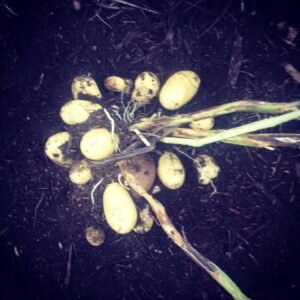
Potatoes in the Ground
1. Plant certified seed potatoes into shallow trenches in loose, free-draining soil. I like to use good quality compost with some sugar cane mulch mixed through, so the soil stays open rather than heavy and compacted.
As the plants grow, keep adding soil or compost around the stems until the mound is roughly 20cm above the original soil level. This is called hilling. Potatoes form close to the surface, so covering them helps stop them being exposed to light and turning green. Green potatoes can upset the stomach, so they are best avoided. Hilling can also encourage a better harvest.
2. Harvest when the lower leaves start to yellow. You can gently dig around and harvest only what you need, leaving the rest of the plant to keep growing. If you want to harvest and store the crop, cut the tops off and leave the potatoes in the ground for another 2–3 weeks before digging.
I have had some potato plants that I harvested from continuously through the season, and others that I left to harvest all at once. In my experience, neither method affected the final result too much.
Dug potatoes should be kept in a cool dark spot.
Good luck and just think how amazed your friends will be when at your Summer pool party you have blue potato salad!
Some varieties of Potatoes Trevallan stocks
The last few years of increment weather around potato season has led to many varieties either being only available in small quantities or just not at all. This year we have a limited supply of Sebago, Dutch Cream and Desiree plus a few newer varieties
Sebago
A long to oval shaped all-rounder with white flesh and skin that’s common in supermarkets and green grocers around Australia. This potato is great for boiling, mash, roasting, baking, chips and mash.
Dutch Cream
Dutch Cream, from Holland, are perfect for frying or serving cold in a salad. Their creamy flavour means they are one of the few waxy varieties that work in a mash as well.
Nicola
Nicola have a low GI rating, with a yellow buttery flesh. They are a firm potato and will hold its shape after boiling, making it perfect for salads. They make a dense creamy mash and good roasted if you part boil; as this will make them crisp up easier.
Kennebec
An old-fashioned variety that has been in Australia for many years. It’s origin from the USA. Loves to be Baked, Roasted or Fried. Have heard its great for the BBQ or pizzas.
Desiree
Red-skinned, yellow flesh with a distinctive flavour. Originally bred in the Netherlands in 1962. Has great resistance to drought, and is fairly resistant to disease. Best used for roasting, baking, and boiling
Pontiac
A very reliable all-rounder with pink skin and white flesh. Great to boil, bake, roast, microwave and mash but not so suitable for frying.
Kipfler
A waxy, finger-shaped, knobbly potato with yellow skin and a light yellow flesh with a buttery nutty taste that is great boiled, steamed, in salads and roasted but not recommended for frying or chips.
Salad Rose
Features a red skin with yellow flesh. Salad Rose is excellent for salads, steaming, boiling, roasting and mashing. Very good for Soups and stews as it won't break apart once cooked.
Sapphire
Has unusual purple skin and flesh. Like all darker coloured veggies Sapphire is packed full of antioxidants. The colour is maintained even after cooking. Great all rounder potato, suitable for salads, boiling, mashing, roasting and chips.
Avanti
An early white potato bred in the Netherlands. A good all-rounder for boiling, roasting and chips.
Delaware
An Australian-bred variety known for reliable crops. Great boiled, steamed, roasted or used in salads.
Imperial Blue
An Australian-bred gourmet potato with striking purple-blue skin and flesh. Beautiful roasted, as wedges or in colourful salads.
Red Lady
A smooth red-skinned potato with creamy flesh. A lovely all-rounder for roasting, baking, boiling and warm winter dishes.
Rodeo
A reliable variety with creamy flesh and good storage qualities. Useful for roasting, baking and mashing.

Parsley
One fragrant herb I am really fond of using in the garden is parsley. t's dark green, lush, exceptionally hardy. Can handle full sun or part shade. Can handle wind and a dry out once established. It prefers nice fertile soil but will grow basically anywhere as long as you give it a good start. Plus you can eat it and if one dies in your border it's easy to replace.

Curly leaf parsley (Petroselinum crispum)
One fragrant herb I am really fond of using in the garden is parsley.
Parsley I believe is an under used bedding plant. Here we have this amazing herb that can be added to any dish and it smells just so refreshing when the wind blows through it yet we only ever put one plant in our gardens.
I honestly think parsley should be used as a border plant in a garden. It's dark green, lush, exceptionally hardy. Can handle full sun or part shade. Can handle wind and a dry out once established. It prefers nice fertile soil but will grow basically anywhere as long as you give it a good start. Plus you can eat it and if one dies in your border it's easy to replace.
I think it's highly underused as a herb for our herb gardens!
If you pick the leaves regularly it promotes more growth. You should really pick from the outside in.

Italian or flat leaf parsley (Petroselinum crispum neapolitanum)
If you've had trouble growing parsley in past it could be because you aren't a witch, superstition says only witches could grow parsley and it was best just to steal it from their yard when you needed it. Usually before a night out on the town with friends as it was believed to reduce the effects of alcohol!
Parsley is a great companion plant and will aid the growth of many plants including tomato, beans, onions and asparagus. I read growing parsley under roses enhances their fragrance!
If you want to attract butterflies, parsley is a favourite of the swallowtail butterfly caterpillars. If you let your parsley flower and go to seed, parsley will attract hoverflies to your garden. With some species of hoverflies, the larvae are known to eat aphids, thrips and other destructive insects. Parsley is also believed to repel harmful beetles.

Flower on Italian or flat leaf parsley (Petroselinum crispum neapolitanum)
This plant is already looking like the best scented plant. Easy to grow, attracts beneficial insects, makes roses smell better, stops the effects of alcohol.... winning! Best of all though is we can eat it and it makes food taste amazing. I think parsley can be paired with any dish and it will enhance the flavour.
Now there are two types of parsley and I think both are brilliant. So you can use either one for your lush tropical scented border plant.
Curly leaf parsley (Petroselinum crispum) with ruffled leaves and Italian or flat leaf parsley (Petroselinum crispum neapolitanum) with flat leaves. In general people believe that flat-leaf parsley has a more robust flavour and that curly-leaf parsley tastes more bitter. I honestly think it depends on the particular plant, its growing conditions, and age.
So it doesn't matter which parsley you choose and it doesn't matter if you grow it for the leaves, the flowers, the scent or the taste. It has so many uses in our gardens and our culinary kitchens I think it's a necessary plant for our scented gardens.

Fennel
Fennel (Foeniculum vulgare) is actually part of the carrot family. It has yellow flowers and light green feathery foliage (just like a carrot). The whole plant can be eaten. It is native to The Mediterranean but it grows easily all over the world.
You know what I love roasted?
Fennel bulbs... oh my goodness yum.
So I thought today since I'm feeling a bit peckish, I'd talk about this Amazing Herb. After a bit of research I found out it has a varied history before it got to my roasting pan.

Positive Vibes Essential Oil Blend contains Fennel essential Oil
Did you know the medicinal properties of this herb were well used as far back as the ancient Greeks. They used to chew the seed to help them control their weight during training for the Olympics. It was also believed that it conveyed longevity and gave a person strength and courage.
Romans ate the seeds on long marches when they did not have time to stop and cook and devout Christian's would chew the seeds to satisfy hunger cravings during fast.
Then in the Middle Ages fennel was associated with witchcraft. It was hung inside houses and churches to protect people from evil!
Fennel seems to be used for a lot in traditional medicine from coughs to constipation to kidney stones.
Fennel essential oil is wonderful when you feel attacked or uncertain. It helps you stand your ground and speak your truth with calm assurance. It encourages honest communication and brings lightness to situations that feel heavy. Beyond this, fennel’s sweetness reminds us to finish what we’ve started and to release anything that keeps us from moving forward. It’s an oil of completion and quiet focus, helping us stay dedicated to our goals and approach them with clarity and confidence. When you wear fennel oil, it supports your inner strength and allows you to move through endings and new beginnings with grace.

Fennel Flower
Plus fennel is an amazing Beneficial insect attractor. Jerry Coleby-Williams writes that fennel flowers "acting as nurseries for aphid-eating hoverfly and ladybird larvae. That's handy since aphids also find them attractive."
Seems like such an amazing herb so let's find out how we can all grow it!
Fennel (Foeniculum vulgare) is actually part of the carrot family. It has yellow flowers and light green feathery foliage (just like a carrot). The whole plant can be eaten.
It is native to The Mediterranean but it grows easily all over the world.
Fennel loves the full sun and doesn't require much water once established. The original fennel can grow quite tall so it's best as mid bedding in your garden. I love letting my fennel go to seed and collecting some seeds but letting the rest self seed through out the garden. I love seeing the feathery leaves blowing in the breeze.
For something really classy there is the bronze fennel which grows to only about 40cm and has an amazing shimmery bronze foliage. Now this plant should be used in more ornamental gardens as a feature plant. Bronze foliage isn't common and looks stunning against a green backdrop.
Florence fennel, the one with the bulb that I love roasted, is named Foeniculum vulgare Azoricum Group. It is a cultivar group (fancy horticultural term that helps distinguish a group of plants with similar characteristics) with an inflated leaf base which form my yummy bulbs.
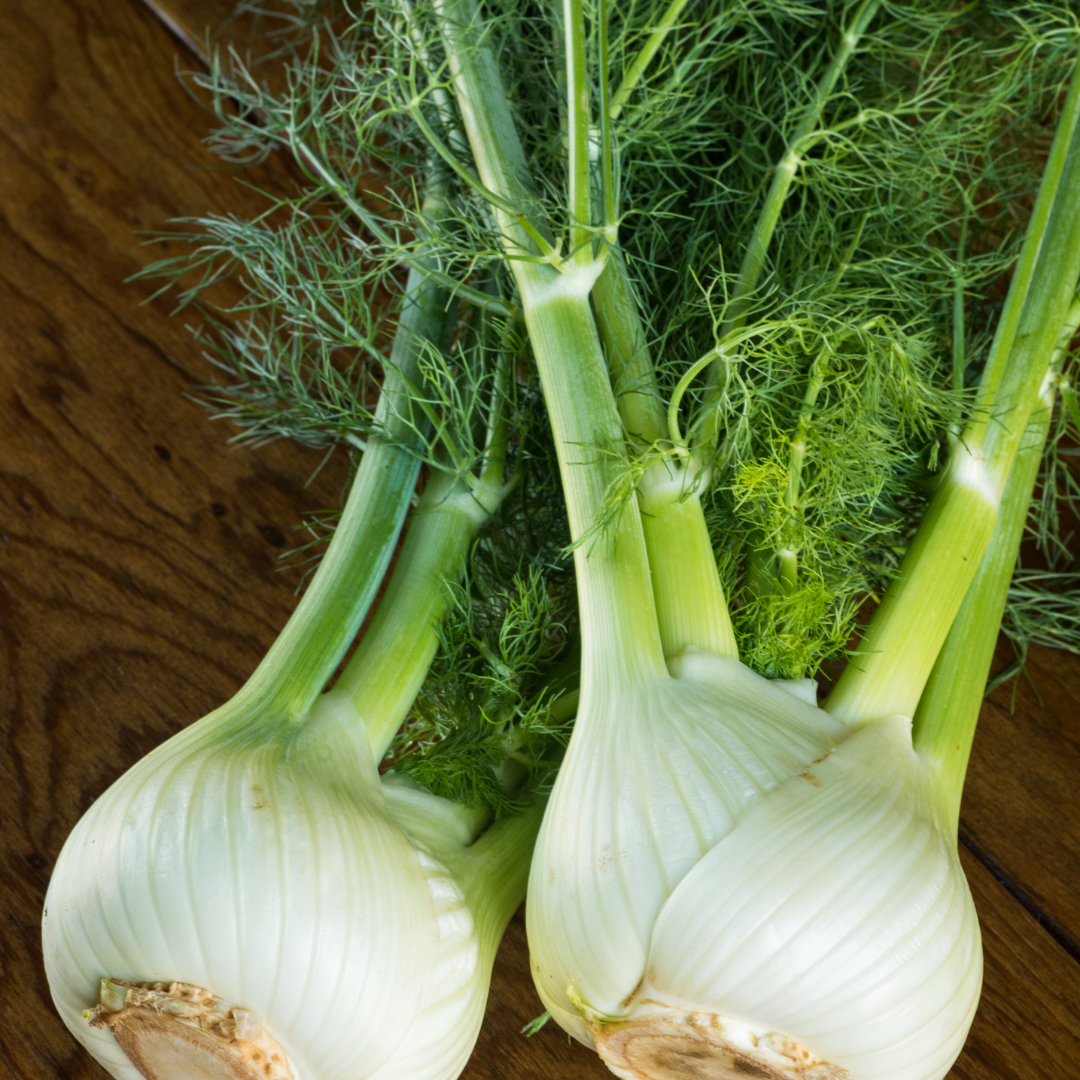
Foeniculum vulgare Azoricum Group
While I do fertilise mine with Organic link when I plant them I find they are extremely hardy and because I let mine self seed through the garden they come up of their own accord when they are ready and this makes them strong and healthy. After reading Jerry's post I believe you can keep cutting and letting the fennel Florence grow.
I love how this whole plant has a scent from the seeds to the leaves and the bulb. I think the best description is a light aniseed scent. When we have it at Trevallan I just love running my fingers through the foliage and the scent is released into the air and my hands come back smelling like lollies.
Can you imagine this plant near a window and on a hot windy day, the scent of aniseed would be just permeating through the house .... ohhhh yummy!
I love how scented plants have so many uses.
Get some fennel today, you will thank me!

Going Potty
Best Practices for having a Potted Garden
I always get asked what’s the best pot and potting mix to use.
For Pots, personally I love terracotta. It’s classic and classy.
Yes, terracotta is pourous but it also breathes and that is fantastic. No, I don’t seal the inside of my pots I love the aged look of terracotta.
I find when you have a 45°C everything drys out no matter what pot you use.
I personally don’t like decorative plastic pots. I have found in the past that plants root balls sweat in these pots and I get very ill looking plants in summer.
I always use Searles Garden Products Platinum Mix in my pots and I always mulch my pots. I fertilise them with Organic Link by Plant of Health Eco Friendly Fertilisers every three months. I try to liquid fertilise fortnight with Triple Boost but to be honest I do forget!
I love grouping pots together. The trick to this is always using the same colour.
So if you use terracotta, find terracotta pots in all different shapes and sizes. Same goes for glazed pots, try to find a similar colour but group all different sizes and styles together. I love the eclectic look but I’d rather the plants do the talking not the pots.
If you have all your plants still in the coloured plastic pots that you get your plants in, try changing them all to Black. Black plastic pots are available in every size imaginable, even huge! It’s a simple and cost effective way of making a statement.
Pots can be used in the garden or around the house. I love using pots in the garden, perfect for those spaces when I can’t dig due to roots or I need height but don’t want to put in a large plant.
I love that with pots you can constantly change your look just by having a little rearrange.
The Great Potting Mix Debate
So often customers come in and tell me their woeful potting mix stories. They tell me how they make their own with really bad quality products or worse how they use garden soil in pots .

I know I am lucky. I need potting mix, I just walk to the shelf, grab the best one and use it.
It hasn’t always been like that.
Years ago I lived away from Trevallan and there were many times I did some gardening and ran out of potting mix. I’d shoot up the street and buy whatever cheap stuff they had. It was just to finish off a job. I didn’t care.
Well I should have because that potting mix ruined my plants. For next six months or so I’d be watering and fertilising and wondering where the hell I went wrong and then I remembered the cheap potting mix. I spent more money trying to keep my plants alive than I would have spent with the expensive potting mix. I eventually repotted into the good stuff and everything grew beautifully.
There is a VAST difference in potting mixes and brands on market. The $2 bag is never ever going to be as good as the $16 unless you add $20 worth of product to it.
So always, always buy the superior product.
Companies spend millions of dollars researching potting mix and how to make it better for you. Trust they know what they are doing and use their superior brands.
If you want to make your own, excellent, make sure you research it well and always use superior products to make your own potting mix.
Garden soil is not for pots, EVER! It’s too heavy. It will either stay too wet and end up being a rotting gluggy mess or will go rock hard.
If your pots dry out too quickly try using a better quality mix and mulch and soil wetter regularly.
All my pots are mulched (I use sugar cane), it makes a huge difference to dry out rates. I also soil wet my pots every six months or so.
I personally use and recommend Searles Garden Products top potting mix - Platinum potting mix. Some of my customers find it keeps their plants too wet so they use the next potting mix down Professional potting mix.
Don’t cut any corners with soil. Soil is the starting point from where your plants grow and thrive
Planting edibles and flowers in POTS hot tips

Use the best quality potting mix. If you have a favourite brand research and find that company’s best quality potting mix.
Go big. Don’t muck around with 20 small pots. I know you’ve seen you can plant your chives into an old kettle but don’t do it. When doing edibles always start at 30cm or bigger. You can put your chives and basil and parsley in a one big pot but don’t go small. Firstly lots of Small pots looks ugly. Secondly too small pots dry out quicker.
Fertilise with Organic Link, as soon as you pot. Yes, I know that bag of potting mix said 12 months feeding but it could have been sitting out in the hot weather for 12 months. So just fertilise with the best organic fertiliser you can get your hands on and then you know when it was fertilised last and you can then refeed in about three months time.
Mulch, yes I mulch my pots. Yes it makes a huge difference. No it doesn’t matter what you use. Apart from stones. Stones are not mulch. Stones are decoration. Use sugarcane mulch or something else that will break down into the soil over time.
Put in sun. Most edibles need at least 4 hours of sun
Water as needed. Probably at least every second or third day. Maybe more as it gets warmer.
I hear you screaming in background but you have possums and wildlife and children that will wreck this potted garden on you. Solution and best ever invention. Buy a Vegepod
These pods come with their own wicking bed, irrigation system and wildlife cover. They are flamin’ fantastic.

All about Strawberries
Strawberry! Fragaria sp.
This relative of the Rose has delicate runners with charming flowers in white and shades of pink that makes Strawberries an attractive option for pots and baskets. Let’s be honest though we don’t grow strawberries for the flowers, we grow it for the delightful fruit that comes after the flowers!

My Grandfather’s Strawberries
Strawberry! Fragaria sp.
This relative of the Rose has delicate runners with charming flowers in white and shades of pink that makes Strawberries an attractive option for pots and baskets. Let’s be honest though we don’t grow strawberries for the flowers, we grow it for the delightful fruit that comes after the flowers!
Growing Strawberries is relatively easy pending conditions and the ever decreasing chance of pollination.
They need deep, rich and friable soil in a position that gets full to part sun. I always add some compost before I plant, never mushroom compost, as Strawberries like slightly acidic soil (pH of 6 – 6.5). My grandfather always mounded up his strawberry patch, left about 30cm between each plant and heavily sugar caned mulched the strawberry patch. The mulching helps prevent fungal diseases, reduces weed invasion and also stops the strawberry fruit from sitting on the bare dirt and rotting away.
Strawberries like moist soil but not really wet. They are very surface rooted so they need regular watering as they can dry out pretty quickly. Once you see the fruit forming you can ease up a little on the watering.
My grandfather would feed his strawberries with Organic Link and Triple Boost in beginning but as soon as the plants got big and leaves turned a lovely deep green colour, he would start to Silica and Potash every second week.

Strawberry Ruby Red growing great in a hanging basket
Crop rotation is very important with strawberries. It is recommended that you move your strawberries to a new patch, with fresh soil, every three years. My Grandfather would let his strawberries form runners at the end of the new seasons plants and direct the runners towards the strawberries new patch of ground. Then every two years he would pull up his old strawberries and let the ground lie fallow for a season or two. Strawberries shouldn’t be planted where tomatoes, eggplants, capsicums or chillis have been for at least three years as they have a tendency to pass on a plethora of fungal diseases.
While Strawberries are very easy to grow they can have a few problems.
Mould and fungus can be an issue, especially when the air is cold and there is water hanging around on the foliage. Best way to prevent this is to water in the early hours of the morning. Snails, slugs and birds can be an issue once the fruit start to form. You can use snail and slug pellets and for birds my grandfather used to use old cds (reflective things scare birds away). You can also use fruit protection netting.
I find growing strawberries in pots or hanging baskets works wonderfully and I don’t have any problems with snails eating my fruit. I use Platinum potting mix and fertilise the same as if they were in the ground.

'Vivipary' on a strawberry fruit
Sometimes a phenomena known as 'Vivipary' can occur on your strawberries. In a few words this just means that the seed is germinating before it is naturally shed as is the natural order of things. I have read of others who have attempted to grow these seedlings on but have not tried it myself. By all accounts each seedling grows on to be a normal healthy plant of the the mother plant.
Some of you may be asking why don’t we grow strawberries from seed?
Simple answer is some plants are just too much of a hassle to grow from seed and Strawberries would have to top this list. I have actually read they are one of the hardest plants to germinate by seed and it can take up to two years before the plant even contemplates producing strawberries.
One website gives this tip for germinating strawberry seeds “Tuck your strawberry seed packet inside a sealed plastic bag or airtight container and place in your freezer for 3-4 weeks. When you remove the bag or container, do not break the seal until it (and its living contents) have reached room temperature....... Opening the package too quickly may result in water condensing on the cold seeds, and this will reduce your chances of success.” Seriously, some plants are better off being bought ready made.
Trevallan stocks a few different strawberries, some are available all year, some are only available from May to July. My grandfather always said Autumn is best time to plant strawberries but really any time is a good time to plant something.
STRAWBERRY LOWANNA only available in 125mm pots or bigger
Lowanna is like the strawberry for giants. They can grow to about 30cm high and 30cm wide in comparison to a normal strawberry that will grow to about 15cm high. The fruit is also bigger than normal as the Plant growth is concentrated on fruit production rather than runner production (this means not as many baby strawberry plants). These are Australian Bred Strawberries that will grow in all zones. One of the best things about Strawberry 'Lowanna' is day neutral which means it fruits throughout the year (whenever the temperate is between 20-30C). So this means Strawberry 'Lowanna' can crop from October all the way through to late May normally.
STRAWBERRY REDLANDS JOY only available in 125mm pots or bigger
Another wonderful Australian bred Strawberry, Redlands Joy is a mid season variety. With exceptionally large sweet juicy fruit that shows some rain resistance, this variety will grow well in a sub tropical climate and is a very good performer in pots
STRAWBERRY SUGARBABY only available in 125mm pots or bigger.
Another mid-season variety with fruit usually ready to eat from early June. Fruit are exceptionally attractive red, glossy, conical, L to XL sized (20g), firm and resilient, with resistance to rain damage. Flesh is bright red, of low acidity, and excellent sweet flavour.
STRAWBERRY SWEETHEART only available in seedlings
This is an alpine type strawberry with white flowers, bearing large deep red, sweet fruit. Just your good old fashioned strawberry.

Strawberry Pinkie
STRAWBERRY PINKIE only available in 100mm pots
Pinkie produces medium, bright red fruit with an elongated shape and is also noted for its pink flowers. Only grows to about 15cm high
STRAWBERRY RUBY RED only available in 100mm pots
Ruby Red produces medium sized bright red fruit with an elongated shape and is also noted for its red flowers. Only grows to about 15cm high
STRAWBERRY SWEETIE only available in 100mm pots
Sweetie produces medium to large, bright red, bi-conical shaped fruit. This delicious tasting strawberry has high sugar levels, and is also very healthy. It has white flowers and only grows to about 15cm high.

African Blue Basil
This is new plant to me but I am falling in love with all its qualities - African blue basil (Ocimum kilimandscharicum x basilicum 'Dark Opal')

This was my original plant. Two years later, this plant is two metres wide and about a metre high. I think it’s one of my favourite plants.
The story goes that in 1983, owner of the Ohio owner of Campanion Plants, noticed a basil plant growing in the pathway between two other basil plants - green-leaved East African basil (Ocimum kilimandscharicum) and 'Dark Opal' basil.
The Ocimum kilimandscharicum is a large growing Perennial basil, with a beautiful camphor scent perfect for pesto making. This basil comes from the forests of Kenya, Tanzania and Uganda which means it can handle some shade.
Dark Opal is know for its compact growth and dark rich purple growth. This is also known to make an amazing red pesto.
The really amazing thing about the African blue basil is that it doesn't produce seed. That's right you can only produce it via cutting.
The African Blue Basil has taken on the prettiest qualities of its parents without the failings. It grows to about 1.5m and has lush bluish green leaves with purple lines through the centre. The new growth has a slightly darker twist. The flowers are the prettiest mauve colour.
African Blue Basil grows very similar to a normal basil. Plant in fertile soil in garden or a pot. It can grow in semi shade or full sun. Give it a nice trim to enable it to grow thick and busy. Fertilise regularly with a complete liquid fertiliser, like Triple Boost and about every three months with a complete organic fertiliser, like Organic Link.
This basil is perennial so it will continuously flower but it doesn't go lanky and to seed like normal sweet basil. This beautiful plant can be used as edible ornamental as it never dies down like normal basil can. It can be killed off by heavy frosts so please put it in a protected spot.
The flowers, leaves and young stems are edible. I've read that some people find the flavour a bit too camphory, but I find it has a rich, mellow flavour. I have been told it makes the best pesto as not only does it taste great but it holds its beautiful green colour and does not go brown like crushed sweet basil can in pesto.
Now we all know I love food so anything scented and edible to a perfect addition in my garden.
Now to find someone to make me that pesto!!

Lemon Balm
Melissa is the Greek word for "honey-bee." It was traditionally used by the ancient bee keepers. They used to rub the crushed leaves on the beehives to encourage the domesticated bees to return to their hives. They also believed that the lemon balm would also bring new bees to the hive.
The most amazing thing happened to me yesterday. I was admiring our beautiful Lemon Balm (Melissa officinalis) and I gently agitated the foliage. The scent that was released was so delicious and soft but with such a strong bite I just had to do it again.
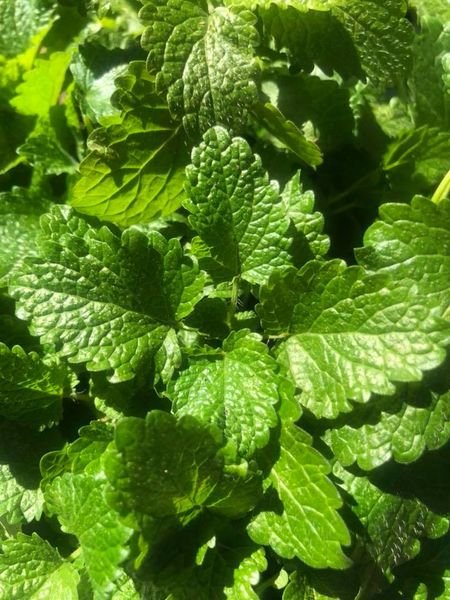
As I leant my hand down to swish the foliage I saw about six European bees and a number of native bees swarming the foliage looking for nectar.
It was like the scent of just the foliage alone (no flowers) sent out a calling card to all the nearby bees.
Here’s where the story gets even cooler.
Melissa is the Greek word for "honey-bee." It was traditionally used by the ancient bee keepers. They used to rub the crushed leaves on the beehives to encourage the domesticated bees to return to their hives. They also believed that the lemon balm would also bring new bees to the hive.
How cool is that.
I love how random bits of information make sense.
Melissa naturally occurs throughout Europe to central Asia. It is widely cultivated today for its essential oil, practical herbal uses and as a great bedding plant.

Lemon Balm is a lemon-scented perennial with a 4-angled stem and ovate, toothed dark green leaves. It likes to grow in moist soil in the sun or partial shade. It provides a nice thick ground cover. It can grow well in a pot (we have ours growing in an old saucepan), hanging baskets or the garden.
After flowering it is recommended to prune back to produce a fresh crop of leaves.
There are so many uses for lemon balm and I think I am going to have to see if I can get this plant growing at home.
Dried leaves can be added to potpourri and herb pillows.
You can use it in cooking – soups, salads, flavoured oils, sauces.
You can use it to make a tea to help with nervous disorders, indigestion associated with nervous tension, depression, anxiety, gout.
It can also be rubbed fresh onto the skin as an insect repellent and to soothe insect bites.
Lemon Balm essential oil is one of my favourite oils and is also very precious and very expensive. So I have to be careful not to use it in every blend I make.
It has been said that it is the ruler of the brain, strengthening memory and removing melancholy. Fischer-Rizzi said it helps us find inner contentment and strengthens ‘wisdom of the heart’. It is one of the best essential oils to help with down in dumps can’t move depression.
I was in love with this herb just from its scent.
Now I know no garden should exist without it!
Go find some lemon balm and lift your spirits and give your heart some contentment.

The Autumn Vegetable Patch
Some us can get gardening bored by beginning of March. We want to play but know it's to early. There are a number of things you can be doing to get your vegetable patch up to scratch so when the ‘autumn' weather starts you’ll be ready.
The beginning of March is traditionally the time to plant our winter crops.
Sometimes this is not the case in SE QLD, Ipswich in particular! Every year is different but most years we can get March day time temperatures exceeding 35 degrees. In weather like this I wonder how anyone could seriously be thinking about planting cabbages!
We do get vegetable garden bored. We want to play yet we know it's to early.
There are a number of things you can be doing to get your vegetable patch up to scratch so when the ‘autumn' (cooler) weather starts you’ll be ready.
Most winter vegetables will grow better if the soil’s pH reading is quite high around 6.5. Your soil’s pH is a measure of its alkalinity or acidity and different plants thrive at different pH levels.
Before you add anything though, you should always measure your soil’s pH with a testing kit. Adding lime will increase your pH reading - making your soil more alkaline. Attempting to make your soil more acidic - a lower pH reading - is a lot more difficult.

Eden Seeds
If you need to add lime to your soil it might be too late for granulated lime to work. It can take months to break down. Eco-flo lime is a liquid concentrated form of lime and is very effective. Enriched with seaweed eco-flo lime is perfect for rapidly correcting acidic soils and boosting calcium levels in your soil. It is also registered organic.
Another thing to note is if your soil’s pH is great you may still want to add some Dolomite. Dolomite helps add calcium and magnesium back into your soil. These two trace elements are water soluble so are easily leeched out of your soil. Especailly after a lot of rain. Lack of calcium is the number one cause of blossom end rot, so even if your garden’s pH is around 6.5 I would still add some Dolomite.
Next make sure your vegetable garden is free of weeds and if you need to add more compost (we use Searles organic compost) or manure now is time to do it.
While it may be too hot or wet to be planting seedlings into the ground, it's a great time to be raising seeds. Seeds are a great way to try different vegetables. The seed range is so extensive at Trevallan we have a “seed wall”. An added bonus of using seeds is you can stagger your crops so everything doesn't ripen at once.
Trevallan stocks Eden Seeds. Eden Seeds distributes old traditional open pollinated varieties of seeds, preferably old Australian varieties and organically or bio-dynamically grown where possible.
It is believed that these types of seeds grow plants that are more nutritious and better tasting, hardier and easier to grow for the home gardener. These older varieties also produce over an extended period of time.
When growing seeds it is best to use a seed raising mix. Some seeds require pre planting preparation, beetroot supposedly germinates quicker if soaked overnight. Some people also do the first water with a weak solution of liquid fertilizer.
As for what to plant your seeds into, there are a myriad of choices - plastic pots, folded up toilet rolls, egg cartons, old seedling trays.

Home Grown Eggplants and Capsicum
I find the trick to seeds is keeping them in part shade and a really LIGHT watering every day to every second day in hot weather. You want to keep them moist but not wet. Once the plant starts to grow I add a little Triple Boost Liquid fertiliser to my watering.
Once the weather cools down continuously it will be time to plant out all those seeds into your garden beds.
If you don't get the chance to raise your own seeds Trevallan stocks a great range of vegetables in seedlings. These seedlings won’t start arriving until about April as it’s still just too hot to plant. Some of your choices could be beetroot, broccoli, snow peas, strawberries, Asian greens, onions, leeks, cauliflower, spinach, rocket, coriander, kale and cabbage. Some people may also like to plant out peas, though I don’t know why… Yuk!
Don't forget we are now proud stockist's of VEGEPOD. Vegepods are an easy to manage contained raised gardening bed that has self-watering technology by using a wicking system. Plants can last weeks without watering in our Vegepods. They also have a Protective Cover that protects crops from UV and pests. We have two set up in the garden centre and for the first time in years we had a tomato crop in summer without fruit fly stings!
Once everything is planted out in your garden don't forget to give it some Organic Link and fortnightly applications of Triple Boost and Neem.
Happy gardening.

Vegetable Garden Checklist
Quick guide to creating your own vegetable garden and growing your own food
✔ Choose a position that receives 5-6 hours sun per day.
✔ Remove the existing grass, plants, rubble.
✔ Add Organic Matter, water in well.
Organic Matter is compost, soil activator, animal manure, fertiliser manure pellets, blood and bone. If you have very clay soil add some liquid gypsum
✔Make sure ground is well tilled to at least 30cm, preferably 60cm.
✔ Choose vegetable seedlings that are appropriate for the season and Plant (roots side down 😉)!
Plant a diversity of flowers, herbs and vegetables so your garden attracts beneficial insects. Here is a great list of Cool Season Vegetables
✔After planting Water all in well with Triple Boost as this helps reduce transplant shock.
✔ Mulch with an organic mulch like sugarcane or lucerne. Water again.
Mulch helps to conserve soil moisture, suppress weeds, keep the soil an even temperature and stop erosion. If directly sowing seeds only use a very fine layer of mulch so as to not impede seed germination.
✔ Water regularly
✔ Fertilise with a combination of Triple Boost Fruit and Vegetable and Neem Liquid Fertiliser fortnightly .... Enjoy!

Winter Vegetables
Autumn, Warm Days, cool nights. Perfect for vegetable planting.
Autumn. Warm Days, cool nights. Perfect for vegetable planting.
By now your vegetable patch has been freshly composted and manured. It’s just waiting for you to plant out. If you are having trouble with how to start off your vegetable patch, check out my Vegetable Patch Checklist
The basic cool season vegetables that I find grow well in most areas are – broccoli, beetroot (my favourite), cabbage, cauliflower, leek, onions, shallots, silverbeet, spinach, snow peas, strawberries (my other favourite), peas, kale and rhubarb.
If you don’t get a frost or you can cover your vegetables - beans, lettuce, capsicum and tomatoes can also be grown.
If you get really cold you can give brussels sprouts a go.
This is the basic vegetable range; there are so many different variations on these classic cooler weather vegetables.

In seedlings alone you can get about four different versions of broccoli.
If you start using old fashioned open pollinated seeds, the list can be endless.
If your vegetable patch consists of a variety of different sized pots don’t worry, there is a large range of dwarf vegetables available in seedlings and seeds.
Leek, lettuce, capsicums, shallots, silverbeet, spinach, snow peas, strawberries, peas and rhubarb all grow well in pots without needing dwarf varieties.
The secret to growing any vegetables in pots follows the same principles as growing in the ground.
Start with the best quality soil or potting mix, mulch with an organic material (I like organic sugar cane mulch that is free from weeds), fertilise with a complete organic slow release fertiliser and liquid fertilise fortnightly with a complete organic liquid fertiliser.
I like using the Plant of Health range of fertilisers – Organic Link and Triple Boost and Searles' range of garden soil for gardens and potting mix - Platinum Potting Mix for pots
I find the cooler months are the best time for growing herbs. Nearly all the herbs are available now. Herbs grow well in the garden or in pots and most herbs can be grouped together in pots to make mini herb gardens.
The best thing about growing cool season vegetables is that it’s usually too cold for the pests to be out and about. If you do get a few pests a pyrethrum based spray or one of the new organic sprays like eco oil or eco fend work well. Mildew and mould is a common problem during wet winters - copper spray (some are considered organic) can be the best solution.
I have heard that having pretend white butterflies in your vegetable patch not only looks pretty but helps deter moths. Jerry Coleby-Williams has also mentioned that Land Cress is a confirmed biocontrol. We stock Land cress in seeds and in plants.
Remember though the healthier the soil, the healthier the plants and the less likely you are to get problems. Now get outside and get dirty!

Why you don't grow food from scraps!
I know the current trend is growing fruit and vegetables from scraps. I would never recommend growing anything from scraps or seeds from fruit and vegetables you buy from the shops. .
I know the current trend is growing fruit and vegetables from scraps. However, I would never recommend growing anything from scraps or seeds from fruit and vegetables you buy from the shops. .
Why? Well, firstly, most of the fruit you buy from the shops, even if it is organic, has been hybridised. As a result, the seeds you put in may be nothing like the vegetable you took it out of.
Secondly, a lot of fruit and vegetables nowadays have seeds in them that are sterile, which means the seeds will not usually grow. If they do , it will only be for a short period of time and they’ll usually wither out and die before anything happens, or will be very prone to insects and disease.
Thirdly, and in my eyes the most important reason why you shouldn’t grow from your scraps, is some vegetables, like potato tubers, can carry many bacterial, viral, and fungal diseases. These bacterial, viral, and fungal diseases are easily passed onto other plants and as a result, can contaminate the soil and make an area implantable. The infections in potatoes can not only affect your potato plants, but also have an impact on all plants in the potato family, such as tomatoes, eggplants and chillies.
I don't believe planting from scraps saves me time or money, in fact, I honestly believe it costs me time and money. This is why I try to always use vegetable seeds that are non-hybrid and open pollinated, like Eden Seeds, and I ALWAYS buy new certified organic potato seed.
Trevallan Lifestyle Centre stocks a wide range of Eden Seeds, which are non-hybrid, old traditional, open pollinated varieties of seeds, with no chemical treatment or genetic modification.

What is Companion Planting?
Why attracting some insects to your garden is beneficial for the whole garden's success.
Companion planting is all about plant diversity - putting together crops that enjoy each other's company and require the same light, soil, water conditions and insect deterrents. In our climate however, I don't think companion planting is highly successful in regards to deterring insects. Instead, it's about planting plants that are either sacrificial plants, end trap plants or plants that attract good bugs to eat all the bad ones. Companion planting is also about planting crops together to help each other along, give out nutrients to each other. One plant can release certain nutrients while the neighbour plant absorbs them and vice versa. This give-and-take process can significantly enhance your plants’ health and create a more harmonious garden as well. A great example of this is the Three Sisters.
Sacrificial Crops

Beneficial insects are any insect that performs a valued service like pollination and/or pest control.
Sacrificial crops, or trap crops, are grown around or amongst crops. Their purpose is to attract the attention of significant pests away from the primary crop. Certain pests prefer the taste of the sacrificial crop, so they leave the crop we like alone.
The sacrificial crop will also, hopefully, reduce the need to spot spray pests.
In the past, people believed sacrificial crops to be more of a breeding grounds for pests, as pest numbers can be quite significant amongst the sacrificial crop. Large numbers of pests also attract bio controls, like parasitoid wasps. Biological control is a method of controlling such pests using other living organisms, which also limits any need to spray even organic insecticides. Organic farmers find that when pest populations peak, so do the bio control insects.
End Trap Plants
Beneficial insects are any insect that performs a valued service like pollination and/or pest control.
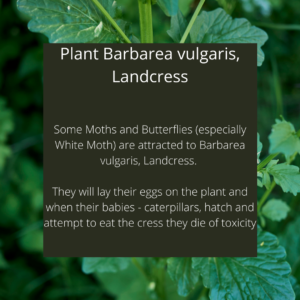
End Trap Plants are crops that you plant in your garden to attract certain moths and butterflies. The moths and butterflies lay their eggs on these plants, instead of on the ones you actually like. Once the caterpillars hatch, they take a bite out of the leaves and ultimately then die of toxicity. On Gardening Australia, Jerry Coleby-Williams spoke about an end-trap plant that will help save your cabbages from white moth. He recommended we plant Barbarea vulgaris amongst our cabbages. During the cooler months we have this plant in stock and we usually always have them in our Eden Seeds Packs.
Beneficial Insects

Beneficial insects are any insect that performs a valued service like pollination and/or pest control.
Beneficial insects are any insects that perform a valued service, such as pollination or pest control. We need to plant more plants that flower, so that we can attract these beneficial insects to eat all the pests ones. The beneficial insects are usually attracted to the pollen or nectar on small flowers. Sometimes, we don't even need to plant more plants. For example, just allowing your herbs or lettuce go to flower once in a while is enough to attract beneficial insects to your garden.
We also now stock Eden Seeds' Beneficial Insect Seed Mix. It is a colourful mix of flowers and herbs, annuals and perennials used to attract insects like lace wings, lady bugs, hoverflies, wasps and bees. It is also a fantastic mix that helps promote natural biodiversity in your garden.
Companion planting is more than just planting some marigolds around your vegetables but marigolds are all you have, they are a great place to start!
Gardening is a Discovery! Always remember that just because it worked for Susan doesn’t mean it will work for you. Susan’s soil and micro climate may be entirely different to yours.
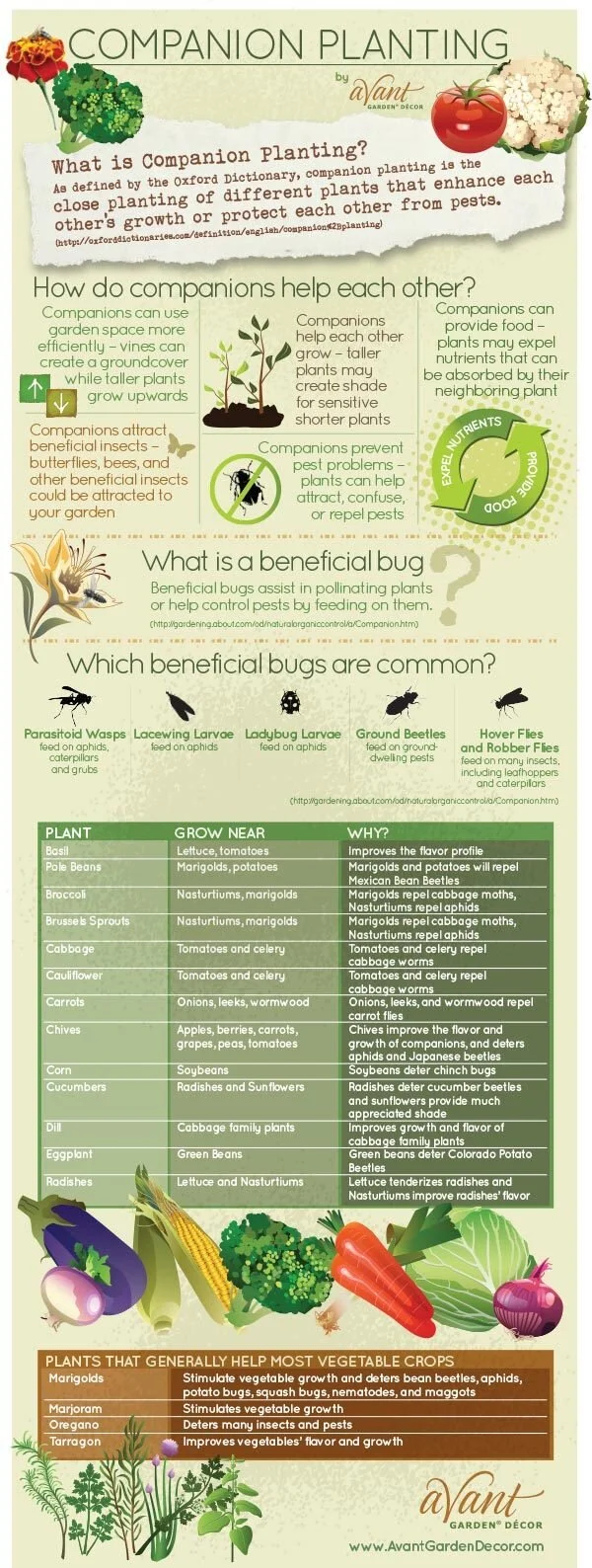
I love this pictogram from Avant Garden that shows some great benefits of companion planting
We can't always think 'if we can't eat it, we can't grow it!'

Native Basil
Coleus graveolens is commonly called Bush Basil or the Five Spice Herb! This plant is native from Cape York all way down to NSW.
Today I have one you all probably know but maybe you are a bit like me and didn’t know it was a native!
Coleus graveolens, synonym Plectranthus graveolens
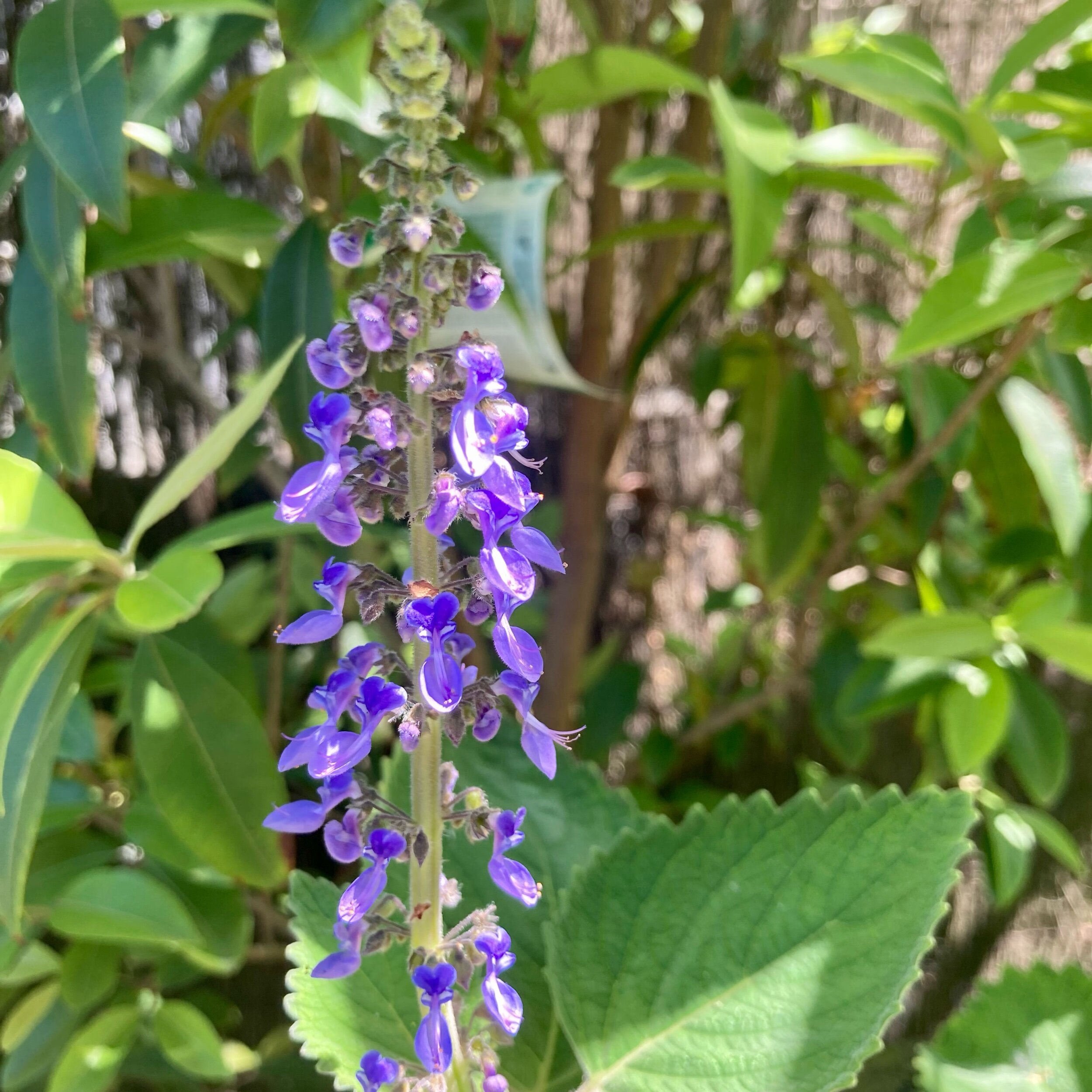
Commonly called Bush Basil or the Five Spice Herb!
This plant is native from Cape York all way down to NSW.
Bush Basil is a very strong herb and is said best to use with Mediterranean flavours like tomato and garlic. You could use fresh leaves on a pizza or blend for a pesto.
It also has many medicinal qualities and can be steeped into a tea to help with coughs and colds.
It’s a vigorous growing herb and can handle full sun or shade and will grow in pots or the garden. It doesn’t mind the heat, dry or cold once established.
It gets covered in pretty mauve flower stalks in the warmer months. These are great as cut flowers and if you cut the leaves off with the flowers it will work as an aromatic bunch of flowers. Scenting the house nicely. The flowers also attract all different types of beneficial insects.
It can get to about 1.5m tall if let go but I find it’s best to trim after flowering otherwise it can get rather scraggly.
As with all my natives I would be fertilising my bush Basil with an organic complete slow release fertiliser like Organic Link every three months.

Coriander actually has a purpose!
WHAT? Coriander actually has a purpose?
Coriander actually has two purposes, making your tastebuds zing, I’m team coriander and attracting beneficial insects to our garden.
WHAT? Coriander actually has a purpose?

Coriander actually has two purposes, making your tastebuds zing, I’m team coriander and attracting beneficial insects to our garden.
Did you know that coriander flowers actually attract things like PARASITIC WASPS. Yes, you do want these wasps in your garden. They are stingless and so small that most of the time we don't even know they are there!
But they utilise caterpillars, beetles, flies, scale and other insects even aphids to house and feed their developing young.
So the bad bugs actually turn into a maternity ward for the good bugs. Which, in theory, decreases the bad bugs you have.
What else can coriander flowers do? Attract hover flies!
Adult Hover flies feed on the nectar as they pollinate flowers. The female lays her eggs near aphid colonies. When the eggs hatch the larvae begin feeding on the aphids. After spending several days eating aphids, the hover fly larvae attach themselves to a stem and build a cocoon. After ten or so days adult emerges and cycle begins again.
Coriander can also help protect potatoes, eggplant and capsicums from Colorado potato beetles.
Planting coriander around tomatoes can not only protect the tomatoes from pests but also improve their flavour.
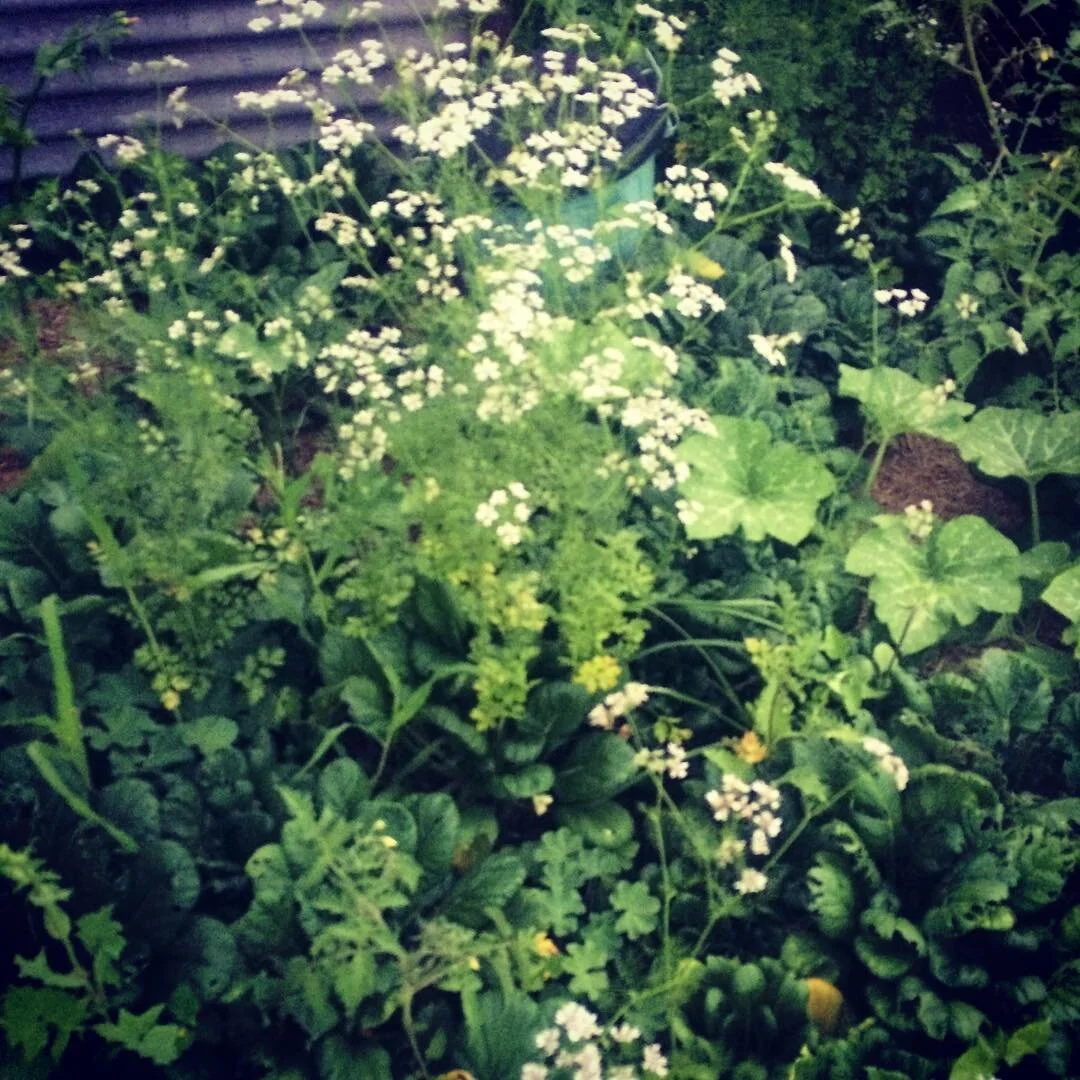
Just because you can’t eat it doesn’t mean it doesn’t have a huge impact in the garden. Start creating a mini eco system in your garden and discover the new beneficial insects!
But how do you successfully grow coriander?Plant your coriander in cooler months, plant a few plants. You can never have too much coriander !
Use as much coriander as you can in cooler months. It grows really well at this time. Now as the weather heats up all this plant wants to do is bolt and flower. Perfect. This is exactly what you want one plant to do straight away.
Let one plant flower and self seed everywhere. Don’t forget coriander flowers attract good bugs.
Water the area surrounding your self seeded coriander and wait for lots and lots of little baby coriander to appear. There should be lots. So use as needed. Let some grow up big and strong so you can repeat the process and use others while they are small and delicious.
With your other plants that you didn’t let go to flower. Keep trimming the flower stalk out for as long as you can (coriander starts to taste a little funny) at that point your baby coriander should have sprouted and you can let these ones go to seed.
Now coriander hate humidity. So don’t over water your coriander and if you plant your coriander in winter it should be well established by summer not to easily wilt with a little sun.
Most common cause of death is steaming to death. Meaning, we over water them and they boil to death in the ground.
I find coriander grows well in large terracotta pots too. The terracotta helps the soil breathe.
Just remember coriander is annual that just wants to flower and have lots of babies in summer. We can try and slow down nature but we can’t change what a plant intrinsically wants to do. We can try to tame Mother Nature but we will never have full control.
I hope this helps and we can have a long enjoyable coriander season with enough flowers to create a mini eco system.

Can you Grow your own Curry?
Curry isn't just one herb, it is a complex seasoning that varies from region to region and even from family to family throughout Southeast Asia. If you thought you could buy a Curry plant, think again!
Curry isn't just one herb, it is a complex seasoning that varies from region to region and even from family to family throughout Southeast Asia. Curry seasonings can even be vastly different depending on the season. During summer months, the seasoning is mixed with spices that cool the body and in winter, a different blend helps keep the body warm.
So what are the plants commonly called 'Curry Plants'? Are they even used in Curries?
Curry Leaf Tree or Sweet Neem (Murraya koenigi)
The Murraya koenigi leaves are the primary seasoning in the South Indian dosa, a crispy, thin, rolled pancake-like bread but it is also used in pickles, egg dishes, chutneys and many other Asian and Indian dishes and is known as “sweet neem” in India.
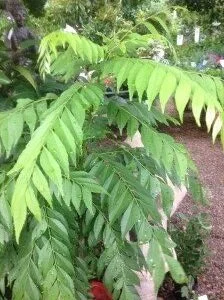
Curry Leaf Tree or Sweet Neem (Murraya koenigi)
Murraya koenigi is native to India and Sri Lanka. The leaf is the only part of the tree used in cooking and the raw, fresh curry leaf won’t really remind you of curry, but once the leaves are roasted in oil, the aroma and flavour can change remarkably, and the flavour is pleasant and delicious.
Even if you don't cook the Murraya koenigi is still a highly prized plant as its purely ornamental small, white flowers are highly fragrant.
It is a beautiful evergreen small tree that can be grown throughout Australia. Trees can grow up to 4m tall, in the warmer weather but it is advisable to prune back to a desired height of 1.5-2m. Pruning also encourages new growth and hence new leaves for harvesting throughout the year.
It requires full sun or semi shade position protected from heavy frosts. Ideal on warm northern side of buildings in cold climates.
The Curry Leaf tree requires reasonable drainage and regular fertilising. I use Organic Link every three months and Triple Boost regularly.
Curry Plant (Helichrysum italicum )
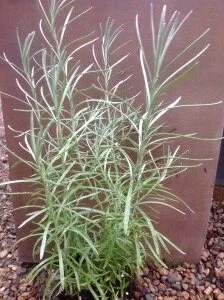
Curry Plant (Helichrysum italicum )
Although called the "curry plant" and smelling like the commercial curry powders, Helichrysum italicum has nothing whatsoever to do with this mixture of spices, nor with the actual curry tree (Murraya koenigii), and is not used as masala for curry dishes.
Helichrysum italicum grows naturally on dry, rocky or sandy ground around the Mediterranean. When growing at home try to make sure your plant is in free draining soil and full sun.
The leaves are grey with clusters of yellow flowers in Summer. These flowers are commonly used in dried flower arrangements.
The shrub can reach about 60 cm in height and can grow in pots or a garden bed. Like all herbs a good tip prune keeps the shrub looking neat and tidy. I usually fertilise at the turn of the season with Organic Link and Triple Boost regularly.
In the Mediterranean the young shoots and leaves of the Helichrysum italicum are used to flavour meat, fish or vegetable dishes. These shoots are then removed before serving. Many people don't like the actual taste of the plant as it has a resinous, somewhat bitter taste reminiscent of sage.
Do you have a Curry Plant or Tree?

The Dirty Dozen
The Dirty Dozen, a list of the fruits and vegetables likely to contain the highest amounts of pesticide residue. You can plant many of these at home.
I'm getting a little gardening bored. It's still too early to be planting my winter vegetables and my vegetable patch is cleaned, composted, mulched and waiting. My few gardens are fertilised, trimmed and waiting for cooler weather to start planting out more. My lawns are fertilised, soil wetted and weed killed - just waiting on rain to green them up.
So what does one do when garden bored - they start dreaming big. I think I have about 40 seed packets of the things I'd like to grow this winter.
So I may have gotten a little over excited. So how do I narrow it down? How do I decide what to plant in my vegetable patch each season or what fruit trees to grow?
I came across an interesting article on the extremely high amounts of pesticide residue on frozen berries. The interesting thing was most of the residue found on the frozen berries were pesticides that are banned in Australia. This happens because most frozen berry companies get their berries from a variety of overseas sources.
The old mind clogs started turning over and after a bit more research I discovered the 'Dirty Dozen' and the 'Clean Fifteen'. These are two lists released by the Environmental Working Group (EWG) each year.
EWG, a nonprofit organization that cites its mission as being to help “people live healthier lives in a healthier environment,” started compiling a list of fruits and vegetables that contain the highest amounts of pesticides in the mid-1990s.
The Dirty Dozen, a list of the fruits and vegetables likely to contain the highest amounts of pesticide residue. The Clean 15 is a list of fruits and vegetables least likely to contain pesticides. The EWG take into account how people typically wash and prepare produce - for example, apples were washed and bananas peeled before testing.
While the EWG’s list is based on the U.S. Department of Agriculture’s Pesticide Data Program, I still find it a great help in determining what to plant and over the years I have used the Dirty Dozen as a guide to what to plant each year. Over the years the list hasn't change much. So I do try to keep track of previous years as it's not like the big farms suddenly stop using pesticides its more like something just contains more pesticides than previous years. One vegetable that continuously goes on and off the list is potatoes. So I always try to grow my own potatoes. Most of vegetables and fruits mentioned can be grown in Ipswich in our vegetable gardens and orchards.
2021 saw the EWG release a special report on citrus fruits, which aren't represented in the Dirty Dozen, but have caught the attention of the organization for trending upward in trace amounts of pesticide recorded.
EWG'S DIRTY DOZEN FOR 2021
(number one being the most highest in pesticide residue)
Strawberries
Spinach
Kale / Collard and Mustard Greens
Nectarines
Apples
Grapes
Cherries
Peaches
Pears
Bell and Hot Peppers
Celery
Tomatoes
EWG'S CLEAN FIFTEEN FOR 2021
Avocados
Sweet corn
Pineapple
Onions
Papaya
Sweet peas (frozen)
Eggplant
Asparagus
Broccoli
Cabbage
Kiwi
Cauliflower
Mushrooms
Honeydew melon
Cantaloupes
Don't get gardening bored, plan big and include the 'Dirty Dozen' in your backyard.

Is Green Manure just really Green Poo?
Green manure crops are crops grown not to be harvested but instead to be incorporated into the soil before they reach maturity to contribute to the health of the soil.
Wonderful blistering hot days, humidity that feels like we should be living in tropics, rain and winds that blow your roof off then cool days that make us wonder if that 45 degree day was just in our imagination.
This is what it can feel like to live in Ipswich in the summer.
How would you fare in this weather? Hot, bothered, quick tempered?
I know I've been struggling, the smallest things bother me.
If I had a vegetable patch right now, I know I'd be pulling most of it up.
If the heat didn't kill everything off, the humidity or insects probably would have.
In years past when I have had a vegetable patch in summer I have suffered with burnt leaves, white mould all over my cucumbers, tomato blight and then to top it all off grubs in my fruit (from fruit fly stings).
Which is why now, at this time of year I always sow a summer green manure crop.
Green manure crops are crops grown not to be harvested but instead to be incorporated into the soil before they reach maturity to contribute to the health of the soil.
It is an old technique of soil management that seems to have been forgotten by many gardeners and farmers. I think it's because we are no longer aware of the proven benefits and cost effectiveness of green manure crops.
Trevallan Lifestyle Centre stocks Eden Seeds, a seed company that only stocks old traditional open pollinated varieties of seed, preferably old Australian varieties and organically or bio-dynamically grown where possible. Eden Seeds do a wonderful green manure seed pack that contains a mix of seeds suited to most climates.
Green manure crops contribute directly to the fertility of your vegetable patch through the supply of important plant nutrients. Legumes, for instance, supply nitrogen because their roots form an association with soil-borne bacteria that can transform nitrogen from the atmosphere into nitrogen compounds that can be used by plants. Isn't nature wonderful? It's also just saved you money as now you don't need to add as much fertiliser to your vegetable patch.
Green manure crops can also contribute indirectly to nutrient supply. Just the process of decomposition of the crop aids in making further nutrients available that are already present in the soil but in a form that cannot be used by plants. After the plants have grown and you incorporate them back into the soil you are supplying vast amounts of organic matter that is usually supplied by organic mulches. Once again saving you money - no need to buy organic mulch.
Drought resistance can also be improved as a lot of the crops are very deep rooted. Their roots can penetrate the subsoil and open it up. Next season's crops can also obtain plant nutrients from the subsoil once it is opened by deep rooted green manure crops.
So this weekend get dirty and take out all your hot weather anger on your vegetable patch by pulling everything up and planting some green manure crops. Your winter vegetables will thank you.