Find Us:
77 Fernvale Rd
Brassall QLD 4305
(07) 3201 8630
Open:
Tue-Sun 9am - 4pm

How a Horticulturist Reads the Signs
Plants are more than decoration, they can be diagnostic tools. This blog explores how horticulturists read plant signals to identify soil issues, stress, or disease, and how species like sunflowers and roses can actively help remediate or warn of deeper problems.
Diagnostics, Treatment, and the Wisdom of Plants
by Guest Writer Robert Wilson

Some species act as bio-indicators, revealing underlying nutrient imbalances or environmental stress through changes in leaf colour, growth form, or flushing behaviour. Others function as bio-accumulators, with remarkable abilities to draw specific elements, like heavy metals, out of the soil, offering us pathways for in-situ remediation.
A recent experience with our Macadamia jansenii collection brought this into sharp focus. This Critically Endangered species, endemic to Central Queensland, is part of a dedicated conservation display here at the gardens. Propagated asexually from wild-collected mother plants, each individual is genetically important, preserving a unique slice of the species’ very limited diversity.
However, we noticed significant variability in performance across the bed. Some plants flourished, while others declined without a clear reason. After consulting with partner institutions and confirming that genetic variability was to be expected (and in fact known to display in certain clones) in such a wild-provenanced group, the pattern still felt inconsistent.
The breakthrough came from one of our Technical Officers, who unearthed historic soil test data from the site, which revealed high Copper levels. Levels that could absolutely affect plant health, especially in sensitive, wild species like Macadamia jansenii.
We faced a dilemma: move the affected plants and risk splitting the collection/losing specimens to transplant shock, or work toward in-situ remediation. Fortunately, nature had already provided an answer, Helianthus annuus, the humble sunflower, is a known bio-accumulator of Copper.

Plants like sunflowers have a remarkable ability to draw up and store or metabolise excess ions and compounds in the soil. By sowing a crop throughout the bed, we began a live remediation experiment. The results? A noticeable improvement in the health of this Macadamia collection.
There’s another facet to the story: indicator plants, species whose physiological responses reveal shifts in environmental conditions, disease pressure or pest populations. Some signal their own stress, prompting timely intervention. Others, when deliberately integrated into planting schemes, serve as early detection tools, providing advance warning of broader issues before more sensitive or high-value plants are affected. In skilled hands, they move beyond passive symptoms to become active sentinels within the landscape. A classic example can be found in vineyards, where roses are traditionally planted at the ends of grape rows. Highly susceptible to Powdery Mildew, they often show symptoms ahead of the vines, giving growers a timely cue to apply preventative treatments.
Whether acting as bio-accumulators to remediate heavy metals or as indicators of pest, disease, or climate stress, plants are constantly offering feedback to those who know how to read it.

Not All Potting Mixes Are Created Equal
Not all potting mixes are created equal—and the potting mix you choose can make or break your plant’s success. After seeing the latest potting mix experiment gaining attention online, I wanted to share what most people aren’t told: age, storage, and the quality of ingredients all play a huge role.
Lately, there’s been a lot of conversation around potting mixes, thanks to Tim’s Garden Centre running a potting mix experiment. It’s a great conversation starter—but like many things in gardening, there’s more to the story than meets the eye.
What Tim’s Experiment Highlights
Tim’s trial uses 8 different Australian Standard Premium Potting Mixes, with dwarf Cos Lettuce planted directly into the bags. It’s simple and visual, and it highlights something really important—not all potting mixes perform the same, even if they meet the same standard.
In fact, some mixes that performed well in a previous trial are struggling this time around, and vice versa.
What does that tell us? The Australian Standard itself might not be enough.
What Tim Didn’t Mention
While the experiment raises valid concerns about consistency, it leaves out some critical context that gardeners deserve to know:
How long had each bag been sitting on the shelf before purchase? Age impacts nutrient levels, moisture retention, and overall performance. Cheaper mixes tend to sell faster, so they’re often fresher. Premium more expensive mixes, on the other hand, might sit longer, especially in big box stores where stock turnover may be slower for a more expensive range.
Where and how was the potting mix stored? Potting mixes stored outside in all weather conditions start to break down faster. This breakdown attracts fungus gnats, which thrive in moist, organic material.
We’ve even seen discontinued mixes on shelves years after they were removed from production. Old, compacted, and improperly stored potting mix isn’t a recipe for success.
Understanding the Australian Standard
This raises an important question—what do the Australian Standards for potting mixes actually cover? Most people assume they guarantee quality, but in reality, the standards primarily focus on:
Physical properties (drainage, air space, particle size)
Basic nutrient levels
pH balance
What they don’t cover in detail is storage conditions or maximum shelf life. That’s a major gap, because even the best potting mix can deteriorate if stored poorly or for too long.
So, What is Potting Mix, Really?
This is a perfect time to go back to basics:
Potting mix isn’t just dirt in a bag—it’s a specially formulated growing medium designed to support plant roots in containers. It’s lightweight, well-draining, and holds moisture without becoming waterlogged.
Garden soil, on the other hand, is heavy, compacted, and often poorly suited to containers. This is something I covered in my blog Going Potty, if you want to dive deeper.
Why I Stock Searles Platinum Potting Mix (and Not Searles Premium Potting Mix)
Tim’s trial uses Searles Premium Potting Mix, which is a high-quality potting mix containing a blend of organic compost, humus, trace elements, minerals, peat, coir, and Zeolite, along with 8 months of Robust® Controlled Release Fertiliser. It’s a solid mix that meets the Australian Premium Standard, but at Trevallan, I go a step further.
I choose to stock Searles Platinum Potting Mix®, the apex potting mix designed for long-term success. It’s professionally formulated using only the highest grade ingredients and advanced blending techniques, honed over decades of experience. Platinum doesn’t just meet the standard—it exceeds it.

Searles Platinum Potting Mix (Stocked at Trevallan)
18 Month Controlled Release Fertiliser
Contains Searles Flourish® Soluble Plant Food & Robust® Controlled Release Fertiliser
Double Strength Penetraide® Re-Wetting Granules and Water Crystals
Enriched with Potash, Fish, Seaweed, and Volcanic Rock Minerals
Enhanced with Zeolite, Trace Elements & Minerals
Suitable for indoor plants, ferns, potted colour, hanging baskets, shadehouse plants, and more
This is why not all potting mixes are created equal—and why choosing a higher-grade mix sets your plants up for success from day one.
The Real Takeaway
It’s easy to blame a plant for failing, but the real culprit might be the mix it’s growing in—or how that mix was handled before you even brought it home. This is why expert advice matters and why I’m always happy to explain the differences between products I stock.
This isn’t about saying one retailer is better than another, it’s about educating gardeners so they understand that not all potting mixes are created equal. If we want people to succeed in gardening (and keep gardening!), they need honest, clear information, something the industry as a whole needs to get better at providing.
If you want to know which potting mixes I recommend (and why), visit me at Trevallan. And if you missed my latest blog about the true cost of plants and why expert advice matters, you can find it here: True Cost of Greenlife
Gardening success starts with good soil—and that starts with knowing what’s in your potting mix.

Are You Really Watering Your Plants?
Many gardeners struggle with plant health issues that appear insect-related, like mealybugs or wilting foliage, but the real culprit is often hidden beneath the surface—hydrophobic soil. When soil becomes water-repellent, it prevents moisture and fertiliser from reaching plant roots, leaving them vulnerable to stress and pest infestations. Even the most diligent watering routine may not be enough. Soil wetters and re-wetting agents are essential tools to restore soil hydration, improve plant health, and prevent nutrient loss. In this guide, we explore how hydrophobic soil forms, the surprising role of ants in this problem, and the best solutions to keep your garden thriving.
The Hidden Issue Beneath the Soil
One of the biggest hurdles in sharing gardening knowledge is asking people to be truly honest about their soil. We might think we know the type of soil in our gardens, but how many of us can honestly say we've consistently enriched it with organic matter? How many of us regularly fertilise or replenish our soil every three months and apply liquid fertiliser every two weeks?
Sometimes, the difference between rarely and often is the key to unlocking our garden’s full potential. Even if you’re already doing this, how much of the water and fertiliser is really getting into your soil? More importantly, how much is actually reaching your plant’s roots?
The Silent Problem of Hydrophobic Soil
With the extreme heat and drying winds we’ve been experiencing, plants dry out far sooner than we realise. This harsh weather pulls moisture from both the soil and foliage, often leaving plants struggling. Over time, soil can become hydrophobic, it repels water instead of absorbing it. Hydrophobic soil leads to uneven water distribution, so even if you’re watering consistently, it might not be making a difference. You could be fertilising and caring for your plants, only to have all that effort go to waste. This issue affects gardens, lawns, and potted plants alike.
What’s worse, hydrophobic soil doesn’t just prevent water from soaking in, it also stops fertilisers from penetrating, leaving plants malnourished.
The Role of Ants in Hydrophobic Soil
A surprising but common cause of hydrophobic soil is ants nesting in plant roots. When ants build extensive tunnel systems in potting mix and garden beds, they create air pockets that prevent water from soaking in properly. Many gardeners notice mealybugs or scale insects on their plants and assume they have an insect problem. In reality, the root cause is often excessive ant activity. Ants farm these sap-sucking pests because they produce honeydew, a sugary substance that ants love to eat. The result? A weakened plant, compacted and dry soil, and a thriving ant colony.
If your soil dries out quickly, remains hard even after watering, or seems to have a persistent insect problem, ants may be the hidden culprits.
How to Fix Hydrophobic Soil
While adding compost and mulch is beneficial, I find the quickest and easiest way to rehydrate soil and improve absorption is by using a soil wetter.
I know I’ve talked about this before, but I keep seeing the same issue plants suffering because water isn’t reaching their roots. Soil wetters make a real difference, and I use them at Trevallan Lifestyle Centre and at home.
How Soil Wetters Work
Soil wetters reduce the surface tension of water, helping it penetrate rather than run off the soil surface. They restore soil hydration and ensure water and nutrients reach the root zone.
Granular vs. Liquid Soil Wetters
I prefer granular soil wetters because they break down slowly and improve moisture retention over time.
My mother and sister prefer liquid wetters because they work faster and are easier to apply.
Both work effectively, so it’s a matter of preference.
To get the best results:
Apply soil wetters to garden beds, pots, and lawns to rehydrate soil.
If your gardens have mulch, move mulch aside, apply soil wetters and add mulch back ontop
Use organic matter like compost to improve soil structure.
Address ant infestations by removing sap-sucking insects (like aphids and mealybugs) and using natural deterrents like neem oil or diatomaceous earth.
Monitor soil moisture to prevent hydrophobic conditions from returning.
Different Types of Soil Wetters Trevallan stocks
Soil Soaker™ Granular is a biodegradable wetting agent that improves water penetration in hydrophobic soils, ensuring moisture reaches plant roots effectively. It contains diatomaceous earth, which provides silica to strengthen plants and reduce heat, transpiration, and salt stress. Ideal for garden beds, potted plants, turf, and commercial landscapes, it helps prevent water runoff and dry spots. Safe for plants, non-burning, and easy to apply, it enhances soil hydration for healthier growth
Soil Soaker™ Wetting Agent Concentrate is an eco-friendly solution designed to address hydrophobic (water-repellent) soils and potting mediums that repel water under dry conditions. This 100% biodegradable surfactant enhances water penetration, ensuring moisture reaches plant roots effectively. Enriched with natural organic humates, it conditions the soil, nourishes beneficial microbes, and improves moisture retention, promoting healthier plant growth. Ideal for dry, sandy soils, gardens, and turf, Soil Soaker™ helps prevent water runoff and dry patches, making it a must-have for maintaining optimal soil hydration
Searles Penetraide® Re-Wetting Granules are designed to combat water-repellent soils, ensuring efficient water and nutrient delivery to plant roots. These easy-to-apply granules enhance soil moisture absorption, reduce runoff, and improve the effectiveness of fertilisers and pesticides. Suitable for pots, gardens, and lawns, a single application can last up to 12 months, promoting healthier and more resilient plants.
Searles Recharge Ultimate Fertiliser – Flower & Fruit is a premium, triple-action fertiliser specifically formulated to enhance flowering and fruiting in plants. It combines controlled-release nutrients that provide up to 12 months of feeding, instant-release fertilisers for immediate nutrient availability, and Penetraide® re-wetting granules to improve water penetration in dry soils. Enriched with trace elements, minerals, micronutrients, and zeolite, this fertiliser promotes lush foliage, vibrant blooms, and robust fruit development. Suitable for use in pots and gardens, including Australian native plants, it ensures sustained nourishment and improved soil moisture retention.
By understanding how water moves through your soil, recognising the signs of hydrophobic conditions, and using the right tools, you can dramatically improve plant health and stop wasting water and fertiliser.
Have you used soil wetters before? If not, it might be time to give them a try!

Extreme Weather Plant Protectants
When the weather swings to either extreme, freezing mornings or relentless heat, I put a protective coat on my plants. For me, that coat is Silica and Potash or Envy.

Hopefully my silica and potash spray works better than using my good coats
Once the cold mornings start, I feel like I should be going out and putting a big winter coat on some of my plants. In summer I want to go put a big Sombrero on all my plants.
The reality is, plants don’t just struggle in cold conditions, they also suffer through heat, dry winds, intense sun and sudden temperature swings. In Ipswich, it’s often not just cold or just hot, but the constant stress of moving between extremes.
We don’t have a big coat and hat for our garden so there are two products that work like a protective layer in both hot and cold conditions, Silica and Potash and Envy.
How does Silica and Potassium help with Extreme Weather Protection?

Silica and Potash by Plant of Health is product we use at Trevallan
Silica (Si)
Role in Protection:
Cell structure strengthening: Silica deposits in plant tissues strengthen cell walls, helping prevent cell rupture caused by ice crystal formation in cold conditions and cell collapse or scorching during extreme heat.
Stress tolerance: Silica improves overall stress tolerance by helping plants regulate internal processes more efficiently, increasing resistance to cold stress, heat stress, drought and rapid temperature fluctuations.
Water retention: Silica helps plant cells retain water, buffering against dehydration caused by freezing temperatures as well as moisture loss during heat, dry winds and high evapotranspiration.
Potash (Potassium, K)
Role in Protection:
Osmoregulation: Potassium regulates water movement within plant cells, helping maintain cell turgor pressure. This reduces the risk of cell damage during freezing conditions and helps plants stay hydrated and functional during heat stress and dry conditions.
Enzyme activation: Potassium activates enzymes involved in metabolism and stress response pathways, allowing plants to better manage cold stress, heat stress and environmental extremes.
Carbohydrate movement: Potassium aids in the transport of carbohydrates throughout the plant. In cold conditions, these carbohydrates can act as natural antifreeze agents, while in hot conditions they support energy availability, recovery and stress resilience.
Combined Benefits of Liquid Silica and Potassium for Extreme Weather Protection
Silica is often more effective when applied as a foliar spray. This is because silica is less mobile in the soil and can be better absorbed directly through the leaves, allowing quicker and more targeted uptake by the plant.
The same applies to potassium, foliar feeding provides a rapid way to deliver potassium to plants, particularly during critical growth stages or periods of environmental stress.
Together, silica and potash support plants through both cold and hot weather extremes by improving the physical and biochemical stability of plant cells. Stronger cell walls, improved water regulation and more efficient internal processes help plants cope with frost, heat stress, drying winds and sudden temperature fluctuations, while also improving overall plant health and resilience.
At Trevallan, we use Plant of Health’s Potash and Silica (certified organic and safe to use across your whole garden). I liquid feed the garden centre about once a month with this product. I add the liquid fertiliser to Birchy, and the entire garden centre is fertilised in around 20 minutes.
What is Envy?
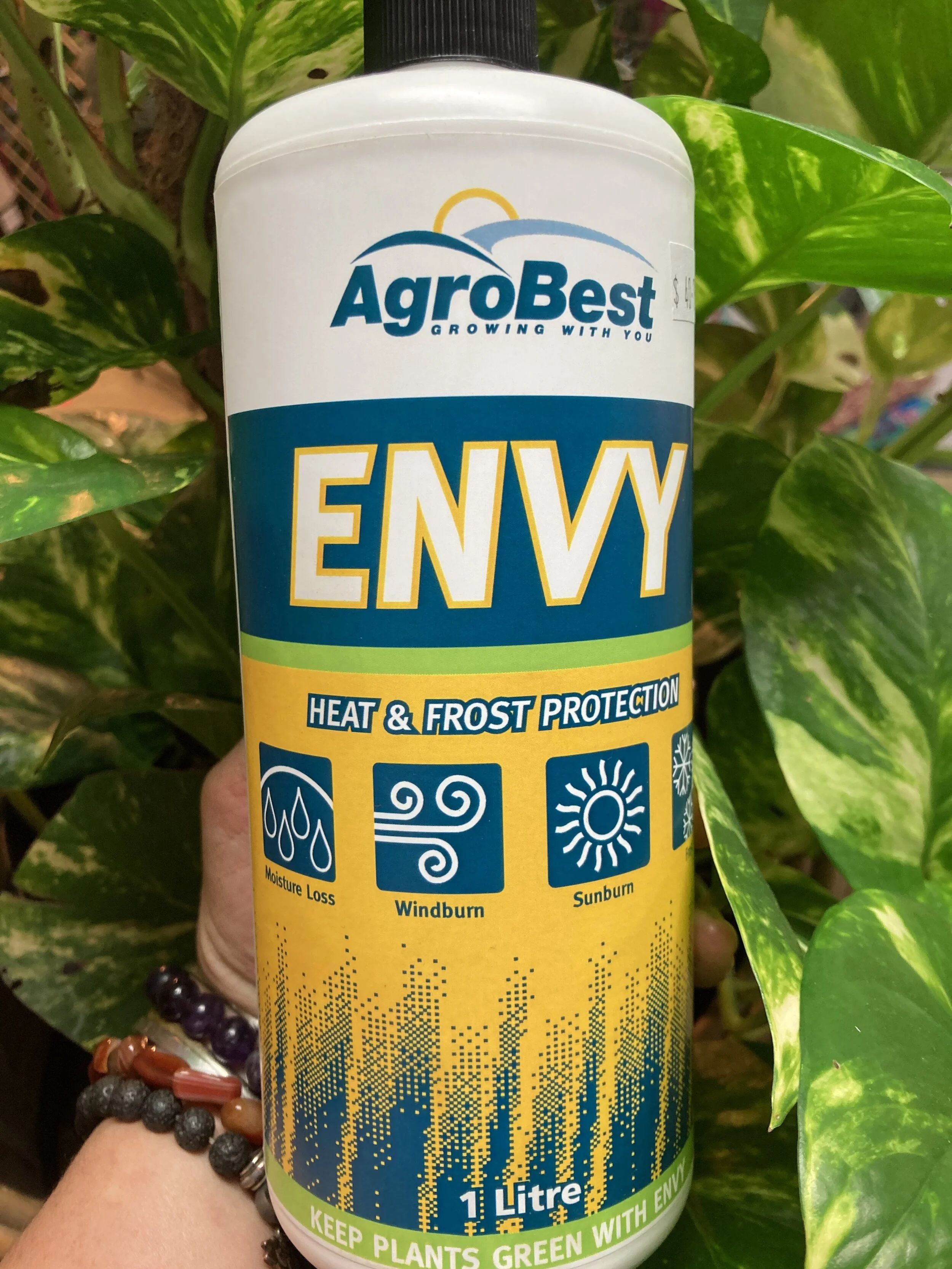
Envy is a frost protectorent and anti transpirant.
Envy is a frost protectant and anti-transpirant that supports plants through both cold and hot weather extremes.
Envy is designed to prevent frost damage by providing a physical and/or chemical barrier that reduces ice nucleation, the process by which ice crystals begin to form from supercooled water, a key factor in frost damage on plant surfaces.
Once sprayed over a plant’s foliage, Envy can increase frost tolerance by up to 4°C.
The same protective film also helps plants during hot, dry and windy conditions. Envy can substantially reduce moisture loss by up to 50%, helping to protect foliage from sunburn, windburn and dehydration during periods of heat stress.
Envy does not hinder plant growth or photosynthesis. It forms a semi-permeable membrane over the leaf surface that still allows the plant to breathe. It is non-toxic, pH neutral, and will biodegrade in sunlight.
Envy is best applied as a foliar spray and should be reapplied as new growth emerges to maintain protection during changing conditions.
Both products ‘Silica and Potash’ and ‘Envy’ can be applied as a foliage spray - mix the product with water and spray over the plant’s foliage.
Both need to be applied regularly for best results.

Dirty Clothes can lead to Healthy Garden
So it's no surprise my laundry and home cleaning is garden orientated. Laundry, Cleaning... Garden? How does this even happen.
Strangely enough I’ve found that gardening infiltrates itself into nearly all aspects of my life.
My job is gardening, one of my many interests is gardening, some of my food comes from the garden, many of my outfits and shoes are gardening friendly, even my morning relax time with a coffee gets extended sometimes with weed pulling and tomato gathering.
So it's no surprise my laundry and home cleaning is garden orientated.
Laundry, Cleaning... Garden? How does this even happen.
It all started with the water restrictions years ago, 2007. I had a baby in cloth nappies, a yard that needed watering and severe skin reactions to the main product on market that was used to soak cloth nappies.
So the hunt began for a product that could:
Keep my nappies white and clothes clean
Be used in a front loader with cold water
Not lead to skin reactions
Cost effective
Wouldn’t damage my washing machine and
Most importantly the water from the washing machine could be used in my garden, grey water
Finally after much confusion, have you seen the laundry powder aisle in the grocery store? Research, or as I fondly refer to it, trial and error.
I found a solution and a lot of information.
What I discovered was that not all laundry powders dissolve totally in the water. Go on go and get your laundry powder, mix it in cold water, leave it for twenty mins and see what the water looks like. I bet there is undissolved particles in it, well there was for me with most of the detergents I tried. These undissolved particles are called fillers. These fillers can not only affect your washing, they can corrode your machine and even affect our health. These fillers can also affect your septic tanks and cause problems with your grey water.

Chelsea using Euca in her laundry
Many laundry detergents also contain salt (sodium sulphate) that can cause major environmental problems in our gardens and waterways.
For me I found that most laundry detergents contained chlorine and synthetic perfumes that are used to sanitise and make our clothes smell pretty. The ones that didn’t contain them didn’t get my clothes clean and didn’t smell as nice. Unfortunately it was the chlorine and synthetic perfumes that were causing my skin problems. For some the chlorine and synthetic perfumes can even trigger bronchial sensitivities.
Finally I found a product that exceeded all my expectations. I fell in love with it so much Trevallan Lifestyle Centre now stocks it and their range of cleaning products.
The product I discovered is the Euca Laundry Detergent Range. The range has a laundry powder, laundry liquid, a prewash stain remover and a fabric conditioner.
The range is based entirely on Australian Eucalyptus oil. The Eucalyptus oil helps deodorise and sanitise without the need for harsh chemicals, so no more skin or bronchial sensitivities.
Euca has no fillers and on average 35 times less sodium sulphate (salt) than other brands of laundry powder. So the waterways, gardens and septic systems are safe.
It can be used in front and top loaders with warm or cold water, it’s cost effective and most importantly my clothes are clean, look clean and smell clean.
It's not just us that think Euca is special, Euca Laundry Powder won People's Choice Award Best Laundry Detergents on Product Review.com
As Euca laundry powder is great for removing soap scum and general grime, I use Euca to clean my shower and mop the floors so all my dirty water can be reused out in my garden.
Never again can I complain about the washing as it’s all going to a good cause – My Garden!
Trevallan stocks a great range of Euca Products, all are septic safe.
Euca Laundry Range
Euca Dishwashing powder for Dishwashers
Euca Dishwashing Liquid —- Click here for my quick Review
Euca Smell Expell – 4 in One Air Freshener, Disinfectant, Deodoriser & Cleaner —- Click here for my quick Review
Euca Multi Concentrate – Super Strong Multipurpose Cleaner
Euca Toilet Cleaner

Tranquil Tea
Tranquil Tea, another local business, has released her own tea blend and she named it in honour of her now home, The Ipswich Breakfast Blend.
We love supporting other local businesses. One that has changed our lives for the better is Tranquil Tea.
A few years ago we had the pleasure of holding a Tea Workshop facilitated by Dona the creative behind Tranquil Tea. Dona explained during the workshop that she grew up in a country where she woke up everyday to a cup of tea. It was the first drink of the day. Tea plantations were the natural place to visit when they travelled around the country.
In her first job as a flight attendant, she served a cup of ‘Çeylon tea’ with pride because she knew that Ceylon tea could not be replicated or grown from tea planation's elsewhere in the world.
During this workshop we discovered what 'real' tea tastes like! While we were all coffee only girls before, you will now often find us having a cup of tea in the afternoons.
Fast forward a few years and Tranquil Tea has released her own tea blend and she named it in honour of her now home. The Ipswich Breakfast Blend is Tranquil Teas first blend from her personal range and can be found at Trevallan and other local cafes around town.
Tranquil Tea's Ipswich Breakfast Blend
Tranquil Tea created this beautiful blend (think English Breakfast but better) to pay tribute to the beautiful town that she has loved living in for the past 12 years. Tranquil Tea states "I love everything about this little city starting from historical buildings and the heritage it carries, landscape, we are in a city surrounded by a mountain range and most of all; people from all walks of life who are proud of their heritage. We have more than 6000 heritage-listed sites and over 500 parks... Love, care, safety, roof above heads and belonging "
Trevallan is over joyed that we can share this experience with you, we now a stockists for Ipswich Breakfast Tea. Why not come in today and be one of the first to get a box of this wonderful new release Tea.
Want to know how to grow your own Tea? Click here

Moringa Tree
Moringa oleifera originates from northern India and the leaves, flowers, pods and roots are edible. It is being claimed that this is The Miracle Superfood tree.
I love a plant that is so versatile, its almost like someone has made this tree up.
Moringa oleifera, Moringa Tree, (horseradish tree, drumstick tree) originates from northern India and the leaves, flowers, pods and roots are edible.
Not only is this plant completely edible its being claimed that this is The Miracle Superfood tree.
The leaves are the most nutritious part of the plant, being a significant source of B vitamins, vitamin C, vitamin K, calcium manganese, and protein. The leaves are cooked and used like spinach, and are commonly dried and crushed into a powder used in soups and sauces.
The immature seed pods are commonly used in curries. The seed pods/fruits, even when cooked remain particularly high in vitamin C and are also a good source of dietary fibre, potassium, magnesium, and manganese.
The seeds are usually removed from the mature seed pods and eaten like peas or roasted like nuts. These also contain high levels of vitamin C and moderate amounts of B vitamins and other dietary minerals
Mature seeds can yield an oil, that is currently being tested as a biofuel and the seed cake remaining after oil extraction is being tested to be used as a fertiliser or to help purify water.
All of the parts of the tree are not only edible for humans, but also can be used as a fodder or forage crop for animals. The high protein content of the leaves make it an excellent supplement to chicken feed and the seed pods can be given to your cows, goats, sheep or other large animals.
Basically the miracle tree.
It is so awesome it is now being used/tested in countries to help with malnutrition.
What makes this tree even more magnificent is that it's drought tolerant, grows in arid regions through to the tropics, will tolerate light frosts and grows quick. It can handle a good prune and has even been used a a living fence.
So why are we only just hearing about it now? Well maybe because this tree could become a problem if everyone started growing it. Its on the Australian plants to watch list. So we do not have trees for sale.
Another reason could just be the simple fact we have forgotten nature provides us with everything we need. Studies are now just starting to be popularised in western countries about the health benefits of this tree.

While we don’t have the tree in stock we do have Moringa Leaf Tea! Moringa tea is an herbal tea made by steeping the moringa leaves in pure hot water (just before boiling point). The tea is naturally caffeine, gluten and diary free and can be consumed at any time of the day. Moringa tea offers an flavour similar to that of green tea but I find it less bitter.
You get all the health benefits of the Moringa tree in tea form without the need to have a plant.
Time to try some Moringa Tea, what's stopping you from being a healthier version of you?

Fertilising at Trevallan
Trevallan follows best organic input in our fertilising practices and the other products we use to keep our plants healthy.
Quick Guide to Trevallan's Favourite Things
Trevallan Lifestyle Centre loves to use the Plant of Health Range at home and at the Garden Centre. We stock this range in store, what we use, you can use.

Slow release pelletised fertiliser
Can be used on every plant – natives, roses, camellias, palms, vegetables – we use it on every plant in the centre
Won’t burn or leech
Finely balanced mineral fertiliser
A high carbon, composted fertiliser to promote nutrient retention and to supply a home base for beneficial micro-organisms
For more information click here
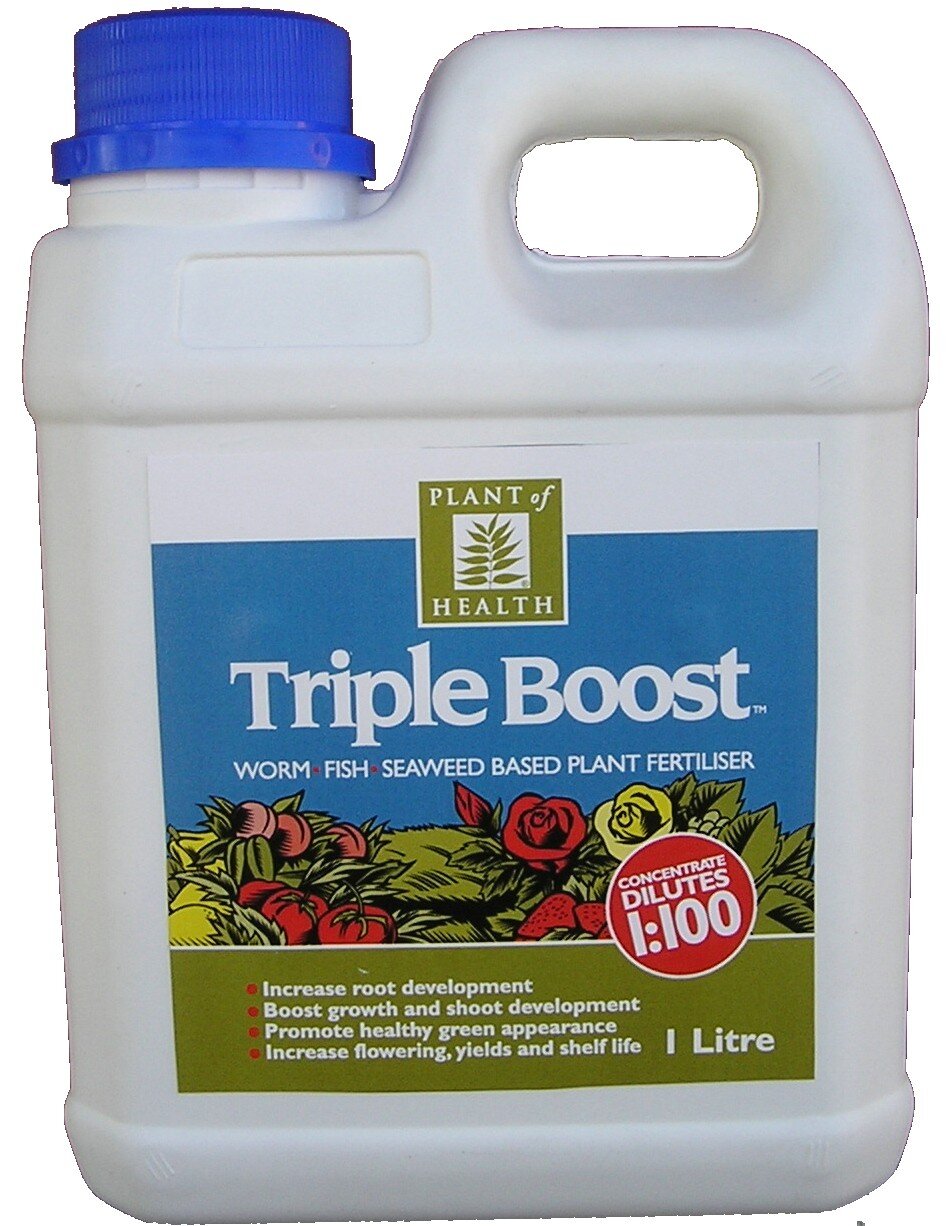
Liquid Fertiliser (mix with water and water over plants foliage)
Boosts growth and root development
Promotes healthy green appearance
Super concentrated fertiliser based on nature’s super foods – fish, seaweed and earthworm combined with trace elements
Contains Tricontanol (extracted from bees wax) powerful photosynthesis enhancer

Liquid Fertiliser (mix with water and water over plants foliage)
Potash helps the plants produce fruit and flowers
Silica can help with plant stress caused by heat, wind, cold and transplanting
For more information Click Here
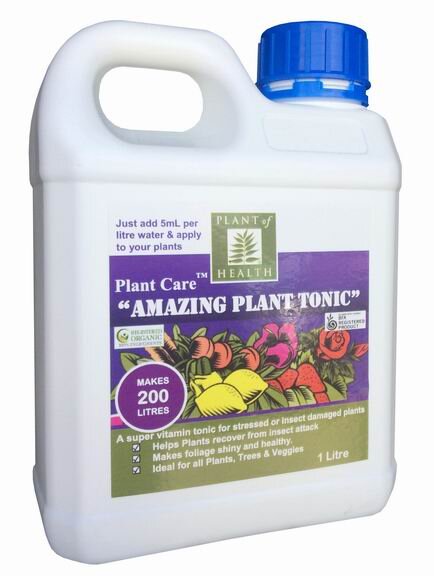
Liquid Fertiliser (mix with water and water over plants foliage)
Super tonic for stressed, flowering or fruiting plants
Helps prevent insect attack
Promotes the plants health during flowering and fruiting
Increases the plants foliage gloss and vitality

Eco friendly surfactant
Allows water to soak into the soil retaining it where it’s needed most.
Available in liquid form or granular form

Organic liquid that provides good bacteria to your soil (PROBOTIC FOR YOUR SOIL).
Enriches and detoxifies your soil and compost.
Healthy soil leads to enhanced plant growth. This can lead to better crop yields, drought and frost resistance and better pest and disease resistance.
Add to water and water into soil

Bio Trace
All in one trace element mix that contains major and micro trace elements that are essential to a plants overall health.
For more information on Trace Elements Click Here

Easy to spread, convenient application
Improves soil fertility
Improved root growth and lush green appearance
Retains moisture
Help put carbon back into the soil
Contains beneficial microbes
Added Trace Elements ensures luxury uptake of minerals maintaining mineral balance & lawn health
Continual use helps prevent Lawn Grub
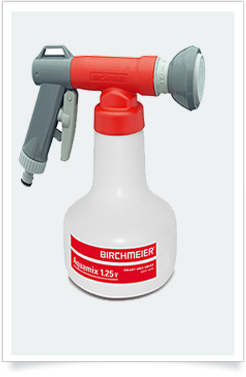
Birchy AquaMix is a fertilizer mixing unit for liquid fertilising without a watering can. The well designed dosing system ensures a precise mixture of water and liquid fertiliser. This is what we use in the garden centre and at home to apply the liquid fertilisers mentioned above.

Bloomin' Fabulous
Potassium Sulphate or Sulphate of Potash is commonly called Potash. It is an essential element necessary to the lives of all plants.
A common question I am asked is "why didn't my fruit trees fruit profusely or if they did why was the fruit misshapen?" Or "why didn't my camellias and azaleas flower as well this year?" Or even "why are all my coloured foliaged plants like crotons and dracaenas losing their colour?"
The answer is usually quite simple - Your garden just needs some TLC and maybe a little Potash!
Potassium Sulphate or Sulphate of Potash is commonly called Potash. It is an essential element necessary to the lives of all plants.
It aids in disease resistance and frost protection by strengthening the plants cell walls. It helps in seed and root development. It encourages strong new growth and helps with the formation of flower buds and fruit.
Potash can improve the quality and the colour of flowers and enhances the formation of proteins and sugars in fruit. Potash can even help plants with slender stems and large flower heads such as Iceland poppies and gerberas hold their heads erect.
Potash defective cues can be seen in a number of ways in your plant. Your plants might be showing signs of overall weakness especially in its stem. It could have yellowing leaf margins and grow more slowly. It could also be disease prone and its fruit and flowers will be small and poorly coloured and sometimes tasteless.
Don't confuse a potash deficiency though with an unhealthy plant. Always make sure you have given your plant some complete slow release organic fertiliser like Organic Link and a Bio Trace first.
Complete fertilisers, whether they are chemical or organic, usually contain potash. Organic Link contains potash. An N:P:K ratio can usually be found on the fertiliser label. A very quick explanation of the N:P:K ratio is - N stands for Nitrogen (greening, growing), P Phosphorus (roots) and K Potassium (fruiting, flowering).
If you use mainly a manure based fertiliser like blood and bone or chicken manure you will need to add potash as these products don’t naturally contain it.
Potash also is available by itself in a liquid form and a granular form.
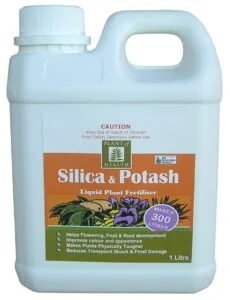
The liquid form is added to water and used as a foliar spray. Used like this it is quick acting but not long lasting and needs to be repeated on a fortnightly basis. This is best for promoting flowers especially on annuals. I use Plant of Health's Potash and Silica.
The granular form is added to the soil and watered in. The granular is slower acting but lasts a lot longer. This is best for correcting deficiencies, promoting fruit and stimulating coloured foliage. We use Searles' Potash.
This weekend I want you all to get some granular potash and go a little silly in your gardens.

Is Green Manure just really Green Poo?
Green manure crops are crops grown not to be harvested but instead to be incorporated into the soil before they reach maturity to contribute to the health of the soil.
Wonderful blistering hot days, humidity that feels like we should be living in tropics, rain and winds that blow your roof off then cool days that make us wonder if that 45 degree day was just in our imagination.
This is what it can feel like to live in Ipswich in the summer.
How would you fare in this weather? Hot, bothered, quick tempered?
I know I've been struggling, the smallest things bother me.
If I had a vegetable patch right now, I know I'd be pulling most of it up.
If the heat didn't kill everything off, the humidity or insects probably would have.
In years past when I have had a vegetable patch in summer I have suffered with burnt leaves, white mould all over my cucumbers, tomato blight and then to top it all off grubs in my fruit (from fruit fly stings).
Which is why now, at this time of year I always sow a summer green manure crop.
Green manure crops are crops grown not to be harvested but instead to be incorporated into the soil before they reach maturity to contribute to the health of the soil.
It is an old technique of soil management that seems to have been forgotten by many gardeners and farmers. I think it's because we are no longer aware of the proven benefits and cost effectiveness of green manure crops.
Trevallan Lifestyle Centre stocks Eden Seeds, a seed company that only stocks old traditional open pollinated varieties of seed, preferably old Australian varieties and organically or bio-dynamically grown where possible. Eden Seeds do a wonderful green manure seed pack that contains a mix of seeds suited to most climates.
Green manure crops contribute directly to the fertility of your vegetable patch through the supply of important plant nutrients. Legumes, for instance, supply nitrogen because their roots form an association with soil-borne bacteria that can transform nitrogen from the atmosphere into nitrogen compounds that can be used by plants. Isn't nature wonderful? It's also just saved you money as now you don't need to add as much fertiliser to your vegetable patch.
Green manure crops can also contribute indirectly to nutrient supply. Just the process of decomposition of the crop aids in making further nutrients available that are already present in the soil but in a form that cannot be used by plants. After the plants have grown and you incorporate them back into the soil you are supplying vast amounts of organic matter that is usually supplied by organic mulches. Once again saving you money - no need to buy organic mulch.
Drought resistance can also be improved as a lot of the crops are very deep rooted. Their roots can penetrate the subsoil and open it up. Next season's crops can also obtain plant nutrients from the subsoil once it is opened by deep rooted green manure crops.
So this weekend get dirty and take out all your hot weather anger on your vegetable patch by pulling everything up and planting some green manure crops. Your winter vegetables will thank you.

The Secret to Great Looking Plants
If you've fertilised, watered well, even checked the pH level, what could possibly be wrong with your plants? Trace elements.
I have discovered the secret to great looking plants.
Trace Elements.
Trace Elements isn’t some brand spanking new fertiliser on the block. It’s an essential item to healthy soils.
Most gardeners are going ‘pfft’ - I so knew that.
Well you might know it but how many of you use a complete trace element mix on your gardens at least once a year? What about your pots, at least twice a year?
It seems everyone fertilises and expects to see results. What happens when you do all the right things but you don’t see the results you want?
A common question is – “I’ve given my plants all the TLC they can handle, I’ve fertilised, watered well, even checked the pH level and it's perfect. What could possibly be wrong with my plants?

Most of us are aware that plants require mineral nutrients for their growth and development. Nitrogen, phosphorus and potassium, the macro elements, the names that usually appear on fertilizer packages, whether you use organic or chemical fertilizers. It is sometimes assumed that they are the "important" nutrients. These macro elements are just consumed by the plants in large quantities. Trace elements, micro nutrients can often be forgotten about as they are required in minuscule quantities.
When it comes to macro elements being the most important nutrients, nothing could be further from the truth. Trace elements like Manganese, Iron, Zinc, and Copper, are every bit as vital to the plants metabolism as nitrogen, potassium and phosphorous. They have essential functions and so a deficiency in even one element will adversely affect the healthy growth of the plant. Strangely enough some trace elements when present in excessive concentrations are actually poisonous for plants.
Common gardening practices (such as liming acid soils) can contribute to widespread occurrence of micronutrient deficiencies in plants by decreasing the availability of the micronutrients present in the soil. Also, extensive use of glyphosate (most common weed killer) is increasingly suspected to impair micronutrient uptake by plants, especially with regard to manganese, iron and zinc.

So how do we pinpoint the problems in our soil? We can get a leaf or soil analysis. Yeah right! I couldn’t be bothered with all that.
So what do I do?
I use Plant of Health’s Bio Trace. It has a blend of the key micronutrients (e.g. iron, cobalt and manganese) supported by macro elements. It is also contains fulvic acid to further enhance growth and health.
The best thing about Plant of Health’s Bio Trace, you mix some up in a watering can and pour it over the plants foliage or as a soil drench. Done. Couldn’t have been easier.
Go on breathe some life into your garden and use Plant of Health’s Bio Trace.
Careful though, when you see the difference it makes you’ll be buying it in bulk like I do now!