One Potato, Two Potato, Three Potato
The first time I heard the words seed potato I imagined a packet of seeds looking somewhat like bean seeds! How wrong I was. Seed Potatoes are what you use to grow potatoes and look like baby potatoes. About 1kg of certified seed should produce about 10kgs of potato.
Woolworths sells potatoes for around $1kg sometimes, why am should I grow them myself?
Potatoes rank among the most contaminated with pesticides and fungicides. Twenty-nine pesticides are commonly used, and 79% of potatoes tested exceed safe levels of multiple pesticides (according to research done by FDA and USDA). Now I don't know about you but I used to use potatoes all the time in cooking. So this little piece of information didn't sit terribly well with me. If I started buying organic potatoes it would cost me upwards of $6kg. So growing potatoes seems like a good idea.
Why should I buy certified seed potato, why can’t I just plant the sprouts that grow from my potatoes from the grocery store?
Firstly potatoes are sprayed with growth inhibitors to stop them from sprouting in shops? This means that when they do finally sprout the growth may be inhibited. You may get weak growth, deformed growth or a plant more susceptible to insect and fungus attack.
Potato plants can carry many potato diseases: bacterial, viral, and fungal; and some of these are passed on through potato tubers. Plant viral infections are persistent and can not only affect your potato plants but your neighbourhood’s plants as well. All plants in the potato family can be affected like tomatoes, eggplants and chillies. These diseases can also contaminate soil and make an area implantable. Remember the Great Famine? Caused by potato blight!
If using non certified seed potatoes the chance of having a disease outbreak is increased. This is because the appearance of a growing potato crop, or the harvested tubers, is not a reliable guide to the pathogen level in the tubers. For example, late season viral infections may not be apparent until the next season’s crop is growing. So give your vegetable patch a little TLC and start with healthy certified seed.
The varieties of certified seed potato seem endless – Dutch Cream, Sebago, Pontiac and Desiree are just a few. There are red ones, pink ones and even blue ones! Some are good for boiling or mashing, some are better for baking and frying, there are even some that are perfect for microwaving! Some are all-rounders. How you like your potatoes cooked is how you choose which variety to grow.

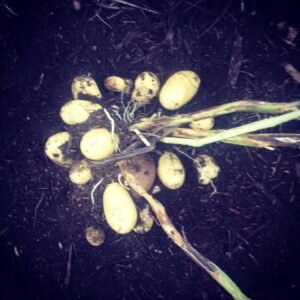
Some of my potatoes one year
Potatoes prefer a sunny, well-drained position and rich, fertile soil. Try not to plant them in the same spot where potatoes, tomatoes, capsicums or eggplants have been grown recently, as they are all in the same family. Ideally, rotate that area for around three years.
In cooler climates, potatoes are often planted 2–3 weeks before the last frost. In Ipswich, we don’t usually have to work around heavy frost, so I tend to plant mine in June/July when the weather is cooler.
Seed potatoes are best planted once they have short shoots around 1cm long. If you buy your seed potatoes in May or June, this usually takes about four weeks.
Large seed potatoes can be cut into two, three or four pieces, as long as each piece has a good eye or shoot. The cut surface should be left to dry for a couple of days before planting. Personally, I don’t usually cut mine, as I haven’t had as much success with pre-cut potatoes.
The principle for growing potatoes is the same whether you grow them in the ground or in pots.
Potatoes in the Ground
1. Plant certified seed potatoes into shallow trenches in loose, free-draining soil. I like to use good quality compost with some sugar cane mulch mixed through, so the soil stays open rather than heavy and compacted.
As the plants grow, keep adding soil or compost around the stems until the mound is roughly 20cm above the original soil level. This is called hilling. Potatoes form close to the surface, so covering them helps stop them being exposed to light and turning green. Green potatoes can upset the stomach, so they are best avoided. Hilling can also encourage a better harvest.
2. Harvest when the lower leaves start to yellow. You can gently dig around and harvest only what you need, leaving the rest of the plant to keep growing. If you want to harvest and store the crop, cut the tops off and leave the potatoes in the ground for another 2–3 weeks before digging.
I have had some potato plants that I harvested from continuously through the season, and others that I left to harvest all at once. In my experience, neither method affected the final result too much.
Dug potatoes should be kept in a cool dark spot.
Good luck and just think how amazed your friends will be when at your Summer pool party you have blue potato salad!
Some varieties of Potatoes Trevallan stocks
The last few years of increment weather around potato season has led to many varieties either being only available in small quantities or just not at all. This year we have a limited supply of Sebago, Dutch Cream and Desiree plus a few newer varieties
Sebago
A long to oval shaped all-rounder with white flesh and skin that’s common in supermarkets and green grocers around Australia. This potato is great for boiling, mash, roasting, baking, chips and mash.
Dutch Cream
Dutch Cream, from Holland, are perfect for frying or serving cold in a salad. Their creamy flavour means they are one of the few waxy varieties that work in a mash as well.
Nicola
Nicola have a low GI rating, with a yellow buttery flesh. They are a firm potato and will hold its shape after boiling, making it perfect for salads. They make a dense creamy mash and good roasted if you part boil; as this will make them crisp up easier.
Kennebec
An old-fashioned variety that has been in Australia for many years. It’s origin from the USA. Loves to be Baked, Roasted or Fried. Have heard its great for the BBQ or pizzas.
Desiree
Red-skinned, yellow flesh with a distinctive flavour. Originally bred in the Netherlands in 1962. Has great resistance to drought, and is fairly resistant to disease. Best used for roasting, baking, and boiling
Pontiac
A very reliable all-rounder with pink skin and white flesh. Great to boil, bake, roast, microwave and mash but not so suitable for frying.
Kipfler
A waxy, finger-shaped, knobbly potato with yellow skin and a light yellow flesh with a buttery nutty taste that is great boiled, steamed, in salads and roasted but not recommended for frying or chips.
Salad Rose
Features a red skin with yellow flesh. Salad Rose is excellent for salads, steaming, boiling, roasting and mashing. Very good for Soups and stews as it won't break apart once cooked.
Sapphire
Has unusual purple skin and flesh. Like all darker coloured veggies Sapphire is packed full of antioxidants. The colour is maintained even after cooking. Great all rounder potato, suitable for salads, boiling, mashing, roasting and chips.
Avanti
An early white potato bred in the Netherlands. A good all-rounder for boiling, roasting and chips.
Delaware
An Australian-bred variety known for reliable crops. Great boiled, steamed, roasted or used in salads.
Imperial Blue
An Australian-bred gourmet potato with striking purple-blue skin and flesh. Beautiful roasted, as wedges or in colourful salads.
Red Lady
A smooth red-skinned potato with creamy flesh. A lovely all-rounder for roasting, baking, boiling and warm winter dishes.
Rodeo
A reliable variety with creamy flesh and good storage qualities. Useful for roasting, baking and mashing.