Find Us:
77 Fernvale Rd
Brassall QLD 4305
(07) 3201 8630
Open:
Tue-Sun 9am - 4pm

Fungus Gnats
Fungus gnats, those pesky flying insects hovering around indoor plants, pose a threat to plant health in humid Australian climates. A blend of prevention and management keeps these pests at bay, preserving a healthy indoor garden.
Gnats is a general term used to describe a variety of small, flying insects within the Dipteran family.
Fungus gnats, in particular, are named for their affinity for fungi and their larvae often being found in damp or decaying organic matter, including soil where they can cause problems for plants. They are a common type of gnat that can be found in and around plants, especially in overly moist conditions.
Fungus gnats, can be problematic for plants. They lay their eggs in the soil, and the larvae feed on organic matter and plant roots. This can lead to several issues for plants, including:
Root Damage: The gnat larvae feed on the roots, causing root damage. This can lead to poor nutrient uptake and weakened plants.
Stunted Growth: As the roots are damaged, plants may experience stunted growth, yellowing leaves, and overall poor health.
Reduced Vigour: Gnats can stress plants, making them more susceptible to other pests and diseases.
Wilting: Severely affected plants may wilt or die if the root damage is extensive.
Prevent and Manage Fungus Gnat Infestations
Prevent
Avoid Overpotting: Overpotting, or using a container significantly larger than the plant needs, can lead to excess moisture retention in the soil. Fungus gnats thrive in damp environments, so using appropriately sized pots for your plants can help maintain the right moisture levels.
Understanding Plant Water Needs: Different plants have varying water requirements. Understanding the specific needs of your indoor plants is crucial. Some plants prefer to dry out slightly between waterings, and overwatering can create a conducive environment for fungus gnats.
Watering Techniques: Water the plants thoroughly but ensure that excess water can drain freely from the bottom of the pot. Watering from the top and allowing the excess water to drain helps flush out any accumulated salts or stagnant water that can attract gnats. It's important not to let the plant sit in water for too long.
Monitor Moisture Levels: Use a moisture meter, correctly, to gauge the soil's moisture content. This can help you determine when it's appropriate to water and prevent overwatering. Adjust your watering schedule based on the meter's readings.
Proper Soil Mix: Choose a well-draining soil mix that doesn't retain excess moisture. Aeration and good drainage are crucial to discourage fungus gnats and promote healthy root growth.
Cleanliness and Plant Hygiene: Regularly remove any fallen leaves, debris, or excess organic matter from the soil surface. Keeping the area around your plants clean reduces potential breeding sites for gnats.
Quarantine New Plants: When bringing in new plants, quarantine them for a few weeks to ensure they aren't carrying any pests. Check the soil and plant carefully for signs of fungus gnats before introducing them to your other plants.
Manage
Introduce Natural Pest Control: Introducing natural predators like beneficial nematodes or predatory mites into the soil is an eco-friendly way to control fungus gnat populations. These predators feed on the larvae of gnats, reducing their numbers and preventing infestations.
Neem Drench: Neem oil, has insecticidal properties and can be effective against gnats. Creating a neem drench by mixing neem oil with water and thoroughly saturating the soil helps deter gnats and disrupt their life cycle. Allowing the plant to drain completely after the drench is crucial.
Gnat Off and Similar Products: Products like Gnat Off and similar insecticides specifically designed to target fungus gnats can be effective in controlling infestations. Follow the manufacturer's instructions for application and usage.
Tanlin Drops: Tanlin Drops are a non-toxic and inert option for managing fungus gnats. They don't harm beneficial microorganisms in the soil while effectively deterring gnats. Follow the instructions for application and dosage provided with the product.
Maintain Cleanliness: Regularly remove fallen leaves, debris, and organic matter from the surface of the soil to eliminate potential breeding sites for gnats. A clean environment discourages infestations.
Isolate Infested Plants: If you notice an infestation, isolate the affected plant to prevent the spread of gnats to other plants. Treat the infested plant using appropriate measures, such as neem drench or commercial products, to control the gnats.
Monitor and Repeat Treatment: Keep a close eye on your plants and monitor for signs of gnats. If needed, repeat the treatment with neem drench or other products to maintain control and prevent reinfestation.
It's important to choose a management method that works for you and your plants.
Combining several of these preventive and management strategies can effectively reduce if not stop fungus gnat infestations in your indoor plants.

Understanding and Managing Azalea Petal Blight
Discover effective strategies to prevent and address Azalea Petal Blight. Keep your plants thriving with our expert insights and proactive solutions
Recently I have noticed a resurgence of Azalea plants exhibiting the characteristic symptoms of Petal Blight, scientifically known as Ovulinia petal blight.

This fungal infection, which primarily affects the azalea and rhododendron species, particularly targets their flowers. It results in flowers showing petal discoloration, water saturation, limpness, and eventual browning, while the flowers remain attached without falling off. It can have a substantial impact on both the visual appearance and the overall vitality of the plants.
The underlying cause of Azalea Petal Blight can be attributed to the fungus Ovulinia azaleae.
While this fungal infection typically thrives in humid environments, it's worth noting that other factors beyond humidity can contribute to its occurrence, even in less humid conditions.
Other Contributing Factors to Petal Blight Onset:
Several pivotal factors can influence the emergence of Azalea Petal Blight:
Moist Conditions: The presence of dampness, even in the absence of pronounced humidity, can create an environment conducive to disease propagation. Fluctuating watering practices, alternating between overwatering one week and underwatering the next, can also pave the way for potential issues.
Impeded Air Circulation: The absence of sufficient air movement around closely situated plants can lead to an environment amenable to fungal proliferation.
Water splashing: Consistent overhead watering, especially in the late afternoons in winter (whether from rain or watering), can spread fungal spores and cause infections.
Reservoirs of Infection: Pieces of decayed and infected flower parts on the ground can hold fungal spores, making it easy for the infection to keep spreading.
Plant Health and Strength: When plants aren't doing well, they're more likely to get sick from harmful things like pests and diseases. Factors, like not getting enough nutrients, being planted incorrectly, or experiencing other kinds of stress, can all make plants more prone to getting Azalea Petal Blight.
Prevention is Better than the Cure
To lower the chance of Azalea Petal Blight and other similar fungal issues, it's really important to take some proactive steps:
Choose excellent quality garden soil or potting mix.
Ensure good air circulation around your plants.
Water at the base to keep those petals dry.
Clear away infected flower debris.
Regularly applying a soil wetter is beneficial since Azaleas tend to develop shallow root systems. This practice enhances water and nutrient absorption for healthier root growth.
Feed your plants by applying 'Organic Link' fertilizer every three months, and don't forget to give them liquid fertiliser regularly. To keep the soil healthy and moist, use organic mulch like sugar cane.
Managing Azalea Petal Blight
If you find your Azaleas have Petal Blight, you can use specific sprays like Mancozeb Plus or Eco Funguncide (certified organic) to treat it. However, it's worth noting that taking preventive measures is even more effective.
By following the gardening tips mentioned above, you can ensure the health and beauty of your azaleas and rhododendrons.
Want more information on Azaleas? Head here

Coriander actually has a purpose!
WHAT? Coriander actually has a purpose?
Coriander actually has two purposes, making your tastebuds zing, I’m team coriander and attracting beneficial insects to our garden.
WHAT? Coriander actually has a purpose?

Coriander actually has two purposes, making your tastebuds zing, I’m team coriander and attracting beneficial insects to our garden.
Did you know that coriander flowers actually attract things like PARASITIC WASPS. Yes, you do want these wasps in your garden. They are stingless and so small that most of the time we don't even know they are there!
But they utilise caterpillars, beetles, flies, scale and other insects even aphids to house and feed their developing young.
So the bad bugs actually turn into a maternity ward for the good bugs. Which, in theory, decreases the bad bugs you have.
What else can coriander flowers do? Attract hover flies!
Adult Hover flies feed on the nectar as they pollinate flowers. The female lays her eggs near aphid colonies. When the eggs hatch the larvae begin feeding on the aphids. After spending several days eating aphids, the hover fly larvae attach themselves to a stem and build a cocoon. After ten or so days adult emerges and cycle begins again.
Coriander can also help protect potatoes, eggplant and capsicums from Colorado potato beetles.
Planting coriander around tomatoes can not only protect the tomatoes from pests but also improve their flavour.
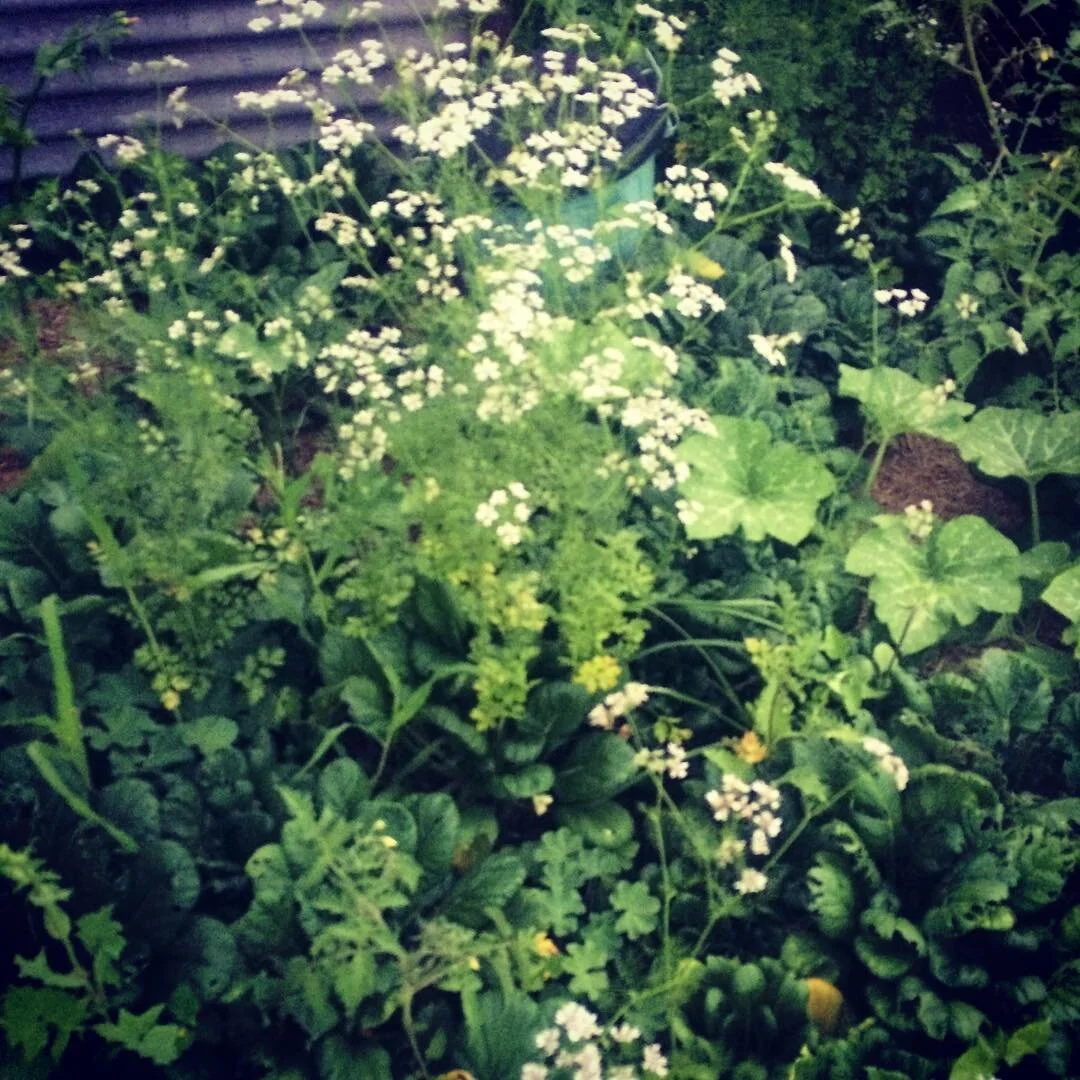
Just because you can’t eat it doesn’t mean it doesn’t have a huge impact in the garden. Start creating a mini eco system in your garden and discover the new beneficial insects!
But how do you successfully grow coriander?Plant your coriander in cooler months, plant a few plants. You can never have too much coriander !
Use as much coriander as you can in cooler months. It grows really well at this time. Now as the weather heats up all this plant wants to do is bolt and flower. Perfect. This is exactly what you want one plant to do straight away.
Let one plant flower and self seed everywhere. Don’t forget coriander flowers attract good bugs.
Water the area surrounding your self seeded coriander and wait for lots and lots of little baby coriander to appear. There should be lots. So use as needed. Let some grow up big and strong so you can repeat the process and use others while they are small and delicious.
With your other plants that you didn’t let go to flower. Keep trimming the flower stalk out for as long as you can (coriander starts to taste a little funny) at that point your baby coriander should have sprouted and you can let these ones go to seed.
Now coriander hate humidity. So don’t over water your coriander and if you plant your coriander in winter it should be well established by summer not to easily wilt with a little sun.
Most common cause of death is steaming to death. Meaning, we over water them and they boil to death in the ground.
I find coriander grows well in large terracotta pots too. The terracotta helps the soil breathe.
Just remember coriander is annual that just wants to flower and have lots of babies in summer. We can try and slow down nature but we can’t change what a plant intrinsically wants to do. We can try to tame Mother Nature but we will never have full control.
I hope this helps and we can have a long enjoyable coriander season with enough flowers to create a mini eco system.

My Flowers bring all the Bees to the Yard
Here are a list of some of my favourite bee attracting plants. When I say bee I mean all bees. Some plants will attract European bees and some will attract native bees. I don’t discriminate, I love them all and want all of them visiting my garden! This list is not exhaustive it’s just a list to get you started.
Question
I would love some suggestions for bee attracting plants that will be happy in clay soil and Ipswich climate. We have plenty in flower at the moment (mostly bottle brush and lillipilli) but would love some suggestions for other times of the year. We do have some citrus which flower periodically too.
Trevallan’s Answer

Clay soils can be a problem for many plants. I do always suggest your cultivate your soil as much as possible with compost, Searles Soil Activator and/or Plant of Health’s Liquid Soil Microbes. Always use an organic mulch like sugarcane or tea tree as the more it breaks down the better the soil becomes. Always use organic fertilises like Organic Link or Pelletised Five In One.
Switch to organic pesticides.
There are some plants that just won’t grow for us in the ground and that’s ok. Use groups of large pots in the garden. I love placing pots around in my garden, it gives the garden another dimension and it allows me to have things I may not be able to grow if it was growing in garden soil. Hanging baskets are another great way to add a new dimension to your garden. You don’t have to hang hanging baskets on your patio .... use large tree branches and hang them in your garden.
Also it’s a great idea to have shallow water dishes around the garden so the bees can rehydrate. Yes, you have to fill them regularly in the heat but the little things we do for wildlife goes a long way and they will repay you by pollinating your vegetables and fruit!
Some of the mentioned plants are seasonal and some are forever. Some will grow better in part sun and some can handle all day sun. Some are trees, some are small. All will grow in Ipswich.
So here are a list of some of my favourite bee attracting plants. When I say bee I mean all bees. Some plants will attract European bees and some will attract native bees. I don’t discriminate, I love them all and want all of them visiting my garden! This list is not exhaustive it’s just a list to get you started.
Bacopa
Camellia Sasanqua
Grevilleas
Lavenders
Fruit trees
Salvia
Daisies
Buddleja
roses
Penstemon
sunflower
marigold
Dandelion
Calendula
Pentas
African Blue Basil
Most herbs left to flower
Alyssum
Murraya paniculata
Jasmine
Aster
cosmos
Lemon Balm (Melissa officinalis)
Borage
Native hibiscus (Alyogyne huegelii)
Guava
Macadamia
Backhousia citriodora
Eucalyptus
Strawberries
Blueberries
Any Syzygium but my favourite is Cascade
Leptospermum
Callistemon
Westringia fruticosa
Waterhousea floribunda
Buckinghamia celsissima
And this list can go on and on.
I also have Eden Seeds bee flower seed mix, which is mixture of flowering plants. Cultivate soil, throw out seeds and see what comes up.
HAVE FUN
“If the bee disappeared off the surface of the globe, then man would have only four years of life left. No more bees, no more pollination, no more plants, no more animals, no more man.” Albert Einstein

All about Bees
Bees pollinate over a third of the food we eat. Unfortunately, bee populations all over the world are declining which in turn is affecting the availability of our food.
Bees.
Just the word alone, can strike fear into some people. But did you know they are an essential element in the circle of life?
"If the bee disappeared off the surface of the globe, then man would only have four years of life left. No more bees, no more pollination, no more plants, no more animals, no more man." Albert Einstein
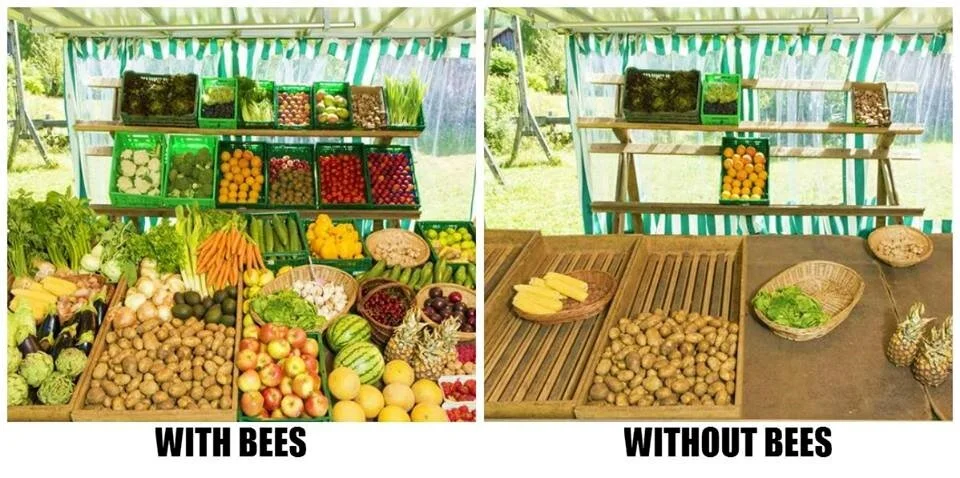
Bees pollinate over a third of the food we eat. Pollination is the process by which pollen is transferred in the reproduction of plants, thereby enabling fertilisation and reproduction, or in layman’s terms, bees help the flowers turn into food.
Unfortunately, bee populations all over the world are declining, which in turn is affecting the availability of our food.
The three main causes are believed to be Genetically Modified Crops (GMOS), chemical pesticide use and habitat loss.
Without getting into a huge debate on GM crops, it is believed one of the main reasons GM crops are leading to colony collapse is that the flower pollen on GM crops is sterile, thus causing the bees to become undernourished and die.
Bees generally travel as far as they need to get food. It is believed that the highest rate of return is between 6 to 7kms away from their hive. Therefore, if a hive is surrounded by GM crops the hive will die out.
The same goes for pesticides. If pesticides are being sprayed in an area, there is a high possibility that the bees will become infected and die out. Home gardeners should note that toxic pesticides meant to kill the bad bugs in our gardens can actually harm the bees which are so important to our environment and survival. Fortunately, Australia has banned many of these harmful pesticides in home use and luckily for us gardeners, there are alternatives. These alternatives are completely organic and don’t harm bees or any other good bugs, but do harm the bad bugs.
The third reason for decline is loss of habitat. This is brought about by development, abandoned farms, growing crops without leaving habitat for wildlife and growing gardens without flowers, or flowers that are not friendly to pollinators.

The larger honey bee (left) shown with the smaller stingless bee (right) on Citrus. Credit: (c) Tobias Smith
In Australia, we have some amazing native bees. There are over 1700 native bees and about ten species of small black stingless bees. They are only about 4 mm long, compared to 12 to 16mm long of the honey bee. The best thing about Australian native bees is that nearly everyone can have a hive or two in their yard.
Many years ago, I visited Melbourne and it seemed most of the suburban garden centres had a native bee hive in their centre. It was fantastic.
Why do we want a native bee hive in our yard?
Australian stingless native bees can be excellent pollinators of certain crops in Australia. They are particularly useful for macadamias, mangoes and watermelons. Also, they are not as prone to the colony collapse disorder that has decimated honeybee populations.
If we can increase the amount of Australian stingless native bees, we might be able to help reduce the loss of food production. Additionally, we might be able to assist the pollination chances in our fruit and vegetable patches.
Australian stingless native bees only produce small amounts of honey - less than one litre per year, particularly in warmer parts of Australia. However, it’s worth the effort as this honey (known as Sugarbag) is delicious.
Anyone can get a Native Bee Hive, as they don’t need as much attention as commercial honey bee hives and akin to the commercial honey bees, have an interesting social behaviour. Contrary to popular belief, you don't have to only have native flowers- I've seen Australian stingless native bees in a buzzing in a frenzy over camellia blooms. Furthermore, it’s worth knowing that increasing the number of Australian stingless native bees will NOT lead to a reduction in Honey bee population. The two can work in harmony.
If you’d like a hive go to the Australian Native Bee Association or Aussie Bee and see if there is a reseller near you. The ANBA promotes the conservation and sustainable use of all Australian native bees.
Do I have bees?
Take a walk around your garden early in the morning. Do you see any bees, native or European? What are they feeding on? I bet it’s not your beetroot leaves or agave leaves!
Growing your own vegetables is a brilliant idea, but don’t forget to mix it up and include some flowers in your edible garden! If you are completely against flowering plants, get some fruit trees, or let some of your vegetables go to flower or plant vegetables that flower, like pumpkin.
We all need to do our bit to keep the bees happy!

Fruit Fly
Two words that can strike fear into any fruit tree or vegetable grower – FRUIT FLY! How to deal with it Organically
So you want to know why your tomatoes get black spots and rot away or why you lose most of your peach crop to black spots and maggots.

Two words that can strike fear into any fruit tree or vegetable grower – FRUIT FLY!
Whether you have one fruit tree in a pot or a commercial orchard Queensland fruit fly can have devastating effects.
These files can sting up to 100 different varieties of fruit and vegetables such as Peach, nectarine, grapefruit, pear, avocado, grape, cumquat, apricot, orange, fig, tomato, eggplant, passionfruit, lemon, apple, loquat, chili, capsicum and strawberries.
Queensland Fruit Fly is an Australian Native insect. This native insect though is recognised as one of the world's worst fruit pests - it used to be estimated that it cost Australian fruit growers more than $100 million each year.
For many years it was just Queenslanders that used to have to suffer the trials of Fruit Fly devastation. Unfortunately fruit fly has not been well managed and many parts of NSW and Victoria have now also been declared Fruit Fly zones.

The adult Queensland Fruit Fly is only about 7 mm long and reddish brown with yellow markings. They lay their eggs in ripe fruit, their babies - maggots then hatch from the eggs and tunnel through the flesh of the fruit turning it into a brown, filthy inedible pulp. Affected fruit is recognised by a small sting mark that becomes discoloured and rot develops around.
Whether you grow one fruit tree or 100 we are all responsible for keeping this pest under control.
Some easy things to do
prune your fruit trees regularly, keeping the tops of the trees to a manageable height which makes fruit picking easier.
Remove any ripe fruit from fruit trees before it has a chance to fall to the ground
Most importantly collect fallen fruit from the ground and preferably place it into a black plastic bag and leave in the sun for 3-7 days to kill any maggots in the fruit.

Another easy way to help reduce the amount of fruit files is to use a trap. Searles Fruit Fly Trap attracts and kills the male fruit fly.
If there are no males in the area the female is unable to reproduce and moves on. The trap has a wick inside a container. The wick contains the pheromone of a female fruit fly in season, coupled with an insecticide. Traps are hung in an area near the fruit trees and can do an area of up to 500m. The wick lasts for three months and a replacement wick can be bought.
I change my wick at the turn of every season. Fruit fly usually have a dormancy period during the colder months but I have found our winters aren't really affecting them like they used too so I keep my trap going all year long.
My first season of using this method I was catching a small vegemite container of Fruit Flies a week!
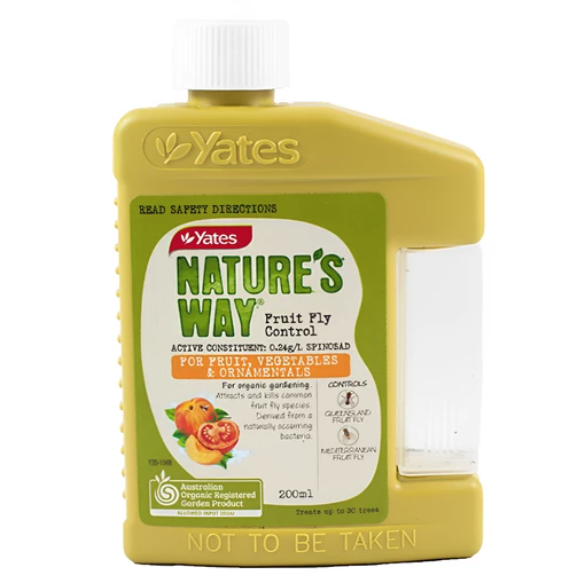
In conjunction with my trap I used to use eco-naturalure but this has now been replaced by Yates Nature's Way Fruit Fly Control. Yates Nature's Way Fruit Fly Control is a BFA registered organic fruit fly control spray for both male and female flies.
It combines specific food based attractants which target only fruit flies, and bacteria derived insecticide, spinosad, that leads to an almost instantaneous death.
You can also use fruit fly netting and fruit protection bags which are specially designed netting that you can use to cover your fruit trees or individual fruit.
I honestly believe that if every household had a fruit fly trap we could get on top of this horrendous outbreak.

The Spittlebug
There are many different insects in our garden …. Spittlebugs are just one.

Check this out looks like someone spat all over my Daintree Pine.
It’s not someone being disgusting.
It’s an insect, well a nymph really (a nymph is the immature form of an insect).
This is the Spittlebug nymph.
The nymph produces 'spittle' clinging on the stems of shrubs or small trees.
They prefer pine like trees.
The nymph lives immersed in masses of the spit like liquid. It is believed that this will reduce the risk of dehydration and to deter parasites.
The adults are excellent jumpers and are sometimes called frog hoppers. Supposedly their faces look like frogs but at 0.5cm long I have no idea how one makes that judgement call! They insert their needle like stylets into the plant tissue to feed. They are sapsuckers which feed on the leaves, twigs, branches and/or trunk of the host trees.
There are around 230000 species of spittlebug (mind just blown). I have no idea which one I have as mine are still in baby spit stage!
They say when the spittlebug is in spit form they cause no real damage (unless you have a huge infestation). Simply putting your hose on high pressure and blasting them off is enough. If you need to spray an organic spray like eco oil or neem oil would work but you would need a few applications.
I like to mix my neem oil with Triple Boost and give the plants a feed at same time. I find insect infestations are usually a sign of a weak plant.
So have you ever seen a spittlebug in your garden?

What's wrong with my Citrus trees?
Citrus trees are prone to Leaf Curl and Leaf Miner. Here’s some organic methods to stop these issues.
Citrus trees are prone to Leaf Curl and Leaf Miner.
Both these problems are mainly caused by insects.
Leaf Curl can be attributed to sap-sucking pests like aphids, mites and psyllids who feed on citrus leaves by extracting the juices directly from transport tissues. As populations grow, they can cause deformations including curling and cupping in leaves, as well as discoloration.
Leaf Miner are another insect, moth larvae. Instead of sap-sucking, moth larvae tunnel through leaf tissues as they grow. These tunnels are highly visible on leaf surfaces, appearing as white or yellow lines.
I find the best way to deal with both of these pests is just trim off the affected leaves. If you wanted to spray BFA certified organic sprays like Eco-oil or Eco-fend would work. I find if I mix a little neem oil with my liquid fertiliser (Plant of Health's Triple Boost) and use it fortnightly it also reduces the harmful insect population. I try to work from a place of prevention is better than cure.
If your plants are badly affected a weekly spray for at least four weeks with Plant Care and Neem Oil, mixed together might be your magic pill!
Why Neem Oil and Plant Care?
Neem Oil is derived from the Azadirachta indica tree. When applied to insects and the plants they are eating, neem oil causes many insects to feed less, grow more slowly, molt less, and lose interest in laying eggs. Neem also suppresses the hatching of pest insects from their eggs.
Plant Care is like a vitamin pill for plants or when they’re sick or stressed. Plant Care contains natural liquid fish proteins, amino acids, liquid vermicast, fulvic acid, natural growth stimulants as well as a special blend of selected herbs and botanical extracts. Plant Care is a natural, non toxic foliar spray and can be used regularly on all plants, vegetables and lawns without the fear of NPK overload or plant damage.
Drought stress can also lead to leaf curl in citrus and is the easiest to remedy. If leaves begin to curl inward while retaining their green colour and the soil around your tree feels dry to the touch, you’re not watering enough. Step up your watering efforts and applying an organic mulch if you haven't already. If you are watering regularly then a soil wetter may be necessary. Soil Wetters help water and nutrients penetrate into the soil enabling the plants roots to pick up what they need.
Nutrient deficiencies can also lead to leaf curl. Citrus trees are very heavy feeders.
My citrus trees get Organic Link every three months and I try to liquid fertilise them fortnightly. I also like to give my trees a liquid fertilise with a complete trace element mix (I use Plant of Health's Bio-Trace) twice a year as part of my normal fertilising regime.
“Even if I knew that tomorrow the world would go to pieces, I would still plant my apple tree.” Martin Luther
I think the world would be a better place if we all took Martin Luther’s advice. We do not know what tomorrow will bring but we do know what we can do today for a better tomorrow!

Sapping the Life from your Trees
As a way to help combat Lantana an evasive weed, a Bio-control called Aconophora compressa (Lantana Treehopper) was introduced in 1995 throughout Queensland and New South Wales.
To me every plant has its place.
Just because I think its place is in the bin doesn’t necessarily mean you should feel the same.
Every garden should be as diverse as its owner.
Take pride in expressing your individuality in your garden. Just because Jamie Durie likes it doesn’t mean you have to.
Some plants though do not deserve anyone’s TLC.
These plants make up Australia’s Most Wanted Weed List or Weeds of National Significance. Lantana would have to be number one. This plant has successfully taken over nearly every rainforest and bushland along the east coast of Australia as well as some areas in West Australia and Northern Territory.
Aconophora compressa
As a way to help combat this evasive weed a Bio-control called Aconophora compressa (Lantana Treehopper) was introduced in 1995 throughout Queensland and New South Wales.
Bio-control is importing a natural enemy to combat pests. It has been very successful in controlling a range of introduced plants that are pests to agriculture, the environment, and human health. Bio-control methods also help reduce the need for pesticide use. The decision to use a Bio-control is not gone into lightly. The lantana treehopper was screened as a bio-control agent from 1990 to 1994 and its release was unanimously supported by 22 state and federal agencies.
The Aconophora compressa camouflages itself very well against the bark of the tree. The insects are brown in colour and can grow up to 8mm long. It has a horned body so it makes the plant look like it has thorns. It sucks the sap out of the host plant and exudes large amounts of honeydew, a sugary solution in which black sooty moulds can grow. The treehopper can cause die back, stunted growth and flowering, unhealthy leaves and eventually death of the plant.
Unfortunately, as with many bio-controls, the Aconophora compressa hopped onto some of our common ornamental shrubs and trees.
This bio-control can be controlled through spraying with an insecticide and trimming or removal of affected plants. The two most viscously attacked plants are Fiddlewoods and Duranta but it has been seen on other ornamentals as well such as Jacarandas and Pandoreas and just recently Annette McFarlane mentioned they were on her Lemon Verbena.
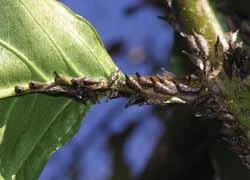
Aconophora compressa
When it comes to the Fiddlewood we aren’t too worried as Fiddlewoods are a West Indian native, considered as an undesirable introduced tree as their roots are very invasive. The Department of Primary Industry (DPI) recommends removing the affected Fiddlewoods and replacing them with a desirable native tree.
Duranta – Sheenas Gold or Geshia Girl can also be affected by the Aconophora compressa. These plants are so extremely fast growing and resilient that a severe trim (putting all affected cuttings into black plastic bags before dumping) and a fertilise with Organic Link (a good quality organic slow release fertiliser) is all they need.
If they are on a plant you can not trim a spray with an oil based insecticide like Eco oil or neem oil. I have heard that Pyremuythum based sprays are effective as well. When spraying for an insect like this you need to be consistent and make sure the plant gets an effective drenching.
This weekend give your life some TLC by getting dirty and making sure you have no nasty critters hiding in amongst your flowers.

Mites
MITES may be invisible to the naked eye but the damage they can cause to plants and lawns isn't so unobvious.
MITES
These pesky bugs are everywhere at the moment, even in lawns. I have found out there are about a gazillion different types of mites (well maybe not a gazillion but quite a few).
Unfortunately mites are invisible to the naked eye. The damage isn't so unobvious.
Some signs of mites
leaves take on a brown, felt-like appearance
distorted, knobbly new growth
the leaves may have yellow blotches on them
distortion, deformation, wilting, spotting, streaking or discoloration on the surface of the leaves
Flowers may not open or become distorted
spiderwebbing on the undersides of the leaves or up stems
With all insect infestations I treat the problem at hand but I also look at why the plant or lawn is being attacked. Is the plant/lawn stressed or unhealthy, too dry or too wet. I always follow the advice I was once given by an organic farmer - A healthy plant doesn’t suffer from an insect attack! So if my plants are suffering from an insect attack I deal with the insect but then look at how to make the plant/lawn healthy again.
Our method of controlling most pests here at Trevallan is a simple one. Trim and fertilise. Sometimes though a fertilise with Organic Link and Triple Boost just doesn't cut it.
When I asked Des from Plant of Health (the team that make our wonderful organic fertilisers) what to use when i need to ‘spray’ to deal with an insect attack he recommended a weekly spray for at least four weeks with Plant Care and Neem Oil, mixed together. This can be used on lawns too.
Why Neem Oil and Plant Care?
Neem Oil is derived from the Azadirachta indica tree. When applied to insects and the plants they are eating, neem oil causes many insects to feed less, grow more slowly, molt less, and lose interest in laying eggs. Neem also suppresses the hatching of pest insects from their eggs.
Plant Care is like a vitamin pill for plants or when they’re sick or stressed. Plant Care contains natural liquid fish proteins, amino acids, liquid vermicast, fulvic acid, natural growth stimulants as well as a special blend of selected herbs and botanical extracts. Plant Care is a natural, non toxic foliar spray and can be used regularly on all plants, vegetables and lawns without the fear of NPK overload or plant damage.
So when mites or any other insects attack take Des' advice ‘a four week intensive care program’. You will see the difference in all your plants as you say goodbye to mites and any other nasty insects that want to destroy your garden.
Good Luck Mite Hunters.

Bugs on my Plants!
At the moment I am finding that aphids are having a feast in my garden. With the warm days many of my plants have tender, yummy, new shoots appearing, just what aphids love. There are many different species of Aphids; they are all small sap sucking insects that vary in colour from green to yellow and black.
Some days start off perfectly - the slow and steady rise from sleep to wakefulness, the smell and taste of a fresh brewed coffee and the deliciousness of a cooked breakfast. Finally as the sun starts to warm up the garden you get motivated to go outside and enjoy the day by being productive.
You take a slow stroll around the garden creating a mental checklist of what needs to be done when you stop short. What on earth has happened to my beautiful plants? They were fine yesterday (or whatever day I was last out here!) Now suddenly they are in dire need of a little TLC. The perfect morning is slowly spiraling downhill.
Even through the cold months insects can play havoc in our gardens.

Aphids on my rose buds
An easy way to keep insects and disease at bay is to keep our plants healthy. I fertilise every three months with a complete organic slow release fertiliser - Organic Link and I try to liquid fertilise every two weeks. Little and often is a great mantra. Fertilising regularly is a great way of helping our plants stay strong and able to fight off disease and insects.
Sometimes though even the best laid plans go astray and plants unfortunately will get disease and insects, it even happens to the best of us green thumbs!
At the moment I am finding that aphids are having a feast in my garden. With the warm days many of my plants have tender, yummy, new shoots appearing, just what aphids love. There are many different species of Aphids; they are all small sap sucking insects that vary in colour from green to yellow and black.
Aphids don’t just suck the life from your plants they also transmit virus diseases such as broad bean wilt. Aphids also secrete a sweet sugary honeydew which can lead to other problems like sooty mold.
Natural predators are lady birds but most of us don't have enough lady birds to stop an infestation.
I like to use neem oil to combat most insects in the garden but two other great organic products are Ecofend® and Eco Oil. Some people find alternating between them is a great idea.
Go and check all your flower buds and new growth. My camellia flowers and hibiscus flowers were inundated with aphids this morning.
Remember prevention is better than the cure so if you haven't fertilised recently now is a great time to do it.