Find Us:
77 Fernvale Rd
Brassall QLD 4305
(07) 3201 8630
Open:
Tue-Sun 9am - 4pm

Best Cut Flowers
Looking for a plant that flowers for months and makes the perfect winter gift? Cyclamen persicum is your go-to for cool-season colour and easy care.
I love the cooler weather. I know the days are still warm, but the nights have that glorious cool tinge and even better, all the plants I love to surround myself with are now in bloom, or coming into bloom.
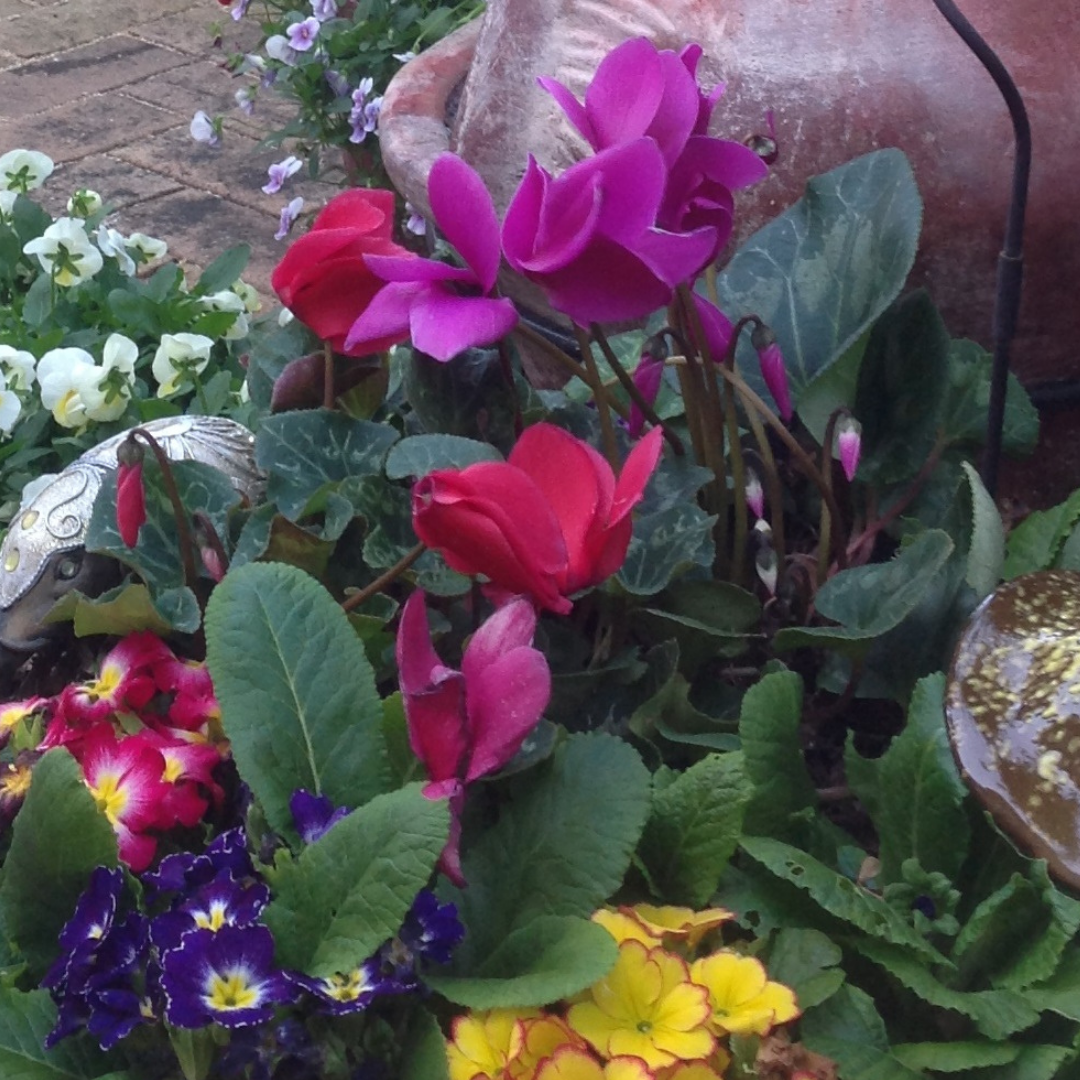
Cut Flowers that lasts for months inside or out!
I love gift giving at this time of year. I don’t do cut flowers, of course as I want my gifts to last a little longer, but I also know not everyone is a green thumb, so I also don’t want to cause any stress with my gift.
Which is why I always love giving Cyclamens.
Why Cyclamens?
Cyclamen persicum, native to the rocky slopes of the eastern Mediterranean, think Turkey, Syria, and Jordan is usually the Cycamen you will find at Trevallan. Despite their exotic origin, they’re remarkably well suited to life here in Ipswich during winter on patios or cool, bright indoor spaces.
They flower for months, from April right through to October, in a rich tapestry of colours, from snowy whites to rich reds, mauves, pinks, and bi-tones. This year a blue one was released for the first time. The foliage is also just as striking as the flowers — heart, kidney, or rounded leaves, patterned or marbled with silver.
A gift and a decoration in one.
Treat Them Cold, Keep Them Beautiful
Even though Cyclamens can grow well indoors, they love the cold. Cool air slows their respiration and preserves their blooms. I always say: cold mornings are their skincare routine!
At home, I water mine once a week, a good slow drench under a tap using icy cold water. Then, I pop them outside (in a shady spot) overnight. That cool, fresh air seems to give them a new lease on life. Indoors, they sit prettily in a bright room until it’s time for their next drink.
The trick is to let them dry out slightly between waterings. Cyclamens grow from a tuber, and those tubers are prone to rot if overwatered or if water collects in the crown. So always water the soil around the base, never directly into the middle of the plant. That centre is their weak spot.
Potting, Planters, and Fuss-Free Beauty
I prefer to keep mine in a decorative planter, not potted into a decorative pot with drainage. I simply place the Cyclamen, in its original black plastic pot, inside the planter. That way, I can take it out to water properly, let it drain, and then pop it back in. Just don’t let water sit in the base, soggy roots are sad roots.
Feeding Flowers, Not Foliage
Cyclamens are moderate feeders, and like many flowering plants, too much nitrogen means lots of leafy growth and very few flowers. To keep mine flowering and healthy, I feed fortnightly with Silica and Potash Liquid. This helps strengthen cell walls, increase flower production, and prolong bloom life. The result? Bloom after bloom, week after week.
Deadheading and Dormancy
Cyclamens don’t like being trimmed with scissors. To remove a tired flower or yellowing leaf, gently twist the stem at the base and pull it cleanly away from the tuber. This reduces the risk of rot or infection and helps the plant focus its energy on new growth.
Cyclamens grow from a tuber and tend to die down during our hot, humid summer. In our hot, humid climate, that’s perfectly normal. You can let the plant rest by placing the pot in a cool, dry, shady spot, reduce watering to almost nothing, and wait. If you’re lucky, it may re-sprout next autumn. If not? Well, you still got months of blooms for the price of a bunch of cut flowers and then some.

Cyclamen - best flower for indoors
A Cyclamen will warm your soul, even on the coldest morning. Whether you’re decorating your home, cheering up your work desk, or spreading a little love, don’t forget, a living gift like this blooms longer, lingers longer, and keeps on giving.
Planting by the Moon
Moon Planting Calendars can help unlock the secrets of the lunar cycles with easy-to-follow directions on the right time to plant, when to fertilise, when to cultivate, when to harvest and when is best to time preserve fruit.
What type of gardener are you?
I’m the one that has 15 minutes to spare, so I’ll try to get as much done as possible. I don’t care what day, month or year it is. Things get trimmed, fertilised, sprayed and planted when I say so.
Perhaps you are more of a follower of the rules, like only plant your sweet peas on St Patrick’s Day?’
Or perhaps you a seasonal gardener, only plant in the spring, trim in the summer and rest in the cooler months?
No matter what type of gardener you are, does it ever feel like you are just unlucky in the garden and then once in a blue moon you hit jackpot and everything goes according to plan? Or are you always lucky and once in awhile things go astray and you just can’t explain it?
Have you ever tried to germinate seeds and sometimes you get 90% success rate, and other times not one measly seed grows- yet you did nothing different?
It’s not just you. It happens to everyone.
The good thing is, The Jackson 5 and myself may be able to explain it.......
Don’t blame it on the sunshine,
Don’t blame it on the gardener,
Don’t blame it on the good soil,
Blame it on the Moon!

Using Thomas Zimmer's Moon Planting Calandar so I can find out best times to plant for optimal growth
For thousands of years, people have been practicing Moon Planting.
Moon planting is based on the synodic period of the Moon, from one New Moon to the next, which is across an average period of 29.5 days.
Over this time, farmers observed that all aspects of farming seemed to be affected by the interaction of the gravitational forces between the Sun, the Moon and the Earth.
Scientists have also found variations in sap flow, biological functions in plants and the subtle changes in the Earth’s electro-magnetic fields, which correspond to the Moon’s gravitational pull. So basically, just as the moon influences the tides, it also affects the motion of water in plants and soil. The ebb and flow of this water ultimately also has an impact on seed germination, flower development and fruit production.
Ok, so how do we unlock the secrets to moon planting? With a Moon Planting Calendar of course.
Moon Planting Calendars unlock the secrets of the lunar cycles, with easy-to-follow directions on the right time to plant, when to fertilise, when to cultivate, when to harvest and when is the best time to preserve fruit.
My grandfather always swore by Thomas Zimmer’s ‘Moon Planting’ calendar. It is produced in Australia for Australian conditions. He followed it for gardening, fishing and even getting operations ....
Thomas Zimmer’s ‘Moon Planting’ calendar is a detailed chart that gives the correct lunar and astrological planting times for fruiting and leafy vegetables and covers the best times to weed, transplant seedlings, prune, harvest and irrigate. There are even instructions for those new to gardening by the moon. The calendar also contains astrological information such as moon phases, equinox, solstice and eclipse dates and times, including annual planting by the moon guides, as well as an astrological commentary on the year to come.
Who knows what the next year will bring, but I’m sure if you follow Thomas Zimmer’s ‘Moon Calendar’, your gardens will be bountiful.
Get your Calendar here

The Winter Lawn
Transform your patchy lawn into a lush green paradise with these expert lawn care tips. Learn how to aerate, use soil wetting agents, fertilize, and control weeds organically. Say goodbye to unwanted invaders and welcome a healthy, vibrant lawn just in time for Christmas. Get ready for backyard cricket and envy-inducing lawns with our comprehensive lawn care guide.
Who has recently taken a good look at their lawn?
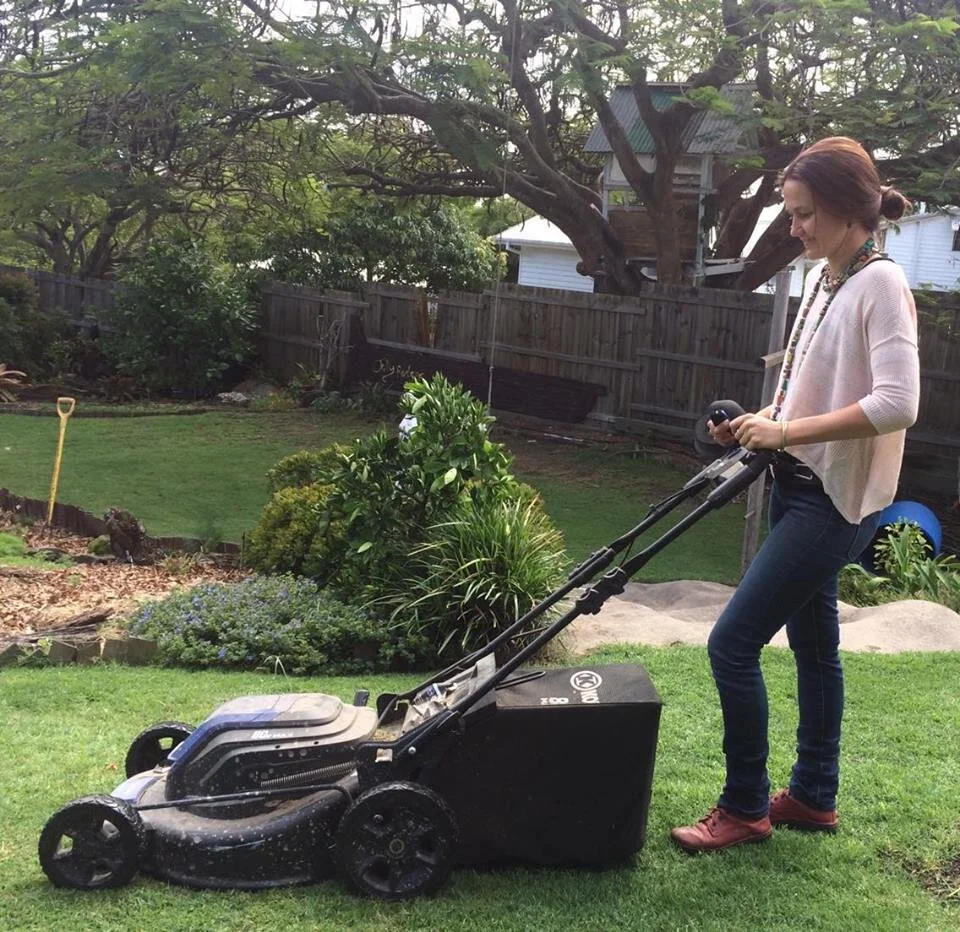
Does it look lush and green? Take a closer look, is that lush greenness coming from the lawn or all the weeds that have recently taken hold due to the rain.
At the moment my lawn isn't looking as good as it should - it is looking a bit patchy and the weeds like bindi, clover and Mullumbimby couch are coming through.
Sound like your lawn? Why not set yourself a simple lawn challenge so that by Christmas your lawn will be looking glorious and everyone will be coming to your house to play backyard cricket.
Sometimes with constant use most lawns become very hard and compacted and slightly hydrophobic (water-repellent).
So the first thing you need to do is aerate your lawn. Aerating your lawn means that the soil is opened up to allow air, water and nutrients to penetrate the grass roots. Aeration helps the roots grow deeply and produce a stronger, more vigorous lawn. Small lawns can be aerated with a sturdy garden fork. Simply insert the fork into the lawn and wriggle it back and forth to fracture the soil profile. If this doesn’t work and larger lawns may need a lawn aerator and/or lawn corer.
Once I have aerated my lawn I like to use a soil wetting agent. I prefer to use Plant of Health’s granular Soil Soaker, my sister loves putting the liquid Soak Soaker into Birchy and spraying it all over her lawn. To really up my lawn game I will put some liquid microbes into Birchy and do it all at the same time.
Hydrophobic lawns do not soak up water leading to overly dry or overly wet spots and can also stop the soil from being able to uptake nutrients (fertilisers). Soil wetting agents can help fix these problems.
A week or so after you've soil wetted you can fertilise.
I know it is winter and people say there is no need to fertilise in winter but I always like to give mine a little feed because the lawn still grows, just a bit slower. I also like to give it a liquid fertilise with Triple Boost about once a month.
I use a complete organic fertiliser by Plant of Health called Organic Link. It is pelletised and does not work in those special lawn fertiliser contraptions. I put mine in a bucket and break up the pellets a little bit and then use my hands and just throw it out over the lawns. The same company does offer an organic based slow release lawn fertiliser called Lawn and Turf Food.
I love the Plant of Health range as it makes my lawn grow thick and lush, not long and sparse, so less mowing and less weed problems. Most weeds occur in lawns that are sparse and unhealthy. The Plant of Health Range also makes my lawn roots grow strong and deep, so my lawn is more resistant to lawn grub and becomes more drought tolerant.
Dave Horton from Horton Turf Farm uses the Plant of Heath fertiliser range and has not used grub kill on his turf farm for over 10 years....if a turf farm doesn't need to spray for lawn grubs why do you?
So, hopefully by now my soil wetter and lawn fertiliser have started to work and most of my weedy areas are slowly being consumed by healthy lawn!
If this isn't the case I'll give my lawn a spray with Jerry Colby-Williams Iron Sulphate trick (see video) before I will resort to chemical weedkillers. I am not a huge fan of using chemicals on my lawns. I try to hand weed and keep the turf healthy before I resort to weed killers.
Did you know there is even the best time to mow and weed according to the moon calendar as growth will be slower?
Sometimes, if your lawn is so infected with weeds, you may need to use a spray. I try to minimise my use of these by spraying well before the weed has flowered. Usually three or four days after rain is when our lawn weeds are growing but not flowering. I have found this is a great time to spray.
When I do spray I like to use Searles’ Ultraweed. If you have Mullumbimby couch you will need Searles’ Lawn Weeder. These products are fine to use on all couch lawns.
The trick with killing weeds in the lawn is to be consistent. Think of it this way - once you see the weeds it usually means that they have already re-seeded. You may need to spray twice or even three times a fortnight apart, until the weeds have disappeared.
During this time you'll be happily mowing away, with a catcher on, of course, so you don't spread any stray lawn weed seeds. Don’t forget to set your mower a little higher too so you can shade out the lawn weeds.
If you are unlucky enough to lawn pests like lawn grub or army worm, you can try a Neem Oil (organic) drench every two weeks or spray with Dipel (organic). Again I don’t like using heavy chemicals on my lawns but if you needed to you can use Searles’ Dead Grub. Just know that this can harm the good bugs as well as the bad bugs in your lawn. So after you have used a product like Dead Grub always follow it up with a liquid feed of Microbes.
By Christmas you should have the best lawn on the street, unless someone else on your street also took up my lawn challenge!

Winter Vegetables
Autumn, Warm Days, cool nights. Perfect for vegetable planting.
Autumn. Warm Days, cool nights. Perfect for vegetable planting.
By now your vegetable patch has been freshly composted and manured. It’s just waiting for you to plant out. If you are having trouble with how to start off your vegetable patch, check out my Vegetable Patch Checklist
The basic cool season vegetables that I find grow well in most areas are – broccoli, beetroot (my favourite), cabbage, cauliflower, leek, onions, shallots, silverbeet, spinach, snow peas, strawberries (my other favourite), peas, kale and rhubarb.
If you don’t get a frost or you can cover your vegetables - beans, lettuce, capsicum and tomatoes can also be grown.
If you get really cold you can give brussels sprouts a go.
This is the basic vegetable range; there are so many different variations on these classic cooler weather vegetables.

In seedlings alone you can get about four different versions of broccoli.
If you start using old fashioned open pollinated seeds, the list can be endless.
If your vegetable patch consists of a variety of different sized pots don’t worry, there is a large range of dwarf vegetables available in seedlings and seeds.
Leek, lettuce, capsicums, shallots, silverbeet, spinach, snow peas, strawberries, peas and rhubarb all grow well in pots without needing dwarf varieties.
The secret to growing any vegetables in pots follows the same principles as growing in the ground.
Start with the best quality soil or potting mix, mulch with an organic material (I like organic sugar cane mulch that is free from weeds), fertilise with a complete organic slow release fertiliser and liquid fertilise fortnightly with a complete organic liquid fertiliser.
I like using the Plant of Health range of fertilisers – Organic Link and Triple Boost and Searles' range of garden soil for gardens and potting mix - Platinum Potting Mix for pots
I find the cooler months are the best time for growing herbs. Nearly all the herbs are available now. Herbs grow well in the garden or in pots and most herbs can be grouped together in pots to make mini herb gardens.
The best thing about growing cool season vegetables is that it’s usually too cold for the pests to be out and about. If you do get a few pests a pyrethrum based spray or one of the new organic sprays like eco oil or eco fend work well. Mildew and mould is a common problem during wet winters - copper spray (some are considered organic) can be the best solution.
I have heard that having pretend white butterflies in your vegetable patch not only looks pretty but helps deter moths. Jerry Coleby-Williams has also mentioned that Land Cress is a confirmed biocontrol. We stock Land cress in seeds and in plants.
Remember though the healthier the soil, the healthier the plants and the less likely you are to get problems. Now get outside and get dirty!

Dirty Clothes can lead to Healthy Garden
So it's no surprise my laundry and home cleaning is garden orientated. Laundry, Cleaning... Garden? How does this even happen.
Strangely enough I’ve found that gardening infiltrates itself into nearly all aspects of my life.
My job is gardening, one of my many interests is gardening, some of my food comes from the garden, many of my outfits and shoes are gardening friendly, even my morning relax time with a coffee gets extended sometimes with weed pulling and tomato gathering.
So it's no surprise my laundry and home cleaning is garden orientated.
Laundry, Cleaning... Garden? How does this even happen.
It all started with the water restrictions years ago, 2007. I had a baby in cloth nappies, a yard that needed watering and severe skin reactions to the main product on market that was used to soak cloth nappies.
So the hunt began for a product that could:
Keep my nappies white and clothes clean
Be used in a front loader with cold water
Not lead to skin reactions
Cost effective
Wouldn’t damage my washing machine and
Most importantly the water from the washing machine could be used in my garden, grey water
Finally after much confusion, have you seen the laundry powder aisle in the grocery store? Research, or as I fondly refer to it, trial and error.
I found a solution and a lot of information.
What I discovered was that not all laundry powders dissolve totally in the water. Go on go and get your laundry powder, mix it in cold water, leave it for twenty mins and see what the water looks like. I bet there is undissolved particles in it, well there was for me with most of the detergents I tried. These undissolved particles are called fillers. These fillers can not only affect your washing, they can corrode your machine and even affect our health. These fillers can also affect your septic tanks and cause problems with your grey water.

Chelsea using Euca in her laundry
Many laundry detergents also contain salt (sodium sulphate) that can cause major environmental problems in our gardens and waterways.
For me I found that most laundry detergents contained chlorine and synthetic perfumes that are used to sanitise and make our clothes smell pretty. The ones that didn’t contain them didn’t get my clothes clean and didn’t smell as nice. Unfortunately it was the chlorine and synthetic perfumes that were causing my skin problems. For some the chlorine and synthetic perfumes can even trigger bronchial sensitivities.
Finally I found a product that exceeded all my expectations. I fell in love with it so much Trevallan Lifestyle Centre now stocks it and their range of cleaning products.
The product I discovered is the Euca Laundry Detergent Range. The range has a laundry powder, laundry liquid, a prewash stain remover and a fabric conditioner.
The range is based entirely on Australian Eucalyptus oil. The Eucalyptus oil helps deodorise and sanitise without the need for harsh chemicals, so no more skin or bronchial sensitivities.
Euca has no fillers and on average 35 times less sodium sulphate (salt) than other brands of laundry powder. So the waterways, gardens and septic systems are safe.
It can be used in front and top loaders with warm or cold water, it’s cost effective and most importantly my clothes are clean, look clean and smell clean.
It's not just us that think Euca is special, Euca Laundry Powder won People's Choice Award Best Laundry Detergents on Product Review.com
As Euca laundry powder is great for removing soap scum and general grime, I use Euca to clean my shower and mop the floors so all my dirty water can be reused out in my garden.
Never again can I complain about the washing as it’s all going to a good cause – My Garden!
Trevallan stocks a great range of Euca Products, all are septic safe.
Euca Laundry Range
Euca Dishwashing powder for Dishwashers
Euca Dishwashing Liquid —- Click here for my quick Review
Euca Smell Expell – 4 in One Air Freshener, Disinfectant, Deodoriser & Cleaner —- Click here for my quick Review
Euca Multi Concentrate – Super Strong Multipurpose Cleaner
Euca Toilet Cleaner

Who am I?
Some of you may not know the face behind Trevallan's web presence.
So here I am!
I believe I have developed a great personal rapport with all of Trevallan's customers, both in person and online. In fact, sometimes I forget I am actually just a business on a computer screen and as a result, some of you may not know the face behind Trevallan's web presence….So here I am!

I come from a family of gardeners. My knowledge is part book based, but mostly comes from being surrounded by it all my life. It's amazing what you can learn just by listening and being made to do something as a chore !
My grandparents were gardeners. Their vegetable patch sustained the family, so, apart from meat, there was no store-bought food. My grandfather also loved fiddling with plants and taught himself to cross breed, graft and do cuttings. However, his true love lay with camellias and azaleas, he was also a lawn fanatic. One of my fondest memories is getting in trouble as I didn’t mow straight enough on his ‘bowling green’ lawns.
Before going into retail, my parents ran a successful landscaping business 'Trevallan Landscapes' that would have been in operation for about 40 odd years today had my father not died in 2000. Trevallan Landscapes was high in demand and I remember my father travelling all over Queensland doing landscaping work - private and commercial. Working for him throughout my childhood was also a great way for me to earn pocket money.
In 1999, I finished my business degree and although I wanted to travel the world, I decided to postpone travel to help my mother at the centre after my father's unexpected death.
Since then, my pieces of paper have increased - I have a Certificate III in Horticulture, am chemcert qualified, have been a national finalist for Young Horticulturalist of year and have also been a HAL emerging leader, as well as being a member of the Queensland Horticultural Media Association.
However, as quickly as my pieces of paper increase, so does my workload. I have written for local papers and gardening magazines. I write all the information found on this website, manage Trevallan's workshops and social media - Facebook and Instagram, plus physically work at Trevallan. I also love giving gardening related talks to social and gardening clubs.
While I've been paper collecting so has Trevallan - over the years Trevallan has won a few awards, one I am most proud of is Best Small Garden Centre in Qld in 2010. We have also just joined Tourism Queensland, as we were recognised as a place of attraction to visitors outside of Ipswich.
As many of us know, knowledge isn't gained from just reading a few books. Knowledge consists of a lifetime of asking questions and determining what you believe is right answer.

I attend a plethora of industry events, run my own events here at Trevallan and read as much as I can, to stay informed in regards to all things plants. I also try to take the time to listen to my customers, my growers and my suppliers, as I find they've tried and tested many things I wouldn't get a chance to do in my lifetime.
My aim at Trevallan has always been to grow people’s minds, allowing them to experience gardening in their own style, but also educating them and giving them the tools for success. I want gardening to be for everyone, so I try to make it easy and simple. For me, Trevallan is a place that grows people’s minds, not just gardens.
But horticulture isn't my only love - aromatherapy is another passion. In between all my paper accumulating for horticulture, I also completed - Certificate Four Massage Therapy, attended many Aromatherapy Masterclasses and am also a qualified Aromatic Kinesiologist and run my own Energetic Healing Practice, Potionatrix .
In October 2012, I won a world wide competition to create my own essential oil blend. This blend 'wisdom' was produced, until recently (2019) by internationally renowned aromatherapy company, Perfect Potion and sold at Trevallan, as well as world-wide, via Perfect potion stores and online trading.
However, life isn't just about fertilising and sweet smells as on top of all of the above, I'm nurturing a young family with three children.
So that's me.
The woman behind the computer screen.

Brighten your Garden with Oranges, Yellows and Pinks.
Ixoras have dark green leathery leaves and produce large clusters of tiny flowers in the summer and autumn. They can be a little hard to grow but are worth the effort
Ixoras.
This is an I love it or I hate it plant.
My mum loves them. I must admit I verge on the opposing side. So, why on earth would I write about them and stock them at Trevallan if they are on my not so favourite list?
Well as with many things these plants have grown on me over the years and as with many plants there seems to be a time and a place for them.
Ixoras are native to the tropical and subtropical areas throughout the world, with many of them in Tropical Asia. These plants typically can't handle frosts so if you are in a frost prone area these may not be for you. Some Ixoras are more prone to being cold affected while others can handle a little bit of cold.

Ixoras have dark green leathery leaves and produce large clusters of tiny flowers in the summer and autumn. The more common Ixoras usually have orange, gold, pink or red flowers. Ixoras prefer acidic soil and usually like a little shelter from our blazing summer sun. In saying that I have seen many gorgeous Ixoras growing in full sun in a commercial setting (shopping centres). They don't mind being in pots or the ground.
I find the four most popular Ixoras are 'Prince of Orange', 'Pink Malay', dwarf orange and dwarf gold. Ixora williamsii is also popular as it has red flowers but it really dislikes the cold so is not commonly grown in Ipswich.
Prince of Orange has fiery orange flowers and can grow around two meters tall. The dwarf orange and yellow grow to around 1/2 metre. These look amazing in pots but I have seen them in gardens trimmed into a hedge and they look stunning when in flower. You can hardly see their green leaves.
My favourite Ixora is Pink Malay. Why do I love it? Not just because it gets covered in pink flowers but because it is so hardy. This Ixora is absolutely amazing; growing to around a metre it can handle full sun and shade. It can grow in pots or the garden and I have seen it successfully growing in a shopping centre car park. Yes that's right, a shopping centre car park. A place that has no good soil, no mulch, no care, only rain fall and it looks glorious. This is why I love this plant.
Ixoras like all my plants get fertilised with Organic Link and Triple Boost and neem oil. I use Searles Platinum Potting Mix for pots and Searles' garden soil for gardens.
There is a grub that likes to destroy your Ixora flower heads. There are a few ways to combat this. As soon as the buds start appearing I begin to mix neem oil in with my fortnightly Triple Boost. If it gets really bad I will spray with Dipel. I will sometimes use Searles' Bug Beater. Eco-oil would also work.
Sooty mould can also form on the leaves. This can be caused by scale and ants. Give your plant a really good soil drench and use a soil wetter if necessary. Fertilise with Organic Link and spray with neem oil or Eco-oil. In a fortnight or so you should be able to hose off the soot and hopefully the ants would have dissipated.
This autumn and summer brighten up your dull spots with shades of orange, yellow and pink.

Gardening Advice, who you ask is Important!
Want correct and helpful advice on gardening - visit your local garden centre. The best place to get correct information is a place that specialises in that particular subject.
I was horrified the other day to hear this story…
A customer was in the greenlife section of a big box store when she overheard a staff member recommending a particular potting mix. Curious because all gardeners want to know what they could be doing better, she moved closer to hear more.
What she discovered was shocking: the staff member was recommending a product she recognised immediately as composted fertiliser, not a potting mix at all.
The bag even clearly stated, in bold print: "THIS IS NOT A POTTING MIX."
These first-time gardeners walked away with three bags of the wrong product and a handful of plants. Unknowingly setting themselves up for heartbreak. Their plants were unlikely to survive, and worse, they’d probably blame themselves when it all went wrong.
This is the real danger of bad advice.

When a plant fails, people get discouraged. They feel like they’ve wasted their time, energy, and money. Many give up on gardening altogether, thinking they were the problem, when in reality, it was simply the wrong product for the job.
The right advice makes all the difference.
And the best place to get it?
A business that actually specialises in gardening.
Garden centres are home to qualified, experienced horticulturists. People who don’t just sell plants, but understand them. We’re locals too, which means we’ve battled the same clay soils, the same hot summers, the same tricky planting spots. We don’t just sympathise, we’ve been there.
Our goal is to help you through your gardening challenges, take away the confusion, and bring back the joy of growing. For most of us, this isn’t just a job. It’s a lifelong passion.
Here at Trevallan Lifestyle Centre, between Carolyn and myself, we bring over 50 years of hands-on gardening and horticultural experience to the table.
We work hard to stay current, not just with what looks good, but with what actually works. That means staying on top of:
Changes in product formulations
Plant performance in our climate
Emerging industry trends
Environmental challenges
We attend supplier sessions, horticultural expos and conferences, and regularly read industry journals and research papers. I’m also a proud member of the Horticultural Media Association, which helps keep us connected and accountable as professionals in this trade.
At Trevallan, we’ve learned that we don’t need a thousand gardening items on the shelves. We only stock what we use ourselves. The tools, products, and plants we know work. It’s all about keeping things simple, effective, and grounded in experience.
We also run a number of horticultural workshops and masterclasses throughout the year, because we believe gardens are investments and to make sure that investment thrives, you need access to honest, down-to-earth, professional advice.
So next time you’re ready to improve your plant-life balance and give your space a little TLC, visit the real gardening experts at Trevallan Lifestyle Centre, your local garden centre.

Roses are Red
The rose has long been a source of fascination and meaningfulness for cultures around the world. I have never claimed to know the secrets of growing roses in a climate where for about six months of the year we have what feels like 100% humidity but here are a few of my tips.
The rose has long been a source of fascination and meaningfulness for cultures around the world.
Cleopatra was believed to have covered the floor of her palace room with roses before Mark Antony visited for in those times anything which was said "under the rose" was deemed to be a secret.
For many of us Queenslanders though how to keep roses looking amazing feels like a state secret.
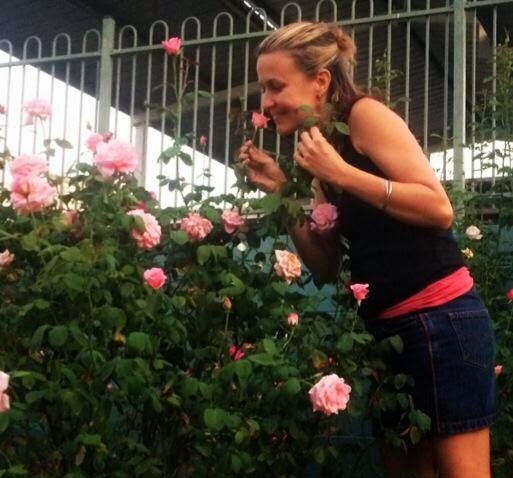
I often stare in awe at the pictures in magazines of roses elsewhere in Australia. How dare they have the climatic conditions to grow these plants successfully?
I have never claimed to know the secrets of growing roses in a climate where for about six months of the year we have what feels like 100% humidity.
Many rose growers out there will probably have a small heart attack at my way of growing roses but that’s ok, my way is the right way for me and maybe if you’ve never had any success in the past it may become the right way for you.
The first thing I needed to realise was that my roses may never look like they do elsewhere. The humidity we suffer is the cause of most rose problems. No amount of sprays, fertilisers or correct planting techniques will change the problems humidity brings.
To combat most of the rose problems such as black spot, fungus, bud worm that occur during the warmer months I trim and fertilise.
I don’t spray.
During the really humid months most of my roses look like bare thorny sticks. I find removing all the affected leaves, trimming back the plant and then fertilising with a slow release complete organic fertiliser like Organic Link works fantastically.
I always trim my roses like I am cutting the flowers off for a long stemmed vase. I personally can’t stand long straggly bushes so I make sure all my roses get a good prune continuously throughout the year. I also find a good dose of granular Sulphate Potash at least twice a year, Winter and Summer, helps with fungal problems and boosts blooms.
After pruning you can use a product like Steriprune which is designed to protect wounds against infections and die back. Come the cooler months and my roses are thick and lush and full of flowers. The few leaves that do get black spot or mould just get pulled off and when the flowers die, I still trim the stem right back like I am cutting it for a long stemmed vase.
To keep roses healthy and insect free I try to regularly liquid fertilise them with Rose Triple Boost and neem oil, fortnightly is ideal (but not always possible). When black spot is rife I alternate between the Rose Triple Boost and Silica and Potash Liquid fertiliser (certified organic).
Another organic alternative for black spot and rust is eco-fungicide. Eco-fungicide is a registered organic fungicide for the control of powdery mildew, black spot and rust in many plants including tomatoes, zucchini, roses, grapevines and geraniums. It attacks existing fungal infections and kills external fungal growth within minutes. Eco-fungicide also leaves an invisible protective coating that prevents new spores from germinating.

This Rose quote is so true even when growing roses. You must put up with all the disease, insects etc but it is well worth it when they bloom
To control insects some people like to use a pyrethrum based spray or neem oil.
All my roses are in full sun in pots and in the ground. I use Searles Platinum Potting Mix for the pots and Searles' Garden Mix for the ground. I mulch with Sugarcane.
Roses do not have the prettiest bush and they can sometimes seem a bit fussy but the reward of the rose is well worth it all.

Talking Dirty
What gardening terms do you use that people think you've made up, don't understand or have a little giggle at your expense?
Last week on Trevallan Lifestyle Centre's Facebook page, I posed the question "What gardening terms do you use that people think you've made up, don't understand or have a little giggle at your expense?"
There were some great examples and I thought I'd enlighten you all with some gardening terms that I find I use and people think I have started to talk in my own special language.
Deciduous
Deciduous, pronounced dih-sij-oo-uhs, is the term I am most often asked to explain. Deciduous means "falling off at maturity" or "tending to fall off", and it is typically used when talking about plants that lose their leaves seasonally. Many plants, particularly in cooler regions, drop their leaves in autumn, have a dormant period through the winter and then come alive again in the spring. In some subtropical and arid regions, plants lose their leaves during the dry season and remain dormant until the wet season begins.
Active Constituent

Active constituents are the substance/s in an agvet (agricultural and veterinary) chemical product primarily responsible for a product's biological or other effects.
For example, Glyphosate is the active constituent in most weed killers. In horticulture, companies register products with different trade names, however, you will often find the active constituent is the same. Trade names such as Yates Zero, Searles Dead Weed, Brunnings Weedkill all contain the same active constituent - glyphosate. When dealing with chemicals in gardening, know your active constituents and you'll never need to rely on trade names again.
Bisexuality
A Bisexual flower or perfect flower is when the flower has both the essential whorls i.e., androecium and gynoecium (male and female reproductive units). Some examples are lilies, roses and sweet peas.
When it comes to fruit and vegetables, we generally use the term bisexual plant, meaning the plant has both male and female flowers and you do not need two separate plants. For example, a pumpkin will usually produce both male and female flowers, following this, insects will hopefully pollinate the females, with the result being big, healthy pumpkins.
Self-watering pots
Now unless you have gnomes in your garden doing all your dirty work, there is no such thing as a self-watering pot. When you buy a self-watering pot, you still have to water.
In a self-watering pot you have a very large saucer, or water well, and the soil is held above the water well, with a false bottom. The water well and the soil are usually connected by a wick of some sort.
As water is used by the plant, capillary action draws the exact amount of water up from below, therefore the soil has just the right amount of water all the time, but also maintains air pockets, which the plant roots also need. This is great for plants that don't like being over watered, as you just fill the bottom chamber.
While self-watering pots are great, I find they only really work once the plant has an established root ball.
This weekend, why not practice your ‘dirty talk’ with someone and show off your new gardening knowledge.

The Dirty Dozen
The Dirty Dozen, a list of the fruits and vegetables likely to contain the highest amounts of pesticide residue. You can plant many of these at home.
I'm getting a little gardening bored. It's still too early to be planting my winter vegetables and my vegetable patch is cleaned, composted, mulched and waiting. My few gardens are fertilised, trimmed and waiting for cooler weather to start planting out more. My lawns are fertilised, soil wetted and weed killed - just waiting on rain to green them up.
So what does one do when garden bored - they start dreaming big. I think I have about 40 seed packets of the things I'd like to grow this winter.
So I may have gotten a little over excited. So how do I narrow it down? How do I decide what to plant in my vegetable patch each season or what fruit trees to grow?
I came across an interesting article on the extremely high amounts of pesticide residue on frozen berries. The interesting thing was most of the residue found on the frozen berries were pesticides that are banned in Australia. This happens because most frozen berry companies get their berries from a variety of overseas sources.
The old mind clogs started turning over and after a bit more research I discovered the 'Dirty Dozen' and the 'Clean Fifteen'. These are two lists released by the Environmental Working Group (EWG) each year.
EWG, a nonprofit organization that cites its mission as being to help “people live healthier lives in a healthier environment,” started compiling a list of fruits and vegetables that contain the highest amounts of pesticides in the mid-1990s.
The Dirty Dozen, a list of the fruits and vegetables likely to contain the highest amounts of pesticide residue. The Clean 15 is a list of fruits and vegetables least likely to contain pesticides. The EWG take into account how people typically wash and prepare produce - for example, apples were washed and bananas peeled before testing.
While the EWG’s list is based on the U.S. Department of Agriculture’s Pesticide Data Program, I still find it a great help in determining what to plant and over the years I have used the Dirty Dozen as a guide to what to plant each year. Over the years the list hasn't change much. So I do try to keep track of previous years as it's not like the big farms suddenly stop using pesticides its more like something just contains more pesticides than previous years. One vegetable that continuously goes on and off the list is potatoes. So I always try to grow my own potatoes. Most of vegetables and fruits mentioned can be grown in Ipswich in our vegetable gardens and orchards.
2021 saw the EWG release a special report on citrus fruits, which aren't represented in the Dirty Dozen, but have caught the attention of the organization for trending upward in trace amounts of pesticide recorded.
EWG'S DIRTY DOZEN FOR 2021
(number one being the most highest in pesticide residue)
Strawberries
Spinach
Kale / Collard and Mustard Greens
Nectarines
Apples
Grapes
Cherries
Peaches
Pears
Bell and Hot Peppers
Celery
Tomatoes
EWG'S CLEAN FIFTEEN FOR 2021
Avocados
Sweet corn
Pineapple
Onions
Papaya
Sweet peas (frozen)
Eggplant
Asparagus
Broccoli
Cabbage
Kiwi
Cauliflower
Mushrooms
Honeydew melon
Cantaloupes
Don't get gardening bored, plan big and include the 'Dirty Dozen' in your backyard.

Bloomin' Fabulous
Potassium Sulphate or Sulphate of Potash is commonly called Potash. It is an essential element necessary to the lives of all plants.
A common question I am asked is "why didn't my fruit trees fruit profusely or if they did why was the fruit misshapen?" Or "why didn't my camellias and azaleas flower as well this year?" Or even "why are all my coloured foliaged plants like crotons and dracaenas losing their colour?"
The answer is usually quite simple - Your garden just needs some TLC and maybe a little Potash!
Potassium Sulphate or Sulphate of Potash is commonly called Potash. It is an essential element necessary to the lives of all plants.
It aids in disease resistance and frost protection by strengthening the plants cell walls. It helps in seed and root development. It encourages strong new growth and helps with the formation of flower buds and fruit.
Potash can improve the quality and the colour of flowers and enhances the formation of proteins and sugars in fruit. Potash can even help plants with slender stems and large flower heads such as Iceland poppies and gerberas hold their heads erect.
Potash defective cues can be seen in a number of ways in your plant. Your plants might be showing signs of overall weakness especially in its stem. It could have yellowing leaf margins and grow more slowly. It could also be disease prone and its fruit and flowers will be small and poorly coloured and sometimes tasteless.
Don't confuse a potash deficiency though with an unhealthy plant. Always make sure you have given your plant some complete slow release organic fertiliser like Organic Link and a Bio Trace first.
Complete fertilisers, whether they are chemical or organic, usually contain potash. Organic Link contains potash. An N:P:K ratio can usually be found on the fertiliser label. A very quick explanation of the N:P:K ratio is - N stands for Nitrogen (greening, growing), P Phosphorus (roots) and K Potassium (fruiting, flowering).
If you use mainly a manure based fertiliser like blood and bone or chicken manure you will need to add potash as these products don’t naturally contain it.
Potash also is available by itself in a liquid form and a granular form.
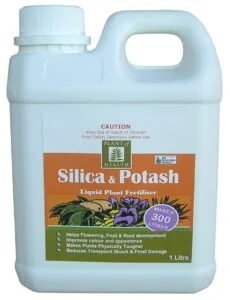
The liquid form is added to water and used as a foliar spray. Used like this it is quick acting but not long lasting and needs to be repeated on a fortnightly basis. This is best for promoting flowers especially on annuals. I use Plant of Health's Potash and Silica.
The granular form is added to the soil and watered in. The granular is slower acting but lasts a lot longer. This is best for correcting deficiencies, promoting fruit and stimulating coloured foliage. We use Searles' Potash.
This weekend I want you all to get some granular potash and go a little silly in your gardens.

Is Green Manure just really Green Poo?
Green manure crops are crops grown not to be harvested but instead to be incorporated into the soil before they reach maturity to contribute to the health of the soil.
Wonderful blistering hot days, humidity that feels like we should be living in tropics, rain and winds that blow your roof off then cool days that make us wonder if that 45 degree day was just in our imagination.
This is what it can feel like to live in Ipswich in the summer.
How would you fare in this weather? Hot, bothered, quick tempered?
I know I've been struggling, the smallest things bother me.
If I had a vegetable patch right now, I know I'd be pulling most of it up.
If the heat didn't kill everything off, the humidity or insects probably would have.
In years past when I have had a vegetable patch in summer I have suffered with burnt leaves, white mould all over my cucumbers, tomato blight and then to top it all off grubs in my fruit (from fruit fly stings).
Which is why now, at this time of year I always sow a summer green manure crop.
Green manure crops are crops grown not to be harvested but instead to be incorporated into the soil before they reach maturity to contribute to the health of the soil.
It is an old technique of soil management that seems to have been forgotten by many gardeners and farmers. I think it's because we are no longer aware of the proven benefits and cost effectiveness of green manure crops.
Trevallan Lifestyle Centre stocks Eden Seeds, a seed company that only stocks old traditional open pollinated varieties of seed, preferably old Australian varieties and organically or bio-dynamically grown where possible. Eden Seeds do a wonderful green manure seed pack that contains a mix of seeds suited to most climates.
Green manure crops contribute directly to the fertility of your vegetable patch through the supply of important plant nutrients. Legumes, for instance, supply nitrogen because their roots form an association with soil-borne bacteria that can transform nitrogen from the atmosphere into nitrogen compounds that can be used by plants. Isn't nature wonderful? It's also just saved you money as now you don't need to add as much fertiliser to your vegetable patch.
Green manure crops can also contribute indirectly to nutrient supply. Just the process of decomposition of the crop aids in making further nutrients available that are already present in the soil but in a form that cannot be used by plants. After the plants have grown and you incorporate them back into the soil you are supplying vast amounts of organic matter that is usually supplied by organic mulches. Once again saving you money - no need to buy organic mulch.
Drought resistance can also be improved as a lot of the crops are very deep rooted. Their roots can penetrate the subsoil and open it up. Next season's crops can also obtain plant nutrients from the subsoil once it is opened by deep rooted green manure crops.
So this weekend get dirty and take out all your hot weather anger on your vegetable patch by pulling everything up and planting some green manure crops. Your winter vegetables will thank you.

Bugs on my Plants!
At the moment I am finding that aphids are having a feast in my garden. With the warm days many of my plants have tender, yummy, new shoots appearing, just what aphids love. There are many different species of Aphids; they are all small sap sucking insects that vary in colour from green to yellow and black.
Some days start off perfectly - the slow and steady rise from sleep to wakefulness, the smell and taste of a fresh brewed coffee and the deliciousness of a cooked breakfast. Finally as the sun starts to warm up the garden you get motivated to go outside and enjoy the day by being productive.
You take a slow stroll around the garden creating a mental checklist of what needs to be done when you stop short. What on earth has happened to my beautiful plants? They were fine yesterday (or whatever day I was last out here!) Now suddenly they are in dire need of a little TLC. The perfect morning is slowly spiraling downhill.
Even through the cold months insects can play havoc in our gardens.

Aphids on my rose buds
An easy way to keep insects and disease at bay is to keep our plants healthy. I fertilise every three months with a complete organic slow release fertiliser - Organic Link and I try to liquid fertilise every two weeks. Little and often is a great mantra. Fertilising regularly is a great way of helping our plants stay strong and able to fight off disease and insects.
Sometimes though even the best laid plans go astray and plants unfortunately will get disease and insects, it even happens to the best of us green thumbs!
At the moment I am finding that aphids are having a feast in my garden. With the warm days many of my plants have tender, yummy, new shoots appearing, just what aphids love. There are many different species of Aphids; they are all small sap sucking insects that vary in colour from green to yellow and black.
Aphids don’t just suck the life from your plants they also transmit virus diseases such as broad bean wilt. Aphids also secrete a sweet sugary honeydew which can lead to other problems like sooty mold.
Natural predators are lady birds but most of us don't have enough lady birds to stop an infestation.
I like to use neem oil to combat most insects in the garden but two other great organic products are Ecofend® and Eco Oil. Some people find alternating between them is a great idea.
Go and check all your flower buds and new growth. My camellia flowers and hibiscus flowers were inundated with aphids this morning.
Remember prevention is better than the cure so if you haven't fertilised recently now is a great time to do it.