Find Us:
77 Fernvale Rd
Brassall QLD 4305
(07) 3201 8630
Open:
Tue-Sun 9am - 4pm

Vegetable Garden Checklist
Quick guide to creating your own vegetable garden and growing your own food
✔ Choose a position that receives 5-6 hours sun per day.
✔ Remove the existing grass, plants, rubble.
✔ Add Organic Matter, water in well.
Organic Matter is compost, soil activator, animal manure, fertiliser manure pellets, blood and bone. If you have very clay soil add some liquid gypsum
✔Make sure ground is well tilled to at least 30cm, preferably 60cm.
✔ Choose vegetable seedlings that are appropriate for the season and Plant (roots side down 😉)!
Plant a diversity of flowers, herbs and vegetables so your garden attracts beneficial insects. Here is a great list of Cool Season Vegetables
✔After planting Water all in well with Triple Boost as this helps reduce transplant shock.
✔ Mulch with an organic mulch like sugarcane or lucerne. Water again.
Mulch helps to conserve soil moisture, suppress weeds, keep the soil an even temperature and stop erosion. If directly sowing seeds only use a very fine layer of mulch so as to not impede seed germination.
✔ Water regularly
✔ Fertilise with a combination of Triple Boost Fruit and Vegetable and Neem Liquid Fertiliser fortnightly .... Enjoy!

Winter Vegetables
Autumn, Warm Days, cool nights. Perfect for vegetable planting.
Autumn. Warm Days, cool nights. Perfect for vegetable planting.
By now your vegetable patch has been freshly composted and manured. It’s just waiting for you to plant out. If you are having trouble with how to start off your vegetable patch, check out my Vegetable Patch Checklist
The basic cool season vegetables that I find grow well in most areas are – broccoli, beetroot (my favourite), cabbage, cauliflower, leek, onions, shallots, silverbeet, spinach, snow peas, strawberries (my other favourite), peas, kale and rhubarb.
If you don’t get a frost or you can cover your vegetables - beans, lettuce, capsicum and tomatoes can also be grown.
If you get really cold you can give brussels sprouts a go.
This is the basic vegetable range; there are so many different variations on these classic cooler weather vegetables.

In seedlings alone you can get about four different versions of broccoli.
If you start using old fashioned open pollinated seeds, the list can be endless.
If your vegetable patch consists of a variety of different sized pots don’t worry, there is a large range of dwarf vegetables available in seedlings and seeds.
Leek, lettuce, capsicums, shallots, silverbeet, spinach, snow peas, strawberries, peas and rhubarb all grow well in pots without needing dwarf varieties.
The secret to growing any vegetables in pots follows the same principles as growing in the ground.
Start with the best quality soil or potting mix, mulch with an organic material (I like organic sugar cane mulch that is free from weeds), fertilise with a complete organic slow release fertiliser and liquid fertilise fortnightly with a complete organic liquid fertiliser.
I like using the Plant of Health range of fertilisers – Organic Link and Triple Boost and Searles' range of garden soil for gardens and potting mix - Platinum Potting Mix for pots
I find the cooler months are the best time for growing herbs. Nearly all the herbs are available now. Herbs grow well in the garden or in pots and most herbs can be grouped together in pots to make mini herb gardens.
The best thing about growing cool season vegetables is that it’s usually too cold for the pests to be out and about. If you do get a few pests a pyrethrum based spray or one of the new organic sprays like eco oil or eco fend work well. Mildew and mould is a common problem during wet winters - copper spray (some are considered organic) can be the best solution.
I have heard that having pretend white butterflies in your vegetable patch not only looks pretty but helps deter moths. Jerry Coleby-Williams has also mentioned that Land Cress is a confirmed biocontrol. We stock Land cress in seeds and in plants.
Remember though the healthier the soil, the healthier the plants and the less likely you are to get problems. Now get outside and get dirty!

Why you don't grow food from scraps!
I know the current trend is growing fruit and vegetables from scraps. I would never recommend growing anything from scraps or seeds from fruit and vegetables you buy from the shops. .
I know the current trend is growing fruit and vegetables from scraps. However, I would never recommend growing anything from scraps or seeds from fruit and vegetables you buy from the shops. .
Why? Well, firstly, most of the fruit you buy from the shops, even if it is organic, has been hybridised. As a result, the seeds you put in may be nothing like the vegetable you took it out of.
Secondly, a lot of fruit and vegetables nowadays have seeds in them that are sterile, which means the seeds will not usually grow. If they do , it will only be for a short period of time and they’ll usually wither out and die before anything happens, or will be very prone to insects and disease.

Thirdly, and in my eyes the most important reason why you shouldn’t grow from your scraps, is some vegetables, like potato tubers, can carry many bacterial, viral, and fungal diseases. These bacterial, viral, and fungal diseases are easily passed onto other plants and as a result, can contaminate the soil and make an area implantable. The infections in potatoes can not only affect your potato plants, but also have an impact on all plants in the potato family, such as tomatoes, eggplants and chillies.
I don't believe planting from scraps saves me time or money, in fact, I honestly believe it costs me time and money. This is why I try to always use vegetable seeds that are non-hybrid and open pollinated, like Eden Seeds, and I ALWAYS buy new certified organic potato seed.
Trevallan Lifestyle Centre stocks a wide range of Eden Seeds, which are non-hybrid, old traditional, open pollinated varieties of seeds, with no chemical treatment or genetic modification.

What is Companion Planting?
Why attracting some insects to your garden is beneficial for the whole garden's success.
Companion planting is all about plant diversity - putting together crops that enjoy each other's company and require the same light, soil, water conditions and insect deterrents. In our climate however, I don't think companion planting is highly successful in regards to deterring insects. Instead, it's about planting plants that are either sacrificial plants, end trap plants or plants that attract good bugs to eat all the bad ones. Companion planting is also about planting crops together to help each other along, give out nutrients to each other. One plant can release certain nutrients while the neighbour plant absorbs them and vice versa. This give-and-take process can significantly enhance your plants’ health and create a more harmonious garden as well. A great example of this is the Three Sisters.
Sacrificial Crops

Beneficial insects are any insect that performs a valued service like pollination and/or pest control.
Sacrificial crops, or trap crops, are grown around or amongst crops. Their purpose is to attract the attention of significant pests away from the primary crop. Certain pests prefer the taste of the sacrificial crop, so they leave the crop we like alone.
The sacrificial crop will also, hopefully, reduce the need to spot spray pests.
In the past, people believed sacrificial crops to be more of a breeding grounds for pests, as pest numbers can be quite significant amongst the sacrificial crop. Large numbers of pests also attract bio controls, like parasitoid wasps. Biological control is a method of controlling such pests using other living organisms, which also limits any need to spray even organic insecticides. Organic farmers find that when pest populations peak, so do the bio control insects.
End Trap Plants
Beneficial insects are any insect that performs a valued service like pollination and/or pest control.
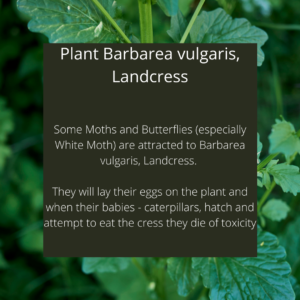
End Trap Plants are crops that you plant in your garden to attract certain moths and butterflies. The moths and butterflies lay their eggs on these plants, instead of on the ones you actually like. Once the caterpillars hatch, they take a bite out of the leaves and ultimately then die of toxicity. On Gardening Australia, Jerry Coleby-Williams spoke about an end-trap plant that will help save your cabbages from white moth. He recommended we plant Barbarea vulgaris amongst our cabbages. During the cooler months we have this plant in stock and we usually always have them in our Eden Seeds Packs.
Beneficial Insects

Beneficial insects are any insect that performs a valued service like pollination and/or pest control.
Beneficial insects are any insects that perform a valued service, such as pollination or pest control. We need to plant more plants that flower, so that we can attract these beneficial insects to eat all the pests ones. The beneficial insects are usually attracted to the pollen or nectar on small flowers. Sometimes, we don't even need to plant more plants. For example, just allowing your herbs or lettuce go to flower once in a while is enough to attract beneficial insects to your garden.
We also now stock Eden Seeds' Beneficial Insect Seed Mix. It is a colourful mix of flowers and herbs, annuals and perennials used to attract insects like lace wings, lady bugs, hoverflies, wasps and bees. It is also a fantastic mix that helps promote natural biodiversity in your garden.
Companion planting is more than just planting some marigolds around your vegetables but marigolds are all you have, they are a great place to start!
Gardening is a Discovery! Always remember that just because it worked for Susan doesn’t mean it will work for you. Susan’s soil and micro climate may be entirely different to yours.
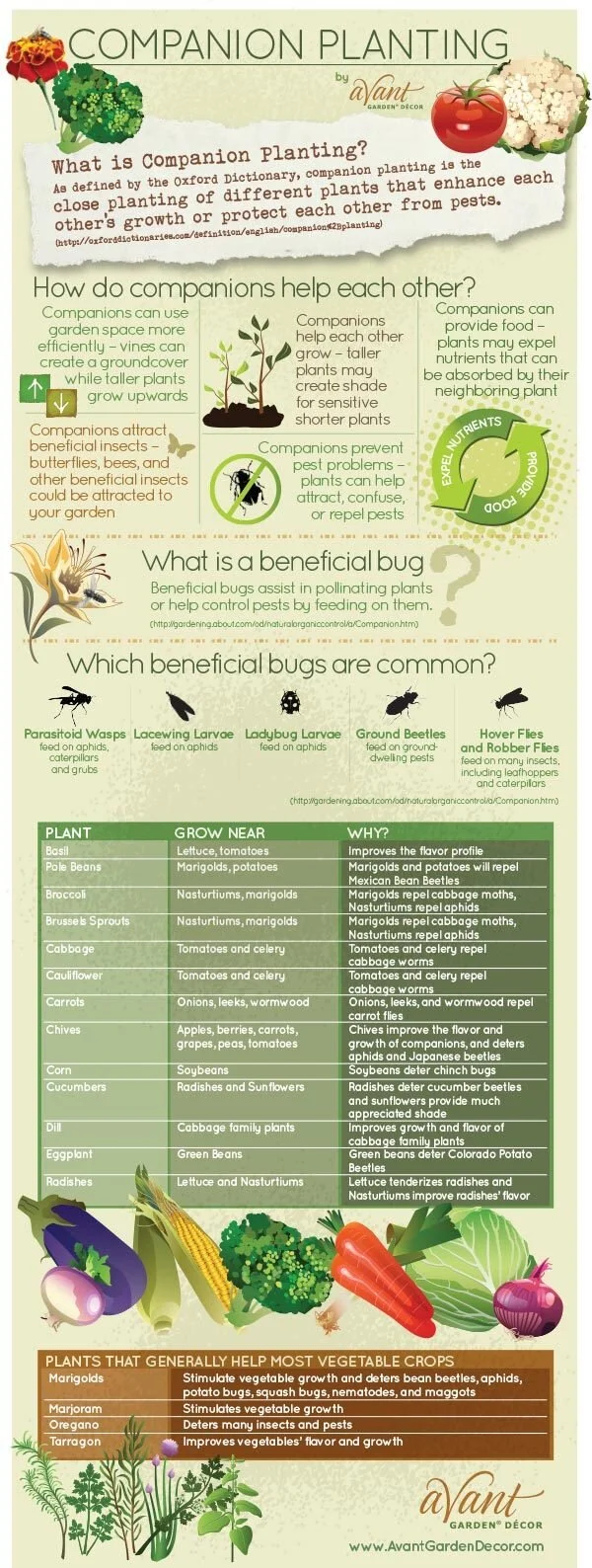
I love this pictogram from Avant Garden that shows some great benefits of companion planting
We can't always think 'if we can't eat it, we can't grow it!'

Pomegranate
There are some foods out there that are extremely nutritious, Superfoods! Pomegranate's are one such food and you can easily grow them at home.
Ever heard of the term Superfood?

Pomegranate. A superfood and one of the most decorative fruit trees
The Macmillan Dictionary defines 'superfood' as a food that is considered to be very good for your health and that may even help some medical conditions. The Oxford Dictionary definition states a superfood is “a nutrient-rich food considered to be especially beneficial for health and well-being”.
In recent times the term Superfood believed to be a bit of a marketing term used to describe foods with supposed health benefits.
Whether you believe the hype, there are some foods out there that are extremely nutritious. Pomegranate's are one such food.
Since pomegrantes have been declared a Superfood they become highly sought after. There are a wide variety of health benefits associated with eating pomegranates. Some of the benefits are
helping to prevent heart disease, reduces strokes, and maintains good cholesterol levels.
Regular intake of pomegranate seeds helps fight gum disease reduces plaque, which means the seeds are a natural way to keep your teeth clean and white! Enjoy eating the seeds with benefits of having an amazing smile and pearly white teeth!
Pomegranate Seeds are considered a great source of iron.
Last but not least, pomegranate seeds are believed to be a natural anti-aging source and are widely used throughout the world. Keep yourself looking younger and healthier naturally.
But what do Pomegranates taste like?
They are a flavour like no other as you get a taste, aroma and mouth feel sensation. They are sweet and yet a little tart to taste. The aroma evolves from various 'woody', 'earthy', 'fruity', 'floral', 'sweet' and 'musty' notes and the mouth feel sensation comes from the seed hardness compared with the flesh softness. An amazing little fruit.
So this little Superfood sure packs a punch but do I really want to grow it?
Yes.
Pomegrantes are one of the most highly decorative fruit trees I have come across. The plants produce tangerine, orange, crinkly 8-petalled flowers from late spring to late summer. These are followed by the most extraordinary coloured and shaped fruit which appear like a shiny crown. These wonderful fruit start small and grow to the size of a tennis ball.

A Fruit tree perfect for pots
Pomegranate ‘Wonderful’ suits it name perfectly. This variety of pomegranate has become the world standard, noted for its rich red colour and piquant flavour. 'Wonderful' can be eaten as fresh fruit or juiced and has become popular as its seeds are less woody than others. Due to its amazingly beautiful flowers and fruit most people would think its an ornamental shrub.
This is this tough Mediterranean plant that is drought tolerant and prefers free draining soil. Pomegranates grow well in areas with cold winters and hot, dry summers. Ipswich can sometimes have wet summers so make sure your Pomegranate can stay high and dry. Pomegranates are very versatile and can also tolerate coastal conditions and frost. Water during fruiting to improve quality and fruit set. Plants are self-fertile but you get more fruit with friends. Fruiting season is usually February to March and in cooler areas can be decdious.
They can get to around 4m high so an open position is best. Trimming is acceptable and they prefer gardens over pots. when planting in the garden I did the hole twice as big as the pot and back fill with Searles' Garden Mix.
Pomegranates should be fertilized every three months, plant health is very important for best fruiting results. We use a good quality organic complete fertiliser like Organic Link. A liquid fertilizer, like Triple Boost should be applied fortnightly through the growing season. A good liquid trace element mix like Bio-Trace should be given about twice a year. It is recommended to tip prune them in July.
Now, have yourself a delicious cup of pomegranate seeds, snack away without feeling guilty!
Want another great Superfood to grow at home? Why not try Blueberries.

Aromatherapy and Gardening
While aromatherapy may still be classed as an alternative therapy it is very closely related to us down to earth gardeners! Find out how it relates to Trevallan!

Chelsea Allan is an an Aromatic Kinesiologist. Aromatic Kinesiology embraces beauty, transformation and balance and focuses on how to influence your physical health, your state of mind and your connection to spirit through exploring aromatherapy from an emotional perspective.
Many of you know that I am an Aromatic Kinesiologist. Aromatic Kinesiology embraces beauty, transformation and balance and focuses on how to influence your physical health, your state of mind and your connection to spirit through exploring aromatherapy from an emotional perspective. I utilise The Essential Oil Reflections as metaphors for change and access the symbolic expressions of essential oils to enhance your capacity to let go of symptoms, to restore balance and to open into a broader way of thinking and feeling. When I am not at Trevallan you can normally find me at Potionatrix.
You may be wondering though, how a gardening girl get interested in essential oils?
To me essential oils and plants go hand in hand as essentially essential oils are the essence of a plant.
An essential oil is a concentrated hydrophobic liquid containing volatile aroma compounds from plants. They are found in the seeds, bark, stems, roots, flowers, and other parts of plants. They can be both beautifully and powerfully fragrant.
Sal Battaglia, owner and creator of Perfect Potion, says if you’ve ever smelt the revitalising scent of a eucalyptus leaf as you crush it in your hand or have run your fingers over a stalk of lavender and inhaled its soothing scent, or scratched the rind of an orange to release its fresh, zesty aroma, you have smelt the pure essential oils that have been just released from these plants.
It is believed that the essential oil in a plant has two types of functions: protection and communication. The scent the essential oil releases protects the plant from bad bacteria or fungi, and/or it deters herbivorous mammals from eating the plant. The “fragrant cloud” surrounding the plant may also attract a particular pollinator that will help the plant reproduce by cross-pollination when it visits similar plants in flower.
For this reason plants that release a certain smell have been used for centuries in companion planting to deter predators and disease and to promote pollination.
You see how closely joined plants and essential oils are? How could I not fall in love with the essence of a plant!

While aromatherapy may still be classed as an alternative therapy it is very closely related to us down to earth gardeners!
But you see gardening isn’t the only place essential oils can be used.
Since the ancient Egyptian time essential oils have been used extensively in medical practice, beauty treatment, food preparation, and in religious ceremonies.
Today we use the term aromatherapy to describe the range of traditional therapies that use essential oils to try to improve a person's health or mood.
But how does the essence of a plant really improve your life and health.
Throughout history we have associated certain plants or scents (essential oil) with meanings. We use rosemary for Remembrance Day, rosemary essential oil can be used to help concentrate and remember. Roses are given as a sign of love, Rose essential oil can be used to instil a sense of self love and happiness, Ylang Ylang flowers are used in the wedding bedroom to help, well you get the idea, as Ylang Ylang is known as a sensual essential oil! The most common is Lavender, I bet we all have used lavender to help relax us at some point.
So while aromatherapy may classed as an alternative therapy or seem a bit farfetched when you really think about it, it’s not that farfetched at all and very closely related to us down to earth gardeners!

Lemons
A house is not a home unless it has a lemon tree growing. Sometimes it is considered a symbol of longevity, purification, love, and friendship. A house that has a lemon will always be safe and happy.
“Her kisses reminded me of lemon slices drizzled with sticky honey. Bitter, sweet and strangely irresistible.” Michael Faudet
While the exact origin of lemons is lost in the mists of time, it is said that citrus fruits were the dowry of Hera, the bride of Zeus, who kept them jealously hidden away in a blissful garden situated at the western end of the earth, where the sun dies every day and where lived the Hesperides (nymphs). Each of the three nymphs guarded her own fruit: Aigle tended the citron, Arethusa the lemon and Hesperethusa the orange, thus the Hesperides were the nymphs guarding the “golden apples” which Hercules stole from the garden and gave to mankind.
Thanks to Hercules the lemon is now grown all over the world in regions whose mild climate suits this evergreen fruiting tree.

Lemons are upright growers and can reach great heights. I think they are always better pruned to keep smaller. I like my fruit trees at a height I can pick the fruit so none are wasted
They love the full sun, great soil and mulch.
When they are in flower and fruit I find regular, consistent watering is best to help the fruit form to their best ability. During this time I will liquid fertilise with Plant Care to keep the tree healthy. I use Plant Care, as over fertilising can lead to bud drop.
I find all citrus, lemon included, are heavy feeders. When the tree is not in flower I fertilise my lemons with Organic Link fertiliser about every two to three months. I also alternate fortnight’s of liquid fertilising between Triple Boost and Silica and Potash.
Lemons like all citrus are prone to Citrus Leaf Miner and Leaf Curl. Click here to find more about these problems. They can also suffer from scale and I find adding neem oil to my fortnightly liquid fertilising really helps.
Lemons can grow in a pot but make sure it’s a very large pot or buy a dwarf lemon. They can also be trimmed after fruiting.
There are few different lemon trees.
Eureka
The best all round lemon
Grows well in all climates but hates cold snaps
It produces fruit almost every day of the year.
Relatively few seeds and small thorns.
Grows to around 4m tall but loves to be pruned
There is a Seedless version of Eureka called ‘Lemon Heaven’
Lisbon
Very high quality lemons with a thin skin, good juice and high acidity
Contain natural pectin so best if using for cooking
Can reach up to 8m high but can be pruned and has thorns
Once a year it produces a heavy crop of fruit in mid winter to early spring
Lemonicious
Improved dwarf form Citrus meyer
In a large pot, reaches around 1.5m x 1m
Fruit has low acidity and reduced bitterness
Very hardy and prolific
Its fruit are produced for most of the year
Most cold-tolerant of all lemons

We also stock Lemonade fruit trees (Citrus limon x reticulata).
Lemonade fruit trees are a citrus fruit that is a hybrid between a mandarin orange and a lemon, grown in Australia and New Zealand in the 1980’s. The fruit looks like a lemon, but can be eaten straight from the tree, just like a mandarin or orange.
It’s a lot sweeter than a lemon with a refreshing tang. It truly has to be tasted to be appreciated.
It makes a refreshing drink when juiced but it also works well in cooking when you need something a bit lighter than a lemon but a lime won’t do!
What lemon are you growing?

Blueberry
Blueberries are one of the yummiest to eat fruits but can be a little tricky to grow. Here’s some great tips to get yours looking and fruiting fantastically.
Hands up who has tried to grow a blueberry before?
Ok, now hands up who grew one successfully?
I know I have tried and failed. Not failed as in to death do us part. Failed as in I got sick of looking at a stick that had three blueberries on it!
I persevered. I can now give you some great growing tips on how I got mine to look so good.
Blueberries like a position that receives full sun most of the day but if you live in Ipswich, like me, and temperatures in Summer can reach over 40C, it is recommended that plants should get a little afternoon shade.
I have found growing my Blueberries in pots is a lot easier than the ground. They are an acidic loving plant and I find my local soil just isn't good enough.
I always use excellent quality potting mix, like Searles Platinum Potting Mix but add some (about a cup or two) course bark (10mm-25mm in size), usually just the Searles Orchid Bark is fine, to provide an open potting mix for root development. Blueberries produce masses of fine roots which mat together. Without an open potting mix all Blueberry varieties will only have a life of around 2-3 years in pots. This mix will extend the plants life well beyond this. Mulching the top of the pot is imperative to minimise drying out. Blueberries hate wet feet but fruit will taste bitter if they dry out too much. Mulch seems to help with both these problems.
Your Blueberry should be fertilized every three months with a good quality organic slow release complete fertiliser like Organic Link. A liquid fertilizer, like Triple Boost should be applied to the foliage fortnightly through the growing season. A good liquid trace element mix like Bio-Trace should be given about twice a year. Plant health is very important for best fruiting results.
I have grown a number of different Blueberries in the past. My current favourites are Blueberry Burst, Sunshine Blue and Gulf Coast.
BlueBerry Burst

Saying I'm excited about BlueBerry Burst would be an understatement. This Australian bred, naturally dwarfing evergreen blueberry (1m high and 75cm wide) is said to grow and fruit WELL anywhere in Australia.
Blueberry ‘Burst’ has been successfully trialled in both hot and cold environments throughout Australia and humid and dry areas too.
I have been successfully growing mine in a large pot in Ipswich for years and my friends grow theirs at Mt Marrow. Both have suffered through hot, humid summers, cold wet winters as well as hot dry summers, cold dry winters.
It has exceptionally large fruit and a very high yield and it still tastes amazingly sweet kind of like, you know a blueberry!
For those of you living in a warmer climate fruiting should start in July and those in a cooler climate around late august. Fruiting concludes within 3-4 months.
Sunshine Blue Blueberry

Sunshine Blue has it all. This semi-dwarf, versatile shrub features showy hot pink flowers that fade to white in spring, with delicious, sweet blue fruit during summer.
A wonderful shrub that is easily grown, producing abundant amounts of fruit for eating or use in pies and sauces.
Sunshine Blue tolerates higher pH soils better than many other blueberries and it is self-fertile.
It is a Southern Highbush with the low chilling requirement of 150 hours making it suitable for the subtropics, but is also surprisingly cold-hardy and a wonderful addition to patios and gardens in cooler areas.
Flowers October to November
Gulf Coast
Gulf Coast Blueberry is an exceptional hardy Blueberry, perfectly suited to the subtropics.
It has excellent flavour, firmness and good picking scar. A vigorous upright bush with moderate toughness and good tolerance to root rot.
It has a late fruiting season October, November, December.
While Blueberries are self pollinating they always produce better and more abundantly if they are surrounded by friends!

African Violets
No special instructions apart from, don’t over love/water them.
Now I am sure there are many people out there with their own methods of keeping African violets alive but I’m working with the theory “Treat ‘em mean keep ‘em Green”.
Saintpaulia or for us normal folks African Violet.
African Violet, these two words that can strike fear into any house plant owner.

My Friends 30year old African Violet
Unfortunately for many people their African Violets did not survive long and so have been tarred with the “too hard to grow or touchy” brush.
Which is a shame as these small beautiful flowering plants are actually very hardy and are extremely suitable for people who may have a tendency to forget they have an indoor plant!
If you know someone that has successfully grown an African violet they usually say ‘oh I’ve had that for years and I never do anything to it and it just grows!’
Overthinking, Over Googling, Overwatering and too much TLC is the most common cause of death.
Some people will tell you never let water touch the foliage, that will kill them.
Some people say only water from the bottom
Some people will tell you only wicking pots work.
Some people will tell you only use African Violet fertiliser, African Violet Potting Mix and special pots
Some people will do anything to make it work for them.
What we do! Boss lady keeps ours outside in the shadehouse (when they not in flower) and they get overhead water all the time, they get Triple Boost when we fertilise with Birchy. Boss Lady has planted them in Hanging Baskets, Terracotta Pots, Ceramic Pots, Plastic Pots…. They are huge and lush. We just don’t overthink it.
When they are in flower, I bring them in and keep them in a well lit position inside. Don Burke recommends you place your African violets within 30cm of a window. I haven’t got my ruler out lately but I’m sure mine’s about that give or take a metre or so. They do prefer a well lit, warm position, free from drafts and cold winds.

Variegated leaf African Violet
I water them maybe once a week like all the other plants. They have a saucer and they may sit in water for a couple of hours while they soak it up. I will try to wait until the soil is really dry then water till the soil is wet.
I prefer to pot my African Violets into a terracotta pots, they seem more breathable but wicking pots do work.
I use Searles Platinum Potting Mix and if mine haven’t flowered in a while and they are looking really healthy I stop the Triple Boost Liquid fertiliser and use a high flowering fertiliser like Silica and Potash.
That’s it.
No special instructions apart from, don’t over love/water them.
Now I am sure there are many people out there with their own methods of keeping African violets alive but I’m working with the theory “Treat ‘em mean keep ‘em Green”.
These plants are native to Tanzania and once cultivated became one of the most popular house plants in the world. I was reading that the first sighting was a botanist walking through the rainforest! In 1946 the first African Violet Society - The African Violet Society of America was formed.
African Violets grow up to 15 cm tall and up to 30 cm wide. Their leaves are oval, with fine hairs, and a fleshy texture. The leaves can vary between dark green, lime green and variegated. The flowers can be about 3 cm diameter and grow in clusters of 3–10 or more on slender stalks. There seems to be about a million different colour variations.
These are beautiful plants and once you find your ‘knack’ for them, you wont be able to stop collecting all the colours.

Dieffenbachia
The best thing about Dieffenbachias is that they look good on a table looking down onto their foliage but they also look great up high looking up into their foliage. They are so versatile and I love using them around the home.
Dieffenbachia, pronounced dee·fuhn·ba·kee·uh, is another one of my all time favourite house plants.
I think I'm a foliage girl more than a flowery girl.

Dieffenbachias can have attractive variegated white and green, cream and green, or all-green leaves that can be speckled, splotched, or loosely striped. There are so many variations it’s easy to start a collection.
I grow them just for the foliage but they do flower and it looks similar to a a peace lily flower.
I feel they bring a lovely tropical feel to your indoor space.
They don't like having wet feet or being overpotted. I find it's better to treat them mean to keep them looking good. I have killed a few over the years simply by never letting them dry out. I now still use an excellent quality potting mix, like Searles Platinum Mix but I just don't water as often and I never let them sit in a saucer of water.
I find Dieffenbachias don't mind a slighter darker spot in the home but the more light they get the shower the variegation in the leaves becomes. The darker the spot the slower the growth and less vibrant foliage colour.
Dieffenbachias can have long and skinny leaves or short and fat leaves. I find if the leaves are long and skinny the plant tends to grow more upright. The fatter the leaves the shorter and squatter the plant.
The best thing about Dieffenbachias is that they look good on a table looking down onto their foliage but they also look great up high looking up into their foliage. They are so versatile and I love using them around the home.
I can group them with other variegated plants like Aglaonemas, with other Dieffenbachias, with lush green plants like Philodendrons or just on their own.
I just love using them around the home. They are one of my first choices with house plants.
To keep them continually looking good and putting on a great display, fertilise with Plant of Health Eco Friendly Fertilisers Organic Link about every three months and a fertilise of granular sulphate of potash, usually once weather has warmed up, around late August to help to help the foliage remain vibrant. I also like to keep their leaves free from dust so every few weeks I take them outside and give it a liquid feed (and shower) with Triple Boost Liquid Fertiliser.
On a side note Dieffenbachias common name is “dumbcane,”! The sap of the plant can cause numbness when touched and interfere with the ability to speak if it gets near your mouth, causing you to temporarily become mute, or “dumb.” So as with all plants unless you know its edible ... Don't eat it!

A Garden is not a Sick Bay
“An economic threshold is the insect's population level or extent of crop damage at which the value of the crop destroyed exceeds the cost of controlling the pest” Which basically means it would cost me more to deal with the problem than it would to replace the plant.
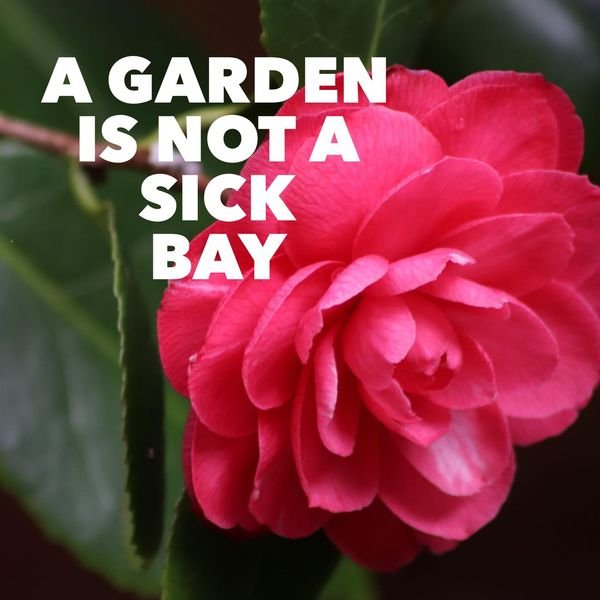
One of the hardest things I’ve had to learn having a garden is something the The Mountain Man told me “a garden is not a sick bay!”
Yesterday I had to pull out a Camellia japonica that was not doing well nor was it ever doing to do well. It was part of a hedge I was making and all the other camellias were doing perfectly fine, gloriously fine.
This camellia had reached its economic threshold. “An economic threshold is the insect's population level or extent of crop damage at which the value of the crop destroyed exceeds the cost of controlling the pest”
Which basically means it would cost me more to deal with the problem than it would to replace the plant.
You see this plant had been attacked by scale and I treated it. It then got a little sick and I treated it. It appeared to be well enough to plant in the hedge, then it got attacked by scale again and then it started to have die back and then it got mealy bug.

Yesterday I had, had enough. I had already spent time and product (money) reviving this plant. I weighed up the cost it would take to bring this plant back to vigour vs a new plant of a similar size and it was not worth it. Out it came and a new plant went in.
I felt guilty the moment I ripped it out. Maybe I should have tried harder etc… but this morning as I stare at my now healthy, glorious looking camellia hedge all I feel is joy and I’m glad I took the plunge and did it.
Is their a plant in your garden that you’ve reached economic threshold with?

Why do we stock Perfect Potion
Why do we stock Perfect Potion?
Perfect Potion is an Australian owned and operated business with worldwide acclaim, based in Brisbane. They are celebrating their 30th year in business this year (2021).
The Perfect Potion team are dedicated to creating an innovative and diverse range of holistic natural aromatherapy products that not only nurtures the body, mind and spirit but also respects the delicate balance of our environment.
Perfect Potion have established a standard to which others can only aspire with a philosophy that harmonises social and environmental concerns with aesthetic appreciation.
The owner, Salvatore Battaglia, has been passionate about natural therapies for most of his life. He holds qualifications in natural therapies, herbal medicine, acupuncture and aromatherapy. Salvatore’s dedication to aromatherapy has seen him hold positions in professional associations and government committees to ensure that the educational standards of professional aromatherapy are maintained and improved.
Salvatore has also been teaching aromatherapy since 1988. He is often called upon to speak at international conferences about aromatherapy, running a holistic and ethical business and what it means to go natural and organic. He is the author of many Aromatherapy books including one that is currently being used as a text book for Aromatherapy students world wide.
When Sal created Perfect Potion in 1991, it was his vision to create a business that would support and nurture the individual, community and environment to flourish while listening, guiding and reconnecting body, mind and spirit.
When Sal first discovered essential oils in the early 1980s, he felt in awe of the magical effects that these heavenly scents have on us – they open the door to our soul and invite us to appreciate the beauty and wonders of nature and in doing so they gave us the impetus to search for meaning in our life.
I think this image describe Perfect Potion Perfectly
Why Trevallan?
Chelsea, our own budding aromatherpist, has had an interest in essential oils for over 20 years. She has won many awards for her blends with Perfect Potion even having her Wisdom Blend as part of their range .
She is also a qualified Aromatic Kinesiologist®. Aromatic Kinesiology® is an empowering system of energetic medicine, that blends the harmonizing influences of essential oils with gentle healing techniques to balance the emotions, transform stress and create wellbeing.
In her spare time she works in her heart-felt business POTIONATRIX
You can read more about Chelsea’s Journey HERE
We all know oils ain’t oils. We are here to help you on your oil journey, if you have any questions or would like to attend one of our workshops, Just ask us.

Fruit Tree won't hold its Flowers
Why won’t my citrus tree give any fruit? It has heaps of flowers, then they just shrivel up and drop off. Bud drop can be due to a few reasons
Why won’t my citrus tree give any fruit? It has heaps of flowers, then they just shrivel up and drop off.
That’s rather annoying isn’t it!
Bud drop can be due to a few reasons
Bud drop reason number one
First and most common is your trace elements in the soil are out of whack. Fruit trees are heavy feeders. So sometimes if we don’t feed them enough of one thing or too much of another the trace elements can go haywire.
I’m no soil scientist so I prefer the easy way of dealing with this.
If I haven’t fertilised in a while, I give my tree a good fertilise with Organic Link (Organic slow release fertiliser)
If I have fertilised I would give it a liquid feed of Plant of Health Eco Friendly Fertilisers Bio Trace. Bio Trace is a product that contains all the major and minor trace elements so I don’t need to be a soil scientist. It gives the soil what it needs and wees out the rest.
With the Bio Trace I Mix it up in water and foliage spray the tree until all the leaves are dripping in Bio Trace. I would then give it another Bio Trace in about a months time. For more information on Bio Trace Click Here
A few weeks later I would also give my tree a handful of sulphate of potash and water it in. Sulphate of potash helps make things flower and fruit.
Bud drop reason number two
Let’s say you did all that and your buds still fell off. How regularly are you watering your tree. Irregular waterings, extended periods of dry or wet, unusual fluctuations in temperature can also make the buds drop off.
Bud drop reason number three
When your tree was in flower you gave it some fertiliser. Excess nitrogen can cause buds to drop. If you want to fertilise your fruit tree when it’s in flower use a product called Plant Care. It will feed your fruit tree but won’t overdo it with unnecessary nutrients.
Bud drop reason number four
Your tree is too young or too unhealthy to hold the flowers. Go back to problem one and start there.

Improving Sandy Soils
How do you improve any soil? Getting your soil right makes plants more robust and less prone to disease and insect attack, helps them develop better roots and helps the soil retain moisture for longer.
So to Improve Soil my mantra is ORGANIC MATTER, ORGANIC MATTER, ORGANIC MATTER.
How do you improve sandy soils?
How do you improve any soil?
Sandy soils are devoid of most nutrients. Getting your soil right makes plants more robust and less prone to disease and insect attack, helps them develop better roots and helps the soil retain moisture for longer.
So to Improve Sandy Soils (any soils) my mantra is ORGANIC MATTER, ORGANIC MATTER, ORGANIC MATTER.
Bring in compost (bag or trailer load). I love and use Searles Garden Products, Soil Activator and Searles Composted Five in One.
Make your own compost. It’s as easy as getting a few old bins drilling a lot holes in them, sinking them halfway into the ground and adding all kitchen scraps, cardboard, newspaper, leaf matter then let the worms do their thing). If that’s too hard buy an Urban Composter Bokashi Bin. It does it all for you
Compost, Compost and Compost. Then I would throw some Organic Link around. Water and then mulch the top with an organic mulch like sugar cane. Water again. Then let nature do its thing. Then REPEAT
Why compost?
Two reasons
Compost helps improves the soils organic carbon. This is the basis of soil fertility. It releases nutrients for plant growth, promotes the structure, biological and physical health of soil, and is a buffer against harmful substances. Basically the more soil carbon you have the healthier your soil and therefore your plants and the soil will hold more water (less watering for you).
Organic matter, compost, increases CEC. Sandy soils rely heavily on the high CEC of organic matter for the retention of nutrients in the topsoil.
CEC, Cation exchange capacity, is a measure of the soil’s ability to hold positively charged ions. It’s very important to the soil as it influences - soil structure stability, nutrient availability, soil pH and the soil’s ability to hold and release fertiliser.
Why Organic Link?
Organic Link contains Natural Rock Dust Minerals & Zeolite. These are usually lacking in sandy soils. Organic Link contains lots of other good things too, I’m just going to talk about these two today!
Zeolite helps the CE to occur. Basically zeolite can hold and exchange nutrients required by plants, making nutrients readily available. Rock Dust is a finely ground volcanic basalt containing a huge number of slow release micro-nutrients. This improves the wettability of sandy soils and CEC of sandy soils. It also enables plants to easily pick up the nutrients they need.
So as you can see composting, organic linking and mulching is important to any garden, not just sandy soils.

Summer Sun, Winter Shade
Discover a list of plants that thrive in spots with winter shade and hot afternoon sun in summer. From border plants to those exceeding 1m, find suitable options and care tips in this gardening guide.
Are you seeking plants that flourish in locations with limited sunlight during winter and intense afternoon sun in summer? Read on to explore a list of plant recommendations based on personal experience, along with practical care insights for these unique conditions..
Now there are a few plants that I can recommend that will only stay a metre but others I have to give honourable mentions too as they are very trimmable and usually look better when trimmed. Now this is not an exhaustive list. I am sure many people out there could add to it. It’s just ones I personally have successfully grown.
Border Plants and Groundcovers
Gardenia Radicans and Trachelospermum Tricolour shine as potential border choices. While the latter is typically used as a groundcover, its adaptability makes it an excellent loose box hedge candidate.
You could also consider the charming Kalanchoe and select varieties of Azaleas (the light series is an excellent choice). Grasses like Liriope and Dianella also offer a visually pleasing solution.
Reaching the 1m Mark
For spots requiring plants around the 1m mark, explore the elegance of Carissa 'Desert Star,' the compact Murraya Min-a-Min, and other dwarf forms of Murraya. Acmena Allyn Magic and Syzygium Little Denise also make the list, alongside the vibrant Coleus and enchanting Gardenia True Love.
Taller Options with Trimming Potential
While exceeding the 1m height, Camellia sasanqua, Magnolia figo (port wine magnolia), Magnolia Coco, and Brunfelsia latifolia (yesterday, today and tomorrow) can be judiciously trimmed to suit the available space. Syzygium 'Cascade' offers another option in this category.
Care Tips for Success
To ensure these plants thrive, adopt a few care practices. After winter, use a complete organic fertilisers like Organic Link coupled with liquid fertilizers like Plant Care to fortify the plants for upcoming heat. Optimal soil cultivation plays a pivotal role in fostering robust plant health while simultaneously mitigating plant stressors and reducing water needs. To this end, the incorporation of compost, utilization of soil wetting agents, and application of mulch (preferably organic like sugar cane) emerges as prudent practices.
During the transition from colder to warmer temperatures and the shift from shade to sun, swift changes in temperatures may lead to leaf burn on plants. However, this effect tends to diminish as plants progressively acclimate to new conditions.
This compilation of plants tested in conditions with no winter sun and intense summer afternoons offers an array of choices for your space. With proper care and understanding, you can cultivate a vibrant and resilient garden, transforming even challenging areas into thriving plant havens.

Help! I have a Garden for First Time
When moving to a new house that has lawn, established trees and garden beds - what is the best way to take stock and come up with a plan for what you want to do with a new space when you know nothing about it’s current conditions?
When moving to a new house that has lawn, established trees and garden beds - what is the best way to take stock and come up with a plan for what you want to do with a new space when you know nothing about it’s current conditions?
There are a few steps one can take one taking over an existing garden.
First step is live in the garden. Especially if you’ve come from a unit or house with no yard. Moving into a place with a yard you start have visions of grandeur. Let yourselves live in it for a little while.
Watch where the sun falls during the seasons
Does your backyard face north/south etc?
What has the average temperatures been? Do you get frost, humidity? Is it on average a good rainfall area?
Watch when it rains where does the water flow/bank up?
Does the ground soak up the water?
What plants are in the yard already? Do you like these? Do they fruit or flower? Do you not like them and plan on removing them? What will this do, open up more sun?
What’s the soil profile look like in different areas of your garden? Dig a hole and see for yourself. Is it sandy, rock hard, clay or maybe is lush beautiful composted soil. Note : In a lot of new estates healthy soil is absent. Before I even contemplate a garden I would be improving my soil health with composts and microbes
Does the current place have a working water efficient irrigation system, what’s the water usage, do we need to plan for tanks? How many tanks? Where will they fit?
If it has lawn, how long does it take to mow? Is that something you enjoy? What’s the best mower to get considering lawn size?
Many people would add walk the streets to see what others grow well but I find this can be misleading as other house may have different aspects than you, be a different level gardener, they might have better soil due to years of building it up. You don’t know.
Instead I suggest you can see what plants are growing in the area. Take photos of the ones you like and then go to your local garden centre and seek their advice, if they will grow in your yard with your soil and micro climate.
I find it best to walk the streets and get a feel for concepts. Buy some magazines and have a look what concepts people use on their gardens.
What do you want in a garden? Write that list - pool, a big covered entertaining area, vegetable garden? Do you like formal gardens or lush tropical gardens? Do you want all open spaces or hide away nooks? Do you want space to put a children adventure playground or a parents retreat? Do you need a men’s shed or a women’s escape room?
Do you have solar? As you don’t want to plant large trees that will block the solar but you also want to plant trees that will cool the house in summer, so you don’t need air cons as much.
Visit your local garden centre. Locally owned garden centres have local horticulturists who know your area and have local knowledge on plants and micro climates.
Use friends and family. Do you have gardeners as friends and family? Invite them over for a drink and casually bring up your garden plans. Most gardeners are eager to share their knowledge. Take their advice on but realise they don’t know your area so sometimes what they suggest may not work for you.
I think unless you have a solid plan of attack the best thing you can do in a new established garden is live it and allow your dreams and plans to evolve over those first few months.
For my place I knew what I wanted exactly out the back. I knew how it would look in the end after I come into a small fortune . Some small things have changed but the major things have always been the same.
The front yard has been a different story. Ideas have flown every which way and even after two years it’s still evolving as the family evolves.
Gardens aren’t static. They are meant to evolve and change over time. We aren’t meant to landscape our yard in a day and then never touch it again.
So take your time, enjoy your new place and just listen and learn from what your current place is telling you.

Soft and Delicate Native
Phyllanthus cuscutiflorus is a glorious native with the softest most delicate foliage and dainty flowers.
Phyllanthus cuscutiflorus or pink phyllanthus

This is a glorious native with the softest most delicate foliage and dainty flowers.
At the moment ours are all in flower and it looks like dainty fairy lights hanging off the stems.
This plant has soft green foliage and pink new growth that has a slight weeping habit. It’s not an exceptionally dense grower but that’s so you can see the little flowers that form like tassels along the stem.
I adore this plant and was very excited to use it as a lose hedge in my last house.
Phyllanthus cuscutiflorus grow into a lovely Christmas tree shape naturally. Mine was near the trampoline and it got trimmed occasionally, this made them really dense and even more fantastic than I originally planned.
These plants can grow to around 3m high and wide. It can grow in full shade to full sun and can handle most soil types. I found it can stress if left for a long time without water (may suffer leaf drop) but it can handle some neglect once it’s established.

It can handle humidity and can handle the cold but it doesn’t like heavy frosts.
As a word of warning and not to scare you off as I think this is a great all round tree. Perfect for hedges or as a small feature tree in your garden. The flowers can have a fairly unpleasant smell at night to attract insects.
One of my favourite native trees.

Air Plants
Tillandsias have evolved into a remarkable genus adapting to a wide range of conditions with the amazing ability of being able to capture all water and nutrients via small scales on the leaf surface rather than through roots. So while Tillandsias grow ‘in the air’ they still need some basic requirements.
One of the most popular plants I get asked for is “Air Plants”
When we talk about air plants we usually mean Tillandsias. There are over 650 different species of Tillandsias and most of them are epiphytes.
An epiphyte is a plant that doesn't grow in soil, instead it grows in the air (usually in trees or on rocks). Examples include bromeliads and orchids which use trees not just for support but also to get better access to sunlight for photosynthesis. They can also grow on each other.
Tillandsias have evolved into a remarkable genus adapting to a wide range of conditions with the amazing ability of being able to capture all water and nutrients via small scales on the leaf surface rather than through roots. So while Tillandsias grow ‘in the air’ they still need some basic requirements.
As with all plants if you want to know how to grow them well you need to look for their country of origin and their original growing habitat. Tillandsias have evolved and adapted to grow in a remarkably wide range of habitats.
Many Tillandsias grow naturally in jungles and swamps, but some grow wonderfully in the cold mountain air and the inhospitable deserts.
A simple guide to the determining a tillandsias requirements is by the nature of the leaves or base of the plant. Thick hard silver leaves and a dense, thick base generally mean that the plant is from a very exposed and dry environment. Finer, softer silver leafed varieties are from exposed positions with a high rainfall. The greener varieties without obvious scales are from shaded conditions with a high rainfall.
The leaves that are covered with specialized cells (trichomes) capable of rapidly absorbing water. This means that just because your air plant doesn’t have any soil around it, doesn’t mean it likes to dry out. Most species absorb moisture and nutrients through the leaves from rain, dew, dust, decaying leaves and insect matter.
Tillandsias need regular misting especially if they are grown indoors as our indoor air can be very drying for them plus indoor air is usually very sterile so always mix a low dose liquid food into the misting bottle to help keep your Tillandsias happy.
I would also give my Tillandsias a thorough soaking at least once a month to sufficiently fill the cells of the plant. During summer you may need to mist every 1 to 3 days. In a dark cold moist area watering every 2 to 4 weeks may be sufficient.
Many of the Tillandsias foliage form a rosette like funnel system so that all water and nutrients funnel back to main junction. Their flowers are usually very bright so that they can attract pollinators. Don’t expect your Tillandsia to flower straight away, flowering can take anywhere from 5 to 20 years (from seed) depending on species.
Tillandsias don’t require lots of light and will happily grow in the shade or indoors just make sure it’s not too dark and warm. Most dislike cold and wet.
Tillandsias can attach themselves to trees, rocks, other plants, fence posts anything really. You can even just have them sitting on your table nothing else around.
These plants are very cool and very versatile, why not have some fun and get an air plant today
We have some interesting air plants available now.
Space Clearing with Essential Oils: A Ritual of Intention
Explore the transformative world of space clearing with essential oils. Discover the power of intention and learn how to personalize your cleansing rituals.
For me, space clearing has always been about intention, infusing each action with purpose and meaning.
But let’s be real: the conventional methods of space clearing, like smoke cleansing with sage or Palo Santo, never sat right with me. Instead of feeling lighter and refreshed, I ended up feeling sick, disconnected, and frustrated that the positive shifts I was searching for just weren’t happening.
A few years ago, I decided it was time to find an alternative that actually resonated with me, my sensitivities, and my space. That’s when I discovered the magic of essential oil-based clearing sprays and using essential oils in my diffuser. Finally, I felt connected to the process—my space felt cleansed, my energy lighter, and the ritual itself felt right.
The Power of Intention
Here’s the thing about any ritual: it’s not about going through the motions; it’s about the intention behind it. Intention is the driving force that gives a ritual its power. Whether it’s through a prayer, speaking words with purpose, or simply focusing on the transformation you want to create, intention is key.
Rituals don’t have to be complicated. They’re just a sequence of actions designed to channel your focus. The more purpose you pour into each step, the more profound the shift becomes.
Make It Your Own
Space clearing isn’t a one-size-fits-all process. What works for me might not work for you—and that’s perfectly okay. It’s all about creating a ritual that feels right for you.
Here are a few thoughts to guide you as you make space clearing your own:
Tune into Your Feelings: What makes you feel aligned, cleansed, and protected? This is a personal journey, so trust what feels right.
Explore: Play around with different essential oils, sprays, and methods. You might find a certain scent lifts your energy more than others.
Listen to Your Body: Your body is your best guide. Pay attention to how you feel during and after the ritual—lighter, calmer, and more grounded? You’re on the right track.
Evolve with It: Your needs and intentions will shift over time, so let your ritual evolve with you.
When it comes to the oils I use, I stick to scents that feel clean and fresh—something that brings clarity and energy into my space. And I don’t overthink it. If I’m ready to clear energy, I’ll use what I have on hand. Some favourites? Lemongrass, Cypress, Frankincense, Lemon, Eucalyptus, Lemon Eucalyptus, Rosemary, Peppermint, and Sweet Orange.
Space clearing is about doing it now. Not waiting for the perfect tools or the perfect moment.
These are my top three favourite essential oil based cleansing items
Space Clearing Essential Oil Blend 
One of my favourite cleansing tools is the 'Space Clearing Essential Oil Blend.' This remarkable blend serves as a powerful ally in purifying both yourself and your surroundings. By diffusing this blend, you can effectively cleanse away negative energies, making space for happiness, peace, positivity, love, and abundance to enter.

Calm and Collected Spray, a versatile essential oil based cleansing spray, has firmly secured a spot among my top three favourite cleansing tools . I just spray myself or the room I want cleansed or both!
When you leave work for the day: Use it as a way to transition from work stress to relaxation.
When you feel scattered, irritable, indecisive: Spray to regain your focus and inner calm.
During witching hour (dinner bath bed routine): Create a peaceful atmosphere during the hectic evening routine.
As a room spray: Lighten and refresh the energy of any room, instantly transforming its vibe.
As a pillow mist before bed: Enjoy a tranquil night's sleep by helping your mind switch off.
To cleanse your crystals and crystal jewelry: Maintain the purity of your crystals' energy.
After being in dense public places like supermarkets, department stores, or airports: Rebalance your energy after exposure to crowded or chaotic environments.
Anytime low vibes (negativity and stress) take hold: Use it as a quick reset to bring positivity back into your space.
There is also Calm and Collected Essential Oil Blend that you can diffuse in your rooms.

Another personal favorite of mine is the 'Purify and Protect' spray. This remarkable spray serves as a guardian against the energetic debris we accumulate throughout the day, restoring a sense of peace, harmony, and friendliness to your environment.
This versatile spray can be applied as a body mist or used to cleanse your living spaces. It works exceptionally well in various situations:
Space clearing rooms when there has been sickness or discord: An effective way to reset the energy when needed.
Cleansing yourself after a challenging day at work: Reclaim your inner balance and positivity.
Clearing space after patients or clients leave: Maintain a clean and inviting atmosphere.
Cleansing yourself after having visitors in your home: Reset your space after social interactions.
Cleansing and clearing anything that feels energetically heavy: A versatile tool for addressing negativity.
Using it before another mist to maximize the benefits: Enhance the effectiveness of your cleansing ritual.
There is also a Purify and Protect Essential Oil Blend that you can diffuse in your rooms.
How to Cleanse Your Space
When it comes to cleansing your space with intention, follow these steps to create a ritual that aligns with your energy:
Open Doors and Windows Begin by opening all doors and windows in your space. This allows for the free flow of energy and sets the stage for a thorough cleansing.
Use Clearing Spray or Diffuser You have the choice to either use a Clearing Spray or place Clearing oils in a diffuser. Both methods work effectively to disperse the cleansing energy.
Picture Your Intention As you begin the cleansing process, focus on your intention. If you're clearing negative energy, visualize its density and see it lifting away. If you seek healing, imagine the spray or diffuser mist cleansing any illness or injury. Envision these energies floating out of your space, through the windows or doors, or sinking down into the earth to be absorbed. If it feels right, you can also pray or chant during this phase.
Express Gratitude Upon completion of your cleansing ritual, take a moment to express gratitude to the universe. Acknowledge that your space is now cleared and ready to receive positive energy.
Invite Love and Joy Don't forget to invite love and joy into your newly cleansed space. One way to do this is by diffusing your favorite essential oil blends in your diffuser. Let the pleasant scents fill your home, creating an atmosphere of positivity.
The beauty of this type of cleansing is its flexibility. You can perform it at any time, as often as you need, regardless of your background or culture. It's a practice that adapts to your unique needs and intentions.
If you've been feeling off-kilter or experiencing challenges in your home, consider giving cleansing a try. At the very least, your house will smell delightful after completing the ceremony. But more importantly, you'll have reset the energy in your space, inviting in the positive vibrations you desire.

Native Daisy
Brachyscome multifida is endemic to Australia and a brilliant free flowering hardy ground cover daisy. This cute little daisy has fine feathery foliage and can grow to about 50cm diameter and about 40cm high.

Brachyscome multifida is endemic to Australia and a brilliant free flowering hardy ground cover daisy.
This cute little daisy has fine feathery foliage and can grow to about 50cm diameter and about 40cm high.
It prefers full sun in good quality free draining soil. The flowers usually appear from mid winter until summer but they can spot flower continuously if conditions are right. The flowers are usually shades of pinks and purples.
They don’t mind the cold or a little bit of dry but do need a top up water.
Fertilise then seasonally with a good quality complete organic fertiliser like Organic Link. They also appreciate a liquid fertilise with Triple Boost to keep them powering on.
I think these guys make great fillers in gardens and work like a living mulch. I also have seen them tumbling out of urns and as hanging basket specimens for full sun areas.

I think these guys are really cute and would work well in a cottage or formal landscape. Sometimes we all need a daisy in our lives.