Find Us:
77 Fernvale Rd
Brassall QLD 4305
(07) 3201 8630
Open:
Tue-Sun 9am - 4pm

Brix
Brix is a simple but powerful measure of how well a plant is functioning. Brix gives insight into photosynthesis, nutrient uptake and overall plant health. Higher Brix is achieved through healthy soil systems that support consistent root function, biology and balanced nutrition.
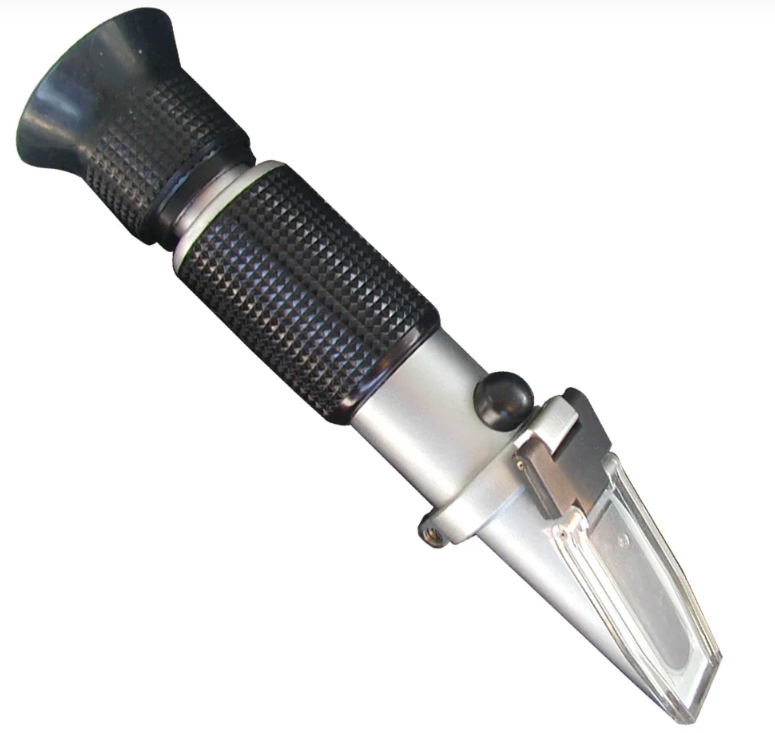
Refractometer
What is Brix and Why it Matters
Brix (°Brix) is a measurement of the concentration of dissolved solids in plant sap or juice, mostly sugars, but also organic acids, minerals, amino acids and other soluble compounds.
It’s measured using a refractometer, which reads how much light bends as it passes through a drop of plant juice, giving a percentage of dissolved solids by weight.
Brix matters because it reflects how effectively a plant is functioning. Higher Brix readings generally indicate stronger photosynthesis, better nutrient density and greater overall plant vigour. For this reason, Brix is widely used in agriculture as a quality and harvest index, particularly in crops such as wine grapes.
When measured over time, Brix provides insight into plant health and performance. Stable or rising readings suggest efficient energy production and nutrient uptake, while declining readings can indicate stress before visual symptoms appear. This is why many growers now use Brix as a monitoring tool for plant stress and nutrient response rather than relying solely on appearance.
Soil Health and Why its Important to Brix
Soil health underpins Brix because it supports the processes that allow plants to produce and store sugars. Active soil biology makes nutrients plant-available, stable soil structure supports consistent root function, balanced nutrition supports sugar production and transport, and organic matter helps regulate moisture and nutrient flow.
When these systems are working together, plants are capable of higher Brix. Sugars produced through photosynthesis are exuded into the soil, feeding microbes that in turn release nutrients back to the plant. The process is circular and self-reinforcing.
It’s important to remember that Brix doesn’t increase simply because fertiliser was applied. When soil health is addressed first, fertiliser becomes supportive rather than corrective and higher Brix follows.
Because Brix reflects how well this whole system is functioning, it can be a useful guide for home gardeners. A rising Brix reading suggests the soil is functioning well, allowing roots to access nutrients and water consistently. That consistency supports steady photosynthesis and steady sugar production.
In commercial agriculture, however, Brix is rarely used in isolation. Growers often pair Brix testing with plant tissue analysis: Brix shows overall system performance, while tissue testing identifies which nutrients may be limiting. Agronomic research shows that fertiliser timing, soil moisture and overall nutrient balance all influence soluble solids in crops.
What Brix numbers mean
Brix values vary by crop, climate and genetics, but the following ranges provide a useful general guide.
Leaf sap Brix (plant health indicator):
Below 6° — weak photosynthesis, high stress
6–9° — moderate health
9–12° — strong metabolic activity
Above 12° — excellent performance and nutrient density
Fruit Brix (flavour and quality indicator):
8–10° — average or standard quality
11–13° — good quality
14–16° — excellent
17+° — exceptional, often seen in well-managed soils
Just to remember, these aren’t hard thresholds. Brix varies with environment and crop type, which is why commercial growers don’t rely on Brix alone. For home gardeners, however, it provides a valuable reference point for understanding plant performance and soil function.

Are You Really Watering Your Plants?
Many gardeners struggle with plant health issues that appear insect-related, like mealybugs or wilting foliage, but the real culprit is often hidden beneath the surface—hydrophobic soil. When soil becomes water-repellent, it prevents moisture and fertiliser from reaching plant roots, leaving them vulnerable to stress and pest infestations. Even the most diligent watering routine may not be enough. Soil wetters and re-wetting agents are essential tools to restore soil hydration, improve plant health, and prevent nutrient loss. In this guide, we explore how hydrophobic soil forms, the surprising role of ants in this problem, and the best solutions to keep your garden thriving.
The Hidden Issue Beneath the Soil
One of the biggest hurdles in sharing gardening knowledge is asking people to be truly honest about their soil. We might think we know the type of soil in our gardens, but how many of us can honestly say we've consistently enriched it with organic matter? How many of us regularly fertilise or replenish our soil every three months and apply liquid fertiliser every two weeks?
Sometimes, the difference between rarely and often is the key to unlocking our garden’s full potential. Even if you’re already doing this, how much of the water and fertiliser is really getting into your soil? More importantly, how much is actually reaching your plant’s roots?
The Silent Problem of Hydrophobic Soil
With the extreme heat and drying winds we’ve been experiencing, plants dry out far sooner than we realise. This harsh weather pulls moisture from both the soil and foliage, often leaving plants struggling. Over time, soil can become hydrophobic, it repels water instead of absorbing it. Hydrophobic soil leads to uneven water distribution, so even if you’re watering consistently, it might not be making a difference. You could be fertilising and caring for your plants, only to have all that effort go to waste. This issue affects gardens, lawns, and potted plants alike.
What’s worse, hydrophobic soil doesn’t just prevent water from soaking in, it also stops fertilisers from penetrating, leaving plants malnourished.
The Role of Ants in Hydrophobic Soil
A surprising but common cause of hydrophobic soil is ants nesting in plant roots. When ants build extensive tunnel systems in potting mix and garden beds, they create air pockets that prevent water from soaking in properly. Many gardeners notice mealybugs or scale insects on their plants and assume they have an insect problem. In reality, the root cause is often excessive ant activity. Ants farm these sap-sucking pests because they produce honeydew, a sugary substance that ants love to eat. The result? A weakened plant, compacted and dry soil, and a thriving ant colony.
If your soil dries out quickly, remains hard even after watering, or seems to have a persistent insect problem, ants may be the hidden culprits.
How to Fix Hydrophobic Soil
While adding compost and mulch is beneficial, I find the quickest and easiest way to rehydrate soil and improve absorption is by using a soil wetter.
I know I’ve talked about this before, but I keep seeing the same issue plants suffering because water isn’t reaching their roots. Soil wetters make a real difference, and I use them at Trevallan Lifestyle Centre and at home.
How Soil Wetters Work
Soil wetters reduce the surface tension of water, helping it penetrate rather than run off the soil surface. They restore soil hydration and ensure water and nutrients reach the root zone.
Granular vs. Liquid Soil Wetters
I prefer granular soil wetters because they break down slowly and improve moisture retention over time.
My mother and sister prefer liquid wetters because they work faster and are easier to apply.
Both work effectively, so it’s a matter of preference.
To get the best results:
Apply soil wetters to garden beds, pots, and lawns to rehydrate soil.
If your gardens have mulch, move mulch aside, apply soil wetters and add mulch back ontop
Use organic matter like compost to improve soil structure.
Address ant infestations by removing sap-sucking insects (like aphids and mealybugs) and using natural deterrents like neem oil or diatomaceous earth.
Monitor soil moisture to prevent hydrophobic conditions from returning.
Different Types of Soil Wetters Trevallan stocks
Soil Soaker™ Granular is a biodegradable wetting agent that improves water penetration in hydrophobic soils, ensuring moisture reaches plant roots effectively. It contains diatomaceous earth, which provides silica to strengthen plants and reduce heat, transpiration, and salt stress. Ideal for garden beds, potted plants, turf, and commercial landscapes, it helps prevent water runoff and dry spots. Safe for plants, non-burning, and easy to apply, it enhances soil hydration for healthier growth
Soil Soaker™ Wetting Agent Concentrate is an eco-friendly solution designed to address hydrophobic (water-repellent) soils and potting mediums that repel water under dry conditions. This 100% biodegradable surfactant enhances water penetration, ensuring moisture reaches plant roots effectively. Enriched with natural organic humates, it conditions the soil, nourishes beneficial microbes, and improves moisture retention, promoting healthier plant growth. Ideal for dry, sandy soils, gardens, and turf, Soil Soaker™ helps prevent water runoff and dry patches, making it a must-have for maintaining optimal soil hydration
Searles Penetraide® Re-Wetting Granules are designed to combat water-repellent soils, ensuring efficient water and nutrient delivery to plant roots. These easy-to-apply granules enhance soil moisture absorption, reduce runoff, and improve the effectiveness of fertilisers and pesticides. Suitable for pots, gardens, and lawns, a single application can last up to 12 months, promoting healthier and more resilient plants.
Searles Recharge Ultimate Fertiliser – Flower & Fruit is a premium, triple-action fertiliser specifically formulated to enhance flowering and fruiting in plants. It combines controlled-release nutrients that provide up to 12 months of feeding, instant-release fertilisers for immediate nutrient availability, and Penetraide® re-wetting granules to improve water penetration in dry soils. Enriched with trace elements, minerals, micronutrients, and zeolite, this fertiliser promotes lush foliage, vibrant blooms, and robust fruit development. Suitable for use in pots and gardens, including Australian native plants, it ensures sustained nourishment and improved soil moisture retention.
By understanding how water moves through your soil, recognising the signs of hydrophobic conditions, and using the right tools, you can dramatically improve plant health and stop wasting water and fertiliser.
Have you used soil wetters before? If not, it might be time to give them a try!

My Favourite Gardening Task
Discover the unparalleled satisfaction of tending to your lawn. Dive into the myriad of positive attributes lawns bring to your garden landscape, from recreational spaces to mental well-being. Explore sustainable practices to enhance these benefits while minimizing environmental impacts.

Runs in the Family!
Warming the engine of the mower so my sister could mow on a cold morning!
My favourite gardening task is nurturing my lawn. I take immense pleasure in mowing it, finding it to be a job uniquely impervious to interference by others. Unlike cleaning a house that quickly gets dirty again, a mowed lawn can be seen for a least a few days and the sense of accomplishment I feel is indescribable. I love looking out or coming down the street and seeing my freshly cut lawn
To me, lawns form an indispensable facet of a garden's landscape, bearing numerous positive attributes that are nowadays often overlooked.
Recreational Space
Lawns offer a versatile space for outdoor activities - be it sports like soccer (our front lawn moonlights as a mini soccer field complete with its own built in goal), at home picnics or easy to clean up kids dinners, gatherings, or simple relaxation. A well-kept lawn invites people to be outside nature, whether it’s to engage in physical pursuits or just ‘chill’. You will often find my teenage son and his friends just chilling on our front lawn.
Aesthetic Appeal
Well-maintained lawns enhance the visual appeal of a property. They create a sense of order and cleanliness, contributing to the overall beauty of a landscape and increasing the curb appeal of homes and public spaces.
Stormwater Management
Lawns adeptly soak in and decelerate rainwater runoff, curtailing flooding and erosion risks. The lawn and soil function as nature's sponges, filtering and absorbing water before it reaches drains or water bodies.
Erosion Control
Lawns, when properly established with healthy root systems, can help prevent soil erosion. Their dense vegetation and root structure stabilise soil and reduce the risk of soil loss during heavy rains or wind.
Cooling Effect
Lawns can mitigate the urban heat island effect by reflecting sunlight and providing a cooler surface compared to paved/concrete/rock/fake turf areas. This helps maintain more comfortable temperatures in and around your home. I know how much cooler our front patio is since we created our turf area.
Mental and Emotional Well-being
A well-maintained lawn fosters mental tranquillity The sight of green and lush open areas lessens stress, instils calmness, and revitalises the mind. For me, it evokes strong emotions rooted in cherished memories of learning about gardening from my grandfather.
Air Quality Enhancement
Lawn grasses can ensnare airborne particles and pollutants, elevating the air quality within their vicinity. This leads to healthier, more breathable air. The difference is tangible; once our front yard evolved from a dirt patch, the home became less dusty and the air more invigorating.
I believe incorporating sustainable practices, like opting for organic fertilisers, water wise methods, and minimising pesticide usage, can amplify all these positives while mitigating the negative ecological and social impacts lawns seemed to have suffered over the last few years.

Chelsea Mowing at her old house
I firmly believe lawns don't necessitate extravagant expenses or environmental detriment for upkeep. They can be tended organically, and a well-rooted, robust lawn requires minimal watering. Maintained lawns are not onerous chores; they just demand consistent, manageable care.
While my lawns may not be in their prime currently, I employ simple, accessible organic techniques that anyone can adopt. Lawns, in their dynamic nature, thrive with regular but not excessive attention.
For me, a lawn is a key ingredient that adds that extra dose of joy to a household and completes the picture of a beautifully landscaped yard.

Planting by the Moon
Moon Planting Calendars can help unlock the secrets of the lunar cycles with easy-to-follow directions on the right time to plant, when to fertilise, when to cultivate, when to harvest and when is best to time preserve fruit.
What type of gardener are you?
I’m the one that has 15 minutes to spare, so I’ll try to get as much done as possible. I don’t care what day, month or year it is. Things get trimmed, fertilised, sprayed and planted when I say so.
Perhaps you are more of a follower of the rules, like only plant your sweet peas on St Patrick’s Day?’
Or perhaps you a seasonal gardener, only plant in the spring, trim in the summer and rest in the cooler months?
No matter what type of gardener you are, does it ever feel like you are just unlucky in the garden and then once in a blue moon you hit jackpot and everything goes according to plan? Or are you always lucky and once in awhile things go astray and you just can’t explain it?
Have you ever tried to germinate seeds and sometimes you get 90% success rate, and other times not one measly seed grows- yet you did nothing different?
It’s not just you. It happens to everyone.
The good thing is, The Jackson 5 and myself may be able to explain it.......
Don’t blame it on the sunshine,
Don’t blame it on the gardener,
Don’t blame it on the good soil,
Blame it on the Moon!

Using Thomas Zimmer's Moon Planting Calandar so I can find out best times to plant for optimal growth
For thousands of years, people have been practicing Moon Planting.
Moon planting is based on the synodic period of the Moon, from one New Moon to the next, which is across an average period of 29.5 days.
Over this time, farmers observed that all aspects of farming seemed to be affected by the interaction of the gravitational forces between the Sun, the Moon and the Earth.
Scientists have also found variations in sap flow, biological functions in plants and the subtle changes in the Earth’s electro-magnetic fields, which correspond to the Moon’s gravitational pull. So basically, just as the moon influences the tides, it also affects the motion of water in plants and soil. The ebb and flow of this water ultimately also has an impact on seed germination, flower development and fruit production.
Ok, so how do we unlock the secrets to moon planting? With a Moon Planting Calendar of course.
Moon Planting Calendars unlock the secrets of the lunar cycles, with easy-to-follow directions on the right time to plant, when to fertilise, when to cultivate, when to harvest and when is the best time to preserve fruit.
My grandfather always swore by Thomas Zimmer’s ‘Moon Planting’ calendar. It is produced in Australia for Australian conditions. He followed it for gardening, fishing and even getting operations ....
Thomas Zimmer’s ‘Moon Planting’ calendar is a detailed chart that gives the correct lunar and astrological planting times for fruiting and leafy vegetables and covers the best times to weed, transplant seedlings, prune, harvest and irrigate. There are even instructions for those new to gardening by the moon. The calendar also contains astrological information such as moon phases, equinox, solstice and eclipse dates and times, including annual planting by the moon guides, as well as an astrological commentary on the year to come.
Who knows what the next year will bring, but I’m sure if you follow Thomas Zimmer’s ‘Moon Calendar’, your gardens will be bountiful.
Get your Calendar here

The Winter Lawn
Transform your patchy lawn into a lush green paradise with these expert lawn care tips. Learn how to aerate, use soil wetting agents, fertilize, and control weeds organically. Say goodbye to unwanted invaders and welcome a healthy, vibrant lawn just in time for Christmas. Get ready for backyard cricket and envy-inducing lawns with our comprehensive lawn care guide.
Who has recently taken a good look at their lawn?
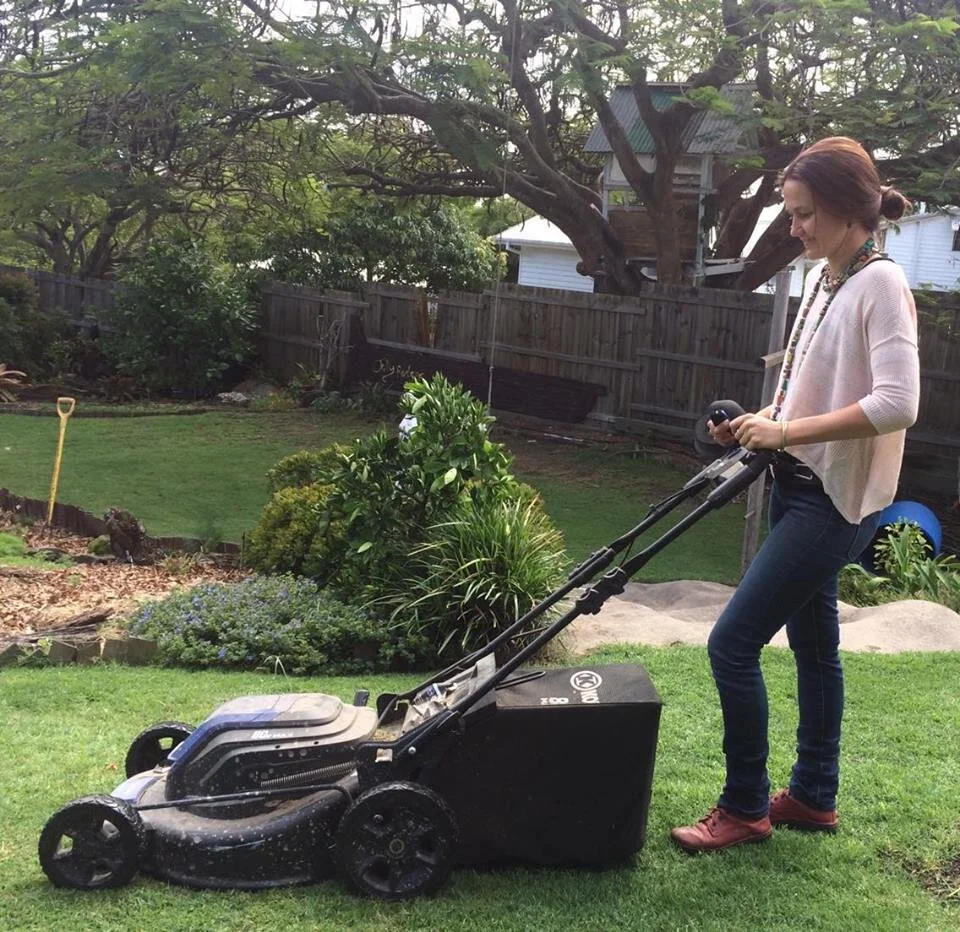
Does it look lush and green? Take a closer look, is that lush greenness coming from the lawn or all the weeds that have recently taken hold due to the rain.
At the moment my lawn isn't looking as good as it should - it is looking a bit patchy and the weeds like bindi, clover and Mullumbimby couch are coming through.
Sound like your lawn? Why not set yourself a simple lawn challenge so that by Christmas your lawn will be looking glorious and everyone will be coming to your house to play backyard cricket.
Sometimes with constant use most lawns become very hard and compacted and slightly hydrophobic (water-repellent).
So the first thing you need to do is aerate your lawn. Aerating your lawn means that the soil is opened up to allow air, water and nutrients to penetrate the grass roots. Aeration helps the roots grow deeply and produce a stronger, more vigorous lawn. Small lawns can be aerated with a sturdy garden fork. Simply insert the fork into the lawn and wriggle it back and forth to fracture the soil profile. If this doesn’t work and larger lawns may need a lawn aerator and/or lawn corer.
Once I have aerated my lawn I like to use a soil wetting agent. I prefer to use Plant of Health’s granular Soil Soaker, my sister loves putting the liquid Soak Soaker into Birchy and spraying it all over her lawn. To really up my lawn game I will put some liquid microbes into Birchy and do it all at the same time.
Hydrophobic lawns do not soak up water leading to overly dry or overly wet spots and can also stop the soil from being able to uptake nutrients (fertilisers). Soil wetting agents can help fix these problems.
A week or so after you've soil wetted you can fertilise.
I know it is winter and people say there is no need to fertilise in winter but I always like to give mine a little feed because the lawn still grows, just a bit slower. I also like to give it a liquid fertilise with Triple Boost about once a month.
I use a complete organic fertiliser by Plant of Health called Organic Link. It is pelletised and does not work in those special lawn fertiliser contraptions. I put mine in a bucket and break up the pellets a little bit and then use my hands and just throw it out over the lawns. The same company does offer an organic based slow release lawn fertiliser called Lawn and Turf Food.
I love the Plant of Health range as it makes my lawn grow thick and lush, not long and sparse, so less mowing and less weed problems. Most weeds occur in lawns that are sparse and unhealthy. The Plant of Health Range also makes my lawn roots grow strong and deep, so my lawn is more resistant to lawn grub and becomes more drought tolerant.
Dave Horton from Horton Turf Farm uses the Plant of Heath fertiliser range and has not used grub kill on his turf farm for over 10 years....if a turf farm doesn't need to spray for lawn grubs why do you?
So, hopefully by now my soil wetter and lawn fertiliser have started to work and most of my weedy areas are slowly being consumed by healthy lawn!
If this isn't the case I'll give my lawn a spray with Jerry Colby-Williams Iron Sulphate trick (see video) before I will resort to chemical weedkillers. I am not a huge fan of using chemicals on my lawns. I try to hand weed and keep the turf healthy before I resort to weed killers.
Did you know there is even the best time to mow and weed according to the moon calendar as growth will be slower?
Sometimes, if your lawn is so infected with weeds, you may need to use a spray. I try to minimise my use of these by spraying well before the weed has flowered. Usually three or four days after rain is when our lawn weeds are growing but not flowering. I have found this is a great time to spray.
When I do spray I like to use Searles’ Ultraweed. If you have Mullumbimby couch you will need Searles’ Lawn Weeder. These products are fine to use on all couch lawns.
The trick with killing weeds in the lawn is to be consistent. Think of it this way - once you see the weeds it usually means that they have already re-seeded. You may need to spray twice or even three times a fortnight apart, until the weeds have disappeared.
During this time you'll be happily mowing away, with a catcher on, of course, so you don't spread any stray lawn weed seeds. Don’t forget to set your mower a little higher too so you can shade out the lawn weeds.
If you are unlucky enough to lawn pests like lawn grub or army worm, you can try a Neem Oil (organic) drench every two weeks or spray with Dipel (organic). Again I don’t like using heavy chemicals on my lawns but if you needed to you can use Searles’ Dead Grub. Just know that this can harm the good bugs as well as the bad bugs in your lawn. So after you have used a product like Dead Grub always follow it up with a liquid feed of Microbes.
By Christmas you should have the best lawn on the street, unless someone else on your street also took up my lawn challenge!

Camellia Japonica
Do yourself and your garden a favour and treat yourself to a Camellia Japonica. These glorious plants are sometimes called the Rose of Winter.

Over the years my grandfather has tried to teach me a lot. He tried to teach me to fish but I could never stand still long enough to catch anything! He tried to teach me to cylinder mow but I could never get the hang of mowing in a straight line. He even tried to teach me to be a little quieter and we all know that didn’t work! The one thing he did teach me well though was how perfect Camellia Japonicas are.
Do yourself and your garden a favour and treat yourself to a Camellia Japonica.
These glorious plants are sometimes called the Rose of Winter. I think they should be called the Jewel of Winter because they put on a fabulous flower display in the cooler months of the year when the rest of the garden often looks dull and bare.
Japonica flowers are what make this plant so perfect.
I get such joy in seeing the buds open to these so flawless and diverse flowers. I have found over ten different descriptions of Japonica flowers. The most common are single, double, peony and formal double. The shade of the flowers are just as diverse and can vary from red to pink to white and sometimes have multi-coloured stripes or specks. The flowers are not small either with many flowers being at least 15cm in diameter. What is even better is these plants flower in abundance and the flowers last for ages. A childhood memory is of water bowls all over our house filled with japonica flowers.
Camellia Japonicas have the darkest green glossiest foliage. The leaves are quite broad, thick and smooth making the plant look lush and dense. Japonicas will grow superbly in full shade or part shade. In climates where deciduous trees are popular japonicas are usually planted underneath so they are protected from the hot summer sun but are free to shine while they are in flower and the tree is naked.
Japonicas don’t mind if they are planted in the ground or in a pot. They don’t like wet feet though so make sure your soil is well drained and slightly acidic, around pH6. They are quite hardy once established. I find they do best if they are mulched well and are given a good fertilise about every three months with a slow release complete organic fertiliser like Organic Link. I also like to give my japonicas a granular dose of sulphate of potash around April/May to help promote flowers. During their flowering season I liquid Plant Care them on a regular basis to keep them healthy while in bloom.
About once a year usually around the end of August I add a little bit of Dolomite to the soil around my camellias. Camellias can be prone to calcium deficiency and I find adding a little bit of Dolomite helps with this. If I can’t add Dolomite (or I forget) I try to Liquid Bio Trace my Camellias at least twice a year.
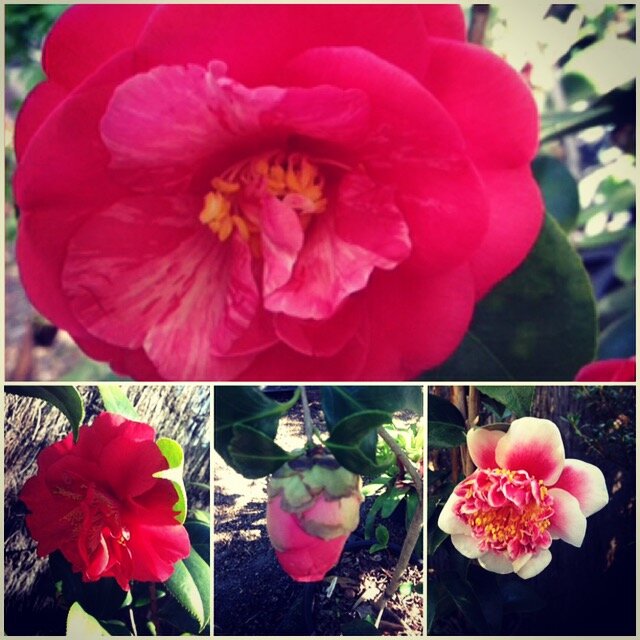
Camellia Japonica Flowers
Why doesn’t everyone have one of these glorious plants?
Over the years they have gotten a bad reputation because they are slow growing and some varieties can take years to flower or suffered Bud Drop.
Beautiful plants do not grow overnight and it is nice to have a plant that does not need constant trimming.
Bud Drop is the loss or decay of buds. This can be caused by over watering (we sometimes get wet winters), high temperatures (we sometimes have hotter than expected winters), pot bound roots and incorrect positioning.
Some Japonicas can take years to flower and some don't flower that well in our climate. I remember my mother waiting years for our 'Waterlilly' japonica to flower. It was well worth it but seriously!!! I have found in Ipswich's unpredictable winter climate the formal doubles struggle to flower spectacularly every year, the others flower very easily.
There are many japonicas that are perfectly suited to flower and grow in Ipswich. Don't ever forget that even one Camellia japonica in a pot on a veranda is the perfect way to give your dull winter life some TLC and bring some happiness back into your garden!

Winter Vegetables
Autumn, Warm Days, cool nights. Perfect for vegetable planting.
Autumn. Warm Days, cool nights. Perfect for vegetable planting.
By now your vegetable patch has been freshly composted and manured. It’s just waiting for you to plant out. If you are having trouble with how to start off your vegetable patch, check out my Vegetable Patch Checklist
The basic cool season vegetables that I find grow well in most areas are – broccoli, beetroot (my favourite), cabbage, cauliflower, leek, onions, shallots, silverbeet, spinach, snow peas, strawberries (my other favourite), peas, kale and rhubarb.
If you don’t get a frost or you can cover your vegetables - beans, lettuce, capsicum and tomatoes can also be grown.
If you get really cold you can give brussels sprouts a go.
This is the basic vegetable range; there are so many different variations on these classic cooler weather vegetables.

In seedlings alone you can get about four different versions of broccoli.
If you start using old fashioned open pollinated seeds, the list can be endless.
If your vegetable patch consists of a variety of different sized pots don’t worry, there is a large range of dwarf vegetables available in seedlings and seeds.
Leek, lettuce, capsicums, shallots, silverbeet, spinach, snow peas, strawberries, peas and rhubarb all grow well in pots without needing dwarf varieties.
The secret to growing any vegetables in pots follows the same principles as growing in the ground.
Start with the best quality soil or potting mix, mulch with an organic material (I like organic sugar cane mulch that is free from weeds), fertilise with a complete organic slow release fertiliser and liquid fertilise fortnightly with a complete organic liquid fertiliser.
I like using the Plant of Health range of fertilisers – Organic Link and Triple Boost and Searles' range of garden soil for gardens and potting mix - Platinum Potting Mix for pots
I find the cooler months are the best time for growing herbs. Nearly all the herbs are available now. Herbs grow well in the garden or in pots and most herbs can be grouped together in pots to make mini herb gardens.
The best thing about growing cool season vegetables is that it’s usually too cold for the pests to be out and about. If you do get a few pests a pyrethrum based spray or one of the new organic sprays like eco oil or eco fend work well. Mildew and mould is a common problem during wet winters - copper spray (some are considered organic) can be the best solution.
I have heard that having pretend white butterflies in your vegetable patch not only looks pretty but helps deter moths. Jerry Coleby-Williams has also mentioned that Land Cress is a confirmed biocontrol. We stock Land cress in seeds and in plants.
Remember though the healthier the soil, the healthier the plants and the less likely you are to get problems. Now get outside and get dirty!

What is Companion Planting?
Why attracting some insects to your garden is beneficial for the whole garden's success.
Companion planting is all about plant diversity - putting together crops that enjoy each other's company and require the same light, soil, water conditions and insect deterrents. In our climate however, I don't think companion planting is highly successful in regards to deterring insects. Instead, it's about planting plants that are either sacrificial plants, end trap plants or plants that attract good bugs to eat all the bad ones. Companion planting is also about planting crops together to help each other along, give out nutrients to each other. One plant can release certain nutrients while the neighbour plant absorbs them and vice versa. This give-and-take process can significantly enhance your plants’ health and create a more harmonious garden as well. A great example of this is the Three Sisters.
Sacrificial Crops

Beneficial insects are any insect that performs a valued service like pollination and/or pest control.
Sacrificial crops, or trap crops, are grown around or amongst crops. Their purpose is to attract the attention of significant pests away from the primary crop. Certain pests prefer the taste of the sacrificial crop, so they leave the crop we like alone.
The sacrificial crop will also, hopefully, reduce the need to spot spray pests.
In the past, people believed sacrificial crops to be more of a breeding grounds for pests, as pest numbers can be quite significant amongst the sacrificial crop. Large numbers of pests also attract bio controls, like parasitoid wasps. Biological control is a method of controlling such pests using other living organisms, which also limits any need to spray even organic insecticides. Organic farmers find that when pest populations peak, so do the bio control insects.
End Trap Plants
Beneficial insects are any insect that performs a valued service like pollination and/or pest control.
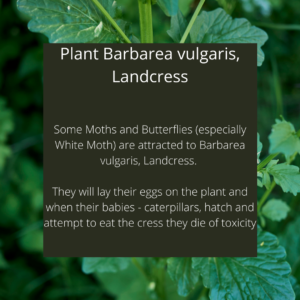
End Trap Plants are crops that you plant in your garden to attract certain moths and butterflies. The moths and butterflies lay their eggs on these plants, instead of on the ones you actually like. Once the caterpillars hatch, they take a bite out of the leaves and ultimately then die of toxicity. On Gardening Australia, Jerry Coleby-Williams spoke about an end-trap plant that will help save your cabbages from white moth. He recommended we plant Barbarea vulgaris amongst our cabbages. During the cooler months we have this plant in stock and we usually always have them in our Eden Seeds Packs.
Beneficial Insects

Beneficial insects are any insect that performs a valued service like pollination and/or pest control.
Beneficial insects are any insects that perform a valued service, such as pollination or pest control. We need to plant more plants that flower, so that we can attract these beneficial insects to eat all the pests ones. The beneficial insects are usually attracted to the pollen or nectar on small flowers. Sometimes, we don't even need to plant more plants. For example, just allowing your herbs or lettuce go to flower once in a while is enough to attract beneficial insects to your garden.
We also now stock Eden Seeds' Beneficial Insect Seed Mix. It is a colourful mix of flowers and herbs, annuals and perennials used to attract insects like lace wings, lady bugs, hoverflies, wasps and bees. It is also a fantastic mix that helps promote natural biodiversity in your garden.
Companion planting is more than just planting some marigolds around your vegetables but marigolds are all you have, they are a great place to start!
Gardening is a Discovery! Always remember that just because it worked for Susan doesn’t mean it will work for you. Susan’s soil and micro climate may be entirely different to yours.
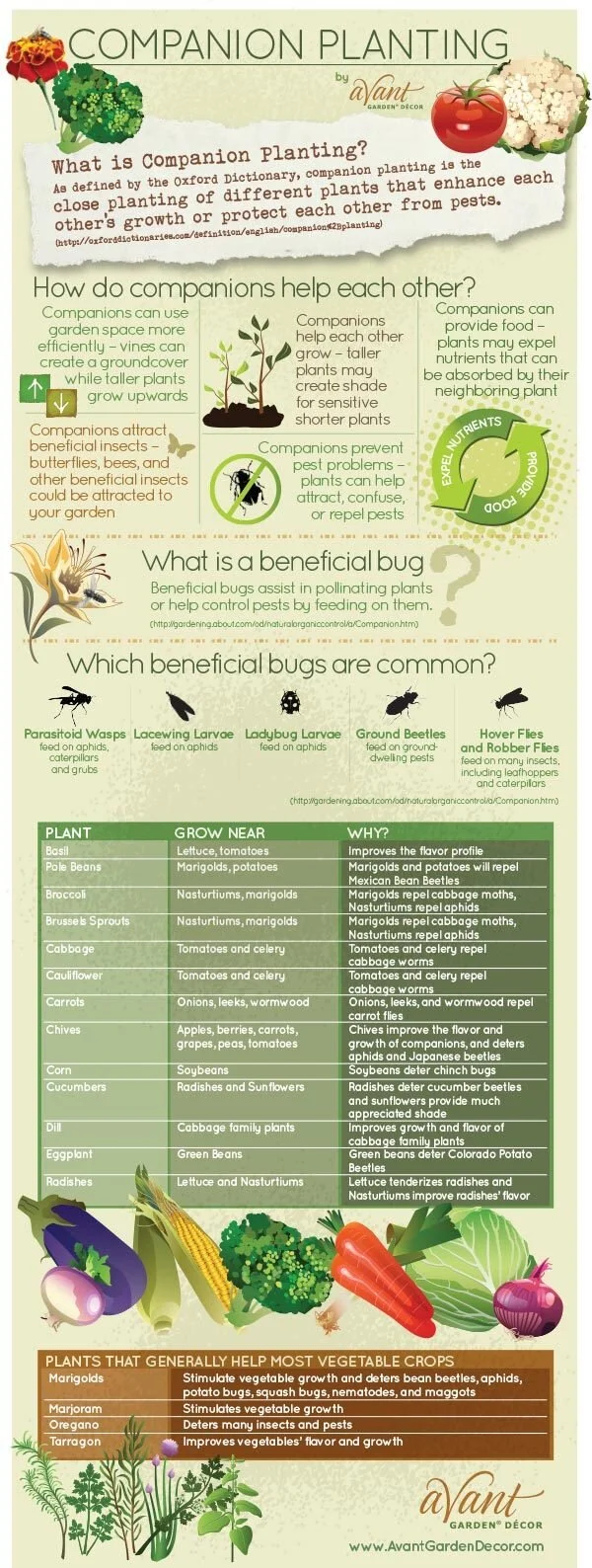
I love this pictogram from Avant Garden that shows some great benefits of companion planting
We can't always think 'if we can't eat it, we can't grow it!'

Blueberry
Blueberries are one of the yummiest to eat fruits but can be a little tricky to grow. Here’s some great tips to get yours looking and fruiting fantastically.
Hands up who has tried to grow a blueberry before?
Ok, now hands up who grew one successfully?
I know I have tried and failed. Not failed as in to death do us part. Failed as in I got sick of looking at a stick that had three blueberries on it!
I persevered. I can now give you some great growing tips on how I got mine to look so good.
Blueberries like a position that receives full sun most of the day but if you live in Ipswich, like me, and temperatures in Summer can reach over 40C, it is recommended that plants should get a little afternoon shade.
I have found growing my Blueberries in pots is a lot easier than the ground. They are an acidic loving plant and I find my local soil just isn't good enough.
I always use excellent quality potting mix, like Searles Platinum Potting Mix but add some (about a cup or two) course bark (10mm-25mm in size), usually just the Searles Orchid Bark is fine, to provide an open potting mix for root development. Blueberries produce masses of fine roots which mat together. Without an open potting mix all Blueberry varieties will only have a life of around 2-3 years in pots. This mix will extend the plants life well beyond this. Mulching the top of the pot is imperative to minimise drying out. Blueberries hate wet feet but fruit will taste bitter if they dry out too much. Mulch seems to help with both these problems.
Your Blueberry should be fertilized every three months with a good quality organic slow release complete fertiliser like Organic Link. A liquid fertilizer, like Triple Boost should be applied to the foliage fortnightly through the growing season. A good liquid trace element mix like Bio-Trace should be given about twice a year. Plant health is very important for best fruiting results.
I have grown a number of different Blueberries in the past. My current favourites are Blueberry Burst, Sunshine Blue and Gulf Coast.
BlueBerry Burst

Saying I'm excited about BlueBerry Burst would be an understatement. This Australian bred, naturally dwarfing evergreen blueberry (1m high and 75cm wide) is said to grow and fruit WELL anywhere in Australia.
Blueberry ‘Burst’ has been successfully trialled in both hot and cold environments throughout Australia and humid and dry areas too.
I have been successfully growing mine in a large pot in Ipswich for years and my friends grow theirs at Mt Marrow. Both have suffered through hot, humid summers, cold wet winters as well as hot dry summers, cold dry winters.
It has exceptionally large fruit and a very high yield and it still tastes amazingly sweet kind of like, you know a blueberry!
For those of you living in a warmer climate fruiting should start in July and those in a cooler climate around late august. Fruiting concludes within 3-4 months.
Sunshine Blue Blueberry

Sunshine Blue has it all. This semi-dwarf, versatile shrub features showy hot pink flowers that fade to white in spring, with delicious, sweet blue fruit during summer.
A wonderful shrub that is easily grown, producing abundant amounts of fruit for eating or use in pies and sauces.
Sunshine Blue tolerates higher pH soils better than many other blueberries and it is self-fertile.
It is a Southern Highbush with the low chilling requirement of 150 hours making it suitable for the subtropics, but is also surprisingly cold-hardy and a wonderful addition to patios and gardens in cooler areas.
Flowers October to November
Gulf Coast
Gulf Coast Blueberry is an exceptional hardy Blueberry, perfectly suited to the subtropics.
It has excellent flavour, firmness and good picking scar. A vigorous upright bush with moderate toughness and good tolerance to root rot.
It has a late fruiting season October, November, December.
While Blueberries are self pollinating they always produce better and more abundantly if they are surrounded by friends!

Loganberry - The Accidental Berry
Discover optimal Loganberry growth techniques, effective fertilization methods, and solutions to common problems in our informative blog. Enhance your harvest with expert tips!

If you are after something a bit different the loganberry may be your answer. The loganberry originated due to an accidental cross between a raspberry and a blackberry. The plant is named after the horticulturist who first created it, James Logan.
Loganberries look a lot like blackberries, or very dark raspberries depending on their variety.
Even though loganberry plants are very hardy and are more disease and frost-resistant than other berries they are not very popular with commercial growers. The two main reasons are - the bushes are thorny and the berries are usually under the leaves so its very labour intensive to harvest and the berries don't mature at the same time making it hard to get a complete harvest at once.
Loganberries are therefore more commonly grown by the suburban gardener.
Growth and Harvest
A loganberry bush usually produces about ten canes or vines. The canes tend instead to vine more like its blackberry mum and will need a bit of support to keep them from getting out of control. The vines aren’t as flexible as the blackberry though, so they don’t bend well. It is recommended to train loganberry vines up a trellis rather than along horizontal wires. The trellis should be placed in the ground at the same time as planting so as not to damage roots at a later stage.
The great thing about Loganberries is that the fruit doesn't ripen all at once, they can fruit for about two months, generally from mid-summer until mid-autumn. The berries are harvested when they are a deep purple colour. Amazingly each bush can produce 7 kg to 8 kg of fruit a year. The worst thing is you may need to wear gloves and long sleeves so the thorns don't bother you when harvesting!
Once you've harvested your berries use them up quickly as they will only stay fresh for around 5 days in the refrigerator. For longer storage, freeze your loganberries and use them in cooked dishes. Loganberries can be used in juice or in jams, pies, crumbles, fruit syrups, and country wines.
After you’ve picked your berries, cut the canes back to ground level. A big bush doesn’t mean more berries, so its better to keep it under control, ten to 12 canes will still produce well.
Loganberry vines can be brittle so choose a sunny location that is sheltered from the wind. For a successful crop, it is advisable to choose a fertile soil location for your loganberry trees, as is generally recommended for fruit-bearing plants. Nevertheless, loganberries display a notable tolerance for poorer soil conditions. If your soil is of lower quality, enhancing it with a quality organic garden soil or compost during planting can be beneficial.
Loganberries, like most plants, need regular watering and a good fertilise with a complete organic fertiliser, like Organic Link at the turn of every season. If they aren't producing much fruit try adding some granular sulphate of potash in spring.
When growing any fruit trees in Queensland it is advisable to have an active fruit fly trap going all year.
Pests and Diseases
Loganberries are generally quite resistant to disease and pests, but there can be a few problems.
Raspberry leaf spot fungus starts out as small spots on the upper surface of young leaves. As the lesions grow, the infected tissue may fall out, leaving holes in the leaves. Badly infected leaves curl downward at the edges and drop prematurely. Spray your plant with a fungicide (eco-fungicide is a great organic fungicide), cut out the spotted leave and any infected leaves that have fallen off should be raked away and destroyed.
Dryberry is caused by a tiny mite that lives in the buds of the plant. The mites will start to feed on the fruit as it develops, leaving you with some berries with dry or dead sections in them. It will need to be treated with an insecticide around the time the fruits are starting to form to combat the problem. Organic insecticides would be eco-oil or eco-fend. Regular treatment with Neem oil may also reduce the problem.
If you don't mind a few thorns Loganberries would be a great addition to your home orchard.

Brighten your Garden with Oranges, Yellows and Pinks.
Ixoras have dark green leathery leaves and produce large clusters of tiny flowers in the summer and autumn. They can be a little hard to grow but are worth the effort
Ixoras.
This is an I love it or I hate it plant.
My mum loves them. I must admit I verge on the opposing side. So, why on earth would I write about them and stock them at Trevallan if they are on my not so favourite list?
Well as with many things these plants have grown on me over the years and as with many plants there seems to be a time and a place for them.
Ixoras are native to the tropical and subtropical areas throughout the world, with many of them in Tropical Asia. These plants typically can't handle frosts so if you are in a frost prone area these may not be for you. Some Ixoras are more prone to being cold affected while others can handle a little bit of cold.

Ixoras have dark green leathery leaves and produce large clusters of tiny flowers in the summer and autumn. The more common Ixoras usually have orange, gold, pink or red flowers. Ixoras prefer acidic soil and usually like a little shelter from our blazing summer sun. In saying that I have seen many gorgeous Ixoras growing in full sun in a commercial setting (shopping centres). They don't mind being in pots or the ground.
I find the four most popular Ixoras are 'Prince of Orange', 'Pink Malay', dwarf orange and dwarf gold. Ixora williamsii is also popular as it has red flowers but it really dislikes the cold so is not commonly grown in Ipswich.
Prince of Orange has fiery orange flowers and can grow around two meters tall. The dwarf orange and yellow grow to around 1/2 metre. These look amazing in pots but I have seen them in gardens trimmed into a hedge and they look stunning when in flower. You can hardly see their green leaves.
My favourite Ixora is Pink Malay. Why do I love it? Not just because it gets covered in pink flowers but because it is so hardy. This Ixora is absolutely amazing; growing to around a metre it can handle full sun and shade. It can grow in pots or the garden and I have seen it successfully growing in a shopping centre car park. Yes that's right, a shopping centre car park. A place that has no good soil, no mulch, no care, only rain fall and it looks glorious. This is why I love this plant.
Ixoras like all my plants get fertilised with Organic Link and Triple Boost and neem oil. I use Searles Platinum Potting Mix for pots and Searles' garden soil for gardens.
There is a grub that likes to destroy your Ixora flower heads. There are a few ways to combat this. As soon as the buds start appearing I begin to mix neem oil in with my fortnightly Triple Boost. If it gets really bad I will spray with Dipel. I will sometimes use Searles' Bug Beater. Eco-oil would also work.
Sooty mould can also form on the leaves. This can be caused by scale and ants. Give your plant a really good soil drench and use a soil wetter if necessary. Fertilise with Organic Link and spray with neem oil or Eco-oil. In a fortnight or so you should be able to hose off the soot and hopefully the ants would have dissipated.
This autumn and summer brighten up your dull spots with shades of orange, yellow and pink.

The Spittlebug
There are many different insects in our garden …. Spittlebugs are just one.

Check this out looks like someone spat all over my Daintree Pine.
It’s not someone being disgusting.
It’s an insect, well a nymph really (a nymph is the immature form of an insect).
This is the Spittlebug nymph.
The nymph produces 'spittle' clinging on the stems of shrubs or small trees.
They prefer pine like trees.
The nymph lives immersed in masses of the spit like liquid. It is believed that this will reduce the risk of dehydration and to deter parasites.
The adults are excellent jumpers and are sometimes called frog hoppers. Supposedly their faces look like frogs but at 0.5cm long I have no idea how one makes that judgement call! They insert their needle like stylets into the plant tissue to feed. They are sapsuckers which feed on the leaves, twigs, branches and/or trunk of the host trees.
There are around 230000 species of spittlebug (mind just blown). I have no idea which one I have as mine are still in baby spit stage!
They say when the spittlebug is in spit form they cause no real damage (unless you have a huge infestation). Simply putting your hose on high pressure and blasting them off is enough. If you need to spray an organic spray like eco oil or neem oil would work but you would need a few applications.
I like to mix my neem oil with Triple Boost and give the plants a feed at same time. I find insect infestations are usually a sign of a weak plant.
So have you ever seen a spittlebug in your garden?

Gardening Advice, who you ask is Important!
Want correct and helpful advice on gardening - visit your local garden centre. The best place to get correct information is a place that specialises in that particular subject.
I was horrified the other day to hear this story…
A customer was in the greenlife section of a big box store when she overheard a staff member recommending a particular potting mix. Curious because all gardeners want to know what they could be doing better, she moved closer to hear more.
What she discovered was shocking: the staff member was recommending a product she recognised immediately as composted fertiliser, not a potting mix at all.
The bag even clearly stated, in bold print: "THIS IS NOT A POTTING MIX."
These first-time gardeners walked away with three bags of the wrong product and a handful of plants. Unknowingly setting themselves up for heartbreak. Their plants were unlikely to survive, and worse, they’d probably blame themselves when it all went wrong.
This is the real danger of bad advice.

When a plant fails, people get discouraged. They feel like they’ve wasted their time, energy, and money. Many give up on gardening altogether, thinking they were the problem, when in reality, it was simply the wrong product for the job.
The right advice makes all the difference.
And the best place to get it?
A business that actually specialises in gardening.
Garden centres are home to qualified, experienced horticulturists. People who don’t just sell plants, but understand them. We’re locals too, which means we’ve battled the same clay soils, the same hot summers, the same tricky planting spots. We don’t just sympathise, we’ve been there.
Our goal is to help you through your gardening challenges, take away the confusion, and bring back the joy of growing. For most of us, this isn’t just a job. It’s a lifelong passion.
Here at Trevallan Lifestyle Centre, between Carolyn and myself, we bring over 50 years of hands-on gardening and horticultural experience to the table.
We work hard to stay current, not just with what looks good, but with what actually works. That means staying on top of:
Changes in product formulations
Plant performance in our climate
Emerging industry trends
Environmental challenges
We attend supplier sessions, horticultural expos and conferences, and regularly read industry journals and research papers. I’m also a proud member of the Horticultural Media Association, which helps keep us connected and accountable as professionals in this trade.
At Trevallan, we’ve learned that we don’t need a thousand gardening items on the shelves. We only stock what we use ourselves. The tools, products, and plants we know work. It’s all about keeping things simple, effective, and grounded in experience.
We also run a number of horticultural workshops and masterclasses throughout the year, because we believe gardens are investments and to make sure that investment thrives, you need access to honest, down-to-earth, professional advice.
So next time you’re ready to improve your plant-life balance and give your space a little TLC, visit the real gardening experts at Trevallan Lifestyle Centre, your local garden centre.

Can you Grow your own Curry?
Curry isn't just one herb, it is a complex seasoning that varies from region to region and even from family to family throughout Southeast Asia. If you thought you could buy a Curry plant, think again!
Curry isn't just one herb, it is a complex seasoning that varies from region to region and even from family to family throughout Southeast Asia. Curry seasonings can even be vastly different depending on the season. During summer months, the seasoning is mixed with spices that cool the body and in winter, a different blend helps keep the body warm.
So what are the plants commonly called 'Curry Plants'? Are they even used in Curries?
Curry Leaf Tree or Sweet Neem (Murraya koenigi)
The Murraya koenigi leaves are the primary seasoning in the South Indian dosa, a crispy, thin, rolled pancake-like bread but it is also used in pickles, egg dishes, chutneys and many other Asian and Indian dishes and is known as “sweet neem” in India.
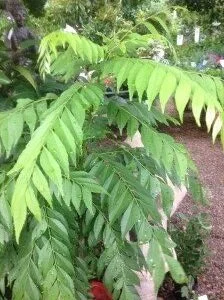
Curry Leaf Tree or Sweet Neem (Murraya koenigi)
Murraya koenigi is native to India and Sri Lanka. The leaf is the only part of the tree used in cooking and the raw, fresh curry leaf won’t really remind you of curry, but once the leaves are roasted in oil, the aroma and flavour can change remarkably, and the flavour is pleasant and delicious.
Even if you don't cook the Murraya koenigi is still a highly prized plant as its purely ornamental small, white flowers are highly fragrant.
It is a beautiful evergreen small tree that can be grown throughout Australia. Trees can grow up to 4m tall, in the warmer weather but it is advisable to prune back to a desired height of 1.5-2m. Pruning also encourages new growth and hence new leaves for harvesting throughout the year.
It requires full sun or semi shade position protected from heavy frosts. Ideal on warm northern side of buildings in cold climates.
The Curry Leaf tree requires reasonable drainage and regular fertilising. I use Organic Link every three months and Triple Boost regularly.
Curry Plant (Helichrysum italicum )
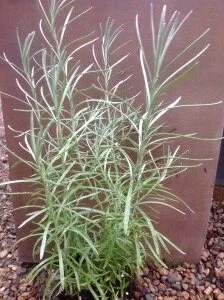
Curry Plant (Helichrysum italicum )
Although called the "curry plant" and smelling like the commercial curry powders, Helichrysum italicum has nothing whatsoever to do with this mixture of spices, nor with the actual curry tree (Murraya koenigii), and is not used as masala for curry dishes.
Helichrysum italicum grows naturally on dry, rocky or sandy ground around the Mediterranean. When growing at home try to make sure your plant is in free draining soil and full sun.
The leaves are grey with clusters of yellow flowers in Summer. These flowers are commonly used in dried flower arrangements.
The shrub can reach about 60 cm in height and can grow in pots or a garden bed. Like all herbs a good tip prune keeps the shrub looking neat and tidy. I usually fertilise at the turn of the season with Organic Link and Triple Boost regularly.
In the Mediterranean the young shoots and leaves of the Helichrysum italicum are used to flavour meat, fish or vegetable dishes. These shoots are then removed before serving. Many people don't like the actual taste of the plant as it has a resinous, somewhat bitter taste reminiscent of sage.
Do you have a Curry Plant or Tree?

The fruit is Perfect for Wine, I'll take two!
Beautiful tree with glossy, deep green leaves, small white flowers, and reddish young growth. Only four or five weeks after flowering the round, purple-black edible fruits are ready to harvest.

Fruit of Grumichama eugenia
The Grumichama is valued almost as much for its aesthetic elegance as it is for its sweet, cherry like fruits.
In its native Brazilian habitat, Grumichama are sometimes seen as a large tree reaching heights of up to 15 metres, however in most Australian home orchards it grows more slowly. Most plants will only become a small, bushy tree to about 6 metres high. This tree can easily be trimmed and kept at a much lower height of 3m.
It is a very beautiful tree with glossy, deep green leaves, small white flowers, and reddish young growth. Only four or five weeks after flowering the round, purple-black fruits are ready to harvest. The flesh of the Grumichama is soft, melting, and sweet like a cherry. The thin, delicate skin is also edible.
The fruits can be eaten directly off the tree, turned into jam or my personal favourite wine!
Its wood is sometimes used in carpentry, woodworking and turnery.
Can be planted in full sun and doesn't mind low temperatures. Fertilise with Organic Link every three months.

Mites
MITES may be invisible to the naked eye but the damage they can cause to plants and lawns isn't so unobvious.
MITES
These pesky bugs are everywhere at the moment, even in lawns. I have found out there are about a gazillion different types of mites (well maybe not a gazillion but quite a few).
Unfortunately mites are invisible to the naked eye. The damage isn't so unobvious.
Some signs of mites
leaves take on a brown, felt-like appearance
distorted, knobbly new growth
the leaves may have yellow blotches on them
distortion, deformation, wilting, spotting, streaking or discoloration on the surface of the leaves
Flowers may not open or become distorted
spiderwebbing on the undersides of the leaves or up stems
With all insect infestations I treat the problem at hand but I also look at why the plant or lawn is being attacked. Is the plant/lawn stressed or unhealthy, too dry or too wet. I always follow the advice I was once given by an organic farmer - A healthy plant doesn’t suffer from an insect attack! So if my plants are suffering from an insect attack I deal with the insect but then look at how to make the plant/lawn healthy again.
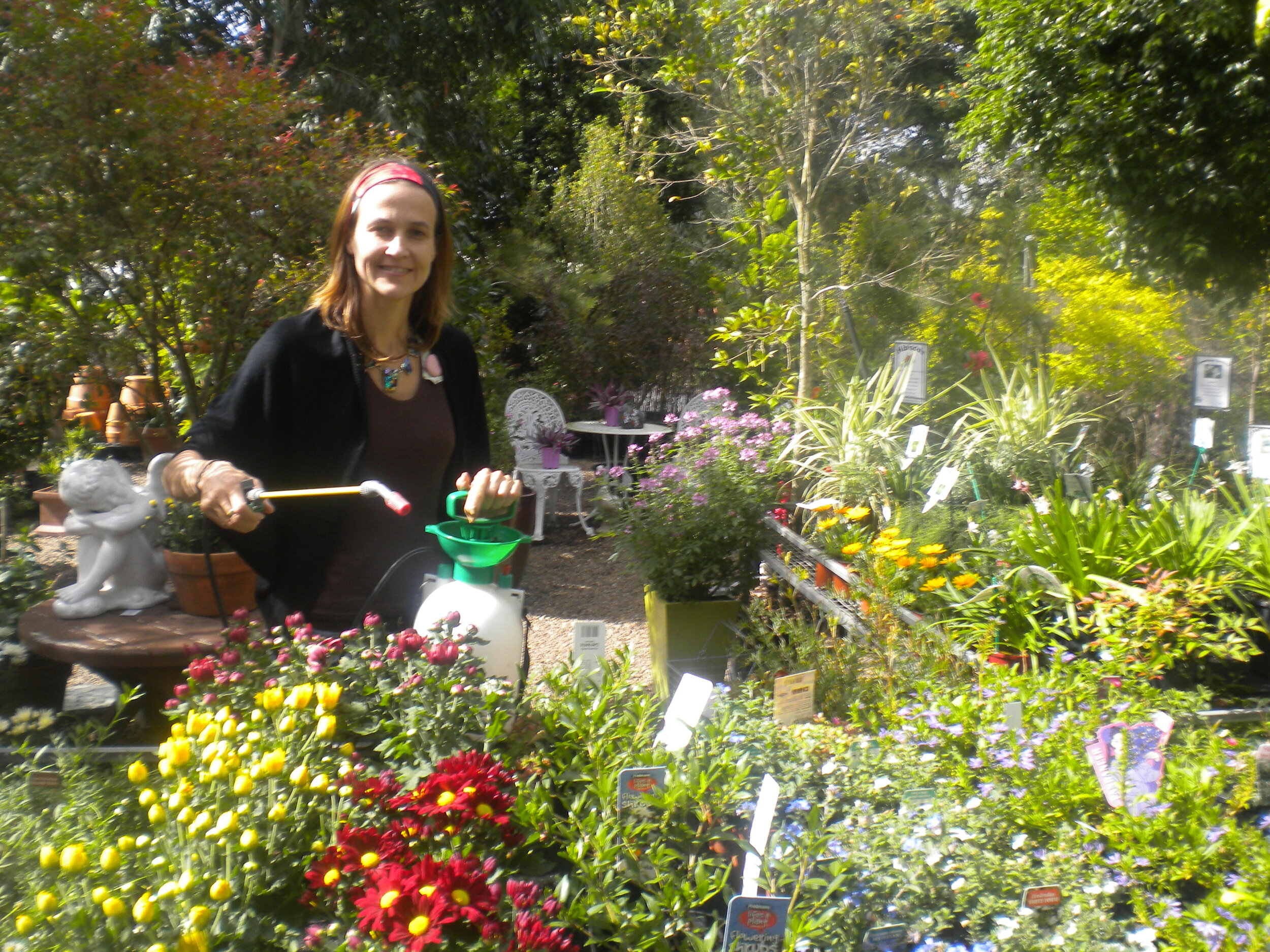
Our method of controlling most pests here at Trevallan is a simple one. Trim and fertilise. Sometimes though a fertilise with Organic Link and Triple Boost just doesn't cut it.
When I asked Des from Plant of Health (the team that make our wonderful organic fertilisers) what to use when i need to ‘spray’ to deal with an insect attack he recommended a weekly spray for at least four weeks with Plant Care and Neem Oil, mixed together. This can be used on lawns too.
Why Neem Oil and Plant Care?
Neem Oil is derived from the Azadirachta indica tree. When applied to insects and the plants they are eating, neem oil causes many insects to feed less, grow more slowly, molt less, and lose interest in laying eggs. Neem also suppresses the hatching of pest insects from their eggs.
Plant Care is like a vitamin pill for plants or when they’re sick or stressed. Plant Care contains natural liquid fish proteins, amino acids, liquid vermicast, fulvic acid, natural growth stimulants as well as a special blend of selected herbs and botanical extracts. Plant Care is a natural, non toxic foliar spray and can be used regularly on all plants, vegetables and lawns without the fear of NPK overload or plant damage.
So when mites or any other insects attack take Des' advice ‘a four week intensive care program’. You will see the difference in all your plants as you say goodbye to mites and any other nasty insects that want to destroy your garden.
Good Luck Mite Hunters.

Roses are Red
The rose has long been a source of fascination and meaningfulness for cultures around the world. I have never claimed to know the secrets of growing roses in a climate where for about six months of the year we have what feels like 100% humidity but here are a few of my tips.
The rose has long been a source of fascination and meaningfulness for cultures around the world.
Cleopatra was believed to have covered the floor of her palace room with roses before Mark Antony visited for in those times anything which was said "under the rose" was deemed to be a secret.
For many of us Queenslanders though how to keep roses looking amazing feels like a state secret.

I often stare in awe at the pictures in magazines of roses elsewhere in Australia. How dare they have the climatic conditions to grow these plants successfully?
I have never claimed to know the secrets of growing roses in a climate where for about six months of the year we have what feels like 100% humidity.
Many rose growers out there will probably have a small heart attack at my way of growing roses but that’s ok, my way is the right way for me and maybe if you’ve never had any success in the past it may become the right way for you.
The first thing I needed to realise was that my roses may never look like they do elsewhere. The humidity we suffer is the cause of most rose problems. No amount of sprays, fertilisers or correct planting techniques will change the problems humidity brings.
To combat most of the rose problems such as black spot, fungus, bud worm that occur during the warmer months I trim and fertilise.
I don’t spray.
During the really humid months most of my roses look like bare thorny sticks. I find removing all the affected leaves, trimming back the plant and then fertilising with a slow release complete organic fertiliser like Organic Link works fantastically.
I always trim my roses like I am cutting the flowers off for a long stemmed vase. I personally can’t stand long straggly bushes so I make sure all my roses get a good prune continuously throughout the year. I also find a good dose of granular Sulphate Potash at least twice a year, Winter and Summer, helps with fungal problems and boosts blooms.
After pruning you can use a product like Steriprune which is designed to protect wounds against infections and die back. Come the cooler months and my roses are thick and lush and full of flowers. The few leaves that do get black spot or mould just get pulled off and when the flowers die, I still trim the stem right back like I am cutting it for a long stemmed vase.
To keep roses healthy and insect free I try to regularly liquid fertilise them with Rose Triple Boost and neem oil, fortnightly is ideal (but not always possible). When black spot is rife I alternate between the Rose Triple Boost and Silica and Potash Liquid fertiliser (certified organic).
Another organic alternative for black spot and rust is eco-fungicide. Eco-fungicide is a registered organic fungicide for the control of powdery mildew, black spot and rust in many plants including tomatoes, zucchini, roses, grapevines and geraniums. It attacks existing fungal infections and kills external fungal growth within minutes. Eco-fungicide also leaves an invisible protective coating that prevents new spores from germinating.

This Rose quote is so true even when growing roses. You must put up with all the disease, insects etc but it is well worth it when they bloom
To control insects some people like to use a pyrethrum based spray or neem oil.
All my roses are in full sun in pots and in the ground. I use Searles Platinum Potting Mix for the pots and Searles' Garden Mix for the ground. I mulch with Sugarcane.
Roses do not have the prettiest bush and they can sometimes seem a bit fussy but the reward of the rose is well worth it all.

Talking Dirty
What gardening terms do you use that people think you've made up, don't understand or have a little giggle at your expense?
Last week on Trevallan Lifestyle Centre's Facebook page, I posed the question "What gardening terms do you use that people think you've made up, don't understand or have a little giggle at your expense?"
There were some great examples and I thought I'd enlighten you all with some gardening terms that I find I use and people think I have started to talk in my own special language.
Deciduous
Deciduous, pronounced dih-sij-oo-uhs, is the term I am most often asked to explain. Deciduous means "falling off at maturity" or "tending to fall off", and it is typically used when talking about plants that lose their leaves seasonally. Many plants, particularly in cooler regions, drop their leaves in autumn, have a dormant period through the winter and then come alive again in the spring. In some subtropical and arid regions, plants lose their leaves during the dry season and remain dormant until the wet season begins.
Active Constituent

Active constituents are the substance/s in an agvet (agricultural and veterinary) chemical product primarily responsible for a product's biological or other effects.
For example, Glyphosate is the active constituent in most weed killers. In horticulture, companies register products with different trade names, however, you will often find the active constituent is the same. Trade names such as Yates Zero, Searles Dead Weed, Brunnings Weedkill all contain the same active constituent - glyphosate. When dealing with chemicals in gardening, know your active constituents and you'll never need to rely on trade names again.
Bisexuality
A Bisexual flower or perfect flower is when the flower has both the essential whorls i.e., androecium and gynoecium (male and female reproductive units). Some examples are lilies, roses and sweet peas.
When it comes to fruit and vegetables, we generally use the term bisexual plant, meaning the plant has both male and female flowers and you do not need two separate plants. For example, a pumpkin will usually produce both male and female flowers, following this, insects will hopefully pollinate the females, with the result being big, healthy pumpkins.
Self-watering pots
Now unless you have gnomes in your garden doing all your dirty work, there is no such thing as a self-watering pot. When you buy a self-watering pot, you still have to water.
In a self-watering pot you have a very large saucer, or water well, and the soil is held above the water well, with a false bottom. The water well and the soil are usually connected by a wick of some sort.
As water is used by the plant, capillary action draws the exact amount of water up from below, therefore the soil has just the right amount of water all the time, but also maintains air pockets, which the plant roots also need. This is great for plants that don't like being over watered, as you just fill the bottom chamber.
While self-watering pots are great, I find they only really work once the plant has an established root ball.
This weekend, why not practice your ‘dirty talk’ with someone and show off your new gardening knowledge.

The Dirty Dozen
The Dirty Dozen, a list of the fruits and vegetables likely to contain the highest amounts of pesticide residue. You can plant many of these at home.
I'm getting a little gardening bored. It's still too early to be planting my winter vegetables and my vegetable patch is cleaned, composted, mulched and waiting. My few gardens are fertilised, trimmed and waiting for cooler weather to start planting out more. My lawns are fertilised, soil wetted and weed killed - just waiting on rain to green them up.
So what does one do when garden bored - they start dreaming big. I think I have about 40 seed packets of the things I'd like to grow this winter.
So I may have gotten a little over excited. So how do I narrow it down? How do I decide what to plant in my vegetable patch each season or what fruit trees to grow?
I came across an interesting article on the extremely high amounts of pesticide residue on frozen berries. The interesting thing was most of the residue found on the frozen berries were pesticides that are banned in Australia. This happens because most frozen berry companies get their berries from a variety of overseas sources.
The old mind clogs started turning over and after a bit more research I discovered the 'Dirty Dozen' and the 'Clean Fifteen'. These are two lists released by the Environmental Working Group (EWG) each year.
EWG, a nonprofit organization that cites its mission as being to help “people live healthier lives in a healthier environment,” started compiling a list of fruits and vegetables that contain the highest amounts of pesticides in the mid-1990s.
The Dirty Dozen, a list of the fruits and vegetables likely to contain the highest amounts of pesticide residue. The Clean 15 is a list of fruits and vegetables least likely to contain pesticides. The EWG take into account how people typically wash and prepare produce - for example, apples were washed and bananas peeled before testing.
While the EWG’s list is based on the U.S. Department of Agriculture’s Pesticide Data Program, I still find it a great help in determining what to plant and over the years I have used the Dirty Dozen as a guide to what to plant each year. Over the years the list hasn't change much. So I do try to keep track of previous years as it's not like the big farms suddenly stop using pesticides its more like something just contains more pesticides than previous years. One vegetable that continuously goes on and off the list is potatoes. So I always try to grow my own potatoes. Most of vegetables and fruits mentioned can be grown in Ipswich in our vegetable gardens and orchards.
2021 saw the EWG release a special report on citrus fruits, which aren't represented in the Dirty Dozen, but have caught the attention of the organization for trending upward in trace amounts of pesticide recorded.
EWG'S DIRTY DOZEN FOR 2021
(number one being the most highest in pesticide residue)
Strawberries
Spinach
Kale / Collard and Mustard Greens
Nectarines
Apples
Grapes
Cherries
Peaches
Pears
Bell and Hot Peppers
Celery
Tomatoes
EWG'S CLEAN FIFTEEN FOR 2021
Avocados
Sweet corn
Pineapple
Onions
Papaya
Sweet peas (frozen)
Eggplant
Asparagus
Broccoli
Cabbage
Kiwi
Cauliflower
Mushrooms
Honeydew melon
Cantaloupes
Don't get gardening bored, plan big and include the 'Dirty Dozen' in your backyard.

Bloomin' Fabulous
Potassium Sulphate or Sulphate of Potash is commonly called Potash. It is an essential element necessary to the lives of all plants.
A common question I am asked is "why didn't my fruit trees fruit profusely or if they did why was the fruit misshapen?" Or "why didn't my camellias and azaleas flower as well this year?" Or even "why are all my coloured foliaged plants like crotons and dracaenas losing their colour?"
The answer is usually quite simple - Your garden just needs some TLC and maybe a little Potash!
Potassium Sulphate or Sulphate of Potash is commonly called Potash. It is an essential element necessary to the lives of all plants.
It aids in disease resistance and frost protection by strengthening the plants cell walls. It helps in seed and root development. It encourages strong new growth and helps with the formation of flower buds and fruit.
Potash can improve the quality and the colour of flowers and enhances the formation of proteins and sugars in fruit. Potash can even help plants with slender stems and large flower heads such as Iceland poppies and gerberas hold their heads erect.
Potash defective cues can be seen in a number of ways in your plant. Your plants might be showing signs of overall weakness especially in its stem. It could have yellowing leaf margins and grow more slowly. It could also be disease prone and its fruit and flowers will be small and poorly coloured and sometimes tasteless.
Don't confuse a potash deficiency though with an unhealthy plant. Always make sure you have given your plant some complete slow release organic fertiliser like Organic Link and a Bio Trace first.
Complete fertilisers, whether they are chemical or organic, usually contain potash. Organic Link contains potash. An N:P:K ratio can usually be found on the fertiliser label. A very quick explanation of the N:P:K ratio is - N stands for Nitrogen (greening, growing), P Phosphorus (roots) and K Potassium (fruiting, flowering).
If you use mainly a manure based fertiliser like blood and bone or chicken manure you will need to add potash as these products don’t naturally contain it.
Potash also is available by itself in a liquid form and a granular form.
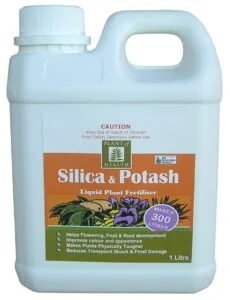
The liquid form is added to water and used as a foliar spray. Used like this it is quick acting but not long lasting and needs to be repeated on a fortnightly basis. This is best for promoting flowers especially on annuals. I use Plant of Health's Potash and Silica.
The granular form is added to the soil and watered in. The granular is slower acting but lasts a lot longer. This is best for correcting deficiencies, promoting fruit and stimulating coloured foliage. We use Searles' Potash.
This weekend I want you all to get some granular potash and go a little silly in your gardens.