Brix
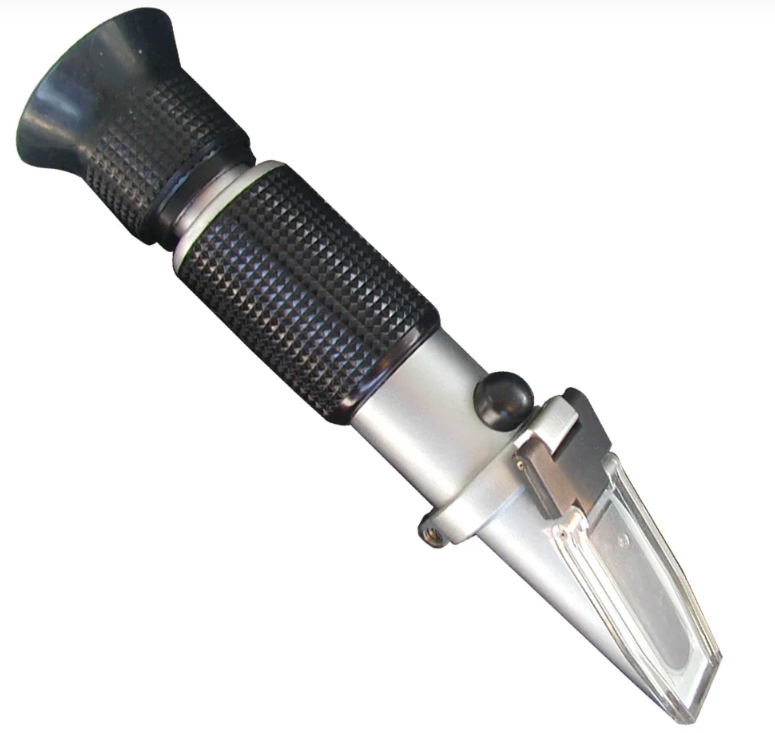
Refractometer
What is Brix and Why it Matters
Brix (°Brix) is a measurement of the concentration of dissolved solids in plant sap or juice, mostly sugars, but also organic acids, minerals, amino acids and other soluble compounds.
It’s measured using a refractometer, which reads how much light bends as it passes through a drop of plant juice, giving a percentage of dissolved solids by weight.
Brix matters because it reflects how effectively a plant is functioning. Higher Brix readings generally indicate stronger photosynthesis, better nutrient density and greater overall plant vigour. For this reason, Brix is widely used in agriculture as a quality and harvest index, particularly in crops such as wine grapes.
When measured over time, Brix provides insight into plant health and performance. Stable or rising readings suggest efficient energy production and nutrient uptake, while declining readings can indicate stress before visual symptoms appear. This is why many growers now use Brix as a monitoring tool for plant stress and nutrient response rather than relying solely on appearance.
Soil Health and Why its Important to Brix
Soil health underpins Brix because it supports the processes that allow plants to produce and store sugars. Active soil biology makes nutrients plant-available, stable soil structure supports consistent root function, balanced nutrition supports sugar production and transport, and organic matter helps regulate moisture and nutrient flow.
When these systems are working together, plants are capable of higher Brix. Sugars produced through photosynthesis are exuded into the soil, feeding microbes that in turn release nutrients back to the plant. The process is circular and self-reinforcing.
It’s important to remember that Brix doesn’t increase simply because fertiliser was applied. When soil health is addressed first, fertiliser becomes supportive rather than corrective and higher Brix follows.
Because Brix reflects how well this whole system is functioning, it can be a useful guide for home gardeners. A rising Brix reading suggests the soil is functioning well, allowing roots to access nutrients and water consistently. That consistency supports steady photosynthesis and steady sugar production.
In commercial agriculture, however, Brix is rarely used in isolation. Growers often pair Brix testing with plant tissue analysis: Brix shows overall system performance, while tissue testing identifies which nutrients may be limiting. Agronomic research shows that fertiliser timing, soil moisture and overall nutrient balance all influence soluble solids in crops.
What Brix numbers mean
Brix values vary by crop, climate and genetics, but the following ranges provide a useful general guide.
Leaf sap Brix (plant health indicator):
Below 6° — weak photosynthesis, high stress
6–9° — moderate health
9–12° — strong metabolic activity
Above 12° — excellent performance and nutrient density
Fruit Brix (flavour and quality indicator):
8–10° — average or standard quality
11–13° — good quality
14–16° — excellent
17+° — exceptional, often seen in well-managed soils
Just to remember, these aren’t hard thresholds. Brix varies with environment and crop type, which is why commercial growers don’t rely on Brix alone. For home gardeners, however, it provides a valuable reference point for understanding plant performance and soil function.