Find Us:
77 Fernvale Rd
Brassall QLD 4305
(07) 3201 8630
Open:
Tue-Sun 9am - 4pm

Best Cut Flowers
Looking for a plant that flowers for months and makes the perfect winter gift? Cyclamen persicum is your go-to for cool-season colour and easy care.
I love the cooler weather. I know the days are still warm, but the nights have that glorious cool tinge and even better, all the plants I love to surround myself with are now in bloom, or coming into bloom.
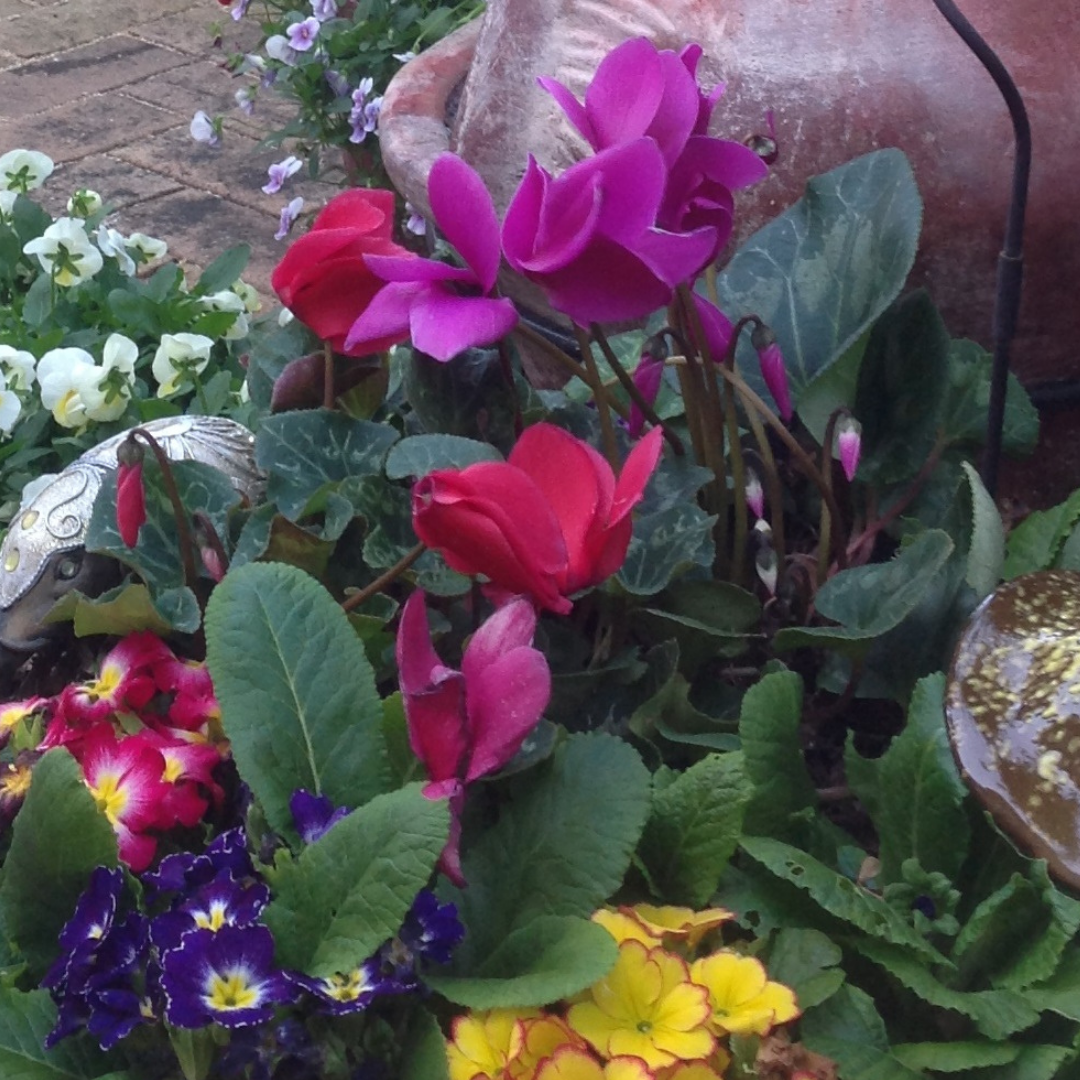
Cut Flowers that lasts for months inside or out!
I love gift giving at this time of year. I don’t do cut flowers, of course as I want my gifts to last a little longer, but I also know not everyone is a green thumb, so I also don’t want to cause any stress with my gift.
Which is why I always love giving Cyclamens.
Why Cyclamens?
Cyclamen persicum, native to the rocky slopes of the eastern Mediterranean, think Turkey, Syria, and Jordan is usually the Cycamen you will find at Trevallan. Despite their exotic origin, they’re remarkably well suited to life here in Ipswich during winter on patios or cool, bright indoor spaces.
They flower for months, from April right through to October, in a rich tapestry of colours, from snowy whites to rich reds, mauves, pinks, and bi-tones. This year a blue one was released for the first time. The foliage is also just as striking as the flowers — heart, kidney, or rounded leaves, patterned or marbled with silver.
A gift and a decoration in one.
Treat Them Cold, Keep Them Beautiful
Even though Cyclamens can grow well indoors, they love the cold. Cool air slows their respiration and preserves their blooms. I always say: cold mornings are their skincare routine!
At home, I water mine once a week, a good slow drench under a tap using icy cold water. Then, I pop them outside (in a shady spot) overnight. That cool, fresh air seems to give them a new lease on life. Indoors, they sit prettily in a bright room until it’s time for their next drink.
The trick is to let them dry out slightly between waterings. Cyclamens grow from a tuber, and those tubers are prone to rot if overwatered or if water collects in the crown. So always water the soil around the base, never directly into the middle of the plant. That centre is their weak spot.
Potting, Planters, and Fuss-Free Beauty
I prefer to keep mine in a decorative planter, not potted into a decorative pot with drainage. I simply place the Cyclamen, in its original black plastic pot, inside the planter. That way, I can take it out to water properly, let it drain, and then pop it back in. Just don’t let water sit in the base, soggy roots are sad roots.
Feeding Flowers, Not Foliage
Cyclamens are moderate feeders, and like many flowering plants, too much nitrogen means lots of leafy growth and very few flowers. To keep mine flowering and healthy, I feed fortnightly with Silica and Potash Liquid. This helps strengthen cell walls, increase flower production, and prolong bloom life. The result? Bloom after bloom, week after week.
Deadheading and Dormancy
Cyclamens don’t like being trimmed with scissors. To remove a tired flower or yellowing leaf, gently twist the stem at the base and pull it cleanly away from the tuber. This reduces the risk of rot or infection and helps the plant focus its energy on new growth.
Cyclamens grow from a tuber and tend to die down during our hot, humid summer. In our hot, humid climate, that’s perfectly normal. You can let the plant rest by placing the pot in a cool, dry, shady spot, reduce watering to almost nothing, and wait. If you’re lucky, it may re-sprout next autumn. If not? Well, you still got months of blooms for the price of a bunch of cut flowers and then some.
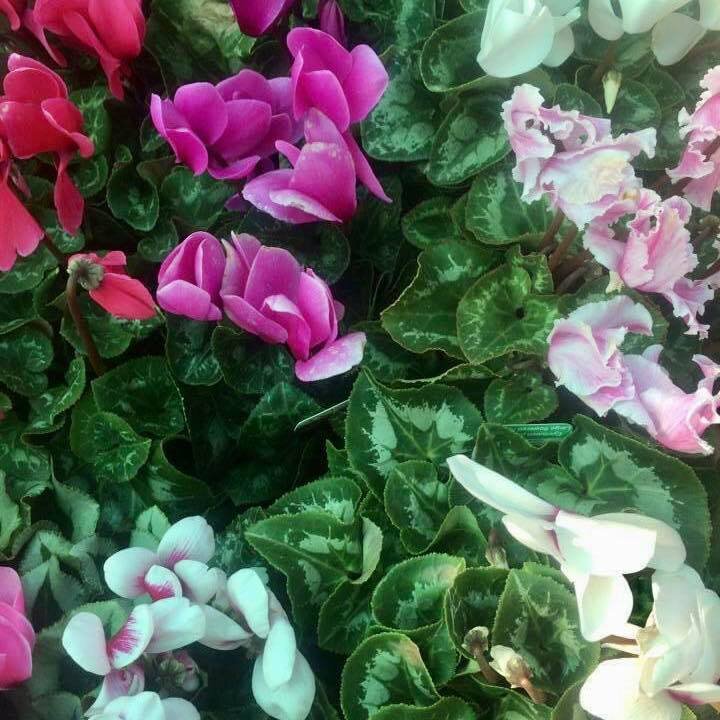
Cyclamen - best flower for indoors
A Cyclamen will warm your soul, even on the coldest morning. Whether you’re decorating your home, cheering up your work desk, or spreading a little love, don’t forget, a living gift like this blooms longer, lingers longer, and keeps on giving.
Planting by the Moon
Moon Planting Calendars can help unlock the secrets of the lunar cycles with easy-to-follow directions on the right time to plant, when to fertilise, when to cultivate, when to harvest and when is best to time preserve fruit.
What type of gardener are you?
I’m the one that has 15 minutes to spare, so I’ll try to get as much done as possible. I don’t care what day, month or year it is. Things get trimmed, fertilised, sprayed and planted when I say so.
Perhaps you are more of a follower of the rules, like only plant your sweet peas on St Patrick’s Day?’
Or perhaps you a seasonal gardener, only plant in the spring, trim in the summer and rest in the cooler months?
No matter what type of gardener you are, does it ever feel like you are just unlucky in the garden and then once in a blue moon you hit jackpot and everything goes according to plan? Or are you always lucky and once in awhile things go astray and you just can’t explain it?
Have you ever tried to germinate seeds and sometimes you get 90% success rate, and other times not one measly seed grows- yet you did nothing different?
It’s not just you. It happens to everyone.
The good thing is, The Jackson 5 and myself may be able to explain it.......
Don’t blame it on the sunshine,
Don’t blame it on the gardener,
Don’t blame it on the good soil,
Blame it on the Moon!

Using Thomas Zimmer's Moon Planting Calandar so I can find out best times to plant for optimal growth
For thousands of years, people have been practicing Moon Planting.
Moon planting is based on the synodic period of the Moon, from one New Moon to the next, which is across an average period of 29.5 days.
Over this time, farmers observed that all aspects of farming seemed to be affected by the interaction of the gravitational forces between the Sun, the Moon and the Earth.
Scientists have also found variations in sap flow, biological functions in plants and the subtle changes in the Earth’s electro-magnetic fields, which correspond to the Moon’s gravitational pull. So basically, just as the moon influences the tides, it also affects the motion of water in plants and soil. The ebb and flow of this water ultimately also has an impact on seed germination, flower development and fruit production.
Ok, so how do we unlock the secrets to moon planting? With a Moon Planting Calendar of course.
Moon Planting Calendars unlock the secrets of the lunar cycles, with easy-to-follow directions on the right time to plant, when to fertilise, when to cultivate, when to harvest and when is the best time to preserve fruit.
My grandfather always swore by Thomas Zimmer’s ‘Moon Planting’ calendar. It is produced in Australia for Australian conditions. He followed it for gardening, fishing and even getting operations ....
Thomas Zimmer’s ‘Moon Planting’ calendar is a detailed chart that gives the correct lunar and astrological planting times for fruiting and leafy vegetables and covers the best times to weed, transplant seedlings, prune, harvest and irrigate. There are even instructions for those new to gardening by the moon. The calendar also contains astrological information such as moon phases, equinox, solstice and eclipse dates and times, including annual planting by the moon guides, as well as an astrological commentary on the year to come.
Who knows what the next year will bring, but I’m sure if you follow Thomas Zimmer’s ‘Moon Calendar’, your gardens will be bountiful.
Get your Calendar here

Winter Vegetables
Autumn, Warm Days, cool nights. Perfect for vegetable planting.
Autumn. Warm Days, cool nights. Perfect for vegetable planting.
By now your vegetable patch has been freshly composted and manured. It’s just waiting for you to plant out. If you are having trouble with how to start off your vegetable patch, check out my Vegetable Patch Checklist
The basic cool season vegetables that I find grow well in most areas are – broccoli, beetroot (my favourite), cabbage, cauliflower, leek, onions, shallots, silverbeet, spinach, snow peas, strawberries (my other favourite), peas, kale and rhubarb.
If you don’t get a frost or you can cover your vegetables - beans, lettuce, capsicum and tomatoes can also be grown.
If you get really cold you can give brussels sprouts a go.
This is the basic vegetable range; there are so many different variations on these classic cooler weather vegetables.

In seedlings alone you can get about four different versions of broccoli.
If you start using old fashioned open pollinated seeds, the list can be endless.
If your vegetable patch consists of a variety of different sized pots don’t worry, there is a large range of dwarf vegetables available in seedlings and seeds.
Leek, lettuce, capsicums, shallots, silverbeet, spinach, snow peas, strawberries, peas and rhubarb all grow well in pots without needing dwarf varieties.
The secret to growing any vegetables in pots follows the same principles as growing in the ground.
Start with the best quality soil or potting mix, mulch with an organic material (I like organic sugar cane mulch that is free from weeds), fertilise with a complete organic slow release fertiliser and liquid fertilise fortnightly with a complete organic liquid fertiliser.
I like using the Plant of Health range of fertilisers – Organic Link and Triple Boost and Searles' range of garden soil for gardens and potting mix - Platinum Potting Mix for pots
I find the cooler months are the best time for growing herbs. Nearly all the herbs are available now. Herbs grow well in the garden or in pots and most herbs can be grouped together in pots to make mini herb gardens.
The best thing about growing cool season vegetables is that it’s usually too cold for the pests to be out and about. If you do get a few pests a pyrethrum based spray or one of the new organic sprays like eco oil or eco fend work well. Mildew and mould is a common problem during wet winters - copper spray (some are considered organic) can be the best solution.
I have heard that having pretend white butterflies in your vegetable patch not only looks pretty but helps deter moths. Jerry Coleby-Williams has also mentioned that Land Cress is a confirmed biocontrol. We stock Land cress in seeds and in plants.
Remember though the healthier the soil, the healthier the plants and the less likely you are to get problems. Now get outside and get dirty!

Brighten your Garden with Oranges, Yellows and Pinks.
Ixoras have dark green leathery leaves and produce large clusters of tiny flowers in the summer and autumn. They can be a little hard to grow but are worth the effort
Ixoras.
This is an I love it or I hate it plant.
My mum loves them. I must admit I verge on the opposing side. So, why on earth would I write about them and stock them at Trevallan if they are on my not so favourite list?
Well as with many things these plants have grown on me over the years and as with many plants there seems to be a time and a place for them.
Ixoras are native to the tropical and subtropical areas throughout the world, with many of them in Tropical Asia. These plants typically can't handle frosts so if you are in a frost prone area these may not be for you. Some Ixoras are more prone to being cold affected while others can handle a little bit of cold.

Ixoras have dark green leathery leaves and produce large clusters of tiny flowers in the summer and autumn. The more common Ixoras usually have orange, gold, pink or red flowers. Ixoras prefer acidic soil and usually like a little shelter from our blazing summer sun. In saying that I have seen many gorgeous Ixoras growing in full sun in a commercial setting (shopping centres). They don't mind being in pots or the ground.
I find the four most popular Ixoras are 'Prince of Orange', 'Pink Malay', dwarf orange and dwarf gold. Ixora williamsii is also popular as it has red flowers but it really dislikes the cold so is not commonly grown in Ipswich.
Prince of Orange has fiery orange flowers and can grow around two meters tall. The dwarf orange and yellow grow to around 1/2 metre. These look amazing in pots but I have seen them in gardens trimmed into a hedge and they look stunning when in flower. You can hardly see their green leaves.
My favourite Ixora is Pink Malay. Why do I love it? Not just because it gets covered in pink flowers but because it is so hardy. This Ixora is absolutely amazing; growing to around a metre it can handle full sun and shade. It can grow in pots or the garden and I have seen it successfully growing in a shopping centre car park. Yes that's right, a shopping centre car park. A place that has no good soil, no mulch, no care, only rain fall and it looks glorious. This is why I love this plant.
Ixoras like all my plants get fertilised with Organic Link and Triple Boost and neem oil. I use Searles Platinum Potting Mix for pots and Searles' garden soil for gardens.
There is a grub that likes to destroy your Ixora flower heads. There are a few ways to combat this. As soon as the buds start appearing I begin to mix neem oil in with my fortnightly Triple Boost. If it gets really bad I will spray with Dipel. I will sometimes use Searles' Bug Beater. Eco-oil would also work.
Sooty mould can also form on the leaves. This can be caused by scale and ants. Give your plant a really good soil drench and use a soil wetter if necessary. Fertilise with Organic Link and spray with neem oil or Eco-oil. In a fortnight or so you should be able to hose off the soot and hopefully the ants would have dissipated.
This autumn and summer brighten up your dull spots with shades of orange, yellow and pink.

Growing Spring Flowering Bulbs in South East Queensland
Spring Flowering Bulbs in South East Queensland seem like a waste of time, don’t despair though we can still plant some beautiful bulbs, corms, and tubers, we just need to change what we plant!

Ranunculus flowers almost look too good to be real. These are an easy to grow Spring Bulb
Bulbs, corms and tubers are all sometimes erroneously referred to as bulbs. The technical term for plants that form underground storage organs is geophyte. All these types of plants cycle through vegetative and reproductive growth stages; the bulb grows to flowering size during the vegetative stage and the plant flowers during the reproductive stage.
These plants need certain conditions to trigger the transition from one stage to the next, such as the shift from a cold winter to warm spring.
Due to the bulb, corm or tuber being a storage device, these plants can also survive adverse conditions such as cold, excessive heat, lack of light or drought.
The foliage of these plants absorb nutrients from the soil and energy from the sun for setting flowers for the next year. After the foliage period is complete, bulbs can be dug up for replanting elsewhere.
I just love the idea of my garden bursting with colour and scent in the Spring, like they do down south or overseas, but sadly, Spring flowering bulbs in South East Queensland just don’t really live up to the expectation.

Hippeastrum reticulatum var. striatifolium
Don’t despair though, we can still plant some beautiful bulbs, corms, and tubers, we just have to accept that our choices are different to the southern states. We can still grow tulips, hyacinths, daffodils, ranunculus and anemone here in South East Queensland. It's just they will never grow like they do down south or in Europe. They usually only flower for just one season and we treat them the same as other flowering annuals such as marigolds, pansies or petunias.
If you want bulbs that will naturalise and come up year after year in your garden and pots, you can happily choose bulbs such as Freesias, Ixia, Sparaxis, Jonquils, Babiana, Tritonia, Leucojum aestivum, Eucharis, Sprekelia, Zephyranthes, Rex Begionas or Proiphys cunninghamii (Brisbane Lily). Don't forget we also have some great summer bulbs/corms/tubers like Hippeastrums, Scadoxus, Haemanthus, Caladiums and ornamental Gingers. We are slowly building up our bulb collection here at Trevallan… SHOP BULBS HERE
When I am looking for new bulbs to plant out, I like to look for flowering bulbs native to South Africa, as I find these do a lot better in South East Queensland.
In my quest to achieve a garden that comes alive with flowering bulbs, I asked Claire Bickle from Gardening for the GoodLife to give me a few tips on how to achieve this daunting task!
Claire Bickle's Tips for Growing Bulbs
Place larger bulbs, such as jonquils, hyacinths, daffodils and tulips in a paper bag in the crisper drawer of the fridge for 4-6 weeks before planting. This gives them the chill down they would not otherwise receive in our mild autumns.
Ranunculus corms are best spread out on a thick wad of wet newspaper and covered with another reasonably damp wad overnight before planting the next day. This helps the corms to swell and get ready for shooting once planted.
If growing in pots, use a good quality potting mix and ensure the pots have good drainage. Shallow pots work quite well too and remember some bulbs can be planted closely together.
You can fertilise the soil with Organic Link when planting, but there is no need to start fertilising with liquid fertiliser until they have some growth. Then I alternate fortnightly feeds between Triple Boost and Potash and Silica.
When the bulbs have finished flowering, don’t be tempted to cut all the foliage off. Leave it to die down naturally, as this is how the bulb draws back in all it’s nutrients to store away until the next season.

A range of spring flowering bulbs
I am very excited, the bulb garden of my dreams may just be achievable if I change the way I view my end goal. This year I've bought myself a mixture of bulbs like Gladiolus, Iris, Jonquils and Ranunculus and I have interplanted them amongst my annuals like poppies, pansies and lobelia. I can't wait to try out Claire's tips and see what comes up this and hopefully, next year. One thing about gardening which is for sure though is that it's never the same!
Gardening Advice, who you ask is Important!
Want correct and helpful advice on gardening - visit your local garden centre. The best place to get correct information is a place that specialises in that particular subject.
I was horrified the other day to hear this story…
A customer was in the greenlife section of a big box store when she overheard a staff member recommending a particular potting mix. Curious because all gardeners want to know what they could be doing better, she moved closer to hear more.
What she discovered was shocking: the staff member was recommending a product she recognised immediately as composted fertiliser, not a potting mix at all.
The bag even clearly stated, in bold print: "THIS IS NOT A POTTING MIX."
These first-time gardeners walked away with three bags of the wrong product and a handful of plants. Unknowingly setting themselves up for heartbreak. Their plants were unlikely to survive, and worse, they’d probably blame themselves when it all went wrong.
This is the real danger of bad advice.
When a plant fails, people get discouraged. They feel like they’ve wasted their time, energy, and money. Many give up on gardening altogether, thinking they were the problem, when in reality, it was simply the wrong product for the job.
The right advice makes all the difference.
And the best place to get it?
A business that actually specialises in gardening.
Garden centres are home to qualified, experienced horticulturists. People who don’t just sell plants, but understand them. We’re locals too, which means we’ve battled the same clay soils, the same hot summers, the same tricky planting spots. We don’t just sympathise, we’ve been there.
Our goal is to help you through your gardening challenges, take away the confusion, and bring back the joy of growing. For most of us, this isn’t just a job. It’s a lifelong passion.
Here at Trevallan Lifestyle Centre, between Carolyn and myself, we bring over 50 years of hands-on gardening and horticultural experience to the table.
We work hard to stay current, not just with what looks good, but with what actually works. That means staying on top of:
Changes in product formulations
Plant performance in our climate
Emerging industry trends
Environmental challenges
We attend supplier sessions, horticultural expos and conferences, and regularly read industry journals and research papers. I’m also a proud member of the Horticultural Media Association, which helps keep us connected and accountable as professionals in this trade.
At Trevallan, we’ve learned that we don’t need a thousand gardening items on the shelves. We only stock what we use ourselves. The tools, products, and plants we know work. It’s all about keeping things simple, effective, and grounded in experience.
We also run a number of horticultural workshops and masterclasses throughout the year, because we believe gardens are investments and to make sure that investment thrives, you need access to honest, down-to-earth, professional advice.
So next time you’re ready to improve your plant-life balance and give your space a little TLC, visit the real gardening experts at Trevallan Lifestyle Centre, your local garden centre.

Mites
MITES may be invisible to the naked eye but the damage they can cause to plants and lawns isn't so unobvious.
MITES
These pesky bugs are everywhere at the moment, even in lawns. I have found out there are about a gazillion different types of mites (well maybe not a gazillion but quite a few).
Unfortunately mites are invisible to the naked eye. The damage isn't so unobvious.
Some signs of mites
leaves take on a brown, felt-like appearance
distorted, knobbly new growth
the leaves may have yellow blotches on them
distortion, deformation, wilting, spotting, streaking or discoloration on the surface of the leaves
Flowers may not open or become distorted
spiderwebbing on the undersides of the leaves or up stems
With all insect infestations I treat the problem at hand but I also look at why the plant or lawn is being attacked. Is the plant/lawn stressed or unhealthy, too dry or too wet. I always follow the advice I was once given by an organic farmer - A healthy plant doesn’t suffer from an insect attack! So if my plants are suffering from an insect attack I deal with the insect but then look at how to make the plant/lawn healthy again.
Our method of controlling most pests here at Trevallan is a simple one. Trim and fertilise. Sometimes though a fertilise with Organic Link and Triple Boost just doesn't cut it.
When I asked Des from Plant of Health (the team that make our wonderful organic fertilisers) what to use when i need to ‘spray’ to deal with an insect attack he recommended a weekly spray for at least four weeks with Plant Care and Neem Oil, mixed together. This can be used on lawns too.
Why Neem Oil and Plant Care?
Neem Oil is derived from the Azadirachta indica tree. When applied to insects and the plants they are eating, neem oil causes many insects to feed less, grow more slowly, molt less, and lose interest in laying eggs. Neem also suppresses the hatching of pest insects from their eggs.
Plant Care is like a vitamin pill for plants or when they’re sick or stressed. Plant Care contains natural liquid fish proteins, amino acids, liquid vermicast, fulvic acid, natural growth stimulants as well as a special blend of selected herbs and botanical extracts. Plant Care is a natural, non toxic foliar spray and can be used regularly on all plants, vegetables and lawns without the fear of NPK overload or plant damage.
So when mites or any other insects attack take Des' advice ‘a four week intensive care program’. You will see the difference in all your plants as you say goodbye to mites and any other nasty insects that want to destroy your garden.
Good Luck Mite Hunters.

Talking Dirty
What gardening terms do you use that people think you've made up, don't understand or have a little giggle at your expense?
Last week on Trevallan Lifestyle Centre's Facebook page, I posed the question "What gardening terms do you use that people think you've made up, don't understand or have a little giggle at your expense?"
There were some great examples and I thought I'd enlighten you all with some gardening terms that I find I use and people think I have started to talk in my own special language.
Deciduous
Deciduous, pronounced dih-sij-oo-uhs, is the term I am most often asked to explain. Deciduous means "falling off at maturity" or "tending to fall off", and it is typically used when talking about plants that lose their leaves seasonally. Many plants, particularly in cooler regions, drop their leaves in autumn, have a dormant period through the winter and then come alive again in the spring. In some subtropical and arid regions, plants lose their leaves during the dry season and remain dormant until the wet season begins.
Active Constituent

Active constituents are the substance/s in an agvet (agricultural and veterinary) chemical product primarily responsible for a product's biological or other effects.
For example, Glyphosate is the active constituent in most weed killers. In horticulture, companies register products with different trade names, however, you will often find the active constituent is the same. Trade names such as Yates Zero, Searles Dead Weed, Brunnings Weedkill all contain the same active constituent - glyphosate. When dealing with chemicals in gardening, know your active constituents and you'll never need to rely on trade names again.
Bisexuality
A Bisexual flower or perfect flower is when the flower has both the essential whorls i.e., androecium and gynoecium (male and female reproductive units). Some examples are lilies, roses and sweet peas.
When it comes to fruit and vegetables, we generally use the term bisexual plant, meaning the plant has both male and female flowers and you do not need two separate plants. For example, a pumpkin will usually produce both male and female flowers, following this, insects will hopefully pollinate the females, with the result being big, healthy pumpkins.
Self-watering pots
Now unless you have gnomes in your garden doing all your dirty work, there is no such thing as a self-watering pot. When you buy a self-watering pot, you still have to water.
In a self-watering pot you have a very large saucer, or water well, and the soil is held above the water well, with a false bottom. The water well and the soil are usually connected by a wick of some sort.
As water is used by the plant, capillary action draws the exact amount of water up from below, therefore the soil has just the right amount of water all the time, but also maintains air pockets, which the plant roots also need. This is great for plants that don't like being over watered, as you just fill the bottom chamber.
While self-watering pots are great, I find they only really work once the plant has an established root ball.
This weekend, why not practice your ‘dirty talk’ with someone and show off your new gardening knowledge.

Bloomin' Fabulous
Potassium Sulphate or Sulphate of Potash is commonly called Potash. It is an essential element necessary to the lives of all plants.
A common question I am asked is "why didn't my fruit trees fruit profusely or if they did why was the fruit misshapen?" Or "why didn't my camellias and azaleas flower as well this year?" Or even "why are all my coloured foliaged plants like crotons and dracaenas losing their colour?"
The answer is usually quite simple - Your garden just needs some TLC and maybe a little Potash!
Potassium Sulphate or Sulphate of Potash is commonly called Potash. It is an essential element necessary to the lives of all plants.
It aids in disease resistance and frost protection by strengthening the plants cell walls. It helps in seed and root development. It encourages strong new growth and helps with the formation of flower buds and fruit.
Potash can improve the quality and the colour of flowers and enhances the formation of proteins and sugars in fruit. Potash can even help plants with slender stems and large flower heads such as Iceland poppies and gerberas hold their heads erect.
Potash defective cues can be seen in a number of ways in your plant. Your plants might be showing signs of overall weakness especially in its stem. It could have yellowing leaf margins and grow more slowly. It could also be disease prone and its fruit and flowers will be small and poorly coloured and sometimes tasteless.
Don't confuse a potash deficiency though with an unhealthy plant. Always make sure you have given your plant some complete slow release organic fertiliser like Organic Link and a Bio Trace first.
Complete fertilisers, whether they are chemical or organic, usually contain potash. Organic Link contains potash. An N:P:K ratio can usually be found on the fertiliser label. A very quick explanation of the N:P:K ratio is - N stands for Nitrogen (greening, growing), P Phosphorus (roots) and K Potassium (fruiting, flowering).
If you use mainly a manure based fertiliser like blood and bone or chicken manure you will need to add potash as these products don’t naturally contain it.
Potash also is available by itself in a liquid form and a granular form.
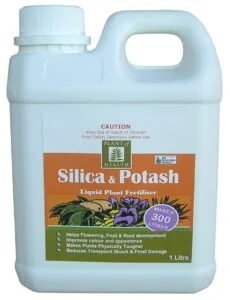
The liquid form is added to water and used as a foliar spray. Used like this it is quick acting but not long lasting and needs to be repeated on a fortnightly basis. This is best for promoting flowers especially on annuals. I use Plant of Health's Potash and Silica.
The granular form is added to the soil and watered in. The granular is slower acting but lasts a lot longer. This is best for correcting deficiencies, promoting fruit and stimulating coloured foliage. We use Searles' Potash.
This weekend I want you all to get some granular potash and go a little silly in your gardens.

The Secret to Great Looking Plants
If you've fertilised, watered well, even checked the pH level, what could possibly be wrong with your plants? Trace elements.
I have discovered the secret to great looking plants.
Trace Elements.
Trace Elements isn’t some brand spanking new fertiliser on the block. It’s an essential item to healthy soils.
Most gardeners are going ‘pfft’ - I so knew that.
Well you might know it but how many of you use a complete trace element mix on your gardens at least once a year? What about your pots, at least twice a year?
It seems everyone fertilises and expects to see results. What happens when you do all the right things but you don’t see the results you want?
A common question is – “I’ve given my plants all the TLC they can handle, I’ve fertilised, watered well, even checked the pH level and it's perfect. What could possibly be wrong with my plants?

Most of us are aware that plants require mineral nutrients for their growth and development. Nitrogen, phosphorus and potassium, the macro elements, the names that usually appear on fertilizer packages, whether you use organic or chemical fertilizers. It is sometimes assumed that they are the "important" nutrients. These macro elements are just consumed by the plants in large quantities. Trace elements, micro nutrients can often be forgotten about as they are required in minuscule quantities.
When it comes to macro elements being the most important nutrients, nothing could be further from the truth. Trace elements like Manganese, Iron, Zinc, and Copper, are every bit as vital to the plants metabolism as nitrogen, potassium and phosphorous. They have essential functions and so a deficiency in even one element will adversely affect the healthy growth of the plant. Strangely enough some trace elements when present in excessive concentrations are actually poisonous for plants.
Common gardening practices (such as liming acid soils) can contribute to widespread occurrence of micronutrient deficiencies in plants by decreasing the availability of the micronutrients present in the soil. Also, extensive use of glyphosate (most common weed killer) is increasingly suspected to impair micronutrient uptake by plants, especially with regard to manganese, iron and zinc.

So how do we pinpoint the problems in our soil? We can get a leaf or soil analysis. Yeah right! I couldn’t be bothered with all that.
So what do I do?
I use Plant of Health’s Bio Trace. It has a blend of the key micronutrients (e.g. iron, cobalt and manganese) supported by macro elements. It is also contains fulvic acid to further enhance growth and health.
The best thing about Plant of Health’s Bio Trace, you mix some up in a watering can and pour it over the plants foliage or as a soil drench. Done. Couldn’t have been easier.
Go on breathe some life into your garden and use Plant of Health’s Bio Trace.
Careful though, when you see the difference it makes you’ll be buying it in bulk like I do now!

Got Milk
Your local garden centre’s staff are the gardening experts – they should be able to listen to your needs and recommend the right product.

Why is it so hard just to buy milk? You all know the advertisements on TV with the guy who just wants milk, but the shop assistant rattles off about twenty different choices. All he wants is milk that tastes like milk! In the end the relief on his face when the shop assistant just gives him what he wants is priceless.
I’m not a huge fan of being overloaded on choice. Electronic equipment, like computers and their programs, is one area where I’d prefer there to be just the one option! I’m not a person that likes to spend hours trolling the internet and magazines looking for the best computer program for my needs. I appreciate going to a specialist computer shop, talking to an expert and let them recommend me the best program for my needs.
I feel the same about gardening. Gardening shouldn’t be hard – back breaking maybe, but not hard. Getting good gardening advice shouldn’t be confusing either. If you have a problem with your plants, need some general gardening advice or even just need to buy a living gift, I recommend you go to a specialist garden centre, as they have expert staff on hand at all times and are alway willing and ready to help.

Have you ever been confused and overloaded by the choice of gardening products on the market? I know I am sometimes. I often wonder just how many versions of trace element mix can there be and it feels like every gardening magazine, lifestyle show and the guy next door, all have their favourite gardening tips.
If confusion and not very ‘good tips and helpful hints’ have prevented you from enjoying the great outdoors, it’s time to take control and visit an expert – your local garden centre, like Trevallan Lifestyle Centre.
Local garden centre staff are gardening experts – they listen to your needs and recommend the right product, without the need to sell a plethora of brands. You don’t need to know that there are ten products on the market that kill slugs, but are safe for dogs. You just need one and one that works. So a garden centre and their expert staff need only stock the one brand that they perceive is the best. However, in some cases, a small range of similar products (for example potting mixes), are necessary as people’s needs are different. In this case, the garden centre experts should then be able to inform you of the differences and recommend the best one suited to your needs.

Your local garden centre is not only staffed by local experts, who have all suffered the same gardening problems that you are currently suffering. Garden centre staff enjoy helping you through your gardening problems, removing any confusion and reinvigorating your joy of gardening.
So next time you decide to improve your plant life balance and give your garden some TLC, make sure you visit the gardening experts - Trevallan Lifestyle Centre - your local garden centre.