Find Us:
77 Fernvale Rd
Brassall QLD 4305
(07) 3201 8630
Open:
Tue-Sun 9am - 4pm
Planting by the Moon
Moon Planting Calendars can help unlock the secrets of the lunar cycles with easy-to-follow directions on the right time to plant, when to fertilise, when to cultivate, when to harvest and when is best to time preserve fruit.
What type of gardener are you?
I’m the one that has 15 minutes to spare, so I’ll try to get as much done as possible. I don’t care what day, month or year it is. Things get trimmed, fertilised, sprayed and planted when I say so.
Perhaps you are more of a follower of the rules, like only plant your sweet peas on St Patrick’s Day?’
Or perhaps you a seasonal gardener, only plant in the spring, trim in the summer and rest in the cooler months?
No matter what type of gardener you are, does it ever feel like you are just unlucky in the garden and then once in a blue moon you hit jackpot and everything goes according to plan? Or are you always lucky and once in awhile things go astray and you just can’t explain it?
Have you ever tried to germinate seeds and sometimes you get 90% success rate, and other times not one measly seed grows- yet you did nothing different?
It’s not just you. It happens to everyone.
The good thing is, The Jackson 5 and myself may be able to explain it.......
Don’t blame it on the sunshine,
Don’t blame it on the gardener,
Don’t blame it on the good soil,
Blame it on the Moon!

Using Thomas Zimmer's Moon Planting Calandar so I can find out best times to plant for optimal growth
For thousands of years, people have been practicing Moon Planting.
Moon planting is based on the synodic period of the Moon, from one New Moon to the next, which is across an average period of 29.5 days.
Over this time, farmers observed that all aspects of farming seemed to be affected by the interaction of the gravitational forces between the Sun, the Moon and the Earth.
Scientists have also found variations in sap flow, biological functions in plants and the subtle changes in the Earth’s electro-magnetic fields, which correspond to the Moon’s gravitational pull. So basically, just as the moon influences the tides, it also affects the motion of water in plants and soil. The ebb and flow of this water ultimately also has an impact on seed germination, flower development and fruit production.
Ok, so how do we unlock the secrets to moon planting? With a Moon Planting Calendar of course.
Moon Planting Calendars unlock the secrets of the lunar cycles, with easy-to-follow directions on the right time to plant, when to fertilise, when to cultivate, when to harvest and when is the best time to preserve fruit.
My grandfather always swore by Thomas Zimmer’s ‘Moon Planting’ calendar. It is produced in Australia for Australian conditions. He followed it for gardening, fishing and even getting operations ....
Thomas Zimmer’s ‘Moon Planting’ calendar is a detailed chart that gives the correct lunar and astrological planting times for fruiting and leafy vegetables and covers the best times to weed, transplant seedlings, prune, harvest and irrigate. There are even instructions for those new to gardening by the moon. The calendar also contains astrological information such as moon phases, equinox, solstice and eclipse dates and times, including annual planting by the moon guides, as well as an astrological commentary on the year to come.
Who knows what the next year will bring, but I’m sure if you follow Thomas Zimmer’s ‘Moon Calendar’, your gardens will be bountiful.
Get your Calendar here

Apple Trees in Ipswich
Q. Apple Trees in Ipswich, is it possible?
A. Yes and no. Yes, they can be grown and I have seen some glorious ones that produce well. No, I personally think I would prefer to grow another type of fruit tree and leave apple growing to the climates better suited.
Q. Apple Trees in Ipswich, is it possible?
A. Yes and no.
Yes, they can be grown and I have seen some glorious ones that produce well.
No, I personally think I would prefer to grow another type of fruit tree and leave apple growing to the climates better suited.
My family love eating apples and we all know how good they are good for us.

A full-grown apple tree makes a good, shade tree for summer. It has showy spring blooms, colourful autumn foliage, naked for winter to let sunlight in and fruit!
Sounds like the perfect tree. So why don’t we grow more of them in Ipswich?
Well let’s first start by looking at the needs of Apple trees.
With over 5000 varieties of Apple the home gardener can grow you’d think you’d be able to find one that suits you best. There are large growing ones, small growing ones and even low chill ones.
All apples need moist, healthy free draining soil. They don’t like wet feet but are heavy feeders. Ipswich soils can be heavy and not very nourishing. You will have to check your soil type, improve your soil or buy an Apple best suited to pots.
Most apples bear best when there are two varieties nearby to pollinate each other. In fact, some apples have to be pollinated by a completely different variety in order to bear fruit. So you need to make sure you have the room for at least two trees (there are multi grafted ones but these don’t seem to grow as well). You also need to make sure your combination of trees is limited to varieties which are good bets for thriving in Ipswich and which flower at the same time.
Apples need cool-cold winters for fruit development – lots of chilling hours. Chilling hours means number of continuous hours a fruit tree needs to be exposed to effective winter temperatures for flower buds to break dormancy. This varies between varieties.
Most apple varieties need 500-1,000 chill hours but there are some low chill varieties available that need about 300-400 chill hours.
To check your chill hours you need to determine the average temperature for the coldest month (July). I found this great chart on Heritage Fruit Trees website that gives us an indication of chill hours to average temperatures.
Ipswich’s average temperature for July 2019 was about 15C (2018 was 16 and 2017 was 17). This means we can JUST grow the low chill varieties, maybe. Our problem in Ipswich is that we can get really cold one night, then have a hotter night, then a cold night. Chill hours need to be consistent.
Apple Trees also need to be correctly pruned to produce fruit. They need an open framework, meaning the main branches are spaced well apart so sunlight and air reaches all the way through the tree's canopy.
Now you’ve gone through all that, Apple trees can very susceptible to numerous pests and diseases especially in our humid climate. They are by nature a dry summer, cold winter plant. So be prepared to have a spray regime. It doesn’t matter if you prefer to use organic means or chemical, your trees will still need to be protected from pests and diseases.
So all these reasons are probably why Apple trees aren’t commonly grown in Ipswich.
Yes they can be grown and I have seen some glorious ones that produce well.
Two of the most popular varieties grown in Ipswich are Anna and Dorsett Golden.
I personally think I would prefer to grow another type of fruit tree and leave apple growing to the climates better suited but you can give it a try.
Apple (Tropical) Dwarf ‘Anna’
Anna is a low chill variety suitable for the subtropics. It is an excellent tasting crunchy apple similar to Red Delicious. Harvesting is usually January, February, March, November, December (weather dependant) but needs cross pollination, Dorsett Golden is believed to be one of the best to cross pollinators. The dwarf tree only grows to about 2-4m, can be pruned and kept in a large pot. Like all apples it is deciduous.
Apple (Tropical) Dwarf ‘Dorsett Golden’
Dorsett Golden is another low chill dwarf apple that cross pollinates exceptionally well with Anna. It has sweet yellow aromatic fruit that have a pink blush and firm white flesh. Harvesting is usually January, February, March, November, December (weather dependant). The dwarf tree only grows to about 2-4m, can be pruned and kept in a large pot. Like all apples it is deciduous.

Avocado
Grow your own Superfood at home. Avocados are easy to grow if you know how.
Did you know that avocados are the only fruit apart from olives to contain monounsaturated fats? Monounsaturated fat is a healthy fat. Yes there is a thing called healthy fats! Healthy fats help you absorb essential fat-soluble nutrients (such as vitamin E), reduce the risk of developing Type 2 diabetes, help maintain a healthy heart and promote healthy skin.
It’s not just the healthy fats that make avocados so good. There are nearly 20 vitamins and minerals in this nutrient dense fruit. Avocados can help keep your immune system healthy, support mental performance, combat tiredness and even support a good mood.
They are not only a delicious way to ensure you are getting optimum nutrition per day, research shows adding avocado to a salad can increase your ability to absorb nutrients from other ingredients.
But avocados can be expensive in the shops….. so let’s grow our own!
Avocados love warm tropical climates. While you can easily grow an avocado from seed it is not recommended as seed grown avocados may not fruit or fruit successfully every year. It is always best to grow a grafted avocado, grafted by a reputable grower.
Avocados can grow over 6m in perfect conditions. Many of us could not handle this in our backyards which is why we recommend the dwarf growing varieties of avocados or keeping your avocado tree trimmed.
Wutrz and Fuerte are our two favourite varieties for growing in this area.
Avocados don’t need another avocado to fruit as the flowers are botanically classed as ‘bisexual’, carrying both male and female reproductive organs. However having more than one is beneficial and having both Type A and Type B flower types is even more beneficial. They tend to fruit more vigorously when they have friends.
Avocado flowers open twice over a two-day period - the first day as a female and the second day as a male.
Type A avocado flowers are ready to be pollinated in the morning, but any blossoms flowering in the afternoon are releasing their pollen.
Type B therefore, release pollen in the morning and are ready for fertilising in the afternoon.
This means the crawling and flying insects trying to harvest the pollen don't always get to their female counterparts to fertilise the fruit. Luckily, the trees usually flower for up to a month, so don’t panic if you can’t find type A and Type B. Just one Type will be enough to get fruit. If you plan on feeding the neighbourhood getting Type A and Type B might be a good idea. Wutrz are a Type A and Fuerte are classed as a Type B both grow fantastic in Ipswich region.
When growing either of these trees make sure it’s in a full sun position, well draining soil and protected from frosts. We recommend using good quality garden mix like Searles Garden Mix or excellent quality potting mix like Searles Platinum mix.
The trees should be fertilized every three months with a good quality organic slow release complete fertiliser like Organic Link. A liquid fertilizer, like Triple Boost should be applied fortnightly through the growing season. A good liquid trace element mix like Bio-Trace should be given about twice a year. Plant health is very important for best fruiting results.
Avocado – Wurtz
Wurtz Avocado is a gorgeous small tree perfect for pots or small gardens. It naturally small and only grows to around 3m. While it may be small in statue it still produces a consistent, heavy crop of beautiful fruit! It has pear-shaped fruit with dark green skin and can fruit from August till October.
Wurtz are classed as a Type A pollinator so would be beneficial to plant a Type B Avocado.
Get your mini orchard going in your backyard today.
Avocado - Fuerte
Fuerte is marginally oily with a rich, creamy flavour with notes of hazelnuts and is often hailed as the tastiest of all avocados. This B-Type avocado not only improves the pollination of A-Type varieties such as ‘Hass’ and ‘Wurtz’, but it also produces delicious pear-shaped fruit of its own from winter into spring. It has easy to peel fruit that crops better every second year. One of the best cold tolerant avocardos.
Fun Fact : The Fuerte avocado got it’s name as it was the only variety to survive the great freeze of 1913 in Los Angeles, California. Fuerte, means “strong” in Spanish. This avocado cultivar built the Californian avocado industry until the 1930s when Hass took over as it had a thicker skin (not better tasting) and therefore could be transported better.

Parsley
One fragrant herb I am really fond of using in the garden is parsley. t's dark green, lush, exceptionally hardy. Can handle full sun or part shade. Can handle wind and a dry out once established. It prefers nice fertile soil but will grow basically anywhere as long as you give it a good start. Plus you can eat it and if one dies in your border it's easy to replace.

Curly leaf parsley (Petroselinum crispum)
One fragrant herb I am really fond of using in the garden is parsley.
Parsley I believe is an under used bedding plant. Here we have this amazing herb that can be added to any dish and it smells just so refreshing when the wind blows through it yet we only ever put one plant in our gardens.
I honestly think parsley should be used as a border plant in a garden. It's dark green, lush, exceptionally hardy. Can handle full sun or part shade. Can handle wind and a dry out once established. It prefers nice fertile soil but will grow basically anywhere as long as you give it a good start. Plus you can eat it and if one dies in your border it's easy to replace.
I think it's highly underused as a herb for our herb gardens!
If you pick the leaves regularly it promotes more growth. You should really pick from the outside in.

Italian or flat leaf parsley (Petroselinum crispum neapolitanum)
If you've had trouble growing parsley in past it could be because you aren't a witch, superstition says only witches could grow parsley and it was best just to steal it from their yard when you needed it. Usually before a night out on the town with friends as it was believed to reduce the effects of alcohol!
Parsley is a great companion plant and will aid the growth of many plants including tomato, beans, onions and asparagus. I read growing parsley under roses enhances their fragrance!
If you want to attract butterflies, parsley is a favourite of the swallowtail butterfly caterpillars. If you let your parsley flower and go to seed, parsley will attract hoverflies to your garden. With some species of hoverflies, the larvae are known to eat aphids, thrips and other destructive insects. Parsley is also believed to repel harmful beetles.

Flower on Italian or flat leaf parsley (Petroselinum crispum neapolitanum)
This plant is already looking like the best scented plant. Easy to grow, attracts beneficial insects, makes roses smell better, stops the effects of alcohol.... winning! Best of all though is we can eat it and it makes food taste amazing. I think parsley can be paired with any dish and it will enhance the flavour.
Now there are two types of parsley and I think both are brilliant. So you can use either one for your lush tropical scented border plant.
Curly leaf parsley (Petroselinum crispum) with ruffled leaves and Italian or flat leaf parsley (Petroselinum crispum neapolitanum) with flat leaves. In general people believe that flat-leaf parsley has a more robust flavour and that curly-leaf parsley tastes more bitter. I honestly think it depends on the particular plant, its growing conditions, and age.
So it doesn't matter which parsley you choose and it doesn't matter if you grow it for the leaves, the flowers, the scent or the taste. It has so many uses in our gardens and our culinary kitchens I think it's a necessary plant for our scented gardens.

Azaleas
Azaleas are the blaze of colour that brings warmth to the cooler months garden. These divine mass flowering plants will do well for many years but they do need a little TLC to look their best.

Azaleas are the blaze of colour that brings warmth to the cooler months garden. These divine mass flowering plants will do well for many years but they do need a little TLC to look their best.
These beautiful plants have dark lush green foliage and come in a wide variety of colours from white, through to pinks, purples, reds and oranges. There are two basic flower types – single and double. The double is my favourite and luckily many double flowering azaleas spot flower throughout the year so I can enjoy this lovely plant all the time!
Most Azaleas will thrive in semi-shade but some will also look fantastic in full sun or full shade. I prefer the smaller more compact varieties that usually grow to around 50cm to 1m high but some can get over 2m high.
Azaleas love acid soil; the pH range should be between 5.5 and 6.0. Many Ipswich residents find that their garden’s soil pH is too low and prefer to grow azaleas in pots and that's perfectly ok as these plants do well in pots and gardens.
Azaleas have a shallow tight root system. If a good layer of mulch is applied, to your pots or the garden bed, and a soil wetter is used at least every 12 months azaleas should thrive. The mulch, must be organic mulch, like sugar cane or rainforest fines. This helps to keep moisture in the soil, and also helps keep the roots warm in winter and cool in summer. The soil wetter helps water penetrate the soil and root ball as after a period of time your soil can become hydrophobic (resists water).

Nice Surprise Azalea
To keep my azaleas looking their best I use the Plant of Heath Range. I use Organic Link every three months and I will also try to give them a liquid fertiliser fortnightly. I alternate between Triple Boost and Neem Oil (together) and Silica and Potash. When my azaleas have finished flowering I prune them back by about one third.
Azaleas do have some pest and disease problems but I find the healthier the plant the less trouble I have.
Petal blight is a fungal disease that turns the beautiful flowers suddenly brown. You can use an organic fungicide called eco-fungicide but I find the easiest solution is to pick off the affected flowers and throw them away and then I give them some liquid fertiliser.
A common problem with azaleas is one where the leaves loose their colour and lustre; it kind of looks like the leaf has been sand blasted. If this occurs, turn the leaves over and you may see black spots. This is a sign of Lace bug. Severe infestations can lead to reduced plant vigour and loss of leaves. To prevent this from happening I mix Neem oil into my Triple Boost Liquid fertiliser (that I foliar spray once a fortnight). I find prevention is better than fighting the problem after it occurs.

Red Wings Azalea
If the problem does occur I spray with Eco-Fend. You may need to spray a few times to control your infestation and unfortunately once the leaves have that sand blasted look they will stay that way. A good trim and fertilise will help promote nice new healthy growth to cover the unsightly affected growth.
I love how azaleas can enliven a garden‘s dull spots and bring a smile to the face of a friend when given as a present. These plants truly will give your life the TLC it deserves.

Fennel
Fennel (Foeniculum vulgare) is actually part of the carrot family. It has yellow flowers and light green feathery foliage (just like a carrot). The whole plant can be eaten. It is native to The Mediterranean but it grows easily all over the world.
You know what I love roasted?
Fennel bulbs... oh my goodness yum.
So I thought today since I'm feeling a bit peckish, I'd talk about this Amazing Herb. After a bit of research I found out it has a varied history before it got to my roasting pan.

Positive Vibes Essential Oil Blend contains Fennel essential Oil
Did you know the medicinal properties of this herb were well used as far back as the ancient Greeks. They used to chew the seed to help them control their weight during training for the Olympics. It was also believed that it conveyed longevity and gave a person strength and courage.
Romans ate the seeds on long marches when they did not have time to stop and cook and devout Christian's would chew the seeds to satisfy hunger cravings during fast.
Then in the Middle Ages fennel was associated with witchcraft. It was hung inside houses and churches to protect people from evil!
Fennel seems to be used for a lot in traditional medicine from coughs to constipation to kidney stones.
Fennel essential oil is wonderful when you feel attacked or uncertain. It helps you stand your ground and speak your truth with calm assurance. It encourages honest communication and brings lightness to situations that feel heavy. Beyond this, fennel’s sweetness reminds us to finish what we’ve started and to release anything that keeps us from moving forward. It’s an oil of completion and quiet focus, helping us stay dedicated to our goals and approach them with clarity and confidence. When you wear fennel oil, it supports your inner strength and allows you to move through endings and new beginnings with grace.

Fennel Flower
Plus fennel is an amazing Beneficial insect attractor. Jerry Coleby-Williams writes that fennel flowers "acting as nurseries for aphid-eating hoverfly and ladybird larvae. That's handy since aphids also find them attractive."
Seems like such an amazing herb so let's find out how we can all grow it!
Fennel (Foeniculum vulgare) is actually part of the carrot family. It has yellow flowers and light green feathery foliage (just like a carrot). The whole plant can be eaten.
It is native to The Mediterranean but it grows easily all over the world.
Fennel loves the full sun and doesn't require much water once established. The original fennel can grow quite tall so it's best as mid bedding in your garden. I love letting my fennel go to seed and collecting some seeds but letting the rest self seed through out the garden. I love seeing the feathery leaves blowing in the breeze.
For something really classy there is the bronze fennel which grows to only about 40cm and has an amazing shimmery bronze foliage. Now this plant should be used in more ornamental gardens as a feature plant. Bronze foliage isn't common and looks stunning against a green backdrop.
Florence fennel, the one with the bulb that I love roasted, is named Foeniculum vulgare Azoricum Group. It is a cultivar group (fancy horticultural term that helps distinguish a group of plants with similar characteristics) with an inflated leaf base which form my yummy bulbs.
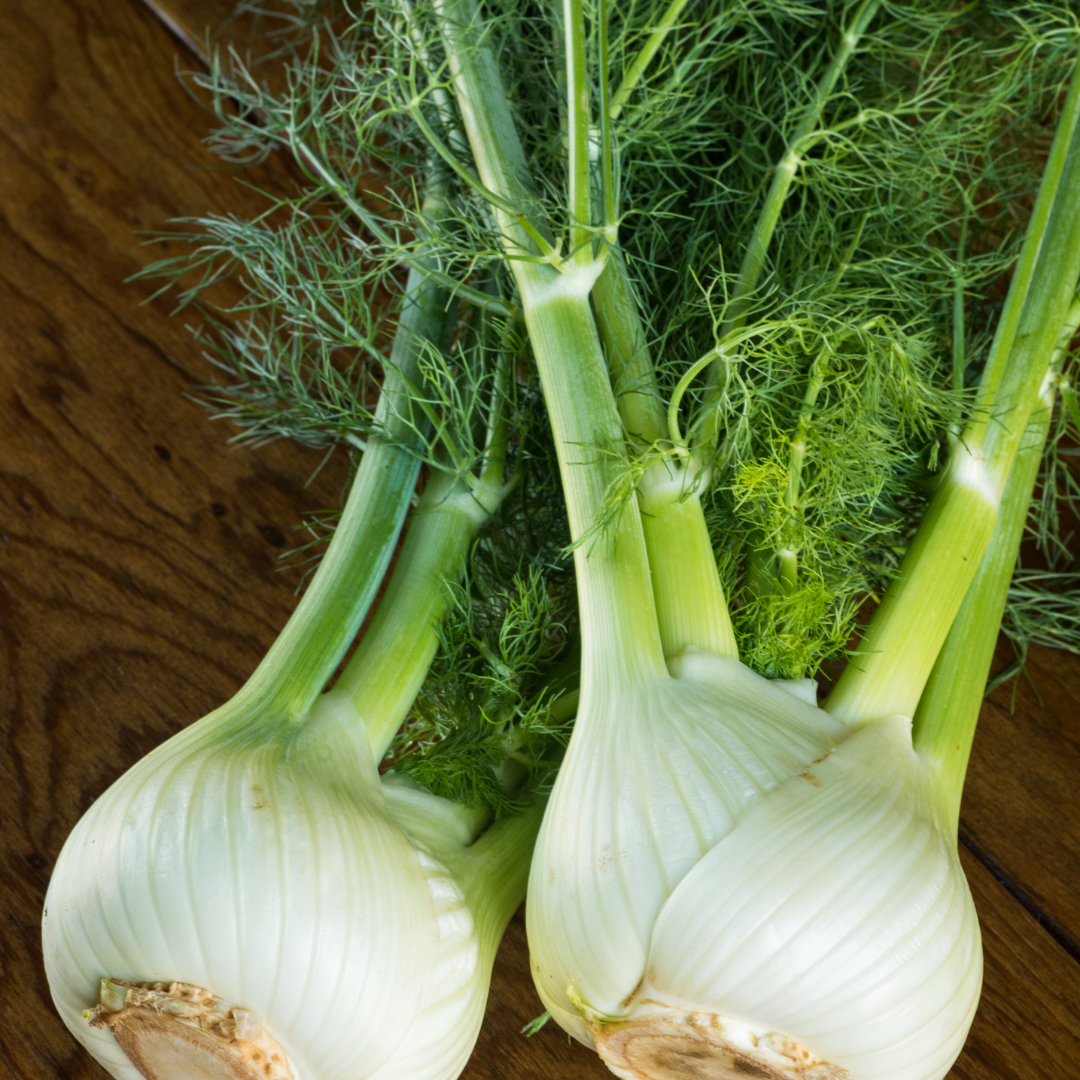
Foeniculum vulgare Azoricum Group
While I do fertilise mine with Organic link when I plant them I find they are extremely hardy and because I let mine self seed through the garden they come up of their own accord when they are ready and this makes them strong and healthy. After reading Jerry's post I believe you can keep cutting and letting the fennel Florence grow.
I love how this whole plant has a scent from the seeds to the leaves and the bulb. I think the best description is a light aniseed scent. When we have it at Trevallan I just love running my fingers through the foliage and the scent is released into the air and my hands come back smelling like lollies.
Can you imagine this plant near a window and on a hot windy day, the scent of aniseed would be just permeating through the house .... ohhhh yummy!
I love how scented plants have so many uses.
Get some fennel today, you will thank me!

Going Potty
Best Practices for having a Potted Garden
I always get asked what’s the best pot and potting mix to use.
For Pots, personally I love terracotta. It’s classic and classy.
Yes, terracotta is pourous but it also breathes and that is fantastic. No, I don’t seal the inside of my pots I love the aged look of terracotta.
I find when you have a 45°C everything drys out no matter what pot you use.
I personally don’t like decorative plastic pots. I have found in the past that plants root balls sweat in these pots and I get very ill looking plants in summer.
I always use Searles Garden Products Platinum Mix in my pots and I always mulch my pots. I fertilise them with Organic Link by Plant of Health Eco Friendly Fertilisers every three months. I try to liquid fertilise fortnight with Triple Boost but to be honest I do forget!
I love grouping pots together. The trick to this is always using the same colour.
So if you use terracotta, find terracotta pots in all different shapes and sizes. Same goes for glazed pots, try to find a similar colour but group all different sizes and styles together. I love the eclectic look but I’d rather the plants do the talking not the pots.
If you have all your plants still in the coloured plastic pots that you get your plants in, try changing them all to Black. Black plastic pots are available in every size imaginable, even huge! It’s a simple and cost effective way of making a statement.
Pots can be used in the garden or around the house. I love using pots in the garden, perfect for those spaces when I can’t dig due to roots or I need height but don’t want to put in a large plant.
I love that with pots you can constantly change your look just by having a little rearrange.
The Great Potting Mix Debate
So often customers come in and tell me their woeful potting mix stories. They tell me how they make their own with really bad quality products or worse how they use garden soil in pots .

I know I am lucky. I need potting mix, I just walk to the shelf, grab the best one and use it.
It hasn’t always been like that.
Years ago I lived away from Trevallan and there were many times I did some gardening and ran out of potting mix. I’d shoot up the street and buy whatever cheap stuff they had. It was just to finish off a job. I didn’t care.
Well I should have because that potting mix ruined my plants. For next six months or so I’d be watering and fertilising and wondering where the hell I went wrong and then I remembered the cheap potting mix. I spent more money trying to keep my plants alive than I would have spent with the expensive potting mix. I eventually repotted into the good stuff and everything grew beautifully.
There is a VAST difference in potting mixes and brands on market. The $2 bag is never ever going to be as good as the $16 unless you add $20 worth of product to it.
So always, always buy the superior product.
Companies spend millions of dollars researching potting mix and how to make it better for you. Trust they know what they are doing and use their superior brands.
If you want to make your own, excellent, make sure you research it well and always use superior products to make your own potting mix.
Garden soil is not for pots, EVER! It’s too heavy. It will either stay too wet and end up being a rotting gluggy mess or will go rock hard.
If your pots dry out too quickly try using a better quality mix and mulch and soil wetter regularly.
All my pots are mulched (I use sugar cane), it makes a huge difference to dry out rates. I also soil wet my pots every six months or so.
I personally use and recommend Searles Garden Products top potting mix - Platinum potting mix. Some of my customers find it keeps their plants too wet so they use the next potting mix down Professional potting mix.
Don’t cut any corners with soil. Soil is the starting point from where your plants grow and thrive
Planting edibles and flowers in POTS hot tips

Use the best quality potting mix. If you have a favourite brand research and find that company’s best quality potting mix.
Go big. Don’t muck around with 20 small pots. I know you’ve seen you can plant your chives into an old kettle but don’t do it. When doing edibles always start at 30cm or bigger. You can put your chives and basil and parsley in a one big pot but don’t go small. Firstly lots of Small pots looks ugly. Secondly too small pots dry out quicker.
Fertilise with Organic Link, as soon as you pot. Yes, I know that bag of potting mix said 12 months feeding but it could have been sitting out in the hot weather for 12 months. So just fertilise with the best organic fertiliser you can get your hands on and then you know when it was fertilised last and you can then refeed in about three months time.
Mulch, yes I mulch my pots. Yes it makes a huge difference. No it doesn’t matter what you use. Apart from stones. Stones are not mulch. Stones are decoration. Use sugarcane mulch or something else that will break down into the soil over time.
Put in sun. Most edibles need at least 4 hours of sun
Water as needed. Probably at least every second or third day. Maybe more as it gets warmer.
I hear you screaming in background but you have possums and wildlife and children that will wreck this potted garden on you. Solution and best ever invention. Buy a Vegepod
These pods come with their own wicking bed, irrigation system and wildlife cover. They are flamin’ fantastic.

The Winter Lawn
Transform your patchy lawn into a lush green paradise with these expert lawn care tips. Learn how to aerate, use soil wetting agents, fertilize, and control weeds organically. Say goodbye to unwanted invaders and welcome a healthy, vibrant lawn just in time for Christmas. Get ready for backyard cricket and envy-inducing lawns with our comprehensive lawn care guide.
Who has recently taken a good look at their lawn?
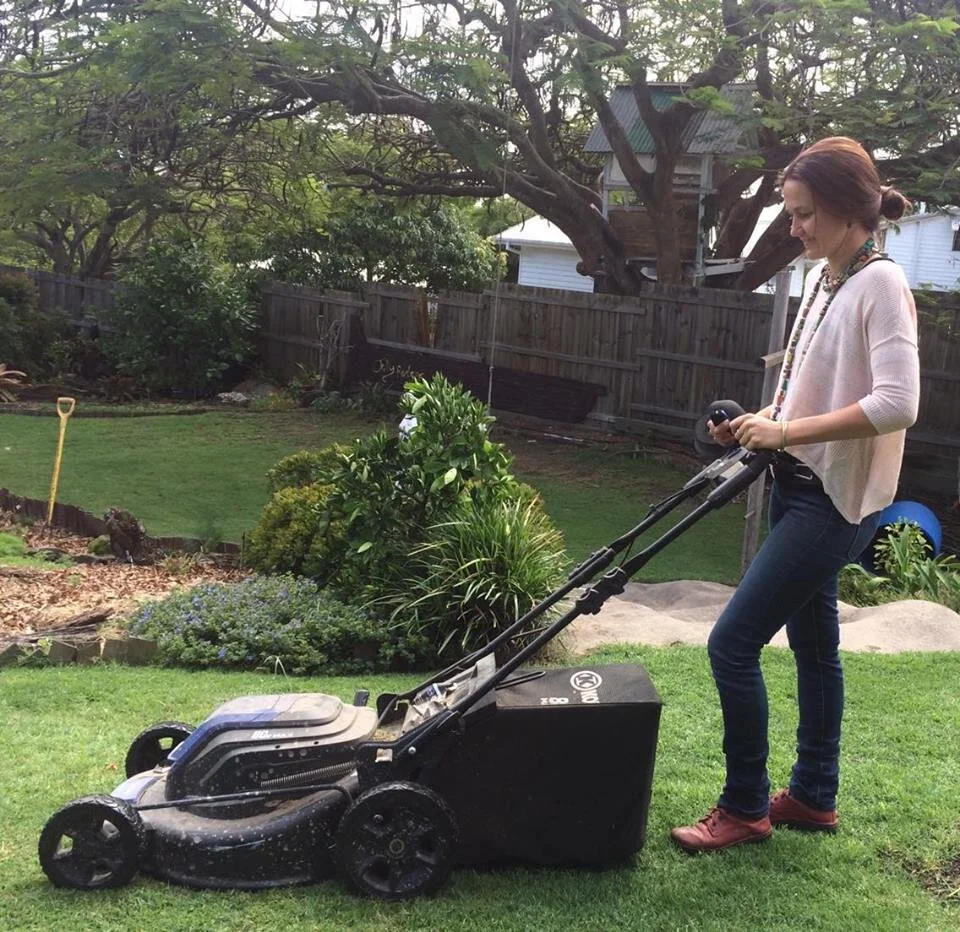
Does it look lush and green? Take a closer look, is that lush greenness coming from the lawn or all the weeds that have recently taken hold due to the rain.
At the moment my lawn isn't looking as good as it should - it is looking a bit patchy and the weeds like bindi, clover and Mullumbimby couch are coming through.
Sound like your lawn? Why not set yourself a simple lawn challenge so that by Christmas your lawn will be looking glorious and everyone will be coming to your house to play backyard cricket.
Sometimes with constant use most lawns become very hard and compacted and slightly hydrophobic (water-repellent).
So the first thing you need to do is aerate your lawn. Aerating your lawn means that the soil is opened up to allow air, water and nutrients to penetrate the grass roots. Aeration helps the roots grow deeply and produce a stronger, more vigorous lawn. Small lawns can be aerated with a sturdy garden fork. Simply insert the fork into the lawn and wriggle it back and forth to fracture the soil profile. If this doesn’t work and larger lawns may need a lawn aerator and/or lawn corer.
Once I have aerated my lawn I like to use a soil wetting agent. I prefer to use Plant of Health’s granular Soil Soaker, my sister loves putting the liquid Soak Soaker into Birchy and spraying it all over her lawn. To really up my lawn game I will put some liquid microbes into Birchy and do it all at the same time.
Hydrophobic lawns do not soak up water leading to overly dry or overly wet spots and can also stop the soil from being able to uptake nutrients (fertilisers). Soil wetting agents can help fix these problems.
A week or so after you've soil wetted you can fertilise.
I know it is winter and people say there is no need to fertilise in winter but I always like to give mine a little feed because the lawn still grows, just a bit slower. I also like to give it a liquid fertilise with Triple Boost about once a month.
I use a complete organic fertiliser by Plant of Health called Organic Link. It is pelletised and does not work in those special lawn fertiliser contraptions. I put mine in a bucket and break up the pellets a little bit and then use my hands and just throw it out over the lawns. The same company does offer an organic based slow release lawn fertiliser called Lawn and Turf Food.
I love the Plant of Health range as it makes my lawn grow thick and lush, not long and sparse, so less mowing and less weed problems. Most weeds occur in lawns that are sparse and unhealthy. The Plant of Health Range also makes my lawn roots grow strong and deep, so my lawn is more resistant to lawn grub and becomes more drought tolerant.
Dave Horton from Horton Turf Farm uses the Plant of Heath fertiliser range and has not used grub kill on his turf farm for over 10 years....if a turf farm doesn't need to spray for lawn grubs why do you?
So, hopefully by now my soil wetter and lawn fertiliser have started to work and most of my weedy areas are slowly being consumed by healthy lawn!
If this isn't the case I'll give my lawn a spray with Jerry Colby-Williams Iron Sulphate trick (see video) before I will resort to chemical weedkillers. I am not a huge fan of using chemicals on my lawns. I try to hand weed and keep the turf healthy before I resort to weed killers.
Did you know there is even the best time to mow and weed according to the moon calendar as growth will be slower?
Sometimes, if your lawn is so infected with weeds, you may need to use a spray. I try to minimise my use of these by spraying well before the weed has flowered. Usually three or four days after rain is when our lawn weeds are growing but not flowering. I have found this is a great time to spray.
When I do spray I like to use Searles’ Ultraweed. If you have Mullumbimby couch you will need Searles’ Lawn Weeder. These products are fine to use on all couch lawns.
The trick with killing weeds in the lawn is to be consistent. Think of it this way - once you see the weeds it usually means that they have already re-seeded. You may need to spray twice or even three times a fortnight apart, until the weeds have disappeared.
During this time you'll be happily mowing away, with a catcher on, of course, so you don't spread any stray lawn weed seeds. Don’t forget to set your mower a little higher too so you can shade out the lawn weeds.
If you are unlucky enough to lawn pests like lawn grub or army worm, you can try a Neem Oil (organic) drench every two weeks or spray with Dipel (organic). Again I don’t like using heavy chemicals on my lawns but if you needed to you can use Searles’ Dead Grub. Just know that this can harm the good bugs as well as the bad bugs in your lawn. So after you have used a product like Dead Grub always follow it up with a liquid feed of Microbes.
By Christmas you should have the best lawn on the street, unless someone else on your street also took up my lawn challenge!

Camellia Japonica
Do yourself and your garden a favour and treat yourself to a Camellia Japonica. These glorious plants are sometimes called the Rose of Winter.
Over the years my grandfather has tried to teach me a lot. He tried to teach me to fish but I could never stand still long enough to catch anything! He tried to teach me to cylinder mow but I could never get the hang of mowing in a straight line. He even tried to teach me to be a little quieter and we all know that didn’t work! The one thing he did teach me well though was how perfect Camellia Japonicas are.
Do yourself and your garden a favour and treat yourself to a Camellia Japonica.
These glorious plants are sometimes called the Rose of Winter. I think they should be called the Jewel of Winter because they put on a fabulous flower display in the cooler months of the year when the rest of the garden often looks dull and bare.
Japonica flowers are what make this plant so perfect.
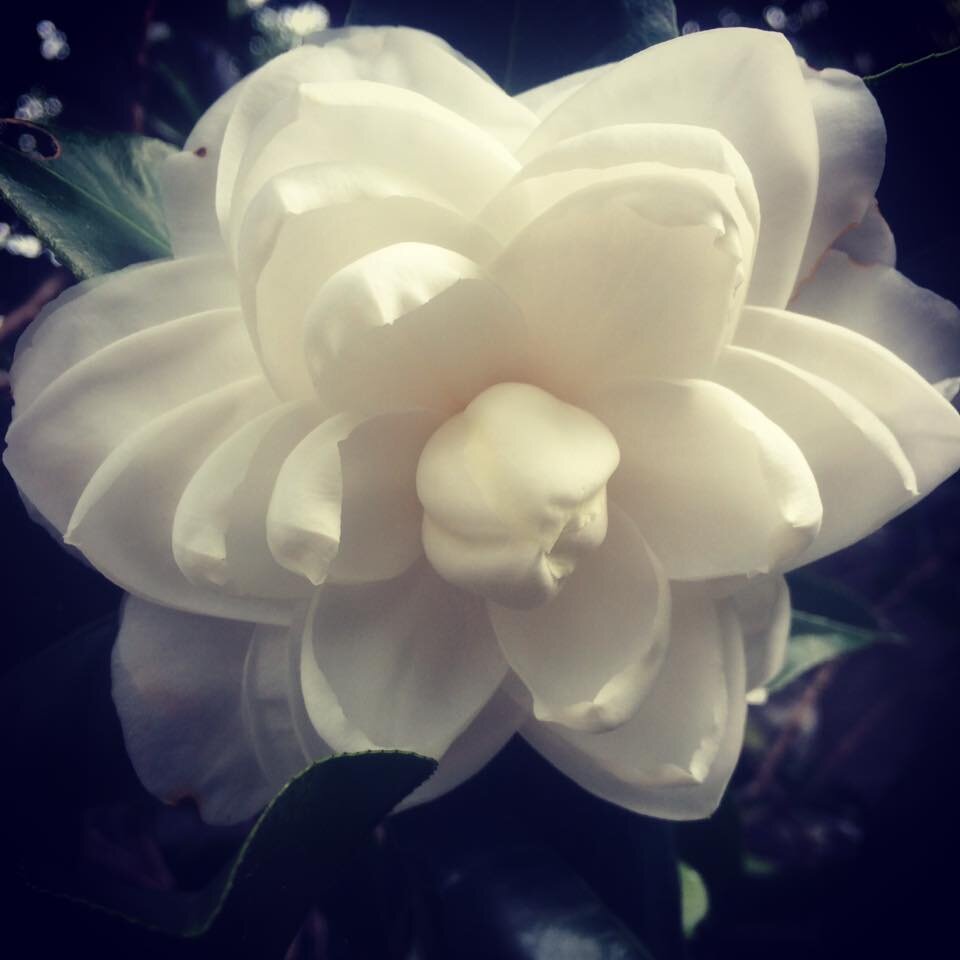
I get such joy in seeing the buds open to these so flawless and diverse flowers. I have found over ten different descriptions of Japonica flowers. The most common are single, double, peony and formal double. The shade of the flowers are just as diverse and can vary from red to pink to white and sometimes have multi-coloured stripes or specks. The flowers are not small either with many flowers being at least 15cm in diameter. What is even better is these plants flower in abundance and the flowers last for ages. A childhood memory is of water bowls all over our house filled with japonica flowers.
Camellia Japonicas have the darkest green glossiest foliage. The leaves are quite broad, thick and smooth making the plant look lush and dense. Japonicas will grow superbly in full shade or part shade. In climates where deciduous trees are popular japonicas are usually planted underneath so they are protected from the hot summer sun but are free to shine while they are in flower and the tree is naked.
Japonicas don’t mind if they are planted in the ground or in a pot. They don’t like wet feet though so make sure your soil is well drained and slightly acidic, around pH6. They are quite hardy once established. I find they do best if they are mulched well and are given a good fertilise about every three months with a slow release complete organic fertiliser like Organic Link. I also like to give my japonicas a granular dose of sulphate of potash around April/May to help promote flowers. During their flowering season I liquid Plant Care them on a regular basis to keep them healthy while in bloom.
About once a year usually around the end of August I add a little bit of Dolomite to the soil around my camellias. Camellias can be prone to calcium deficiency and I find adding a little bit of Dolomite helps with this. If I can’t add Dolomite (or I forget) I try to Liquid Bio Trace my Camellias at least twice a year.
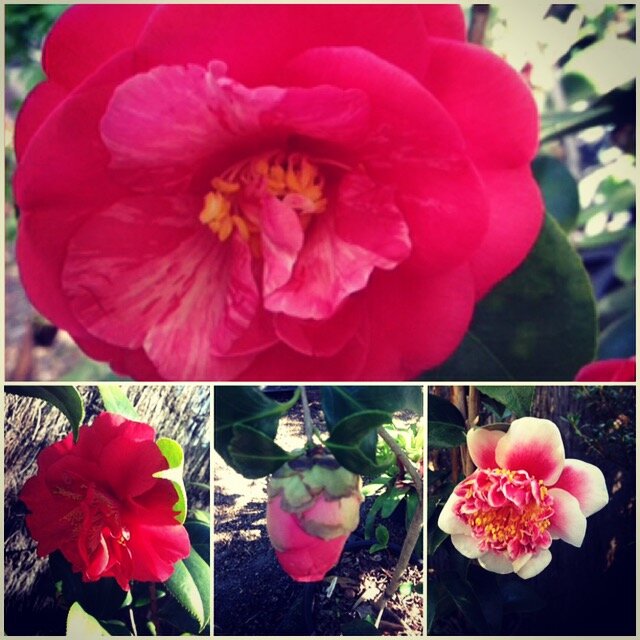
Camellia Japonica Flowers
Why doesn’t everyone have one of these glorious plants?
Over the years they have gotten a bad reputation because they are slow growing and some varieties can take years to flower or suffered Bud Drop.
Beautiful plants do not grow overnight and it is nice to have a plant that does not need constant trimming.
Bud Drop is the loss or decay of buds. This can be caused by over watering (we sometimes get wet winters), high temperatures (we sometimes have hotter than expected winters), pot bound roots and incorrect positioning.
Some Japonicas can take years to flower and some don't flower that well in our climate. I remember my mother waiting years for our 'Waterlilly' japonica to flower. It was well worth it but seriously!!! I have found in Ipswich's unpredictable winter climate the formal doubles struggle to flower spectacularly every year, the others flower very easily.
There are many japonicas that are perfectly suited to flower and grow in Ipswich. Don't ever forget that even one Camellia japonica in a pot on a veranda is the perfect way to give your dull winter life some TLC and bring some happiness back into your garden!

Mould and Essential Oils
Don't let Mould take over your home during these heavy rain periods and damp air days. This blend doesn’t just mask the musty, damp mould odour, but also eliminates the cause.
Don't let Mould take over your home during these heavy rain periods and damp air days.
Perfect Potion have come up with an amazing smelling (and mould eliminating) ANTI-MOULD ESSENTIAL OIL BLEND
This blend doesn’t just mask the musty, damp mould odour, but also eliminates the cause.
Clove, tea tree, Cinnamon and Lemongrass pure essential oils have proven through various scientific studies to be effective in killing various types of mould; with chemical constituents and compounds such as thymol and eugenol inhibiting mould spore germination, rendering mould inactive and preventing mould spores from growing.

Perfect Potion’s ANTI MOULD BASE RECIPE
This base recipe (total 35 drops) is to be used in mould-eradicating and mould-preventing recipes
20 x drops Tea Tree, Melaleuca alternifolia, Pure Essential Oil
5 x drops Clove Bud, Syzygium aromaticum, Pure Essential Oil
5 x drops Cinnamon Bark, Cinnamomum zeylanicum, Pure Essential Oil
5 x drops Lemongrass, Cymbopogon flexuosus Pure Essential Oil
Check out Perfect Potion’s full blog and all the recipes such as DIY ANTI-MOULD SPRAY here.
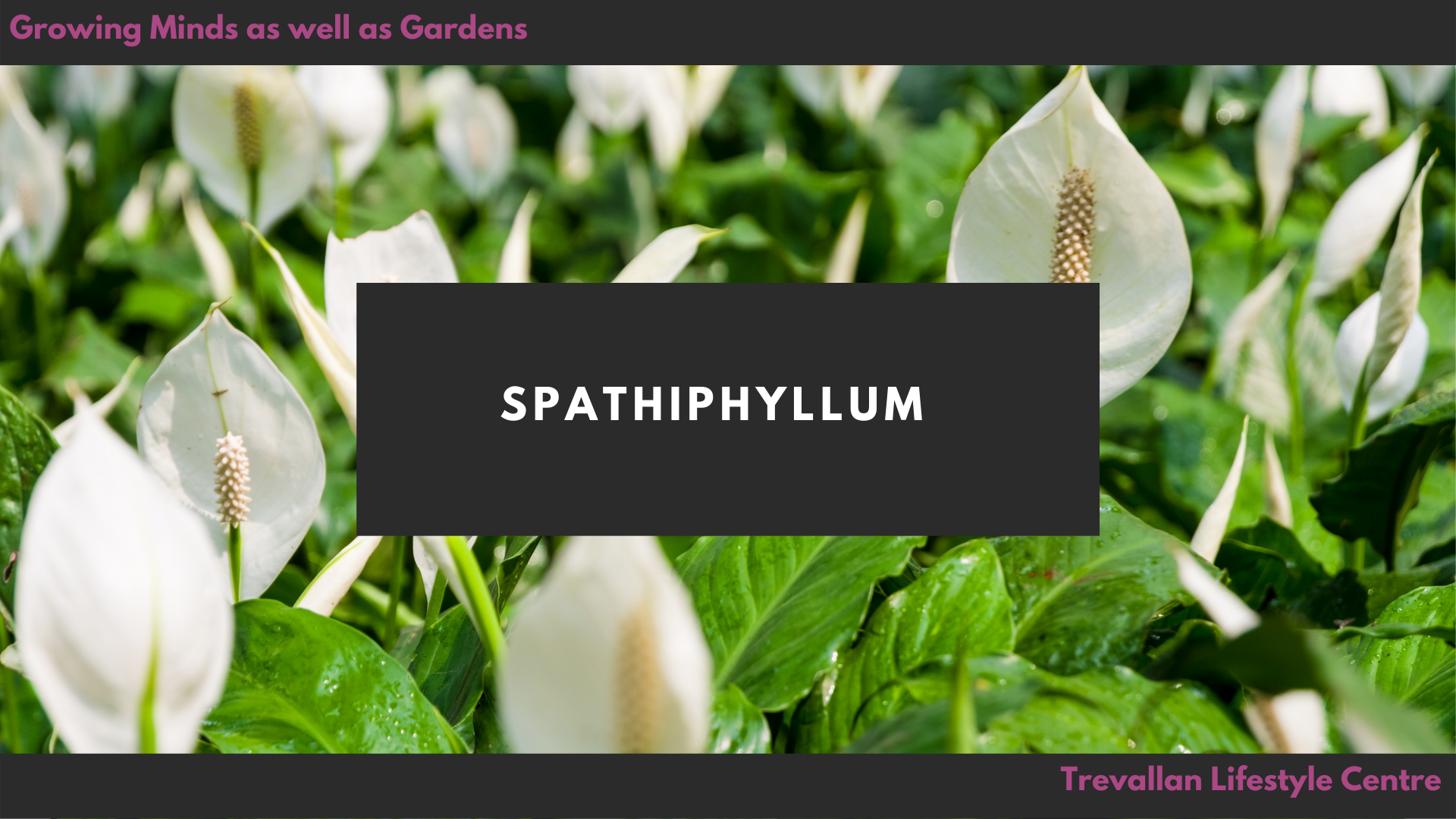
Spathiphyllum
Perfect Indoor Plant, this plant is an understory plant of the rainforest and basically requires very little light (hence its common name 'Dungeon Plant') and very low water. Which is probably why it was so popular.
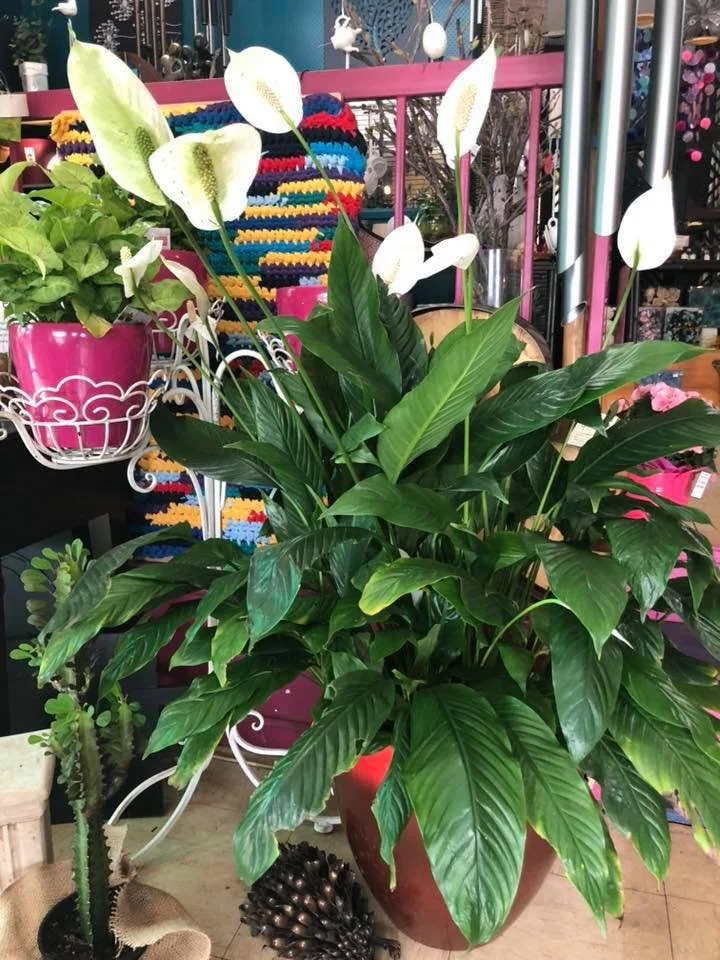
Spathiphyllum, spath, Peace Lilly, dungeon plant!
It's the original 70s house plant. In recent times it has become popular with the emergence of the variegated foliage forms.
Why is this plant so popular?
Lush green foliage, flowers consistently through warmer months, easy to take care of, works inside or shade gardens!
There are so many forms of Spathiphyllums, you can’t get bored!. Short and fat lush green leaves, long and skinny lush green leaves, big and fat lush green leaves and Giganotosaurus lush green leaves. There is also a form that has crinkly green and white variegated leaves and just a flat glossy variegated leaf. There is also a silver leafed form.
All have beautiful white flowers. Some flowers sit high out of the foliage and some sit in amongst the foliage. Some are big and some are little.
This plant is an understory plant of the rainforest and basically requires very little light (hence its common name 'Dungeon Plant') and very low water. Which is probably why it was so popular.
The NASA Clean Air Study has also found that Spathiphyllum cleans indoor air of certain environmental contaminants, including benzene and formaldehyde.
Seriously how could one not want this indoors....
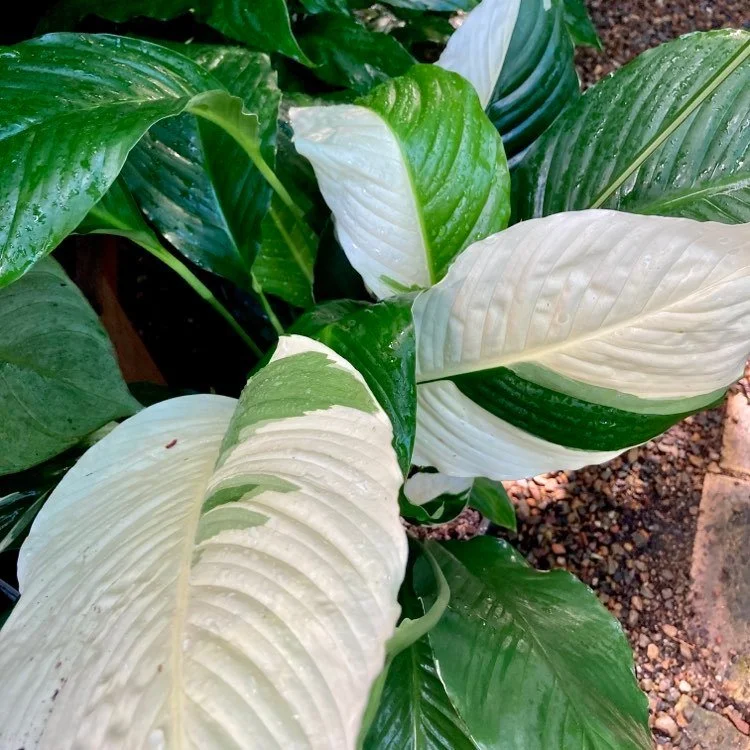
Spathiphyllum Picasso
Oh well here we go .....
We worked out the flower wasn't good for our kids or animals to eat, so it slowly got banned from the homes of plant eating animal and children.
Then the tips of the leaves started turning brown and yellow making the plant look ugly and not Insta worthy.
Now that's because we all became afraid to give our plants a good drink. Spathiphyllums don't like it when you consistently give them little bits of water (shallow watering). I know you don't want to ruin Aunt Frans antique table with water running every where, so invest in a planter or take your Spathiphyllum to the sink to water it.
Spathiphyllums like a good long drink where water flows through the soil and out the bottom. Once a week is usually fine. If it doesn't last that long you need to reassess what your Spathiphyllum is planted in.
Spathiphyllums should be planted in a fantastic quality potting mix, remember they are understory plants living and surviving in decaying matter! The better the quality of potting soil, the less watering you'll need to do. I always use Platinum potting mix.
If you don’t want to repot your Spathiphyllum try using Searles Recharge. Recharge does what it says recharges old potting mix. I love this product and use it about once a year on all my indoor plants.
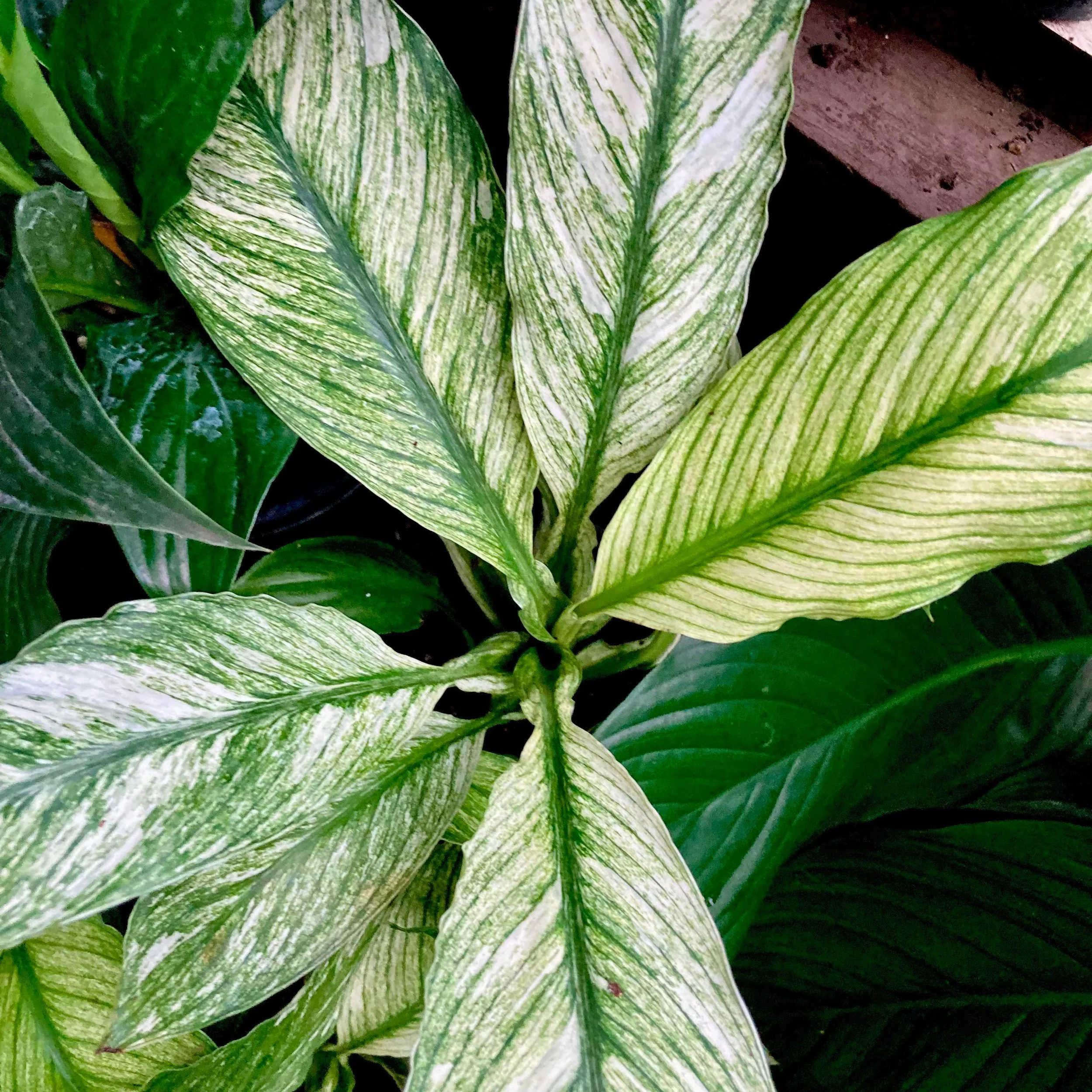
Spathiphyllum Sensation variegated
Spathiphyllums also don't like sitting in wet muddy yucky potting mix either. So make sure your soil is free draining.
Now the most annoying reason Spathiphyllums got a bad rap is the flowers turning green ... why they do that?
Well it is believed it's due to two major issues. From my research they are unsure which is main reason. I have started a few experiments at Trevallan.
Firstly Spathiphyllums prefer low light (remember understory plant) too much light makes the chemicals in the plants brain go all funny and it produces the green flower.
Secondly Spathiphyllums like certain nutrients. Green flowers can be caused by a chemical imbalance caused by under or over fertilisation. Too much or too little of what they are still unsure. When you do get green flowers why not try Bio Trace, a complete trace element liquid feed, to help the plant adjust and hopefully start producing white flowers again.
At the end of August I always give my Spathiphyllums a handful of granular sulphate of potash. I have found the use of potash at this time of year gives me great white flowers at Christmas.
I truly love this easy to care for plant

Aglaonema
Aglaonema, what’s not to love? Spectacular Foliage Colours, Fabulous Indoors Plant, Grows well outside in Full Shade but can tolerate a little sun, Great for Pots or Gardens, Tolerates Dry Conditions
Aglaonema, pronounced Agg-low-neem-uh, is another one of my all time favourite house plants.
I think I'm a foliage girl more than a flowery girl.
What’s not to love?
Spectacular Foliage Colours
Fabulous Indoors Plant
Grows well outside in Full Shade but can tolerate a little sun
Great for Pots or Gardens
Tolerates Dry Conditions
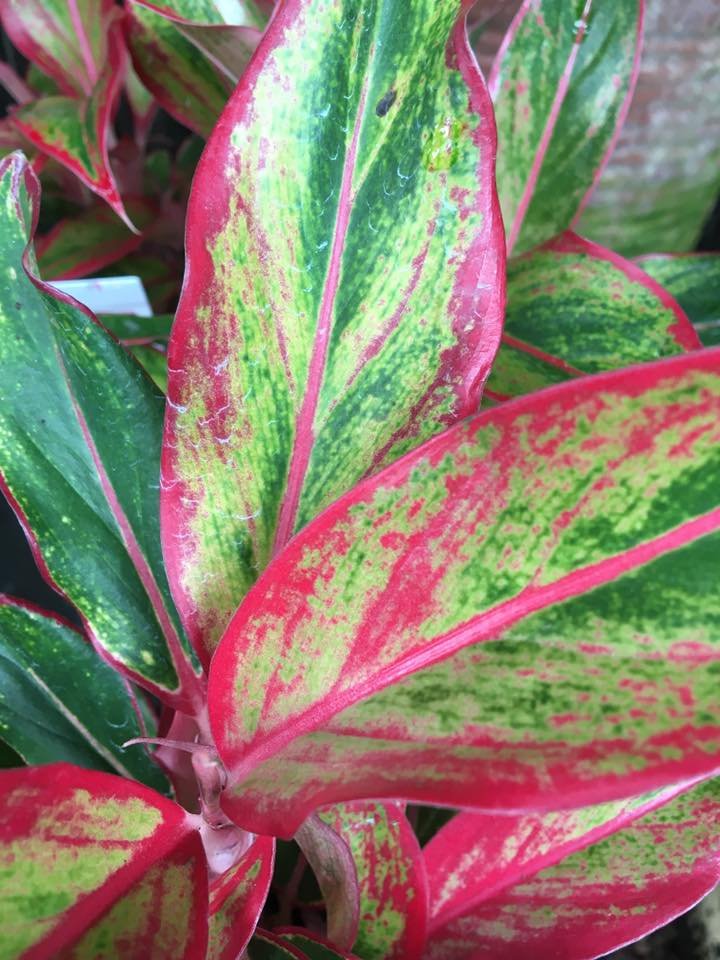
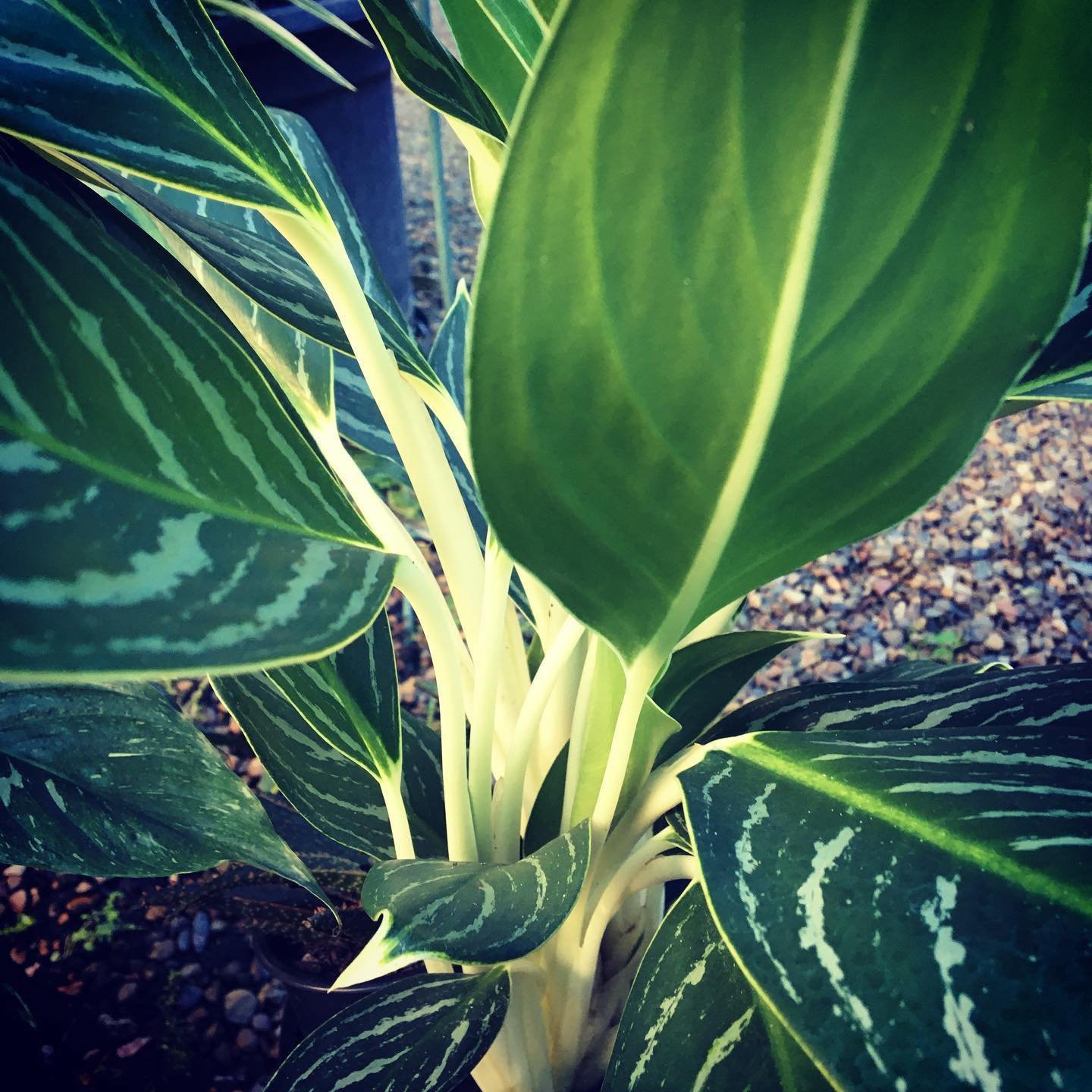
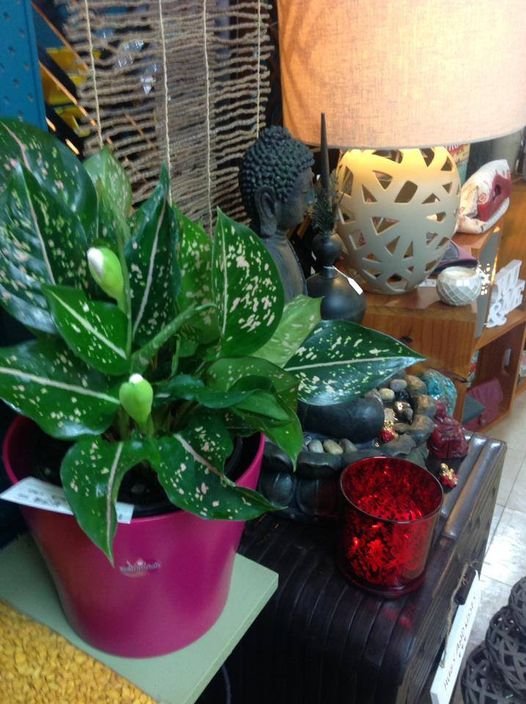
Aglaonemas have attractive glossy variegated foliage and colourful stems. They can be green and white, shades of pink, pink and green, pink and white and all shades in between. There are so many variations it’s easy to start a collection.
I grow them just for the foliage but they do flower it’s just not anything to write home about.
I feel they bring a lovely tropical feel to your indoor space.
Aglaonemas are relatively slow growing. They don't like having wet feet or being overpotted. I find it's better to treat them mean to keep them looking good. I have killed a few over the years simply by never letting them dry out. I now still use an excellent quality potting mix, like Searles Platinum Mix but I just don't water as often and I never let them sit in a saucer of water.
I find Aglaonemas can handle a dark position inside but really thrive in a well lit position. They also don’t mind being planted in gardens or pots outside in shady positions.
I find Aglaonemas to be so versatile, I love using them around the home. Up high, down low, they seem to suit all positions. As an added bonus these plants are known as luck-bringers and The NASA Clean Air Study determined that they were effective at removing common household air toxins formaldehyde and benzene.
So they really are the perfect houseplant. To keep them continually looking good and putting on a great display, fertilise with Plant of Health Eco Friendly Fertilisers Organic Link about every three months and a fertilise of granular sulphate of potash, usually once weather has warmed up, around late August to help to help the foliage remain vibrant. I also like to keep their leaves free from dust so every few weeks I take them outside and give it a liquid feed (and shower) with Triple Boost Liquid Fertiliser.
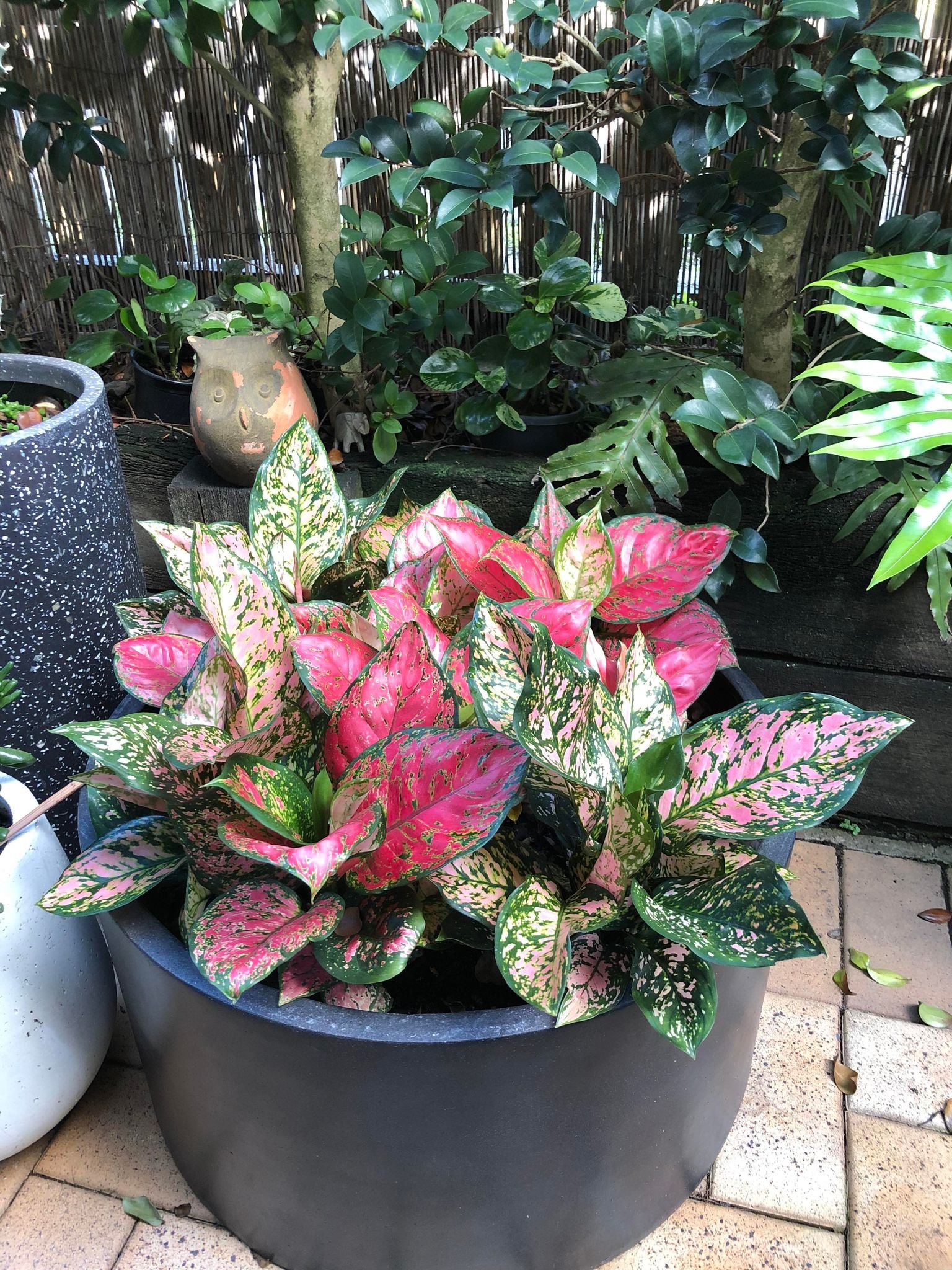
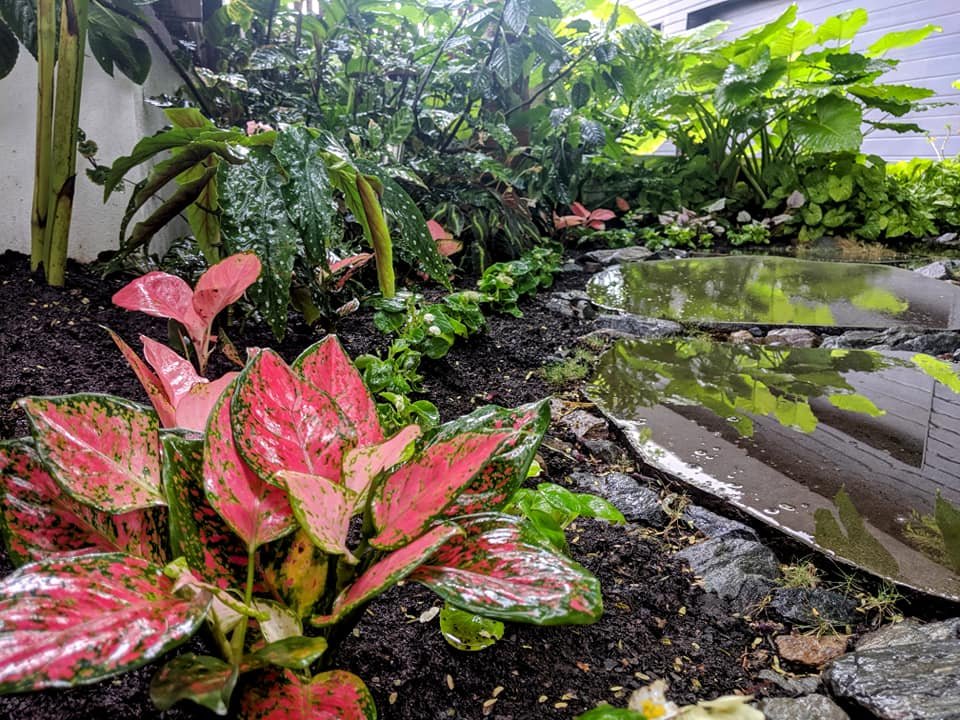
On a side note Aglaonemas are not for human or animal consumption. These plants, like many others, are considered poisonous as they contain calcium oxalate crystals. If ingested they cause irritation of the mucous membranes, and the juice can cause skin irritation and painful rash. So as with all plants unless you know its edible ... Don't eat it!

Stephanotis floribunda
Want a plant that is classy, lush green, tropical looking and has a heavenly scent. Stephanotis floribunda is the plant for you.
Want a plant that is classy, lush green, tropical looking and has a heavenly scent.
Stephanotis floribunda is the plant for you.
For what ever reason this beautiful climber isn’t widely grown anymore. This makes it even more special as not everyone has one.
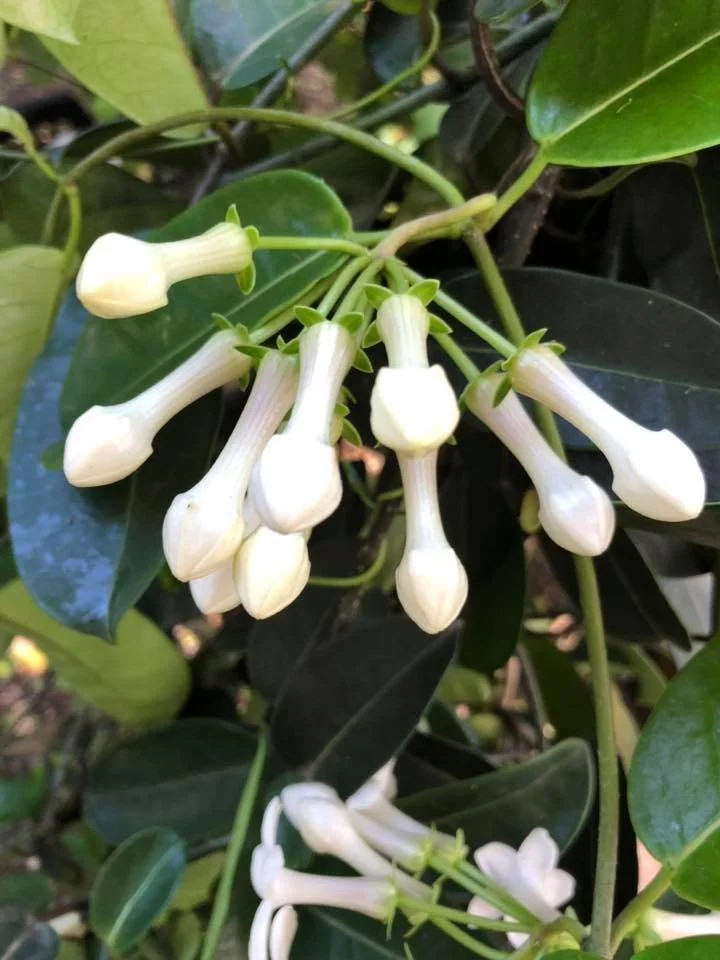
Stephanotis, or Madagascan jasmine has the most wonderful bunches of large starry white blooms and an absolutely delicious perfume. Mine just has one bunch of flowers open and I can catch that whiff of something special as I walk past. I can’t wait till all the bunches are open.
For years I’ve seen it used in floral bouquets especially for wedding parties, years ago it used to be called the Wedding Flower!
This luscious plant is a vigorous climber that's native to parts of Africa, Madagascar and Asia.
Stephanotis can be grown throughout most of Queensland, although the plant doesn't thrive in the cold and is frost tender. I have seen very old large ones in colder climates. I think they must of been protected while they were young.
It likes a warm, sunny position and can be grown either in pots or against a warm wall, which will retain the heat. It likes a rich, well drained soil and can grow up to 5 metres high, so it needs support with a trellis. But remember full sun can sometimes burn the flowers, so try giving it a little shade.
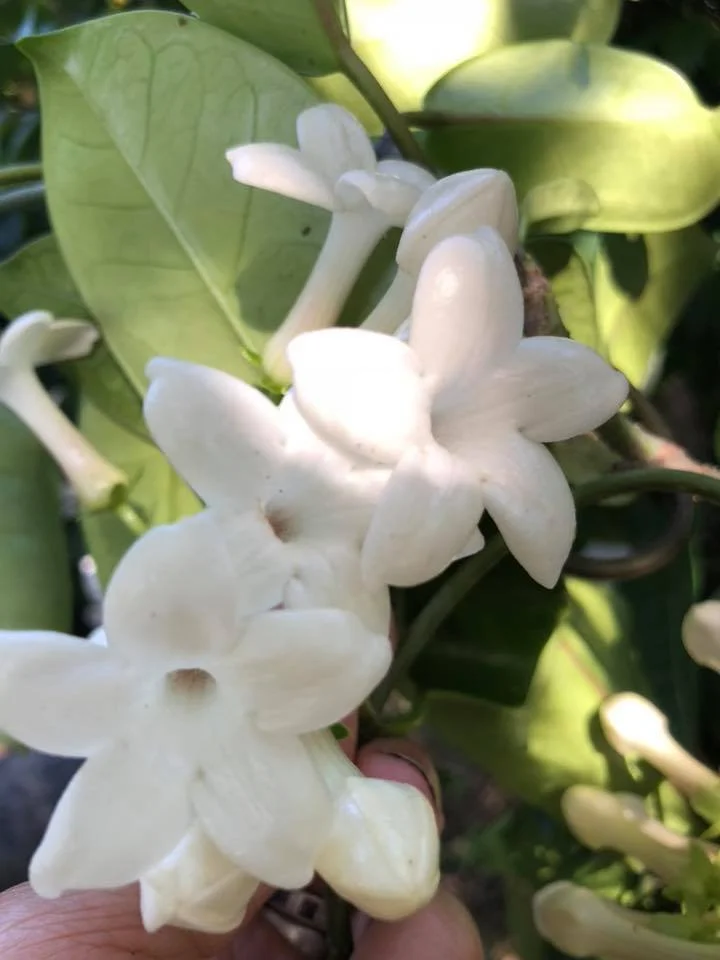
Stephanotis, when fully grown, is a great plant for covering large spaces, and is also useful for screening unsightly areas. Think of a star jasmine but with bigger leaves in its growth.
The dark green leathery leaves are very handsome even when they don't have any flowers. Stephanotis is great for adding a sense of presence and scent to the garden.
If you need to have a climber try Stephanotis and be that little bit different. Not everyone has one and I think you’ll enjoy the scent even more knowing you have an uncommon classy plant.

Clove Tree
Clove trees botanical name is Syzygium aromaticum. Clove are native to the Maluku Islands in Indonesia, but they have naturalised in many warm countries including Mexico, Kenya and Sri Lanka. Did you know that clove comes from the Latin word 'clavus', which means nail because cloves look like little nails! It has been in cultivation since 200BC!
Clove
It's a scent that goes hand in hand with Christmas.
Who remembers as a kid making oranges stuffed with cloves as decorations?
I'm not a huge fan of the smell of clove by itself but it does pack a huge punch in cooking and in energetics of essential oils. It also can slowly but surely kill mould spores.
There are many recipes out there for clove and mould removal, I like 1/4 teaspoon of clove bud essential oil (Syzygium aromaticum) to 1 litre of water. Shake and spray on affected surface. It can take numerous sprays before all the spores are killed.

Syzygium aromaticum and clove drying process
Clove trees botanical name is Syzygium aromaticum. In the past it's gone under a few different botanical names like Eugenia caryophyllata. Botanical names can change due to many factors the first reason is research. New scientific insights about relationships sometimes lead to changes in classification of plant groups.
Clove trees being a Syzgium are related to our native Lilly Pillys. Clove are native to the Maluku Islands in Indonesia, but they have naturalised in many warm countries including Mexico, Kenya and Sri Lanka.
Did you know that clove comes from the Latin word 'clavus', which means nail because cloves look like little nails! It has been in cultivation since 200BC! I love history information like this.
Clove trees are evergreens that grow to around 15m tall. They have smooth grey bark and long leaves that look like bay leaves. The flower buds initially have a pale hue, gradually turn green, then transition to a bright red when ready for harvest. Cloves are like the outside of the flower. The entire plant is fragrant and aromatic.
Clove trees grow best in a hot and wet conditions. So they usually aren't available in the Ipswich region. They can be grown up north. If you were able to acquire a clove tree it would need a ready supply of water and protection from the cold when young.
Cloves have a long history in food and many cultures have made it a yummy addition to many national dishes. It has also been used to flavour cigarettes and potpourri.
Cloves have also been used in tradional Chinese medicine and Indian Ayurvedic medicine for centuries.
Aromatherapists have used clove to help open our hearts to the beauty of possibilities. It helps us release emotional clutter that is controlling our lives. It helps us release the ties and attachments to material things and ideals about how our lives should be lived. It gives us an inner strength to move forward when we know we need to change.
Now is a great time is a great time to reflect and clean out the clutter that is holding us here - emotionally and physically.
I hope we can all be open to change and start to find simple pleasures in life and release the need to control things!!

All about Strawberries
Strawberry! Fragaria sp.
This relative of the Rose has delicate runners with charming flowers in white and shades of pink that makes Strawberries an attractive option for pots and baskets. Let’s be honest though we don’t grow strawberries for the flowers, we grow it for the delightful fruit that comes after the flowers!

My Grandfather’s Strawberries
Strawberry! Fragaria sp.
This relative of the Rose has delicate runners with charming flowers in white and shades of pink that makes Strawberries an attractive option for pots and baskets. Let’s be honest though we don’t grow strawberries for the flowers, we grow it for the delightful fruit that comes after the flowers!
Growing Strawberries is relatively easy pending conditions and the ever decreasing chance of pollination.
They need deep, rich and friable soil in a position that gets full to part sun. I always add some compost before I plant, never mushroom compost, as Strawberries like slightly acidic soil (pH of 6 – 6.5). My grandfather always mounded up his strawberry patch, left about 30cm between each plant and heavily sugar caned mulched the strawberry patch. The mulching helps prevent fungal diseases, reduces weed invasion and also stops the strawberry fruit from sitting on the bare dirt and rotting away.
Strawberries like moist soil but not really wet. They are very surface rooted so they need regular watering as they can dry out pretty quickly. Once you see the fruit forming you can ease up a little on the watering.
My grandfather would feed his strawberries with Organic Link and Triple Boost in beginning but as soon as the plants got big and leaves turned a lovely deep green colour, he would start to Silica and Potash every second week.

Strawberry Ruby Red growing great in a hanging basket
Crop rotation is very important with strawberries. It is recommended that you move your strawberries to a new patch, with fresh soil, every three years. My Grandfather would let his strawberries form runners at the end of the new seasons plants and direct the runners towards the strawberries new patch of ground. Then every two years he would pull up his old strawberries and let the ground lie fallow for a season or two. Strawberries shouldn’t be planted where tomatoes, eggplants, capsicums or chillis have been for at least three years as they have a tendency to pass on a plethora of fungal diseases.
While Strawberries are very easy to grow they can have a few problems.
Mould and fungus can be an issue, especially when the air is cold and there is water hanging around on the foliage. Best way to prevent this is to water in the early hours of the morning. Snails, slugs and birds can be an issue once the fruit start to form. You can use snail and slug pellets and for birds my grandfather used to use old cds (reflective things scare birds away). You can also use fruit protection netting.
I find growing strawberries in pots or hanging baskets works wonderfully and I don’t have any problems with snails eating my fruit. I use Platinum potting mix and fertilise the same as if they were in the ground.

'Vivipary' on a strawberry fruit
Sometimes a phenomena known as 'Vivipary' can occur on your strawberries. In a few words this just means that the seed is germinating before it is naturally shed as is the natural order of things. I have read of others who have attempted to grow these seedlings on but have not tried it myself. By all accounts each seedling grows on to be a normal healthy plant of the the mother plant.
Some of you may be asking why don’t we grow strawberries from seed?
Simple answer is some plants are just too much of a hassle to grow from seed and Strawberries would have to top this list. I have actually read they are one of the hardest plants to germinate by seed and it can take up to two years before the plant even contemplates producing strawberries.
One website gives this tip for germinating strawberry seeds “Tuck your strawberry seed packet inside a sealed plastic bag or airtight container and place in your freezer for 3-4 weeks. When you remove the bag or container, do not break the seal until it (and its living contents) have reached room temperature....... Opening the package too quickly may result in water condensing on the cold seeds, and this will reduce your chances of success.” Seriously, some plants are better off being bought ready made.
Trevallan stocks a few different strawberries, some are available all year, some are only available from May to July. My grandfather always said Autumn is best time to plant strawberries but really any time is a good time to plant something.
STRAWBERRY LOWANNA only available in 125mm pots or bigger
Lowanna is like the strawberry for giants. They can grow to about 30cm high and 30cm wide in comparison to a normal strawberry that will grow to about 15cm high. The fruit is also bigger than normal as the Plant growth is concentrated on fruit production rather than runner production (this means not as many baby strawberry plants). These are Australian Bred Strawberries that will grow in all zones. One of the best things about Strawberry 'Lowanna' is day neutral which means it fruits throughout the year (whenever the temperate is between 20-30C). So this means Strawberry 'Lowanna' can crop from October all the way through to late May normally.
STRAWBERRY REDLANDS JOY only available in 125mm pots or bigger
Another wonderful Australian bred Strawberry, Redlands Joy is a mid season variety. With exceptionally large sweet juicy fruit that shows some rain resistance, this variety will grow well in a sub tropical climate and is a very good performer in pots
STRAWBERRY SUGARBABY only available in 125mm pots or bigger.
Another mid-season variety with fruit usually ready to eat from early June. Fruit are exceptionally attractive red, glossy, conical, L to XL sized (20g), firm and resilient, with resistance to rain damage. Flesh is bright red, of low acidity, and excellent sweet flavour.
STRAWBERRY SWEETHEART only available in seedlings
This is an alpine type strawberry with white flowers, bearing large deep red, sweet fruit. Just your good old fashioned strawberry.

Strawberry Pinkie
STRAWBERRY PINKIE only available in 100mm pots
Pinkie produces medium, bright red fruit with an elongated shape and is also noted for its pink flowers. Only grows to about 15cm high
STRAWBERRY RUBY RED only available in 100mm pots
Ruby Red produces medium sized bright red fruit with an elongated shape and is also noted for its red flowers. Only grows to about 15cm high
STRAWBERRY SWEETIE only available in 100mm pots
Sweetie produces medium to large, bright red, bi-conical shaped fruit. This delicious tasting strawberry has high sugar levels, and is also very healthy. It has white flowers and only grows to about 15cm high.

African Blue Basil
This is new plant to me but I am falling in love with all its qualities - African blue basil (Ocimum kilimandscharicum x basilicum 'Dark Opal')

This was my original plant. Two years later, this plant is two metres wide and about a metre high. I think it’s one of my favourite plants.
The story goes that in 1983, owner of the Ohio owner of Campanion Plants, noticed a basil plant growing in the pathway between two other basil plants - green-leaved East African basil (Ocimum kilimandscharicum) and 'Dark Opal' basil.
The Ocimum kilimandscharicum is a large growing Perennial basil, with a beautiful camphor scent perfect for pesto making. This basil comes from the forests of Kenya, Tanzania and Uganda which means it can handle some shade.
Dark Opal is know for its compact growth and dark rich purple growth. This is also known to make an amazing red pesto.
The really amazing thing about the African blue basil is that it doesn't produce seed. That's right you can only produce it via cutting.
The African Blue Basil has taken on the prettiest qualities of its parents without the failings. It grows to about 1.5m and has lush bluish green leaves with purple lines through the centre. The new growth has a slightly darker twist. The flowers are the prettiest mauve colour.
African Blue Basil grows very similar to a normal basil. Plant in fertile soil in garden or a pot. It can grow in semi shade or full sun. Give it a nice trim to enable it to grow thick and busy. Fertilise regularly with a complete liquid fertiliser, like Triple Boost and about every three months with a complete organic fertiliser, like Organic Link.
This basil is perennial so it will continuously flower but it doesn't go lanky and to seed like normal sweet basil. This beautiful plant can be used as edible ornamental as it never dies down like normal basil can. It can be killed off by heavy frosts so please put it in a protected spot.
The flowers, leaves and young stems are edible. I've read that some people find the flavour a bit too camphory, but I find it has a rich, mellow flavour. I have been told it makes the best pesto as not only does it taste great but it holds its beautiful green colour and does not go brown like crushed sweet basil can in pesto.
Now we all know I love food so anything scented and edible to a perfect addition in my garden.
Now to find someone to make me that pesto!!

Patchouli
Patchouli is a bushy herb with dark green leaves and small, slightly fragrant pale pink-white flowers. It can get to around 1m in height. It loves a warm part sunny position and dislikes cold winters (protect from frost).

Patchouli growing in my friends garden
Scented plant that has no scent....
What the, she's gone crazy!
Pogostemon cablin or Patchouli as we know it.
Patchouli is a bushy herb with dark green leaves and small, slightly fragrant pale pink-white flowers. It can get to around 1m in height. It loves a warm part sunny position and dislikes cold winters (protect from frost).
While it's flowers do have a slight scent it's the dried leaves that are the most potent. The fresh leaves have no real scent.
My history lesson has always been that dried patchouli leaves were put into the fabric to deter moths... It was so used widely by India’s fabric manufacturers in the 19th century to protect their products from damage while in transit, that it became the signature scent of clothing and fabric exported from India. This unknown scent was believed to have captivated many European women and then became a guarantee of authenticity. For so many the source of the exotic fragrance was a mystery, so fraudulent fabrics were easy to spot because they didn’t have the signature patchouli scent. Now days this scent is associated with the hippie movement of the 60's as it's an ingredient in many incense that became popular in that time.
Did you know that patchouli was also an ingredient in coke and according to Wikipedia In 1985 Mattel used patchouli oil in the plastic used to produce the action figure Stinkor in the Masters of the Universe line of toys!
Patchouli is one of the most common essential oils of today. It is a strong, slightly sweet, intoxicating scent. It described as having a dark, musky-earthy aroma. It is one of my favourite essential oils. Robbi Zeck writes that patchouli "....awakens within the soul, a deep yearning for the comforting presence of peace, bringing spiritual insights to all realms. Patchouli's slow peacefulness brings about a state of mind and wholehearted feeling where unification occurs with the soul on all levels. When the fragments of your spirit have been scattered far and wide, call the peacemaker of your soul to you." How beautiful is this explanation of what a scent can do to your psyche.

Harvested Patchouli, ready for drying
I have a lovely friend who lives in Ipswich that grows amazing patchouli plants. So big she can easily harvest a large amount of leaves each year to dry and hang in her cupboards.
Patchouli grows well in pots or the garden. It does love to be fed. I sprinkle Organic Link every three months over the soil and I liquid feed every fortnight with Triple Boost. Patchouli do not like wet feet, so try not to over water it and if you have clay soil you may be better growing your patchouli in a pot.
Patchouli flowers in summer. If you want to harvest the leaves it is best to do it on a dry morning before the plant comes into bloom.
Maybe it's time we all relived the ☮️ of the 60's and full our homes with this delightful scent.

Scented Magnolias
No fragrant garden is complete without the popular Port wine Magnolia, Magnolia figo, and it’s sister Magnolia Coco.

Port wine Magnolia, Magnolia figo
No fragrant garden is complete without the popular Port wine Magnolia, Magnolia figo, and it’s sister Magnolia Coco.
Coco is more like another version of Magnolia figo (hybrid) .... not better just different.
Coco has extremely scented creamy flowers edged in burgundy. It flowers late winter into spring and spot flowers during summer. Magnolia figo has smaller flowers and are a deep purple wine colour. Both flowers form up the stems of the tree and are extremely prolific.
Both are highly scented but I find Coco's scent is a lot stronger than figo. Magnolia figo’s scent seems to waft through the air early evening and night where as Coco has a definite strong scent all day and evening. Beneficial insects also love the flowers, maybe even more than me!

Magnolia Coco
Both have glossy green leaves but I find Coco has a slightly looser habit and grows slightly wider and taller (around 3-4m). Magnolia figo can grow to about 2-3m and has a tighter denser foliage. I think Magnolia figo is more suited to hedging and Coco is suited to an amazing as a stand alone shrub.
They will grow in full sun to full shade but they are a lot slower in the shade. They like a slightly acidic soil and I find they perform better if they are regularly fertilised with Organic Link and tip pruned.
I have seen them growing in large pots but they need a lot more fertilising and care.
They are dry tolerant once established and don't mind the cold. If it gets really cold where you are they may be slower growing.
Note
Michelia is a genus of flowering plants belonging to the Magnolia family. Recently the michelia was dropped and replaced by magnolia.
Port wine magnolias botanical name is now Magnolia figo and Michelia coco is now called Magnolia Coco.

Lemon Balm
Melissa is the Greek word for "honey-bee." It was traditionally used by the ancient bee keepers. They used to rub the crushed leaves on the beehives to encourage the domesticated bees to return to their hives. They also believed that the lemon balm would also bring new bees to the hive.
The most amazing thing happened to me yesterday. I was admiring our beautiful Lemon Balm (Melissa officinalis) and I gently agitated the foliage. The scent that was released was so delicious and soft but with such a strong bite I just had to do it again.
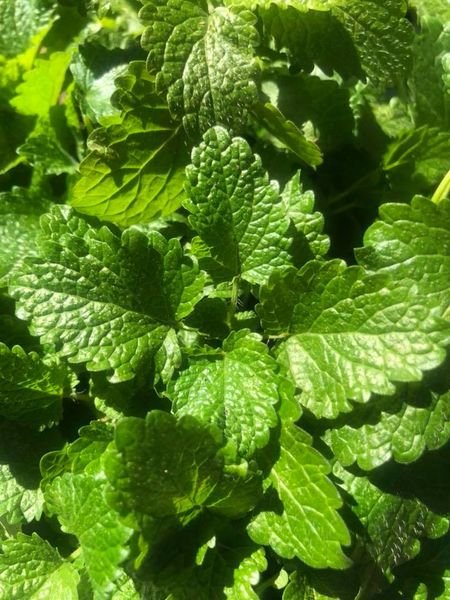
As I leant my hand down to swish the foliage I saw about six European bees and a number of native bees swarming the foliage looking for nectar.
It was like the scent of just the foliage alone (no flowers) sent out a calling card to all the nearby bees.
Here’s where the story gets even cooler.
Melissa is the Greek word for "honey-bee." It was traditionally used by the ancient bee keepers. They used to rub the crushed leaves on the beehives to encourage the domesticated bees to return to their hives. They also believed that the lemon balm would also bring new bees to the hive.
How cool is that.
I love how random bits of information make sense.
Melissa naturally occurs throughout Europe to central Asia. It is widely cultivated today for its essential oil, practical herbal uses and as a great bedding plant.

Lemon Balm is a lemon-scented perennial with a 4-angled stem and ovate, toothed dark green leaves. It likes to grow in moist soil in the sun or partial shade. It provides a nice thick ground cover. It can grow well in a pot (we have ours growing in an old saucepan), hanging baskets or the garden.
After flowering it is recommended to prune back to produce a fresh crop of leaves.
There are so many uses for lemon balm and I think I am going to have to see if I can get this plant growing at home.
Dried leaves can be added to potpourri and herb pillows.
You can use it in cooking – soups, salads, flavoured oils, sauces.
You can use it to make a tea to help with nervous disorders, indigestion associated with nervous tension, depression, anxiety, gout.
It can also be rubbed fresh onto the skin as an insect repellent and to soothe insect bites.
Lemon Balm essential oil is one of my favourite oils and is also very precious and very expensive. So I have to be careful not to use it in every blend I make.
It has been said that it is the ruler of the brain, strengthening memory and removing melancholy. Fischer-Rizzi said it helps us find inner contentment and strengthens ‘wisdom of the heart’. It is one of the best essential oils to help with down in dumps can’t move depression.
I was in love with this herb just from its scent.
Now I know no garden should exist without it!
Go find some lemon balm and lift your spirits and give your heart some contentment.

The Autumn Vegetable Patch
Some us can get gardening bored by beginning of March. We want to play but know it's to early. There are a number of things you can be doing to get your vegetable patch up to scratch so when the ‘autumn' weather starts you’ll be ready.
The beginning of March is traditionally the time to plant our winter crops.
Sometimes this is not the case in SE QLD, Ipswich in particular! Every year is different but most years we can get March day time temperatures exceeding 35 degrees. In weather like this I wonder how anyone could seriously be thinking about planting cabbages!
We do get vegetable garden bored. We want to play yet we know it's to early.
There are a number of things you can be doing to get your vegetable patch up to scratch so when the ‘autumn' (cooler) weather starts you’ll be ready.
Most winter vegetables will grow better if the soil’s pH reading is quite high around 6.5. Your soil’s pH is a measure of its alkalinity or acidity and different plants thrive at different pH levels.
Before you add anything though, you should always measure your soil’s pH with a testing kit. Adding lime will increase your pH reading - making your soil more alkaline. Attempting to make your soil more acidic - a lower pH reading - is a lot more difficult.

Eden Seeds
If you need to add lime to your soil it might be too late for granulated lime to work. It can take months to break down. Eco-flo lime is a liquid concentrated form of lime and is very effective. Enriched with seaweed eco-flo lime is perfect for rapidly correcting acidic soils and boosting calcium levels in your soil. It is also registered organic.
Another thing to note is if your soil’s pH is great you may still want to add some Dolomite. Dolomite helps add calcium and magnesium back into your soil. These two trace elements are water soluble so are easily leeched out of your soil. Especailly after a lot of rain. Lack of calcium is the number one cause of blossom end rot, so even if your garden’s pH is around 6.5 I would still add some Dolomite.
Next make sure your vegetable garden is free of weeds and if you need to add more compost (we use Searles organic compost) or manure now is time to do it.
While it may be too hot or wet to be planting seedlings into the ground, it's a great time to be raising seeds. Seeds are a great way to try different vegetables. The seed range is so extensive at Trevallan we have a “seed wall”. An added bonus of using seeds is you can stagger your crops so everything doesn't ripen at once.
Trevallan stocks Eden Seeds. Eden Seeds distributes old traditional open pollinated varieties of seeds, preferably old Australian varieties and organically or bio-dynamically grown where possible.
It is believed that these types of seeds grow plants that are more nutritious and better tasting, hardier and easier to grow for the home gardener. These older varieties also produce over an extended period of time.
When growing seeds it is best to use a seed raising mix. Some seeds require pre planting preparation, beetroot supposedly germinates quicker if soaked overnight. Some people also do the first water with a weak solution of liquid fertilizer.
As for what to plant your seeds into, there are a myriad of choices - plastic pots, folded up toilet rolls, egg cartons, old seedling trays.

Home Grown Eggplants and Capsicum
I find the trick to seeds is keeping them in part shade and a really LIGHT watering every day to every second day in hot weather. You want to keep them moist but not wet. Once the plant starts to grow I add a little Triple Boost Liquid fertiliser to my watering.
Once the weather cools down continuously it will be time to plant out all those seeds into your garden beds.
If you don't get the chance to raise your own seeds Trevallan stocks a great range of vegetables in seedlings. These seedlings won’t start arriving until about April as it’s still just too hot to plant. Some of your choices could be beetroot, broccoli, snow peas, strawberries, Asian greens, onions, leeks, cauliflower, spinach, rocket, coriander, kale and cabbage. Some people may also like to plant out peas, though I don’t know why… Yuk!
Don't forget we are now proud stockist's of VEGEPOD. Vegepods are an easy to manage contained raised gardening bed that has self-watering technology by using a wicking system. Plants can last weeks without watering in our Vegepods. They also have a Protective Cover that protects crops from UV and pests. We have two set up in the garden centre and for the first time in years we had a tomato crop in summer without fruit fly stings!
Once everything is planted out in your garden don't forget to give it some Organic Link and fortnightly applications of Triple Boost and Neem.
Happy gardening.