Find Us:
77 Fernvale Rd
Brassall QLD 4305
(07) 3201 8630
Open:
Tue-Sun 9am - 4pm

Chrysanthemums
Chrysanthemums are one of the easiest plants to grow and are perfect for green or brown fingered gardeners
Chrysanthemums are traditionally given at Mother’s Day as they flower profusely during autumn and they contain the word mum!
I have found for some strange reason people tend to shy away from having Chrysanthemums in their garden. Maybe they are just too common?

Chrysanthemums are one of the easiest plants to grow and are perfect for green or brown fingered gardeners!
I find these brilliantly flowering plants are one of the best for gardens in the full sun.
They are so many varieties of chrysanthemums available today, one to suit every garden. The US National Chrysanthemum Society has derived that there are 13 different types of flower forms. Then there are the colours, I think every year they get more exquisite. There are single coloured and multi-coloured blooms ranging in colour from pure white to all shades of yellow, reds and purples.
Chrysanthemums are one of the easiest plants to grow and are perfect for green or brown fingered gardeners! Chrysanthemums have long lasting flowers and are relatively pest and disease free. This makes them perfect for everyone as this enables us to enjoy these plants hassle free for many years to come.
Potted chrysanthemums can flower for several weeks indoors but thrive best if placed in full sun. They can be grown in pots or in the garden. To keep them looking fantastic and to promote more flowers, remove all spent flowers and discoloured leaves and liquid fertilised fortnightly.
After flowering chrysanthemums should be cut back to about 15cm (6") high and given Organic Link fertiliser. They will usually flower again in about two months.
Chrysanthemums aren’t just the perfect idea to brighten up one's garden.
They can be used in cooking and teas. NASA Clean Air Study also found chrysanthemum plants can reduce indoor air pollution. Extracts of chrysanthemum plants have been shown to have a wide variety of potential medicinal properties, including anti-HIV-1, antibacterial and antimycotic.
Pyrethrum a well-known insecticide is also derived from chrysanthemums.
This Autumn don’t stress about finding a beautiful, versatile, easy care plant - just buy a Chrysanthemum!

Kalanchoe
Nothing kick starts you like the vibrant shades of the Kalanchoe. These hardy plants are perfect for giving your garden some TLC during winter.

With the onset of winter, we all need a kick start to get out in the garden. Nothing kick starts you like the vibrant shades of the Kalanchoe and these hardy plants are perfect for giving your garden some TLC during winter.
Kalanchoes are one of the prettiest bushy succulents. They belong to the stonecrop (Crassulaceae) family, which is the same family as the Jade plant or money tree. Kalanchoes are the ultimate winter plant whether it is for your garden or pots.
These glorious plants flower from June through to September, sometimes even longer. Kalanchoe flowers are best described as masses of small bouquets of starry, four petalled flowers that develop at the end of a stalk. The vivid colour of the flowers - hot pink, bright yellow, brilliant orange and intense red make a dramatic statement during the bleak cold of winter. In the past, the flowers have only been available in single form, but in recent years, a double flowering Kalanchoe has been released and is available in all the vibrant colours, hot pink being my favourite.
Kalanchoes have a compact habit and their leaves are oval with scalloped edges. They usually have lush green foliage, but some varieties have grey leaves, which can actually add a lovely contrast to a dull spot in your garden, or brighten a boring pot.

Kalanchoes are a succulent that can grow anywhere and are extremely hardy. They don’t mind whether they are grown in full sun or shade, so are perfect for shady balconies or the western side of the house. They don’t mind if they are left inside while they are flowering or if they spend their life outside. They look magnificent mass planted in the garden, or as a specimen plant in a pot. They even look fantastic in a hanging basket.
Brown or green fingered, Kalanchoes are sure to survive at your house. These beauties don’t need much water and would much prefer to be dry than wet. A good watering once or twice a week is all that is needed to keep these plants looking beautiful. They don’t like to sit in water, so make sure that if planted in a pot, their saucer isn’t constantly full or if in the ground, it is a well-drained area. Try planting in a clay pot with Searles Platinum potting mix as sometimes roots in plastic pots tend to sweat during the warmer months, which can lead to an untimely death.
Kalanchoes will thrive if Organic Link is used every three months and Triple Boost is applied every two weeks. If by chance insects attack your kalanchoe, trim off the affected foliage and spray with Eco-Oil (organic pesticide) or Neem Oil. Don’t fret though, these plants are tough and should survive even if they are only attended to rarely.
Flowering kalanchoes brighten any cold bleary winter’s day, so give your life and garden some TLC this weekend by getting outside with your morning coffee and enjoying the colours of summer whilst wearing your Ugg boots!

Camellia Sasanqua
Camellias are amongst the world's best flowering plants. They are hardy and disease resistant

Autumn is my favourite season. Cool crisp nights and fresh sunshine days. The days are shorter but seemed to be filled with achievable goals (maybe because we aren’t sweating by 9am!). Autumn is also a glorious time of year because one of my favourite plants starts to flower – Camellias.
Don Burke said it best way back in 2002 “Camellias are amongst the world's best flowering plants. They are hardy and disease resistant, most varieties have attractive, glossy green foliage, and they put on their fabulous flower display in the cooler months of the year when the rest of the garden often looks dull and bare”.
Originally from China camellias have taken well to their Australian home. I have four favourite types of camellias - sasanquas, japonicas, reticulates and hybrids.
Sasanquas are the TLC my autumn garden needs. They seem to burst into life, brightening up sun and shade spots alike with their elegant sometimes fragrant blooms. Of course these plants are still handsome at other times of the year, with their deep green, glossy leaves, and graceful habit. Sasanquas are a versatile shrub with a variety of uses. They are great as a hedge, look fantastic espaliered against a fence, perfect as a statement in a pot or garden and can even be used as bonsai.

Camellia Sasanqua Flower
Camellia sasanquas flower in abundance from March through August with much of the shrub being covered with their striking coloured flowers. These flowers are mostly singles or semi-doubles and range in colour from white through to deep pinks and reds. All the flowers have brilliant yellow stamens that the Australian native bees find delicious!
Some of the sasanquas even have a delightful fragrance that gently wafts through the air tickling your senses and leaves you wanting more. To promote this profusion of flowers and good growth, fertilising with Organic Link should be done at least twice a year, just before flowering and just after. I also like to give my Camellia sasanquas a granular dose of sulphate of potash around February to help promote flowers. If you find you are a little late this year you can just start liquid fertilising with Silica and Potash, every fortnight to help promote blooms. During their flowering season I liquid Plant Care them on a regular basis to keep them healthy while in bloom. About once a year usually around the end of February I add a little bit of Dolomite to the soil around my camellias. Camellias can be prone to calcium deficiency and I find adding a little bit of Dolomite helps with this. If I can’t add Dolomite (or I forget) I try to Liquid Bio Trace my Camellias at least twice a year.
Sasanquas also possesses the distinct advantage of tolerating both full sun and partial shade. These are the perfect plant for your south facing garden or patio. As long as they are planted into good quality potting mix or garden soil and mulched correctly sasanquas are one of the most robust drought tolerant plants around.

Camellias in Ipswich are considered to be relatively slow growing; as a result they are quite happy to stay in a pot.
This is also why they make an excellent hedge – with little effort they can easily be trained to grow thick and neat, they really only need to be pruned once a year after flowering.
There are over 1000 named varieties of Camellia sasanquas, so this diverse group of flowering shrubs should fulfil a range of needs and colour schemes in everyone’s garden. Give your shady or sunny garden spots some TLC this weekend with the hardy Camellia sasanqua.

Pretty Pots
Wonderful warm days, cool nights. I can not express how much I love autumn in the garden
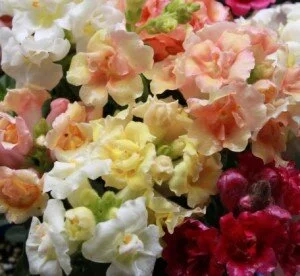
Snapdragon Double Mix
Wonderful warm days, cool nights. I can not express how much I love autumn.
This is usually the time I up end all my all drab/dead pots that lost their lust for life around the same time temperatures hit forty and I got caught up in the school routine.
I usually just throw the dead plants out and throw the soil from the pots if it’s old on the lawn as a quick top dressing.
I love grouping my terracotta pots. Before I even start to plant I work out which pots I want to use and usually have grouping of three or four all different sized and shaped terracotta pots. I also work out where I’m putting my pots and does that area get all day sun, some shade and sun or all day shade.
Next I get my potting mix. I always use, what is in my eyes, the best quality potting mix – Searles Platinum Potting Mix 30Lt. I find that if I give my plants the best possible start in life they are more likely to flourish with little input from me. I use Peat 80 for everything in pots whether its roses, vegetables, azaleas or flowering annuals
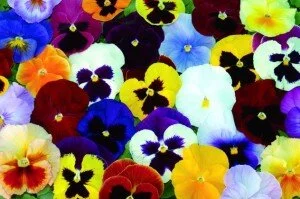
Pansy Mixed
Plants in pots do need a little bit more care and attention than plants in the ground. I try to give my pots a complete organic slow release fertiliser with Organic Link every three months and I alternate my liquid fertilisers fortnightly. I use Triple Boost and Silica and Potash. I am sometimes a bit forgetful with the liquid fertilising but I have realised that if I want my potted plants to stand out and look really amazing once a fortnight is best.
Next it’s time to choose the plants.
The best thing about this time of year is that I can start filling all my empty pots with winter flowering annuals like pansies, tall snap dragons, primula and violas! Plus all year round annuals like lobelia and asylum.
I’m not usually an annual person. It’s not that annuals are that much work, it’s just I’m too much of an impatient gardener to wait for the seedlings to grow into plants and flower! But I just love the cooler flowering annuals.
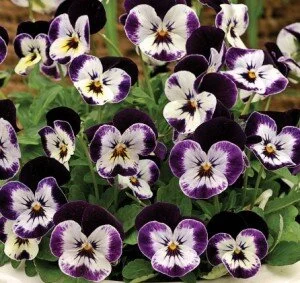
Viola Mixed
Some of you may be wondering what an annual is.
Annuals are a range of plants that usually flower and grow for one season, many do grow for longer. Winter flowering annuals such as pansies and violas will usually only grow in Ipswich during the cooler months by the time Christmas is here they have completely died off.
I may only get five months of winter annual joy but how could I not love the bright infusion of colour these wonderful plants can bring?
The best thing about winter annuals is that many of them are perfect for cut flowers. Snapdragons and stocks can last for a couple of weeks inside in a vase.
This weekend get outside, get dirty and breathe back some life into your old pots.

Kokedama
Kokedama is a style of Japanese bonsai made by taking a plant out of its pot and into a ball held together with a unique soil mixture, moss and string.
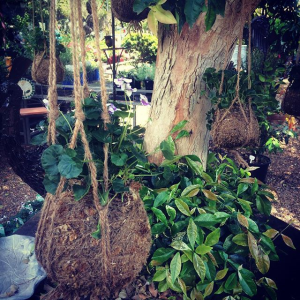
Viola hederacea’s made into kokedamas at Trevallan
Kokedama is a style of Japanese bonsai made by taking a plant out of its pot and turning it into a ball held together with a unique soil mixture, moss and string.
Trevallan's Kokedamas can be hung outside in full or part shade, and some are perfectly suited to indoors.
Trevallan stocks a range of Kokedamas, such as Native Violets, Ficus Pimula, Parlour Palm, Brazilian Walking Iris, Ficus Fiddle Leaf and Anthuriums .
How to look after me
When the sphagnum moss feels dry to touch and the ball is light, I soak them in a bucket of water for about ten minutes. If it’s really hot, you may need to do this more than once a week. If it’s cold, you may only have to do it once a fortnight.
Alternatively, similar to your other plants, you can just water them with a hose or watering can.
If my Kokedamas are inside, I like to sit them in a bowl and top the bowl up with water.
Where to put me

Trevallan's kokedama
Some of Trevallan's Kokedamas come with their own hanger. These can be hung outside in shade or part shade, maybe under a tree or on your patio. They look fantastic as a group.
Some Kokedamas are perfectly suited to indoors and can be hung from the ceiling, or Trevallan's handmade Timber Kokedama Stand.
If hanging isn’t an option, you can sit your Kokedama on a plate or in a bowl. The sphagnum moss will be wet most of the time, so be sure to protect your furniture.
Kokedama’s are definitely worth trying - remember, not every plant needs to be potted!

Are your Chakras out of Balance?
Are your Chakra’s out of Balance? Here’s a quick checklist to help us determine which chakras are out of balance.
Answering yes to four or more questions associated with a chakra indicates an imbalance.
How do we know if our Chakras are out of balance?
Perfect Potion have a checklist to help us determine which chakras are out of balance.
Answering yes to four or more questions associated with a chakra indicates an imbalance.
Base Chakra
Do you feel disassociated from your body?
Are you overweight?
Are you underweight?
Do you have a weak physical constitution?
Does life on earth feel like a burden?
Are you fearful?
Are you disorganised?
Are you possessive and/or materialistic?
Are you worried about financial security?
Are you accident prone?
Sacral Chakra
Do you suppress your sexual desires?
Do you have a negative attitude about sex?
Does sexuality make you nervous?
Do you lack the passion or excitement about life?
Are you emotionally dependent?
Does your creativity feel blocked?
Do you feel guilty?
Are you afraid of making a commitment?
Are you obsessed with sexual thoughts or feelings?
Solar Plexus Chakra
Do you have low energy?
Do you have low self esteem?
Are you weak willed?
Are you easily upset or discouraged?
Do you feel ashamed of who you are?
Are you unreliable?
Are you manipulative and controlling?
Are you unable to relax?
Do you have temper outbursts?
Are you stubborn?
Are you prone to digestive problems?
Do you always like to be in control?
Are you afraid of rejection?
Heart Chakra
Are you anti social?
Are you tolerant of others?
Do you have a fear of intimacy?
Are you overly sensitive?
Are you depressed?
Are you experiencing grief?
Are you indifferent?
Do you have a jealous nature?
Do you have difficulty breathing?
Do you take care of others but not yourself?
Throat Chakra
Do you have a fear of speaking?
Do you have a weak voice?
Are you unable to express your true feelings?
Are you shy or withdrawn?
Do you speak harshly to others?
Do you talk too much?
Do you tell lies?
Are you unable to listen to others?
Do you frequently have a sore throat?
Do you feel you have nothing worth saying?
Do you clench your jaw or grind your teeth?
Third Eye Chakra
Are you out of touch with reality?
Do you have a poor memory?
Are you forgetful?
Do you feel confused?
Do you have impaired vision?
Do you have difficulty in concentrating?
Do you have nightmares?
Do you often misunderstand situations?
Do you have frequent headaches?
Are you over-analytical?
Do you doubt your intuition?
Crown Chakra
Are you apathetic?
Do you feel lonely or isolated?
Do you feel you have no purpose in life?
Are you afraid of dying?
Does life seem senseless?
Are you over attached to your belongings or relationships?
Do you have an addictive relationship with spirituality?
Do you search for answers outside yourself?
After reading this, you (like me) may feel that more than one chakra is imbalanced or blocked. This is because when one is blocked, the other chakras begin to compensate and either become overactive or under-active.
The best way to start is to acknowledge the first chakra that is out of balance, then check out our guide to balancing your chakras. Another way to Balance your Chakras is to have a Chakra Balance session with Lorelle from Dimensional Healing. You can book one here
Spring is Here. What do I Plant?
Spring is Here. Some inspiring plants that thrive in the spring
Jasmine polyanthum
Few vines rival Jasmine polyanthum for beauty and fragrance. This easy-to-grow climber produces beautiful clusters of starry flowers you can smell from miles away. Most Jasmine polyanthums bloom in late winter or early spring. We have ours in hanging baskets so no need to worry about stakes for these vigorous climbers.
Waterhouse Unipunctata
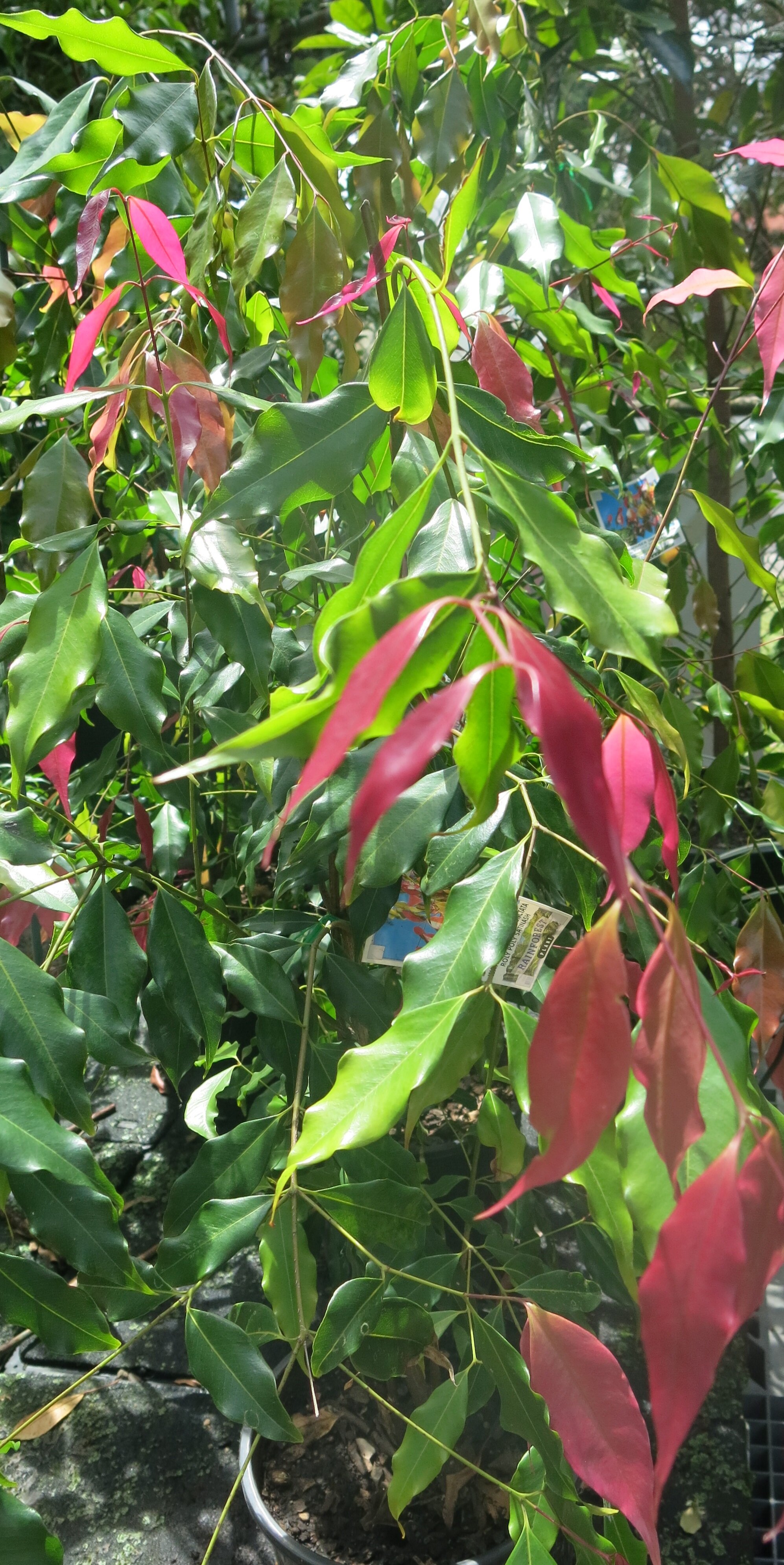
You may think that a native tree that has small white flowers is a little unusual to be included in Plants that I love for Spring. Think again! Waterhousea Unipunctata or Roly Poly Satinash has been included because of its long lasting flushes of brilliant red new growth that cover the plant making it stand out amongst the green backdrop of any garden. Plus its flowers and fruit are a delight to the native fauna. It can handle dry conditions and light frosts once established and likes the full sun.

Osteospermum Copper Amethyst
Osteoperums always bring sunshine and brightness to any garden. There is a range of colours now available so you will find one to suit any garden palette.
They are perfect for gardens or pots and will flower continuously through the warmer months.
You can let it ramble through the garden or keep it neat and tidy by giving it a good trim inbetween flowering. Regular deadheading and fortnightly liquid fertilising will encourage new blooms. Flowers will close up every evening and open up again in early morning.

Lavender
How can one not want the beautiful fragrance of Lavender in their garden? Lavenders can be grown in pots or the garden and flower profusely. Plus they look really pretty as cut flowers.
Give the plants a full sun position in a well-drained soil. Do not overwater as lavender dislikes wet feet, prune after flowering to promote compact growth and mulch well. Drought tolerant once established.
There are so many varieties of Lavender available. I have found French to be the longest lasting in our climate but if you want to try something different you could try Lavender ‘Lavish’ the double flowering lavender or Lavender ‘Silver Lining’ which has an almost white foliage.

Petunia Midnight Gold
We are now stocking a great range of trailing perennials in seedlings and pots. Perfect as living mulches or to jazz up full sun hanging baskets. One of my favourites at the moment is the Petunia Midnight Gold. This petunia features huge double blooms that are a lemony yellow around the outside and deep purple black on the inside. It has exceptional branching habit with profuse flowering making this perfect for hanging baskets.

An unconditional love
This Mother’s Day look past your mum’s insane streak and don’t forget all the wonderful Tim Tams and pieces of pie she gave you and is probably still giving you!
Spoilt for Choice at Trevallan for chrysanthemums
When I was quite young, I once watched a mum give the last two Tim Tams in a packet to her kids. At the time I thought the woman had gone completely mad - who gives away perfectly good Tim Tams ?
Years later, I came across this quote “A mother is a person who seeing there are only four pieces of pie for five people, promptly announces she never did care for pie.” As a mother myself, I now understand the crazy lady giving away her Tim Tams (though giving away Tim Tams is still a little crazy)!
As parents, we sometimes forget that we are children too and our mums will always be our mums!
Because we are always children in our mother’s eyes, they have the ability to drive us, as adults, a little insane at times.
Their insanity, so it seems, is not due to old age, it’s just their ability to never stop caring or loving us.
This Mother’s Day, look past your mum’s insane streak and don’t forget all the wonderful Tim Tams and pieces of pie she gave you, and probably is still giving you without you even realising!

Love this beautiful winter flowering plant
Don’t just give her a pot of flowers, give her something that she really wants – time with you.
As a mother of young children, my ideal Mother’s Day would probably be sleeping in a bed without sand, crumbs and/or tiny feet kicking me through the night, to enjoy my morning coffee, without the need to be a climbing frame, not having the Terraria computer game theme song stuck in my head or answering a 1000 questions before 5am, oh and of course a massage and a hair cut.
My mum, on the other hand, would probably appreciate a day of my kids shenanigans, sorry, I mean ah, a day of quality time with my children and myself.
So this Mother’s Day the only answer is - the kids are spending the day at mum’s house, I’ll be supervising! Win, win!
Lavender shades
Seriously though, in today’s world it seems we are spoilt for choice in the present department. Believe it or not, a few years ago, a pot of chrysanthemums was the only choice you had as a gift option for Mother’s Day.
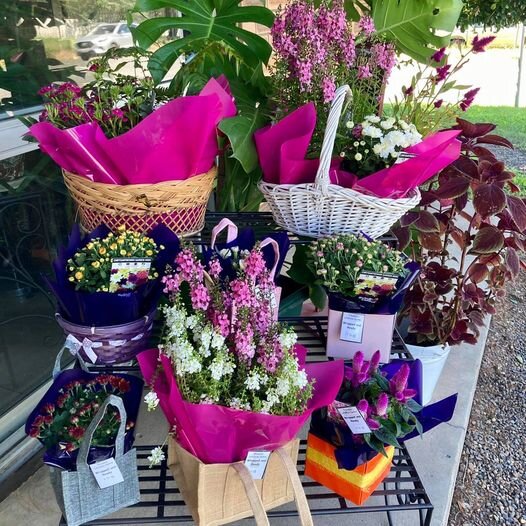
This Mother's Day, Trevallan Lifestyle Centre is overflowing with living flowering gifts. Cyclamens, azaleas, pansies, orchids, kalanchoes, even flowering cactus and of course chrysanthemums, all are in bloom, look fantastic and are easy to care for – even brown thumb mums should enjoy!
With every present you give though, don’t forget to give a little of your time as well.
Our mothers just want the best for us – so ignore the so called mothering insanity and instead, give her a hug and kiss and let you know you love her.
Because while a mother’s love is unconditional, we as children need to reassure them that our love is unconditional too!

What's wrong with my Citrus trees?
Citrus trees are prone to Leaf Curl and Leaf Miner. Here’s some organic methods to stop these issues.
Citrus trees are prone to Leaf Curl and Leaf Miner.
Both these problems are mainly caused by insects.
Leaf Curl can be attributed to sap-sucking pests like aphids, mites and psyllids who feed on citrus leaves by extracting the juices directly from transport tissues. As populations grow, they can cause deformations including curling and cupping in leaves, as well as discoloration.
Leaf Miner are another insect, moth larvae. Instead of sap-sucking, moth larvae tunnel through leaf tissues as they grow. These tunnels are highly visible on leaf surfaces, appearing as white or yellow lines.
I find the best way to deal with both of these pests is just trim off the affected leaves. If you wanted to spray BFA certified organic sprays like Eco-oil or Eco-fend would work. I find if I mix a little neem oil with my liquid fertiliser (Plant of Health's Triple Boost) and use it fortnightly it also reduces the harmful insect population. I try to work from a place of prevention is better than cure.
If your plants are badly affected a weekly spray for at least four weeks with Plant Care and Neem Oil, mixed together might be your magic pill!
Why Neem Oil and Plant Care?
Neem Oil is derived from the Azadirachta indica tree. When applied to insects and the plants they are eating, neem oil causes many insects to feed less, grow more slowly, molt less, and lose interest in laying eggs. Neem also suppresses the hatching of pest insects from their eggs.
Plant Care is like a vitamin pill for plants or when they’re sick or stressed. Plant Care contains natural liquid fish proteins, amino acids, liquid vermicast, fulvic acid, natural growth stimulants as well as a special blend of selected herbs and botanical extracts. Plant Care is a natural, non toxic foliar spray and can be used regularly on all plants, vegetables and lawns without the fear of NPK overload or plant damage.
Drought stress can also lead to leaf curl in citrus and is the easiest to remedy. If leaves begin to curl inward while retaining their green colour and the soil around your tree feels dry to the touch, you’re not watering enough. Step up your watering efforts and applying an organic mulch if you haven't already. If you are watering regularly then a soil wetter may be necessary. Soil Wetters help water and nutrients penetrate into the soil enabling the plants roots to pick up what they need.
Nutrient deficiencies can also lead to leaf curl. Citrus trees are very heavy feeders.
My citrus trees get Organic Link every three months and I try to liquid fertilise them fortnightly. I also like to give my trees a liquid fertilise with a complete trace element mix (I use Plant of Health's Bio-Trace) twice a year as part of my normal fertilising regime.
“Even if I knew that tomorrow the world would go to pieces, I would still plant my apple tree.” Martin Luther
I think the world would be a better place if we all took Martin Luther’s advice. We do not know what tomorrow will bring but we do know what we can do today for a better tomorrow!

Get through your Workday with Ease
The work day can be very long sometimes… It doesn’t matter if you work for someone, are the boss or a student, we are all dealing with constant stress and pressures. To help us all cope a little better Trevallan stocks a great range of products that can be incorporated into your daily ritual.
The work day can be very long sometimes…
It doesn’t matter if you work for someone, are the boss or a student, we are all dealing with constant stress and pressures.
This includes everything from physical and mental stresses, environmental and social stresses, growth and developmental stresses...and that's all in one day.
To help us all cope a little better Trevallan stocks a great range of Perfect Potion products that can be incorporated into your daily ritual.
Clear and Focused Trio of essential oil blends
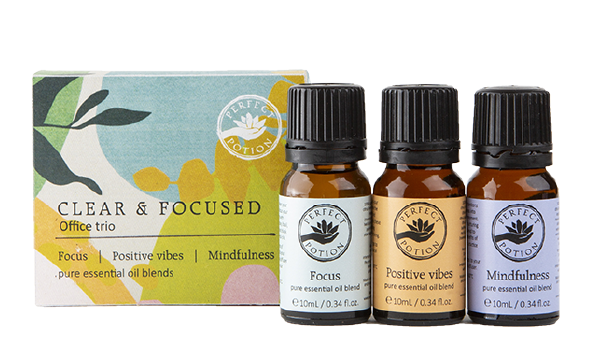
Stay sharp, motivated and focused in your home or workspace with the energising aromas of Focus, Positive Vibes and Mindfulness essential oil blends. Just add 3 drops of one of the blends into your diffuser and enjoy a boost.
Focus Essential Oil Blend helps you keep focused during classes, study or work. It harnesses concentration, thoughts and aspirations and helps the mind remain fresh and clear.
Positive Vibes Blend will help you feel inspired and energised by this uplifting blend.
Honour the present moment with the uplifting and mind-focusing Mindfulness Blend. Diffuse this nurturing, grounding blend to enjoy the benefits of mindfulness practice in your life.
Body and Room Sprays

Calm & Collected Aromatic Mist is all about returning to yourself. It is designed to bring your energy back to you so you feel aligned, balanced and capable of making decisions. Chakra related essential oils are blended with crystal essence and infused with reiki symbols and energy, all with intention to balance the chakra system.
You can use the Calm & Collected Aura Spray:
~ When you leave work for the day
~ When you feel scattered, irritable, indecisive
~ During witching hour (dinner bath bed routine) when tension and stress are high
~ As a room spray - to lighten and refresh the energy of the room
~ As a pillow mist before bed to help you switch off
~ After being in dense public places like supermarkets, department stores or airports
~ Anytime low vibes (negativity and stress) take hold

Happy and Calm Aromatic Mist is cheerful and calming helping to create a positive and comforting space. It helps us to wind down, relax and have fun. The Happy and calm mist contains the Calm & Clear Bush Flower Essence which helps us to wind down while still enjoying life. I love spraying this in the car just before pick up time, it always makes the drive home a little calmer! You can spray this mist onto yourself, in a room or do as I do and spray the car.

Breathing Space Room Spray creates a clean fresh environment that helps create an atmosphere of calm and serenity, banishes bad vibes and can help keep colds and flus at bay. In Winter I try to spray myself and kids when we get home from school and work so we don't bring other peoples lurgies into the house. Great if you use public transport a lot and are constantly surrounded by air borne bacteria. You can spray this mist onto yourself, in a room or the car. I sometimes use it on stinky shoes or gym clothes before a wash.
I also love Perfect Potion’s other room sprays - Australian Journey, Yuzu and Lime and Shinrin-yoku. All of these work well at clearing the air and bringing a sense of calm and happiness into a room.

Sweet Dreams Aromatic Mist helps you wind down and create your own dreamy paradise. It promotes serenity and inner peace and helps you wake fully rested. It regulates the body clock creating a familiarity with 'falling asleep'. It contains Meditation Bush Flower essence which helps you reach a deeper state in mediation. I swear by this. I have used this for many years, whether to soothe a teething over tired baby or an overtired mummy! I find after a spray of this everyone calms down and can easily fall asleep. You can spray this mist onto yourself, on a pillow or in a room.
Don't forget Laughter is the best medicine. Having a good laugh is a great way for us to relax after a hard day. Laughter is contagious!

Sapping the Life from your Trees
As a way to help combat Lantana an evasive weed, a Bio-control called Aconophora compressa (Lantana Treehopper) was introduced in 1995 throughout Queensland and New South Wales.
To me every plant has its place.
Just because I think its place is in the bin doesn’t necessarily mean you should feel the same.
Every garden should be as diverse as its owner.
Take pride in expressing your individuality in your garden. Just because Jamie Durie likes it doesn’t mean you have to.
Some plants though do not deserve anyone’s TLC.
These plants make up Australia’s Most Wanted Weed List or Weeds of National Significance. Lantana would have to be number one. This plant has successfully taken over nearly every rainforest and bushland along the east coast of Australia as well as some areas in West Australia and Northern Territory.
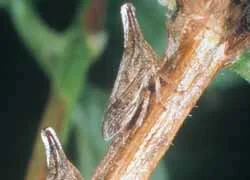
Aconophora compressa
As a way to help combat this evasive weed a Bio-control called Aconophora compressa (Lantana Treehopper) was introduced in 1995 throughout Queensland and New South Wales.
Bio-control is importing a natural enemy to combat pests. It has been very successful in controlling a range of introduced plants that are pests to agriculture, the environment, and human health. Bio-control methods also help reduce the need for pesticide use. The decision to use a Bio-control is not gone into lightly. The lantana treehopper was screened as a bio-control agent from 1990 to 1994 and its release was unanimously supported by 22 state and federal agencies.
The Aconophora compressa camouflages itself very well against the bark of the tree. The insects are brown in colour and can grow up to 8mm long. It has a horned body so it makes the plant look like it has thorns. It sucks the sap out of the host plant and exudes large amounts of honeydew, a sugary solution in which black sooty moulds can grow. The treehopper can cause die back, stunted growth and flowering, unhealthy leaves and eventually death of the plant.
Unfortunately, as with many bio-controls, the Aconophora compressa hopped onto some of our common ornamental shrubs and trees.
This bio-control can be controlled through spraying with an insecticide and trimming or removal of affected plants. The two most viscously attacked plants are Fiddlewoods and Duranta but it has been seen on other ornamentals as well such as Jacarandas and Pandoreas and just recently Annette McFarlane mentioned they were on her Lemon Verbena.
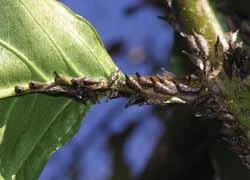
Aconophora compressa
When it comes to the Fiddlewood we aren’t too worried as Fiddlewoods are a West Indian native, considered as an undesirable introduced tree as their roots are very invasive. The Department of Primary Industry (DPI) recommends removing the affected Fiddlewoods and replacing them with a desirable native tree.
Duranta – Sheenas Gold or Geshia Girl can also be affected by the Aconophora compressa. These plants are so extremely fast growing and resilient that a severe trim (putting all affected cuttings into black plastic bags before dumping) and a fertilise with Organic Link (a good quality organic slow release fertiliser) is all they need.
If they are on a plant you can not trim a spray with an oil based insecticide like Eco oil or neem oil. I have heard that Pyremuythum based sprays are effective as well. When spraying for an insect like this you need to be consistent and make sure the plant gets an effective drenching.
This weekend give your life some TLC by getting dirty and making sure you have no nasty critters hiding in amongst your flowers.
Gardening Advice, who you ask is Important!
Want correct and helpful advice on gardening - visit your local garden centre. The best place to get correct information is a place that specialises in that particular subject.
I was horrified the other day to hear this story…
A customer was in the greenlife section of a big box store when she overheard a staff member recommending a particular potting mix. Curious because all gardeners want to know what they could be doing better, she moved closer to hear more.
What she discovered was shocking: the staff member was recommending a product she recognised immediately as composted fertiliser, not a potting mix at all.
The bag even clearly stated, in bold print: "THIS IS NOT A POTTING MIX."
These first-time gardeners walked away with three bags of the wrong product and a handful of plants. Unknowingly setting themselves up for heartbreak. Their plants were unlikely to survive, and worse, they’d probably blame themselves when it all went wrong.
This is the real danger of bad advice.

When a plant fails, people get discouraged. They feel like they’ve wasted their time, energy, and money. Many give up on gardening altogether, thinking they were the problem, when in reality, it was simply the wrong product for the job.
The right advice makes all the difference.
And the best place to get it?
A business that actually specialises in gardening.
Garden centres are home to qualified, experienced horticulturists. People who don’t just sell plants, but understand them. We’re locals too, which means we’ve battled the same clay soils, the same hot summers, the same tricky planting spots. We don’t just sympathise, we’ve been there.
Our goal is to help you through your gardening challenges, take away the confusion, and bring back the joy of growing. For most of us, this isn’t just a job. It’s a lifelong passion.
Here at Trevallan Lifestyle Centre, between Carolyn and myself, we bring over 50 years of hands-on gardening and horticultural experience to the table.
We work hard to stay current, not just with what looks good, but with what actually works. That means staying on top of:
Changes in product formulations
Plant performance in our climate
Emerging industry trends
Environmental challenges
We attend supplier sessions, horticultural expos and conferences, and regularly read industry journals and research papers. I’m also a proud member of the Horticultural Media Association, which helps keep us connected and accountable as professionals in this trade.
At Trevallan, we’ve learned that we don’t need a thousand gardening items on the shelves. We only stock what we use ourselves. The tools, products, and plants we know work. It’s all about keeping things simple, effective, and grounded in experience.
We also run a number of horticultural workshops and masterclasses throughout the year, because we believe gardens are investments and to make sure that investment thrives, you need access to honest, down-to-earth, professional advice.
So next time you’re ready to improve your plant-life balance and give your space a little TLC, visit the real gardening experts at Trevallan Lifestyle Centre, your local garden centre.

Brilliant Australian Native Plant
Summer Red Eucalyptus would have to be the best flowering Australian Native gum tree for suburbia.
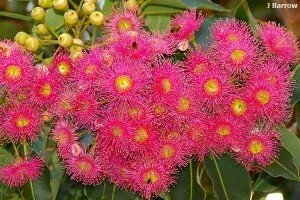
Photo by Brian Walters from the Australian Native Plants Society
Summer Red Eucalyptus would have to be the best flowering Australian Native gum tree for suburbia.
Before this range was released if you wanted a flowering gum tree you had to just go out and buy one and hope for the best. Sometimes the flowers turned out red and other times pink, but quite often it was an insipid white which you didn’t really want anyway. Plus the plant was straggly and had to be kept heavily trimmed to look nice.
The good news is that it’s now possible to buy flowering gums with predictable flower colours. Specially bred for the home garden, the new plants are hybrids between Eucalyptus ficifolia and Eucalyptus ptychocarpa, grafted on to Eucalyptus intermedia rootstock.
Eucalyptus ‘Summer Red’ produces masses of mid-pink to red flowers in summer and grows quickly to around 5 metres. It has large glossy green leaves and the new foliage is an attractive bronze colour. The trees should do well in most areas of Australia and will tolerate light frosts and drought.
Eucalyptus ‘Summer Red’ would be my ideal gum tree for the home garden. It is the perfect shade tree, with a height and spread of around 5m. It can be kept easily pruned and is even suitable for large pots.
Make a bird happy today and plant a Eucalyptus ‘Summer Red’!
It can be trimmed after flowering and I find its best to fertilise them at least three times a year with Organic Link.
A Stunning Australian Native Plant
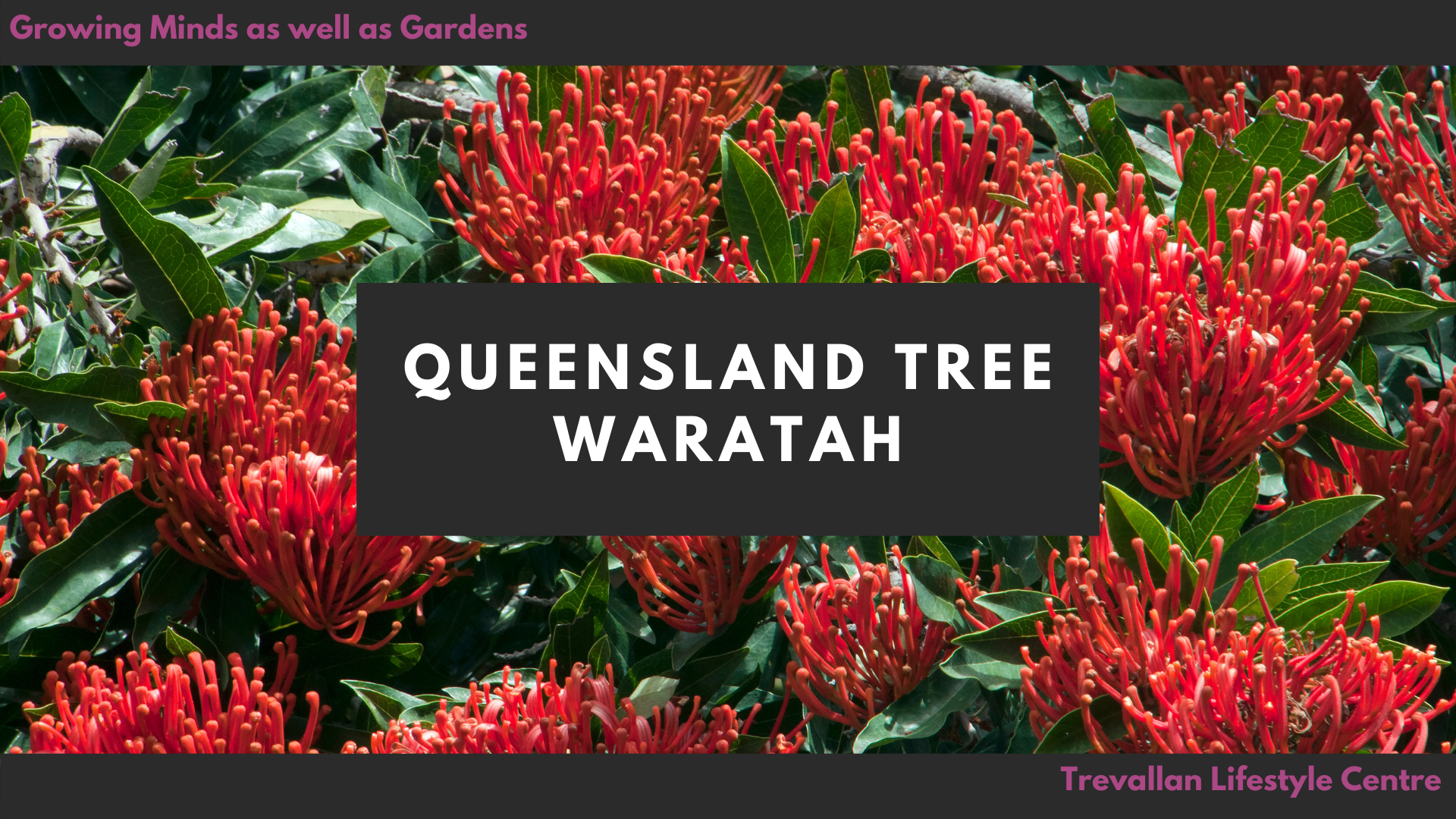
The Alloxylon flammeum, Queensland tree waratah, would have to be one of our favourite Australian native plants.

Photo by Brian Walters from the Australian Native Plants Society
The Alloxylon flammeum, Queensland tree waratah, would have to be boss lady's favourite Australian native plant.
This tree is widely known as one of the most stunning rainforest trees (endemic to North Queensland Rainforest) with a spectacular flowering display in spring. Despite its tropical origin, the tree waratah can be grown in cooler districts at least as far south as Sydney where the plant flowers reliably.
Alloxylon is from the Greek allo, strange or different and xylon, wood, referring to the unique wood anatomy of the genus - oak-like grain with very broad medullary rays. Flammeum is Latin, meaning flame-coloured or fiery red.
It is listed as 'Vulnerable' under the EPBC Act* (ie. facing a high risk of extinction in the wild in the medium-term future, as determined in accordance with prescribed criteria). Which means if you have the space get one of these beauties in your garden!
It has shiny green elliptical leaves up to 18 cm long, and prominent orange-red inflorescences (An inflorescence is a group or cluster of flowers arranged on a stem that is composed of a main branch or a complicated arrangement of branches) that appear from August to October, followed by rectangular woody seed pods that ripen in February and March. Juvenile plants have large (up to 25 cm long) deeply lobed pinnate leaves.
It will flower most prolifically if grown in full sun in deep rich soil with extra water given in periods of hot dry weather. In its native habitat it can grow to around 25m tall. In a normal garden it will get to around 10m tall and I find it to be the perfect shade tree.
You can trim after flowering but it has a natural beautiful shape that does not require trimming. It will need a good fertilise every three months. I use Organic Link on all my natives.

Can you Grow your own Curry?
Curry isn't just one herb, it is a complex seasoning that varies from region to region and even from family to family throughout Southeast Asia. If you thought you could buy a Curry plant, think again!
Curry isn't just one herb, it is a complex seasoning that varies from region to region and even from family to family throughout Southeast Asia. Curry seasonings can even be vastly different depending on the season. During summer months, the seasoning is mixed with spices that cool the body and in winter, a different blend helps keep the body warm.
So what are the plants commonly called 'Curry Plants'? Are they even used in Curries?
Curry Leaf Tree or Sweet Neem (Murraya koenigi)
The Murraya koenigi leaves are the primary seasoning in the South Indian dosa, a crispy, thin, rolled pancake-like bread but it is also used in pickles, egg dishes, chutneys and many other Asian and Indian dishes and is known as “sweet neem” in India.
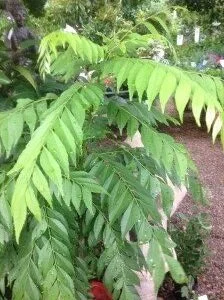
Curry Leaf Tree or Sweet Neem (Murraya koenigi)
Murraya koenigi is native to India and Sri Lanka. The leaf is the only part of the tree used in cooking and the raw, fresh curry leaf won’t really remind you of curry, but once the leaves are roasted in oil, the aroma and flavour can change remarkably, and the flavour is pleasant and delicious.
Even if you don't cook the Murraya koenigi is still a highly prized plant as its purely ornamental small, white flowers are highly fragrant.
It is a beautiful evergreen small tree that can be grown throughout Australia. Trees can grow up to 4m tall, in the warmer weather but it is advisable to prune back to a desired height of 1.5-2m. Pruning also encourages new growth and hence new leaves for harvesting throughout the year.
It requires full sun or semi shade position protected from heavy frosts. Ideal on warm northern side of buildings in cold climates.
The Curry Leaf tree requires reasonable drainage and regular fertilising. I use Organic Link every three months and Triple Boost regularly.
Curry Plant (Helichrysum italicum )
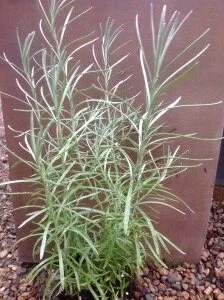
Curry Plant (Helichrysum italicum )
Although called the "curry plant" and smelling like the commercial curry powders, Helichrysum italicum has nothing whatsoever to do with this mixture of spices, nor with the actual curry tree (Murraya koenigii), and is not used as masala for curry dishes.
Helichrysum italicum grows naturally on dry, rocky or sandy ground around the Mediterranean. When growing at home try to make sure your plant is in free draining soil and full sun.
The leaves are grey with clusters of yellow flowers in Summer. These flowers are commonly used in dried flower arrangements.
The shrub can reach about 60 cm in height and can grow in pots or a garden bed. Like all herbs a good tip prune keeps the shrub looking neat and tidy. I usually fertilise at the turn of the season with Organic Link and Triple Boost regularly.
In the Mediterranean the young shoots and leaves of the Helichrysum italicum are used to flavour meat, fish or vegetable dishes. These shoots are then removed before serving. Many people don't like the actual taste of the plant as it has a resinous, somewhat bitter taste reminiscent of sage.
Do you have a Curry Plant or Tree?

Aloe Aloe
Forget all you know about Aloes. Now imagine a beautiful structural plant with colourful flowers that make birds sing, bees buzz and nature do a happy dance.
About 12 months ago I was asked to visit an open garden featuring Aloes.
My first thoughts were “seriously, you want me to go and look at a garden full of aloe veras and succulents!” I found it very hard to go with an open mind.
The day arrived and quite simply my mind was blown.
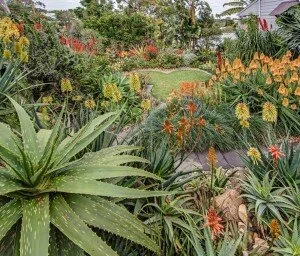
As I walked down the drive, colour and flowers burst from every space. Birds sang, bees buzzed and nature did a happy dance.
A few times I had to shake my head and remind myself I was in an aloe garden not a beautiful cottage garden.
Forget all that you know about aloe. For me that wasn’t hard as all I knew was the ugly looking aloe vera.
Now imagine a beautiful structural plant. Imagine a plant that is able to withstand the harsh Australian climate by storing water and food within swollen leaves and roots. Imagine a plant whose flowers can last weeks as well as being bird attracting. Imagine a plant that is not only easy to grow but resistant to disease and pests.
Imagine the beautiful new range of aloes named Aloe-Aloe!
These amazing plants are native to South Africa so they are used to harsh climatic conditions. It was not just the hardiness of the aloe-aloes that intrigued me and left me wanting more. It was their huge display of flowers with their differing colours, red, white, yellow, pink and all the colours in between. I think the only colour I couldn’t find was blue!
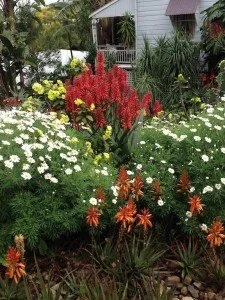
Some plants and flowers were tiny, only reaching 20cm high. Others reached meters into the sky. Click here for a quick reference chart on flowering times and heights of Aloe-Aloes.
The versatility of this plant is excellent. On its own in a pot it makes a fantastic feature. Planted out in a garden or pot amongst other flowering shrubs it also looked great. The garden I saw was mainly aloe-aloes but there were other shrubs intermingled amongst it and the garden looked amazing. Depending on where I looked and the other plants used, some areas of the display garden looked like a cottage garden, others were tropical and lush and some formal. The Aloe-Aloes worked in all genres.
How could you not want a range of plants in your garden that can flower from February to November. Grow well in a full sun position but can handle a little shade. They would rather have dry feet than wet.
We used a good quality potting mix when planting ours and fertilized with Organic Link and Triple Boost.
I honestly think these amazing plants would suit any garden. I am a true converted lover of Aloe-Aloe. Next time I am asked to go look at an Aloe garden I’ll be jumping up and down and packing my camera.

The fruit is Perfect for Wine, I'll take two!
Beautiful tree with glossy, deep green leaves, small white flowers, and reddish young growth. Only four or five weeks after flowering the round, purple-black edible fruits are ready to harvest.

Fruit of Grumichama eugenia
The Grumichama is valued almost as much for its aesthetic elegance as it is for its sweet, cherry like fruits.
In its native Brazilian habitat, Grumichama are sometimes seen as a large tree reaching heights of up to 15 metres, however in most Australian home orchards it grows more slowly. Most plants will only become a small, bushy tree to about 6 metres high. This tree can easily be trimmed and kept at a much lower height of 3m.
It is a very beautiful tree with glossy, deep green leaves, small white flowers, and reddish young growth. Only four or five weeks after flowering the round, purple-black fruits are ready to harvest. The flesh of the Grumichama is soft, melting, and sweet like a cherry. The thin, delicate skin is also edible.
The fruits can be eaten directly off the tree, turned into jam or my personal favourite wine!
Its wood is sometimes used in carpentry, woodworking and turnery.
Can be planted in full sun and doesn't mind low temperatures. Fertilise with Organic Link every three months.

Mites
MITES may be invisible to the naked eye but the damage they can cause to plants and lawns isn't so unobvious.
MITES
These pesky bugs are everywhere at the moment, even in lawns. I have found out there are about a gazillion different types of mites (well maybe not a gazillion but quite a few).
Unfortunately mites are invisible to the naked eye. The damage isn't so unobvious.
Some signs of mites
leaves take on a brown, felt-like appearance
distorted, knobbly new growth
the leaves may have yellow blotches on them
distortion, deformation, wilting, spotting, streaking or discoloration on the surface of the leaves
Flowers may not open or become distorted
spiderwebbing on the undersides of the leaves or up stems
With all insect infestations I treat the problem at hand but I also look at why the plant or lawn is being attacked. Is the plant/lawn stressed or unhealthy, too dry or too wet. I always follow the advice I was once given by an organic farmer - A healthy plant doesn’t suffer from an insect attack! So if my plants are suffering from an insect attack I deal with the insect but then look at how to make the plant/lawn healthy again.
Our method of controlling most pests here at Trevallan is a simple one. Trim and fertilise. Sometimes though a fertilise with Organic Link and Triple Boost just doesn't cut it.
When I asked Des from Plant of Health (the team that make our wonderful organic fertilisers) what to use when i need to ‘spray’ to deal with an insect attack he recommended a weekly spray for at least four weeks with Plant Care and Neem Oil, mixed together. This can be used on lawns too.
Why Neem Oil and Plant Care?
Neem Oil is derived from the Azadirachta indica tree. When applied to insects and the plants they are eating, neem oil causes many insects to feed less, grow more slowly, molt less, and lose interest in laying eggs. Neem also suppresses the hatching of pest insects from their eggs.
Plant Care is like a vitamin pill for plants or when they’re sick or stressed. Plant Care contains natural liquid fish proteins, amino acids, liquid vermicast, fulvic acid, natural growth stimulants as well as a special blend of selected herbs and botanical extracts. Plant Care is a natural, non toxic foliar spray and can be used regularly on all plants, vegetables and lawns without the fear of NPK overload or plant damage.
So when mites or any other insects attack take Des' advice ‘a four week intensive care program’. You will see the difference in all your plants as you say goodbye to mites and any other nasty insects that want to destroy your garden.
Good Luck Mite Hunters.

Roses are Red
The rose has long been a source of fascination and meaningfulness for cultures around the world. I have never claimed to know the secrets of growing roses in a climate where for about six months of the year we have what feels like 100% humidity but here are a few of my tips.
The rose has long been a source of fascination and meaningfulness for cultures around the world.
Cleopatra was believed to have covered the floor of her palace room with roses before Mark Antony visited for in those times anything which was said "under the rose" was deemed to be a secret.
For many of us Queenslanders though how to keep roses looking amazing feels like a state secret.

I often stare in awe at the pictures in magazines of roses elsewhere in Australia. How dare they have the climatic conditions to grow these plants successfully?
I have never claimed to know the secrets of growing roses in a climate where for about six months of the year we have what feels like 100% humidity.
Many rose growers out there will probably have a small heart attack at my way of growing roses but that’s ok, my way is the right way for me and maybe if you’ve never had any success in the past it may become the right way for you.
The first thing I needed to realise was that my roses may never look like they do elsewhere. The humidity we suffer is the cause of most rose problems. No amount of sprays, fertilisers or correct planting techniques will change the problems humidity brings.
To combat most of the rose problems such as black spot, fungus, bud worm that occur during the warmer months I trim and fertilise.
I don’t spray.
During the really humid months most of my roses look like bare thorny sticks. I find removing all the affected leaves, trimming back the plant and then fertilising with a slow release complete organic fertiliser like Organic Link works fantastically.
I always trim my roses like I am cutting the flowers off for a long stemmed vase. I personally can’t stand long straggly bushes so I make sure all my roses get a good prune continuously throughout the year. I also find a good dose of granular Sulphate Potash at least twice a year, Winter and Summer, helps with fungal problems and boosts blooms.
After pruning you can use a product like Steriprune which is designed to protect wounds against infections and die back. Come the cooler months and my roses are thick and lush and full of flowers. The few leaves that do get black spot or mould just get pulled off and when the flowers die, I still trim the stem right back like I am cutting it for a long stemmed vase.
To keep roses healthy and insect free I try to regularly liquid fertilise them with Rose Triple Boost and neem oil, fortnightly is ideal (but not always possible). When black spot is rife I alternate between the Rose Triple Boost and Silica and Potash Liquid fertiliser (certified organic).
Another organic alternative for black spot and rust is eco-fungicide. Eco-fungicide is a registered organic fungicide for the control of powdery mildew, black spot and rust in many plants including tomatoes, zucchini, roses, grapevines and geraniums. It attacks existing fungal infections and kills external fungal growth within minutes. Eco-fungicide also leaves an invisible protective coating that prevents new spores from germinating.

This Rose quote is so true even when growing roses. You must put up with all the disease, insects etc but it is well worth it when they bloom
To control insects some people like to use a pyrethrum based spray or neem oil.
All my roses are in full sun in pots and in the ground. I use Searles Platinum Potting Mix for the pots and Searles' Garden Mix for the ground. I mulch with Sugarcane.
Roses do not have the prettiest bush and they can sometimes seem a bit fussy but the reward of the rose is well worth it all.

Talking Dirty
What gardening terms do you use that people think you've made up, don't understand or have a little giggle at your expense?
Last week on Trevallan Lifestyle Centre's Facebook page, I posed the question "What gardening terms do you use that people think you've made up, don't understand or have a little giggle at your expense?"
There were some great examples and I thought I'd enlighten you all with some gardening terms that I find I use and people think I have started to talk in my own special language.
Deciduous
Deciduous, pronounced dih-sij-oo-uhs, is the term I am most often asked to explain. Deciduous means "falling off at maturity" or "tending to fall off", and it is typically used when talking about plants that lose their leaves seasonally. Many plants, particularly in cooler regions, drop their leaves in autumn, have a dormant period through the winter and then come alive again in the spring. In some subtropical and arid regions, plants lose their leaves during the dry season and remain dormant until the wet season begins.
Active Constituent

Active constituents are the substance/s in an agvet (agricultural and veterinary) chemical product primarily responsible for a product's biological or other effects.
For example, Glyphosate is the active constituent in most weed killers. In horticulture, companies register products with different trade names, however, you will often find the active constituent is the same. Trade names such as Yates Zero, Searles Dead Weed, Brunnings Weedkill all contain the same active constituent - glyphosate. When dealing with chemicals in gardening, know your active constituents and you'll never need to rely on trade names again.
Bisexuality
A Bisexual flower or perfect flower is when the flower has both the essential whorls i.e., androecium and gynoecium (male and female reproductive units). Some examples are lilies, roses and sweet peas.
When it comes to fruit and vegetables, we generally use the term bisexual plant, meaning the plant has both male and female flowers and you do not need two separate plants. For example, a pumpkin will usually produce both male and female flowers, following this, insects will hopefully pollinate the females, with the result being big, healthy pumpkins.
Self-watering pots
Now unless you have gnomes in your garden doing all your dirty work, there is no such thing as a self-watering pot. When you buy a self-watering pot, you still have to water.
In a self-watering pot you have a very large saucer, or water well, and the soil is held above the water well, with a false bottom. The water well and the soil are usually connected by a wick of some sort.
As water is used by the plant, capillary action draws the exact amount of water up from below, therefore the soil has just the right amount of water all the time, but also maintains air pockets, which the plant roots also need. This is great for plants that don't like being over watered, as you just fill the bottom chamber.
While self-watering pots are great, I find they only really work once the plant has an established root ball.
This weekend, why not practice your ‘dirty talk’ with someone and show off your new gardening knowledge.