Find Us:
77 Fernvale Rd
Brassall QLD 4305
(07) 3201 8630
Open:
Tue-Sun 9am - 4pm

The Dirty Dozen
The Dirty Dozen, a list of the fruits and vegetables likely to contain the highest amounts of pesticide residue. You can plant many of these at home.
I'm getting a little gardening bored. It's still too early to be planting my winter vegetables and my vegetable patch is cleaned, composted, mulched and waiting. My few gardens are fertilised, trimmed and waiting for cooler weather to start planting out more. My lawns are fertilised, soil wetted and weed killed - just waiting on rain to green them up.
So what does one do when garden bored - they start dreaming big. I think I have about 40 seed packets of the things I'd like to grow this winter.
So I may have gotten a little over excited. So how do I narrow it down? How do I decide what to plant in my vegetable patch each season or what fruit trees to grow?
I came across an interesting article on the extremely high amounts of pesticide residue on frozen berries. The interesting thing was most of the residue found on the frozen berries were pesticides that are banned in Australia. This happens because most frozen berry companies get their berries from a variety of overseas sources.
The old mind clogs started turning over and after a bit more research I discovered the 'Dirty Dozen' and the 'Clean Fifteen'. These are two lists released by the Environmental Working Group (EWG) each year.
EWG, a nonprofit organization that cites its mission as being to help “people live healthier lives in a healthier environment,” started compiling a list of fruits and vegetables that contain the highest amounts of pesticides in the mid-1990s.
The Dirty Dozen, a list of the fruits and vegetables likely to contain the highest amounts of pesticide residue. The Clean 15 is a list of fruits and vegetables least likely to contain pesticides. The EWG take into account how people typically wash and prepare produce - for example, apples were washed and bananas peeled before testing.
While the EWG’s list is based on the U.S. Department of Agriculture’s Pesticide Data Program, I still find it a great help in determining what to plant and over the years I have used the Dirty Dozen as a guide to what to plant each year. Over the years the list hasn't change much. So I do try to keep track of previous years as it's not like the big farms suddenly stop using pesticides its more like something just contains more pesticides than previous years. One vegetable that continuously goes on and off the list is potatoes. So I always try to grow my own potatoes. Most of vegetables and fruits mentioned can be grown in Ipswich in our vegetable gardens and orchards.
2021 saw the EWG release a special report on citrus fruits, which aren't represented in the Dirty Dozen, but have caught the attention of the organization for trending upward in trace amounts of pesticide recorded.
EWG'S DIRTY DOZEN FOR 2021
(number one being the most highest in pesticide residue)
Strawberries
Spinach
Kale / Collard and Mustard Greens
Nectarines
Apples
Grapes
Cherries
Peaches
Pears
Bell and Hot Peppers
Celery
Tomatoes
EWG'S CLEAN FIFTEEN FOR 2021
Avocados
Sweet corn
Pineapple
Onions
Papaya
Sweet peas (frozen)
Eggplant
Asparagus
Broccoli
Cabbage
Kiwi
Cauliflower
Mushrooms
Honeydew melon
Cantaloupes
Don't get gardening bored, plan big and include the 'Dirty Dozen' in your backyard.

Bloomin' Fabulous
Potassium Sulphate or Sulphate of Potash is commonly called Potash. It is an essential element necessary to the lives of all plants.
A common question I am asked is "why didn't my fruit trees fruit profusely or if they did why was the fruit misshapen?" Or "why didn't my camellias and azaleas flower as well this year?" Or even "why are all my coloured foliaged plants like crotons and dracaenas losing their colour?"
The answer is usually quite simple - Your garden just needs some TLC and maybe a little Potash!
Potassium Sulphate or Sulphate of Potash is commonly called Potash. It is an essential element necessary to the lives of all plants.
It aids in disease resistance and frost protection by strengthening the plants cell walls. It helps in seed and root development. It encourages strong new growth and helps with the formation of flower buds and fruit.
Potash can improve the quality and the colour of flowers and enhances the formation of proteins and sugars in fruit. Potash can even help plants with slender stems and large flower heads such as Iceland poppies and gerberas hold their heads erect.
Potash defective cues can be seen in a number of ways in your plant. Your plants might be showing signs of overall weakness especially in its stem. It could have yellowing leaf margins and grow more slowly. It could also be disease prone and its fruit and flowers will be small and poorly coloured and sometimes tasteless.
Don't confuse a potash deficiency though with an unhealthy plant. Always make sure you have given your plant some complete slow release organic fertiliser like Organic Link and a Bio Trace first.
Complete fertilisers, whether they are chemical or organic, usually contain potash. Organic Link contains potash. An N:P:K ratio can usually be found on the fertiliser label. A very quick explanation of the N:P:K ratio is - N stands for Nitrogen (greening, growing), P Phosphorus (roots) and K Potassium (fruiting, flowering).
If you use mainly a manure based fertiliser like blood and bone or chicken manure you will need to add potash as these products don’t naturally contain it.
Potash also is available by itself in a liquid form and a granular form.
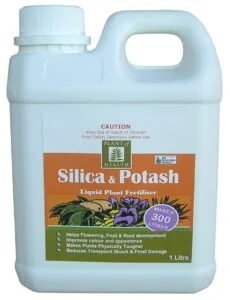
The liquid form is added to water and used as a foliar spray. Used like this it is quick acting but not long lasting and needs to be repeated on a fortnightly basis. This is best for promoting flowers especially on annuals. I use Plant of Health's Potash and Silica.
The granular form is added to the soil and watered in. The granular is slower acting but lasts a lot longer. This is best for correcting deficiencies, promoting fruit and stimulating coloured foliage. We use Searles' Potash.
This weekend I want you all to get some granular potash and go a little silly in your gardens.

Is Green Manure just really Green Poo?
Green manure crops are crops grown not to be harvested but instead to be incorporated into the soil before they reach maturity to contribute to the health of the soil.
Wonderful blistering hot days, humidity that feels like we should be living in tropics, rain and winds that blow your roof off then cool days that make us wonder if that 45 degree day was just in our imagination.
This is what it can feel like to live in Ipswich in the summer.
How would you fare in this weather? Hot, bothered, quick tempered?
I know I've been struggling, the smallest things bother me.
If I had a vegetable patch right now, I know I'd be pulling most of it up.
If the heat didn't kill everything off, the humidity or insects probably would have.
In years past when I have had a vegetable patch in summer I have suffered with burnt leaves, white mould all over my cucumbers, tomato blight and then to top it all off grubs in my fruit (from fruit fly stings).
Which is why now, at this time of year I always sow a summer green manure crop.
Green manure crops are crops grown not to be harvested but instead to be incorporated into the soil before they reach maturity to contribute to the health of the soil.
It is an old technique of soil management that seems to have been forgotten by many gardeners and farmers. I think it's because we are no longer aware of the proven benefits and cost effectiveness of green manure crops.
Trevallan Lifestyle Centre stocks Eden Seeds, a seed company that only stocks old traditional open pollinated varieties of seed, preferably old Australian varieties and organically or bio-dynamically grown where possible. Eden Seeds do a wonderful green manure seed pack that contains a mix of seeds suited to most climates.
Green manure crops contribute directly to the fertility of your vegetable patch through the supply of important plant nutrients. Legumes, for instance, supply nitrogen because their roots form an association with soil-borne bacteria that can transform nitrogen from the atmosphere into nitrogen compounds that can be used by plants. Isn't nature wonderful? It's also just saved you money as now you don't need to add as much fertiliser to your vegetable patch.
Green manure crops can also contribute indirectly to nutrient supply. Just the process of decomposition of the crop aids in making further nutrients available that are already present in the soil but in a form that cannot be used by plants. After the plants have grown and you incorporate them back into the soil you are supplying vast amounts of organic matter that is usually supplied by organic mulches. Once again saving you money - no need to buy organic mulch.
Drought resistance can also be improved as a lot of the crops are very deep rooted. Their roots can penetrate the subsoil and open it up. Next season's crops can also obtain plant nutrients from the subsoil once it is opened by deep rooted green manure crops.
So this weekend get dirty and take out all your hot weather anger on your vegetable patch by pulling everything up and planting some green manure crops. Your winter vegetables will thank you.

Uncoordinated Wins Again
I’m not what you’d call a sportswoman. I’m a little uncoordinated. At school I was the child the sports’ teachers would shake their heads at when they saw me coming. I’m sure they were thinking there is no hope for this one. Apart from winning most improved player for about three years in a row for basketball, I don’t have that many awards from childhood.
I’m sure making up for it now.

The Queensland winner of the Heather Ramsey Young Leader Award goes to – Chelsea Allan”
Last Friday night (2013), I attended the Nursery and Garden Industry Queensland Award Ceremony. During the night I had one of those “this is your life moments”. The presenter started to read a story about a girl who seemed to have accidentally fallen into horticulture while looking for her dream job. 15 years on that girl discovers she is working her dream job.
As the presenter was reading this story I got thinking, this girl sounds a lot like me.
He then announced “The Queensland winner of the Heather Ramsey Young Leader Award goes to – Chelsea Allan”
It took a moment, hang on that’s me. Wow.
I WON.
But what does this mean?
The Heather Ramsey Young Leader Award recognizes and rewards the outstanding achievements of individuals in the Australian nursery and garden industry, who display exceptional commitment and passion towards their business, the industry and industry leadership potential.
That’s me. I’m young (this is my last year of being young though), I’m committed to this industry (long days and sometimes longer nights) and gardening is my passion.
But it’s not just the physical aspect of gardening. It’s the sharing component I love. I love enabling others to enjoy gardening with my few simple tips. I love going to clubs and talking gardening. I love writing Trevallan’s gardening blogs that you can read on here and using Trevallan’s Facebook page to keep you updated and informed. I don’t get paid to write my gardening column that appear newspapers and magazines across Queensland, I do it because I want to share with you all this wondrous thing called gardening.
It was an amazing experience to be recognised and awarded this award by my industry peers. I couldn’t have won this award without you.
It is because of my customers, my family and my mentors that this award was possible.
The other day a gentleman came into Trevallan Lifestyle Centre to tell me he hated mowing. He read my lawn challenge article and thought I was crazy saying I loved to mow. He followed my simple steps and now he loves to mow. His granddaughter loves coming over and running barefoot on his lawn. He mows twice a week and loves sitting back to admire his handiwork.
It’s because of happy customers and family who are gardening enthusiasts that my passion has grown. It’s because of you I want to achieve more so I can give you more.
I am so proud to win this award. Thank you for helping me turn my passion turn into an award. I hope we can continue to share this passion for many years enabling us all to have amazing gardens.

The Secret to Great Looking Plants
If you've fertilised, watered well, even checked the pH level, what could possibly be wrong with your plants? Trace elements.
I have discovered the secret to great looking plants.
Trace Elements.
Trace Elements isn’t some brand spanking new fertiliser on the block. It’s an essential item to healthy soils.
Most gardeners are going ‘pfft’ - I so knew that.
Well you might know it but how many of you use a complete trace element mix on your gardens at least once a year? What about your pots, at least twice a year?
It seems everyone fertilises and expects to see results. What happens when you do all the right things but you don’t see the results you want?
A common question is – “I’ve given my plants all the TLC they can handle, I’ve fertilised, watered well, even checked the pH level and it's perfect. What could possibly be wrong with my plants?

Most of us are aware that plants require mineral nutrients for their growth and development. Nitrogen, phosphorus and potassium, the macro elements, the names that usually appear on fertilizer packages, whether you use organic or chemical fertilizers. It is sometimes assumed that they are the "important" nutrients. These macro elements are just consumed by the plants in large quantities. Trace elements, micro nutrients can often be forgotten about as they are required in minuscule quantities.
When it comes to macro elements being the most important nutrients, nothing could be further from the truth. Trace elements like Manganese, Iron, Zinc, and Copper, are every bit as vital to the plants metabolism as nitrogen, potassium and phosphorous. They have essential functions and so a deficiency in even one element will adversely affect the healthy growth of the plant. Strangely enough some trace elements when present in excessive concentrations are actually poisonous for plants.
Common gardening practices (such as liming acid soils) can contribute to widespread occurrence of micronutrient deficiencies in plants by decreasing the availability of the micronutrients present in the soil. Also, extensive use of glyphosate (most common weed killer) is increasingly suspected to impair micronutrient uptake by plants, especially with regard to manganese, iron and zinc.

So how do we pinpoint the problems in our soil? We can get a leaf or soil analysis. Yeah right! I couldn’t be bothered with all that.
So what do I do?
I use Plant of Health’s Bio Trace. It has a blend of the key micronutrients (e.g. iron, cobalt and manganese) supported by macro elements. It is also contains fulvic acid to further enhance growth and health.
The best thing about Plant of Health’s Bio Trace, you mix some up in a watering can and pour it over the plants foliage or as a soil drench. Done. Couldn’t have been easier.
Go on breathe some life into your garden and use Plant of Health’s Bio Trace.
Careful though, when you see the difference it makes you’ll be buying it in bulk like I do now!

Creating a Sacred Space
I was lucky to have one of my secret dreams realised and to be able to share it with others.
It started with a graduation present.
Perfect Potion was a little shop in the Elizabeth Arcade in Brisbane. For my year 12 graduation present my mother bought me a box of essential oils and a candle oil burner. A few years later I upgraded to an electric oil vaporizer. It was ugly yellow; there wasn’t much choice back then! Now I have a classy black aroma diffuser.
No matter where I lived I always had my oils. Slowly as my interest grew, so did my library and my aromatherapy classes. I enjoyed infusing my home with the scents I created. I loved it when friends visited and they’d say ‘your house always smells so good’. When I lived in an apartment the girls upstairs used to tell me how much they enjoyed walking past my door as there was always beautiful scents wafting out.
Lucky for me as my interest grew Perfect Potion flourished. More and more stores opened, more oils were released, more blends were available, more products. Unfortunately it didn't quench my scent thirst, it only fuelled it.
There was nothing more I enjoyed than spending an afternoon in a Perfect Potion Store.
One day the opportunity arose to stock Perfect Potion at Trevallan Lifestyle Centre. We have never looked back. It has been an amazing journey being a part of a company that seems to only take huge steps forward.
Then in 2012 something strange happened - Perfect Potion ran a competition, a competition unlike any other. A competition open to all Australian and Japanese residents. The competition was to create your own essential oil blend to be sold under the Perfect Potion banner. They had never offered this before; all the blends sold by Perfect Potion are Perfect Potion’s creations.
The competition wasn’t just about choosing some essential oils. You had to work out the perfect combination of oils and then how much of each oil. Plus the scent you were trying to create was to embody your scared space.
Hang on I live in a small house with kids, animals – what scared space?
My books! It always comes back to books. Books are my scared space. Books are my escape. At the time of the competition my little library was being built. So now I had a sacred space but no scent.
Then a few days before close of competition inspiration struck. The oils just worked, the combination, the amounts. It worked. I still hesitated to enter and then late one night, almost competition end time, I finally got enough guts to enter. And swoosh like that the email was sent, the competition closed and I promptly forgot all about it.
You see I had a baby on the way. Number three to be exact. The day the winners of Perfect Potion’s competition was announced I was a little busy. I was in labour.
When I finally got my head out of new born clouds I read an email “Firstly, a massive CONGRATULATIONS for being the winner of the Create Your Own Sacred Space Blend Competition”.
I thought “what’s going on. Who won the competition? They aren’t telling me the names”. I thought it was a generic email sent to everyone who entered informing them of the winner.
Silly me.
Tears may have flowed when it set in.
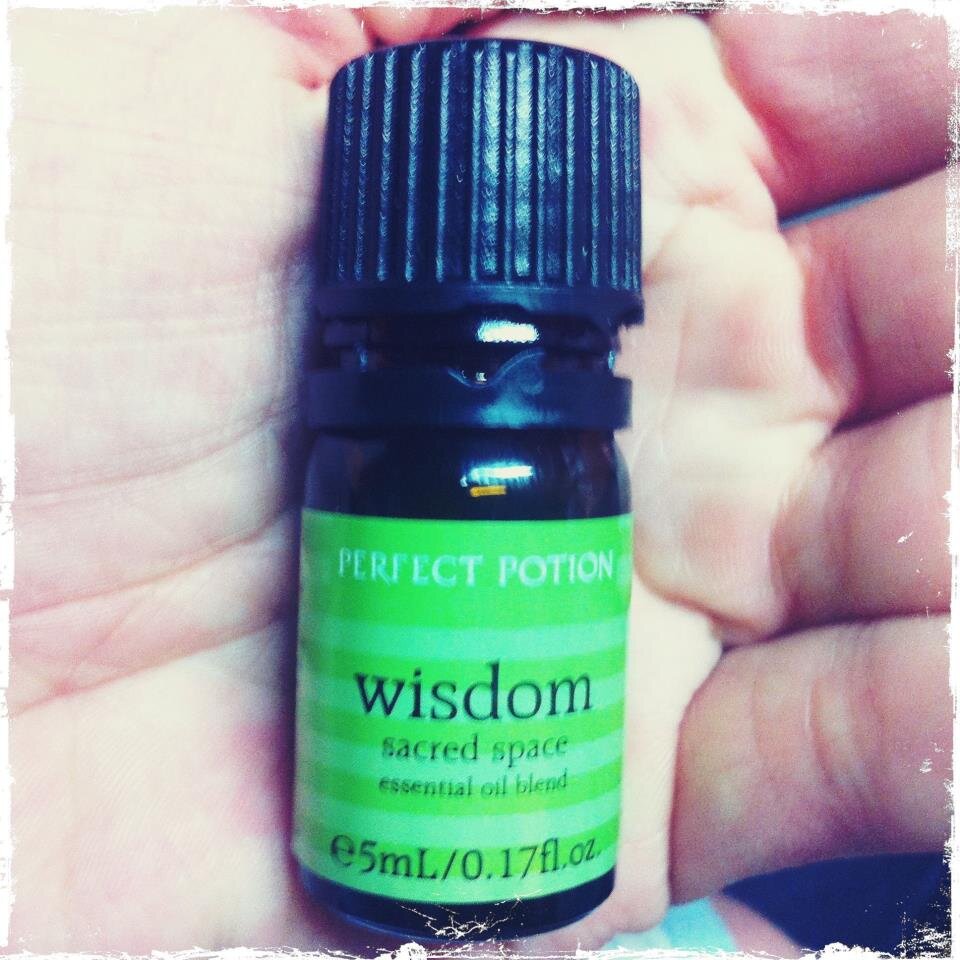
My Creation - Widsom
Something I loved, something that is so important and a part of me just became real.
The day that I received that little bottle adeptly named ‘Wisdom’, my heart skipped a beat. Just thinking about it now makes me well up with tears.
It wasn’t just that I won it was the recognition I also got from the creator of Perfect Potion Sal Battaglia. A man who I admire for all that he and his team have achieved over the years.
Sal wrote ‘Choosing the sacred space blend has been so difficult for me as there were so many wonderful ideas and beautiful blends…. I was so impressed with the depth and complexity of the blend. It is such a simple formula…..I absolutely loved the blend …
Unfortunately after 8 years this blend is no longer a part of Perfect Potion's range. I will always be eternally grateful to Sal and the Perfect Potion Team for giving me this opportunity. I was lucky to have one of my secret dreams realised and to be able to share it with others.
The Perfect Plant
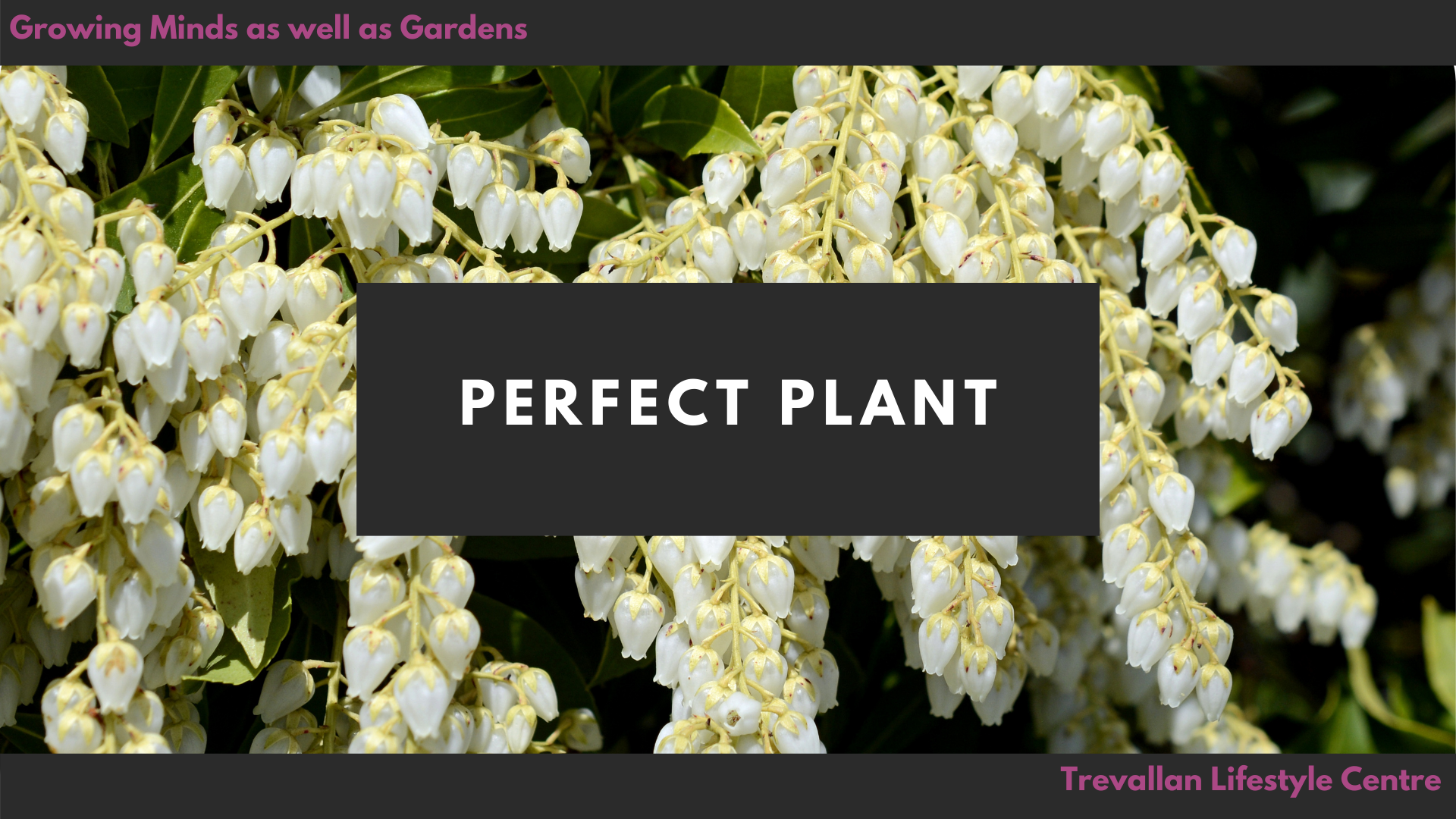
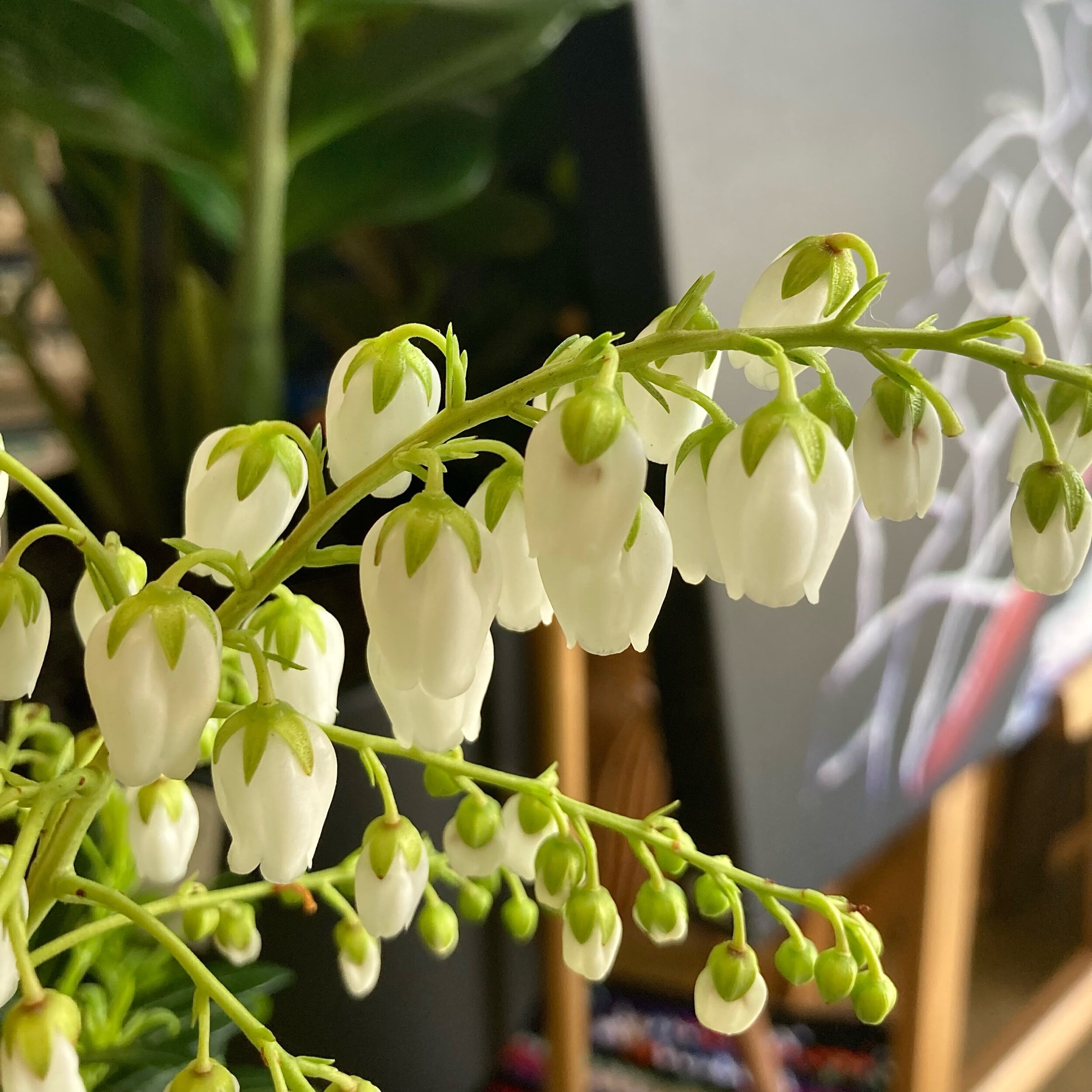
The perfect plant is called Pieris Japonica 'Temple Bells'. This beautiful plant can be used as a feature plant in a pot or as a low hedge in a garden. It is versatile, easy to maintain and looks good all year whether it’s hot or frosty cold.
I can find the beauty in most plants but like everyone else I am always on the hunt for the perfect plant.
You know the one – grows in full sun or part shade, does not require me to fight with my twisted and kinked hose every day to water it, looks good even when I forget to fertilise, flowers most of the year, doesn’t have a scent so I can’t drive the neighbours batty and doesn’t require me to trim it to make it look good! Oh, and I forgot to mention only grows about a metre so it looks good in a garden or in a pot and it doesn’t mind the cold or the heat!
You are all laughing now because you think the perfect plant doesn’t exist. Well I think it does.
Are you ready for it?
The perfect plant is called Pieris Japonica 'Temple Bells'.
Now when you all go rushing out to your local nursery to get the perfect plant, you must make sure you ask for Pieris japonica 'Temple Bells' as I don’t know any other Pieris that grows as well in Ipswich.
This highly ornamental plant has extremely dark green lush foliage that forms a dense mound. In the warmer months its new growth is a brilliant red that fades to copper then green. Though it is slow growing it still forms a nice shrub in a year or two.
It’s the almost continuous flowering that makes this plant perfect. The flowers can start their show as early as March. The plant becomes covered with small lime green bell shaped buds that as the weather cools grow and open to form pure white bells that appear to be dripping off the plant. The flowers remind me of the lily of the valley flower. By the time the warmer weather kicks in, the white bells have dropped leaving the greenish ‘bell holders’ still on the bush for another month or so. It almost seems that the plant is in flower for more than half a year due to its three phase flowering process.
I have grown this plant in a pot in full sun for years now and it has always looked fabulous. It can thrive in some shade too. As Pieris Japonica 'Temple Bells' won’t win any medals for fastest growing plant but not the slowest growing plant either - you can expect it to reach around a metre in height.
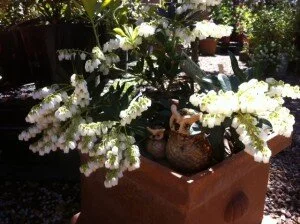
Pieris 'Temple Bells' in Bloom
This beautiful plant can be used as a feature plant in a pot or as a low hedge in a garden. It is versatile, easy to maintain and looks good all year whether it’s hot or frosty cold.
Always use excellent quality potting mix (I use Searles' Platinum Potting Mix) or garden soil (I use Searles' Garden Soil) and try to fertilise every season with a complete organic slow release fertiliser like Plant of Health's Organic Link.
Pieris japonica 'Temple Bells' really is the perfect plant. Give your garden some TLC this weekend and get a Pieris. It will reward you all year.

Got Milk
Your local garden centre’s staff are the gardening experts – they should be able to listen to your needs and recommend the right product.
Why is it so hard just to buy milk? You all know the advertisements on TV with the guy who just wants milk, but the shop assistant rattles off about twenty different choices. All he wants is milk that tastes like milk! In the end the relief on his face when the shop assistant just gives him what he wants is priceless.
I’m not a huge fan of being overloaded on choice. Electronic equipment, like computers and their programs, is one area where I’d prefer there to be just the one option! I’m not a person that likes to spend hours trolling the internet and magazines looking for the best computer program for my needs. I appreciate going to a specialist computer shop, talking to an expert and let them recommend me the best program for my needs.
I feel the same about gardening. Gardening shouldn’t be hard – back breaking maybe, but not hard. Getting good gardening advice shouldn’t be confusing either. If you have a problem with your plants, need some general gardening advice or even just need to buy a living gift, I recommend you go to a specialist garden centre, as they have expert staff on hand at all times and are alway willing and ready to help.

Have you ever been confused and overloaded by the choice of gardening products on the market? I know I am sometimes. I often wonder just how many versions of trace element mix can there be and it feels like every gardening magazine, lifestyle show and the guy next door, all have their favourite gardening tips.
If confusion and not very ‘good tips and helpful hints’ have prevented you from enjoying the great outdoors, it’s time to take control and visit an expert – your local garden centre, like Trevallan Lifestyle Centre.
Local garden centre staff are gardening experts – they listen to your needs and recommend the right product, without the need to sell a plethora of brands. You don’t need to know that there are ten products on the market that kill slugs, but are safe for dogs. You just need one and one that works. So a garden centre and their expert staff need only stock the one brand that they perceive is the best. However, in some cases, a small range of similar products (for example potting mixes), are necessary as people’s needs are different. In this case, the garden centre experts should then be able to inform you of the differences and recommend the best one suited to your needs.

Your local garden centre is not only staffed by local experts, who have all suffered the same gardening problems that you are currently suffering. Garden centre staff enjoy helping you through your gardening problems, removing any confusion and reinvigorating your joy of gardening.
So next time you decide to improve your plant life balance and give your garden some TLC, make sure you visit the gardening experts - Trevallan Lifestyle Centre - your local garden centre.

Vintage Garden Plants - Hydrangeas
Hydrangeas are a beautiful old fashioned plant. These wonderful, hardy shrubs would certainly have to be included on the list of the best flowering plants in the world.

I like plants. You’ve probably already guessed that but what I mean is I love the diversity plants offer us in our lives. I love how the same plant can be used in a formal garden or a cottage garden and still look fantastic. I love how the popularity of certain plants is cyclic just like our fashion industry.
I adore old fashion plants or vintage styled plants (vintage makes me sound more fashionable!). I think there was a reason our grandmother’s gardens were full of certain plants. It was because they didn’t require much TLC to look fantastic all year.
Hydrangeas are one such plant. These wonderful, hardy shrubs would certainly have to be included on the list of the best flowering plants in the world.
Hydrangea flowers are absolutely stunning and with over 500 different cultivars there is sure to be one to suit everyone.
There are two main groups of flowers these cultivars are split between – Mopheads and Lacecaps.
Mophead flowers are large round flower heads resembling as the name implies the head of a mop. In contrast, lacecap flowers bear round flat flower heads with a centre of subdued, fertile flowers surrounded by outer rings of showy, sterile flowers.
Hydrangea flowers usually appear from early spring through to late summer.
It is the colours of the hydrangea flower that I find most amazing. The colours range from white through to red, pink, purple, and blue but the amazing part is I can change the colour of my flower!
The acidity of your soil determines the colour of the flowers. If the soil is acidic the flowers will be blue, electric blue or even peacock blue but if the soil is more Alkaline the flowers will be pink through to red, neutral is purple of course.
The white cultivars remain white regardless of the soil pH. To make sure you get the colour you want you must change the soil pH before flower buds form. I would always check your soil's pH before starting any treatments.
Even though the hydrangea flower is impressive, the foliage too can be quite remarkable. Most hydrangeas have large lush dark green oval leaves, often with serrated edges but some have variegated green and white leaves.
I find hydrangeas to be very hardy ONCE established. The trick is to preserve to get them established. They are best grown in part shade but I have seen some beautiful plants grown in full sun. I find the flowers on these full sun bushes tend to burn off too quickly though in our hot summer sun.
Many of the cultivars available today are compact growing. I find many people believe they aren't good hydrangea growers as their plants are always so small! So make sure you check how big your actual hydrangea grows before you start to feel bad. Due to the compactness I find they do well in both pots and gardens.
I tend to fertilise with a carbon based organic fertiliser, Organic Link, every three months. I also like to liquid fertilise once a fortnight. I alternate fortnights between Triple Boost and Silica and Potash. I find a small prune in late Autumn will help promote next seasons growth and flowers.
If you have struggled with hydrangeas in the past, try growing them again but stick with them. I find pots work well for people who don't have great soil.
About 18months ago I put some hydrangeas into my garden. It was a warm shade spot that received warmth but no sun in winter and morning sun in summer. The soil was loose and well composted (pretty perfect, even if I do say so myself!). They were well watered but not over watered (they may have dried out a few times ... oops). There was many occasions I almost gave up on them. This spring though they have finally gotten their roots in and are taking off. I feel proud to say I am a Hydrangea mumma!
If you feel Hydrangeas and you aren't meant to be, that's ok. Think of them as a really long lasting bunch of cut flowers. Enjoy them all spring and summer in a pot and when it looks sick it's time to part ways. Plants are meant to be enjoyed not stressed over!
Hydrangeas are one of my vintage must haves for your garden as they require not much TLC once established. Plus the anticipation of wondering what colour will it flower this year is a cheap but wonderful thrill all gardeners experience.

Bugs on my Plants!
At the moment I am finding that aphids are having a feast in my garden. With the warm days many of my plants have tender, yummy, new shoots appearing, just what aphids love. There are many different species of Aphids; they are all small sap sucking insects that vary in colour from green to yellow and black.
Some days start off perfectly - the slow and steady rise from sleep to wakefulness, the smell and taste of a fresh brewed coffee and the deliciousness of a cooked breakfast. Finally as the sun starts to warm up the garden you get motivated to go outside and enjoy the day by being productive.
You take a slow stroll around the garden creating a mental checklist of what needs to be done when you stop short. What on earth has happened to my beautiful plants? They were fine yesterday (or whatever day I was last out here!) Now suddenly they are in dire need of a little TLC. The perfect morning is slowly spiraling downhill.
Even through the cold months insects can play havoc in our gardens.

Aphids on my rose buds
An easy way to keep insects and disease at bay is to keep our plants healthy. I fertilise every three months with a complete organic slow release fertiliser - Organic Link and I try to liquid fertilise every two weeks. Little and often is a great mantra. Fertilising regularly is a great way of helping our plants stay strong and able to fight off disease and insects.
Sometimes though even the best laid plans go astray and plants unfortunately will get disease and insects, it even happens to the best of us green thumbs!
At the moment I am finding that aphids are having a feast in my garden. With the warm days many of my plants have tender, yummy, new shoots appearing, just what aphids love. There are many different species of Aphids; they are all small sap sucking insects that vary in colour from green to yellow and black.
Aphids don’t just suck the life from your plants they also transmit virus diseases such as broad bean wilt. Aphids also secrete a sweet sugary honeydew which can lead to other problems like sooty mold.
Natural predators are lady birds but most of us don't have enough lady birds to stop an infestation.
I like to use neem oil to combat most insects in the garden but two other great organic products are Ecofend® and Eco Oil. Some people find alternating between them is a great idea.
Go and check all your flower buds and new growth. My camellia flowers and hibiscus flowers were inundated with aphids this morning.
Remember prevention is better than the cure so if you haven't fertilised recently now is a great time to do it.