Find Us:
77 Fernvale Rd
Brassall QLD 4305
(07) 3201 8630
Open:
Tue-Sun 9am - 4pm

Improving Sandy Soils
How do you improve any soil? Getting your soil right makes plants more robust and less prone to disease and insect attack, helps them develop better roots and helps the soil retain moisture for longer.
So to Improve Soil my mantra is ORGANIC MATTER, ORGANIC MATTER, ORGANIC MATTER.
How do you improve sandy soils?
How do you improve any soil?
Sandy soils are devoid of most nutrients. Getting your soil right makes plants more robust and less prone to disease and insect attack, helps them develop better roots and helps the soil retain moisture for longer.
So to Improve Sandy Soils (any soils) my mantra is ORGANIC MATTER, ORGANIC MATTER, ORGANIC MATTER.
Bring in compost (bag or trailer load). I love and use Searles Garden Products, Soil Activator and Searles Composted Five in One.
Make your own compost. It’s as easy as getting a few old bins drilling a lot holes in them, sinking them halfway into the ground and adding all kitchen scraps, cardboard, newspaper, leaf matter then let the worms do their thing). If that’s too hard buy an Urban Composter Bokashi Bin. It does it all for you
Compost, Compost and Compost. Then I would throw some Organic Link around. Water and then mulch the top with an organic mulch like sugar cane. Water again. Then let nature do its thing. Then REPEAT
Why compost?
Two reasons
Compost helps improves the soils organic carbon. This is the basis of soil fertility. It releases nutrients for plant growth, promotes the structure, biological and physical health of soil, and is a buffer against harmful substances. Basically the more soil carbon you have the healthier your soil and therefore your plants and the soil will hold more water (less watering for you).
Organic matter, compost, increases CEC. Sandy soils rely heavily on the high CEC of organic matter for the retention of nutrients in the topsoil.
CEC, Cation exchange capacity, is a measure of the soil’s ability to hold positively charged ions. It’s very important to the soil as it influences - soil structure stability, nutrient availability, soil pH and the soil’s ability to hold and release fertiliser.
Why Organic Link?
Organic Link contains Natural Rock Dust Minerals & Zeolite. These are usually lacking in sandy soils. Organic Link contains lots of other good things too, I’m just going to talk about these two today!
Zeolite helps the CE to occur. Basically zeolite can hold and exchange nutrients required by plants, making nutrients readily available. Rock Dust is a finely ground volcanic basalt containing a huge number of slow release micro-nutrients. This improves the wettability of sandy soils and CEC of sandy soils. It also enables plants to easily pick up the nutrients they need.
So as you can see composting, organic linking and mulching is important to any garden, not just sandy soils.

Summer Sun, Winter Shade
Discover a list of plants that thrive in spots with winter shade and hot afternoon sun in summer. From border plants to those exceeding 1m, find suitable options and care tips in this gardening guide.
Are you seeking plants that flourish in locations with limited sunlight during winter and intense afternoon sun in summer? Read on to explore a list of plant recommendations based on personal experience, along with practical care insights for these unique conditions..
Now there are a few plants that I can recommend that will only stay a metre but others I have to give honourable mentions too as they are very trimmable and usually look better when trimmed. Now this is not an exhaustive list. I am sure many people out there could add to it. It’s just ones I personally have successfully grown.
Border Plants and Groundcovers
Gardenia Radicans and Trachelospermum Tricolour shine as potential border choices. While the latter is typically used as a groundcover, its adaptability makes it an excellent loose box hedge candidate.
You could also consider the charming Kalanchoe and select varieties of Azaleas (the light series is an excellent choice). Grasses like Liriope and Dianella also offer a visually pleasing solution.
Reaching the 1m Mark
For spots requiring plants around the 1m mark, explore the elegance of Carissa 'Desert Star,' the compact Murraya Min-a-Min, and other dwarf forms of Murraya. Acmena Allyn Magic and Syzygium Little Denise also make the list, alongside the vibrant Coleus and enchanting Gardenia True Love.
Taller Options with Trimming Potential
While exceeding the 1m height, Camellia sasanqua, Magnolia figo (port wine magnolia), Magnolia Coco, and Brunfelsia latifolia (yesterday, today and tomorrow) can be judiciously trimmed to suit the available space. Syzygium 'Cascade' offers another option in this category.
Care Tips for Success
To ensure these plants thrive, adopt a few care practices. After winter, use a complete organic fertilisers like Organic Link coupled with liquid fertilizers like Plant Care to fortify the plants for upcoming heat. Optimal soil cultivation plays a pivotal role in fostering robust plant health while simultaneously mitigating plant stressors and reducing water needs. To this end, the incorporation of compost, utilization of soil wetting agents, and application of mulch (preferably organic like sugar cane) emerges as prudent practices.
During the transition from colder to warmer temperatures and the shift from shade to sun, swift changes in temperatures may lead to leaf burn on plants. However, this effect tends to diminish as plants progressively acclimate to new conditions.
This compilation of plants tested in conditions with no winter sun and intense summer afternoons offers an array of choices for your space. With proper care and understanding, you can cultivate a vibrant and resilient garden, transforming even challenging areas into thriving plant havens.

Help! I have a Garden for First Time
When moving to a new house that has lawn, established trees and garden beds - what is the best way to take stock and come up with a plan for what you want to do with a new space when you know nothing about it’s current conditions?
When moving to a new house that has lawn, established trees and garden beds - what is the best way to take stock and come up with a plan for what you want to do with a new space when you know nothing about it’s current conditions?
There are a few steps one can take one taking over an existing garden.
First step is live in the garden. Especially if you’ve come from a unit or house with no yard. Moving into a place with a yard you start have visions of grandeur. Let yourselves live in it for a little while.
Watch where the sun falls during the seasons
Does your backyard face north/south etc?
What has the average temperatures been? Do you get frost, humidity? Is it on average a good rainfall area?
Watch when it rains where does the water flow/bank up?
Does the ground soak up the water?
What plants are in the yard already? Do you like these? Do they fruit or flower? Do you not like them and plan on removing them? What will this do, open up more sun?
What’s the soil profile look like in different areas of your garden? Dig a hole and see for yourself. Is it sandy, rock hard, clay or maybe is lush beautiful composted soil. Note : In a lot of new estates healthy soil is absent. Before I even contemplate a garden I would be improving my soil health with composts and microbes
Does the current place have a working water efficient irrigation system, what’s the water usage, do we need to plan for tanks? How many tanks? Where will they fit?
If it has lawn, how long does it take to mow? Is that something you enjoy? What’s the best mower to get considering lawn size?
Many people would add walk the streets to see what others grow well but I find this can be misleading as other house may have different aspects than you, be a different level gardener, they might have better soil due to years of building it up. You don’t know.
Instead I suggest you can see what plants are growing in the area. Take photos of the ones you like and then go to your local garden centre and seek their advice, if they will grow in your yard with your soil and micro climate.
I find it best to walk the streets and get a feel for concepts. Buy some magazines and have a look what concepts people use on their gardens.
What do you want in a garden? Write that list - pool, a big covered entertaining area, vegetable garden? Do you like formal gardens or lush tropical gardens? Do you want all open spaces or hide away nooks? Do you want space to put a children adventure playground or a parents retreat? Do you need a men’s shed or a women’s escape room?
Do you have solar? As you don’t want to plant large trees that will block the solar but you also want to plant trees that will cool the house in summer, so you don’t need air cons as much.
Visit your local garden centre. Locally owned garden centres have local horticulturists who know your area and have local knowledge on plants and micro climates.
Use friends and family. Do you have gardeners as friends and family? Invite them over for a drink and casually bring up your garden plans. Most gardeners are eager to share their knowledge. Take their advice on but realise they don’t know your area so sometimes what they suggest may not work for you.
I think unless you have a solid plan of attack the best thing you can do in a new established garden is live it and allow your dreams and plans to evolve over those first few months.
For my place I knew what I wanted exactly out the back. I knew how it would look in the end after I come into a small fortune . Some small things have changed but the major things have always been the same.
The front yard has been a different story. Ideas have flown every which way and even after two years it’s still evolving as the family evolves.
Gardens aren’t static. They are meant to evolve and change over time. We aren’t meant to landscape our yard in a day and then never touch it again.
So take your time, enjoy your new place and just listen and learn from what your current place is telling you.

Soft and Delicate Native
Phyllanthus cuscutiflorus is a glorious native with the softest most delicate foliage and dainty flowers.
Phyllanthus cuscutiflorus or pink phyllanthus

This is a glorious native with the softest most delicate foliage and dainty flowers.
At the moment ours are all in flower and it looks like dainty fairy lights hanging off the stems.
This plant has soft green foliage and pink new growth that has a slight weeping habit. It’s not an exceptionally dense grower but that’s so you can see the little flowers that form like tassels along the stem.
I adore this plant and was very excited to use it as a lose hedge in my last house.
Phyllanthus cuscutiflorus grow into a lovely Christmas tree shape naturally. Mine was near the trampoline and it got trimmed occasionally, this made them really dense and even more fantastic than I originally planned.
These plants can grow to around 3m high and wide. It can grow in full shade to full sun and can handle most soil types. I found it can stress if left for a long time without water (may suffer leaf drop) but it can handle some neglect once it’s established.

It can handle humidity and can handle the cold but it doesn’t like heavy frosts.
As a word of warning and not to scare you off as I think this is a great all round tree. Perfect for hedges or as a small feature tree in your garden. The flowers can have a fairly unpleasant smell at night to attract insects.
One of my favourite native trees.

Air Plants
Tillandsias have evolved into a remarkable genus adapting to a wide range of conditions with the amazing ability of being able to capture all water and nutrients via small scales on the leaf surface rather than through roots. So while Tillandsias grow ‘in the air’ they still need some basic requirements.
One of the most popular plants I get asked for is “Air Plants”
When we talk about air plants we usually mean Tillandsias. There are over 650 different species of Tillandsias and most of them are epiphytes.
An epiphyte is a plant that doesn't grow in soil, instead it grows in the air (usually in trees or on rocks). Examples include bromeliads and orchids which use trees not just for support but also to get better access to sunlight for photosynthesis. They can also grow on each other.
Tillandsias have evolved into a remarkable genus adapting to a wide range of conditions with the amazing ability of being able to capture all water and nutrients via small scales on the leaf surface rather than through roots. So while Tillandsias grow ‘in the air’ they still need some basic requirements.
As with all plants if you want to know how to grow them well you need to look for their country of origin and their original growing habitat. Tillandsias have evolved and adapted to grow in a remarkably wide range of habitats.
Many Tillandsias grow naturally in jungles and swamps, but some grow wonderfully in the cold mountain air and the inhospitable deserts.
A simple guide to the determining a tillandsias requirements is by the nature of the leaves or base of the plant. Thick hard silver leaves and a dense, thick base generally mean that the plant is from a very exposed and dry environment. Finer, softer silver leafed varieties are from exposed positions with a high rainfall. The greener varieties without obvious scales are from shaded conditions with a high rainfall.
The leaves that are covered with specialized cells (trichomes) capable of rapidly absorbing water. This means that just because your air plant doesn’t have any soil around it, doesn’t mean it likes to dry out. Most species absorb moisture and nutrients through the leaves from rain, dew, dust, decaying leaves and insect matter.
Tillandsias need regular misting especially if they are grown indoors as our indoor air can be very drying for them plus indoor air is usually very sterile so always mix a low dose liquid food into the misting bottle to help keep your Tillandsias happy.
I would also give my Tillandsias a thorough soaking at least once a month to sufficiently fill the cells of the plant. During summer you may need to mist every 1 to 3 days. In a dark cold moist area watering every 2 to 4 weeks may be sufficient.
Many of the Tillandsias foliage form a rosette like funnel system so that all water and nutrients funnel back to main junction. Their flowers are usually very bright so that they can attract pollinators. Don’t expect your Tillandsia to flower straight away, flowering can take anywhere from 5 to 20 years (from seed) depending on species.
Tillandsias don’t require lots of light and will happily grow in the shade or indoors just make sure it’s not too dark and warm. Most dislike cold and wet.
Tillandsias can attach themselves to trees, rocks, other plants, fence posts anything really. You can even just have them sitting on your table nothing else around.
These plants are very cool and very versatile, why not have some fun and get an air plant today
We have some interesting air plants available now.
Space Clearing with Essential Oils: A Ritual of Intention
Explore the transformative world of space clearing with essential oils. Discover the power of intention and learn how to personalize your cleansing rituals.
For me, space clearing has always been about intention, infusing each action with purpose and meaning.
But let’s be real: the conventional methods of space clearing, like smoke cleansing with sage or Palo Santo, never sat right with me. Instead of feeling lighter and refreshed, I ended up feeling sick, disconnected, and frustrated that the positive shifts I was searching for just weren’t happening.
A few years ago, I decided it was time to find an alternative that actually resonated with me, my sensitivities, and my space. That’s when I discovered the magic of essential oil-based clearing sprays and using essential oils in my diffuser. Finally, I felt connected to the process—my space felt cleansed, my energy lighter, and the ritual itself felt right.
The Power of Intention
Here’s the thing about any ritual: it’s not about going through the motions; it’s about the intention behind it. Intention is the driving force that gives a ritual its power. Whether it’s through a prayer, speaking words with purpose, or simply focusing on the transformation you want to create, intention is key.
Rituals don’t have to be complicated. They’re just a sequence of actions designed to channel your focus. The more purpose you pour into each step, the more profound the shift becomes.
Make It Your Own
Space clearing isn’t a one-size-fits-all process. What works for me might not work for you—and that’s perfectly okay. It’s all about creating a ritual that feels right for you.
Here are a few thoughts to guide you as you make space clearing your own:
Tune into Your Feelings: What makes you feel aligned, cleansed, and protected? This is a personal journey, so trust what feels right.
Explore: Play around with different essential oils, sprays, and methods. You might find a certain scent lifts your energy more than others.
Listen to Your Body: Your body is your best guide. Pay attention to how you feel during and after the ritual—lighter, calmer, and more grounded? You’re on the right track.
Evolve with It: Your needs and intentions will shift over time, so let your ritual evolve with you.
When it comes to the oils I use, I stick to scents that feel clean and fresh—something that brings clarity and energy into my space. And I don’t overthink it. If I’m ready to clear energy, I’ll use what I have on hand. Some favourites? Lemongrass, Cypress, Frankincense, Lemon, Eucalyptus, Lemon Eucalyptus, Rosemary, Peppermint, and Sweet Orange.
Space clearing is about doing it now. Not waiting for the perfect tools or the perfect moment.
These are my top three favourite essential oil based cleansing items
Space Clearing Essential Oil Blend 
One of my favourite cleansing tools is the 'Space Clearing Essential Oil Blend.' This remarkable blend serves as a powerful ally in purifying both yourself and your surroundings. By diffusing this blend, you can effectively cleanse away negative energies, making space for happiness, peace, positivity, love, and abundance to enter.

Calm and Collected Spray, a versatile essential oil based cleansing spray, has firmly secured a spot among my top three favourite cleansing tools . I just spray myself or the room I want cleansed or both!
When you leave work for the day: Use it as a way to transition from work stress to relaxation.
When you feel scattered, irritable, indecisive: Spray to regain your focus and inner calm.
During witching hour (dinner bath bed routine): Create a peaceful atmosphere during the hectic evening routine.
As a room spray: Lighten and refresh the energy of any room, instantly transforming its vibe.
As a pillow mist before bed: Enjoy a tranquil night's sleep by helping your mind switch off.
To cleanse your crystals and crystal jewelry: Maintain the purity of your crystals' energy.
After being in dense public places like supermarkets, department stores, or airports: Rebalance your energy after exposure to crowded or chaotic environments.
Anytime low vibes (negativity and stress) take hold: Use it as a quick reset to bring positivity back into your space.
There is also Calm and Collected Essential Oil Blend that you can diffuse in your rooms.

Another personal favorite of mine is the 'Purify and Protect' spray. This remarkable spray serves as a guardian against the energetic debris we accumulate throughout the day, restoring a sense of peace, harmony, and friendliness to your environment.
This versatile spray can be applied as a body mist or used to cleanse your living spaces. It works exceptionally well in various situations:
Space clearing rooms when there has been sickness or discord: An effective way to reset the energy when needed.
Cleansing yourself after a challenging day at work: Reclaim your inner balance and positivity.
Clearing space after patients or clients leave: Maintain a clean and inviting atmosphere.
Cleansing yourself after having visitors in your home: Reset your space after social interactions.
Cleansing and clearing anything that feels energetically heavy: A versatile tool for addressing negativity.
Using it before another mist to maximize the benefits: Enhance the effectiveness of your cleansing ritual.
There is also a Purify and Protect Essential Oil Blend that you can diffuse in your rooms.
How to Cleanse Your Space
When it comes to cleansing your space with intention, follow these steps to create a ritual that aligns with your energy:
Open Doors and Windows Begin by opening all doors and windows in your space. This allows for the free flow of energy and sets the stage for a thorough cleansing.
Use Clearing Spray or Diffuser You have the choice to either use a Clearing Spray or place Clearing oils in a diffuser. Both methods work effectively to disperse the cleansing energy.
Picture Your Intention As you begin the cleansing process, focus on your intention. If you're clearing negative energy, visualize its density and see it lifting away. If you seek healing, imagine the spray or diffuser mist cleansing any illness or injury. Envision these energies floating out of your space, through the windows or doors, or sinking down into the earth to be absorbed. If it feels right, you can also pray or chant during this phase.
Express Gratitude Upon completion of your cleansing ritual, take a moment to express gratitude to the universe. Acknowledge that your space is now cleared and ready to receive positive energy.
Invite Love and Joy Don't forget to invite love and joy into your newly cleansed space. One way to do this is by diffusing your favorite essential oil blends in your diffuser. Let the pleasant scents fill your home, creating an atmosphere of positivity.
The beauty of this type of cleansing is its flexibility. You can perform it at any time, as often as you need, regardless of your background or culture. It's a practice that adapts to your unique needs and intentions.
If you've been feeling off-kilter or experiencing challenges in your home, consider giving cleansing a try. At the very least, your house will smell delightful after completing the ceremony. But more importantly, you'll have reset the energy in your space, inviting in the positive vibrations you desire.

Native Daisy
Brachyscome multifida is endemic to Australia and a brilliant free flowering hardy ground cover daisy. This cute little daisy has fine feathery foliage and can grow to about 50cm diameter and about 40cm high.

Brachyscome multifida is endemic to Australia and a brilliant free flowering hardy ground cover daisy.
This cute little daisy has fine feathery foliage and can grow to about 50cm diameter and about 40cm high.
It prefers full sun in good quality free draining soil. The flowers usually appear from mid winter until summer but they can spot flower continuously if conditions are right. The flowers are usually shades of pinks and purples.
They don’t mind the cold or a little bit of dry but do need a top up water.
Fertilise then seasonally with a good quality complete organic fertiliser like Organic Link. They also appreciate a liquid fertilise with Triple Boost to keep them powering on.
I think these guys make great fillers in gardens and work like a living mulch. I also have seen them tumbling out of urns and as hanging basket specimens for full sun areas.

I think these guys are really cute and would work well in a cottage or formal landscape. Sometimes we all need a daisy in our lives.

Native Basil
Coleus graveolens is commonly called Bush Basil or the Five Spice Herb! This plant is native from Cape York all way down to NSW.
Today I have one you all probably know but maybe you are a bit like me and didn’t know it was a native!
Coleus graveolens, synonym Plectranthus graveolens
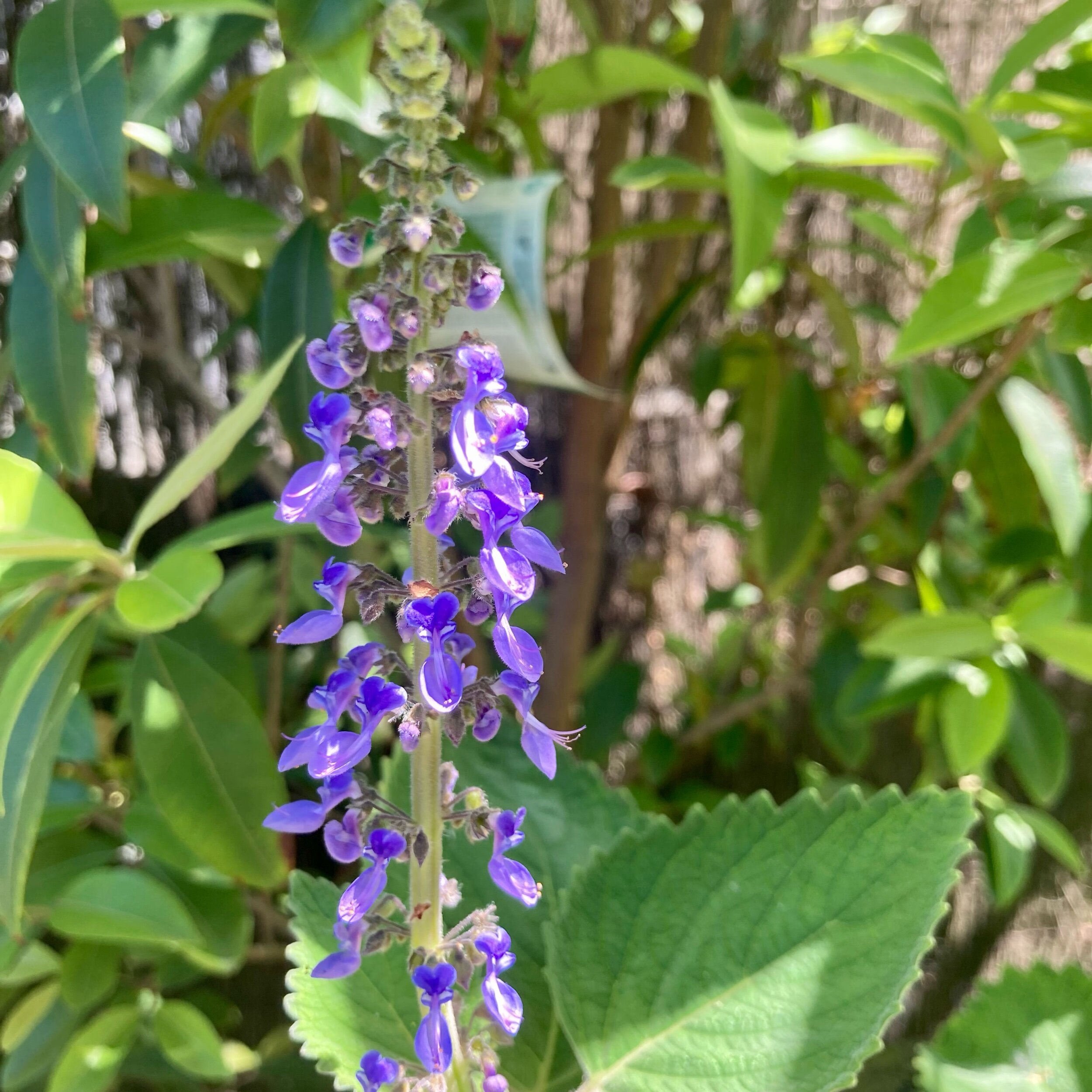
Commonly called Bush Basil or the Five Spice Herb!
This plant is native from Cape York all way down to NSW.
Bush Basil is a very strong herb and is said best to use with Mediterranean flavours like tomato and garlic. You could use fresh leaves on a pizza or blend for a pesto.
It also has many medicinal qualities and can be steeped into a tea to help with coughs and colds.
It’s a vigorous growing herb and can handle full sun or shade and will grow in pots or the garden. It doesn’t mind the heat, dry or cold once established.
It gets covered in pretty mauve flower stalks in the warmer months. These are great as cut flowers and if you cut the leaves off with the flowers it will work as an aromatic bunch of flowers. Scenting the house nicely. The flowers also attract all different types of beneficial insects.
It can get to about 1.5m tall if let go but I find it’s best to trim after flowering otherwise it can get rather scraggly.
As with all my natives I would be fertilising my bush Basil with an organic complete slow release fertiliser like Organic Link every three months.

Native Ground Cover
Scaevolas are a hardy, low growing plant with lush green foliage all year long. They have striking fan-shaped flowers that cover the bush for most of the year. You can get them in a range of colours - blue, pink, white and yellow.
The Fanfare range of groundcovers is a must have for your native garden.
Scaevolas are a hardy, low growing plant with lush green foliage all year long. They have striking fan-shaped flowers that cover the bush for most of the year. You can get them in a range of colours - blue, pink, white and yellow.

This Australian native is heat & drought tolerant and has a trailing and cascading habit making them a great choice for hanging baskets, underplanting under trees in gardens, cascading over retaining walls, in large pots as a glorious spiller as well as being just a great plant for the garden.
Scaevolas suit all style gardens from native gardens to tropical and even cottage gardens.
It seems to handle the cold (not heavy frosts), wind and the heat. It loves free draining soils and hates wet feet. Mulch well and keep slightly dry in summer as it hates humidity. As Scaevolas never stop flowering I find giving them small tip prunes regularly and liquid fertilising with Triple Boost every fortnight keeps them looking fantastic.
While Scaevolas love the sun they can handle a little bit of shade.
Even the bees and butterflies love it!

Yesterday, Today and Tomorrow
The true beauty of Brunfelsia latifolia is in its flowers. Sweetly perfumed, they appear from September to late November. When they first open they are a violet colour, fading to lavender blue and then white, with the three colours present on the bush at the same time. How extraordinary that a plant can be covered in three different coloured flowers at once!
I’m noticing this plant in flower everywhere at the moment - Brunfelsia latifolia, Yesterday, Today, Tomorrow. It’s been a great season for them and I think all of them are stepping out of the shadows to scream ‘Look at me’.
I like to refer to this plant as a vintage plant as there is no such thing as old fashioned in gardening.

This evergreen shrub grows slowly to around 2-4m tall and 2m wide. Most people tend to keep theirs at around the 1.5m mark. The foliage is dense and a smoky green colour. The new leaves can go purplish in cool weather.
The true beauty of Brunfelsia latifolia is in its flowers. Sweetly perfumed, they appear from September to late November. When they first open they are a violet colour, fading to lavender blue and then white, with the three colours present on the bush at the same time. How extraordinary that a plant can be covered in three different coloured flowers at once!
Brunfelsia latifolia enjoys full sun or partial shade. It enjoys a trim but does not need to be trimmed to look thick and lush.
I find all Brunfelsias can be hungry plants. I like to feed them with Organic Link four times a year and I give them liquid bio trace (mix of trace elements by Plant of Health) at least three times a year.
The great thing about this plant is, once established, it doesn’t seem to mind if it’s a little dry or a little wet; it likes the summer heat and can handle the winter chills. It’s not keen on heavy frosts, though.
I find they grow better in the ground but I have seen some nice ones in pots. I would just recommend feeding it more.
Years ago, a dwarf brunfelsia latifolia was released that only grows to around a metre. It is perfect for borders or small gardens. Be aware that this plant can be slower to flower.
The only downside to brunfelsia latifolia is that they are highly toxic to animals and humans if eaten, so if you have an animal, especially a goat or a friend that is a vegan that likes to eat the plants in your garden, please take precautions.
Indulge all of your senses by planting a brunfelsia latifolia this weekend!

Native Shade Tree
Luscious® is a cultivar or Tristaniopsis laurina. It is one of my favourite Australian native shade trees. Luscious® can grow in a small garden, provide some shade and allow your children to still play around it.
Luscious® is a cultivar or Tristaniopsis laurina. It is one of my favourite Australian native shade trees.
Luscious® can grow in a small garden, provide some shade and allow your children to still play around it.
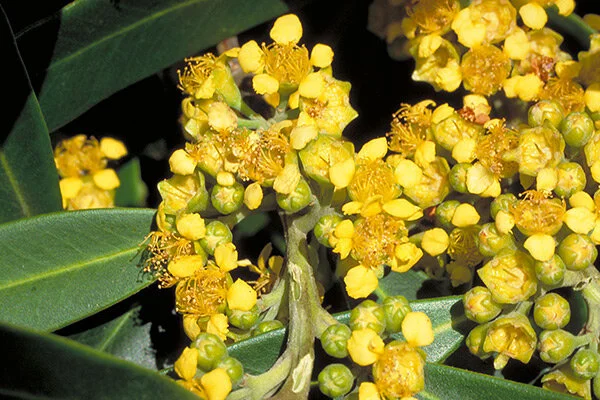
Tristaniopsis laurina
Photo: Brian Walters from Australian Native Plant Society
Just imagine a tree
no higher than 5-8m high and around 3-5m wide
bird and bee attracting
has scented flowers
Evergreen
lush deep green leaves that are long and leathery
brilliant red new growth to add a bit of colour
Sounds pretty perfect, right?
Well I just described Luscious®.
We have one of these growing at Trevallan and while all these things I’ve mentioned are great and perfect selling points it’s the bark that takes my breath away. It’s roughly textured and is cream coloured with variations in it. It’s a true feature in itself.
This tree can also handle full sun to part shade and all types of soil. It can handle the heat, humidity and once established can handle the cold and dry.
I would care for this tree like I care for all my other plants. About four times a year I throw some Organic Link around the base and I try to liquid fertilise with Triple Boost every fortnight.
Luscious® is a cultivar or Tristaniopsis laurina and is an absolutely stunning native and one that for some reason is constantly overlooked but not anymore!
Please enjoy this exciting video telling you about amazing this tree is.

Coriander actually has a purpose!
WHAT? Coriander actually has a purpose?
Coriander actually has two purposes, making your tastebuds zing, I’m team coriander and attracting beneficial insects to our garden.
WHAT? Coriander actually has a purpose?

Coriander actually has two purposes, making your tastebuds zing, I’m team coriander and attracting beneficial insects to our garden.
Did you know that coriander flowers actually attract things like PARASITIC WASPS. Yes, you do want these wasps in your garden. They are stingless and so small that most of the time we don't even know they are there!
But they utilise caterpillars, beetles, flies, scale and other insects even aphids to house and feed their developing young.
So the bad bugs actually turn into a maternity ward for the good bugs. Which, in theory, decreases the bad bugs you have.
What else can coriander flowers do? Attract hover flies!
Adult Hover flies feed on the nectar as they pollinate flowers. The female lays her eggs near aphid colonies. When the eggs hatch the larvae begin feeding on the aphids. After spending several days eating aphids, the hover fly larvae attach themselves to a stem and build a cocoon. After ten or so days adult emerges and cycle begins again.
Coriander can also help protect potatoes, eggplant and capsicums from Colorado potato beetles.
Planting coriander around tomatoes can not only protect the tomatoes from pests but also improve their flavour.
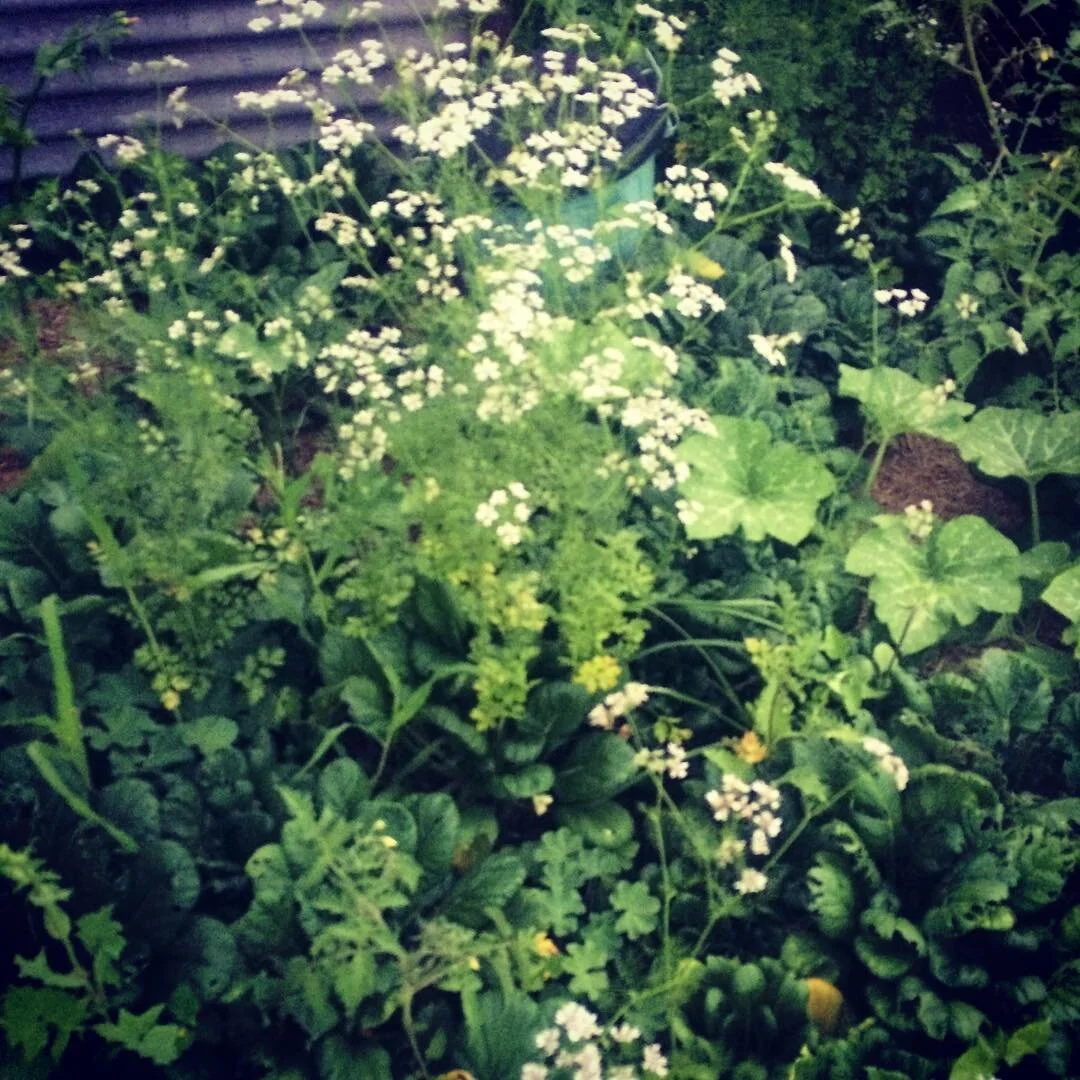
Just because you can’t eat it doesn’t mean it doesn’t have a huge impact in the garden. Start creating a mini eco system in your garden and discover the new beneficial insects!
But how do you successfully grow coriander?Plant your coriander in cooler months, plant a few plants. You can never have too much coriander !
Use as much coriander as you can in cooler months. It grows really well at this time. Now as the weather heats up all this plant wants to do is bolt and flower. Perfect. This is exactly what you want one plant to do straight away.
Let one plant flower and self seed everywhere. Don’t forget coriander flowers attract good bugs.
Water the area surrounding your self seeded coriander and wait for lots and lots of little baby coriander to appear. There should be lots. So use as needed. Let some grow up big and strong so you can repeat the process and use others while they are small and delicious.
With your other plants that you didn’t let go to flower. Keep trimming the flower stalk out for as long as you can (coriander starts to taste a little funny) at that point your baby coriander should have sprouted and you can let these ones go to seed.
Now coriander hate humidity. So don’t over water your coriander and if you plant your coriander in winter it should be well established by summer not to easily wilt with a little sun.
Most common cause of death is steaming to death. Meaning, we over water them and they boil to death in the ground.
I find coriander grows well in large terracotta pots too. The terracotta helps the soil breathe.
Just remember coriander is annual that just wants to flower and have lots of babies in summer. We can try and slow down nature but we can’t change what a plant intrinsically wants to do. We can try to tame Mother Nature but we will never have full control.
I hope this helps and we can have a long enjoyable coriander season with enough flowers to create a mini eco system.

Dirty Clothes can lead to Healthy Garden
So it's no surprise my laundry and home cleaning is garden orientated. Laundry, Cleaning... Garden? How does this even happen.
Strangely enough I’ve found that gardening infiltrates itself into nearly all aspects of my life.
My job is gardening, one of my many interests is gardening, some of my food comes from the garden, many of my outfits and shoes are gardening friendly, even my morning relax time with a coffee gets extended sometimes with weed pulling and tomato gathering.
So it's no surprise my laundry and home cleaning is garden orientated.
Laundry, Cleaning... Garden? How does this even happen.
It all started with the water restrictions years ago, 2007. I had a baby in cloth nappies, a yard that needed watering and severe skin reactions to the main product on market that was used to soak cloth nappies.
So the hunt began for a product that could:
Keep my nappies white and clothes clean
Be used in a front loader with cold water
Not lead to skin reactions
Cost effective
Wouldn’t damage my washing machine and
Most importantly the water from the washing machine could be used in my garden, grey water
Finally after much confusion, have you seen the laundry powder aisle in the grocery store? Research, or as I fondly refer to it, trial and error.
I found a solution and a lot of information.
What I discovered was that not all laundry powders dissolve totally in the water. Go on go and get your laundry powder, mix it in cold water, leave it for twenty mins and see what the water looks like. I bet there is undissolved particles in it, well there was for me with most of the detergents I tried. These undissolved particles are called fillers. These fillers can not only affect your washing, they can corrode your machine and even affect our health. These fillers can also affect your septic tanks and cause problems with your grey water.

Chelsea using Euca in her laundry
Many laundry detergents also contain salt (sodium sulphate) that can cause major environmental problems in our gardens and waterways.
For me I found that most laundry detergents contained chlorine and synthetic perfumes that are used to sanitise and make our clothes smell pretty. The ones that didn’t contain them didn’t get my clothes clean and didn’t smell as nice. Unfortunately it was the chlorine and synthetic perfumes that were causing my skin problems. For some the chlorine and synthetic perfumes can even trigger bronchial sensitivities.
Finally I found a product that exceeded all my expectations. I fell in love with it so much Trevallan Lifestyle Centre now stocks it and their range of cleaning products.
The product I discovered is the Euca Laundry Detergent Range. The range has a laundry powder, laundry liquid, a prewash stain remover and a fabric conditioner.
The range is based entirely on Australian Eucalyptus oil. The Eucalyptus oil helps deodorise and sanitise without the need for harsh chemicals, so no more skin or bronchial sensitivities.
Euca has no fillers and on average 35 times less sodium sulphate (salt) than other brands of laundry powder. So the waterways, gardens and septic systems are safe.
It can be used in front and top loaders with warm or cold water, it’s cost effective and most importantly my clothes are clean, look clean and smell clean.
It's not just us that think Euca is special, Euca Laundry Powder won People's Choice Award Best Laundry Detergents on Product Review.com
As Euca laundry powder is great for removing soap scum and general grime, I use Euca to clean my shower and mop the floors so all my dirty water can be reused out in my garden.
Never again can I complain about the washing as it’s all going to a good cause – My Garden!
Trevallan stocks a great range of Euca Products, all are septic safe.
Euca Laundry Range
Euca Dishwashing powder for Dishwashers
Euca Dishwashing Liquid —- Click here for my quick Review
Euca Smell Expell – 4 in One Air Freshener, Disinfectant, Deodoriser & Cleaner —- Click here for my quick Review
Euca Multi Concentrate – Super Strong Multipurpose Cleaner
Euca Toilet Cleaner

Passionate about Passionfruit
Trevallan stocks Passionfruit Panama Red and Gold through the warmer months of the year. This is one of the easiest fruiting plants to grow that will always repay you in kind with an abundance of fruit, no matter where you live.
I grew up having an abundance of passionfruit.
Fresh from the vine and frozen pulp in off season.
My grandparents lived at One Mile and back then heavy frosts would descend every winter and the Passionfruit vine would be almost destroyed. Every spring we’d cut it back and allow it to reshoot and take over a section of fence once again. Some years Pop would plant seeds he got up from the previous years plant or he would plant a whole new plant if the previous year’s plant did not perform to his standard.
As he got older and I too got older it was left up to me to trim and rebuild the passionfruit trellis. These plants can climb as high and as wide as you allow them. Some places say allow an 8m spread!
For us the rule was as high as we can grab and as wide as we can go!
It was always a race to get to the ripe fruit before the birds. My grandfather had set up elaborate contraptions to keep the birds out with jingle bells, cds and glowing eye owls but the cockatoos are sneaky buggers and they would still steal the fruit. Lucky for us there was always plenty to go around.
My children grew up with fresh passionfruit and one day I heard my daughter tell her friend .... “oh it’s been too dry that’s why the pulp isn’t as nice this time!”
My grandfather always grew Passionfruit Panama Red. It has a red skin and is very sweet as long as it gets regular water. It’s also self pollinating. He tried Passionfruit Panama Gold one year but he declared that the only real difference is that one has gold and one has red skin. Panama Gold is believed to have an almost creamier taste but pop couldn’t tell and told me that the yellows look wrong so back to red it was!
In most parts of Queensland passionfruit grows so well we don’t need grafted or cultivated varieties.
My grandfather would always make sure his passionfruit were planted into excellent quality garden soil. He would fertilise them with Organic Link at beginning of the warm weather and we would alternate liquid fertilising them with Triple Boost or Potash and Silica every fortnight.
We did try a Banana Passionfruit (Passiflora tarminiana) vine one year but found it just did not perform anywhere near as well as the Panama varieties. Banana Passionfruit has bright pink flowers and its banana like fruit ripen from autumn to winter. It tastes sweeter than the traditional black passionfruit with a hint of banana. It is native to higher altitudes in South America so can withstand longer periods of cold. In many areas of Australia and New Zealand it is now considered a weed.
Trevallan stocks Passionfruit Panama Red and Gold through the warmer months of the year. This is one of the easiest fruiting plants to grow that will always repay you in kind with an abundance of fruit, no matter where you live.

The best way to eat Mulberries is Naked
Mulberries can be trimmed to keep them manageable or left to grow wildly huge in your yard. There is nothing better in life than sitting under a mulberry tree, stuffing your face with juicy red mulberries. If you do decide to trim, leave your trimming to late autumn as the fruit will be on the new growth come spring.

The best way to eat Mulberries is Naked ... to save staining your clothes!!! 😉
Mulberries are one of the best fruiting plants on the planet!
If you don’t like mulberries, you are crazy!!
It’s also one of the fastest growing fruit trees, producing an abundance of excellent fruit every year and is virtually pest and disease free.
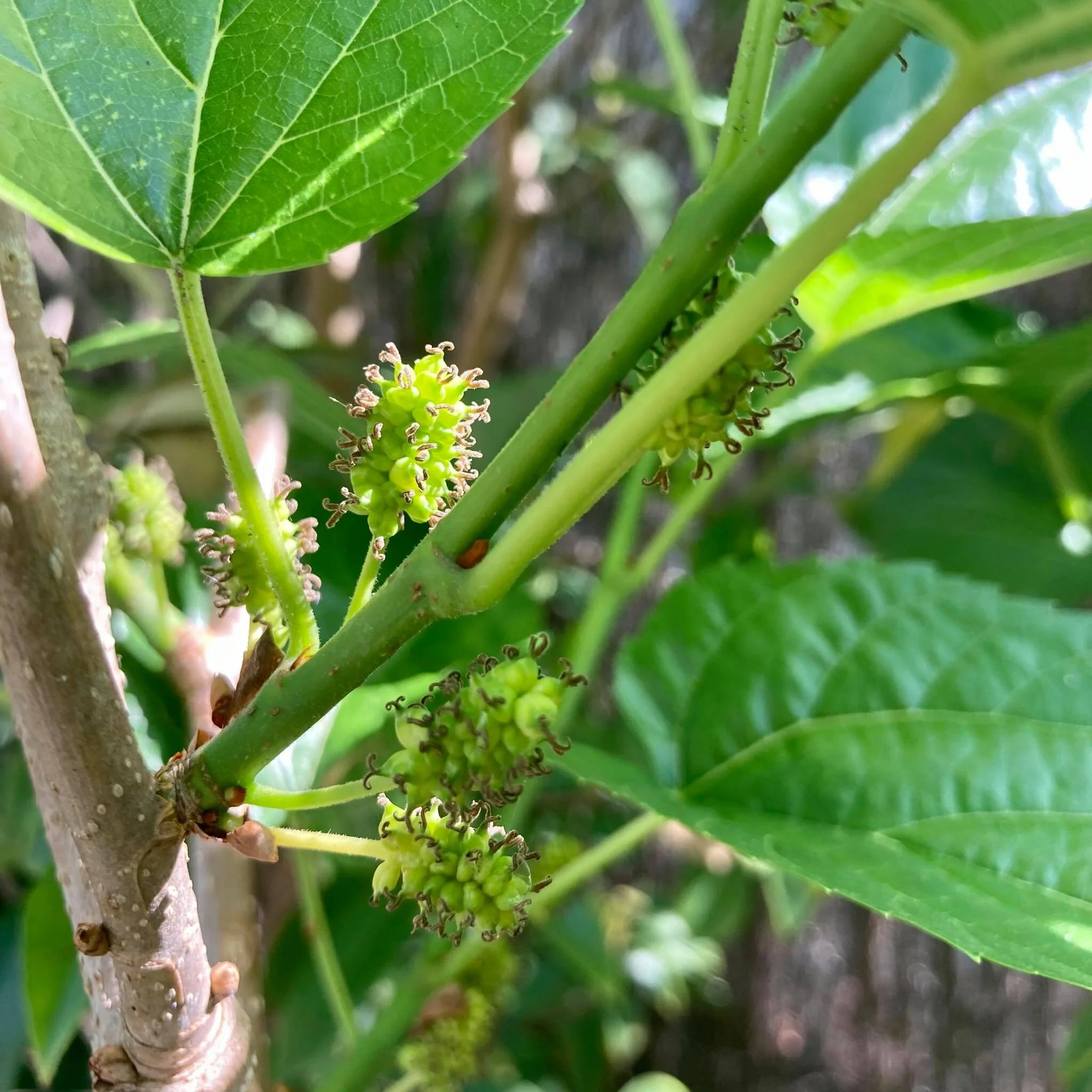
It is one-half responsible for the finest fibres known to man, silk and can be grown nearly everywhere that has soil.
Mulberries can be feature trees they have beautiful large dark green foliage that turns yellow in autumn, making the tree an attractive specimen for large gardens. In areas that get cold it can be completely deciduous.
Mulberries can be trimmed to keep them manageable or left to grow wildly huge in your yard. There is nothing better in life than sitting under a mulberry tree, stuffing your face with juicy red mulberries. If you do decide to trim, leave your trimming to late autumn as the fruit will be on the new growth come spring.
Mulberries will handle most situations you throw at them but I have found that the fruit tastes better when they are taken care of. Every season it’s a good idea to add manure based compost and organic mulch (sugar cane) around the base. A regular water during the fruit forming stage helps keeps the fruit juicy.
If you have a lot of wildlife around your house we suggest you net your tree.
We currently have
MULBERRY BLACK Large elongated, richly coloured fruit ripens from red to black
Can grow up to 12m but can be kept small
Prune after fruiting or late Autumn
Dwarf Black MulberryLarge elongated, richly coloured fruit ripens from red to black
Can grow up to 3m but can be kept smaller
Suitable for pots and gardens
Prune after fruiting or late Autumn
And for those of you that can’t handle Mulberry stains we have
MULBERRY WHITE Clusters of small white to pink, edible fruit
Can grow up to 12m but can be kept small
Prune after fruiting or late Autumn
How do you eat your Mulberries?

Growing Nectarines in Ipswich
The first nectarine was grown spontaneously as a bud sport. Which means that it grew morphologically different from the rest of the plant, which was a Peach tree. The basic difference is that Peaches have a fuzzy skin, while in Nectarines the fuzzy skin gene is recessive. Trevallan usually stocks Sunnybelle Nectarines, a low chill variety.

Did you know that the Nectarine is often referred to as a miracle plant.
The first nectarine was grown spontaneously as a bud sport. Which means that it grew morphologically different from the rest of the plant, which was a Peach tree.
The basic difference is that Peaches have a fuzzy skin, while in Nectarines the fuzzy skin gene is recessive.
Trevallan usually stocks Sunnybelle Nectarines. Sunnybelle Nectarine is a medium sized fruit with white flesh. It’s skin is bright red with light sugar speckles.
Normally nectarines don’t grow well in some parts of Ipswich but this guy is a low chill nectarine and it has been said to have one of the best flavours of a low chill nectarine range.

When we talk about some fruit trees we need to talk about chilling hours.
Chilling hours means number of hours a fruit tree needs to be exposed to effective winter temperatures for flower buds to break dormancy. This varies between varieties.
Most nectarine varieties need 700-900 chill hours but there are some low chill varieties available that need about 150-400 chill hours.
To check your chill hours you need to determine the average temperature for the coldest month (usually July). I found this great chart on Heritage Fruit Trees website that gives us an indication of chill hours to average temperatures.
Ipswich’s average temperature for July 2019 was about 15C (2018 was 16 and 2017 was 17).
So this means that if our average is between 17-15 degrees this means our chill units sit around 300. So we should be able to grow these nectarines without any hassle.
Sunnybelle can get to around 2-4m and can be grown in large pots with excellent quality potting mix (we recommend Platinum Potting Mix) or in the ground. If planting in the ground make sure your soil is excellent quality (we recommend Searles Garden Soil). For fruit trees I tend to dig my holes at least two to three times as big as pot in comes in and backfill with excellent quality garden soil. They much prefer full sun but can handle a little shade during summer. It is best to give these guys a good fertilise with Organic Link as soon as the weather warms up. I find alternating my fortnightly liquid fertiliser between Triple Boost and Potash and Silica helps the plant stay healthy and produce more fruit.
These guys tend to be deciduous, this means they drop their leaves in colder months. So don’t panic if during cooler months your tree doesn’t look fantastic.
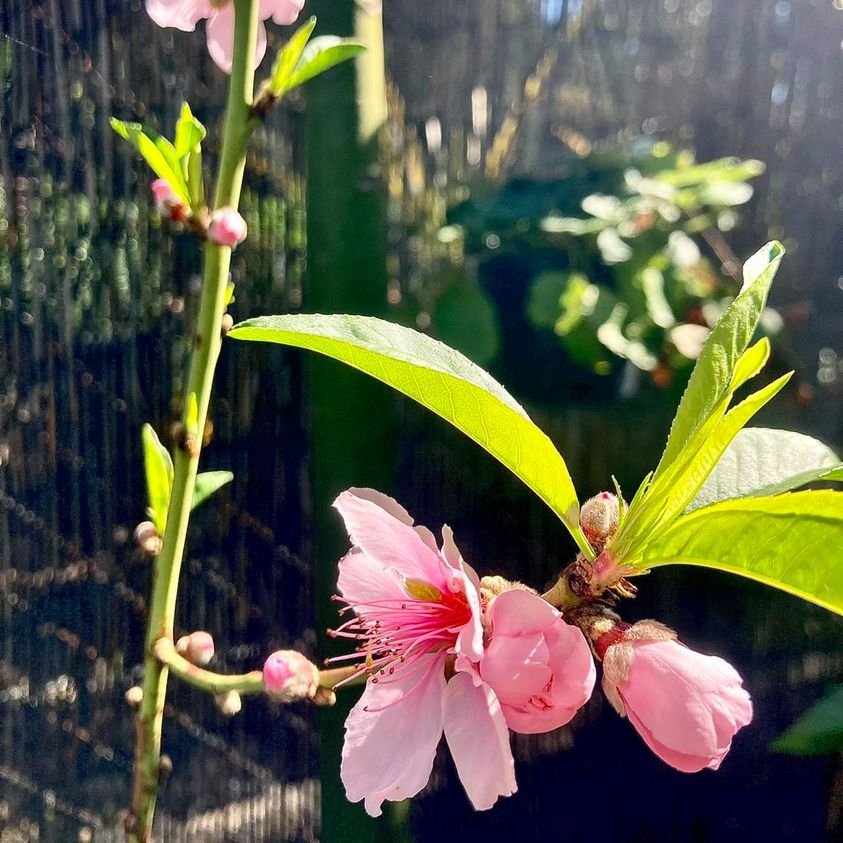
Sunnybelle Nectarines have beautiful pink flowers that appear as soon as it starts to get warm. They will sometimes appear before leaves even start to form after their winter shedding. Did you know that the nectarine flower symbolises a desire to do nice things for others and encourage sweet words. It is also about enhancing gentleness and softens our character, bringing out our best intentions. Sunnybelle Nectarines are self pollinating (they don’t need another Nectarine to help produce fruit). The fruit will start to form usually by October.
Nectarines are really susceptible to fruit fly so I would also buy a fruit fly exclusion net so you can not only grow yummy nectarines but actually enjoy your nectarines!
Sunnybelle Nectarine is a great fruit tree for any size garden.

Elaeocarpus
Elaeocarpus are one of my all time favourite native tree speices. Two of my favourite cultivars for home gardens are Elaeocarpus reticulatus Prima Donna and Elaeocarpus eumundi.
Elaeocarpus are one of my all time favourite native tree speices.
Two of my favourite cultivars for home gardens are Elaeocarpus reticulatus Prima Donna and Elaeocarpus eumundi.
Elaeocarpus reticulatus Prima Donna

Elaeocarpus reticulatus Prima Donna
Elaeocarpus reticulatus Prima Donna or blueberry ash has masses of delicately fringed small pink flowers in spring. These flowers may look like fairy petticoats or ballerina skirts and have a faint perfume. After flowering blue edible fruits appear that the wildlife love (these fruits are edible for humans ... not so palatable!).
The foliage is pretty wondrous too and can be very colourful when it’s in full growth mode. It has bronze new growth, dusky green growth and then as the leaf ages it turns brilliant red.
It’s a slow growing small tree (maybe 4m on average in normal house lot). It has a slender shape and I have found its best grown as a feature planting but I have also seen it used a a hedge in Gympie and it looked glorious.
It has high pest and disease resistance and is exceptionally low maintenance once established. It can handle dry, heat, humidity and the cold.
You can plant these beauties in gardens or pots and I find it’s best to fertilise about every three months with a complete organic slow release fertiliser like Organic Link.
This is the type of tree you can sit back and enjoy once established!
Elaeocarpus eumundi
Elaeocarpus eumundi is a mid-sized native rainforest tree and one that I love and adore and have plans to use at home.
This tree is commonly known as Eumundi Quandong, or Smooth Leafed Quandong.
Usually you don’t see native trees used in cultivation wisely but fortunately for us Ipswichites, Elaeocarpus eumundi was chosen as a feature tree for the Coles in Ipswich development.
Elaeocarpus eumundi are the perfect tree when tall and skinny but beautiful Is a requirement. I personally plan on using these trees down the western side of my house.

Elaeocarpus eumundi Picture from Natures Decor Garden Centre
Perfect in that they get tall (about 5m , perfect conditions about 8m) but not too wide (about 2m). I can use these trees to protect my home from the western sun but also not encroach too much on the neighbours.
Elaeocarpus eumundi have glossy green foliage and gorgeous bronze new growth. The thing I love most about them is in later life they can develop a small but beautiful buttress trunk.
It does get small scented flowers and fruit in warmer months. While the fruit isn’t classed as palatable for humans it is known as a great wildlife attractant, with many nectar eating birds and insects as well as seed loving birds utilising it’s resources.
This tree doesn’t like the frost but can handle the cold once established. It prefers well drained, Fertile soil. Once established can handle periods of dry and heat. As an added bonus it is very disease and pest resistant.
This tree responds well to care and attention but can also withstand being a ‘street tree’.
I think this tree is a must for your native garden.

Leptospermums - Spoilt for Choice
Easy to grow, exceptionally hardy Australian native is happy in full sun to light shade. It can handle most soils and once established will handle a little dry and a light frost. Plus flowers are brilliant wildlife attractors
Love our native Tea Trees, Leptospermums?
Here a a few cultivars to fill your garden with.
Leptospermum obovacum 'Starry Night' 
Leptospermum obovacum 'Starry Night'
This glorious Leptospermum has shiny black-purple foliage... I know you are already sold but when it's dripping in white starry flowers you may actually think it really is a Starry Night!!!!
All the wildlife will love you too as the flowers are laden with pollen
This easy to grow, exceptionally hardy Australian native is happy in full sun to light shade. It can handle most soils and once established will handle a little dry and a light frost. It will get to around 2m High x 1.5m Wide. I would trim and shape from an early age if a tight screen was needed. Trim after flowering.
I would fertilise every three months with Organic Link fertiliser and plant into excellent quality garden soil.
Trevallan's have not started to flower yet as this Leptospermum flowers late spring summer. This picture is from Austraflora 's website. The breeders of this beautiful plant.
Leptospermum Purple Haze (Leptospermum scoparium). 
Leptospermum Purple Haze (Leptospermum scoparium).
This Leptospermum has pretty pinky/purple flowers in spring that cover the entire Bush. The mass of flowers attracts nectar feeding insects, birds and other wildlife.
I like this Leptospermum mainly though because it’s leaves are a little different to other Leptospermums, they are kind of small, fat and glossy.
This is a great small to medium shrub that can be used a feature plant in pots or gardens but would also be perfectly suited to form a small low hedge.
It grows naturally to around 1.5ms tall. This plant doesn’t need to be trimmed but like most Leptospermums looks better after a haircut. Leptospermums can handle a range of soil types and once established don’t mind the cold, heat or the dry. I like to give all my natives a good feed with Organic Link (a complete organic slow release fertiliser) about once every three months.
Leptospermum scoparium ‘Burgundy Queen’While all Leptospermums are beautiful my favourite and the one I’d have in my garden is the Leptospermum scoparium ‘Burgundy Queen’.
I think at first it was the deep burgundy almost black foliage but It’s majestic upright growth habit also took my breath away.
Then I found out it flowered profusely with intense dark burgundy double flowers. I was blown away. Plus it has the most adorable black eyes inside the flowers.
Seriously how could you not fall in love.
I honestly think it looks best kept trimmed to around 1.5m but this plant can easily grow untouched to about 3m
I could imagine it in a pot surrounded by the soft delicate Sweet Alyssum or in a dry landscape garden as a hedge.
Leptospermums can handle a range of soil types and once established don’t mind the cold, heat or the dry. I like to give all my natives a good feed with Organic Link (a complete organic slow release fertiliser) about once every three months.
Like most Leptospermums ‘Burgundy Queen’ is great at attracting wildlife when it’s in flower and is also an amazing cut flower.
Seriously I think we all need these beauties in our life.

Leptospermums - Aussie Blossom Range
The Aussie Blossom Range is a beautiful range of Leptospermums that have masses of stunning flowers in a range of pink shades that cover the bush for about 8-10 weeks in winter and early spring.
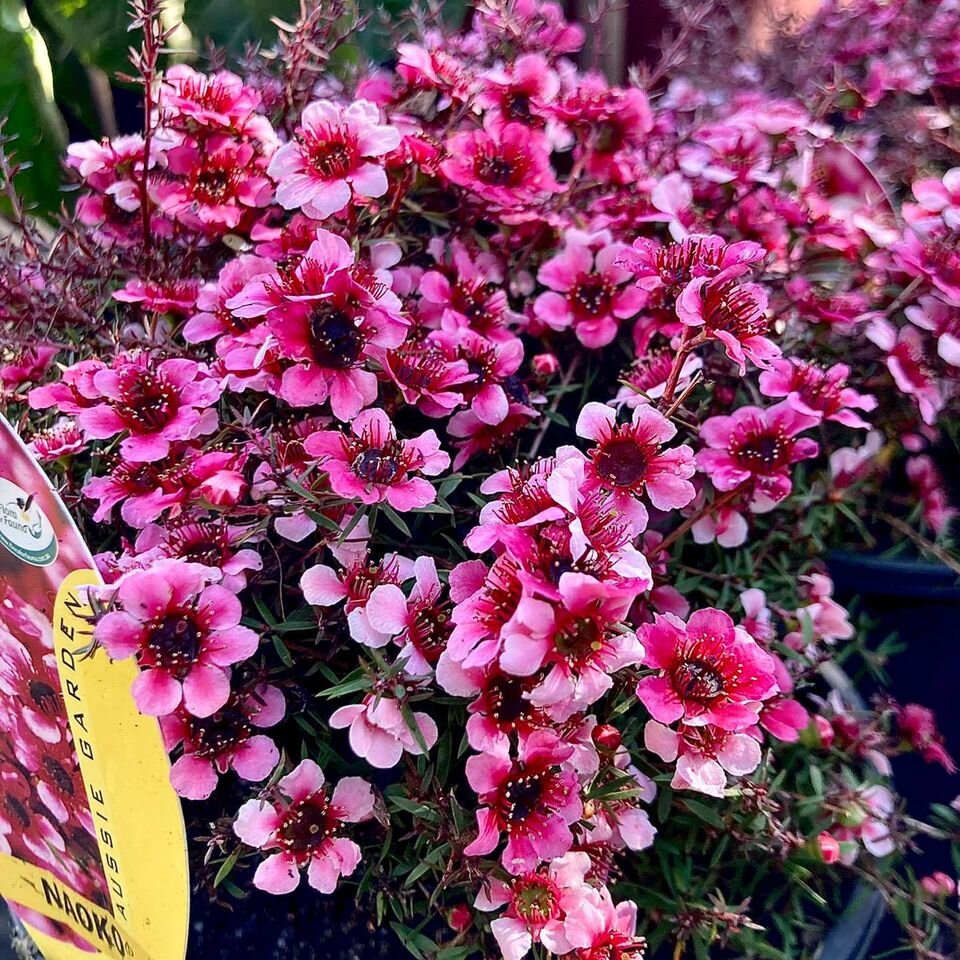
Naoka Leptospermum
I always get asked for Geraldton Wax. While we do sometimes stock this beautiful native I believe the Leptospermum cultivars, our native Tea Trees, do a lot better here in Ipswich.
I like to refer to our native tea trees as the Australian Cherry Blossom
The Leptospermums that reflect this name the best is the Aussie Blossom Range.
The Aussie Blossom Range is a beautiful range of Leptospermums that have masses of stunning flowers in a range of pink shades that cover the bush for about 8-10 weeks in winter and early spring.
The range has been bred for easy care, compact growth and brilliant flowers and there are a few within the range to choose from
Alicia Rose pbr (rose coloured flowers)
Emily Nao pbr (pink coloured flowers)
Joy pbr (dusty pink flowers)
Martin pbr (dusty white flowers)
Naoka pbr (pink with ruby red centre)
Stephen Rose pbr (white with pink centre)
You could mass plant any of these beauties to create an informal low hedge (grow to about 1.5m) or you could create a stunning masterpiece in your garden with just one.
While you don’t NEED to trim these guys I always find they grow and look better after a hair cut. I like to do it after they finish flowering.

Joy Leptospermum
While some people are under the impression natives don’t need fertiliser this is not true. All plants need fertiliser. I like to say it’s the difference between survive and thrive.
I like to give all my natives a good feed with Organic Link (a complete organic slow release fertiliser) about once every three months and a liquid fertilise with Triple Boost about once a fortnight.
This is a beautiful range of plants and I think at least one should be a part of any garden design. They even work wonderfully for cut flower displays.

Backhousia citriodora
Lemon Myrtle (Backhousia citriodora) is an absolute delight for any garden. It is a small growing tree (around 3-5m) with leaves that release a strong lemon scent when crushed or after rain. I love breaking off a few and throwing them on the lawn before I mow. It makes mowing so much more enjoyable!
One of my all time favourite scented foliage plants is the Backhousia citriodora (lemon myrtle).
It is endemic to subtropical rainforests of central and south-eastern Queensland, Australia, with a natural distribution from Mackay to Brisbane.

Unfortunately the lemon myrtle was very hard hit by the myrtle rust and the commercial availability of the smaller plants became very limited. You see, Backhousia citriodoras don’t grow true to form from seed, cutting grown is always best but Backhousias are notoriously hard to grow from cutting. Understand now why there can be a shortage some years! Older established trees are readily available and now the smaller ones are slowly coming back on the market.
Lemon Myrtle (Backhousia citriodora) is an absolute delight for any garden. It is a small growing tree (around 3-5m) with leaves that release a strong lemon scent when crushed or after rain. I love breaking off a few and throwing them on the lawn before I mow. It makes mowing so much more enjoyable!
New growth is tinged red and in summer you’ll get abundant clusters of creamy white flowers which are loved by butterflies and bees.
Lemon myrtle is quite versatile and can be used as a screen, hedge or feature tree and is suitable for most gardens and courtyards. It loves the full sun and can handle the cold and dry once established. It is naturally thick and dense and doesn't require trimming to keep it neat.
A good fertilise with Organic Link on turn of every season would be appreciated by the tree.

Long, hot day calls for an icy mineral water (maybe with a splash of vodka) and some Backhousia citriodora leaves for a great tang.
The leaves, flowers and seeds of lemon myrtle are all edible and can be used in cooking to flavour biscuits, cakes, bread, pasta, meat and herbal teas. It can be also use to scent your own soaps or bath bombs.
Lemon Myrtle essential oil is also available. It has an intense lemony aroma which is uplifting and invigorating and is great to use when studying or just needing a gentle nudge into the fast track of the day.
One of my all time favourite natives. Trevallan always tries to have these amazing natives in stock