Find Us:
77 Fernvale Rd
Brassall QLD 4305
(07) 3201 8630
Open:
Tue-Sun 9am - 4pm
Choosing the Best Oranges for Your Backyard
Discover the best orange trees for your garden. Learn about their flavour, season, health benefits, and why citrus make stunning feature trees, pot plants, hedges or espaliers. Grow your own juicy, fragrant oranges with Trevallan’s expert tips.
Few fruits are as universally loved as oranges. They are sweet, tangy, juicy, and versatile in the kitchen. Plus, they are a powerhouse of nutrition. A daily serving of fresh fruit from your own tree can do wonders for your wellbeing:
Vitamin C boost – Oranges are famous for their high vitamin C content, which supports your immune system and helps ward off winter colds.
Antioxidants – Varieties like Cara Cara and Blood Orange are especially rich in antioxidants such as lycopene and anthocyanins, which support heart health and fight free radicals.
Fibre – Eating an orange (rather than just drinking the juice) gives you plenty of dietary fibre, which aids digestion and keeps you feeling full.
Hydration – Oranges are made up of over 80% water, making them a refreshing way to stay hydrated.
Everyday wellness – Regular citrus consumption is linked to improved skin health, better iron absorption, and overall vitality.
At Trevallan we’ve chosen to stock a small but well-considered range of orange varieties this season. These aren’t just any oranges, each one brings something unique to your table and your garden.
Beyond the obvious joy of picking your own juicy fruit, oranges are long-lived, ornamental trees with glossy evergreen foliage and fragrant white blossoms. They’re as beautiful as they are practical, providing both food and shade.
But don’t think of citrus as only “fruit trees for the orchard.” They shine just as brightly in ornamental and creative plantings:
Feature trees – A single orange tree can anchor a garden bed, drawing the eye with its glossy foliage and glowing fruit.
Scented gardens – Few fragrances compare to citrus blossom. Planting oranges near an entertaining area, pathway, or window means you can enjoy that heavenly perfume in spring.
Pots and courtyards – Oranges adapt beautifully to large containers, making them perfect for sunny patios and small gardens. Dwarf grafted varieties keep things compact while still producing generous crops.
Hedging and screening – With regular pruning, citrus can be trained into dense, productive hedges that are both practical and attractive.
Espalier – For a touch of European charm, oranges can be espaliered against a wall or fence, creating living architecture while saving space.
Plant one (or more!) and you’ll quickly discover why citrus trees have been treasured for centuries. Not only for their fruit, but for their beauty, fragrance, and versatility in the landscape.
Let’s explore the stars of the orchard:
Washington Navel
The undisputed classic and the most popular backyard orange. Washington Navels are famous for their seedless, easy-to-peel fruit. Their flavour is bright, sweet with just a hint of tang, and they’re perfect eaten straight from the tree.
Season: Late autumn to early winter.
Fruit: Medium to large, thick-skinned, seedless.
Why choose it? Reliable crops, consistent fruiting, and an all-rounder. If you’re planting your first orange, start here.
Cara Cara Navel
At first glance, you’d mistake it for a regular navel orange, but cut it open and you’ll be surprised by the rich salmon-pink flesh. This colour isn’t from anthocyanins (like blood oranges) but from natural lycopene, the same antioxidant found in tomatoes. The flavour is sweeter, lower in acid, and often described as having berry or cherry undertones.
Season: Late autumn into winter.
Fruit: Medium to large, pink flesh, seedless, juicy.
Why choose it? It’s an easy-to-grow tree that produces fruit with a unique flavour and colour.
Blood Orange
The dramatic beauty of the citrus world. Blood oranges have rich crimson flesh, thanks to anthocyanins that develop best during cooler nights. Their flavour is intense, a sweet orange base layered with a raspberry-like tang. They are brilliant for fresh eating, but also shine in cocktails, marmalades, and desserts.
Season: Mid-winter through early spring.
Fruit: Smaller to medium-sized, deep red flesh, strong flavour.
Why choose it? If you want something striking and different.
Orange Pineapple
This variety stands out for its naturally sweet, low-acid flavour. Perfect for those who don’t enjoy the tang of traditional oranges. The taste is often described as tropical, with a faint pineapple-like sweetness, making it excellent for juicing.
Season: Winter into early spring.
Fruit: Medium-sized, golden flesh, extra sweet and low acid.
Why choose it? For juicing enthusiasts and anyone who loves sweeter citrus.
Growing and Caring for Oranges
Whether you’re planting in the ground or in a large pot, oranges are wonderfully rewarding. With the right care, they’ll reward you with fragrant blossoms and bowls of fruit each year.
Position & Soil
Full sun is non-negotiable. The more sun, the sweeter the fruit.
Plant in well-drained soil. Oranges hate “wet feet.” If your soil is heavy clay, mound the planting area or stick to large pots with premium potting mix.
Pots vs Ground
Ground: Trees will grow larger and produce more fruit.
Pots: Choose a dwarf grafted variety where possible, and plant into at least a half wine barrel size. Potted trees crop well but need more attention with feeding and watering.
Fertilising
Oranges are heavy feeders. Keep them healthy and productive with:
Three main feeds per year (early spring, mid-summer, early autumn) using a complete organic fertiliser, like Organic Link.
Supplementary feeding with liquid fertilisers such as Triple Boost or Potash + Silica every 2 weeks during the growing season.
Add Bio-Trace™ to boost soil health and micronutrients.
Pot-grown oranges especially benefit from regular liquid feeds, as nutrients wash through more quickly.
Watering
Keep soil consistently moist but not waterlogged.
Deep soak less frequently rather than shallow frequent watering.
In pots, check moisture daily during hot weather.
Mulching
Apply sugar cane, tea tree, rainforest fines, or hoop bark mulch to conserve water, regulate soil temperature, and improve soil health. Always keep mulch away from the trunk to avoid rot.
Pruning & General Care
Light prune after harvest to maintain shape and airflow.
Remove dead or crossing branches.
In pots, prune harder to keep trees manageable.
Watch for pests like citrus leaf miner and scale. Treat with horticultural oils or eco-friendly sprays if needed.
At Trevallan we believe gardens should feed both body and soul. Oranges do exactly that. They’ll scent your spring evenings, brighten your winter mornings, and remind you just how good homegrown food can taste.
Which one will you take home — the classic, the sweet, the dramatic, or the tropical? Whichever you choose, your garden will thank you.

Mango Madness
Mangoes aren’t just for big backyards! This blog breaks down the best varieties and shares simple, practical tips for growing them in pots or small spaces. From pruning to pollination, everything you need for sweet success is right here.
There’s nothing quite like the taste of a homegrown mango. That sun-warmed sweetness, the juice running down your hands, and the pride that comes from picking fruit straight from your own tree… it’s one of the true joys of gardening in Queensland.
And the good news? Mangoes aren’t just for those with acreage or tropical estates. With new dwarf and compact varieties available, even a small backyard (or large pot on the patio) can be the perfect spot for a mango tree.
Here’s a little guide to some of our favourite varieties — plus tips to help you grow them like a pro.
First, a Few Growing Tips
Position is everything: Mangoes love full sun and warmth. Choose a spot with at least 6 hours of direct sun a day, and good air movement to help reduce fungal issues.
Soil matters: Free-draining soil is essential. Avoid heavy clay. Slightly sandy, well-mulched soils are ideal. If planting in a pot we suggest using Platinum Potting Mix and if in the ground we suggest you use a mix of the original soil and Searles Garden Soil
Watering: Once established, mango trees are quite drought-tolerant. But young trees need regular watering, especially in dry spells or when flowering and fruiting.
Feeding: A well balanced fertiliser like Organic Link every three months helps with flowering and fruit set. Do not use Organic Link once flowering starts as too much leaf growth can limit fruit. I use a liquid fertiliser, Plant Care, fortnightly during this time.
Pruning: Keep your tree in shape with light pruning after harvest. This helps control height and encourages branching for future fruit. Dwarf varieties especially benefit from this.
Pests & diseases: Watch out for anthracnose and black spot, especially in humid seasons. Good airflow, pruning, and copper-based sprays (when needed) can help keep things in check.
Mango Varieties We Love
Dwarf Mango ‘King Thai’
Elongated fruit similar to Nam Doc Mai, with green skin that ripens to yellow with a pink-red blush. Incredibly sweet. Grows to around 4m (can be kept smaller), making it perfect for pots or compact gardens. Great resistance to anthracnose and black spot.
Dwarf Mango ‘Palmer’
A late-season variety with stunning purple-red fruit. Large, elongated, sweet and almost fibreless. Grows to about 5m and fruits in 3–5 years. Good, consistent cropper. Also great in pots.
Mango ‘Florigon’
One of the softest, sweetest varieties we’ve tasted, fibreless and melt-in-your-mouth. Smaller fruit (300–350g), but also a small seed. Moderate resistance to anthracnose. Can grow up to 10m but responds well to pruning down to 5m.
Mango ‘Kent’
Sweet, juicy, and low-fibre. Ideal for eating fresh, juicing or drying. Big fruit (400g–1kg) and big tree potential (up to 10m), but again, responds well to pruning. Keep it trimmed and well-fed for a lush, productive tree.
Mango ‘R2E2’
Mid-season, with large, brightly coloured fruit. This one’s a bit of a legend, developed right here in Australia and now the third most popular mango grown commercially. Upright habit, so early pruning is key. Long shelf life and excellent for eating or gifting.
All of these mango varieties are self-pollinating, so you only need one tree to get fruit. Though we won’t blame you if you plant a few different types to extend your mango season and add a bit of variety to the harvest bowl!
If you're dreaming of mangoes this summer, now’s the time to get planting.
Come in and chat with us. We’ll help you find the right mango for your space, pot, or palate.

The Jaboticaba Tree
Looking for a fruit tree that’s a little out of the ordinary? Meet the Jaboticaba tree (Plinia cauliflora), a Brazilian gem that grows grape-like, deep purple fruit directly on its trunk—yes, the trunk! This quirky habit, called cauliflory, makes it look like nature’s bubble tea. The fruit is sweet, juicy, and slightly tangy, perfect for fresh eating, jams, or even wine. Slow-growing but worth the wait, it thrives in warm climates and even grows well in pots. If you want a beautiful, unique, and delicious tree, Jaboticaba is the one!

Picture Curtesy of Jim Madden
Looking for a fruit tree that’s a little out of the ordinary? One that will make your neighbours do a double take and ask, “What on earth is that?” Well, meet the Jaboticaba tree (Plinia cauliflora), a Brazilian beauty that’s as fascinating as it is delicious!
Unlike your standard fruit tree, the Jaboticaba likes to do things a little differently. Instead of growing fruit on branches like a respectable tree, it breaks all the rules, producing grape-like, deep purple fruit directly on its trunk. That’s right, the trunk! This quirky habit, known as cauliflory, makes the tree look like it’s been sprinkled with nature’s own bubble tea pearls.
And these little purple gems? They taste amazing, like a mix between a grape and a cherry, with a hint of tang. Eat them fresh (if you can beat the birds to them), turn them into jams, jellies, wine, or even liqueur. In Brazil, Jaboticaba wine is a thing, and honestly I think we are missing out not having it readily available here!
Beyond its delicious fruit, Jaboticaba is a bit of a show-off in the garden. Its lush, glossy green leaves give it a tropical feel, and when it flowers, the trunk is covered in tiny white blossoms, making it look like a tree out of a fairy tale. It’s slow-growing, and unless you’re a very patient gardener, you might not see it reach its full 10-metre potential in your lifetime but trust me, it’s worth the wait! Most people keep them at 3 metres to make harvesting easier and to keep their backyard jungle under control.

Picture Curtesy of Jim Madden
Jaboticabas love warm, humid climates, making them perfect for the Ipswich region. They enjoy rich, slightly acidic soil, regular watering, and a good feed of Organic Link fertiliser on the turn of every season to keep them thriving. They can handle a bit of dry weather, but if you want loads of juicy fruit, don’t slack on the watering!
Jaboticabas are low maintenance, but they do have a few enemies. Scale insects and aphids love them as much as we do! Keep an eye out for sticky leaves or sooty mould, which are signs of sap-sucking pests. A dose of eco-oil or neem oil will keep them in check. Birds and fruit fly can also be a problem which is why a lot of people keep their trees small so they can net them.
Don’t have space for a giant tree? No worries! Jaboticabas grow surprisingly well in pots—just make sure to pick a big one, use Searles Platinum Potting Mix, and give it plenty of love
Why You Need a Jaboticaba Tree
It’s a total conversation starter—guests will be amazed when they see fruit growing on the trunk!
The fruit is packed with antioxidants and traditionally used in Brazilian folk medicine for everything from digestion to respiratory health.
It makes your garden look like something from a fantasy novel when in bloom.
It’s low maintenance and happy in a pot, making it great for small gardens.
If you want a fruit tree that’s beautiful, unique, and delicious, Jaboticaba is the one! It might take a little patience (it’s a slow grower), but once it starts fruiting, you’ll be hooked. Get yourself one, and prepare for your backyard to become the envy of all who see it!
Raspberries
Discover the joys of growing Heritage Raspberries! These self-pollinating, hardy perennials produce sweet, tangy fruit twice a year, perfect for Queensland gardens. Their flowers attract bees, while their resilient canes thrive in unpredictable weather. Learn how to grow, prune, and enjoy this nutritious superfood!

Raspberries are one of those fruits that make you fall in love at first taste. Bursting with flavour, their sweetness is balanced by just the right amount of tang. Unfortunately my bank account doesn’t agree with this love affair and I have found I need to either grow my own or heavily reduce my consumption.
The Beauty of the Raspberry Bush
Raspberry plants (Rubus idaeus) are hardy perennials that send up fresh canes each year, making them a productive and surprisingly low-maintenance choice for home gardeners. Raspberry ‘Heritage’, (Rubus idaeus x Rubus hybrids), is popular variety for Queensland gardens as it is well suited to our long hot summers and mild autumns. They also have the ability to bear fruit twice a year, once on first-year canes (primocanes) and again on second-year canes (floricanes). This dual fruiting potential is especially valuable in Ipswich, where the weather can be unpredictable. Some years reward us with two abundant harvests, others with just one, and occasionally, none at all. But with Heritage raspberries, there’s always the hope of at least one fruitful season.
Raspberries are self-pollinating, so a single plant is all you need for a plentiful harvest. Their delicate white flowers are a magnet for bees and other beneficial insects. So why isn’t everyone growing these amazing plants? One word: thorns. Raspberry canes are covered in small, prickly thorns that can make harvesting and maintenance a bit of a challenge. While the reward of fresh, juicy berries is worth the effort, it’s best to approach with gloves and a bit of caution to avoid the sting
A Nutritional Powerhouse
Raspberries aren’t just delicious—they’re incredibly nutritious. Packed with dietary fibre, they support digestion and can help maintain healthy cholesterol levels. They’re also rich in vitamins C and K, manganese, and antioxidants, which help combat free radicals and support overall well-being.
It’s no wonder raspberries are often called a superfood!
Who Can Grow Raspberries?
If you’re in Ipswich, good news: raspberries can thrive here with the right care. While they prefer a mild climate, Heritage raspberries are resilient and adapt well to our warmer weather. They grow best in a sunny position with some afternoon shade to protect them from the harsh summer heat.
Raspberry plants are perfect for smaller gardens, as they can be trained on trellises to save space. They’re also happy in pots, provided you use a large container with premium potting mix.
Planting and Pruning Tips
Raspberries are happiest in fertile, well-draining soil with a slightly acidic pH of 6.0–6.5. Prepare the garden with garden soil and/or compost before planting. If you’re planting in a pot, choose a high-quality mix like Searles Platinum Potting Mix.
Pruning is where raspberries truly shine. Heritage raspberries are incredibly forgiving:
After the autumn harvest, cut all canes that have fruited back to the base. This encourages fresh growth.
For a second summer harvest, leave the primocanes (first-year canes) intact after their autumn fruiting, as they’ll bear again next season.
Always remove weak, dead, or overcrowded canes to promote air circulation and reduce disease risks.
Sharp tools are a must when pruning, as raspberries can gum up pruners with their sap. Clean tools regularly to keep them in top condition.
Feeding and Caring for Raspberries
Raspberry bushes are heavy feeders, so they’ll thrive with regular fertilising. Apply Organic Link fertiliser every 2–3 months to keep plants strong and productive. During the growing season, a fortnightly liquid feed with Triple Boost or a potassium-rich fertiliser will encourage abundant fruiting.
Mulching is another key to success. Organic mulch like sugar cane keeps roots cool, conserves moisture, and suppresses weeds. Water deeply and consistently, especially in the warmer months, as raspberries have shallow roots and can dry out quickly.
Pests that affect Raspberries
Raspberries are a joy to grow, but pests can occasionally try to steal the spotlight. Common culprits include fruit fly, aphids, spider mites, caterpillars, beetles, and of course, birds.
To keep your raspberries thriving:
Spray neem oil regularly or use other organic sprays to deter pests.
Hang fruit fly traps near your plants to catch those troublesome invaders.
Protect with netting to keep birds and larger pests at bay.
With a little attention and care, you can enjoy your raspberries pest-free!
Diseases and Problems that affect Raspberries
While raspberries are generally hardy, they can occasionally face a range of diseases and problems when grown in South East Queensland. Here's how to identify and manage these issues:
Diseases
Powdery Mildew: Ensure good airflow around the plants and avoid overhead watering. Apply sulphur-based sprays or organic fungicides (like eco-fungicide) to manage outbreaks.
Botrytis (Grey Mould): Promptly remove affected fruit, thin canes to improve ventilation, and apply copper fungicide during periods of high humidity.
Cane Blight: Prune out damaged or diseased canes using clean, sharp tools to prevent the disease from spreading.
Root Rot: Plant in well-drained soil or raised beds, and avoid overwatering to reduce the risk of waterlogging.
Common Problems
Sunburn: Leaves and fruit may scorch in Ipswich's intense summer heat. Use shade cloth or strategic planting to provide afternoon shade during heatwaves.
Poor Fruit Set: Inadequate feeding or incorrect pruning can lead to fewer berries. Fertilise regularly with a balanced feed like Organic Link, Triple Boost and Silica and Potash and prune correctly to promote healthy growth.
Overcrowding: Dense canes restrict airflow, increasing the risk of disease. Thin out canes annually, retaining only the strongest to ensure good ventilation.
Dry Soil: Raspberries have shallow roots that struggle in dry periods. Water deeply and consistently, especially during hot or windy weather. Apply organic mulches, such as sugar cane, to retain soil moisture and reduce evaporation.
By staying proactive and providing the right care, you can minimise these challenges and enjoy a thriving raspberry crop in your garden!

Figgin’ Delicious
Figs, delicious and oh so nutritious. Easy to grow in South East Queensland. Learn how here.
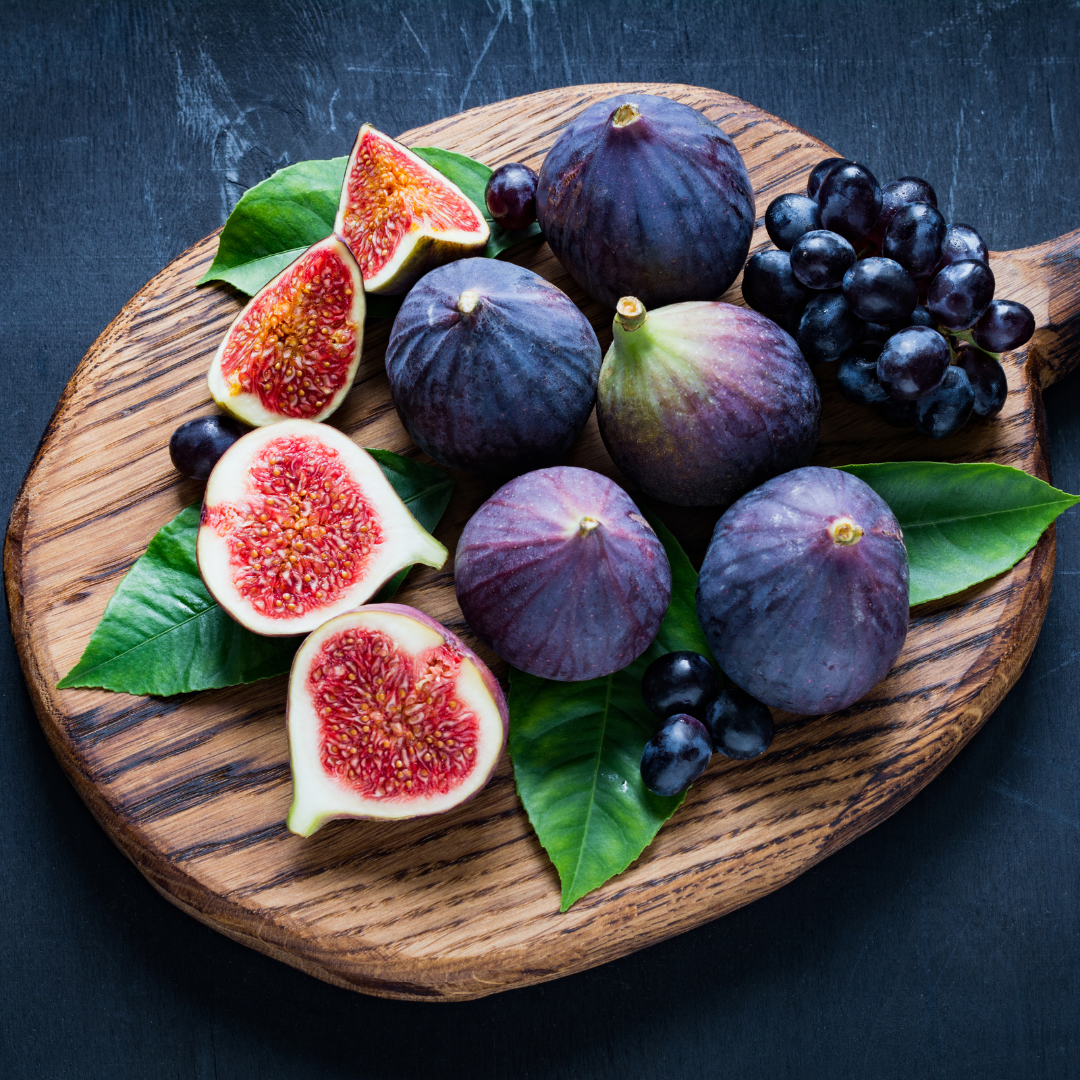
Highly concentrated source of minerals and vitamins in one bite
I love figs. I fell in love at first taste. It was a wine and cheese tasting at Sirromet Winery. It could have been the wine talking but the love affair started that day and it has never waned.
While bought figs are nice, nothing compares to growing your own and eating it straight off the bush. They are so lusciously sweet with a texture that combines the chewiness of their flesh, the smoothness of their skin, and the crunchiness of their seeds. Oh my, almost sensual.
Ficus carica is a large, broad-leaved deciduous tree with many unusual features. It usually bears two crops a year and its flowers are hidden on the inside of a pear shaped, fleshy receptacle which becomes the fruit which we call ‘fig’. Figs are pollinated by wasps but don’t need the wasp to form fruit so they are classed as self pollinating.
Figs are oh so tasty and very nutritious, thank goodness with the amount I eat! They have the highest amount of calcium of any fruit, and 100g of dried figs contains 16% of the daily recommended amount.
Figs are also an excellent source of dietary fibre. Fruit fibre has been shown to significantly lower the risk of breast cancer in postmenopausal women. It is also very filling and can help to take the edge off appetite.
Figs are also a good source of iron, magnesium, potassium, B vitamins, as well as vitamin K. Figs contain different types of antioxidants and have been shown in studies to raise antioxidant activity. Antioxidants mop up free radicals, which may contribute to the development of cancer, heart disease and the visible signs of aging by damaging DNA and other body systems. The riper the fig, the more antioxidants it contains.

Fig leaves are also surprisingly healthy. Several cultures use the leaves in cooking, particularly to wrap meats and fish. Studies have shown that an extract of fig leaves will increase insulin sensitivity, and may be useful for preventing diabetes. Studies on animals have also shown that fig leaves can reduce the likelihood of heart disease and possibly kill cancer cells as well.
Figs were such an important fruit crop of earlier civilisations in the Mediterranean region and Asia Minor that the Greeks even created laws forbidding the export of the best quality fruit. Figs were also revered in ancient Rome where they were thought of as a sacred fruit. According to Roman myth, the wolf that nurtured the twin founders of Rome, Romulus and Remus, rested under a fig tree.
So many reasons to grow a fig.
The real question is who can grow one?
Figs needs a mild, warm climate and grow best in a sunny situation protected from heavy frosts.
A full grown fig can be over 5 meters high and wide. Don’t worry, they can easily be pruned to a more manageable size without affecting fruit crop. They can grow in pots or the ground. If pots is your only option the dwarf variety ‘Figalicious’ may be your best option.
Pruning your fig is very easy as they fruit on new growth so you won’t ever have to worry about losing a crop. The best time to prune is in late winter. During the first few years, you want to try to create a strong central leader with a few healthy main branches coming off that. These main branches will produce new growth each year that's capable of bearing the weight of the fruit. You can trim up to 50% off the tree if necessary in the first year or two to create a strong healthy tree. You can prune every year if necessary as a well pruned fig can last hundreds of years
Similar to other fruit trees, you should remove any dead, broken or rotten branches. Then you remove any crooked or crossed branches. Figs can produce suckers at the base of the tree. It is important to trim these away, you want to encourage growth within the main plant.
Figs have a thick, white, sticky sap that will be released when trimming, it can quickly gum up pruners and other tools so always keep a cloth rag and solvent on hand to clean tools regularly. Always use sharp tools when pruning as blunt tools don’t cut cleanly and will leave the bare ends of wood jagged and frayed, and this can create entry points for pests and diseases. According to Thomas Zimmer Moon Planting Guide you should try to prune your Fig on a waxing moon to promote new growth on fertile days (water signs).
After pruning always fertilise with Organic Link and once new leaves start to form a fortnightly liquid fertilise with Triple Boost would be beneficial. All fruit trees are heavy feeders so I try to Organic Link my fruit trees every two to three months.
When you plant your Fig tree out make sure you use excellent quality potting mix if planting in pots, we use Searles Platinum Potting Mix. If planting in the ground I use Searles Garden Soil. I add more compost every year to my garden planted fig and mulch with Sugar Cane.
Fig Brown Turkey
A vigorous fig that bears medium sized, richly flavoured figs with a sugary taste, brown skin and pinkish brown flesh.
The crop is usually produced over a prolonged period from summer to late autumn. Eat fresh or dried or use in jams and preservatives.
Fig White Genoa
A good bearer of large sized, long conical shaped, pale green fruit, flesh is reddish-pink with sweet flavour.
Can bear two crops a year. Used for fresh fruit, drying and jam.
Fig Black Genoa
A large sized, conical shaped, fig with purple skin and red flesh that has a very sweet rich flavour.
Can bear two crops a year. Used for fresh fruit, drying and jam.
Figalicious
A compact, small to medium sized tree that produces an abundance of delicious dark red fleshed fruit with purple-green coloured skin in summer. In a large pot will reach 1.0m high x 1.0m wide
Get healthy this year and grow a fig today. By the way they taste great with wine and cheese!

Diospyros australis
What’s not to love about a beautiful native tree that work wonderfully as a feature tree or slow growing hedge that also produces edible fruit?
Diospyros australis, commonly known as Black Plum or Native Persimmon, is a small native rainforest tree found from south-east NSW up to tropical Queensland.
What’s not to love about a beautiful native tree that work wonderfully as a feature tree or slow growing hedge that also produces edible fruit?
Diospyros australis, commonly known as Black Plum or Native Persimmon, is a small native rainforest tree found from south-east NSW up to tropical Queensland.
During the cooler months Diospyros australis, produces plum-like berries. Berries are about 10mm in size, starting out yellow and turning black as they ripen. They are most edible when black and soft with a sweetness that makes them perfect for jellies, chutneys and jams.
Small cream/yellow flowers appear enmasse from October, and will self-pollinate. However it is sometimes advised to plant two or more trees to improve your chances of fruiting.
The fruit isn’t the only reason to grow one. I love the beautiful green glossy foliage. The leaves tend to have a yellow/green underside with a prominent yellow mid-vein. I would be using Diospyros australis instead of Syzigum australe for my hedge plantings.
Being a native rainforest tree, Diospyros australis prefers moist well composted soils. It performs best with protection from both wind and afternoon sun.
These trees can grow anywhere between 4 to 10 metres in the garden, but as they are slowish growing can easily be kept as a small bushy shrub or even in a large pot, trimmed to be a feature plant! I also found out they are known for their fire retardant properties, making them a worthwhile inclusion in your garden especially if you live in a bush fire zone.
The fruit and leaves of the Diospyros australis is said to have many medical properties. One property is helping to convert starch into energy and keep blood sugar levels in check, perfect for Diabetics. The fruit is said to also said to help relieve stomach pain, anti-scorbutic (high amounts of vitamin C) and diuretic. If you make your own vinegar from the fruit you can drink it to help reduce enlargement of spleen, diarrhoea, and those have urine retention problems.
This beautiful native tree, commonly called Burrpurr (Yolngu) by the First Nations, will become a must have in your garden.

Native Large Leaf Tamarind - Edible
Diploglottis australis, this beautiful native plant is commonly called Native Large Leaf Tamarind.
Diploglottis australis.
I love saying this Australian Native’s botanical name. It has such flow and yet the weirdest set of letters together.
Say it slowly the first time helps
Dip..lo..glot..tis Aus..tral..is
This beautiful plant is commonly called Native Large Leaf Tamarind.
In its natural habitat, along east coast of Australia anywhere from Proserpine (QLD) to Brogo (NSW), it can grow to over 35m tall. In cultivation, our backyards, it’s mainly used as a large shade tree. In best conditions it will usually grow to about 10m high and 3-5m wide.
There are so many things to love about this tree but honestly the thing I love the most is it’s leaves. I love trees with large leaves and this one has these large leaves that are covered in velvety golden brown hairs. Adding a bronzing effect to the overall greenness of the tree. Added to that the leaf veins are easy to see and the midrib is slightly raised. It’s truly a visual and textural leaf.
Not only does it have these amazing leaves it also has the coolest fruit!
The flowers are like hairy creamy white puffs that form in the Spring. Then from about January fruit starts to drop to ground when ripe. The berries, are two or three-lobed and are roughly about the size of a small fig fruit. They have a brown hairy outer casing and contain juicy, orange/red, edible pulp around a large brown seed.
The fruit is often sour to taste, but like the Asian Tamarind, may be enjoyed raw or processed into jams, jellies, sauces and drinks. It’s a great native food.
Diploglottis australis can be grown in full sun or part shade. It doesn’t like frosts or windy positions. It does prefer to have moist fertile soil but beggars can’t be choosers and can grow in a wide range of soils and conditions.
A good feed with a complete slow release organic fertiliser, like Organic Link, every three months would be greatly appreciated.
Diploglottis australis is a beautiful small native tree that would be an added bonus to any garden.

Apple Trees in Ipswich
Q. Apple Trees in Ipswich, is it possible?
A. Yes and no. Yes, they can be grown and I have seen some glorious ones that produce well. No, I personally think I would prefer to grow another type of fruit tree and leave apple growing to the climates better suited.
Q. Apple Trees in Ipswich, is it possible?
A. Yes and no.
Yes, they can be grown and I have seen some glorious ones that produce well.
No, I personally think I would prefer to grow another type of fruit tree and leave apple growing to the climates better suited.
My family love eating apples and we all know how good they are good for us.

A full-grown apple tree makes a good, shade tree for summer. It has showy spring blooms, colourful autumn foliage, naked for winter to let sunlight in and fruit!
Sounds like the perfect tree. So why don’t we grow more of them in Ipswich?
Well let’s first start by looking at the needs of Apple trees.
With over 5000 varieties of Apple the home gardener can grow you’d think you’d be able to find one that suits you best. There are large growing ones, small growing ones and even low chill ones.
All apples need moist, healthy free draining soil. They don’t like wet feet but are heavy feeders. Ipswich soils can be heavy and not very nourishing. You will have to check your soil type, improve your soil or buy an Apple best suited to pots.
Most apples bear best when there are two varieties nearby to pollinate each other. In fact, some apples have to be pollinated by a completely different variety in order to bear fruit. So you need to make sure you have the room for at least two trees (there are multi grafted ones but these don’t seem to grow as well). You also need to make sure your combination of trees is limited to varieties which are good bets for thriving in Ipswich and which flower at the same time.
Apples need cool-cold winters for fruit development – lots of chilling hours. Chilling hours means number of continuous hours a fruit tree needs to be exposed to effective winter temperatures for flower buds to break dormancy. This varies between varieties.
Most apple varieties need 500-1,000 chill hours but there are some low chill varieties available that need about 300-400 chill hours.
To check your chill hours you need to determine the average temperature for the coldest month (July). I found this great chart on Heritage Fruit Trees website that gives us an indication of chill hours to average temperatures.
Ipswich’s average temperature for July 2019 was about 15C (2018 was 16 and 2017 was 17). This means we can JUST grow the low chill varieties, maybe. Our problem in Ipswich is that we can get really cold one night, then have a hotter night, then a cold night. Chill hours need to be consistent.
Apple Trees also need to be correctly pruned to produce fruit. They need an open framework, meaning the main branches are spaced well apart so sunlight and air reaches all the way through the tree's canopy.
Now you’ve gone through all that, Apple trees can very susceptible to numerous pests and diseases especially in our humid climate. They are by nature a dry summer, cold winter plant. So be prepared to have a spray regime. It doesn’t matter if you prefer to use organic means or chemical, your trees will still need to be protected from pests and diseases.
So all these reasons are probably why Apple trees aren’t commonly grown in Ipswich.
Yes they can be grown and I have seen some glorious ones that produce well.
Two of the most popular varieties grown in Ipswich are Anna and Dorsett Golden.
I personally think I would prefer to grow another type of fruit tree and leave apple growing to the climates better suited but you can give it a try.
Apple (Tropical) Dwarf ‘Anna’
Anna is a low chill variety suitable for the subtropics. It is an excellent tasting crunchy apple similar to Red Delicious. Harvesting is usually January, February, March, November, December (weather dependant) but needs cross pollination, Dorsett Golden is believed to be one of the best to cross pollinators. The dwarf tree only grows to about 2-4m, can be pruned and kept in a large pot. Like all apples it is deciduous.
Apple (Tropical) Dwarf ‘Dorsett Golden’
Dorsett Golden is another low chill dwarf apple that cross pollinates exceptionally well with Anna. It has sweet yellow aromatic fruit that have a pink blush and firm white flesh. Harvesting is usually January, February, March, November, December (weather dependant). The dwarf tree only grows to about 2-4m, can be pruned and kept in a large pot. Like all apples it is deciduous.
Avocado
Grow your own Superfood at home. Avocados are easy to grow if you know how.
Did you know that avocados are the only fruit apart from olives to contain monounsaturated fats? Monounsaturated fat is a healthy fat. Yes there is a thing called healthy fats! Healthy fats help you absorb essential fat-soluble nutrients (such as vitamin E), reduce the risk of developing Type 2 diabetes, help maintain a healthy heart and promote healthy skin.
It’s not just the healthy fats that make avocados so good. There are nearly 20 vitamins and minerals in this nutrient dense fruit. Avocados can help keep your immune system healthy, support mental performance, combat tiredness and even support a good mood.
They are not only a delicious way to ensure you are getting optimum nutrition per day, research shows adding avocado to a salad can increase your ability to absorb nutrients from other ingredients.
But avocados can be expensive in the shops….. so let’s grow our own!
Avocados love warm tropical climates. While you can easily grow an avocado from seed it is not recommended as seed grown avocados may not fruit or fruit successfully every year. It is always best to grow a grafted avocado, grafted by a reputable grower.
Avocados can grow over 6m in perfect conditions. Many of us could not handle this in our backyards which is why we recommend the dwarf growing varieties of avocados or keeping your avocado tree trimmed.
Wutrz and Fuerte are our two favourite varieties for growing in this area.
Avocados don’t need another avocado to fruit as the flowers are botanically classed as ‘bisexual’, carrying both male and female reproductive organs. However having more than one is beneficial and having both Type A and Type B flower types is even more beneficial. They tend to fruit more vigorously when they have friends.
Avocado flowers open twice over a two-day period - the first day as a female and the second day as a male.
Type A avocado flowers are ready to be pollinated in the morning, but any blossoms flowering in the afternoon are releasing their pollen.
Type B therefore, release pollen in the morning and are ready for fertilising in the afternoon.
This means the crawling and flying insects trying to harvest the pollen don't always get to their female counterparts to fertilise the fruit. Luckily, the trees usually flower for up to a month, so don’t panic if you can’t find type A and Type B. Just one Type will be enough to get fruit. If you plan on feeding the neighbourhood getting Type A and Type B might be a good idea. Wutrz are a Type A and Fuerte are classed as a Type B both grow fantastic in Ipswich region.
When growing either of these trees make sure it’s in a full sun position, well draining soil and protected from frosts. We recommend using good quality garden mix like Searles Garden Mix or excellent quality potting mix like Searles Platinum mix.
The trees should be fertilized every three months with a good quality organic slow release complete fertiliser like Organic Link. A liquid fertilizer, like Triple Boost should be applied fortnightly through the growing season. A good liquid trace element mix like Bio-Trace should be given about twice a year. Plant health is very important for best fruiting results.
Avocado – Wurtz
Wurtz Avocado is a gorgeous small tree perfect for pots or small gardens. It naturally small and only grows to around 3m. While it may be small in statue it still produces a consistent, heavy crop of beautiful fruit! It has pear-shaped fruit with dark green skin and can fruit from August till October.
Wurtz are classed as a Type A pollinator so would be beneficial to plant a Type B Avocado.
Get your mini orchard going in your backyard today.
Avocado - Fuerte
Fuerte is marginally oily with a rich, creamy flavour with notes of hazelnuts and is often hailed as the tastiest of all avocados. This B-Type avocado not only improves the pollination of A-Type varieties such as ‘Hass’ and ‘Wurtz’, but it also produces delicious pear-shaped fruit of its own from winter into spring. It has easy to peel fruit that crops better every second year. One of the best cold tolerant avocardos.
Fun Fact : The Fuerte avocado got it’s name as it was the only variety to survive the great freeze of 1913 in Los Angeles, California. Fuerte, means “strong” in Spanish. This avocado cultivar built the Californian avocado industry until the 1930s when Hass took over as it had a thicker skin (not better tasting) and therefore could be transported better.

Clove Tree
Clove trees botanical name is Syzygium aromaticum. Clove are native to the Maluku Islands in Indonesia, but they have naturalised in many warm countries including Mexico, Kenya and Sri Lanka. Did you know that clove comes from the Latin word 'clavus', which means nail because cloves look like little nails! It has been in cultivation since 200BC!
Clove
It's a scent that goes hand in hand with Christmas.
Who remembers as a kid making oranges stuffed with cloves as decorations?
I'm not a huge fan of the smell of clove by itself but it does pack a huge punch in cooking and in energetics of essential oils. It also can slowly but surely kill mould spores.
There are many recipes out there for clove and mould removal, I like 1/4 teaspoon of clove bud essential oil (Syzygium aromaticum) to 1 litre of water. Shake and spray on affected surface. It can take numerous sprays before all the spores are killed.

Syzygium aromaticum and clove drying process
Clove trees botanical name is Syzygium aromaticum. In the past it's gone under a few different botanical names like Eugenia caryophyllata. Botanical names can change due to many factors the first reason is research. New scientific insights about relationships sometimes lead to changes in classification of plant groups.
Clove trees being a Syzgium are related to our native Lilly Pillys. Clove are native to the Maluku Islands in Indonesia, but they have naturalised in many warm countries including Mexico, Kenya and Sri Lanka.
Did you know that clove comes from the Latin word 'clavus', which means nail because cloves look like little nails! It has been in cultivation since 200BC! I love history information like this.
Clove trees are evergreens that grow to around 15m tall. They have smooth grey bark and long leaves that look like bay leaves. The flower buds initially have a pale hue, gradually turn green, then transition to a bright red when ready for harvest. Cloves are like the outside of the flower. The entire plant is fragrant and aromatic.
Clove trees grow best in a hot and wet conditions. So they usually aren't available in the Ipswich region. They can be grown up north. If you were able to acquire a clove tree it would need a ready supply of water and protection from the cold when young.
Cloves have a long history in food and many cultures have made it a yummy addition to many national dishes. It has also been used to flavour cigarettes and potpourri.
Cloves have also been used in tradional Chinese medicine and Indian Ayurvedic medicine for centuries.
Aromatherapists have used clove to help open our hearts to the beauty of possibilities. It helps us release emotional clutter that is controlling our lives. It helps us release the ties and attachments to material things and ideals about how our lives should be lived. It gives us an inner strength to move forward when we know we need to change.
Now is a great time is a great time to reflect and clean out the clutter that is holding us here - emotionally and physically.
I hope we can all be open to change and start to find simple pleasures in life and release the need to control things!!

All about Strawberries
Strawberry! Fragaria sp.
This relative of the Rose has delicate runners with charming flowers in white and shades of pink that makes Strawberries an attractive option for pots and baskets. Let’s be honest though we don’t grow strawberries for the flowers, we grow it for the delightful fruit that comes after the flowers!

My Grandfather’s Strawberries
Strawberry! Fragaria sp.
This relative of the Rose has delicate runners with charming flowers in white and shades of pink that makes Strawberries an attractive option for pots and baskets. Let’s be honest though we don’t grow strawberries for the flowers, we grow it for the delightful fruit that comes after the flowers!
Growing Strawberries is relatively easy pending conditions and the ever decreasing chance of pollination.
They need deep, rich and friable soil in a position that gets full to part sun. I always add some compost before I plant, never mushroom compost, as Strawberries like slightly acidic soil (pH of 6 – 6.5). My grandfather always mounded up his strawberry patch, left about 30cm between each plant and heavily sugar caned mulched the strawberry patch. The mulching helps prevent fungal diseases, reduces weed invasion and also stops the strawberry fruit from sitting on the bare dirt and rotting away.
Strawberries like moist soil but not really wet. They are very surface rooted so they need regular watering as they can dry out pretty quickly. Once you see the fruit forming you can ease up a little on the watering.
My grandfather would feed his strawberries with Organic Link and Triple Boost in beginning but as soon as the plants got big and leaves turned a lovely deep green colour, he would start to Silica and Potash every second week.

Strawberry Ruby Red growing great in a hanging basket
Crop rotation is very important with strawberries. It is recommended that you move your strawberries to a new patch, with fresh soil, every three years. My Grandfather would let his strawberries form runners at the end of the new seasons plants and direct the runners towards the strawberries new patch of ground. Then every two years he would pull up his old strawberries and let the ground lie fallow for a season or two. Strawberries shouldn’t be planted where tomatoes, eggplants, capsicums or chillis have been for at least three years as they have a tendency to pass on a plethora of fungal diseases.
While Strawberries are very easy to grow they can have a few problems.
Mould and fungus can be an issue, especially when the air is cold and there is water hanging around on the foliage. Best way to prevent this is to water in the early hours of the morning. Snails, slugs and birds can be an issue once the fruit start to form. You can use snail and slug pellets and for birds my grandfather used to use old cds (reflective things scare birds away). You can also use fruit protection netting.
I find growing strawberries in pots or hanging baskets works wonderfully and I don’t have any problems with snails eating my fruit. I use Platinum potting mix and fertilise the same as if they were in the ground.

'Vivipary' on a strawberry fruit
Sometimes a phenomena known as 'Vivipary' can occur on your strawberries. In a few words this just means that the seed is germinating before it is naturally shed as is the natural order of things. I have read of others who have attempted to grow these seedlings on but have not tried it myself. By all accounts each seedling grows on to be a normal healthy plant of the the mother plant.
Some of you may be asking why don’t we grow strawberries from seed?
Simple answer is some plants are just too much of a hassle to grow from seed and Strawberries would have to top this list. I have actually read they are one of the hardest plants to germinate by seed and it can take up to two years before the plant even contemplates producing strawberries.
One website gives this tip for germinating strawberry seeds “Tuck your strawberry seed packet inside a sealed plastic bag or airtight container and place in your freezer for 3-4 weeks. When you remove the bag or container, do not break the seal until it (and its living contents) have reached room temperature....... Opening the package too quickly may result in water condensing on the cold seeds, and this will reduce your chances of success.” Seriously, some plants are better off being bought ready made.
Trevallan stocks a few different strawberries, some are available all year, some are only available from May to July. My grandfather always said Autumn is best time to plant strawberries but really any time is a good time to plant something.
STRAWBERRY LOWANNA only available in 125mm pots or bigger
Lowanna is like the strawberry for giants. They can grow to about 30cm high and 30cm wide in comparison to a normal strawberry that will grow to about 15cm high. The fruit is also bigger than normal as the Plant growth is concentrated on fruit production rather than runner production (this means not as many baby strawberry plants). These are Australian Bred Strawberries that will grow in all zones. One of the best things about Strawberry 'Lowanna' is day neutral which means it fruits throughout the year (whenever the temperate is between 20-30C). So this means Strawberry 'Lowanna' can crop from October all the way through to late May normally.
STRAWBERRY REDLANDS JOY only available in 125mm pots or bigger
Another wonderful Australian bred Strawberry, Redlands Joy is a mid season variety. With exceptionally large sweet juicy fruit that shows some rain resistance, this variety will grow well in a sub tropical climate and is a very good performer in pots
STRAWBERRY SUGARBABY only available in 125mm pots or bigger.
Another mid-season variety with fruit usually ready to eat from early June. Fruit are exceptionally attractive red, glossy, conical, L to XL sized (20g), firm and resilient, with resistance to rain damage. Flesh is bright red, of low acidity, and excellent sweet flavour.
STRAWBERRY SWEETHEART only available in seedlings
This is an alpine type strawberry with white flowers, bearing large deep red, sweet fruit. Just your good old fashioned strawberry.

Strawberry Pinkie
STRAWBERRY PINKIE only available in 100mm pots
Pinkie produces medium, bright red fruit with an elongated shape and is also noted for its pink flowers. Only grows to about 15cm high
STRAWBERRY RUBY RED only available in 100mm pots
Ruby Red produces medium sized bright red fruit with an elongated shape and is also noted for its red flowers. Only grows to about 15cm high
STRAWBERRY SWEETIE only available in 100mm pots
Sweetie produces medium to large, bright red, bi-conical shaped fruit. This delicious tasting strawberry has high sugar levels, and is also very healthy. It has white flowers and only grows to about 15cm high.

Pomegranate
There are some foods out there that are extremely nutritious, Superfoods! Pomegranate's are one such food and you can easily grow them at home.
Ever heard of the term Superfood?
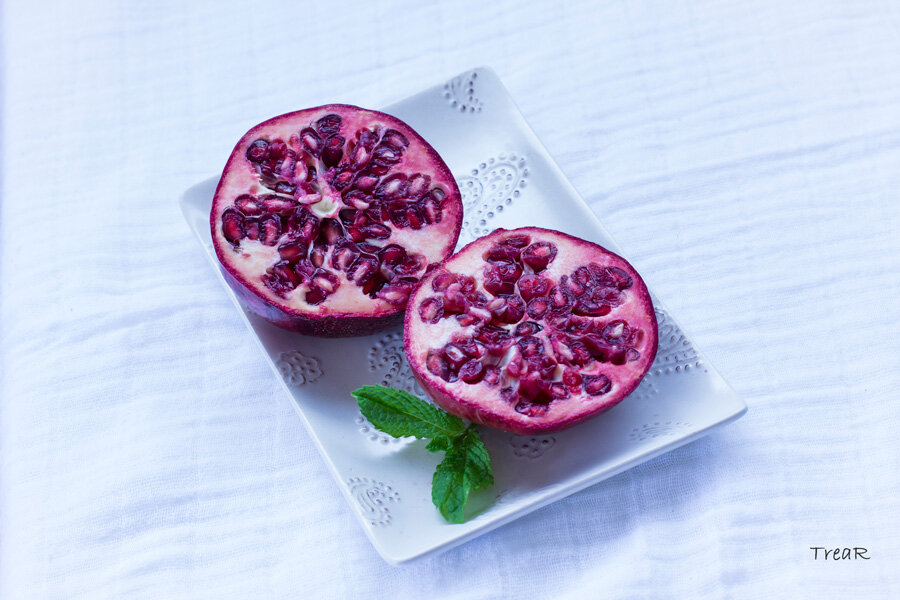
Pomegranate. A superfood and one of the most decorative fruit trees
The Macmillan Dictionary defines 'superfood' as a food that is considered to be very good for your health and that may even help some medical conditions. The Oxford Dictionary definition states a superfood is “a nutrient-rich food considered to be especially beneficial for health and well-being”.
In recent times the term Superfood believed to be a bit of a marketing term used to describe foods with supposed health benefits.
Whether you believe the hype, there are some foods out there that are extremely nutritious. Pomegranate's are one such food.
Since pomegrantes have been declared a Superfood they become highly sought after. There are a wide variety of health benefits associated with eating pomegranates. Some of the benefits are
helping to prevent heart disease, reduces strokes, and maintains good cholesterol levels.
Regular intake of pomegranate seeds helps fight gum disease reduces plaque, which means the seeds are a natural way to keep your teeth clean and white! Enjoy eating the seeds with benefits of having an amazing smile and pearly white teeth!
Pomegranate Seeds are considered a great source of iron.
Last but not least, pomegranate seeds are believed to be a natural anti-aging source and are widely used throughout the world. Keep yourself looking younger and healthier naturally.
But what do Pomegranates taste like?
They are a flavour like no other as you get a taste, aroma and mouth feel sensation. They are sweet and yet a little tart to taste. The aroma evolves from various 'woody', 'earthy', 'fruity', 'floral', 'sweet' and 'musty' notes and the mouth feel sensation comes from the seed hardness compared with the flesh softness. An amazing little fruit.
So this little Superfood sure packs a punch but do I really want to grow it?
Yes.
Pomegrantes are one of the most highly decorative fruit trees I have come across. The plants produce tangerine, orange, crinkly 8-petalled flowers from late spring to late summer. These are followed by the most extraordinary coloured and shaped fruit which appear like a shiny crown. These wonderful fruit start small and grow to the size of a tennis ball.
A Fruit tree perfect for pots
Pomegranate ‘Wonderful’ suits it name perfectly. This variety of pomegranate has become the world standard, noted for its rich red colour and piquant flavour. 'Wonderful' can be eaten as fresh fruit or juiced and has become popular as its seeds are less woody than others. Due to its amazingly beautiful flowers and fruit most people would think its an ornamental shrub.
This is this tough Mediterranean plant that is drought tolerant and prefers free draining soil. Pomegranates grow well in areas with cold winters and hot, dry summers. Ipswich can sometimes have wet summers so make sure your Pomegranate can stay high and dry. Pomegranates are very versatile and can also tolerate coastal conditions and frost. Water during fruiting to improve quality and fruit set. Plants are self-fertile but you get more fruit with friends. Fruiting season is usually February to March and in cooler areas can be decdious.
They can get to around 4m high so an open position is best. Trimming is acceptable and they prefer gardens over pots. when planting in the garden I did the hole twice as big as the pot and back fill with Searles' Garden Mix.
Pomegranates should be fertilized every three months, plant health is very important for best fruiting results. We use a good quality organic complete fertiliser like Organic Link. A liquid fertilizer, like Triple Boost should be applied fortnightly through the growing season. A good liquid trace element mix like Bio-Trace should be given about twice a year. It is recommended to tip prune them in July.
Now, have yourself a delicious cup of pomegranate seeds, snack away without feeling guilty!
Want another great Superfood to grow at home? Why not try Blueberries.

Lemons
A house is not a home unless it has a lemon tree growing. Sometimes it is considered a symbol of longevity, purification, love, and friendship. A house that has a lemon will always be safe and happy.
“Her kisses reminded me of lemon slices drizzled with sticky honey. Bitter, sweet and strangely irresistible.” Michael Faudet
While the exact origin of lemons is lost in the mists of time, it is said that citrus fruits were the dowry of Hera, the bride of Zeus, who kept them jealously hidden away in a blissful garden situated at the western end of the earth, where the sun dies every day and where lived the Hesperides (nymphs). Each of the three nymphs guarded her own fruit: Aigle tended the citron, Arethusa the lemon and Hesperethusa the orange, thus the Hesperides were the nymphs guarding the “golden apples” which Hercules stole from the garden and gave to mankind.
Thanks to Hercules the lemon is now grown all over the world in regions whose mild climate suits this evergreen fruiting tree.

Lemons are upright growers and can reach great heights. I think they are always better pruned to keep smaller. I like my fruit trees at a height I can pick the fruit so none are wasted
They love the full sun, great soil and mulch.
When they are in flower and fruit I find regular, consistent watering is best to help the fruit form to their best ability. During this time I will liquid fertilise with Plant Care to keep the tree healthy. I use Plant Care, as over fertilising can lead to bud drop.
I find all citrus, lemon included, are heavy feeders. When the tree is not in flower I fertilise my lemons with Organic Link fertiliser about every two to three months. I also alternate fortnight’s of liquid fertilising between Triple Boost and Silica and Potash.
Lemons like all citrus are prone to Citrus Leaf Miner and Leaf Curl. Click here to find more about these problems. They can also suffer from scale and I find adding neem oil to my fortnightly liquid fertilising really helps.
Lemons can grow in a pot but make sure it’s a very large pot or buy a dwarf lemon. They can also be trimmed after fruiting.
There are few different lemon trees.
Eureka
The best all round lemon
Grows well in all climates but hates cold snaps
It produces fruit almost every day of the year.
Relatively few seeds and small thorns.
Grows to around 4m tall but loves to be pruned
There is a Seedless version of Eureka called ‘Lemon Heaven’
Lisbon
Very high quality lemons with a thin skin, good juice and high acidity
Contain natural pectin so best if using for cooking
Can reach up to 8m high but can be pruned and has thorns
Once a year it produces a heavy crop of fruit in mid winter to early spring
Lemonicious
Improved dwarf form Citrus meyer
In a large pot, reaches around 1.5m x 1m
Fruit has low acidity and reduced bitterness
Very hardy and prolific
Its fruit are produced for most of the year
Most cold-tolerant of all lemons

We also stock Lemonade fruit trees (Citrus limon x reticulata).
Lemonade fruit trees are a citrus fruit that is a hybrid between a mandarin orange and a lemon, grown in Australia and New Zealand in the 1980’s. The fruit looks like a lemon, but can be eaten straight from the tree, just like a mandarin or orange.
It’s a lot sweeter than a lemon with a refreshing tang. It truly has to be tasted to be appreciated.
It makes a refreshing drink when juiced but it also works well in cooking when you need something a bit lighter than a lemon but a lime won’t do!
What lemon are you growing?

Blueberry
Blueberries are one of the yummiest to eat fruits but can be a little tricky to grow. Here’s some great tips to get yours looking and fruiting fantastically.
Hands up who has tried to grow a blueberry before?
Ok, now hands up who grew one successfully?
I know I have tried and failed. Not failed as in to death do us part. Failed as in I got sick of looking at a stick that had three blueberries on it!
I persevered. I can now give you some great growing tips on how I got mine to look so good.
Blueberries like a position that receives full sun most of the day but if you live in Ipswich, like me, and temperatures in Summer can reach over 40C, it is recommended that plants should get a little afternoon shade.
I have found growing my Blueberries in pots is a lot easier than the ground. They are an acidic loving plant and I find my local soil just isn't good enough.
I always use excellent quality potting mix, like Searles Platinum Potting Mix but add some (about a cup or two) course bark (10mm-25mm in size), usually just the Searles Orchid Bark is fine, to provide an open potting mix for root development. Blueberries produce masses of fine roots which mat together. Without an open potting mix all Blueberry varieties will only have a life of around 2-3 years in pots. This mix will extend the plants life well beyond this. Mulching the top of the pot is imperative to minimise drying out. Blueberries hate wet feet but fruit will taste bitter if they dry out too much. Mulch seems to help with both these problems.
Your Blueberry should be fertilized every three months with a good quality organic slow release complete fertiliser like Organic Link. A liquid fertilizer, like Triple Boost should be applied to the foliage fortnightly through the growing season. A good liquid trace element mix like Bio-Trace should be given about twice a year. Plant health is very important for best fruiting results.
I have grown a number of different Blueberries in the past. My current favourites are Blueberry Burst, Sunshine Blue and Gulf Coast.
BlueBerry Burst

Saying I'm excited about BlueBerry Burst would be an understatement. This Australian bred, naturally dwarfing evergreen blueberry (1m high and 75cm wide) is said to grow and fruit WELL anywhere in Australia.
Blueberry ‘Burst’ has been successfully trialled in both hot and cold environments throughout Australia and humid and dry areas too.
I have been successfully growing mine in a large pot in Ipswich for years and my friends grow theirs at Mt Marrow. Both have suffered through hot, humid summers, cold wet winters as well as hot dry summers, cold dry winters.
It has exceptionally large fruit and a very high yield and it still tastes amazingly sweet kind of like, you know a blueberry!
For those of you living in a warmer climate fruiting should start in July and those in a cooler climate around late august. Fruiting concludes within 3-4 months.
Sunshine Blue Blueberry

Sunshine Blue has it all. This semi-dwarf, versatile shrub features showy hot pink flowers that fade to white in spring, with delicious, sweet blue fruit during summer.
A wonderful shrub that is easily grown, producing abundant amounts of fruit for eating or use in pies and sauces.
Sunshine Blue tolerates higher pH soils better than many other blueberries and it is self-fertile.
It is a Southern Highbush with the low chilling requirement of 150 hours making it suitable for the subtropics, but is also surprisingly cold-hardy and a wonderful addition to patios and gardens in cooler areas.
Flowers October to November
Gulf Coast
Gulf Coast Blueberry is an exceptional hardy Blueberry, perfectly suited to the subtropics.
It has excellent flavour, firmness and good picking scar. A vigorous upright bush with moderate toughness and good tolerance to root rot.
It has a late fruiting season October, November, December.
While Blueberries are self pollinating they always produce better and more abundantly if they are surrounded by friends!

Fruit Tree won't hold its Flowers
Why won’t my citrus tree give any fruit? It has heaps of flowers, then they just shrivel up and drop off. Bud drop can be due to a few reasons
Why won’t my citrus tree give any fruit? It has heaps of flowers, then they just shrivel up and drop off.
That’s rather annoying isn’t it!
Bud drop can be due to a few reasons
Bud drop reason number one
First and most common is your trace elements in the soil are out of whack. Fruit trees are heavy feeders. So sometimes if we don’t feed them enough of one thing or too much of another the trace elements can go haywire.
I’m no soil scientist so I prefer the easy way of dealing with this.
If I haven’t fertilised in a while, I give my tree a good fertilise with Organic Link (Organic slow release fertiliser)
If I have fertilised I would give it a liquid feed of Plant of Health Eco Friendly Fertilisers Bio Trace. Bio Trace is a product that contains all the major and minor trace elements so I don’t need to be a soil scientist. It gives the soil what it needs and wees out the rest.
With the Bio Trace I Mix it up in water and foliage spray the tree until all the leaves are dripping in Bio Trace. I would then give it another Bio Trace in about a months time. For more information on Bio Trace Click Here
A few weeks later I would also give my tree a handful of sulphate of potash and water it in. Sulphate of potash helps make things flower and fruit.
Bud drop reason number two
Let’s say you did all that and your buds still fell off. How regularly are you watering your tree. Irregular waterings, extended periods of dry or wet, unusual fluctuations in temperature can also make the buds drop off.
Bud drop reason number three
When your tree was in flower you gave it some fertiliser. Excess nitrogen can cause buds to drop. If you want to fertilise your fruit tree when it’s in flower use a product called Plant Care. It will feed your fruit tree but won’t overdo it with unnecessary nutrients.
Bud drop reason number four
Your tree is too young or too unhealthy to hold the flowers. Go back to problem one and start there.

Passionate about Passionfruit
Trevallan stocks Passionfruit Panama Red and Gold through the warmer months of the year. This is one of the easiest fruiting plants to grow that will always repay you in kind with an abundance of fruit, no matter where you live.
I grew up having an abundance of passionfruit.
Fresh from the vine and frozen pulp in off season.
My grandparents lived at One Mile and back then heavy frosts would descend every winter and the Passionfruit vine would be almost destroyed. Every spring we’d cut it back and allow it to reshoot and take over a section of fence once again. Some years Pop would plant seeds he got up from the previous years plant or he would plant a whole new plant if the previous year’s plant did not perform to his standard.
As he got older and I too got older it was left up to me to trim and rebuild the passionfruit trellis. These plants can climb as high and as wide as you allow them. Some places say allow an 8m spread!
For us the rule was as high as we can grab and as wide as we can go!
It was always a race to get to the ripe fruit before the birds. My grandfather had set up elaborate contraptions to keep the birds out with jingle bells, cds and glowing eye owls but the cockatoos are sneaky buggers and they would still steal the fruit. Lucky for us there was always plenty to go around.
My children grew up with fresh passionfruit and one day I heard my daughter tell her friend .... “oh it’s been too dry that’s why the pulp isn’t as nice this time!”
My grandfather always grew Passionfruit Panama Red. It has a red skin and is very sweet as long as it gets regular water. It’s also self pollinating. He tried Passionfruit Panama Gold one year but he declared that the only real difference is that one has gold and one has red skin. Panama Gold is believed to have an almost creamier taste but pop couldn’t tell and told me that the yellows look wrong so back to red it was!
In most parts of Queensland passionfruit grows so well we don’t need grafted or cultivated varieties.
My grandfather would always make sure his passionfruit were planted into excellent quality garden soil. He would fertilise them with Organic Link at beginning of the warm weather and we would alternate liquid fertilising them with Triple Boost or Potash and Silica every fortnight.
We did try a Banana Passionfruit (Passiflora tarminiana) vine one year but found it just did not perform anywhere near as well as the Panama varieties. Banana Passionfruit has bright pink flowers and its banana like fruit ripen from autumn to winter. It tastes sweeter than the traditional black passionfruit with a hint of banana. It is native to higher altitudes in South America so can withstand longer periods of cold. In many areas of Australia and New Zealand it is now considered a weed.
Trevallan stocks Passionfruit Panama Red and Gold through the warmer months of the year. This is one of the easiest fruiting plants to grow that will always repay you in kind with an abundance of fruit, no matter where you live.

The best way to eat Mulberries is Naked
Mulberries can be trimmed to keep them manageable or left to grow wildly huge in your yard. There is nothing better in life than sitting under a mulberry tree, stuffing your face with juicy red mulberries. If you do decide to trim, leave your trimming to late autumn as the fruit will be on the new growth come spring.

The best way to eat Mulberries is Naked ... to save staining your clothes!!! 😉
Mulberries are one of the best fruiting plants on the planet!
If you don’t like mulberries, you are crazy!!
It’s also one of the fastest growing fruit trees, producing an abundance of excellent fruit every year and is virtually pest and disease free.
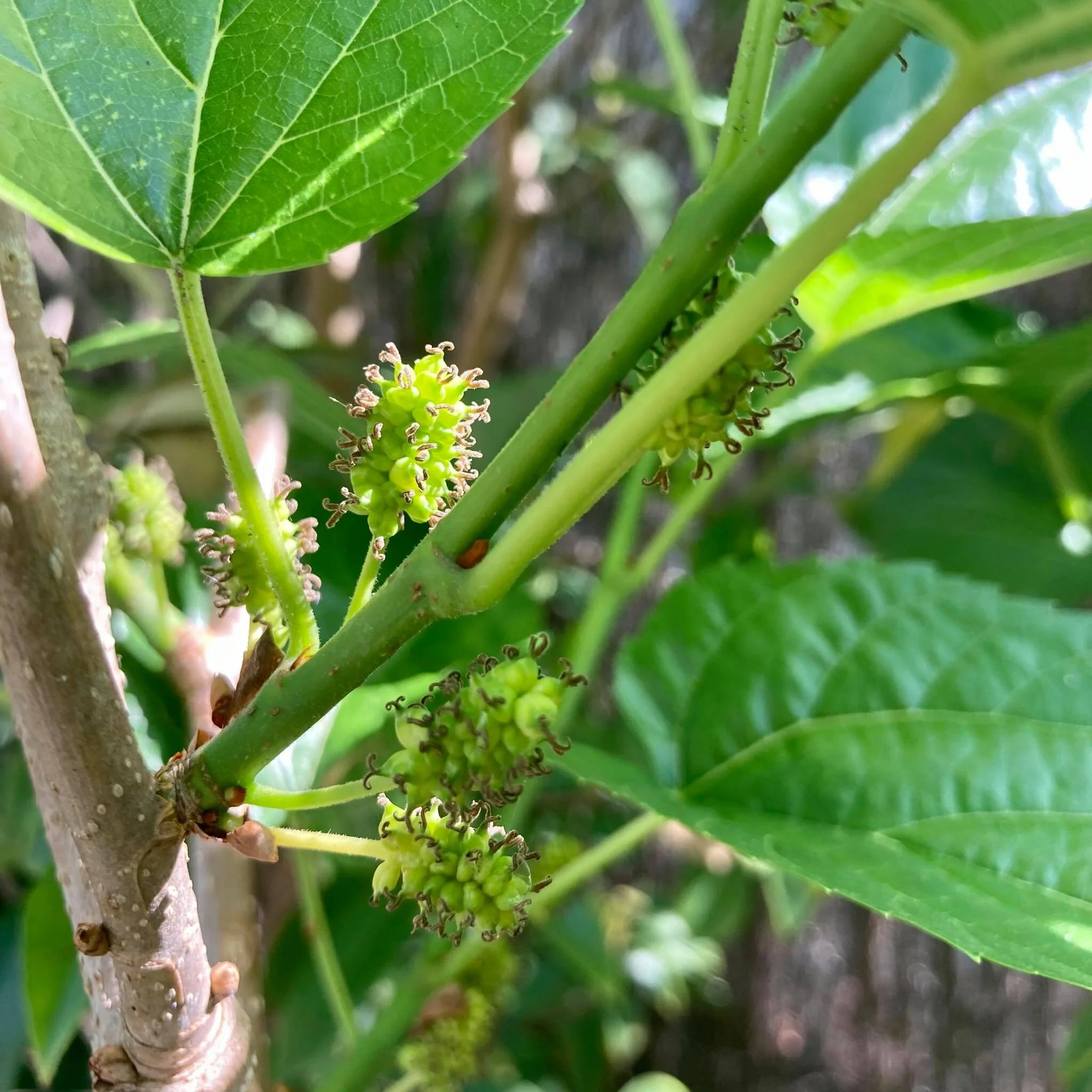
It is one-half responsible for the finest fibres known to man, silk and can be grown nearly everywhere that has soil.
Mulberries can be feature trees they have beautiful large dark green foliage that turns yellow in autumn, making the tree an attractive specimen for large gardens. In areas that get cold it can be completely deciduous.
Mulberries can be trimmed to keep them manageable or left to grow wildly huge in your yard. There is nothing better in life than sitting under a mulberry tree, stuffing your face with juicy red mulberries. If you do decide to trim, leave your trimming to late autumn as the fruit will be on the new growth come spring.
Mulberries will handle most situations you throw at them but I have found that the fruit tastes better when they are taken care of. Every season it’s a good idea to add manure based compost and organic mulch (sugar cane) around the base. A regular water during the fruit forming stage helps keeps the fruit juicy.
If you have a lot of wildlife around your house we suggest you net your tree.
We currently have
MULBERRY BLACK Large elongated, richly coloured fruit ripens from red to black
Can grow up to 12m but can be kept small
Prune after fruiting or late Autumn
Dwarf Black MulberryLarge elongated, richly coloured fruit ripens from red to black
Can grow up to 3m but can be kept smaller
Suitable for pots and gardens
Prune after fruiting or late Autumn
And for those of you that can’t handle Mulberry stains we have
MULBERRY WHITE Clusters of small white to pink, edible fruit
Can grow up to 12m but can be kept small
Prune after fruiting or late Autumn
How do you eat your Mulberries?

Growing Nectarines in Ipswich
The first nectarine was grown spontaneously as a bud sport. Which means that it grew morphologically different from the rest of the plant, which was a Peach tree. The basic difference is that Peaches have a fuzzy skin, while in Nectarines the fuzzy skin gene is recessive. Trevallan usually stocks Sunnybelle Nectarines, a low chill variety.

Did you know that the Nectarine is often referred to as a miracle plant.
The first nectarine was grown spontaneously as a bud sport. Which means that it grew morphologically different from the rest of the plant, which was a Peach tree.
The basic difference is that Peaches have a fuzzy skin, while in Nectarines the fuzzy skin gene is recessive.
Trevallan usually stocks Sunnybelle Nectarines. Sunnybelle Nectarine is a medium sized fruit with white flesh. It’s skin is bright red with light sugar speckles.
Normally nectarines don’t grow well in some parts of Ipswich but this guy is a low chill nectarine and it has been said to have one of the best flavours of a low chill nectarine range.
When we talk about some fruit trees we need to talk about chilling hours.
Chilling hours means number of hours a fruit tree needs to be exposed to effective winter temperatures for flower buds to break dormancy. This varies between varieties.
Most nectarine varieties need 700-900 chill hours but there are some low chill varieties available that need about 150-400 chill hours.
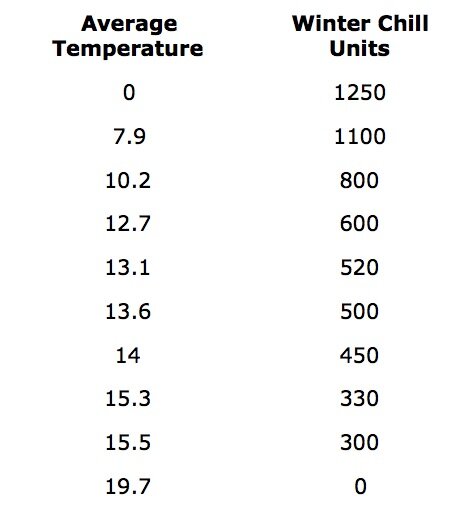
To check your chill hours you need to determine the average temperature for the coldest month (usually July). I found this great chart on Heritage Fruit Trees website that gives us an indication of chill hours to average temperatures.
Ipswich’s average temperature for July 2019 was about 15C (2018 was 16 and 2017 was 17).
So this means that if our average is between 17-15 degrees this means our chill units sit around 300. So we should be able to grow these nectarines without any hassle.
Sunnybelle can get to around 2-4m and can be grown in large pots with excellent quality potting mix (we recommend Platinum Potting Mix) or in the ground. If planting in the ground make sure your soil is excellent quality (we recommend Searles Garden Soil). For fruit trees I tend to dig my holes at least two to three times as big as pot in comes in and backfill with excellent quality garden soil. They much prefer full sun but can handle a little shade during summer. It is best to give these guys a good fertilise with Organic Link as soon as the weather warms up. I find alternating my fortnightly liquid fertiliser between Triple Boost and Potash and Silica helps the plant stay healthy and produce more fruit.
These guys tend to be deciduous, this means they drop their leaves in colder months. So don’t panic if during cooler months your tree doesn’t look fantastic.
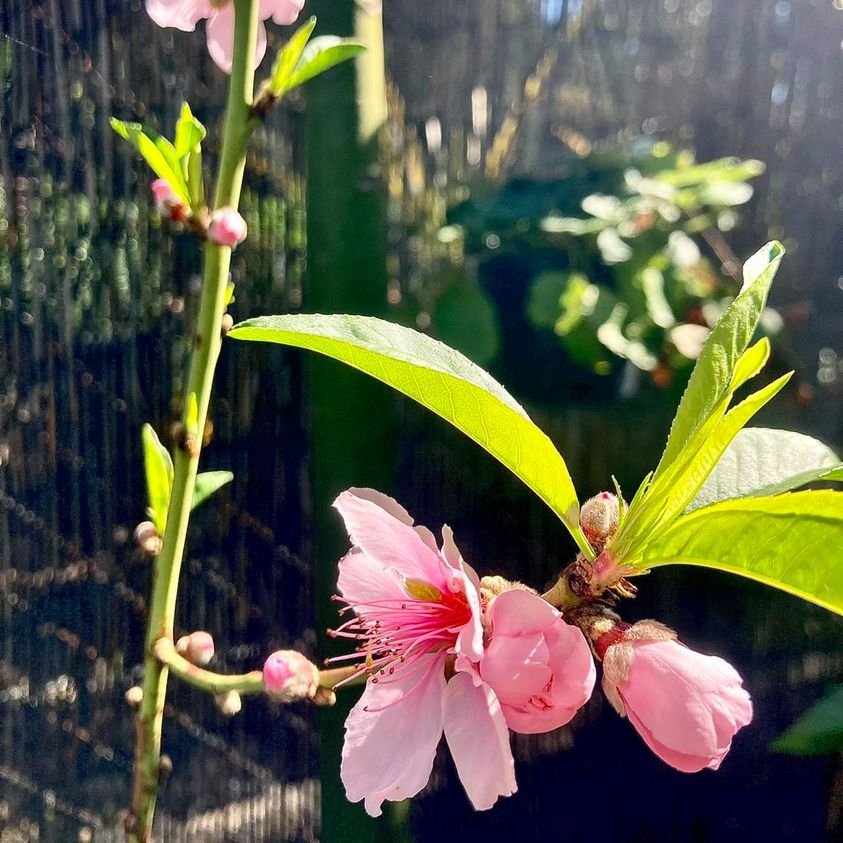
Sunnybelle Nectarines have beautiful pink flowers that appear as soon as it starts to get warm. They will sometimes appear before leaves even start to form after their winter shedding. Did you know that the nectarine flower symbolises a desire to do nice things for others and encourage sweet words. It is also about enhancing gentleness and softens our character, bringing out our best intentions. Sunnybelle Nectarines are self pollinating (they don’t need another Nectarine to help produce fruit). The fruit will start to form usually by October.
Nectarines are really susceptible to fruit fly so I would also buy a fruit fly exclusion net so you can not only grow yummy nectarines but actually enjoy your nectarines!
Sunnybelle Nectarine is a great fruit tree for any size garden.

Backhousia citriodora
Lemon Myrtle (Backhousia citriodora) is an absolute delight for any garden. It is a small growing tree (around 3-5m) with leaves that release a strong lemon scent when crushed or after rain. I love breaking off a few and throwing them on the lawn before I mow. It makes mowing so much more enjoyable!
One of my all time favourite scented foliage plants is the Backhousia citriodora (lemon myrtle).
It is endemic to subtropical rainforests of central and south-eastern Queensland, Australia, with a natural distribution from Mackay to Brisbane.

Unfortunately the lemon myrtle was very hard hit by the myrtle rust and the commercial availability of the smaller plants became very limited. You see, Backhousia citriodoras don’t grow true to form from seed, cutting grown is always best but Backhousias are notoriously hard to grow from cutting. Understand now why there can be a shortage some years! Older established trees are readily available and now the smaller ones are slowly coming back on the market.
Lemon Myrtle (Backhousia citriodora) is an absolute delight for any garden. It is a small growing tree (around 3-5m) with leaves that release a strong lemon scent when crushed or after rain. I love breaking off a few and throwing them on the lawn before I mow. It makes mowing so much more enjoyable!
New growth is tinged red and in summer you’ll get abundant clusters of creamy white flowers which are loved by butterflies and bees.
Lemon myrtle is quite versatile and can be used as a screen, hedge or feature tree and is suitable for most gardens and courtyards. It loves the full sun and can handle the cold and dry once established. It is naturally thick and dense and doesn't require trimming to keep it neat.
A good fertilise with Organic Link on turn of every season would be appreciated by the tree.

Long, hot day calls for an icy mineral water (maybe with a splash of vodka) and some Backhousia citriodora leaves for a great tang.
The leaves, flowers and seeds of lemon myrtle are all edible and can be used in cooking to flavour biscuits, cakes, bread, pasta, meat and herbal teas. It can be also use to scent your own soaps or bath bombs.
Lemon Myrtle essential oil is also available. It has an intense lemony aroma which is uplifting and invigorating and is great to use when studying or just needing a gentle nudge into the fast track of the day.
One of my all time favourite natives. Trevallan always tries to have these amazing natives in stock

Macadamia tetraphylla
Macadamia tetraphylla is native to southern Queensland and northern New South Wales and is now classed as a vulnerable in the wild. Macadamia tetraphylla has a higher sugar content than Macadamia integrifolia. Having a higher sugar content makes it really yummy when eaten raw but can lead to burning when used in baking.
Did you know that Macadamia tetraphylla was the first Australian native food plant to be grown by non-indigenous Australians as a commercial crop?
What’s even cooler is that seedlings from this original plantation were used as rootstock for grafted modern varieties of Macadamia Nuts well into the 20th century.

Macadamia tetraphylla from Royal Botanical Garden in Sydney
In recent times commercial growers have stopped growing Macadamia tetraphylla and preferred to grow Macadamia integrifolia (Macadamia Nut most of us know and love). The reason for this is the Macadamia tetraphylla has a higher sugar content than Macadamia integrifolia. Having a higher sugar content makes it really yummy when eaten raw but can lead to burning when used in baking.
Macadamia tetraphylla is native to southern Queensland and northern New South Wales and is now classed as a vulnerable in the wild.
Macadamia tetraphylla has long, pendulous nectar rich pink flowers that the insects and birds adore. They also have a delicious scent. After the flowers woody, rounded fruits appear which contain the edible seeds.
It can grow to 18m in best conditions but can be kept smaller. It is best suited for people who have space and is an excellent shade tree.
These trees are best growing in the ground. Best planting advice is dig your hole twice as big as your pot. Back fill with excellent quality garden soil and plant your tree, fertilise with Organic Link when planting. I like to fertilise all my natives on turn of every season (every three months) with Organic Link. It usually takes around three months for a tree to fully establish itself. Keep water and liquid fertiliser up to your tree over this time and allow it to get the best possible start in life.
We have some of these beauties in stock now