Find Us:
77 Fernvale Rd
Brassall QLD 4305
(07) 3201 8630
Open:
Tue-Sun 9am - 4pm

My Flowers bring all the Bees to the Yard
Here are a list of some of my favourite bee attracting plants. When I say bee I mean all bees. Some plants will attract European bees and some will attract native bees. I don’t discriminate, I love them all and want all of them visiting my garden! This list is not exhaustive it’s just a list to get you started.
Question
I would love some suggestions for bee attracting plants that will be happy in clay soil and Ipswich climate. We have plenty in flower at the moment (mostly bottle brush and lillipilli) but would love some suggestions for other times of the year. We do have some citrus which flower periodically too.
Trevallan’s Answer

Clay soils can be a problem for many plants. I do always suggest your cultivate your soil as much as possible with compost, Searles Soil Activator and/or Plant of Health’s Liquid Soil Microbes. Always use an organic mulch like sugarcane or tea tree as the more it breaks down the better the soil becomes. Always use organic fertilises like Organic Link or Pelletised Five In One.
Switch to organic pesticides.
There are some plants that just won’t grow for us in the ground and that’s ok. Use groups of large pots in the garden. I love placing pots around in my garden, it gives the garden another dimension and it allows me to have things I may not be able to grow if it was growing in garden soil. Hanging baskets are another great way to add a new dimension to your garden. You don’t have to hang hanging baskets on your patio .... use large tree branches and hang them in your garden.
Also it’s a great idea to have shallow water dishes around the garden so the bees can rehydrate. Yes, you have to fill them regularly in the heat but the little things we do for wildlife goes a long way and they will repay you by pollinating your vegetables and fruit!
Some of the mentioned plants are seasonal and some are forever. Some will grow better in part sun and some can handle all day sun. Some are trees, some are small. All will grow in Ipswich.
So here are a list of some of my favourite bee attracting plants. When I say bee I mean all bees. Some plants will attract European bees and some will attract native bees. I don’t discriminate, I love them all and want all of them visiting my garden! This list is not exhaustive it’s just a list to get you started.
Bacopa
Camellia Sasanqua
Grevilleas
Lavenders
Fruit trees
Salvia
Daisies
Buddleja
roses
Penstemon
sunflower
marigold
Dandelion
Calendula
Pentas
African Blue Basil
Most herbs left to flower
Alyssum
Murraya paniculata
Jasmine
Aster
cosmos
Lemon Balm (Melissa officinalis)
Borage
Native hibiscus (Alyogyne huegelii)
Guava
Macadamia
Backhousia citriodora
Eucalyptus
Strawberries
Blueberries
Any Syzygium but my favourite is Cascade
Leptospermum
Callistemon
Westringia fruticosa
Waterhousea floribunda
Buckinghamia celsissima
And this list can go on and on.
I also have Eden Seeds bee flower seed mix, which is mixture of flowering plants. Cultivate soil, throw out seeds and see what comes up.
HAVE FUN
“If the bee disappeared off the surface of the globe, then man would have only four years of life left. No more bees, no more pollination, no more plants, no more animals, no more man.” Albert Einstein

Macadamia tetraphylla
Macadamia tetraphylla is native to southern Queensland and northern New South Wales and is now classed as a vulnerable in the wild. Macadamia tetraphylla has a higher sugar content than Macadamia integrifolia. Having a higher sugar content makes it really yummy when eaten raw but can lead to burning when used in baking.
Did you know that Macadamia tetraphylla was the first Australian native food plant to be grown by non-indigenous Australians as a commercial crop?
What’s even cooler is that seedlings from this original plantation were used as rootstock for grafted modern varieties of Macadamia Nuts well into the 20th century.

Macadamia tetraphylla from Royal Botanical Garden in Sydney
In recent times commercial growers have stopped growing Macadamia tetraphylla and preferred to grow Macadamia integrifolia (Macadamia Nut most of us know and love). The reason for this is the Macadamia tetraphylla has a higher sugar content than Macadamia integrifolia. Having a higher sugar content makes it really yummy when eaten raw but can lead to burning when used in baking.
Macadamia tetraphylla is native to southern Queensland and northern New South Wales and is now classed as a vulnerable in the wild.
Macadamia tetraphylla has long, pendulous nectar rich pink flowers that the insects and birds adore. They also have a delicious scent. After the flowers woody, rounded fruits appear which contain the edible seeds.
It can grow to 18m in best conditions but can be kept smaller. It is best suited for people who have space and is an excellent shade tree.
These trees are best growing in the ground. Best planting advice is dig your hole twice as big as your pot. Back fill with excellent quality garden soil and plant your tree, fertilise with Organic Link when planting. I like to fertilise all my natives on turn of every season (every three months) with Organic Link. It usually takes around three months for a tree to fully establish itself. Keep water and liquid fertiliser up to your tree over this time and allow it to get the best possible start in life.
We have some of these beauties in stock now

Beaded Chandeliers and Gourds
Sharon walked into the shop one day, jeans, boots and work shirt. She looked like she’d rode into town on her horse. I soon found out she’d been out working her horses all that morning. She tentatively asked if I’d like to see some of her work, she described them as hanging ornaments…. what she showed me blew me away.
Beaded Chandeliers was a more adapt description. Made from recycled necklaces and special beads. Each piece handmade and designed even the wrought iron holders were made by Sharon’s friend especially for her chandeliers.
These Chandeliers are so hard to photographer so I can’t ever really show you the true beauty of them but here is a little video of them … I have mine situated near a lamp and at night I love watching the shadows play on my walls.

Alocasias
Alocasias are fast becoming a must have indoor plant. You will need a bright or really well lit area in your home for these babies. They tend to turn their leaves to face the light, so not great for dark areas.
Alocasias are fast becoming a must have indoor plant, but can it really survive in everyone’s home?
Alocasias are a tuberous growing plant, generally found in the tropics. They dislike the cold and if planted out in a garden can die down during our colder months and reshoot in the spring.
You will need a bright, or really well lit, area in your home for these babies. They tend to turn their leaves to face the light, so they’re not suitable for dark areas.
During summer, these plants appreciate you creating a little humidity bath for them. I read that sitting them in a dish filled with pebbles and water helps. The pebbles keep the roots from sitting in water, but the constant water supply increases humidity around the leaves. During winter, it’s best to let these guys dry out between waterings.
Alocasias hate to be over potted, so try to let it get really potbound before you repot it and only ever pot up to the next size.
A liquid fertilise with Triple Boost and Neem Oil once a fortnight would be appreciated. Mixing it up into a spray bottle and drenching the leaves, on top and underneath is preferable and fertilise with Organic Link (organic, complete fertiliser) at the turning of every season (every three months).
Every stunning plant needs some time out, so when my Alocasias look a little sad, I usually just place them in a shady spot in my garden and wait until they are looking amazing again.
I have found that they are susceptible to mites, yet if I remember to spray them weekly in summer, with a mixture of neem and liquid fertiliser, I can usually stop the infestation before it begins.
For me personally I have found that Alocasias grow fantastically in my garden and they are used as features either in mass plantings or single forms. For gardens that are in a lot of shade these plants have striking foliage and stems that really scream “look at me!”. Sometimes flowers aren’t the only way to provide your garden with bursts of colour.
Some of my favourite Alocasias
There are so many different varieties of Alocasias around these days that you will slowly become addicted to collecting them all. These are just some of my favourites that are commonly available.
Alocasia brisbanensisCommonly called Cunjevoi. This plant is native to our Brisbane region. It's a clumping plant that can grow up to about 1.5m in height with large, green, spade-shaped glossy leaves. The best part about this plant is that it has a fragrant flower and juicy sweet smelling, red berry like balls. It can be used as a marginal or bog plant in full sun but it also grows beautifully indoors, in full shade on a patio or in a garden.
Alocasia ZebrinaThis is one of my favourites with very long green arrow-shaped leaves and long white stems that are striped with dark markings like a little zebra. Can get up to 1.5m. Wow factor.
Alocasia amazonica 'Bambino' 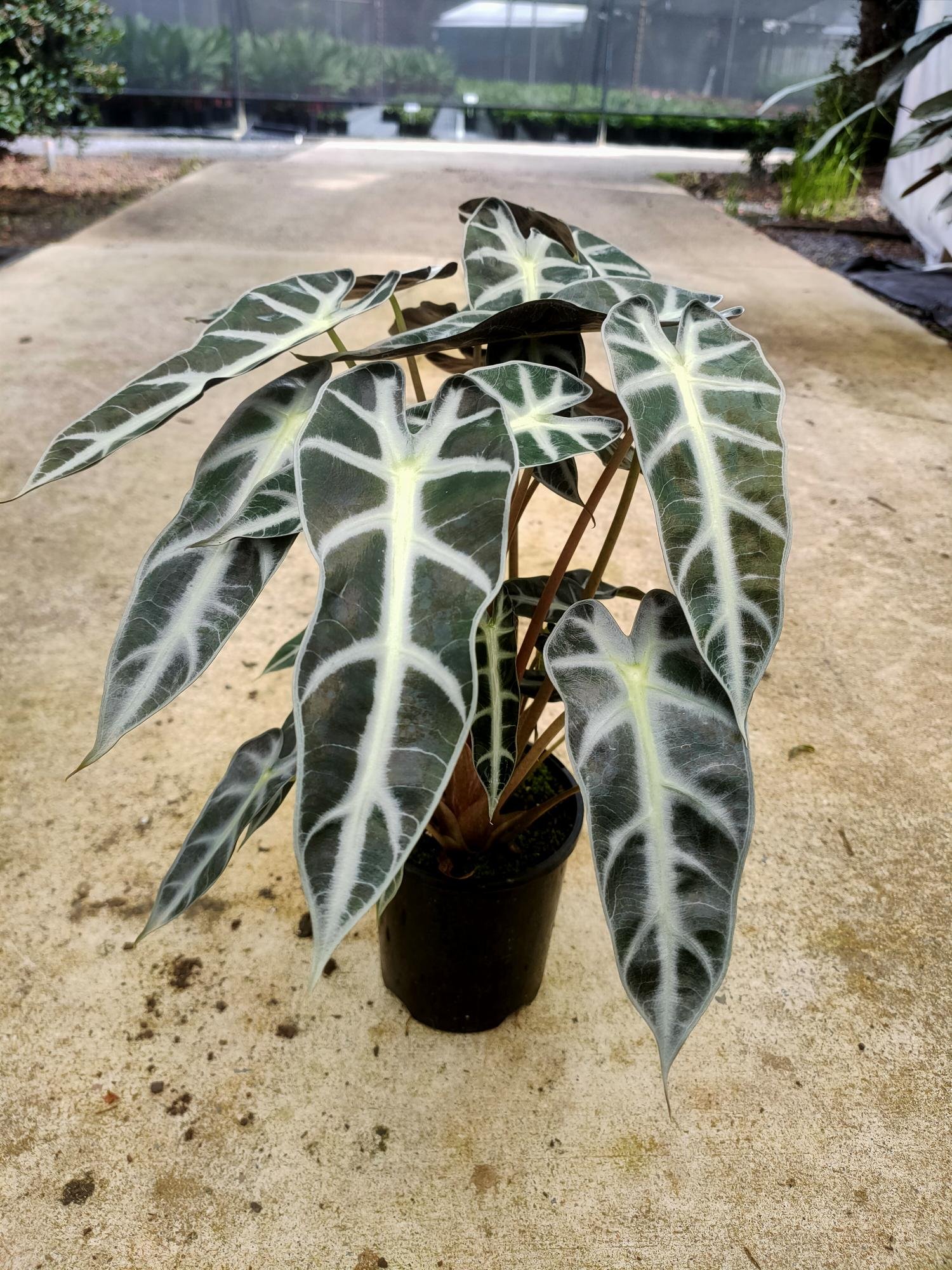
Alocasia Bambino
The say everything is cuter when in miniature. Bambino is a beautiful baby Alocasia, with slender deep green (almost black) leaves and dramatic white veins. This little guy will only get to about 30-40cm high and wide. Perfectly sized for showing off on your kitchen table or as a border plant in the garden.
Alocasia macrorrhiza 'Stingray'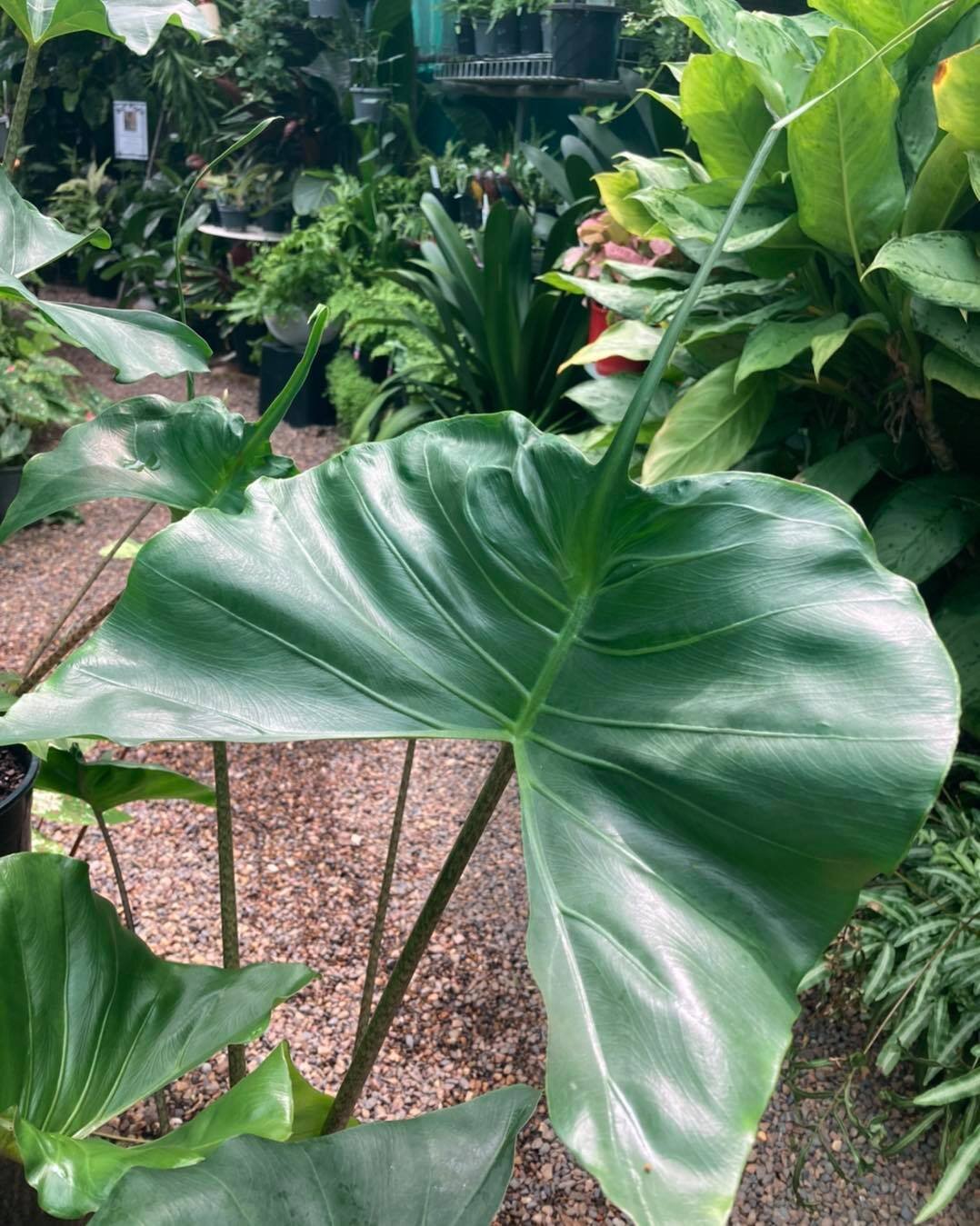
Alocasia macrorrhiza 'Stingray'
What makes this plant a must have? Well, firstly it looks cool and funky. It has unique green, stingray shaped leaves that sit upon striped stems. Really who wouldn’t want this inside to stare at all day long?
Alocasia sarawakensis ‘Yucatan Princess’ I could dive deep into the depths of Yucatan Princess’ leaves all day. She has red wine coloured stems and dark thick green leather-like leaves. I have found in low light situations her red wine stem turns the purest white which is kind of cool too.
At full growth, her stems will be about 3m long and her leaf can get to over 1.5m long! In pots she may not reach this size, but she will still be very impressive.
Yucatan Princess can stand on her own in a large container commanding attention as an indoor or shade garden focal point. She also makes friends easily and mixes nicely with other plants. I have her multi planted at the moment with Peperomia ‘Red Edge’.
I’m thinking when mine grows big I’d love to have her potted at the front door with some Rex Begonias and a walking iris around her base. I know she won’t mind sharing the spotlight.
Alocasia reginula, the Black Velvet AlocasiaAlocasia reginula, the Black Velvet Alocasia is exotic and elegant. It reminds me of Cleopatra and ancient Egypt for some reason. I want to display this beautiful plant in a gold pot with some long tapered candles in gold stands ... all dark and moody.
Alocasia reginula has thick heart shaped black velvet leaves with iridescent silver veins. The leaves grow about 15cm long and 5cm wide. They sit atop a short fleshy stems and rarely get above 20cm in height.
Finding this native of the Southeast Asian Jungle used to be rare, but nowadays due to tissue culture, he is commonly found in shady gardens and indoors.
Alocasia baginda 'Dragon Scale'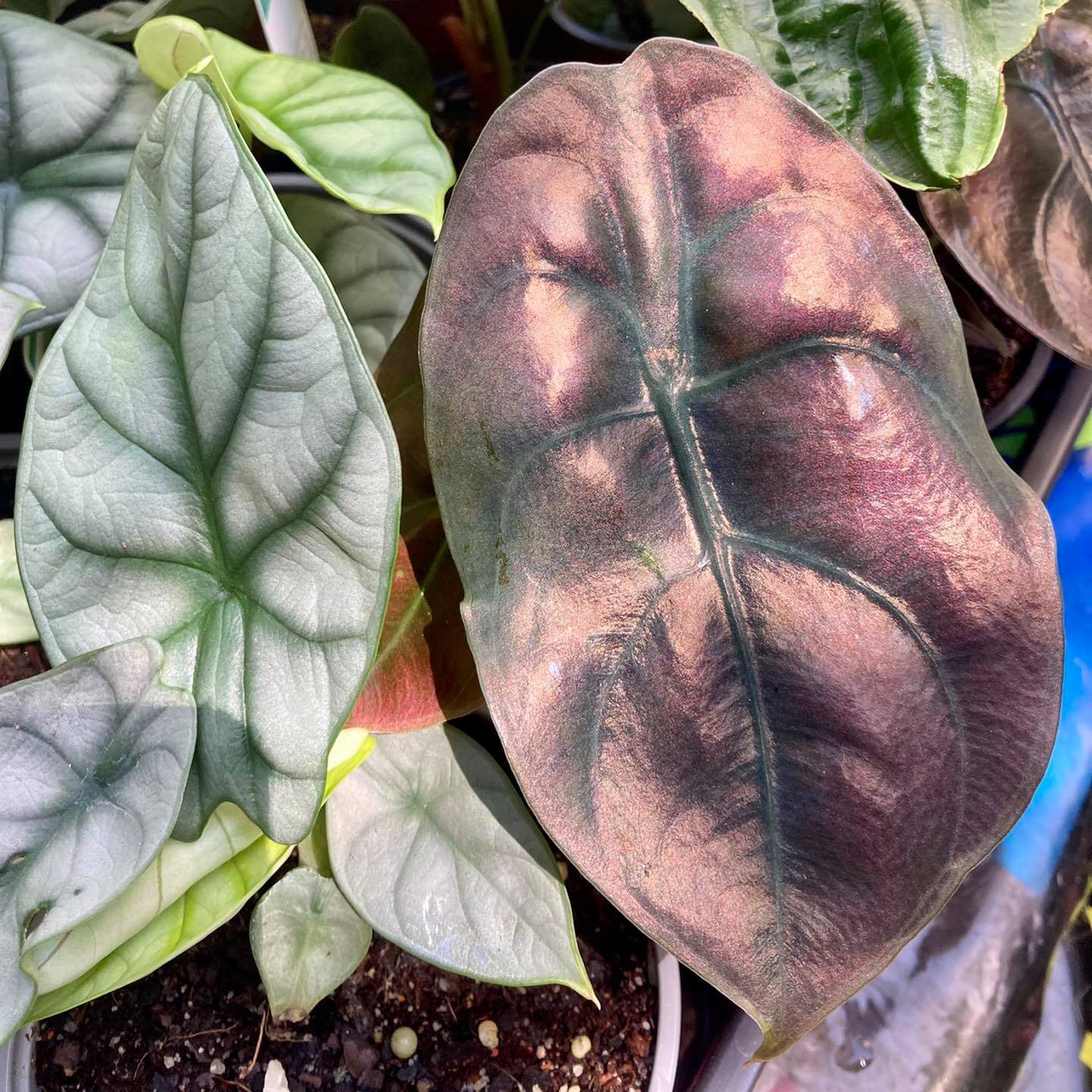
Alocasia baginda 'Dragon Scale' and Alocasia cuprea 'Red Secret'
The Alocasia Dragon Scale looks like something out of a fairy tale with shimmering, reflective, textured foliage that is so tough and pliable it appears crafted from, well, dragon’s scales.
Alocasia Dragon Scale is a cultivated variety of Alocasia baginda, which is native to the tropical forests of Borneo. This Alocasia is a smaller grower and its leaves only tend to get to about 60cm long. In perfect conditions the leaves can get to about 1m, with a 50cm spread.
Alocasia cuprea 'Red Secret'Alocasia cuprea 'Red Secret's has incredible rich, shiny, bronzey red foliage. These guys are relatively slow growing, taking ten years to reach maturity and then only reaching full height in perfect conditions. In most instances cuprea will only get to about 50cm high and 30cm wide. If you are lucky though, their leaves can reach about 1m and they will clump up to about 80cm.
Xanthosoma Lime Zinger While technically not an Alocasia many people do call Lime Zinger an Alocaisa so I’m throwing it into the mix here. Xanthosoma Lime Zinger is a stunning plant that features lime green heart shaped foliage. With each individual leaf capable of growing up to 50cm long and it’s stems can up to 1.5m long, this plant is guaranteed to add some WOW to pots or the garden!

Anthurium ambianum
Most anthuriums we see today are a form of Anthurium ambianum. This form can handle the cool (though it hates the frost) and low-light conditions. In warmer areas, these grow well outside in the full shade or you can grow them indoors.
Anthurium. One of my favourite indoor plants.
Most anthuriums we see today are a form of Anthurium ambianum. This form can handle the cool (though it hates frost) and low-light conditions. In warmer areas, these grow well outside in full shade, or you can grow them indoors.

They have beautiful, luscious green foliage and incandescent flowers that are usually shades of reds, pinks and whites. You can sometimes get purple and black, but they are not always available.
I find most people commonly refer to these as the "red peace lily" as they have a similar flower. Some call them flamingo flowers which I love and I'm pretty sure why this is my daughter’s second favourite plant (lipstick is her first).
The best thing about anthuriums is they flower most of the year and profusely flower during the warmer months. I have had a white one inside, flowering since Christmas, it has only now decided to have a short break.
Anthuriums can be used in pots, in the ground or in terrariums (pictured). Anthuriums are naturally semi- epiphyte and they can grow on rocks or trees. If growing in a pot, I find they don't like to be over potted or continuously potted up. They quite like their roots to fill the pot and be pot bound. They like a good quality, free-draining potting mix. If you do need to pot them up, it's best to let them rest outside for a month or two afterwards.
Anthuriums don't need a lot to drink and they don't like to sit in a saucer full of water. One big drink is better than lots of little ones, as they can also suffer from brown leaf tips like Spathiphyllums.
To keep them continually looking good and putting on a great display, fertilise with Plant of Health Eco Friendly Fertilisers Organic Link about every three months and a fertilise of granular sulphate of potash, usually once weather has warmed up, around late August. I also like to keep their leaves free from dust so every few weeks I take them outside and give it a liquid feed (and shower) with Triple Boost Liquid Fertiliser.
Anthuriums are very versatile plants but they can be rather slow growing and this makes them a great, long-lasting feature plant for most indoor situations.
In the past, these guys have had a bit of a bad rap due to us over-loving them, but I think it's time we added some flowers to our indoor gardens with Anthuriums.

Philodendron Mican
I love Philodendron Micans as they have lovely deep green almost black velvety, heart-shaped leaves that are iridescent. On the backside is a deep beautiful red colour. t. It loves hanging down from the top of a bookshelf and being forgotten about but I’m also training one up a coir fibre pole as it’s perfect for skinny places in home where I need height without bulk.
Philodendron Micans are my new favourite indoor plant and have almost surpassed my love of pothos!
The botanical name for these guys is a bit of a mouthful- Philodendron hederaceum var. hederaceum, so although I love using botanical names, I think in this instance, I’ll stick to Philodendron Micans.

These guys are native to Tropical America and Mexico, so they love the humidity that we get here in summer.
They are a semi-epiphytic, so it likes good free draining soil and doesn’t like wet feet at all.
I love these plants as they have lovely, deep green almost black velvety, heart-shaped leaves that are iridescent. On the backside, is a beautiful, deep red colour.
The leaves don’t tend to grow bigger than about 8cm wide and the plant climbs very quickly. The nodes are deeply packed with roots and can be easily propagated.
I’m really impressed with the versatility of this plant. It loves hanging down from the top of a bookshelf and being forgotten about but I’m also training one up a coir fibre pole as it’s perfect for skinny places in home where I need height, without bulk.
My house has limited light and I’m finding it does okay in dark spots, as well as really well-lit areas.
Like all my indoor plants I find these guys really appreciate a liquid feed fortnightly. I use Plant Care one fortnight and Triple Boost the next.

Rhaphidophora decursiva, Dragons Tail
Rhaphidophora decursiva. In it’s native environment it climbs up things like trees and rocks using its aerial roots to grip to the trunks or surfaces of rocks. In a pot inside I suggest you get a chunky iron bark stake or a nice trellis for it to climb up. We had a stake at home and ours has twinned itself around it, to form a thick green pole.
I am loving the Rhaphidophora decursiva, Dragons Tail.
Now, I don’t just love this plant because it has a really cool name ... well I kind of bought it because really who doesn’t want a plant called Dragon’s Tail? However, it’s actually turned into one of my favourite plants because it’s so easy and looks amazing.
Rhaphidophora decursiva, native to the tropical forests of India and Southeast Asia and is classed as a climbing vine. In it’s native environment, it climbs up trees and rocks using its aerial roots to grip to the trunks or surfaces. In a pot inside, I suggest you get a chunky iron bark stake or a nice trellis for it to climb up. We had a stake at home and ours has twined itself around it, to form a thick green pole.

The leaves are a dark, lush, shiny green. When the leaves are young, they have an arrow shape but as they get older each leaf splits into parts forming a dragons tail!
I have found this plant grows well inside in bright places, but will also tolerate low light conditions. I am growing mine in a corner where I have struggled to grow other things and it’s doing well.
Dragon Tails are drought tolerant and don't require a lot of water. It’s one of those plants we can love to death, so make sure you allow the soil to dry out between waterings. I fertilise mine every three months with Organic Link and spray the foliage every fortnight with Triple Boost.
I sometimes forget how hardy this plant is, I think because it’s one of those plants that is so easy to care for.
If I could narrow my favourite, easy care, indoor plants down to a top ten, Dragon Tail’s are without a second thought on that list.

Muehlenbeckia platyclada
Muehlenbeckia platyclada comes from the tropical regions of New Guinea and Solman Islands. In its natural habitat it can handle sun but needs lots of moisture and humidity. I have found an exceptionally well lit indoor spot is perfect for this plant.
Muehlenbeckia platyclada
Say that three times really quickly!
It’s actually not that hard to say... I’ll break it down and then you can say it fast!
mule-en-beck-e-a
Plat-eh-clad-a
This strange looking plant has taken my heart and I can’t for the life of me work out why.
A few years ago we stocked this strange plant no one had ever heard of.. This was back when I used to try and convince you all having indoor plants was cool!

It was at the time when indoor plants had to be thick and lush and oddities weren’t accepted.
But alas, it wasn’t cool back then to buy ‘kooky’ indoor plants. Of course, nowadays everyone wants Kook and this plant has all the kook you can handle!
Muehlenbeckia platyclada used to be called Homalocladium platycladum and has some pretty ordinary common names like tapeworm plant, so we will keep it scientific today.
Muehlenbeckia platyclada comes from the tropical regions of New Guinea and Solman Islands. In its natural habitat it can handle sun, but requires a great deal of moisture and humidity and I have found an exceptionally well-lit indoor spot is perfect for this plant.
This plant is all Kook as it’s green stems are actually flat, as in 2d, and it’s usually leafless. These leafless flat stems branch out and weave their way up, forming a tall, bushy mass of green odd shaped ribbons. If it does form leaves, they are very little and alternate up the flat stems, with white with pink tinged flowers in spring.
These guys grow best when regularly looked after. You know the drill... fortnightly liquid feeds and three monthly granular feeds. Regular water, but not sitting in water. Best quality potting mix and given they can reach about 1-2m high and wide, I would regularly prune them out to keep them a little bit tidier .
These plants are very versatile and if you get tired of them indoors, move them outside. Jerry Coleby-Williams mentioned a while ago that he uses these plants for Victorian period horticulture-themed garden beds in the Palace Garden in Sydney Botanic Gardens.
I’m not sure pictures really do the plants Kook status justice, so if you want something really cool for your indoor space, simply call into Trevallan as we have them in stock now

Rhipsalis Disocactus
Rhipsalis are an interesting plant as it’s belongs to the cacti genus but don’t really behave how we would expect a cactus to behave. They hate full sun, the much prefer a warm shady spot and they like a little moisture around them. In their natural habitat you would find them in the tree canopy. So I find growing them inside, in a small pot in which they can ultimately hang down the sides is perfect.
The other week I bought a Rhipsalis Disocactus, or Bits’n’Pieces, and I must admit it was love at first sight.
Although I have heard other, less savoury, names for this plant, such as Cockroach Legs and Alien tentacles ... I think I’ll stick to Bits’n’Pieces

The name comes from the fact it has all these odd shaped leaves and hairy tentacles protruding from the main stem and I guess the aesthetic of the plant is a bit all over the place. The one pictured is only a young plant, so it’s not quite at ‘alien’ stage.
I actually love its’ weirdness and even though it doesn’t have any real leaves, it still feels lush and is the perfect fit for a lush, tropical rainforest look.
In all honesty, I’ve been in love with Rhipsalis for a while, but this is the first one I’ve bought home and I plan on bringing home a few more!
Why? Firstly, I think they are a fantastic indoor plant that have really small roots, meaning I can keep them in my smaller planters. Secondly, although Rhipsalis belong to the cacti genus, they don’t really behave like a typical cactus. Funnily enough they hate full sun, and much prefer a warm, shady spot, with a little moisture around them. In their natural habitat, you would find them in the tree canopy, so I find growing them inside, in a pot with sphagnum moss, in a position which they can ultimately hang down the sides, is perfect.
Bright, indirect light is perfect for them- imagine the dappled shade that a rainforest canopy would provide. I find that like most indoor plants, they don’t like to be over watered, so just give them one big drink, drain and then let them dry out. I water mine about once a week in summer, to once a month in winter as this is when Bits’n’Pieces are basically dormant, so it is best to slow down your watering at this time, especially if your house gets really cold.
If your houseplant collection needs a new kooky addition, then this is definitely the plant for you.

Monstera adansonii
Monstera adansonii and Monstera adansonii ‘Monkey Mask’, Both of these adansonii’s have dark green leaves’ that have small holes inside the leaf literally looking like a piece of Swiss cheese.
Monstera adansonii
and
Monstera adansonii ‘Monkey Mask’

Both of these adansonii’s have dark green leaves that have small holes inside the leaf, so they literally look like a piece of Swiss cheese.
The original adansonii has a very trailing habit and looks fantastic hanging down off a shelf, or in a hanging basket. It can also climb, but given its soft stems, it is often used as a trailing plant.
Monkey Mask seems to be more compact and bulkier than his step brother. I have found he seems to want to fill the pot first, and then have a little bit of a trail. His trail doesn’t go as far as the original adansonii and I find the leaves are fatter too.
The differences are hard to notice, unless both plants are side by side, but they are both great indoor options and have similar requirements.
Like most monsteras, these guys love a free draining potting mix. Some people even suggest adding some chunky bark to help keep the soil aerated. I also like to add a layer of sphagnum Moss on top of my pots to help keep humidity levels up.
Monsteras are semi epiphytic, meaning they hate being drowned, or sitting in a pot with wet feet. One big drink and dry out is how I water mine.

I think a regular liquid fertiliser is best for these plants and just a little and often seems to be the key. I like to give mine a good misting about once a fortnight with Triple Boost Liquid Fertiliser. If we have a dry summer, or if the house is closed up during winter and the air is really dry, I mist the leaves every couple of days to help with humidity.
I have found these guys love bright, indirect light, so placement right near a window is best, but not in direct sunlight. These guys absolutely hate being left in the dark and I have found that they will tell you very quickly if they don’t like a spot. I took one home and in about two days it went from healthy plant to yellow leaves and drooping. I moved it to a brighter position and boom, within a week it was like a new plant.
Adansonii’s could easily find a home in your home, so why not add one to your indoor plant collection?
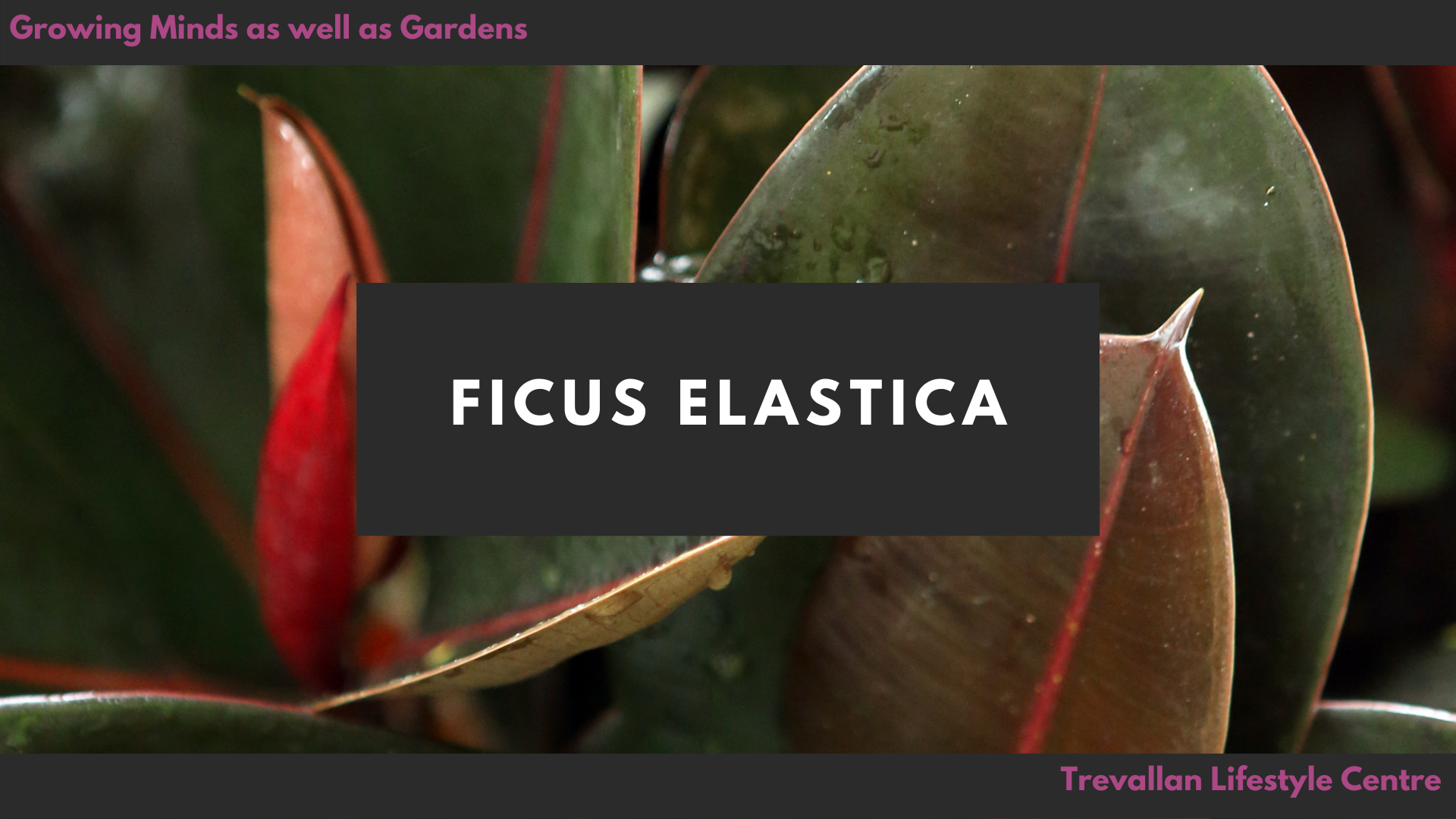
Ficus elastica
Ficus elastica is in my eyes a brilliant indoor plant and for me no where near as temperamental as the fiddle leaf. It’s one that was showing it’s worth when house plants were cool in the 70s.
Like all ficus, these bad boys are grown to make a statement. Huge glossy leaves make this plant look fake or too perfect.
Sometimes when a plant is so popular you seem to forget about its’ older brothers and sisters, the ones that have been around longer and proven their worth time and time again, but because their baby brother is the ‘new kid on the block’ they get forgetten!

This is exactly what happen to the Ficus elastica, the older brother to Ficus Fiddleleaf!
Ficus elastica, is in my eyes, a brilliant indoor plant and nowhere near as temperamental as the fiddle leaf. It’s one that was already showing its worth when house plants were cool in the 70’s.
Like all ficus, these bad boys are grown to make a statement and the huge, glossy leaves make this plant look fake, or too perfect.
Like the fiddle leaf, they can grow large and impressive in a pot and unless you have acreage, never plant them in a garden.
The ficus is impressive for many reasons. Firstly, the leaves are so big and glossy and although this may highlight the dust sitting on them, they’re still stunning to look at.
Secondly, I love the way the lead unfurls and interestingly, the leaves develop inside a sheath or meristem. I have found it is usually a brighter colour, than the existing leaf and grows larger as the new leaf develops. When the leaf is finally mature, it unfolds and that sheath drops off the plant.
Thirdly, they look impressive even as a small, young plant. It’s the type of plant you know will grow bigger and older and do great things.
Fourthly, it comes in a range of colours that suit any household. Currently, we have Burgundy and Ruby. Burgundy has such a deep red leaf it almost black and Ruby is a mix of pinks, whites and greens.

Ficus elastica is quite an easy plant to care for and can grow well in low light, or well lit situations. The worst you can do is give it too much water. Also, sudden changes in temperature can make them cranky, but they don’t take long to bounce back.
As this is quite a large growing tree, once it reaches your desired height, it’s a good idea to start trimming, otherwise you’ll end up living in a tree house! I find trimming the side branches off helps keep it neat and dense.
These guys also love a good quality potting mix and a fertilise with a complete, organic slow release fertiliser about every three months and I liquid fertilise once a fortnight. To keep the leaves shiny, I tend to use a Petroleum Oil based product. I spray the leaves and then wipe it off with a cloth. Spider mites and scale can also be a problem, but the Petroleum Oil based insecticides, or neem oil work really well in combatting this.
I am really in love with the ficus at the moment and can’t wait to get some more going at home.

Aeschynanthus marmoratus
Aeschynanthus marmoratus had a dark green oval shaped leaf with these amazing veins of maroon. What’s even better is the bottom of the leaf is slightly cooler than the top. It’s like it was made to hang in a basket.
Aeschynanthus marmoratus.

This amazingly gorgeous trailing plant is up there in my top ten foliage plants. It’s not out there, it’s subtly sexy and I think that’s why I love it so much.
Aeschynanthus marmoratus had a dark green oval shaped leaf, with these amazing veins of maroon. What’s even better is the bottom of the leaf is slightly cooler than the top. It’s like it was made to hang in a basket.
The foliage really is stunning, but it also flowers with the kookiest green tubes!
Seriously, how could you not want this plant?
I found that at home this plant survived well on basically no care or attention from me! It loved a well lit area, with lots of air flow. What astounded me (and shouldn’t have) was that it tripled in size the moment I started caring for it. I repotted it in some excellent quality potting mix, gave it some fertiliser, watered it regularly and boom, my baby suddenly took off. So, although it might not like to be over-loved, it definitely appreciates some regular care and attention.
These plants also love the humidity and can handle a little bit of heat ... so you know that window that gets actual morning sun directly, this guy is the perfect plant for that area. Remember to not over water him though, as he hates wet feet.
Mine has got a great trailing habit and it’s in a hanging basket and hangs down a good 50-60cm and is about 60cm wide.

I am honestly so in love with this baby and excited to share him with you finally ..
Even better is that Aeschynanthus in general are on the non toxic to animals list, so are perfect for those that own animals that like to destroy their plants ...
I am definitely a foliage girl and this one is almost as high on my list as Caladiums, so call into Trevallan today and see my new favourite indoor plant!
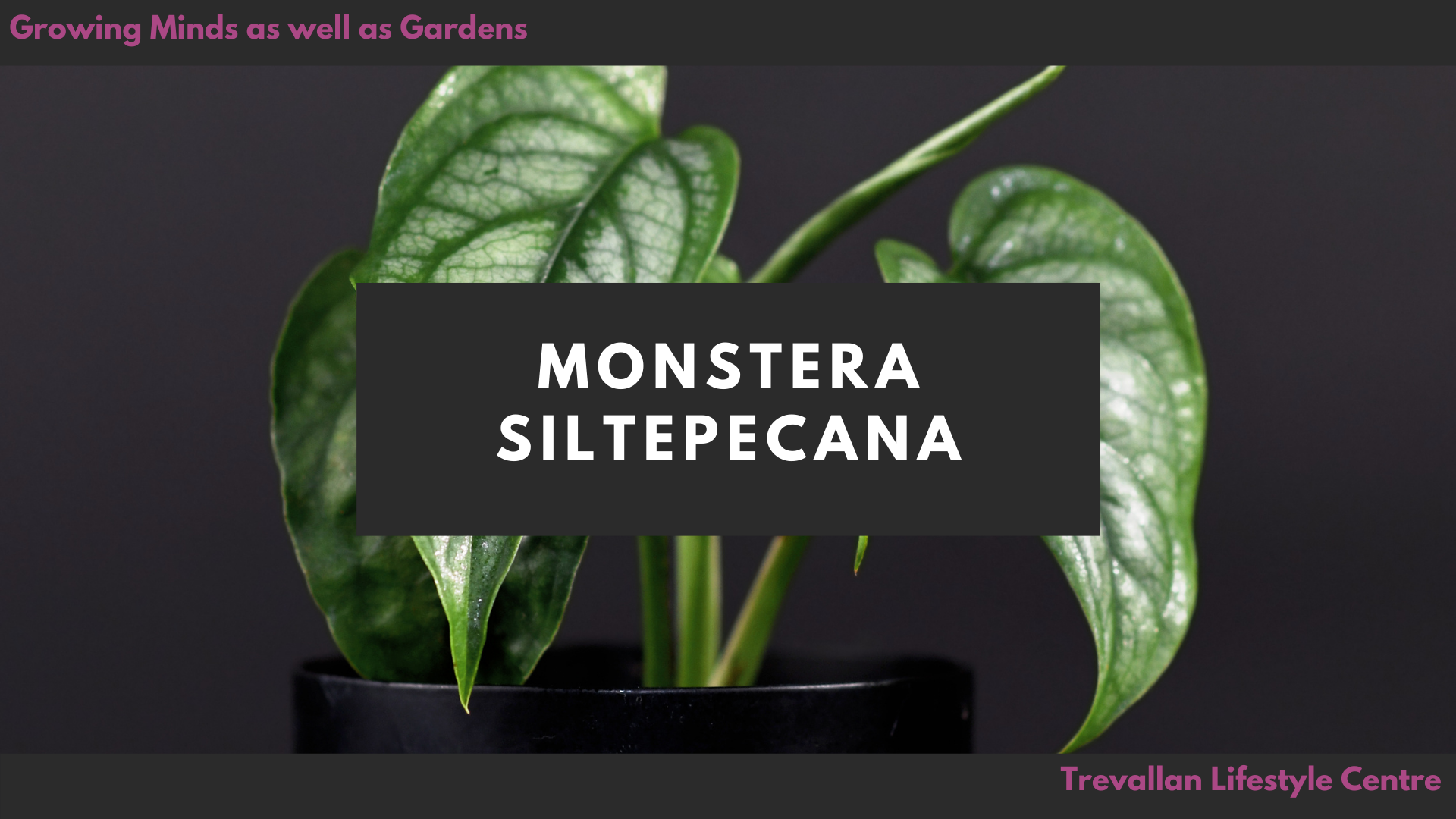
Monstera siltepecana
Monstera Siltepecana is one of the 50 named and lucky for you, is at Trevallan right now. It has beautiful green leaves with silver patches and prominent veins. It will climb if given the chance but as it’s branches are really soft it works wonderfully as a trailing plant too.
Monstera Siltepecana.
This plant belongs to the fascinating genus monstera. This genus is rather cool, as while there is already around 50 different known species, they believe that there are many more in the wild we have yet to identify.

Monstera Siltepecana young leaves
Which also means there could be 100’s of plants we need to add to our must have list!
Monstera Siltepecana is one of the 50 identified and lucky for you, is stocked at Trevallan. It has beautiful green leaves, with silver patches and prominent veins. It will climb if given the chance, but as its’ branches are really soft, it also works wonderfully as a trailing plant.
In the past, Monstera Siltepecana have been a little hard to grow, but with the correct knowledge, you’ll have a plant the envy of all your friends. Monstera Siltepecana, like most monsteras, like a free draining potting mix and I’d even suggest adding some chunky bark to help keep soil aerated. I also like to add a layer of sphagnum Moss on top to help keep humidity levels up, as Monsteras are semi epiphytic, meaning they love humidity, but hate being drowned.
Here’s the trick to watering a lot of indoor plants .... Water your plant whenever the soil is turning from being slightly moist to dry. Do not wait until the topsoil is completely dry, the soil should stay slightly moist. This is why I like to use sphagnum Moss on top, as it keeps the topsoil damp for a bit longer and it’s easy to tell when it needs a water.
I think a regular liquid fertilise is best for these plants. I like to give mine a good misting about once a fortnight with Triple Boost and if we have a dry summer, I mist the leaves every couple of days to help with humidity.

Monstera siltepecana older leaves
I have found these guys love bright, indirect light, so placement right near a window is perfect. Not in direct sunlight, just off to the side, but remember that guys hate being left in the dark!
Now here’s where the magic of these plants lies.... the younger leaves are completely different to the mature leaf. Believe it or not, the Mature Monstera siltepecana has huge leaves with holes close to the midrib, but it will only produce these leaves if allowed to climb. It can take up to three years in ideal conditions for your leaves to show signs of mature leaves forming.
Monstera siltepecana are a truly magical plant and one that I think you could have a few of in your indoor plant collection!

Zamioculcas zamiifolia
Zamioculcas zamiifolia, the sign at Trevallan Lifestyle Centre reads no care, no fuss house plant.
Zamioculcas zamiifolia
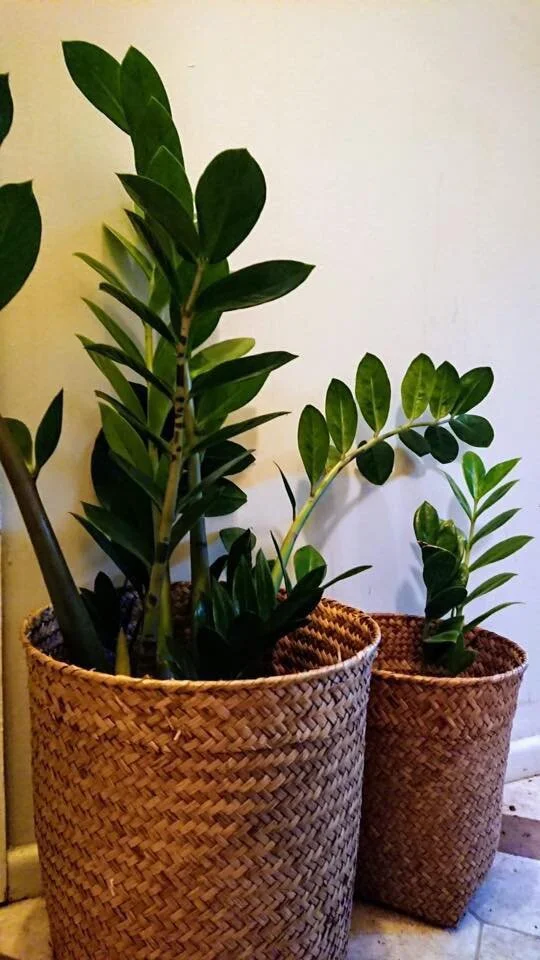
The sign for this guy at Trevallan Lifestyle Centre reads ‘No care, no fuss house plant’.
He can grow in any light situation, from the corridorof my sister’s office, which receives no natural light, to my bedroom bedside table which has light all day long. Whatever the light situation, this guy handles it with aplomb.
You don’t even have to worry about shining his leaves - he does it himself. His leaf is naturally thick, dark green and exceptionally glossy and shiny and he looks lush and tropical all the time.
Don't worry about water restrictions with this guy as he doesn't like a lot. A good drink every few weeks and he will repay you by continuing to look awesome. Don't worry if you are a bit like Boss Lady and tend to over love your plants, he can handle that too (he just doesn't like continually sitting in water).
It actually grows from these potato like tubers that store water, so even if by some ungodly chance you think you've killed your Zanzibar gem through lack of water, when the rains come it will reshoot!
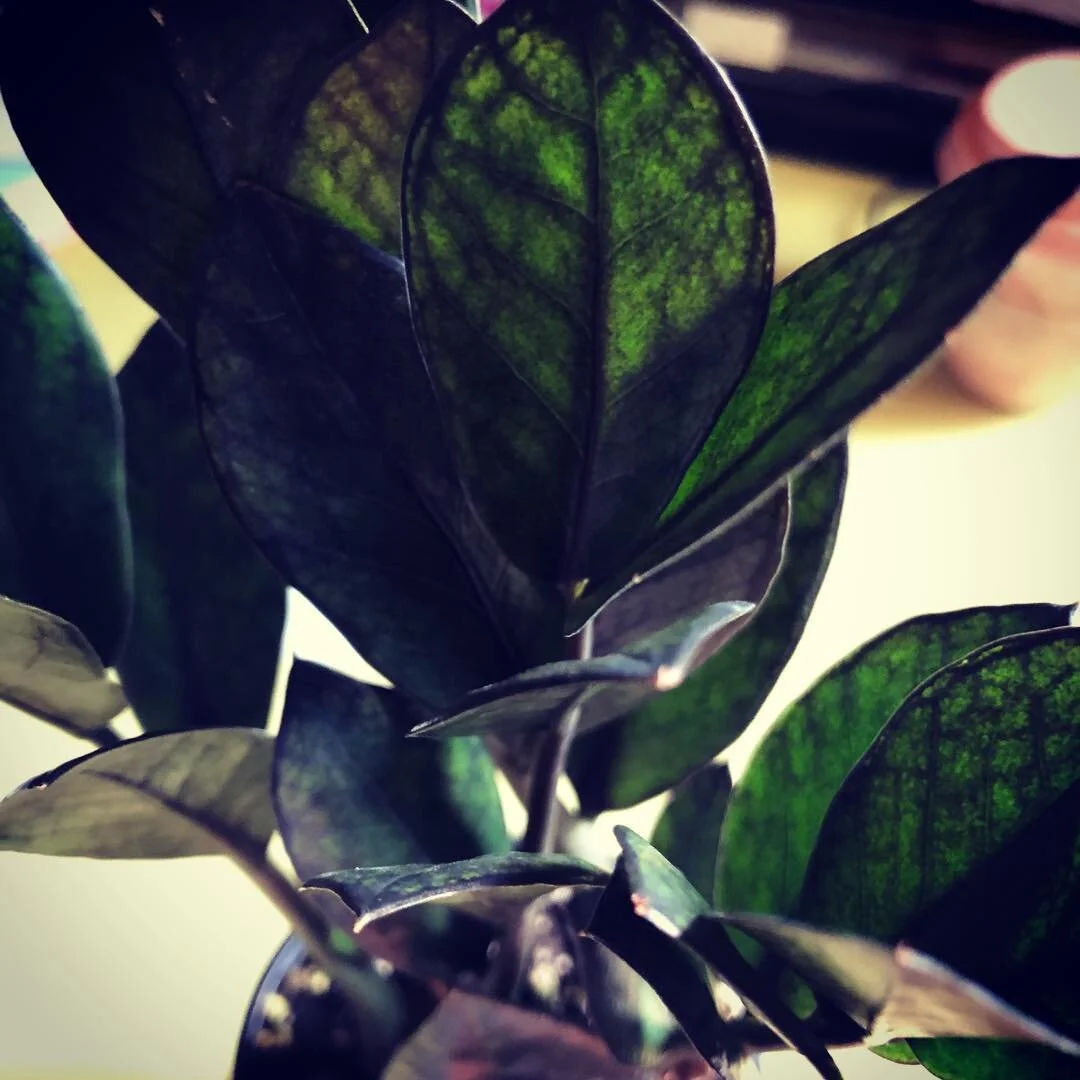
This guy is amazing and the best house mate you will ever find.
He has a sexy brother called ‘Jungle Warrior’, who has new, green growth that turns black as it gets older and is just as fabulous as its older brother, but a little sexier. Additionally, recently a new baby was born to this family ....Zenzi is as a cute as a baby brother should be. He looks very similar to his older brother, with lush, dark green foliage, yet his leaves form closer together up the stem, making it seem more compact and thicker looking.
Honestly if you get one house plant in your lifetime, buy one of the Zamioculcas zamiifolia brothers. You’ll never regret having this kind of family in your house!

Watermelon Peperomia
Peperomia argyreia usually only grow to about 20cms high and about 40cms wide. The have lush deep green leaves that are slightly fleshy. The leaves have silver curved stripes and sit atop red stems. I find in the right light the leaves sparkle. Tiny green flower spikes appear in summer.
Peperomia argyreia, or, the watermelon peperomia !
Just so we all understand, the watermelon peperomia is no relation at all to watermelons and just because it’s safe for cats and dogs, does not mean we should try it to see if it tastes like watermelon!
The common name occurs because, as you can see, the plant leaves look like a watermelon skin. Peperomia argyreia usually only grow to about 20cms high and about 40cms wide. The have lush deep green leaves that are slightly fleshy and have silver curved stripes, sitting atop red stems. I find that in the right light the leaves sparkle. Also, tiny green flower spikes appear in summer.
This plant is a great wow factor plant once it grows into its shape. Perfect for coffee tables, where you can switch off the TV and just gaze lovingly at its leaves and like all really cool plants, it has gained the gained the Royal Horticultural Society’s Award of Garden Merit.
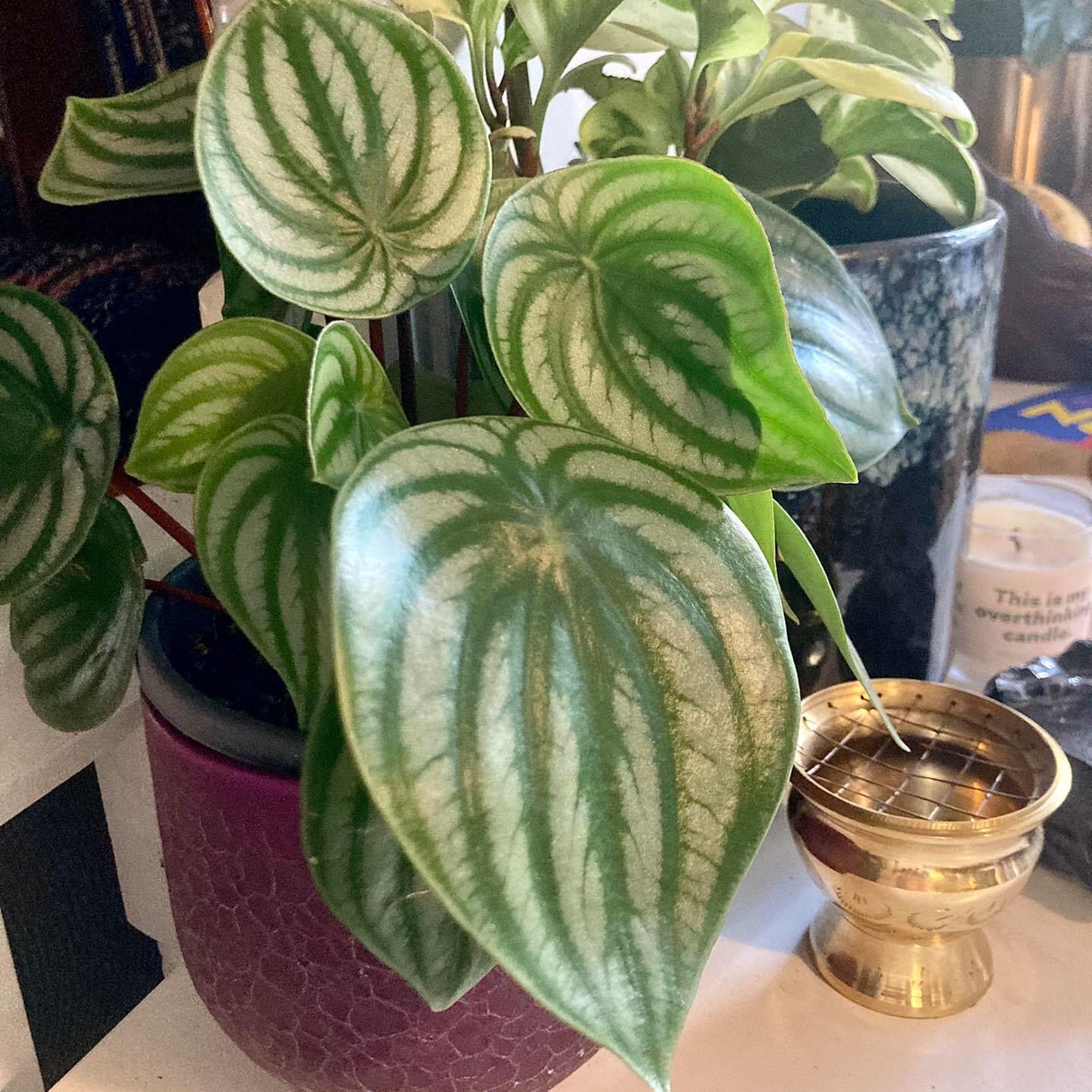
This plant requires very little care and attention and any problems with it usually occur due to excessive love/overwatering! In fact, watermelon peperomia is the poster child for KEEP IT SIMPLE - lots of light, no overwatering and no cold conditions (including air conditioning on Arctic temperatures).
It doesn’t need a lot of water, at the moment mine gets a good soak once a week and as the weather cools off, I’ll try to push it out to once a fortnight as my house is very cold in winter and plants don’t dry out as much. Never let them sit in water and always check your soil first, as your indoor conditions my be different to mine....
How do you check your soil for moisture? Easy, simply stick your finger in it, if it’s dry, water, if it’s wet, leave another day! Very technical I know! Another great way is to feel the weight of the pot. If you pick it up and it’s really light, the plant needs a drink. This is a good way to tell dampness with potting mixes that rely heavily on peat or coir.
I have found Peperomia argyreia hate dark spots, they prefer lots of light, but not direct sunlight. They are slow growing and don’t like to be over potted, I only ever pot up to next size pot and only when the original plant is very pot bound.
They do love a bit of humidity, so you can either spray the leaves once a week, or you can soak the entire plant in a bucket for a few seconds so soil and foliage gets wet, but only do this in the warmer months.
I mix a little liquid fertiliser into my spray bottle, so I’m liquid fertilising at same time or if I’m soaking I add a little bit of liquid fertiliser to my soak bucket. I also fertilise all my indoor plants at the turn of every season with Organic Link, a certified organic slow release fertiliser.
Peperomias are usually very easy to care for, but I have found Peperomia argyreia can be a little sensitive, because it’s hard to get the watering and light conditions perfect for them, keep I mind though that they hate to be over loved.
If you have a bright spot in your home and you are a forgetful waterer, than maybe this is the plant for you
******
The photo is of mine from last week - in the past, I have struggled with these guys and may have killed a few, but this spot is perfect for them. Morning sun comes in the window, but no actual sun hits the leaves, so it’s really bright and warm. It’s in a spot I constantly look at and think ‘I must water that’, but never do, so the plant dries out! Thirdly, you can see that the pot sits just above the rim of my planter. Normally I hate this look, but in this instance it’s perfect as it’s never sitting in water as the pot isn’t sitting all the way to base of planter.

Saxifraga stolonifera
Saxifraga stolonifera .... commonly known as Strawberry Begonia even though It’s not relative of either one. This little guy isn’t widely cultivated but it’s slowly been making its way into our hearts as a cute indoor plant or a great ground cover for shady areas. It has even been awarded the Royal Horticultural Society’s Award of Garden Merit.
I’d like to introduce you to the cutest little fellow and one that has stolen my heart.
Saxifraga stolonifera, commonly known as Strawberry Begonia, even though it’s not relative of either.
In its native habitat, it can be found in forests growing on the ground as a ground over, or even over rocks or rotting timber.
This little guy isn’t widely cultivated, but it’s slowly been making its’ way into our hearts as a cute indoor plant or a great ground cover for shady areas. It has even been awarded the Royal Horticultural Society’s Award of Garden Merit.

This guy has a beautiful scalloped edge leaf that is a dusty green, with prominent white veins and spreads by sending out little runners on which a new plant forms.
I think they look amazing in hanging baskets, with all their little babies hanging down around them. However, what makes these guys even more beautiful, is that it has these dainty white flowers that sit above the foliage. They mainly flower from spring into summer, but in saying that, mine has also flowered sparingly through autumn.
Saxifraga stolonifera prefer a damp, shady position. They don’t like sitting in water, but also hate drying out for too long. If growing them indoors, make sure it’s a really well lit, well-ventilated space.
I have found mine only do well on a window ledge, where there is constant bright light (not direct sun) ... I guess nobody puts Saxifraga stolonifera in a corner!

Calatheas
I was recently asked what’s the secret to growing Calathea, temperamental beauties! Growing Calatheas inside has been a lot of trial and error for me and I have found some do really well and others not so good.
First and foremost you need to remember these plants are native to Tropical Americas. So if your house isn’t a hot humid beach in the Caribbean you are always going to have some issues
I was recently asked what’s the secret to growing Calathea, otherwise known as temperamental beauties!
There is no hard and fast secret with these plants. They kind of remind me of my kids ... they will have a full blown tantrum because the sun came into their room the wrong way one morning, but not be bothered by it at all the next.

Calatheas are pretty much the same- you think you can be doing everything right one day and then boom, the next thing you know it decides everything you’ve been doing is wrong and that’s it. Calathea heaven here we come.
Growing Calatheas inside has been a lot of trial and error for me and I have found some do better than others. First and foremost you need to remember these plants are native to Tropical Americas, so if your house isn’t like a hot humid beach in the Caribbean, you are always going to have some issues.
Calatheas love warm humidity and lots of natural light, but not full sun, so inside you will need to place it in a really well lit area, that’s warm (some houses are cold, think the middle of summer temperatures and air conditioning), and if the air is dry, you’ll need to create some humidity.
I have one room in my house where the morning light streams in and this is where my Calatheas calls home. I make sure they never sit in water - I water them when they are dry, but not too dry, more like ‘I dried out yesterday give me a drink today’ kind of dry.
I have also found with some of them that if I put a little bit of sphagnum moss around the top of the pot and keep it moist, this helps increase the humidity. I spray the foliage about once a week to make sure the leaves don’t dry out and my spray bottle also has a weak solution of Triple Boost. This enables me to feed my plants at same time as keeping up the humidity .
I find that if the tips of the leaves turn a little brown, that’s him screaming at me saying “I’m from the tropics and I demand humidity’.
They really hate the cold, so they may go dormant or even die down in winter if your house becomes too dark and cold. Don’t panic, remember we don’t live in the tropics, so plants adapt. Just remember to not overwater during colder months and try to find the warmest spot you have in the house.
I don’t over pot my Calatheas either, meaning I only ever pot them up to next size pot when they are bursting at the seams of first pot and I only use the best quality potting mix when I do it.

If they do start to look a little worse for wear, they guys can be cut back to ground level just before it gets warm, then simply fertilise and they should shoot back really quickly.I fertilise mine with slow release organic fertiliser, Organic Link, about once every three months.
I really love these plants and while their list of needs seem long and maybe too difficult for some of you, it’s just a matter of finding the perfect spot. The trick with any indoor plant, is find its country of origin and how it grows there, then try to recreate that at home.
I have found these plants work really well indoors in a planter, like a kokedama and in my closed and open terrariums. They can be very versatile and easy to grow, if you are willing in the beginning to put in the effort.

Why do I need Permission to buy that Indoor Plant!
So today I’m giving you permission to buy something that may not last but will bring you immense joy.... what are you going to buy?
Today I am giving you permission. Permission to buy a plant and if you accidentally kill it, permission to throw it away and not care!
Say what!? I see you all shaking your heads and wringing your hands and wondering what the hell I am on about .....So, I’m going to share a story and maybe you can understand why I’m giving you permission.
The other day I was getting coffee and the coffee shop sold gorgeous bunches of flowers ... so here I was, half asleep pre-coffee and this little blue and this bunch of native flowers just called to me. Just looking at it made me happy and smile, so I thought bugger it, and bought that bunch of flowers.
$25 I spent. Not much, but also not a little.
I came home and proudly displayed that bunch of flowers on my kitchen bench and all week I smiled.
But come that six day mark, something was amiss... moving into the 8th day and I knew it was over. I held on, but ten days later, that was it. That bunch of flowers was long gone. $2.50 a day I had spent to bring me joy and I did not question it all as I’d enjoyed those flowers every day.
This week we got new Calatheas at Trevallan. Unfortunately, my house is too dark to continually grow Calatheas well, so I admired them from afar, unpacked them in-store and walked away. Later, however, I thought of those flowers. How I didn’t question spending money on a bunch of flowers I knew wouldn’t last.
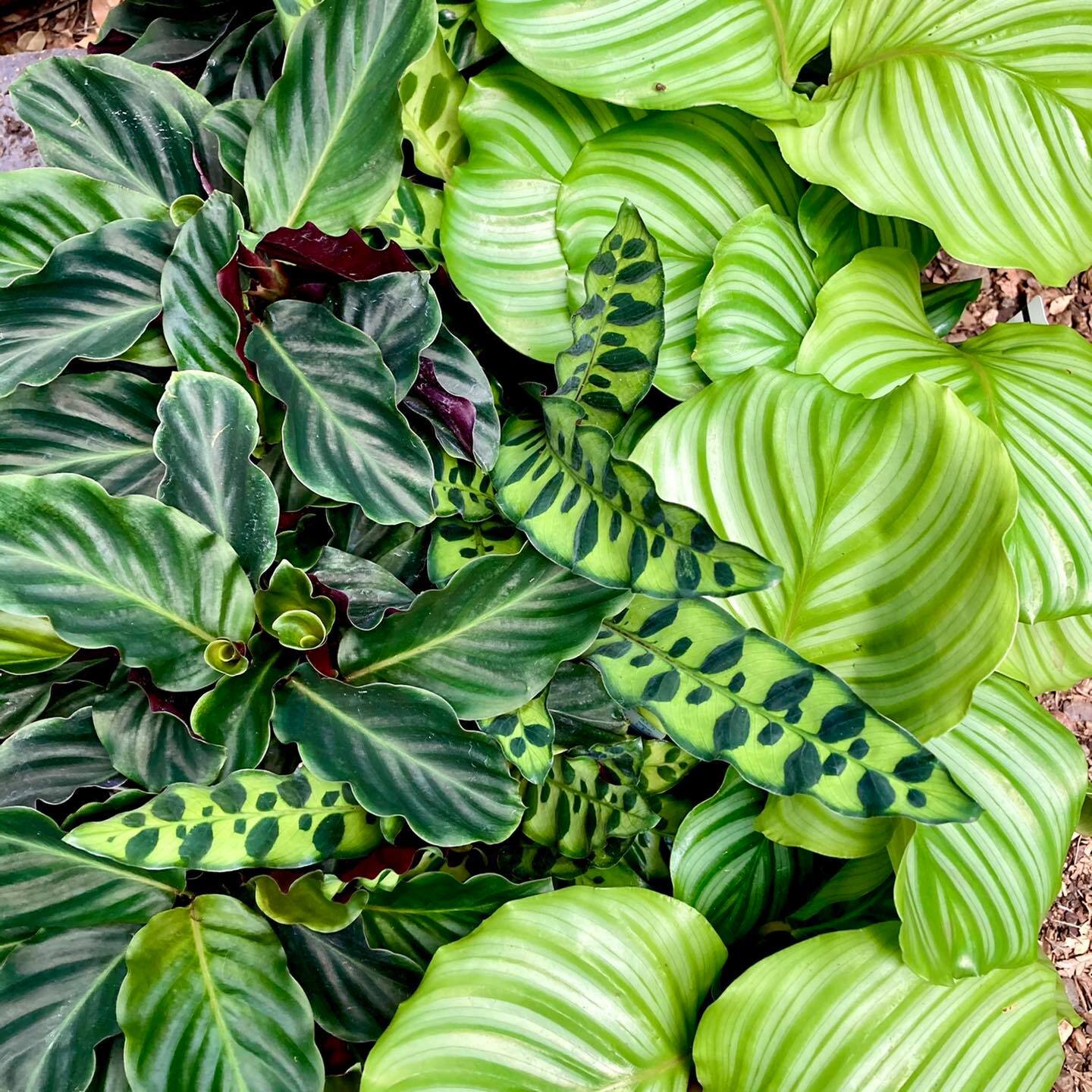
So yesterday afternoon I bought myself a Calathea. I took it home and put it in a spot where it may not even survive. Yet, here’s the thing .... it was cheaper than a bunch of flowers, it will last longer than a bunch of flowers and I will get more joy from it than a bunch of cut flowers. If it dies in three months, so be it. If it gets sick and I can save it, so be it.
I gave myself permission to buy something that will bring me endless joy and I’m not putting a time span on it.
We have the notion that because it's got roots, it has to last forever and when it doesn’t, we see it as our fault. We see ourselves as plant killers. Yet we don’t see ourselves as cut flowers killers!
Sometimes we need to buy a plant just because it brings us immense joy and happiness. Sometimes, just sometimes, we are allowed to buy an indoor plant- not because it’s hardy, not because it’s insta worthy, not because you won’t kill it, but purely for the fact it will bring us immense joy while we have it.
So today I’m giving you permission to buy something that may not last but will bring you immense joy.... so, here’s the million dollar question: What plant are you going to buy?

How do I care for my Indoor Plants
There is so much information available and a lot of it is conflicting ... so what’s the real answer.
I find the best way to treat my indoor plants is how I treat gardening in general ... simplicity is key.
I adore my plants but I’m a simple girl at heart.
Although we all love indoor plants immensely, how do we take care of them?
There is so much information available and a lot of it is conflicting ... so what’s the real answer.

I find the best way to treat my indoor plants is how I treat gardening in general ... simplicity is key.
I adore my plants, but I’m a simple girl at heart.
There is always going to be that indoor plant person that makes their own potting mixes and mixes their homemade fertilisers, has humidifiers and growing lamps… and then there is me!
Let’s look at how I treat my indoor plants as the starting point and then you can always work up to grow lamps!
My house is exceptionally dark, apart from one window area. I have learnt that the plant I want isn’t always going to be the plant that thrives.
I’d rather have a house full of thriving plants, instead of the newest release that’s barely surviving. Therefore, I’ve learnt that if I want a certain plant I need a twin. For example, I really love Calatheas, but my house is too dark for them to thrive, so I have two and swap them out fortnightly. This way, I get what I want inside and the plant continues to thrive.
My watering skills are haphazard and I know some plants that can handle this, so I tend to choose these plants over ones that I need to watch the watering. As my house is usually cool and dark, I find watering once a fortnight to once a month is enough for most plants -you just need to find your groove.
I have also learnt that Planters (cover pots) are the best thing for my indoor plants. Planters are pots without holes that literally cover the black plastic pot that your plant comes in. I place my plant inside these (I never usually pot into a planter, there is always an exception) I find planters enable me to swap plants around easily, protect my furniture, as I can give things a good drink without water going everywhere and I can also easily tip out water if the plant gets too much.

Occasionally, I may pot into a planter. If I do, I treat the planter and my potting method the same as I would a terrarium. I use a lot of Sphagnum moss and very little soil, and carefully select what kind of plant I will use.
I treat my plants to a spa day about once every two months. I take all my plants outside to a shady area, I give them some Organic Link slow release fertiliser, wash their foliage and give them a Liquid fertilise with Triple Boost and Neem oil. I usually leave them outside for the evening and bring them back in the next day. The fertiliser I use is same I use in my garden and all my other pots. Remember I keep things simple.
If a plant looks sick, it usually is. Imagine being cooped up inside all day. The best way to tackle a sick plant is to treat it as soon as possible - take it outside to a shady spot for a week or so. Give it a fertilise and a good drink and leave it be. I find most indoor plant deaths come from over love! Also weigh up how much you spent on it vs how much you will need to spend on it to bring it back to vigorous health. Sometimes it is worthwhile to accept a loss and get a new healthy plant, instead of spending months agonising over it.
If I find a plant is always suffering from insect attack inside, I know it’s not meant to be inside. Instead of constantly battling an insect problem, the plant gets treated with neem oil, trimmed and placed in a shady spot outside to live, where I know it’ll be happy.
What works for others may not work for me. This has been the hardest thing to learn. Just because someone is growing a particular plant well, does not mean I will be successful, therefore, I need to make my own rules in my own house.
The best thing I have learned is to not overthink it. Try a new plant, see if you like it, or more importantly, if it likes you. Move it around, buy a pot that suits that particular corner and more often than not, the plant will follow. Just remember to have fun.
Although I don’t always have all the answers, I am happy to help you on your indoor plant journey so pop down to Trevallan today.

Maiden Hair
Maiden Hairs. I adore them. I adore the common ones and the real frilly leaf ones. I adore the ones that get red new growth and the ones that don’t. I adore the fat leaf ones and the skinny leaf ones. I just love them.
Today I am going to blow your mind with a concept that may shock and surprise you.
Today I am going to talk about one of my all time favourite indoor plants and how I treat it.
Maiden Hairs. I adore them, particularly the common ones and the real frilly leaf ones. I adore the ones that get new, red growth and the ones that don’t. I adore the fat leaf ones and the skinny leaf ones. Basically, I love them all!
A few days ago, I bought myself a new maiden hair and put it on my little office desk, which gets minimal natural light. I have a cute little planter it sits in and every single morning and night, I smile and I touch it.

It brings me so much joy.
Actually, over the last few days that plant has bought me more joy than anything else in my house. I have smiled a 1000 smiles because of that maiden hair.
For less than $15, I have gotten an experience that I usually couldn’t afford.
Now, to be totally honest, that maiden hair probably won't last, as together, we have a terrible track record. They are a plant that some people can grow easily and others will always struggle- I am one of those strugglers, but I don’t care!
This plant was cheaper than a bunch of cut flowers and did I mention I am currently experiencing so much joy that I wouldn’t normally be able to afford.
Sometimes we have the assumption that because it's got roots, it has to last forever, but sometimes we need to buy a plant just because it brings us immense joy and happiness and this maiden hair was worth every cent.
So tell me what indoor plant would you buy that would bring you immense joy, even if only for a short time?
Side note : Usually when my maiden hairs give up on me inside, I cut them back fertilise them with Organic Link and plant them outside in a shady spot. They sometimes come back. Indoors maiden hairs like to be moist, but not too wet, they hate drafts and need a very well lit area.