Find Us:
77 Fernvale Rd
Brassall QLD 4305
(07) 3201 8630
Open:
Tue-Sun 9am - 4pm

Dracaena trifasciata
Dracaena trifasciata is one of my most recommended indoor plants.
It seems to survive the most unsuitable growing conditions, abuse and neglect. Basically, you have to work really hard to kill these Dracaenas. (I must be honest here and mention I have killed one, but it was purely from too much accidental love!)
Dracaena trifasciata, previously known as Sansevieria trifasciata.
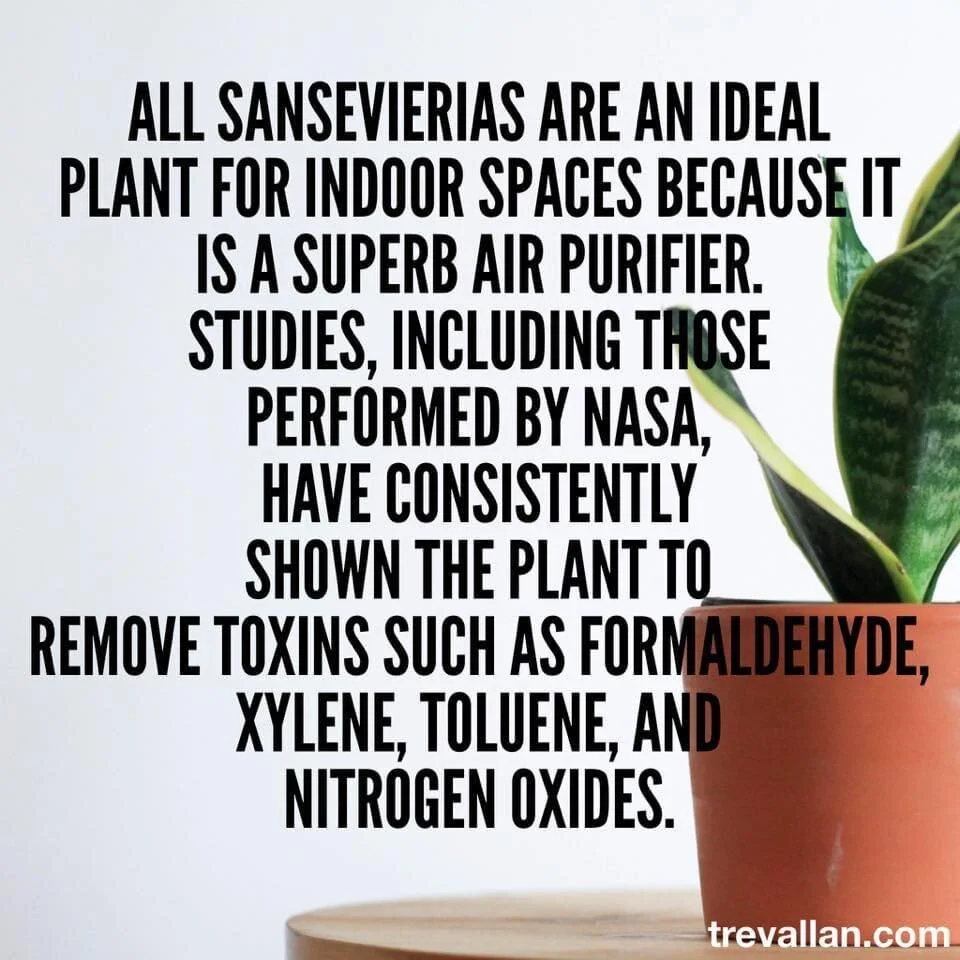
Many of us know this plant as "mother-in-law's tongue" or "snake plant", supposedly because of the shape and sharp margins of its leaves.
One gardener told me it's called mother in law’s tongue because it's so hard to kill!
Another common name for this plant unbeknownst to me is the "viper's bowstring hemp", because it is one of the sources for plant fibres used to make bowstrings.
Dracaena trifasciata has had a hard life. It’s native to tropical West Africa and when it came to Australia, it was used outside in garden landscaping as it was so tough and hardy. Unfortunately, it got out of hand, people started to dump it in bushland and it found itself on the weed list.
However, I believe though that this plant can be used effectively and non-invasively when used as an indoor plant.
Dracaena trifasciata is one of my most recommended indoor plants.
It seems to survive the most unsuitable growing conditions, abuse and neglect. Basically, you have to work really hard to kill these Dracaenas. (I must be honest here and mention I have killed one, but it was purely from too much love!)
The Dracaena trifasciata has long sword like foliage. It’s a great plant when you need height and hardiness. There are three main forms of Dracaena trifasciata.
The original Dracaena trifasciata, has dark green foliage, with light grey-green stripes going across the leaves. Each leaf can reach to about a metre, but in optimal conditions, it can reach two.
There is also a variegated cultivar, called Dracaena trifasciata, 'Laurentii'. This one has green foliage with a yellow band around the outside and can also reach that one metre mark
The third form is the silver leafed called Dracaena trifasciata, 'Moonshine'. Unlike its’ brothers, Moonshine only grows to about 60cm high and has an almost white to silver foliage.
Dracaena trifasciata can handle any light situation from full sun to your darkest, no natural light, office cubicle. They can handle our hot humid summers and our coldest, driest air conditioners!
However, take care when watering these guys. Dry is best and remember that I almost rotted one to death through too much love.
You can grow these guys in great quality potting mix, or you can grow them in water. Weird I know. But without the soil around them, they do fantastically as a water plant!

Keep their leaves clean and free from dust and grease. I only tend to fertilise mine with an organic slow release fertiliser when I split them, which I only do when they break the pot they are in.
If you've never had any luck with indoor plants, this is the plant for you. I know you might think these are old fashioned and uncool, I was the same, but now have several at home and love them to bits. Why? They’re a large chunky plant that will always look good, survive low light and not need care. I have them growing where I couldn’t get any other indoor plant to grow and they look amazing so why not up your indoor plant game and get your hands on a chunky Dracaena trifasciata

Who am I?
Some of you may not know the face behind Trevallan's web presence.
So here I am!
I believe I have developed a great personal rapport with all of Trevallan's customers, both in person and online. In fact, sometimes I forget I am actually just a business on a computer screen and as a result, some of you may not know the face behind Trevallan's web presence….So here I am!

I come from a family of gardeners. My knowledge is part book based, but mostly comes from being surrounded by it all my life. It's amazing what you can learn just by listening and being made to do something as a chore !
My grandparents were gardeners. Their vegetable patch sustained the family, so, apart from meat, there was no store-bought food. My grandfather also loved fiddling with plants and taught himself to cross breed, graft and do cuttings. However, his true love lay with camellias and azaleas, he was also a lawn fanatic. One of my fondest memories is getting in trouble as I didn’t mow straight enough on his ‘bowling green’ lawns.
Before going into retail, my parents ran a successful landscaping business 'Trevallan Landscapes' that would have been in operation for about 40 odd years today had my father not died in 2000. Trevallan Landscapes was high in demand and I remember my father travelling all over Queensland doing landscaping work - private and commercial. Working for him throughout my childhood was also a great way for me to earn pocket money.
In 1999, I finished my business degree and although I wanted to travel the world, I decided to postpone travel to help my mother at the centre after my father's unexpected death.
Since then, my pieces of paper have increased - I have a Certificate III in Horticulture, am chemcert qualified, have been a national finalist for Young Horticulturalist of year and have also been a HAL emerging leader, as well as being a member of the Queensland Horticultural Media Association.
However, as quickly as my pieces of paper increase, so does my workload. I have written for local papers and gardening magazines. I write all the information found on this website, manage Trevallan's workshops and social media - Facebook and Instagram, plus physically work at Trevallan. I also love giving gardening related talks to social and gardening clubs.
While I've been paper collecting so has Trevallan - over the years Trevallan has won a few awards, one I am most proud of is Best Small Garden Centre in Qld in 2010. We have also just joined Tourism Queensland, as we were recognised as a place of attraction to visitors outside of Ipswich.
As many of us know, knowledge isn't gained from just reading a few books. Knowledge consists of a lifetime of asking questions and determining what you believe is right answer.

I attend a plethora of industry events, run my own events here at Trevallan and read as much as I can, to stay informed in regards to all things plants. I also try to take the time to listen to my customers, my growers and my suppliers, as I find they've tried and tested many things I wouldn't get a chance to do in my lifetime.
My aim at Trevallan has always been to grow people’s minds, allowing them to experience gardening in their own style, but also educating them and giving them the tools for success. I want gardening to be for everyone, so I try to make it easy and simple. For me, Trevallan is a place that grows people’s minds, not just gardens.
But horticulture isn't my only love - aromatherapy is another passion. In between all my paper accumulating for horticulture, I also completed - Certificate Four Massage Therapy, attended many Aromatherapy Masterclasses and am also a qualified Aromatic Kinesiologist and run my own Energetic Healing Practice, Potionatrix .
In October 2012, I won a world wide competition to create my own essential oil blend. This blend 'wisdom' was produced, until recently (2019) by internationally renowned aromatherapy company, Perfect Potion and sold at Trevallan, as well as world-wide, via Perfect potion stores and online trading.
However, life isn't just about fertilising and sweet smells as on top of all of the above, I'm nurturing a young family with three children.
So that's me.
The woman behind the computer screen.

Indoor Plants
A gardening passion of mine is making Indoor Plants easy and why wouldn’t I when it's the biggest gardening craze since well, the 70's really!
A gardening passion of mine is making indoor plants easy - why wouldn’t I when it's the biggest gardening craze since, well, the 70's really! It's not the millennial generation any more, it’s the insta indoor gardener generation.
Really though, who can blame people for jumping on board with this amazing, not so new, craze? Who doesn’t want to be surrounded by lush green foliage inside and out?
We have decreased our yard size and increased our house space. We are on average spending more time indoors than we did ten years ago, so it's no wonder people are trying to beautify their indoor space with greenery.
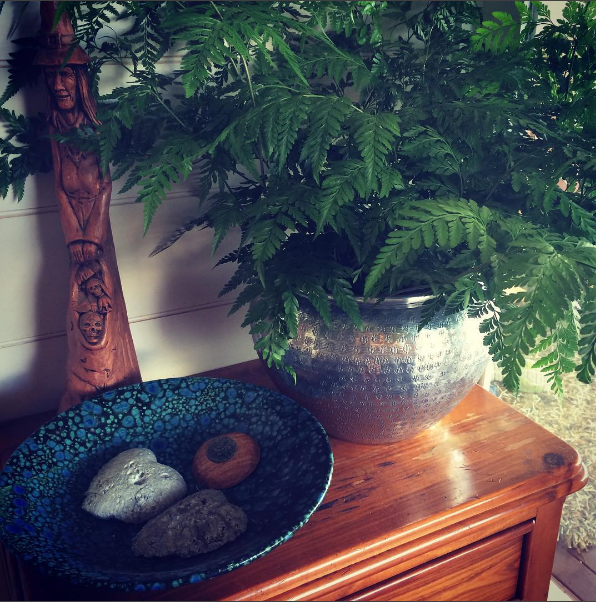
When done right, indoor plants completely change a way an indoor space looks and feels.
How many of us have instantly fallen in love with a room in a magazine? We think it’s the furnishings and the light, but I bet that space also has greenery.
For over 50 years scientists have been researching why indoor plants make us feel good. One reason is that plants make the indoor air cleaner. Volatile Organic chemicals are found in most household products – paint, furniture, cleaning products and fake air fresheners. Being volatile means they can easily become vapours or gasses, which in turn, can contaminate our air and be detrimental to our health.
Concentrations of many VOCs can be up to 10 times higher indoors than outdoors and can be even more concentrated in enclosed, air-conditioned offices.
It is believed a 3x4m room, just one healthy 200mm plant can reduce VOCs. To reduce VOCs by up to 80% you need at least ten large house plants.
However, indoor plants do more than purify the air.
Research has showed that there is also a link to our mental health and plants. When we are surrounded by plants, our mood and concentration improves, we are more productive and we interact more positively with others.
Research has also shown that although one plant doesn't really cut it in improving our mental health, when we start creating that "look" with more plants, wellbeing increases significantly. In fact, the greater the mix of plants and sizes, the better the benefits.
So indoor plants really do make us feel better. The science is there. It's not a crazy phase of the 70's that’s back in fashion. It’s a life necessity. However, the trick with indoor plants is to never give up. I thought I had my indoor plant game sorted, then I moved and my new house is providing both challenges and some really interesting wins.
Sometimes the most fashionable plant may not work for you and that's ok. It's about finding indoor plants that suit you and your lifestyle.
I can't wait to bring you inside to my indoor plant garden, and be sure to follow my indoor plant blogs for more information

Honey
Store bought honey is usually a combination of honeys from all different suppliers from all different regions, therefore all different flowers were used in the making of the money. Plus, the honey is also put through a refining process which some believe changes the structure of the honey.
We all know bees are crucial for pollination and food production, but there’s another incredible gift they give us: Honey.
I was lucky enough to grow up with grandparents and an uncle who kept beehives. Thanks to them, I learnt early on that bees weren’t something to fear, and that fresh honeycomb is one of life’s greatest gifts.
In fact, it wasn’t until I moved out of home and tried store-bought honey that I was genuinely surprised by what other people HAD to eat. Not only did it taste very different (like terrible), but it never crystallised. Not once.
If you've only ever had supermarket honey (even if it’s labelled ‘organic’), you might think honey is always a golden, runny liquid. But raw, real honey, the kind that comes straight from the hive, does crystallise, harden. And that’s completely normal.
Honey naturally contains two main sugars: glucose and fructose. The ratio of these sugars depends on the flowers the bees have been foraging on. The higher the glucose, the faster the honey will crystallise. Even though honey is low in water (usually under 18%), some of that water separates from the glucose over time. As glucose loses water, it starts to form crystals. Once one crystal forms, more will follow, and soon the whole jar of honey is set hard or crystallised. If there’s pollen, propolis, or wax in the honey, which there always is in raw, real, honey, these particles act as anchors that help crystals grow.
So if your honey goes hard or crystallised, that means you have real honey. If you want to return it to liquid form, just pop the jar in a sunny spot or sit it in warm (not boiling) water.
Why Doesn’t Store-Bought Honey Crystallise?
There are a few reasons. Most commercial honey is blended, meaning it’s mixed from multiple sources, usually from all over the world, usually from unspecified sources. It includes honey from bees feeding on a wide range of flowers, the glucose-to-fructose ratio becomes more balanced, slowing crystallisation. Blending also smooths out seasonal flavour changes, which might be good for consistency, but not for character. The biggest change happens during processing. Store-bought honey is ‘almost’ (always) heat-treated (pasteurised) and ultra-filtered. It’s heated to such high temperatures, usually between 60–70°C, that it dissolves any forming crystals and delays crystallisation.
This process comes at a cost.
Heating honey destroys many (all) of the natural enzymes, antioxidants, and aromatic compounds that give honey its character, complexity, and health benefits. The delicate floral notes disappear. The living goodness, like the antibacterial properties, immune support, and soothing effects, is gone. What’s left is a product that looks the part but lacks the soul.
In all cases, commercial honey is also diluted with glucose syrup or other sugar-based additives to bulk it out, which further reduces crystallisation and alters the taste.
The end result? A smooth, syrupy product that’s stable on the shelf but a far cry from what comes out of a hive.
Taste the Flowers
My grandfather’s honey never tasted the same twice. Each season, the flavour shifted with the flowers. When the tea trees (Leptospermum) were blooming, the honey was dark, bold, and almost medicinal (disgusting). When the ironbarks flowered, it became light, floral, and delicate (delectable).
As with most foods, unprocessed is best. Raw honey not only tastes better, but it also contains more beneficial enzymes, pollen, and antioxidants. Buying local honey from trusted beekeepers supports small producers and helps protect healthy bee populations in your area. So, please stop buying honey from the supermarket.
Now that you know what’s really in most supermarket Sugar Syrups, because let’s be honest, it’s not real honey, don’t pretend it’s the same thing. If it’s been heat-treated, filtered, blended, or cut with glucose syrup, it’s not real honey. It’s just a sweet imitation.
When you buy that kind of product, you’re not supporting beekeepers. You’re supporting a system that values shelf life and profitability over bee health and ultimately our health.
Choose better. Support real honey.

All about Bees
Bees pollinate over a third of the food we eat. Unfortunately, bee populations all over the world are declining which in turn is affecting the availability of our food.
Bees.
Just the word alone, can strike fear into some people. But did you know they are an essential element in the circle of life?
"If the bee disappeared off the surface of the globe, then man would only have four years of life left. No more bees, no more pollination, no more plants, no more animals, no more man." Albert Einstein
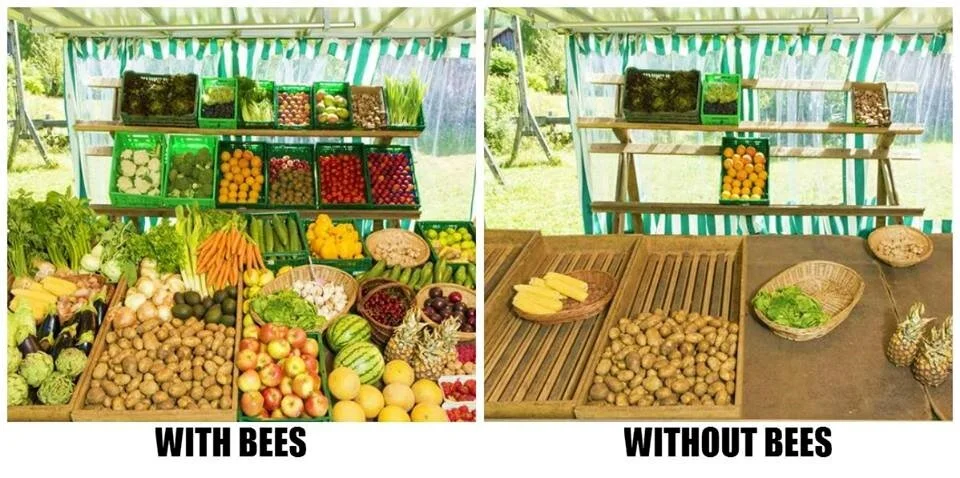
Bees pollinate over a third of the food we eat. Pollination is the process by which pollen is transferred in the reproduction of plants, thereby enabling fertilisation and reproduction, or in layman’s terms, bees help the flowers turn into food.
Unfortunately, bee populations all over the world are declining, which in turn is affecting the availability of our food.
The three main causes are believed to be Genetically Modified Crops (GMOS), chemical pesticide use and habitat loss.
Without getting into a huge debate on GM crops, it is believed one of the main reasons GM crops are leading to colony collapse is that the flower pollen on GM crops is sterile, thus causing the bees to become undernourished and die.
Bees generally travel as far as they need to get food. It is believed that the highest rate of return is between 6 to 7kms away from their hive. Therefore, if a hive is surrounded by GM crops the hive will die out.
The same goes for pesticides. If pesticides are being sprayed in an area, there is a high possibility that the bees will become infected and die out. Home gardeners should note that toxic pesticides meant to kill the bad bugs in our gardens can actually harm the bees which are so important to our environment and survival. Fortunately, Australia has banned many of these harmful pesticides in home use and luckily for us gardeners, there are alternatives. These alternatives are completely organic and don’t harm bees or any other good bugs, but do harm the bad bugs.
The third reason for decline is loss of habitat. This is brought about by development, abandoned farms, growing crops without leaving habitat for wildlife and growing gardens without flowers, or flowers that are not friendly to pollinators.

The larger honey bee (left) shown with the smaller stingless bee (right) on Citrus. Credit: (c) Tobias Smith
In Australia, we have some amazing native bees. There are over 1700 native bees and about ten species of small black stingless bees. They are only about 4 mm long, compared to 12 to 16mm long of the honey bee. The best thing about Australian native bees is that nearly everyone can have a hive or two in their yard.
Many years ago, I visited Melbourne and it seemed most of the suburban garden centres had a native bee hive in their centre. It was fantastic.
Why do we want a native bee hive in our yard?
Australian stingless native bees can be excellent pollinators of certain crops in Australia. They are particularly useful for macadamias, mangoes and watermelons. Also, they are not as prone to the colony collapse disorder that has decimated honeybee populations.
If we can increase the amount of Australian stingless native bees, we might be able to help reduce the loss of food production. Additionally, we might be able to assist the pollination chances in our fruit and vegetable patches.
Australian stingless native bees only produce small amounts of honey - less than one litre per year, particularly in warmer parts of Australia. However, it’s worth the effort as this honey (known as Sugarbag) is delicious.
Anyone can get a Native Bee Hive, as they don’t need as much attention as commercial honey bee hives and akin to the commercial honey bees, have an interesting social behaviour. Contrary to popular belief, you don't have to only have native flowers- I've seen Australian stingless native bees in a buzzing in a frenzy over camellia blooms. Furthermore, it’s worth knowing that increasing the number of Australian stingless native bees will NOT lead to a reduction in Honey bee population. The two can work in harmony.
If you’d like a hive go to the Australian Native Bee Association or Aussie Bee and see if there is a reseller near you. The ANBA promotes the conservation and sustainable use of all Australian native bees.
Do I have bees?
Take a walk around your garden early in the morning. Do you see any bees, native or European? What are they feeding on? I bet it’s not your beetroot leaves or agave leaves!
Growing your own vegetables is a brilliant idea, but don’t forget to mix it up and include some flowers in your edible garden! If you are completely against flowering plants, get some fruit trees, or let some of your vegetables go to flower or plant vegetables that flower, like pumpkin.
We all need to do our bit to keep the bees happy!

Green Space, Is it Needed?
As my garden is a little lacking at the moment I love it when I go for long drives and can surround myself with bushland and beautiful old homes with established gardens. It pains me greatly when beautiful bushland is destroyed by plantless housing communities.
I love immersing myself in nature. When I moved into my current house it was all lawn and unfortunately, it still pretty much is. I’ve got a vegetable patch, compost heap and a lot of plans. Although I’ve even gotten as far as making some gardens and ordering plants, I have yet to plant. It’s coming but unfortunately it all takes time. Something I seem to be lacking.
As my garden is a little lacking at the moment, I love it when I go for long drives and can surround myself with bushland and beautiful old homes with established gardens. It pains me greatly when beautiful bushland is destroyed by plantless housing communities.
Don’t get me wrong, I have no problems with development and growth and I realise that clearing bushland is a necessary part of this growth and development. What hurts me though is the seemingly lack of future green growth planning for these new communities.
Most new housing blocks have a very small green space available. Unfortunately, for new owners this green space can be hard to develop into a flourishing space, due to the ‘builder’s rubble soil’. Couple this with time poor self-confessed brown thumbs, the small green space suddenly becomes a huge paved outdoor area, without a green leaf to be seen.
But that’s ok, because apparently these new housing communities take this into consideration and have beautifully landscaped public spaces with large established trees easily accessible by all?
Don’t they?
Did you know in many areas of Australia (surrounding major cities) it can take over 30mins to walk to a green space? How many of you would walk 30mins just to sit under some trees, or to take your shoes off and feel green grass? We are time poor remember!
So suddenly in a short space of time, our bushland has been turned into a concrete urban jungle without a great deal of new or established greenery. But should we really care? Do we really need green spaces?
We all know that in nature, fauna needs flora and vice versa. All our wildlife needs a food source, so if we want the birds and the bees, then we need to offer them homes and food.
But do WE really need it.
Can’t we just go on living in our concrete urban jungles and working in our plantless offices?
Did you know that offices with no plants increase stress and negativity by up to 40% and having indoor plants alone can help relieve stress and reduce negative mood states by up to 60%.
That’s just inside. Imagine if you could surround your home with plants. Imagine how happy we could all be.
Plants don’t just make us happy.
Well-tendered public and private green spaces improve our fitness and property values.
Spending time in nature can make us mentally, emotionally and physically healthier.
Strategically placed plants can reduce energy bills - Strategically placed trees planted around a home could cut your summer air conditioning costs by up to 50 percent (according to a council in California).
By reducing the energy demand for cooling our houses, we reduce carbon dioxide and other pollution emissions from power plants. Trees also help us reduce our rates through less road repairs due to heat stress.
Neighbourhoods become safer, barren neighbourhoods have shown to have a greater incidence of violence than their greener counterparts. Trees and healthy urban landscaping encourage people to spend more times outside socialising and also have a therapeutic effect, which overall reduces the level of fear people have for their neighbours.
We need to start implementing forward-thinking council plans for homeowners and public spaces. We need to be continually educated, to create a future of green urban jungles, not concrete ones.
Let Nature Reclaim You
Spending time in nature can make us mentally, emotionally and physically healthier. We can all harness the magic of plants by creating our own green space. Are you letting nature reclaim you?
I found this amazing piece of art called "IT WILL BE OURS".
It was created by Ransom & Mitchell and was inspired by Jonas Salk's quote, "If all the insects were to disappear from the earth, within 50 years all life on earth would end. If all human beings disappeared from the earth, within 50 years all forms of life would flourish."

Why, oh why, does Nature need to reclaim us?
Spending time in nature can make us mentally, emotionally and physically healthier. During times of high stress, being outside can greatly relieve feelings of overwhelm and anxiety. When combined, sun, rain, soil and provide us with a kind of happiness bubble.
In fact, the 2013 World Happiness Report stated that one in ten people suffer from mental disorders, such as depression or anxiety. It is believed the practice of shinrin-yoku, a Japanese term that means forest bathing, has the power to counter depression, anxiety and stress as well as illnesses including cancer, strokes and gastric ulcers. It is also believed that over time, it boosts the immune system, lowers blood pressure and aids sleep.
RMIT University also investigated direct mental health benefits of plants, such as improved mood and concentration, and indirect benefits, such as productivity and positive social behaviour!
They found that with indoor plants there is very little wellbeing benefit in just one plant, but once you start to create a "look" in your space, wellbeing begins to increase significantly.
What's more, complexity matters. The greater the mix of sizes and varietals, the greater the benefits.... see there is a reason we need to create an indoor jungle, one is not enough!
In outdoor spaces such as yards and courtyards, plants have limited ability to improve air quality. However, a good array of plants will still improve wellbeing significantly. Hospitals are now adopting and designing ‘healing gardens’ as a way to offer a space of solitude for their patients to find refuge, putting into practice the research that shows being around nature can help speed up a healing process, with less pain experienced and shorter hospital stays.
We can all harness the magic of plants by creating our own green space, which is why it is so important to take the time to sit with and be in nature.
Are you creating a happiness bubble for yourself and your children?
Are you letting nature reclaim you?
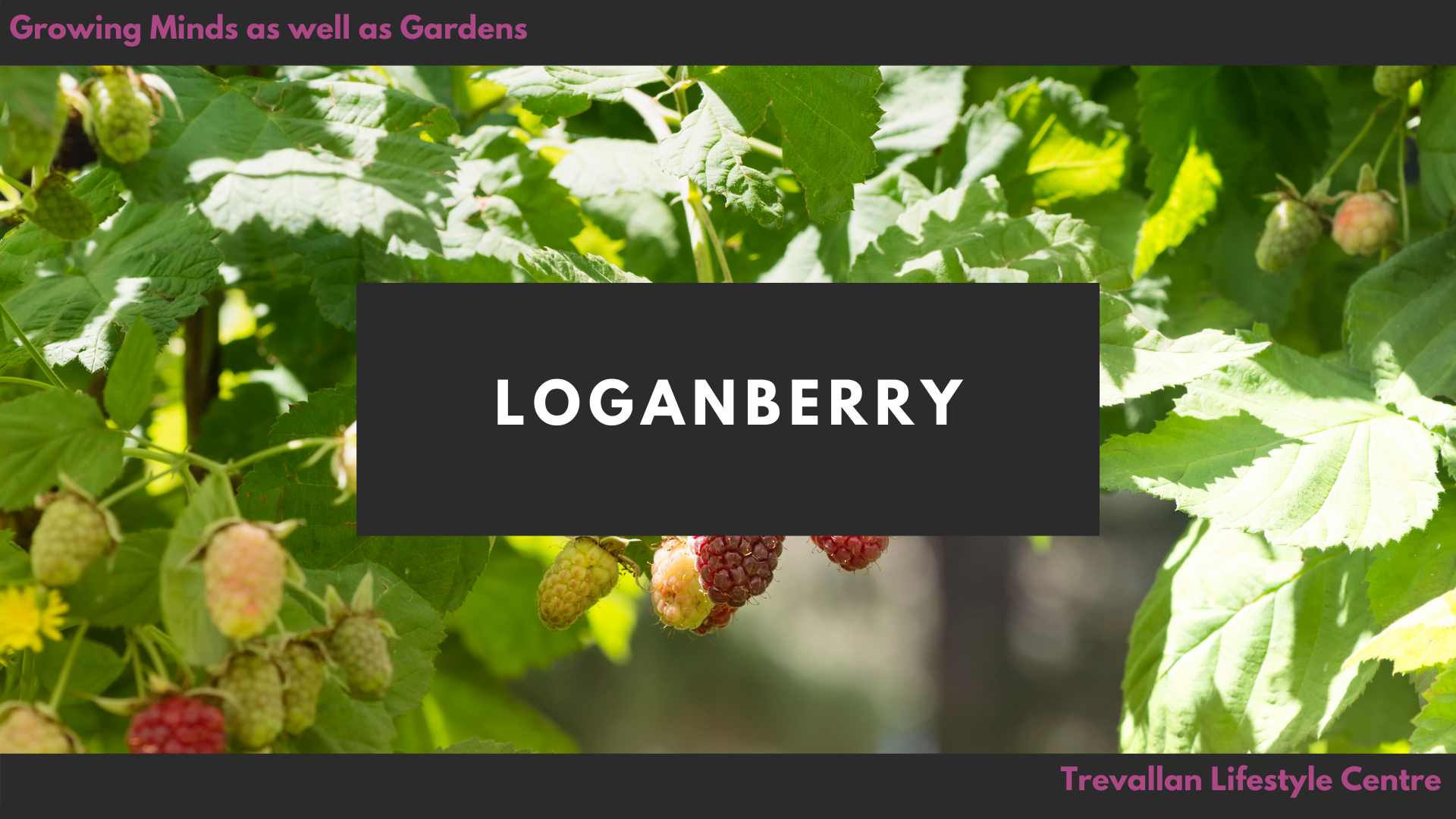
Loganberry - The Accidental Berry
Discover optimal Loganberry growth techniques, effective fertilization methods, and solutions to common problems in our informative blog. Enhance your harvest with expert tips!

If you are after something a bit different the loganberry may be your answer. The loganberry originated due to an accidental cross between a raspberry and a blackberry. The plant is named after the horticulturist who first created it, James Logan.
Loganberries look a lot like blackberries, or very dark raspberries depending on their variety.
Even though loganberry plants are very hardy and are more disease and frost-resistant than other berries they are not very popular with commercial growers. The two main reasons are - the bushes are thorny and the berries are usually under the leaves so its very labour intensive to harvest and the berries don't mature at the same time making it hard to get a complete harvest at once.
Loganberries are therefore more commonly grown by the suburban gardener.
Growth and Harvest
A loganberry bush usually produces about ten canes or vines. The canes tend instead to vine more like its blackberry mum and will need a bit of support to keep them from getting out of control. The vines aren’t as flexible as the blackberry though, so they don’t bend well. It is recommended to train loganberry vines up a trellis rather than along horizontal wires. The trellis should be placed in the ground at the same time as planting so as not to damage roots at a later stage.
The great thing about Loganberries is that the fruit doesn't ripen all at once, they can fruit for about two months, generally from mid-summer until mid-autumn. The berries are harvested when they are a deep purple colour. Amazingly each bush can produce 7 kg to 8 kg of fruit a year. The worst thing is you may need to wear gloves and long sleeves so the thorns don't bother you when harvesting!
Once you've harvested your berries use them up quickly as they will only stay fresh for around 5 days in the refrigerator. For longer storage, freeze your loganberries and use them in cooked dishes. Loganberries can be used in juice or in jams, pies, crumbles, fruit syrups, and country wines.
After you’ve picked your berries, cut the canes back to ground level. A big bush doesn’t mean more berries, so its better to keep it under control, ten to 12 canes will still produce well.
Loganberry vines can be brittle so choose a sunny location that is sheltered from the wind. For a successful crop, it is advisable to choose a fertile soil location for your loganberry trees, as is generally recommended for fruit-bearing plants. Nevertheless, loganberries display a notable tolerance for poorer soil conditions. If your soil is of lower quality, enhancing it with a quality organic garden soil or compost during planting can be beneficial.
Loganberries, like most plants, need regular watering and a good fertilise with a complete organic fertiliser, like Organic Link at the turn of every season. If they aren't producing much fruit try adding some granular sulphate of potash in spring.
When growing any fruit trees in Queensland it is advisable to have an active fruit fly trap going all year.
Pests and Diseases
Loganberries are generally quite resistant to disease and pests, but there can be a few problems.
Raspberry leaf spot fungus starts out as small spots on the upper surface of young leaves. As the lesions grow, the infected tissue may fall out, leaving holes in the leaves. Badly infected leaves curl downward at the edges and drop prematurely. Spray your plant with a fungicide (eco-fungicide is a great organic fungicide), cut out the spotted leave and any infected leaves that have fallen off should be raked away and destroyed.
Dryberry is caused by a tiny mite that lives in the buds of the plant. The mites will start to feed on the fruit as it develops, leaving you with some berries with dry or dead sections in them. It will need to be treated with an insecticide around the time the fruits are starting to form to combat the problem. Organic insecticides would be eco-oil or eco-fend. Regular treatment with Neem oil may also reduce the problem.
If you don't mind a few thorns Loganberries would be a great addition to your home orchard.

Brighten your Garden with Oranges, Yellows and Pinks.
Ixoras have dark green leathery leaves and produce large clusters of tiny flowers in the summer and autumn. They can be a little hard to grow but are worth the effort
Ixoras.
This is an I love it or I hate it plant.
My mum loves them. I must admit I verge on the opposing side. So, why on earth would I write about them and stock them at Trevallan if they are on my not so favourite list?
Well as with many things these plants have grown on me over the years and as with many plants there seems to be a time and a place for them.
Ixoras are native to the tropical and subtropical areas throughout the world, with many of them in Tropical Asia. These plants typically can't handle frosts so if you are in a frost prone area these may not be for you. Some Ixoras are more prone to being cold affected while others can handle a little bit of cold.

Ixoras have dark green leathery leaves and produce large clusters of tiny flowers in the summer and autumn. The more common Ixoras usually have orange, gold, pink or red flowers. Ixoras prefer acidic soil and usually like a little shelter from our blazing summer sun. In saying that I have seen many gorgeous Ixoras growing in full sun in a commercial setting (shopping centres). They don't mind being in pots or the ground.
I find the four most popular Ixoras are 'Prince of Orange', 'Pink Malay', dwarf orange and dwarf gold. Ixora williamsii is also popular as it has red flowers but it really dislikes the cold so is not commonly grown in Ipswich.
Prince of Orange has fiery orange flowers and can grow around two meters tall. The dwarf orange and yellow grow to around 1/2 metre. These look amazing in pots but I have seen them in gardens trimmed into a hedge and they look stunning when in flower. You can hardly see their green leaves.
My favourite Ixora is Pink Malay. Why do I love it? Not just because it gets covered in pink flowers but because it is so hardy. This Ixora is absolutely amazing; growing to around a metre it can handle full sun and shade. It can grow in pots or the garden and I have seen it successfully growing in a shopping centre car park. Yes that's right, a shopping centre car park. A place that has no good soil, no mulch, no care, only rain fall and it looks glorious. This is why I love this plant.
Ixoras like all my plants get fertilised with Organic Link and Triple Boost and neem oil. I use Searles Platinum Potting Mix for pots and Searles' garden soil for gardens.
There is a grub that likes to destroy your Ixora flower heads. There are a few ways to combat this. As soon as the buds start appearing I begin to mix neem oil in with my fortnightly Triple Boost. If it gets really bad I will spray with Dipel. I will sometimes use Searles' Bug Beater. Eco-oil would also work.
Sooty mould can also form on the leaves. This can be caused by scale and ants. Give your plant a really good soil drench and use a soil wetter if necessary. Fertilise with Organic Link and spray with neem oil or Eco-oil. In a fortnight or so you should be able to hose off the soot and hopefully the ants would have dissipated.
This autumn and summer brighten up your dull spots with shades of orange, yellow and pink.

Avoiding Colds and Flu naturally
Staying physically healthy, eating nutrient dense foods and making sure our vitamin levels are correct is the first line of dense. Our airways will be our second line of defence to airborne viruses' that can cause colds and the flu.
Perfect Potion’s Breathe Easy Range, Aroma Defence Blend, Breathing Space Room Spray and Healthy Hands will be the tools we need for this second line of defence.
The cold weather has come again and is presenting us with the usual challenges cold weather can bring - avoiding catching colds and the flu!
Avoiding Colds and Flu

Staying physically healthy, eating nutrient dense foods and making sure our vitamin levels are correct is the first line of dense. Our airways will be our second line of defence to airborne viruses' that can cause colds and the flu.
Perfect Potion’s Breathe Easy Range, Aroma Defence Blend, Breathing Space Room Spray and Healthy Hands will be the tools we need for this second line of defence.
Breathe Easy Range
The Breathe Easy Range can help ease the pain of cold and flu congestion. It can offer relief from the temporary discomforts of respiratory challenges, making breathing easier for the whole family, from adults through to young children, providing protection from airborne bacteria.

Perfect Potion's Breathe Easy Essential Oil Blend. Put this blend in your aroma diffuser, take a deep breath and enjoy the purifying, cleansing composition of pure essential oils in this refreshing blend, including eucalyptus, peppermint and tea tree. It may assist with symptoms of the cold and flu by relieving blocked and congested noses to help you breathe more freely. Breathe Easy blend soothes irritated airways from chesty coughs and sore throats.
I find the Breathe Easy essential oil blend is best used in an aroma diffuser. This is because aroma diffusers are also a humidifier, air purifier and an ioniser.
Just by adding a few drops of Breathe Easy Blend, your house will fill with clean fresh scents that actually help clear your nose. Great for open offices as well. It not only provides some protection from airborne bacteria it is also a very uplifting and invigorating scent.
Put this blend in your aroma diffuser, take a deep breath and enjoy the purifying, cleansing composition of pure essential oils in this refreshing blend, including eucalyptus, peppermint and tea tree. It may assist with symptoms of the cold and flu by relieving blocked and congested noses to help you breathe more freely. Breathe Easy blend soothes irritated airways from chesty coughs and sore throats.
Buy Breathe Easy Now
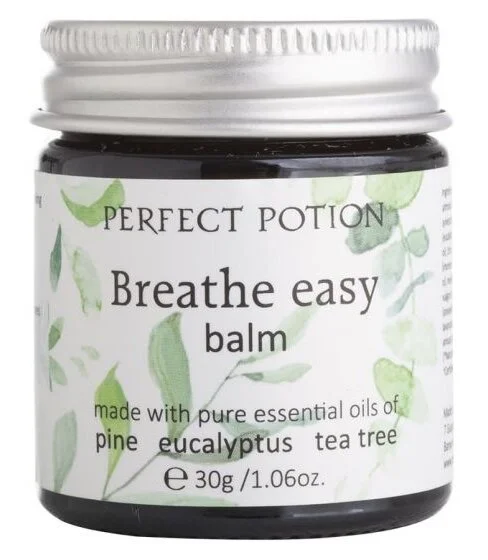
Instead of reaching for vicks (which I don’t like at all) I reach for a more natural product like Perfect Potion’s Breathe Easy Balm.
Instead of reaching for vicks (which I don’t like at all) I reach for a more natural product like Perfect Potion’s Breathe Easy Balm.
Imagine crushing some eucalyptus, peppermint, pine and lemon leaves in your hand, then taking a big deep whiff of this amazing aroma. Feel it cleanse your sinuses, feel it revitalise you. That’s how Breathe Easy smells to me.
Breathe Easy Balm is made entirely from natural and organic ingredients. It is non greasy and as your rub it onto your back, chest and feet you can feel it melting into your skin. I even dab a tiny amount under my nose as it helps keep my sinus clear all day.
Everyone in the house, children and adults, gets a little bit rubbed on them morning and night during the colder months. While the jar looks small it is amazingly cost effective.

Breathe Easy Mask Spray features Perfect Potion's signature Breathe Easy blend of pure essential oils in quick-drying plant-derived ethanol, and is part of the Breathe Easy Collection. Perfect Potion’s skilled aromatherapists have crafted the aromas of our mask sprays to be subtle but effective, so that you can experience the benefits of aromatherapy on-the-go while staying protected and feeling good.
TAKE A DEEP BREATH AND CLEAR THE AIRWAYS
Purifying, camphoraceous aroma
Make mask wearing enjoyable with this refreshing, cleansing blend
Enjoy the benefits of pure essential oils with each inhalation
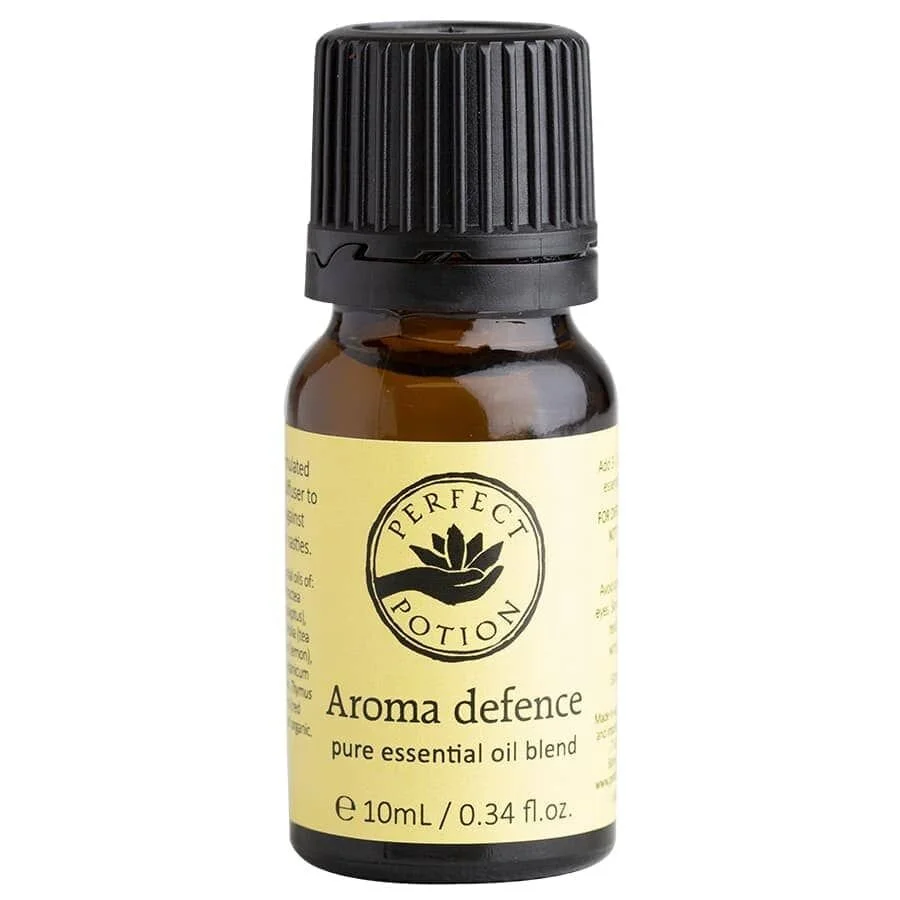
The Aroma Defence Blend has been specially formulated for use in a diffuser to purify the air with eucalyptus, tea tree, lemon, cinnamon and thyme 100% pure essential oils.
The Aroma Defence Blend has been specially formulated for use in a diffuser to purify the air with eucalyptus, tea tree, lemon, cinnamon and thyme 100% pure essential oils.
This is a fantastically scented blend that is perfect to clear the air of nasties. It has a nice crisp scent with an ending note of cinnamon buns cooking in an oven.

The Breathing Space Room Spray promotes a clean and fresh atmosphere that is useful for keeping winter colds and flu at bay.Use every day and experience the uplifting, refreshing effect of fir, lemon and eucalyptus pure essential oils
The Breathing Space Room Spray promotes a clean and fresh atmosphere that is useful for keeping winter colds and flu at bay.
It is also great if you use public transport. It can be spritzed over you before and after your trip to help keep other people’s nasties at bay.
Spritz your room, office, car or yourself as many times a day as required to help cleanse the atmosphere.
Use every day and experience the uplifting, refreshing effect of fir, lemon and eucalyptus pure essential oils.
It is also great as a linen spray for keeping insects away and as a disinfectant for stinky shoes. Even a small spray on stinky clothes before a wash is helpful.
Healthy Hands
Having healthy hands is a great way to stop bacteria spreading. Firstly we must understand that there is good bacteria and bad bacteria and by constantly using sanitisers we are killing both.
Everything in moderation as we don't want to live in an overly sterile world. A good hand wash will always be better than constantly using sanitisers but in today's world we need to be able to take the sanitisers out with us and use on the go. At home hand washing is best.
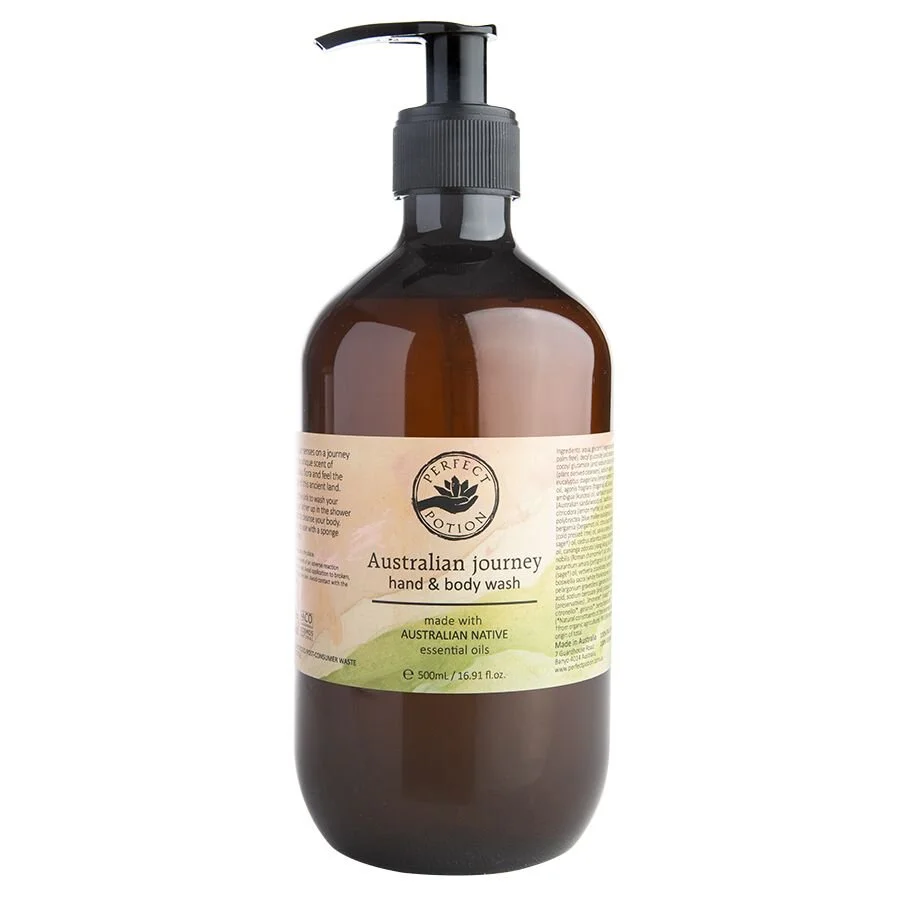
Cleanse your hands and body with this sulphate and palm-free wash while energising the senses with the fresh and woody aromas of lemon-scented ironbark, fragonia, kunzea, Australian sandalwood, lemon myrtle and blue mallee eucalyptus pure essential oils.
Perfect Potion stock many different certified natural, sulphate-free hand and body washes that gently cleans your hands and body without causing dryness. My favourite though has to be the Australian Journey Hand & Body Wash.
Take your senses on a journey with the unique scent of Australia’s flora and feel the energy of this ancient land. This unique formula gently cleanses the skin without drying and is safe for all skin types.
Use at the sink to wash your hands or lather up in the shower or bath. Allow the earthy, yet clean scent, reminiscent of the Australian bush, to invigorate your senses. Superb to use with a loofah or sponge.
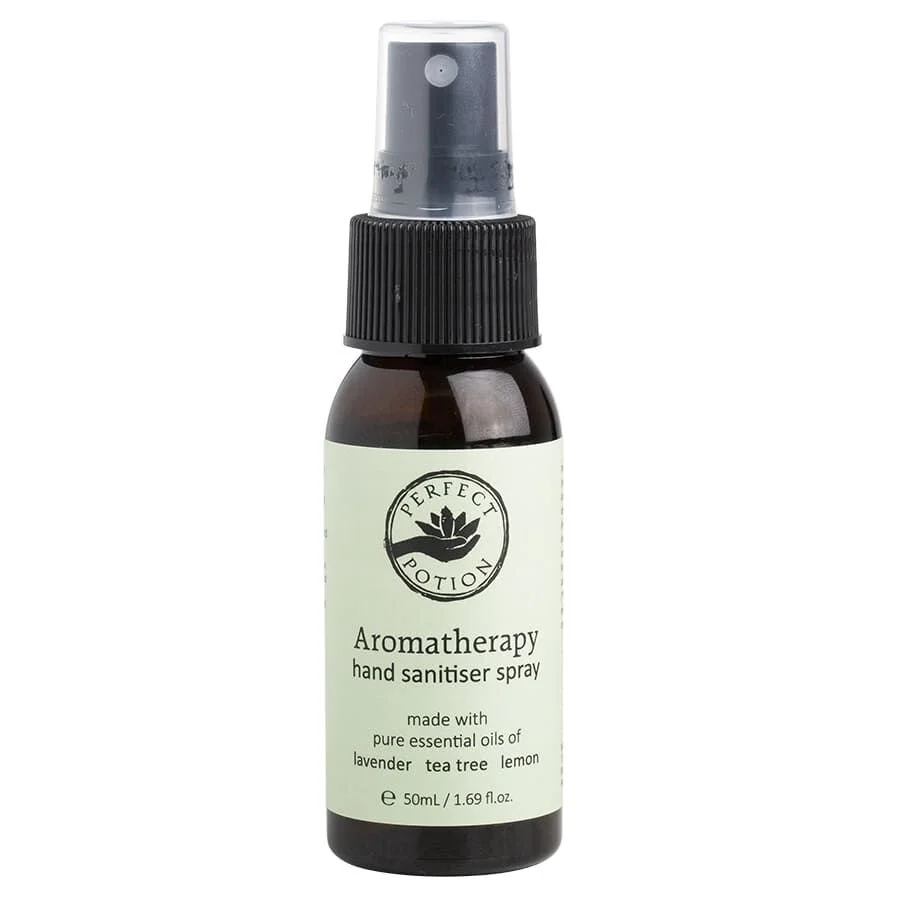
Feel safe and secure with Perfect Potion's Aromatherapy Hand Sanitiser Spray. This all natural, no-rinse hand sanitiser contains powerful pure essential oils of tea tree, lemon and lavender in a natural plant ethanol base.
Feel safe and secure with Perfect Potion's Aromatherapy Hand Sanitiser Spray. This all natural, no-rinse hand sanitiser contains powerful pure essential oils of tea tree, lemon and lavender in a natural plant ethanol base.
Please note: product contains 80% alcohol which meets Centre for Disease Control & Prevention (CDC) guidelines.
Pop into your bag and take it anywhere. Simply spray 2-3 pumps onto your hands and rub together. Great for children and adults.
This cold season fight colds and flu naturally with a little help from Trevallan and Perfect Potion.
Autumn Gardening
It’s amazing what some time outside can do for the soul. I know I am looking forward to quality gardening time this autumn!
I'll be honest when that calendar clicks over to March 1st I totally expect the weather to change.
Even though I live in Queensland I also expect trees to start changing colour and I even kind of imagine being that person that rakes a pile of autumn leaves into a pile then jumps on them, like they do in the movies!
Annnd this all starts on March 1st!
Reality hits... Its a 35 degree day with what feels like 60% humidity. Sweat is currently sitting on top of sweat. Pretty much like its been for last few days. We are supposed to get rain but we all know, the weather man has no idea how really how the week will turn out!
I try to enjoy the weather today because it wasn't as hot as yesterday. I try to write an amazing welcome to Autumn post on Facebook ... I try to be excited about my Autumn vegetable patch. I try to share the supposed Autumn hints and tricks with you.
As an Ipswichite I know that usually Autumn will hit mid April ... but this year who knows ... It's been a crazy year already.
Today I was wondering, what do I write to welcome us all to Autumn and I came across something I had written in 2007.
Feeling hot, bothered and frustrated, the sentiment I was reading really resonated with me. I do believe as I type this now my fingernails are the cleanest they have been in a long while! I'm not sure whether to blame the weather or life suddenly becoming really busy, since we got 'back to normal'.
The bundle of joy mentioned below recently turned 14 and he has a brother and a sister now. It's funny how life turns full circle on you. Today I had 20 minutes spare, in between a phone call and general mother/life/businessperson duties ... I gardened like no one was watching.... and I can tell you that 20mins today felt more like a accomplishment than I washed, dried and put sheets on everyone's bed!
Since the birth of my first bundle of joy things have changed. My fingernails got clean. For the last 12 weeks I’ve had clean fingernails. I hate it. In between feeding, changing nappies, singing mother goose nursery rhymes and pretending to sleep, I haven’t had the time to get outdoors and get dirty.
Things had to change.
So a hat, a sun shade and a play mat was brought and out we went into the wide green yonder of our backyard (well it’s actually brown at the moment). The garden was to big of a job to tackle on my first day of getting the dirt back under my nails, so my pots got a work out.
It felt great. Elbow deep in soil, surrounded by dreams of rain, and reality of watering cans and soil wetters.
An hour later, two pots were completed. I had spreading pansies, perennial primula, alyssum and a camellia. I had mulched, soil wetted and fertilised. My nails were dirty and I was the happiest person around.
My little bundle of joy had received his first lesson in gardening and I didn’t let anything stand in my way of gardening.
This season don’t let life and the weather stand in the way of you getting your fingernails dirty. We can still get out water and admire our plants.
Flowers and gardening bring so much joy to everyone. Isn’t it nice to drive around and see gardens that are well taken care of and full of flowers. Isn’t lovely when you come home from a hard day at work to drive in and see of bright pot of flowers at the front door. Doesn’t it make you feel good when you eat a home grown tomato.
I can’t believe how much happier it made me feel just by getting outdoors and tending to my pots. They say laughter is the medicine for the soul, that person must not have been a gardener. Flowers are definitely the medicine for my soul.
Everyone should get outside and get dirty!
Plant a pot of flowers,
Put in a crop of tomatoes,
Redo a small section of your garden,
Whatever it is remember that no one can take the joy and pleasure that gardening brings away from you …
Not even the weather man!
It’s amazing what some time outside can do for the soul.
I know I am looking forward to quality gardening time this Autumn, no matter what the weather or guidelines the Government brings in!

Grow your own Tea
We can easily grow Camellia sinensis in Ipswich. We just have to understand they will grow a lot slower than they do in their natural habitat. We may only get one yield a year out of our Camellia sinensis.
Do you know that almost every type of tea comes from a Camellia? That's right tea comes from the plant Camellia sinensis.
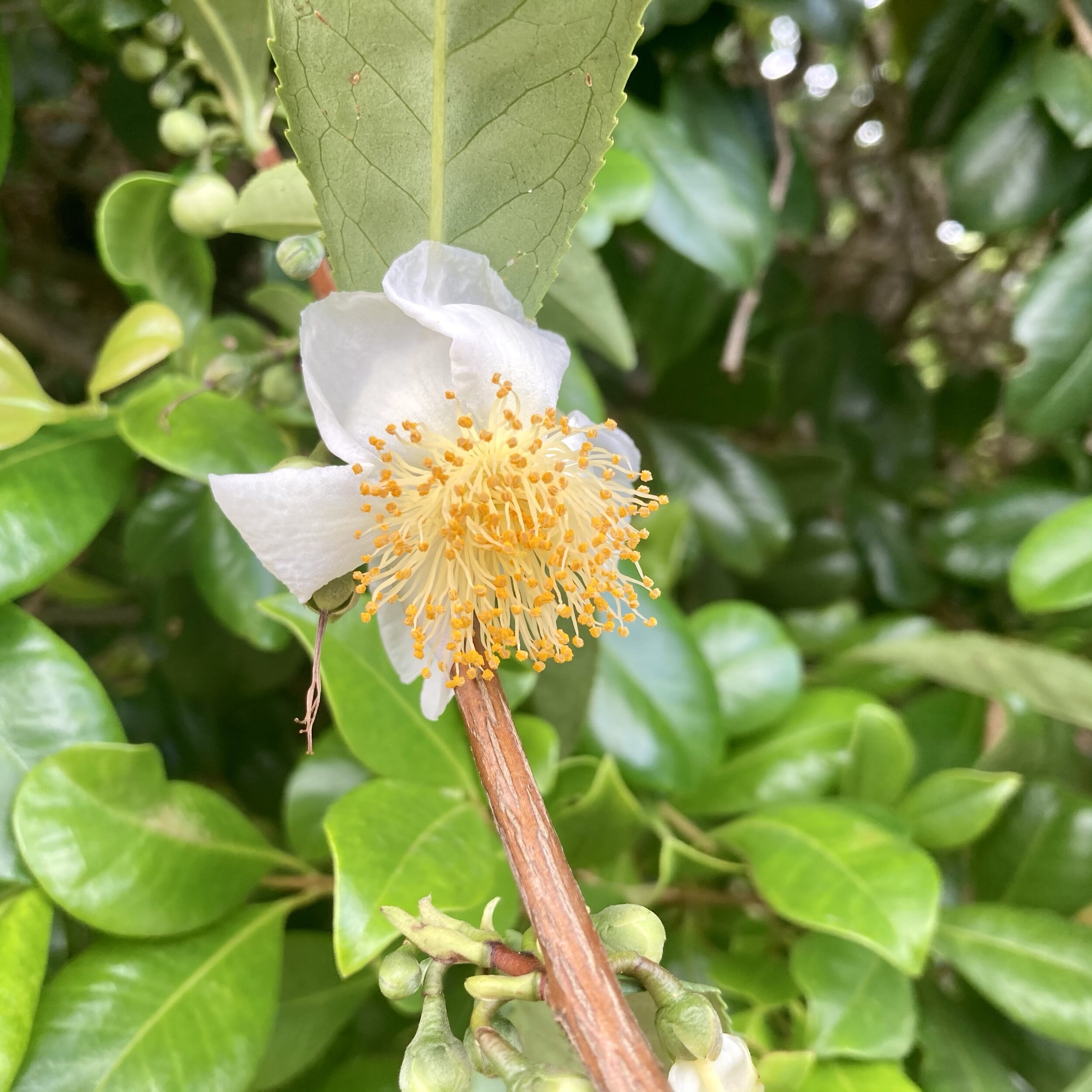
Camellia sinensis Flower
Camellia sinensis var. sinensis and Camellia sinensis var. assamica are two major varieties grown today. Camellia sinensis are believed to have originated in the borderlands of north Burma and southwestern China.
Camellia sinensis are evergreen shrubs. The leaves are glossy green with serrated edges. It usually forms cute small white flowers with bright yellow stamens in spring but I have found in our climate it can flower from spring through to winter. In cultivation flowering is halted by the consistent plucking of new growth, forcing the plant to constantly make more leaves not more flowers.
After flowering Camellia sinensis can fruit. This fruit has a hard green shell and a single, round, brown seed, these seeds can be used to make tea oil. Tea oil has huge huge potential in the cosmetic industry and medical industry due to its natural healing and nutritional properties. It is also commonly used in Chinese cooking.
Camellia sinensis sinensis (China)
Camellia sinensis var. sinensis is the main tea plant in production in China. It naturally grows at high altitudes on mountain slopes. In its native habitat it can grow to 4.5m tall and produce leaves up to 5cm long. The growing season may be short in it's native mountainous area and the yeilds small but the tender leaves yield a sweeter, less astringent tea.
When grown in cultivation the plant is pruned to about 1m high with a flat top surface to allow easier plucking of the new growth. In most areas the growing season is only half of the year as the plant is dormant during Winter. These plants will generally only yield about five pluckings a year. Due to its dormancy during Winter, where its storing up all its nutrients, the first spring "flush" of new growth provides some of the finest teas on earth with the highest concentrations of desirable flavours and essential elements that make tea a health tonic.
Camellia sinensis assamica (Assam, India)
Camellia sinensis assamica is native to the Assam region in Northern India (near boarder of Burma and China). This strain of Camellia sinensis loves high humidity, warm temperatures and lots of rain. If left alone the Camellia sinensis assamica can grow up 15-20m high and its leaves can be 20cm long. Under perfect conditions Camellia sinensis assamica can be harvested every 8 to 12 days all through the year. Due to the tremendous yields, it is the preferred crop in Northeast India, Sri Lanka and Africa. The Camellia sinensis assamica leaf is ideal for producing strong, malty, black teas. Other Chinese teas requiring lengthier production, such as oolong and pu'erh, are also made from the larger leaves of the Assamica plant.
We can easily grow Camellia sinensis in Ipswich. We just have to understand they will grow a lot slower than they do in their natural habitat. We may only get one yield a year out of our Camellia sinensis. Due to their slow growth rate, Camellia sinensis would be happy to stay in a pot or they could be used as a low hedge. With little effort Camellia sinensis can easily be trained to grow thick and neat, they really only need to be pruned once a year, when you do your tea harvest!
To promote good growth and some flowers I would be fertilising with Organic Link at least twice a year, just before flowering and just after. Throughout the year I also think its a brilliant idea to regularly liquid fertilise. I like to alternate between Triple Boost and Silica and Potash. I find Camellia sinensis aren't prone to a lot of insects or diseases if kept healthy. I usually mix neem oil with my Triple Boost Liquid Fertiliser to promote strong healthy growth. If by chance I get an insect attack I find Eco-oil or Eco-Fend can usually solve the issue.
Camellia sinensis can tolerate both full sun and full shade but the best spot is a partially shaded area. As long as they are planted into good quality potting mix or garden soil and mulched correctly Camellia sinensis can be one of the most robust drought tolerant plants around. They do prefer regular watering's though to promote healthy new growth.
If you've been looking for something a little different to grow in your garden this year, I'd suggest Camellia sinensis are a great place to start.
If you love your tea but can't wait to grow your own, Trevallan also stocks Tranquil Tea's Ipswich Breakfast Blend

Tranquil Tea
Tranquil Tea, another local business, has released her own tea blend and she named it in honour of her now home, The Ipswich Breakfast Blend.
We love supporting other local businesses. One that has changed our lives for the better is Tranquil Tea.
A few years ago we had the pleasure of holding a Tea Workshop facilitated by Dona the creative behind Tranquil Tea. Dona explained during the workshop that she grew up in a country where she woke up everyday to a cup of tea. It was the first drink of the day. Tea plantations were the natural place to visit when they travelled around the country.
In her first job as a flight attendant, she served a cup of ‘Çeylon tea’ with pride because she knew that Ceylon tea could not be replicated or grown from tea planation's elsewhere in the world.
During this workshop we discovered what 'real' tea tastes like! While we were all coffee only girls before, you will now often find us having a cup of tea in the afternoons.
Fast forward a few years and Tranquil Tea has released her own tea blend and she named it in honour of her now home. The Ipswich Breakfast Blend is Tranquil Teas first blend from her personal range and can be found at Trevallan and other local cafes around town.
Tranquil Tea's Ipswich Breakfast Blend
Tranquil Tea created this beautiful blend (think English Breakfast but better) to pay tribute to the beautiful town that she has loved living in for the past 12 years. Tranquil Tea states "I love everything about this little city starting from historical buildings and the heritage it carries, landscape, we are in a city surrounded by a mountain range and most of all; people from all walks of life who are proud of their heritage. We have more than 6000 heritage-listed sites and over 500 parks... Love, care, safety, roof above heads and belonging "
Trevallan is over joyed that we can share this experience with you, we now a stockists for Ipswich Breakfast Tea. Why not come in today and be one of the first to get a box of this wonderful new release Tea.
Want to know how to grow your own Tea? Click here

Grow your own Coffee
Have you grown and made your own coffee? Ultimately these babies can produce beautifully scented white flowers, fruit that can be eaten raw and then the ultimate seeds that make the coffee.

Did you know that the coffee tree shares the same family as cocaine?
Coffea arabica also known as the Arabian coffee, is a species of Coffea.
It is believed to be the first species of coffee to be cultivated and is said to currently represent over 60% of global coffee production.
The other main coffee producer is and Coffea canephora, known as "Robusta"Coffea arabica is one of the world's most valuable crops and is the preferred coffee of choice as it is sweeter in taste.
Coffea canephora, has a higher caffeine content.
C. arabica originated in the highlands of Ethiopia and the Boma Plateau of Sudan.
According to Wikipedia, The first written record of coffee comes from Arab scholars, who wrote that it was useful in prolonging their working hours.

Coffea arabica 'First Fleet' Taken by Jerry Coleby-Williams
Coffea arabica can grow quite tall but there are dwarf varieties available. You can also just prune your Coffea arabica to size. Jerry Colbey-Williams recommends pruning your coffee tree to produce a crop that ripens evenly, to protect the cherries (fruit) from fungal damage, and to keep plants to a suitable height for picking. Jerry states that “Coffee plants flower on the current season's growth, not on older stems. Prune off all weak, dead or crossing branches. If necessary, thin flowering stems so all of them are exposed to good sunlight.”
Coffea arabica prefers a position that gets a lot of warmth but not too much direct summer sun. I have found this plant will burn in full sun and fade in shade. We have it in a number of positions at Trevallan and it loves early morning sun and all day warmth or late afternoon sun and all day warmth. I’ve even heard of people growing it in a full sun position inside. You know the place where the sun streams in through the windows! Coffea arabica hates the cold and during winter really loves a warm spot. It likes regular watering and hates drying out for long periods. It also hates over watering. Regular water is key! It can also be susceptible to insects if allowed to get unhealthy. I find fertilising mine regularly with Organic Link and a regular Liquid feed with neem and Triple Boost keeps ours looking good. Also great soil - free draining and nutrient dense. Jerry Colley-Williams has many posts on his Facebook page about coffee and all its different uses. Like, did you know you you can eat the ripe outer flesh? Jerry says it’s sweet and antioxidant rich. It can also be brewed to make tea which is said to have anti-inflammatory properties? A tea from coffee, mind blown!
Ultimately these babies can produce beautifully scented white flowers, fruit that can be eaten raw and then the ultimate seeds that make the coffee. It’s a long process and not one I would like to do to get a cup of coffee in the morning but at the same time an exercise I would like to experience
Have you grown and made your own coffee?
Coffea arabica now available at Trevallan

Finger Lime
Finger Limes - Little balls of goodness on your tongue and a sweet Lime explosion happens in your mouth, giving a unique flavour sensation.
Finger Limes are like our national treasure.
I always liken the little balls of tasty goodness to popping candy that I used to have as a kid.
Here’s this weird long fruit that you cut open to reveal what looks like caviar. You put these little balls of goodness on your tongue and a sweet Lime explosion happens in your mouth, giving a unique flavour sensation.
But to get to this amazing point we all need to remember the saying be thankful the thorn bush has roses!
To me Finger Lime bushes are spindly and exceptionally prickly. There really isn’t much more to say about their looks. As my mother always taught me if you can't say something nice, don't say anything!
As for care and attention, these guys are very hardy as long as you get it right! They Like a very warm protected position. This plant isn’t a fan of the cold and it also hates the burning sun. You have to remember that these plants are native to the rainforests of the border ranges of SE Queensland and Northern NSW.
I personally have found I can grow them better in a pot but I know a lovely family that is growing them by the tens at Pine Mountain in the ground.
They love a really nutrient dense soil so fertilise on the turn of every season with an excellent quality all round organic fertiliser like Organic Link.

Finger Lime Chartreuse
I have found it’s best to keep them trimmed as they can get a little, dare I say it, ugly !
White Autumn flowers are followed in Winter and Spring by slow-growing finger-shaped fruit containing glistening ‘citrus pearls’. The fruit is highly nutritious, rich in Vitamin C and high in antioxidants. Finger Lime fruit doesn’t ripen well off the tree, so pick only fully ripe fruit – these will feel full and detach easily. When opening the fruit, avoid getting oil from the rind onto the pearls, as this can affect the flavour.
Varieties Trevallan Stocks
Red Champagne variety of Finger limes produce fruit from December to March and they say the flavour is like spiced apple and apricot with a berry aroma... sounds like a good wine description!
Chartreuse has a subtle citrus flavour and is less bitter than other finger lime varieties. It has green fruit with a pale green/yellow flesh. It is said to be ideal for salads, desserts and seafood. Chartreuse has a long fruiting season
Byron Sunrise is a dark skinned finger lime with tangy light pink coloured citrus pearls that strengthen in flavour when the fruit is cut and exposed to the air.
Crystal variety has very large fruit and can be vigorous, enabling the possibility of high yields per tree. The fruit is green skin with light green vesicles, bursting with flavour.
Seriously while these plants aren’t the prettiest plants they have a unique look that can work in many garden designs especially as containerised feature trees. Come into Trevallan today and get your own native fruit tree!

Going Bananas
Bananas, we can finally grow them in our backyards, legally. Which variety is best for us and how do we grow them successfully?
We are going Bananas at Trevallan
We have some beautiful looking bananas at Trevallan. This range of banana have been selected for not only being able to grow and fruit well in the home garden but also for their ability to produce fruit under cooler conditions.... we all know sometimes we can get cold here in the Ipswich Region.
Varieties of Bananas Trevallan Stocks

Dwarf Red Dacca produces small, very sweet bananas with a creamy texture. The skin changes from burgundy to orange as they ripen and the flesh is pale orange-pink.
Dwarf Cavendish produces heavy crops of full sized, sweet bananas with a creamy texture. The tree is super dwarf reaching a maximum height of only 2m so it is perfect for pots, so it can be grown on balconies and yards.
Lady Finger produces small bananas with a rich, sweet flavour and creamy texture and which keep well. Great for fruit salads since the flesh does not brown when cut
Blue Java fast growing, cold tolerant. Fruit has the flavour and consistency of creamy vanilla ice cream or custard.
PLANTING INFORMATION
Bananas require deep, rich soil which is well drained, in a position which is in full sun for most of the day.
Let’s be honest most soil in Ipswich isn’t that good unless you’ve been really working it for the last few years. So you will really need to work your soil well before you plant. A couple of bags of Searle’s Compost, some granulated Soil Soaker and a couple of handfuls of Organic Link will really enliven the soil before you plant.
The Dwarf varieties can be planted in very large pots. For this I would use Searles’ Platinum Potting Mix
They suggest a north facing position is best for your banana and make sure if you get frost you can either protect it by throwing a cover over it or it’s in a protected position.
After planting, water thoroughly and apply a thick layer of organic mulch to the worked area, keeping it away from the stem of the plant. I find sugar cane is best.
Bananas are heavy feeders and as the plant grows it will need a good feed about every two to three months. I would be using Organic Link.
Remove dead leaves regularly and keep the tree clean.
WHEN TO HARVEST
You will know the bananas are ready to be harvested when the bananas lose their ridges. They will become more rounded, softer looking.
The flowers at the end of the bunch will go dry and crumbly is an indication as well.
MOST IMPORTANT INFORMATION TO KNOW ABOUT BANANAS
It may take 2-3 years for the first fruit to be produced.
Suckers will appear from near the base of the main stem.
You will need to select one to be the next main stem and remove the others.
After the fruit has been harvested the stem that had the fruit on it should be cut down.
The retained sucker will replace it as the main stem.
This process is continued indefinitely
Bananas don’t need another tree to help pollinate the flower so one Banana tree is enough but since variety is the spice of life why not grow all three if you have the space.
My Dirty Little Secret
I love the scent wafting in the air, just a hint of spring. I love getting up close and breathing deeply letting the fragrance fill me. I love how it captures me and makes me want more. Oh how glorious it would be to be surrounded by Jasmine polyanthums.
Every year around this time my secret love affair starts.
It starts off slow with only a hint of the love and pure joy that will come as the days turn into weeks and finally months.
Then it’s gone. All the happiness and pleasure gone and I come crashing back down to earth.
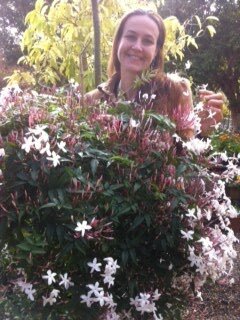
Jasmine Polyanthum in full bloom. I love this scent.
I have to keep my love a secret as so many people disagree with me plus this love is just so, so, so common!
But I’ll let you in on my dirty little secret…. I love Jasmine polyanthum. They give my end of winter start of the westerly winds blues the TLC I need to continue. I know spring will be here soon.
I love nearly everything about this plant.
I love the soft feather like foliage, the deep green lushness of its leaves.
I love the way it soft stems intertwine themselves and fall gracefully down.
I love how the pink buds form at the end of winter, letting me know the end of this cold is close.
I love watching the deep pink buds open to the purest white flower.
But most of all I love the scent.
I love the scent wafting in the air, just a hint of spring. I love getting up close and breathing deeply letting the fragrance fill me. I love how it captures me and makes me want more. Oh how glorious it would be to be surrounded by Jasmine polyanthums.

Every year I forget what their scent does to me. Then I start to notice them everywhere. This beautiful dense climber with pink buds and then they buds open and I’m in love all over again.
While Jasmine polyanthums are beautiful at this time of year reality hits around autumn and winter when they have a tendency to look a little shabby. I have found that a good fertilise with Organic Link Fertiliser and trim after flowering (November) and just before flowering (June) helps keep them looking neat and beautiful.
Jasmine polyanthums love the full sun but can grow in some shade. They are a very vigorous climber and can cover an area quite quickly.
If you don’t have anywhere for them to climb don’t worry they look glorious in hanging baskets or trailing over the edges of retaining walls.
I have even seen some Jasmine polyanthums climbing on chain link fence and they were so highly trimmed it looked like a box hedge.
These plants are hardy – they don’t mind a little bit of dry weather or a little bit of wet weather. They seem to handle the cold and the heat and once established can handle most soil types.
Jasmine flowers are also commonly used as aphrodisiacs so make sure you like your neighbours before you use it on your fencing!
Also for many people the scent can be very overpowering and even a bit sickly so do be mindful of where you plant it.
This weekend give your love life some TLC and bring a Jasmine polyanthum home, it can even stay inside for a few days too, so you can enjoy the scent 24/7.

My Favourite Scentous Month
I find the best way to give my life some TLC especially during one of the coldest months of the year is to have a Rogiera amoena.

I love July. It has to be my favourite month. Not only is it my birthday month but my favourite plant is starting to flower. I first discovered this plant when I was a little girl climbing trees in my parent’s garden. At the time I thought that my mother and father had especially planted this tree for me so I had flowers on my birthday. I just could never work out why they planted it under my sister’s window and not mine! Even when I smell the flowers today I get transported back to their garden and a time of simple existence.
I find the best way to give my life some TLC especially during one of the coldest months of the year is to have a Rogiera amoena. Many of you would know it by it’s old botanical name Rondeletia amoena. Whether it be in the garden or a pot this plant is a must for all gardeners. Some may class it as old fashioned, for me it’s timeless!
Previously the genus name, Rondeletia, commemorates Guillaume Rondelet, a 16th century French naturalist. The species name, amoena, is from the Latin meaning 'lovely' and lovely it is.
Rogiera amoena is an evergreen shrub or small tree to around 3m tall. It has dense green foliage making the perfect tree for hedging or as a feature. Energex even thinks it’s a wonderful plant and recommends it for planting under power lines.
By July Rogiera amoena are just beginning to produce their clusters of deep pink buds which will slowly open to salmon-pink, perfumed flowers. They will flower from July until the end of spring. These deliciously scented flowers do not have an overpowering scent. If you are anything like me though you’ll want to sit all day in the garden and breathe in this divine scent.

Rogiera amoena’s are a versatile plant that can be grown in full sun or part shade. It is a very tough, drought-tolerant plant for any style of garden from tropical to formal. These plants are hardly bothered by pests or disease and they even attract butterflies!
Whether you have a green-thumb or slightly brown tinged one Rogiera amoena are for you.
A light prune after flowering and a seasonal fertilise with an organic slow release fertiliser, I use Organic Link, will promote a denser form and more beautiful plant.
This weekend spoil yourself and take a trip back to your childhood. Rogiera amoena are the best and easiest way to give yourself and garden some TLC during the cold month of July.

Ridding your Home or Office of Bad Vibes
Smudging is a common way to rid our homes of that yucky or bad feeling. It is believed to be a powerful spiritual cleansing technique which uses the smoke of various sacred plants to drive away negative energy and to restore balance to an individual, a group, a space, or all three. Here’s how Trevallan does it …

Smudging is the common name given to the indigenous American tradition known as 'The Sacred Smoke Bowl Blessing'
Smudging is a common way to rid our homes of that yucky or bad feeling. It's also a great thing to do if you just move into a home or if everyone has been feeling off kilter.
Smudging is the common name given to the indigenous American tradition known as the Sacred Smoke Bowl Blessing.
It is believed to be a powerful spiritual cleansing technique which uses the smoke of various sacred plants to drive away negative energy and to restore balance to an individual, a group, a space, or all three.
Smudging has only come into the general Western consciousness in the past few decades, so it may seem strange and "new age-y" to some.
However, smudging is a traditional that goes back thousands of years.

Be gone, Bad Vibes with smudging
Smudging allows you to wash away all the emotional and spiritual negativity that gathers in your body and your space over time. It's a little bit like taking a spiritual shower!
The effects of smudging can be very effective, often banishing stress almost instantly and providing energy and peace. Originally, herbs and resins were placed in a special bowl and burned, or were burned over the smouldering coals of a fire.
Now days we have ‘Smudge Sticks’ and Smudge Incense.
Trevallan’s stocks smudge sticks, these are composed of bundles of dried sage tied together and Smudge Incense, white sage and Palo Santo. The incense provides a great alternative to those who might be allergic to or don’t like the scent of the traditional sage stick.
The smoke of Sage and Palo Santo are believed to drive away negative energies and influences. After you have Smudged your house with White Sage or Palo Santo it is advised to burn some dried sweet grass or your favourite essential oil or incense. These attract positive energy to the space from which the negative energy was banished. Trevallan stocks fresh sweetgrass in our herb section and Perfect Potion's Essential oil blends.
How to Smudge
I always like to open all doors and windows
Light one end of your smudge stick or incense stick, allowing it to catch fire and burn for several seconds. Once the flame extinguishes gently blow on the lit end to fan the embers; it will begin to glow and smoke.
Have a heat proof dish, to catch the ashes as it burns. We should always respect the power of fire when using it in ritual.
As the smoke rises into the air, picture your intention, whatever it may be. If you are clearing negative energy, picture its density and see it lifting away. Healing? Then imagine the smoke cleansing any illness or injury. Whatever it is – envision it floating away on the smoke. You can pray or chant if you feel so called.
Use your hands to guide the smoke over yourself and around your sacred space.
Upon completion of smudging your space, douse the burning embers and Thank the universe.
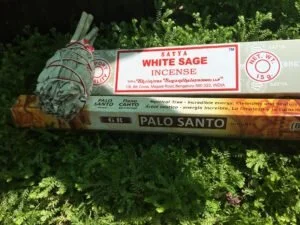
Different ways you can Smudge
The beauty of smudging is that it can be done at any time, as often as you need, no matter your background or culture.
If by chance the idea of 'Smoke Cleansing' does not feel right. Trevallan stocks a range of other products that you can use to cleanse your space and yourself! Click here for more information.
If you've been feeling off kilter or maybe things just keep going wrong at home why not give cleansing a try. At the very worst you house will smell nice after you complete the ceremony!

Forest Bathing
Due to urbanisation, media and technology our biophilia, close relationship with nature has been weakened. It is believed the disconnection with nature is one reason why we have so many mental health issues.
Sal from Perfect Potion believes the renewed interest we have for aromatherapy is based on our desire to reconnect with nature.
Learn how here….
"It is not so much for its beauty that the forest makes a claim upon men’s hearts, as for that subtle something, that quality of air that emanation from old trees, that so wonderfully changes and renews a weary spirit.” – Robert Louis Stevenson
Did you know there was a term used to describe that innate tendency we have to seek connections with nature?
Biophilia
Biophilia is an innate and genetically determined affinity of human beings with the natural world.
Due to urbanisation, media and technology our biophilia, close relationship with nature has been weakened.
Sal from Perfect Potion believes the renewed interest we have for aromatherapy is based on our desire to reconnect with nature.
He thinks that essential oils remind us of nature and that they are a powerful tool to bring healing qualities of nature back into our lives. It seems we need aromatherapy more than ever to reconnect with nature.
It is believed the disconnection with nature is one reason why we have so many mental health issues.
The Japanese many moons ago decided to do something about this disconnection and in 1982 the term shinrin-yoku was coined.
Shinrin-yoku literally translates to taking a bath in the forest.
There have been many studies that have confirmed that spending time within a forest can reduce psychological stress, depressive symptoms and aggression, while also improving sleep and increasing both our energy levels and sense of wellbeing.
Japanese researchers also found that 20 minutes of shinrin-yoku (compared with 20 minutes walking in an urban setting) altered cerebral blood flow in a way that indicated a state of relaxation.
The Nippon Medical School showed that forest bathing (either a day trip or a couple of hours daily over three days) can have a long-lasting influence in increasing the number of natural killer cells and increasing the number of intracellular anticancer proteins.
It was also reported that the natural chemicals, phytoncides, secreted by the evergreen trees, have been associated with improvement in the activity of our immune system. Essential oils from the Pine family are high in this chemical.
With all this in mind Sal from Perfect Potion developed the Shinrin Yoku Range.
Shinrin Yoku Range
Shinrin-yoku Room Spray

Transform your surroundings into an enchanting mystical forest with the lush forest-green scent of Siberian fir CO2 extract blended with pure essential oils of lemon, bergamot, lavender, sage, rosemary, Virginian cedarwood, geranium and sweet orange.
Spritz yourself or your room and allow the scent of the forest to surround you.

It’s time for you to reconnect with Nature by creating a healing sanctuary with the aromas of the forest. Experience the health benefits of forest bathing in your home or office
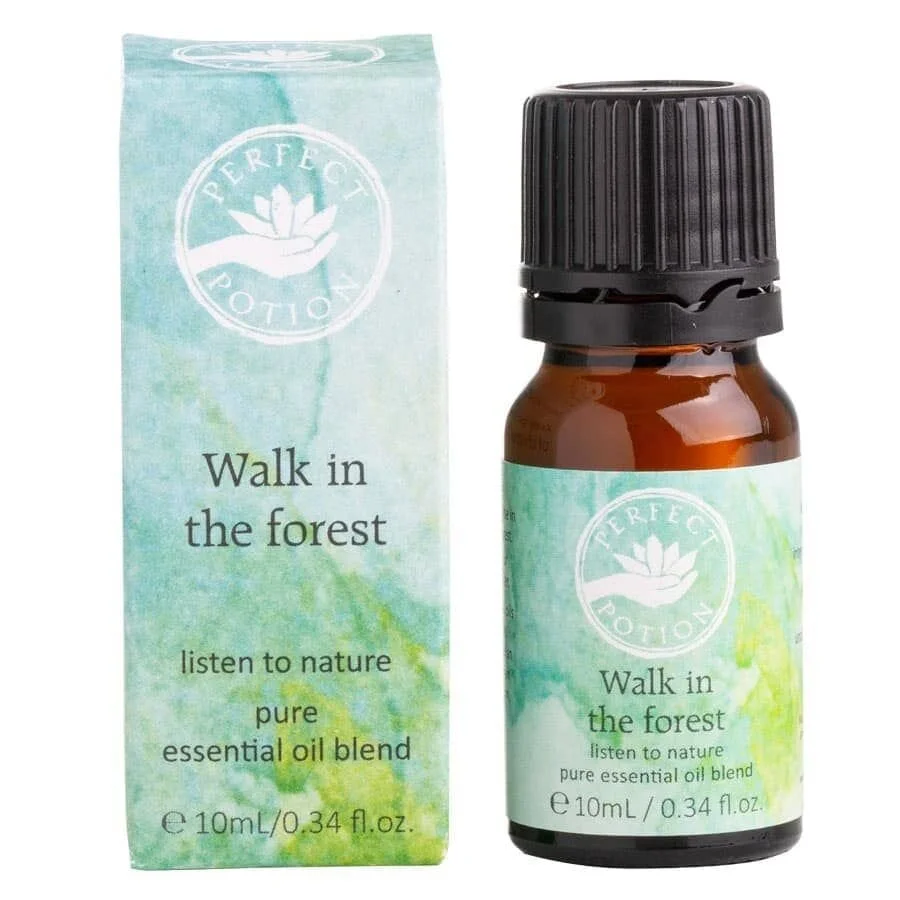
Walk in the Forest Essential oil blend - Feel invigorated and re-energised as you immerse in the vitality of the forest
Feel invigorated and re-energised as you immerse in the vitality of the forest. Add a few drops to a Ultrasonic Diffuser and inhale the fresh, rich aromas of lemon, bergamot, lavender, sage, Siberian fir CO2, rosemary, Virginian cedarwood, geranium and sweet orange pure essential oils.

Koyasan Sacred Mountain Room Mist
Experience the healing scent of the Sacred Japanese Koyasan Mountain with this blend of oils from sustainably harvested koyamaki pine needle and hinoki wood growing in the sacred mountain region of Koyasan, Japan.
You can read more on how this mist came about here

This is a new addition to my scents of Shinrin yoku range but I believe it has to be included as this room spray is the epitome of the Australian Bush. It’s time to take your senses on a journey with the unique native flora of Australia in this revitalising room spray.
Lemon iron bark, fragonia, kunzea, Australian sandalwood, lemon myrtle, and blue mallee eucalyptus are the heart of this creation. These beautiful Australian pure essential oils have been blended with bergamot, lime, clary sage, cedarwood, ylang ylang, chamomile, sage, vetiver, frankincense and geranium to awaken your spirit.
Freshen your home, office or car and create an atmosphere of calm and serenity. This beautiful blend removes stale odours and leaves the room smelling fresh and sweet. You may also use this as a linen spray.
Let Trevallan and the scent of Shinrin yoku transport you to an enchanting mystical forest that will become your healing and rejuvenating sanctuary.