Find Us:
77 Fernvale Rd
Brassall QLD 4305
(07) 3201 8630
Open:
Tue-Sun 9am - 4pm
How Do I choose what Seeds to Plant?
Sharing my vegetable gardening experiences with you so hopefully you don't make the same mistakes as me.
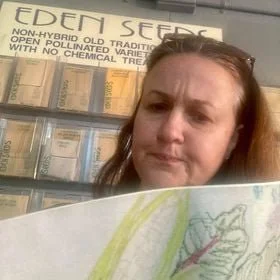
Me looking extremely perplexed about what to plant!
I remember reading my first ever Eden seeds catalogue. I think I had ever second seed variety highlighted. We were going to grow five different types of beans … I hate beans... I think I thought if I grew them, I’d eat them!
What I ended up with was a seed draw full of seeds, an over grown vegetable patch and too much produce all at once.
I’m a little bit wiser now, little bit!
I thought I’d share some of my vegetable gardening experiences with you so hopefully you don't make the same mistakes as me.
My first piece of advice is realising I am not Annette McFarlane, Claire Bickle, Jerry Colby-Williams or Jamie Oliver. Yes, I want to plant all the edibles but really am I going to cook, preserve and then eat all the edibles. Do I even have the space, time or know how?
Realisation, I do not enjoy cooking or preserving. Nor do I have the capacity to store a lot of those things.
I need to make sure I plant mainly what I can eat and cook with and maybe one different thing every season to broaden my horizons
Some of you think you want to cook and preserve but just make sure you’ve attempted this before or at least know what’s involved. Thinking you are going to be that person that makes a huge batch of tomato sauce or chutney, is a lot different to the person who is in a kitchen doing it all day long. I did this as a child with my grandmother and I hated it, as an adult I gave it another go and hated it.
I realised my passion was in eating not cooking! I now surround myself with a lot of happy chefs in my life that willing take the food I grow and magically turn it into yummy things in jars for me to eat!
I need to successive plant. Planting 12 lettuces isn't the best way forward for me. I’m not even sure I know 12 people to share 12 lettuces with. It’s better if I plant four lots of lettuce. Sowing some seeds every month so I have a continuous supply and not everything all at once. Unless you like lettuce soup!
To work out what to plant, I first work out what I eat a lot of. I then work what is really cheap at the stores when in season. For example we eat a lot of broccoli but by the time I get a good crop of broccoli, it's readily available at the shops and it’s a good price. Broccoli takes up a lot of space in the garden and can be hard to get a good crop so I leave that one for the professionals. On the other hand we eat a lot of tomatoes and they are never cheap, nor do they taste any good so that something I will definitely grow. Once I work out my basic favourite things to eat and grow I always like to throw something a little different into the mix. Maybe we love Silverbeet but instead of growing green silverbeet we grow rainbow silverbeet.
I always love to choose a vegetable that sounds yummy but I haven’t incorporated into my food before and grow that too just to see what it’s like.
Buy good quality non hybrid seeds or good quality established plants from known growers. Try really hard not to grow things from scraps.
If I’m really struggling with what to plant one season, I grow herbs. I can always use herbs, herbs are easy to grow and herbs are easy to share with friends.
Start small, then go big. Unless you have the time, energy and skills start small. There is nothing wrong with planting three edibles. There is nothing wrong with planting ten edibles. It doesn't matter. What matters is that you are doing it.
Finally my biggest piece of advice is don’t scrimp on soil. Soil is the key to a healthy garden. Buy the good soil, make the good soil. Have organic fertiliser on hand and use it. Healthy soils make plants thrive not just survive. Growing your own food can be so rewarding but follow the steps and get good advice.
Always remember There are no gardening mistakes, only experiments. – Janet Kilburn Phillips!

Planting Sweet Peas
Sweet Peas are a fragrant spring flowering annual, native to Italy. They have one of the most enchanting flowers, delicate and fragrant, perfect in garden or admired in a vase. Learn how to grow Sweet Peas in Ipswich.
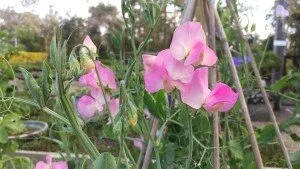
Sweet pea flowers from The Mountain Man
Sweet Peas are a fragrant spring flowering annual, native to Italy. They have one of the most enchanting flowers, delicate and fragrant, perfect in garden or admired in a vase.
Tradition dictates that March 17th (St Patrick's day) is the time to plant Sweet pea seeds. Have you ever wondered why?
Planting PEA seeds on St Patrick's Day is an old American tradition. As you will need the 'luck of the Irish' to get plants to grow while there is still snow on the ground!!!
For us here in Australia, we still follow this tradition because lets be honest here in Ipswich we need the 'luck of the Irish' to get sweet peas flowering and looking good. Normally, March is still too warm to start our winter gardens here in SE QLD.
Instead I use time as a reminder to prepare my soil.
Noel Burdette used to live here in the Ipswich region. Years ago he offered me this great advice about preparing the soil for Sweet Peas. This information is for sweet peas but can be applied to any peas.
Noel's Sweet Pea Advice
Sweet peas like a full sun position in the garden with plenty of airflow to minimise any fungal concerns.
They also enjoy a slightly higher level of pH in the soil, somewhere between 7.5 - 8.5. You can adjust your pH by applying a generous amount of Dolomite (provide much needed Magnesium) or a light dusting of Lime (as the calcium content is important).
They love well composted soil. We use Searles Compost but a little well aged sheep, cow or chicken manure worked into the soil would also help to encourage good drainage, yet adequate moisture retention.
Usually around mid April is a good time to plant out your seeds or the first quarter moon after St Patricks Day. Noel recommends to soak them overnight in a little water with a small amount of Condi's crystals (usually get this at a chemist) as this will encourage a higher percentage of germination.
After planting the seeds in the ground, water them in once and don't water again until they are "up and out "of the ground.
Pinch out any lateral growth in the early stages as what you're looking for are strong, upright plants that will then branch out as they get older and provide long lasting, fragrant blooms from late winter and into spring.
Fertilise your Sweet Peas with Organic Link when first growth appears and then alternating fortnightly between Triple Boost and Silica and Potash Liquid fertiliser.
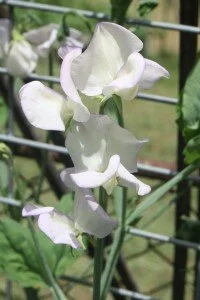
Sweet Pea Fragrant spring flowering annual, used as cut flower, native to Italy
All sweet peas are climbing. Some are dwarf climbers (only grow to about 50cm) and others can grow to over 2m.
With all types of sweet peas, ensure they have somewhere to stretch their tendrils (fences or tepees) or maybe try them in a hanging basket and let the tendrils hang down.
Trevallan stocks Eden Seeds (non-hybrid open pollinated old fashioned seeds) Sweet Peas and Pohlmans Sweet Pea Seedlings. This year we have two choices in the seeds and the seedlings. The seedlings aren't usually available until April.
Bijou, Dwarf (seeds and seedlings)
Early Gigantea, mixed colours to 3m high, early flowering (seedlings only)
Spencer Choice Mix, The classic English sweetpea, 1902 release developed from Earl of Spencer's garden, climbing (seeds only)
Come into Trevallan and we can help you on your Pea Journey. Good Luck.

Fennel
Fennel (Foeniculum vulgare) is actually part of the carrot family. It has yellow flowers and light green feathery foliage (just like a carrot). The whole plant can be eaten. It is native to The Mediterranean but it grows easily all over the world.
You know what I love roasted?
Fennel bulbs... oh my goodness yum.
So I thought today since I'm feeling a bit peckish, I'd talk about this Amazing Herb. After a bit of research I found out it has a varied history before it got to my roasting pan.

Positive Vibes Essential Oil Blend contains Fennel essential Oil
Did you know the medicinal properties of this herb were well used as far back as the ancient Greeks. They used to chew the seed to help them control their weight during training for the Olympics. It was also believed that it conveyed longevity and gave a person strength and courage.
Romans ate the seeds on long marches when they did not have time to stop and cook and devout Christian's would chew the seeds to satisfy hunger cravings during fast.
Then in the Middle Ages fennel was associated with witchcraft. It was hung inside houses and churches to protect people from evil!
Fennel seems to be used for a lot in traditional medicine from coughs to constipation to kidney stones.
Fennel essential oil is wonderful when you feel attacked or uncertain. It helps you stand your ground and speak your truth with calm assurance. It encourages honest communication and brings lightness to situations that feel heavy. Beyond this, fennel’s sweetness reminds us to finish what we’ve started and to release anything that keeps us from moving forward. It’s an oil of completion and quiet focus, helping us stay dedicated to our goals and approach them with clarity and confidence. When you wear fennel oil, it supports your inner strength and allows you to move through endings and new beginnings with grace.

Fennel Flower
Plus fennel is an amazing Beneficial insect attractor. Jerry Coleby-Williams writes that fennel flowers "acting as nurseries for aphid-eating hoverfly and ladybird larvae. That's handy since aphids also find them attractive."
Seems like such an amazing herb so let's find out how we can all grow it!
Fennel (Foeniculum vulgare) is actually part of the carrot family. It has yellow flowers and light green feathery foliage (just like a carrot). The whole plant can be eaten.
It is native to The Mediterranean but it grows easily all over the world.
Fennel loves the full sun and doesn't require much water once established. The original fennel can grow quite tall so it's best as mid bedding in your garden. I love letting my fennel go to seed and collecting some seeds but letting the rest self seed through out the garden. I love seeing the feathery leaves blowing in the breeze.
For something really classy there is the bronze fennel which grows to only about 40cm and has an amazing shimmery bronze foliage. Now this plant should be used in more ornamental gardens as a feature plant. Bronze foliage isn't common and looks stunning against a green backdrop.
Florence fennel, the one with the bulb that I love roasted, is named Foeniculum vulgare Azoricum Group. It is a cultivar group (fancy horticultural term that helps distinguish a group of plants with similar characteristics) with an inflated leaf base which form my yummy bulbs.
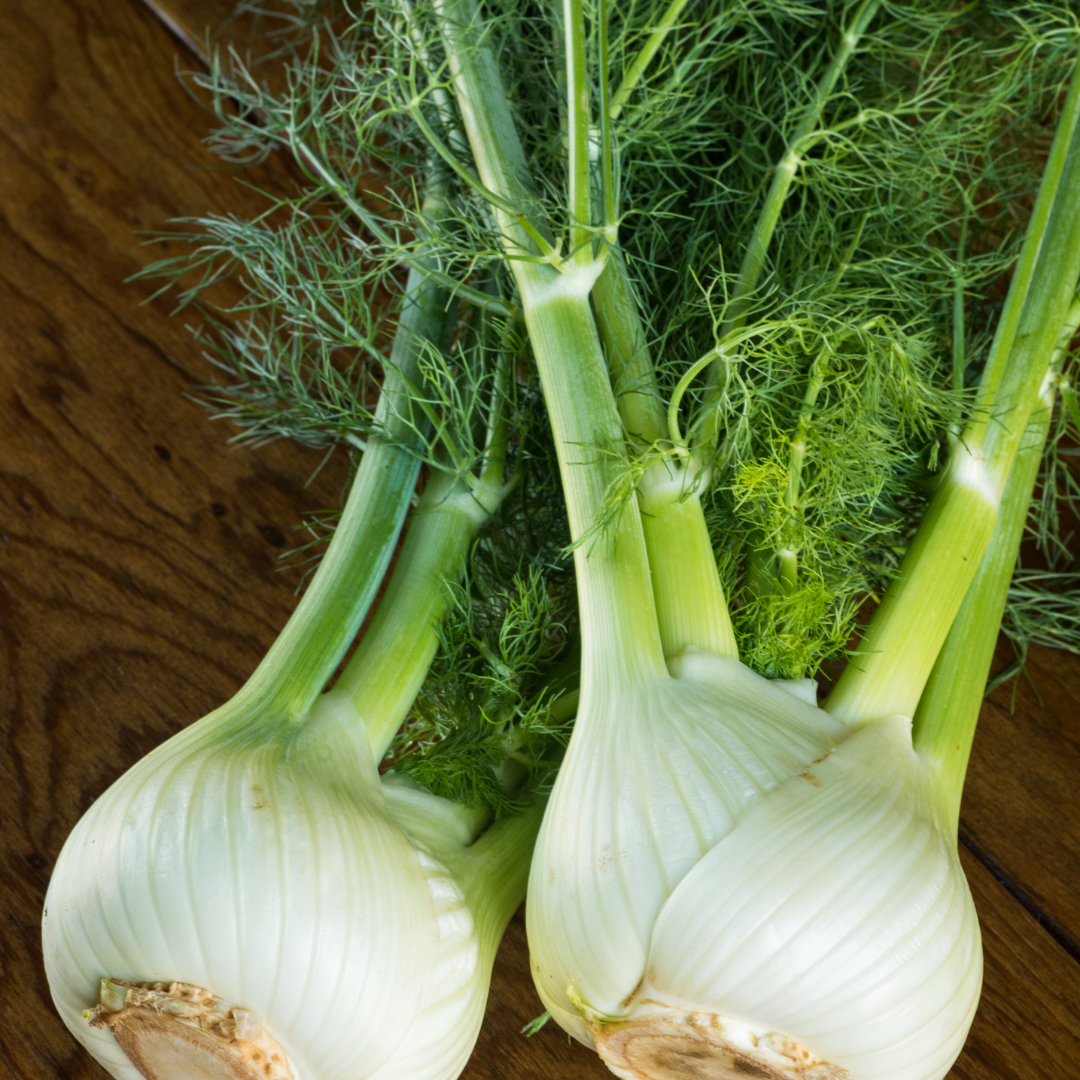
Foeniculum vulgare Azoricum Group
While I do fertilise mine with Organic link when I plant them I find they are extremely hardy and because I let mine self seed through the garden they come up of their own accord when they are ready and this makes them strong and healthy. After reading Jerry's post I believe you can keep cutting and letting the fennel Florence grow.
I love how this whole plant has a scent from the seeds to the leaves and the bulb. I think the best description is a light aniseed scent. When we have it at Trevallan I just love running my fingers through the foliage and the scent is released into the air and my hands come back smelling like lollies.
Can you imagine this plant near a window and on a hot windy day, the scent of aniseed would be just permeating through the house .... ohhhh yummy!
I love how scented plants have so many uses.
Get some fennel today, you will thank me!

The Dirty Dozen
The Dirty Dozen, a list of the fruits and vegetables likely to contain the highest amounts of pesticide residue. You can plant many of these at home.
I'm getting a little gardening bored. It's still too early to be planting my winter vegetables and my vegetable patch is cleaned, composted, mulched and waiting. My few gardens are fertilised, trimmed and waiting for cooler weather to start planting out more. My lawns are fertilised, soil wetted and weed killed - just waiting on rain to green them up.
So what does one do when garden bored - they start dreaming big. I think I have about 40 seed packets of the things I'd like to grow this winter.
So I may have gotten a little over excited. So how do I narrow it down? How do I decide what to plant in my vegetable patch each season or what fruit trees to grow?
I came across an interesting article on the extremely high amounts of pesticide residue on frozen berries. The interesting thing was most of the residue found on the frozen berries were pesticides that are banned in Australia. This happens because most frozen berry companies get their berries from a variety of overseas sources.
The old mind clogs started turning over and after a bit more research I discovered the 'Dirty Dozen' and the 'Clean Fifteen'. These are two lists released by the Environmental Working Group (EWG) each year.
EWG, a nonprofit organization that cites its mission as being to help “people live healthier lives in a healthier environment,” started compiling a list of fruits and vegetables that contain the highest amounts of pesticides in the mid-1990s.
The Dirty Dozen, a list of the fruits and vegetables likely to contain the highest amounts of pesticide residue. The Clean 15 is a list of fruits and vegetables least likely to contain pesticides. The EWG take into account how people typically wash and prepare produce - for example, apples were washed and bananas peeled before testing.
While the EWG’s list is based on the U.S. Department of Agriculture’s Pesticide Data Program, I still find it a great help in determining what to plant and over the years I have used the Dirty Dozen as a guide to what to plant each year. Over the years the list hasn't change much. So I do try to keep track of previous years as it's not like the big farms suddenly stop using pesticides its more like something just contains more pesticides than previous years. One vegetable that continuously goes on and off the list is potatoes. So I always try to grow my own potatoes. Most of vegetables and fruits mentioned can be grown in Ipswich in our vegetable gardens and orchards.
2021 saw the EWG release a special report on citrus fruits, which aren't represented in the Dirty Dozen, but have caught the attention of the organization for trending upward in trace amounts of pesticide recorded.
EWG'S DIRTY DOZEN FOR 2021
(number one being the most highest in pesticide residue)
Strawberries
Spinach
Kale / Collard and Mustard Greens
Nectarines
Apples
Grapes
Cherries
Peaches
Pears
Bell and Hot Peppers
Celery
Tomatoes
EWG'S CLEAN FIFTEEN FOR 2021
Avocados
Sweet corn
Pineapple
Onions
Papaya
Sweet peas (frozen)
Eggplant
Asparagus
Broccoli
Cabbage
Kiwi
Cauliflower
Mushrooms
Honeydew melon
Cantaloupes
Don't get gardening bored, plan big and include the 'Dirty Dozen' in your backyard.

Is Green Manure just really Green Poo?
Green manure crops are crops grown not to be harvested but instead to be incorporated into the soil before they reach maturity to contribute to the health of the soil.
Wonderful blistering hot days, humidity that feels like we should be living in tropics, rain and winds that blow your roof off then cool days that make us wonder if that 45 degree day was just in our imagination.
This is what it can feel like to live in Ipswich in the summer.
How would you fare in this weather? Hot, bothered, quick tempered?
I know I've been struggling, the smallest things bother me.
If I had a vegetable patch right now, I know I'd be pulling most of it up.
If the heat didn't kill everything off, the humidity or insects probably would have.
In years past when I have had a vegetable patch in summer I have suffered with burnt leaves, white mould all over my cucumbers, tomato blight and then to top it all off grubs in my fruit (from fruit fly stings).
Which is why now, at this time of year I always sow a summer green manure crop.
Green manure crops are crops grown not to be harvested but instead to be incorporated into the soil before they reach maturity to contribute to the health of the soil.
It is an old technique of soil management that seems to have been forgotten by many gardeners and farmers. I think it's because we are no longer aware of the proven benefits and cost effectiveness of green manure crops.
Trevallan Lifestyle Centre stocks Eden Seeds, a seed company that only stocks old traditional open pollinated varieties of seed, preferably old Australian varieties and organically or bio-dynamically grown where possible. Eden Seeds do a wonderful green manure seed pack that contains a mix of seeds suited to most climates.
Green manure crops contribute directly to the fertility of your vegetable patch through the supply of important plant nutrients. Legumes, for instance, supply nitrogen because their roots form an association with soil-borne bacteria that can transform nitrogen from the atmosphere into nitrogen compounds that can be used by plants. Isn't nature wonderful? It's also just saved you money as now you don't need to add as much fertiliser to your vegetable patch.
Green manure crops can also contribute indirectly to nutrient supply. Just the process of decomposition of the crop aids in making further nutrients available that are already present in the soil but in a form that cannot be used by plants. After the plants have grown and you incorporate them back into the soil you are supplying vast amounts of organic matter that is usually supplied by organic mulches. Once again saving you money - no need to buy organic mulch.
Drought resistance can also be improved as a lot of the crops are very deep rooted. Their roots can penetrate the subsoil and open it up. Next season's crops can also obtain plant nutrients from the subsoil once it is opened by deep rooted green manure crops.
So this weekend get dirty and take out all your hot weather anger on your vegetable patch by pulling everything up and planting some green manure crops. Your winter vegetables will thank you.