Find Us:
77 Fernvale Rd
Brassall QLD 4305
(07) 3201 8630
Open:
Tue-Sun 9am - 4pm

All about Bees
Bees pollinate over a third of the food we eat. Unfortunately, bee populations all over the world are declining which in turn is affecting the availability of our food.
Bees.
Just the word alone, can strike fear into some people. But did you know they are an essential element in the circle of life?
"If the bee disappeared off the surface of the globe, then man would only have four years of life left. No more bees, no more pollination, no more plants, no more animals, no more man." Albert Einstein
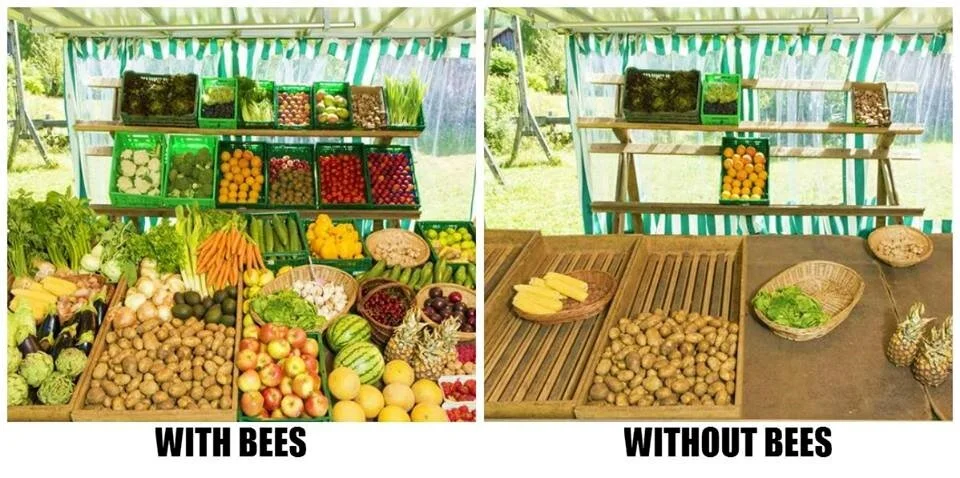
Bees pollinate over a third of the food we eat. Pollination is the process by which pollen is transferred in the reproduction of plants, thereby enabling fertilisation and reproduction, or in layman’s terms, bees help the flowers turn into food.
Unfortunately, bee populations all over the world are declining, which in turn is affecting the availability of our food.
The three main causes are believed to be Genetically Modified Crops (GMOS), chemical pesticide use and habitat loss.
Without getting into a huge debate on GM crops, it is believed one of the main reasons GM crops are leading to colony collapse is that the flower pollen on GM crops is sterile, thus causing the bees to become undernourished and die.
Bees generally travel as far as they need to get food. It is believed that the highest rate of return is between 6 to 7kms away from their hive. Therefore, if a hive is surrounded by GM crops the hive will die out.
The same goes for pesticides. If pesticides are being sprayed in an area, there is a high possibility that the bees will become infected and die out. Home gardeners should note that toxic pesticides meant to kill the bad bugs in our gardens can actually harm the bees which are so important to our environment and survival. Fortunately, Australia has banned many of these harmful pesticides in home use and luckily for us gardeners, there are alternatives. These alternatives are completely organic and don’t harm bees or any other good bugs, but do harm the bad bugs.
The third reason for decline is loss of habitat. This is brought about by development, abandoned farms, growing crops without leaving habitat for wildlife and growing gardens without flowers, or flowers that are not friendly to pollinators.

The larger honey bee (left) shown with the smaller stingless bee (right) on Citrus. Credit: (c) Tobias Smith
In Australia, we have some amazing native bees. There are over 1700 native bees and about ten species of small black stingless bees. They are only about 4 mm long, compared to 12 to 16mm long of the honey bee. The best thing about Australian native bees is that nearly everyone can have a hive or two in their yard.
Many years ago, I visited Melbourne and it seemed most of the suburban garden centres had a native bee hive in their centre. It was fantastic.
Why do we want a native bee hive in our yard?
Australian stingless native bees can be excellent pollinators of certain crops in Australia. They are particularly useful for macadamias, mangoes and watermelons. Also, they are not as prone to the colony collapse disorder that has decimated honeybee populations.
If we can increase the amount of Australian stingless native bees, we might be able to help reduce the loss of food production. Additionally, we might be able to assist the pollination chances in our fruit and vegetable patches.
Australian stingless native bees only produce small amounts of honey - less than one litre per year, particularly in warmer parts of Australia. However, it’s worth the effort as this honey (known as Sugarbag) is delicious.
Anyone can get a Native Bee Hive, as they don’t need as much attention as commercial honey bee hives and akin to the commercial honey bees, have an interesting social behaviour. Contrary to popular belief, you don't have to only have native flowers- I've seen Australian stingless native bees in a buzzing in a frenzy over camellia blooms. Furthermore, it’s worth knowing that increasing the number of Australian stingless native bees will NOT lead to a reduction in Honey bee population. The two can work in harmony.
If you’d like a hive go to the Australian Native Bee Association or Aussie Bee and see if there is a reseller near you. The ANBA promotes the conservation and sustainable use of all Australian native bees.
Do I have bees?
Take a walk around your garden early in the morning. Do you see any bees, native or European? What are they feeding on? I bet it’s not your beetroot leaves or agave leaves!
Growing your own vegetables is a brilliant idea, but don’t forget to mix it up and include some flowers in your edible garden! If you are completely against flowering plants, get some fruit trees, or let some of your vegetables go to flower or plant vegetables that flower, like pumpkin.
We all need to do our bit to keep the bees happy!
Water Saving Tips for Gardeners
Gardeners are not water criminals. Gardeners and Gardens are necessary as we need trees and gardens to help sustain a healthy urban environment.Back in 2005, we were hit with water restrictions for the first time and these made gardeners feel like they were some sort of water criminal. Even today, it still feels like gardeners get the blame for wasting water and not conserving our environment.
Gardeners are not water criminals. Gardeners and Gardens are necessary as we need trees and gardens to help sustain a healthy urban environment.
Three positives generating a healthy urban environment are:
Spending time in nature can make us mentally, emotionally and physically healthier.
“In 2021, nearly 1 in every 7 people (1.1 billion) around the world were living with a mental disorder, with anxiety and depressive disorders the most common.” It is believed the practice of shinrin-yoku, a Japanese term that means forest bathing, has the power to counter depression, anxiety and stress, as well as illnesses including cancer, strokes and gastric ulcers. It is also believed that over time it boosts the immune system, lowers blood pressure and aids sleep.
Energy is conserved, saving YOU money.
Strategically placed trees planted around a home could cut your summer air conditioning costs by over 25%. By reducing the energy demand for cooling our houses, we reduce carbon dioxide and other pollution emissions from power plants.
Barren neighbourhoods have shown to have a greater incidence of violence than their greener counterparts. Trees and healthy urban landscaping encourage people to spend more times outside socialising and also have a therapeutic effect, which overall reduces the level of fear people have for their neighbours.
If these reasons aren’t good enough (I have plenty more) for someone who accuses you of being a water criminal because you garden, just explain that you save water in the following ways:
Soil Wetters. Sometimes soils become hydrophobic (can't soak up water so it just runs off the surface). These products contain surfactants that allow the water to penetrate the soil and enhances the soil’s ability to absorb moisture, enabling the soil to actually become wet and stay wet for longer. This leads to a happier, healthier plant. These products are a must for all gardens and lawns and need to be applied at least yearly, but preferably every six months.
We stock Searles Penetraide Re-Wetting Granules or Searles Recharge. Both these are granular soil wetters that contain fertiliser as well. All in one product.
Plant of Health's Eco Friendly Range of Soil Wetters are also fantastic. We use the Soil Wetter Granular, which is 100% biodegradable. This surfactant is infused into natural diatomaceous earth granules giving you the benefit of both a surfactant and a silica rich input, that helps retain water, hydrate the plant and helps reduce plant heat stress. We also use Soil Wetter Liquid. This also has 100% biodegradable surfactants that enable water to penetrate the soil while the natural organic humates condition the soil, feed microbes, help retain water and hydrate the plant.
You try to use the lawn sprinkler as an outdoor shower, with friends of course!
You use organic Mulch; like sugar cane, tea tree, or my personal favourite, one inch hoop bark. Mulching your garden can reduce the water lost through evaporation by up to 73%.
You become a nude gardener … No need for clothes washing.
If you do wash you use the EUCA range of laundry detergents as it’s grey water and septic safe.
You use Envy. Envy is a liquid that you spray over your plant’s foliage. It helps protect against frost and reduces water loss through the leaves (transpiration) by 50%.
You don’t drink water whilst gardening, you drink vodka.
You use Silica and Potash Foliage Spray. This is a liquid that is sprayed over the plants foliage. It improves growth, flowering, fruit count, leaf presentation, colour and shelf life. It is also excellent for transplanting plants and can reduce wilting, frost damage, wind burn, heat and winter stress. Plants become physically stronger, especially in poor or salty soils, and more tolerant to pest attack.
Fertilise. A healthy plant is a strong plant. Use a complete organic slow release fertilisers, like Organic Link. These fertilisers promote deep healthy roots that allow the plant to withstand growth phases, as well as heat and dry phases.
Enjoy your garden and never feel guilty about being outside, using water and playing in the dirt.

Kokedama
Kokedama is a style of Japanese bonsai made by taking a plant out of its pot and into a ball held together with a unique soil mixture, moss and string.
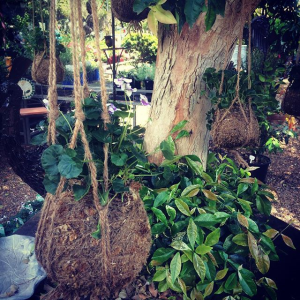
Viola hederacea’s made into kokedamas at Trevallan
Kokedama is a style of Japanese bonsai made by taking a plant out of its pot and turning it into a ball held together with a unique soil mixture, moss and string.
Trevallan's Kokedamas can be hung outside in full or part shade, and some are perfectly suited to indoors.
Trevallan stocks a range of Kokedamas, such as Native Violets, Ficus Pimula, Parlour Palm, Brazilian Walking Iris, Ficus Fiddle Leaf and Anthuriums .
How to look after me
When the sphagnum moss feels dry to touch and the ball is light, I soak them in a bucket of water for about ten minutes. If it’s really hot, you may need to do this more than once a week. If it’s cold, you may only have to do it once a fortnight.
Alternatively, similar to your other plants, you can just water them with a hose or watering can.
If my Kokedamas are inside, I like to sit them in a bowl and top the bowl up with water.
Where to put me

Trevallan's kokedama
Some of Trevallan's Kokedamas come with their own hanger. These can be hung outside in shade or part shade, maybe under a tree or on your patio. They look fantastic as a group.
Some Kokedamas are perfectly suited to indoors and can be hung from the ceiling, or Trevallan's handmade Timber Kokedama Stand.
If hanging isn’t an option, you can sit your Kokedama on a plate or in a bowl. The sphagnum moss will be wet most of the time, so be sure to protect your furniture.
Kokedama’s are definitely worth trying - remember, not every plant needs to be potted!

An unconditional love
This Mother’s Day look past your mum’s insane streak and don’t forget all the wonderful Tim Tams and pieces of pie she gave you and is probably still giving you!
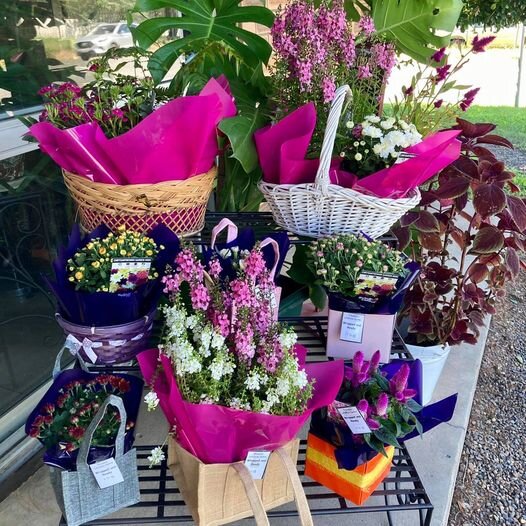
Spoilt for Choice at Trevallan for chrysanthemums
When I was quite young, I once watched a mum give the last two Tim Tams in a packet to her kids. At the time I thought the woman had gone completely mad - who gives away perfectly good Tim Tams ?
Years later, I came across this quote “A mother is a person who seeing there are only four pieces of pie for five people, promptly announces she never did care for pie.” As a mother myself, I now understand the crazy lady giving away her Tim Tams (though giving away Tim Tams is still a little crazy)!
As parents, we sometimes forget that we are children too and our mums will always be our mums!
Because we are always children in our mother’s eyes, they have the ability to drive us, as adults, a little insane at times.
Their insanity, so it seems, is not due to old age, it’s just their ability to never stop caring or loving us.
This Mother’s Day, look past your mum’s insane streak and don’t forget all the wonderful Tim Tams and pieces of pie she gave you, and probably is still giving you without you even realising!

Love this beautiful winter flowering plant
Don’t just give her a pot of flowers, give her something that she really wants – time with you.
As a mother of young children, my ideal Mother’s Day would probably be sleeping in a bed without sand, crumbs and/or tiny feet kicking me through the night, to enjoy my morning coffee, without the need to be a climbing frame, not having the Terraria computer game theme song stuck in my head or answering a 1000 questions before 5am, oh and of course a massage and a hair cut.
My mum, on the other hand, would probably appreciate a day of my kids shenanigans, sorry, I mean ah, a day of quality time with my children and myself.
So this Mother’s Day the only answer is - the kids are spending the day at mum’s house, I’ll be supervising! Win, win!
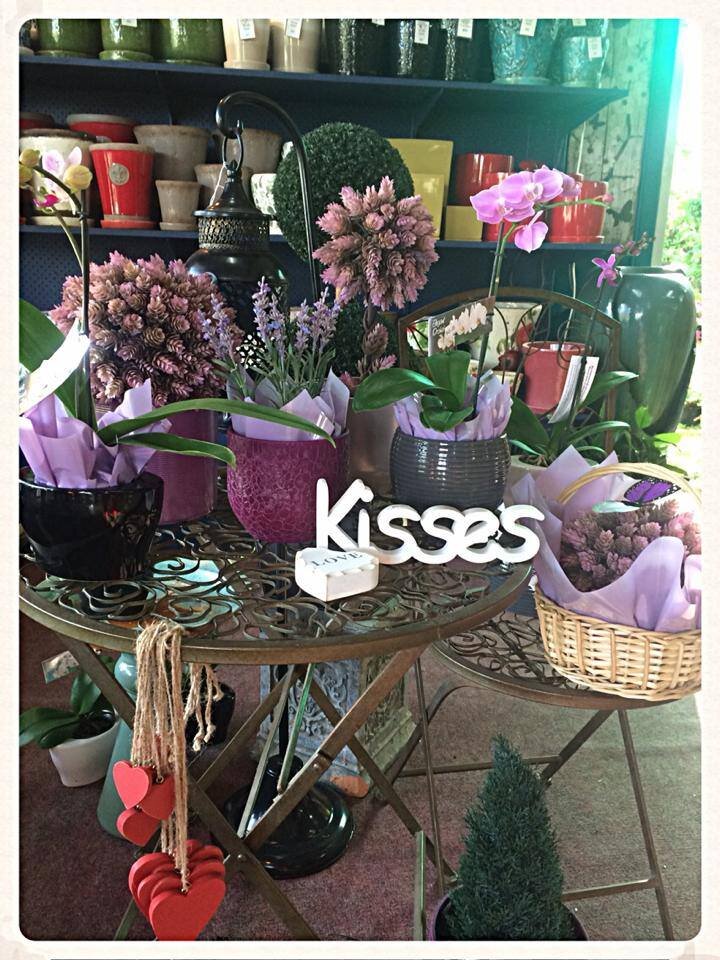
Lavender shades
Seriously though, in today’s world it seems we are spoilt for choice in the present department. Believe it or not, a few years ago, a pot of chrysanthemums was the only choice you had as a gift option for Mother’s Day.
This Mother's Day, Trevallan Lifestyle Centre is overflowing with living flowering gifts. Cyclamens, azaleas, pansies, orchids, kalanchoes, even flowering cactus and of course chrysanthemums, all are in bloom, look fantastic and are easy to care for – even brown thumb mums should enjoy!
With every present you give though, don’t forget to give a little of your time as well.
Our mothers just want the best for us – so ignore the so called mothering insanity and instead, give her a hug and kiss and let you know you love her.
Because while a mother’s love is unconditional, we as children need to reassure them that our love is unconditional too!

Talking Dirty
What gardening terms do you use that people think you've made up, don't understand or have a little giggle at your expense?
Last week on Trevallan Lifestyle Centre's Facebook page, I posed the question "What gardening terms do you use that people think you've made up, don't understand or have a little giggle at your expense?"
There were some great examples and I thought I'd enlighten you all with some gardening terms that I find I use and people think I have started to talk in my own special language.
Deciduous
Deciduous, pronounced dih-sij-oo-uhs, is the term I am most often asked to explain. Deciduous means "falling off at maturity" or "tending to fall off", and it is typically used when talking about plants that lose their leaves seasonally. Many plants, particularly in cooler regions, drop their leaves in autumn, have a dormant period through the winter and then come alive again in the spring. In some subtropical and arid regions, plants lose their leaves during the dry season and remain dormant until the wet season begins.
Active Constituent

Active constituents are the substance/s in an agvet (agricultural and veterinary) chemical product primarily responsible for a product's biological or other effects.
For example, Glyphosate is the active constituent in most weed killers. In horticulture, companies register products with different trade names, however, you will often find the active constituent is the same. Trade names such as Yates Zero, Searles Dead Weed, Brunnings Weedkill all contain the same active constituent - glyphosate. When dealing with chemicals in gardening, know your active constituents and you'll never need to rely on trade names again.
Bisexuality
A Bisexual flower or perfect flower is when the flower has both the essential whorls i.e., androecium and gynoecium (male and female reproductive units). Some examples are lilies, roses and sweet peas.
When it comes to fruit and vegetables, we generally use the term bisexual plant, meaning the plant has both male and female flowers and you do not need two separate plants. For example, a pumpkin will usually produce both male and female flowers, following this, insects will hopefully pollinate the females, with the result being big, healthy pumpkins.
Self-watering pots
Now unless you have gnomes in your garden doing all your dirty work, there is no such thing as a self-watering pot. When you buy a self-watering pot, you still have to water.
In a self-watering pot you have a very large saucer, or water well, and the soil is held above the water well, with a false bottom. The water well and the soil are usually connected by a wick of some sort.
As water is used by the plant, capillary action draws the exact amount of water up from below, therefore the soil has just the right amount of water all the time, but also maintains air pockets, which the plant roots also need. This is great for plants that don't like being over watered, as you just fill the bottom chamber.
While self-watering pots are great, I find they only really work once the plant has an established root ball.
This weekend, why not practice your ‘dirty talk’ with someone and show off your new gardening knowledge.