Find Us:
77 Fernvale Rd
Brassall QLD 4305
(07) 3201 8630
Open:
Tue-Sun 9am - 4pm

Extreme Weather Plant Protectants
When the weather swings to either extreme, freezing mornings or relentless heat, I put a protective coat on my plants. For me, that coat is Silica and Potash or Envy.

Hopefully my silica and potash spray works better than using my good coats
Once the cold mornings start, I feel like I should be going out and putting a big winter coat on some of my plants. In summer I want to go put a big Sombrero on all my plants.
The reality is, plants don’t just struggle in cold conditions, they also suffer through heat, dry winds, intense sun and sudden temperature swings. In Ipswich, it’s often not just cold or just hot, but the constant stress of moving between extremes.
We don’t have a big coat and hat for our garden so there are two products that work like a protective layer in both hot and cold conditions, Silica and Potash and Envy.
How does Silica and Potassium help with Extreme Weather Protection?

Silica and Potash by Plant of Health is product we use at Trevallan
Silica (Si)
Role in Protection:
Cell structure strengthening: Silica deposits in plant tissues strengthen cell walls, helping prevent cell rupture caused by ice crystal formation in cold conditions and cell collapse or scorching during extreme heat.
Stress tolerance: Silica improves overall stress tolerance by helping plants regulate internal processes more efficiently, increasing resistance to cold stress, heat stress, drought and rapid temperature fluctuations.
Water retention: Silica helps plant cells retain water, buffering against dehydration caused by freezing temperatures as well as moisture loss during heat, dry winds and high evapotranspiration.
Potash (Potassium, K)
Role in Protection:
Osmoregulation: Potassium regulates water movement within plant cells, helping maintain cell turgor pressure. This reduces the risk of cell damage during freezing conditions and helps plants stay hydrated and functional during heat stress and dry conditions.
Enzyme activation: Potassium activates enzymes involved in metabolism and stress response pathways, allowing plants to better manage cold stress, heat stress and environmental extremes.
Carbohydrate movement: Potassium aids in the transport of carbohydrates throughout the plant. In cold conditions, these carbohydrates can act as natural antifreeze agents, while in hot conditions they support energy availability, recovery and stress resilience.
Combined Benefits of Liquid Silica and Potassium for Extreme Weather Protection
Silica is often more effective when applied as a foliar spray. This is because silica is less mobile in the soil and can be better absorbed directly through the leaves, allowing quicker and more targeted uptake by the plant.
The same applies to potassium, foliar feeding provides a rapid way to deliver potassium to plants, particularly during critical growth stages or periods of environmental stress.
Together, silica and potash support plants through both cold and hot weather extremes by improving the physical and biochemical stability of plant cells. Stronger cell walls, improved water regulation and more efficient internal processes help plants cope with frost, heat stress, drying winds and sudden temperature fluctuations, while also improving overall plant health and resilience.
At Trevallan, we use Plant of Health’s Potash and Silica (certified organic and safe to use across your whole garden). I liquid feed the garden centre about once a month with this product. I add the liquid fertiliser to Birchy, and the entire garden centre is fertilised in around 20 minutes.
What is Envy?
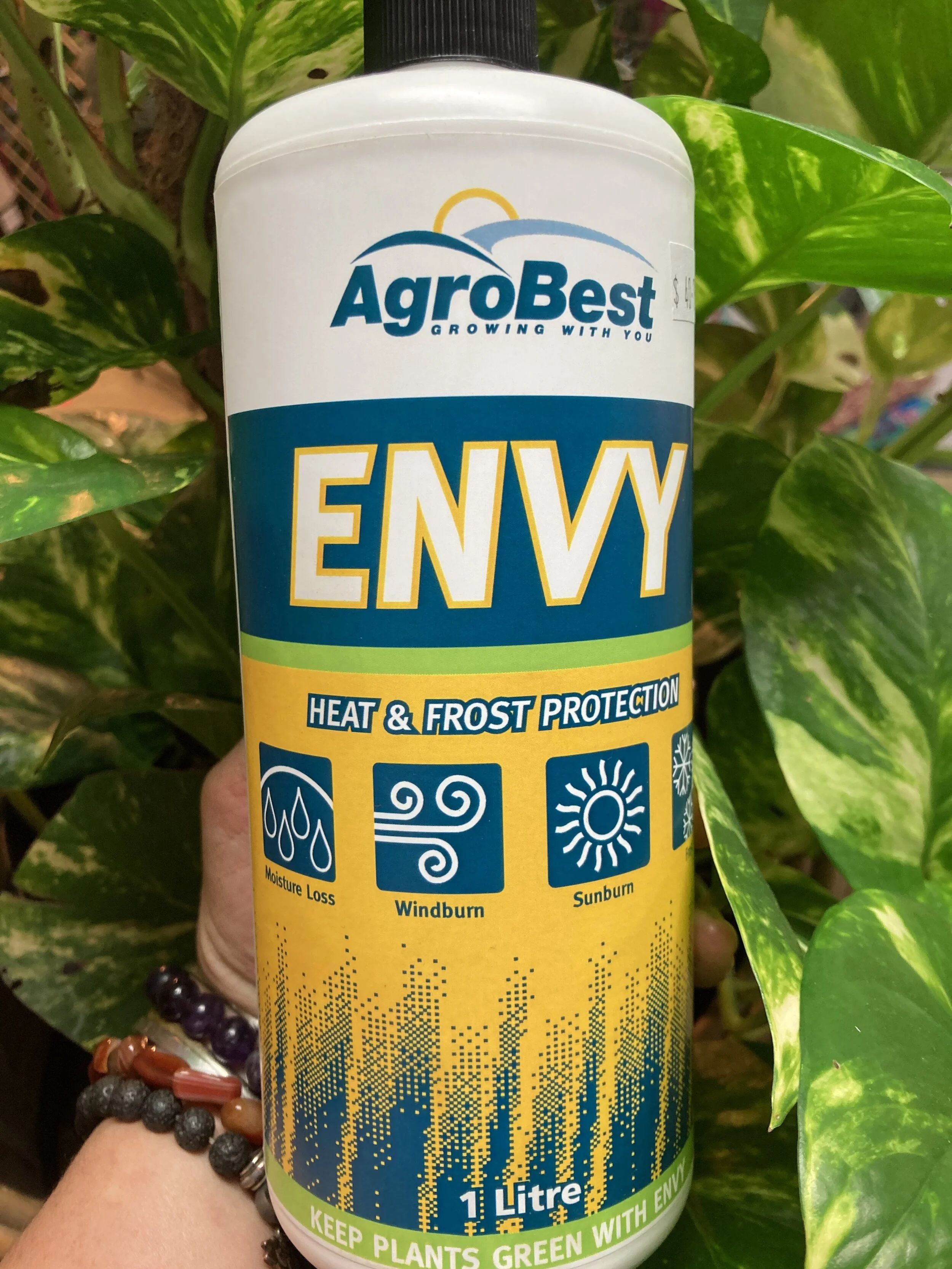
Envy is a frost protectorent and anti transpirant.
Envy is a frost protectant and anti-transpirant that supports plants through both cold and hot weather extremes.
Envy is designed to prevent frost damage by providing a physical and/or chemical barrier that reduces ice nucleation, the process by which ice crystals begin to form from supercooled water, a key factor in frost damage on plant surfaces.
Once sprayed over a plant’s foliage, Envy can increase frost tolerance by up to 4°C.
The same protective film also helps plants during hot, dry and windy conditions. Envy can substantially reduce moisture loss by up to 50%, helping to protect foliage from sunburn, windburn and dehydration during periods of heat stress.
Envy does not hinder plant growth or photosynthesis. It forms a semi-permeable membrane over the leaf surface that still allows the plant to breathe. It is non-toxic, pH neutral, and will biodegrade in sunlight.
Envy is best applied as a foliar spray and should be reapplied as new growth emerges to maintain protection during changing conditions.
Both products ‘Silica and Potash’ and ‘Envy’ can be applied as a foliage spray - mix the product with water and spray over the plant’s foliage.
Both need to be applied regularly for best results.

Bloomin' Fabulous
Potassium Sulphate or Sulphate of Potash is commonly called Potash. It is an essential element necessary to the lives of all plants.
A common question I am asked is "why didn't my fruit trees fruit profusely or if they did why was the fruit misshapen?" Or "why didn't my camellias and azaleas flower as well this year?" Or even "why are all my coloured foliaged plants like crotons and dracaenas losing their colour?"
The answer is usually quite simple - Your garden just needs some TLC and maybe a little Potash!
Potassium Sulphate or Sulphate of Potash is commonly called Potash. It is an essential element necessary to the lives of all plants.
It aids in disease resistance and frost protection by strengthening the plants cell walls. It helps in seed and root development. It encourages strong new growth and helps with the formation of flower buds and fruit.
Potash can improve the quality and the colour of flowers and enhances the formation of proteins and sugars in fruit. Potash can even help plants with slender stems and large flower heads such as Iceland poppies and gerberas hold their heads erect.
Potash defective cues can be seen in a number of ways in your plant. Your plants might be showing signs of overall weakness especially in its stem. It could have yellowing leaf margins and grow more slowly. It could also be disease prone and its fruit and flowers will be small and poorly coloured and sometimes tasteless.
Don't confuse a potash deficiency though with an unhealthy plant. Always make sure you have given your plant some complete slow release organic fertiliser like Organic Link and a Bio Trace first.
Complete fertilisers, whether they are chemical or organic, usually contain potash. Organic Link contains potash. An N:P:K ratio can usually be found on the fertiliser label. A very quick explanation of the N:P:K ratio is - N stands for Nitrogen (greening, growing), P Phosphorus (roots) and K Potassium (fruiting, flowering).
If you use mainly a manure based fertiliser like blood and bone or chicken manure you will need to add potash as these products don’t naturally contain it.
Potash also is available by itself in a liquid form and a granular form.
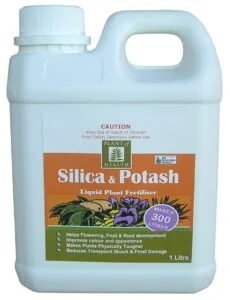
The liquid form is added to water and used as a foliar spray. Used like this it is quick acting but not long lasting and needs to be repeated on a fortnightly basis. This is best for promoting flowers especially on annuals. I use Plant of Health's Potash and Silica.
The granular form is added to the soil and watered in. The granular is slower acting but lasts a lot longer. This is best for correcting deficiencies, promoting fruit and stimulating coloured foliage. We use Searles' Potash.
This weekend I want you all to get some granular potash and go a little silly in your gardens.