Find Us:
77 Fernvale Rd
Brassall QLD 4305
(07) 3201 8630
Open:
Tue-Sun 9am - 4pm

Best Cut Flowers
Looking for a plant that flowers for months and makes the perfect winter gift? Cyclamen persicum is your go-to for cool-season colour and easy care.
I love the cooler weather. I know the days are still warm, but the nights have that glorious cool tinge and even better, all the plants I love to surround myself with are now in bloom, or coming into bloom.
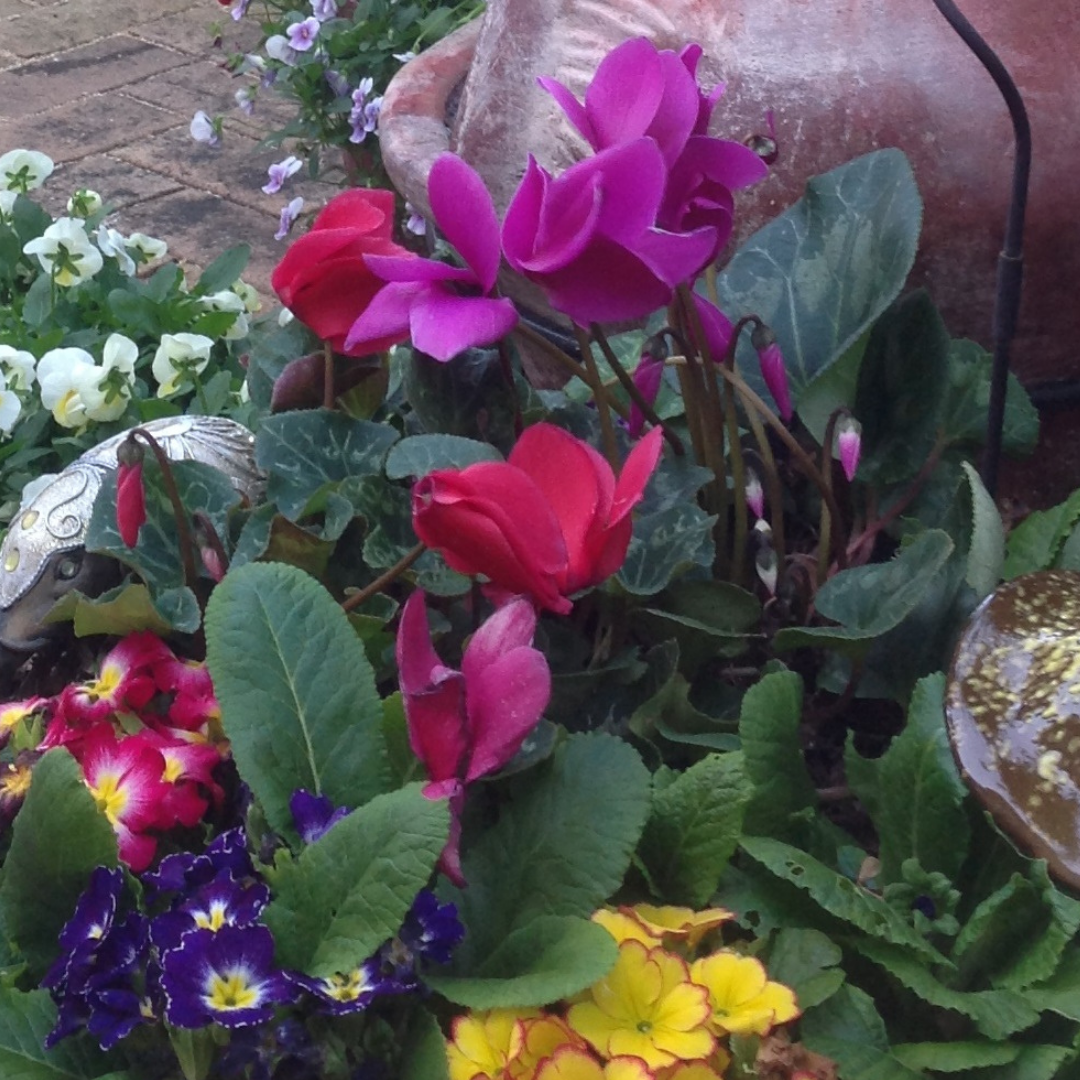
Cut Flowers that lasts for months inside or out!
I love gift giving at this time of year. I don’t do cut flowers, of course as I want my gifts to last a little longer, but I also know not everyone is a green thumb, so I also don’t want to cause any stress with my gift.
Which is why I always love giving Cyclamens.
Why Cyclamens?
Cyclamen persicum, native to the rocky slopes of the eastern Mediterranean, think Turkey, Syria, and Jordan is usually the Cycamen you will find at Trevallan. Despite their exotic origin, they’re remarkably well suited to life here in Ipswich during winter on patios or cool, bright indoor spaces.
They flower for months, from April right through to October, in a rich tapestry of colours, from snowy whites to rich reds, mauves, pinks, and bi-tones. This year a blue one was released for the first time. The foliage is also just as striking as the flowers — heart, kidney, or rounded leaves, patterned or marbled with silver.
A gift and a decoration in one.
Treat Them Cold, Keep Them Beautiful
Even though Cyclamens can grow well indoors, they love the cold. Cool air slows their respiration and preserves their blooms. I always say: cold mornings are their skincare routine!
At home, I water mine once a week, a good slow drench under a tap using icy cold water. Then, I pop them outside (in a shady spot) overnight. That cool, fresh air seems to give them a new lease on life. Indoors, they sit prettily in a bright room until it’s time for their next drink.
The trick is to let them dry out slightly between waterings. Cyclamens grow from a tuber, and those tubers are prone to rot if overwatered or if water collects in the crown. So always water the soil around the base, never directly into the middle of the plant. That centre is their weak spot.
Potting, Planters, and Fuss-Free Beauty
I prefer to keep mine in a decorative planter, not potted into a decorative pot with drainage. I simply place the Cyclamen, in its original black plastic pot, inside the planter. That way, I can take it out to water properly, let it drain, and then pop it back in. Just don’t let water sit in the base, soggy roots are sad roots.
Feeding Flowers, Not Foliage
Cyclamens are moderate feeders, and like many flowering plants, too much nitrogen means lots of leafy growth and very few flowers. To keep mine flowering and healthy, I feed fortnightly with Silica and Potash Liquid. This helps strengthen cell walls, increase flower production, and prolong bloom life. The result? Bloom after bloom, week after week.
Deadheading and Dormancy
Cyclamens don’t like being trimmed with scissors. To remove a tired flower or yellowing leaf, gently twist the stem at the base and pull it cleanly away from the tuber. This reduces the risk of rot or infection and helps the plant focus its energy on new growth.
Cyclamens grow from a tuber and tend to die down during our hot, humid summer. In our hot, humid climate, that’s perfectly normal. You can let the plant rest by placing the pot in a cool, dry, shady spot, reduce watering to almost nothing, and wait. If you’re lucky, it may re-sprout next autumn. If not? Well, you still got months of blooms for the price of a bunch of cut flowers and then some.

Cyclamen - best flower for indoors
A Cyclamen will warm your soul, even on the coldest morning. Whether you’re decorating your home, cheering up your work desk, or spreading a little love, don’t forget, a living gift like this blooms longer, lingers longer, and keeps on giving.

Azaleas
Azaleas are the blaze of colour that brings warmth to the cooler months garden. These divine mass flowering plants will do well for many years but they do need a little TLC to look their best.

Azaleas are the blaze of colour that brings warmth to the cooler months garden. These divine mass flowering plants will do well for many years but they do need a little TLC to look their best.
These beautiful plants have dark lush green foliage and come in a wide variety of colours from white, through to pinks, purples, reds and oranges. There are two basic flower types – single and double. The double is my favourite and luckily many double flowering azaleas spot flower throughout the year so I can enjoy this lovely plant all the time!
Most Azaleas will thrive in semi-shade but some will also look fantastic in full sun or full shade. I prefer the smaller more compact varieties that usually grow to around 50cm to 1m high but some can get over 2m high.
Azaleas love acid soil; the pH range should be between 5.5 and 6.0. Many Ipswich residents find that their garden’s soil pH is too low and prefer to grow azaleas in pots and that's perfectly ok as these plants do well in pots and gardens.
Azaleas have a shallow tight root system. If a good layer of mulch is applied, to your pots or the garden bed, and a soil wetter is used at least every 12 months azaleas should thrive. The mulch, must be organic mulch, like sugar cane or rainforest fines. This helps to keep moisture in the soil, and also helps keep the roots warm in winter and cool in summer. The soil wetter helps water penetrate the soil and root ball as after a period of time your soil can become hydrophobic (resists water).

Nice Surprise Azalea
To keep my azaleas looking their best I use the Plant of Heath Range. I use Organic Link every three months and I will also try to give them a liquid fertiliser fortnightly. I alternate between Triple Boost and Neem Oil (together) and Silica and Potash. When my azaleas have finished flowering I prune them back by about one third.
Azaleas do have some pest and disease problems but I find the healthier the plant the less trouble I have.
Petal blight is a fungal disease that turns the beautiful flowers suddenly brown. You can use an organic fungicide called eco-fungicide but I find the easiest solution is to pick off the affected flowers and throw them away and then I give them some liquid fertiliser.
A common problem with azaleas is one where the leaves loose their colour and lustre; it kind of looks like the leaf has been sand blasted. If this occurs, turn the leaves over and you may see black spots. This is a sign of Lace bug. Severe infestations can lead to reduced plant vigour and loss of leaves. To prevent this from happening I mix Neem oil into my Triple Boost Liquid fertiliser (that I foliar spray once a fortnight). I find prevention is better than fighting the problem after it occurs.

Red Wings Azalea
If the problem does occur I spray with Eco-Fend. You may need to spray a few times to control your infestation and unfortunately once the leaves have that sand blasted look they will stay that way. A good trim and fertilise will help promote nice new healthy growth to cover the unsightly affected growth.
I love how azaleas can enliven a garden‘s dull spots and bring a smile to the face of a friend when given as a present. These plants truly will give your life the TLC it deserves.

Brighten your Garden with Oranges, Yellows and Pinks.
Ixoras have dark green leathery leaves and produce large clusters of tiny flowers in the summer and autumn. They can be a little hard to grow but are worth the effort
Ixoras.
This is an I love it or I hate it plant.
My mum loves them. I must admit I verge on the opposing side. So, why on earth would I write about them and stock them at Trevallan if they are on my not so favourite list?
Well as with many things these plants have grown on me over the years and as with many plants there seems to be a time and a place for them.
Ixoras are native to the tropical and subtropical areas throughout the world, with many of them in Tropical Asia. These plants typically can't handle frosts so if you are in a frost prone area these may not be for you. Some Ixoras are more prone to being cold affected while others can handle a little bit of cold.

Ixoras have dark green leathery leaves and produce large clusters of tiny flowers in the summer and autumn. The more common Ixoras usually have orange, gold, pink or red flowers. Ixoras prefer acidic soil and usually like a little shelter from our blazing summer sun. In saying that I have seen many gorgeous Ixoras growing in full sun in a commercial setting (shopping centres). They don't mind being in pots or the ground.
I find the four most popular Ixoras are 'Prince of Orange', 'Pink Malay', dwarf orange and dwarf gold. Ixora williamsii is also popular as it has red flowers but it really dislikes the cold so is not commonly grown in Ipswich.
Prince of Orange has fiery orange flowers and can grow around two meters tall. The dwarf orange and yellow grow to around 1/2 metre. These look amazing in pots but I have seen them in gardens trimmed into a hedge and they look stunning when in flower. You can hardly see their green leaves.
My favourite Ixora is Pink Malay. Why do I love it? Not just because it gets covered in pink flowers but because it is so hardy. This Ixora is absolutely amazing; growing to around a metre it can handle full sun and shade. It can grow in pots or the garden and I have seen it successfully growing in a shopping centre car park. Yes that's right, a shopping centre car park. A place that has no good soil, no mulch, no care, only rain fall and it looks glorious. This is why I love this plant.
Ixoras like all my plants get fertilised with Organic Link and Triple Boost and neem oil. I use Searles Platinum Potting Mix for pots and Searles' garden soil for gardens.
There is a grub that likes to destroy your Ixora flower heads. There are a few ways to combat this. As soon as the buds start appearing I begin to mix neem oil in with my fortnightly Triple Boost. If it gets really bad I will spray with Dipel. I will sometimes use Searles' Bug Beater. Eco-oil would also work.
Sooty mould can also form on the leaves. This can be caused by scale and ants. Give your plant a really good soil drench and use a soil wetter if necessary. Fertilise with Organic Link and spray with neem oil or Eco-oil. In a fortnight or so you should be able to hose off the soot and hopefully the ants would have dissipated.
This autumn and summer brighten up your dull spots with shades of orange, yellow and pink.

Chrysanthemums
Chrysanthemums are one of the easiest plants to grow and are perfect for green or brown fingered gardeners
Chrysanthemums are traditionally given at Mother’s Day as they flower profusely during autumn and they contain the word mum!
I have found for some strange reason people tend to shy away from having Chrysanthemums in their garden. Maybe they are just too common?

Chrysanthemums are one of the easiest plants to grow and are perfect for green or brown fingered gardeners!
I find these brilliantly flowering plants are one of the best for gardens in the full sun.
They are so many varieties of chrysanthemums available today, one to suit every garden. The US National Chrysanthemum Society has derived that there are 13 different types of flower forms. Then there are the colours, I think every year they get more exquisite. There are single coloured and multi-coloured blooms ranging in colour from pure white to all shades of yellow, reds and purples.
Chrysanthemums are one of the easiest plants to grow and are perfect for green or brown fingered gardeners! Chrysanthemums have long lasting flowers and are relatively pest and disease free. This makes them perfect for everyone as this enables us to enjoy these plants hassle free for many years to come.
Potted chrysanthemums can flower for several weeks indoors but thrive best if placed in full sun. They can be grown in pots or in the garden. To keep them looking fantastic and to promote more flowers, remove all spent flowers and discoloured leaves and liquid fertilised fortnightly.
After flowering chrysanthemums should be cut back to about 15cm (6") high and given Organic Link fertiliser. They will usually flower again in about two months.
Chrysanthemums aren’t just the perfect idea to brighten up one's garden.
They can be used in cooking and teas. NASA Clean Air Study also found chrysanthemum plants can reduce indoor air pollution. Extracts of chrysanthemum plants have been shown to have a wide variety of potential medicinal properties, including anti-HIV-1, antibacterial and antimycotic.
Pyrethrum a well-known insecticide is also derived from chrysanthemums.
This Autumn don’t stress about finding a beautiful, versatile, easy care plant - just buy a Chrysanthemum!