Find Us:
77 Fernvale Rd
Brassall QLD 4305
(07) 3201 8630
Open:
Tue-Sun 9am - 4pm

Best Cut Flowers
Looking for a plant that flowers for months and makes the perfect winter gift? Cyclamen persicum is your go-to for cool-season colour and easy care.
I love the cooler weather. I know the days are still warm, but the nights have that glorious cool tinge and even better, all the plants I love to surround myself with are now in bloom, or coming into bloom.
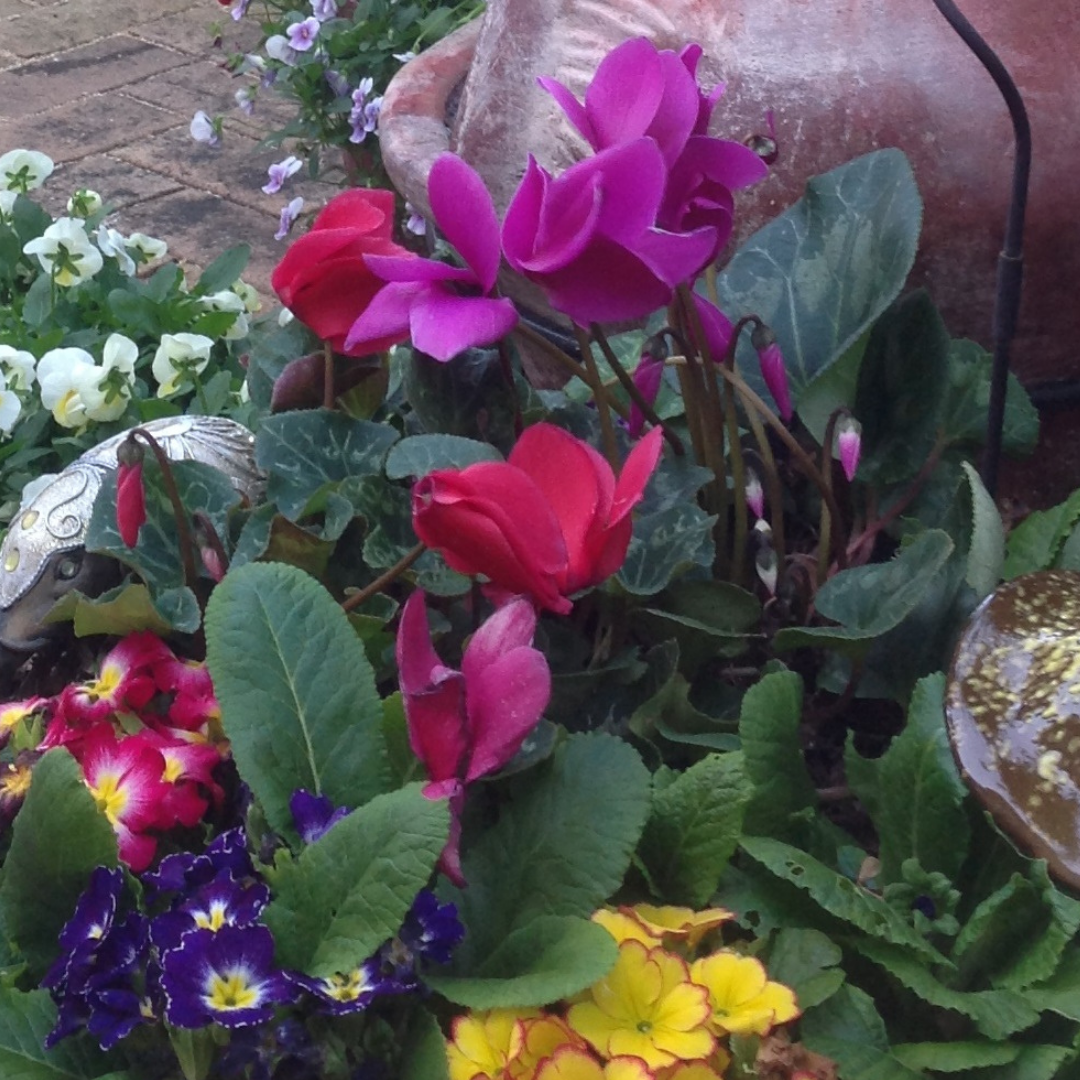
Cut Flowers that lasts for months inside or out!
I love gift giving at this time of year. I don’t do cut flowers, of course as I want my gifts to last a little longer, but I also know not everyone is a green thumb, so I also don’t want to cause any stress with my gift.
Which is why I always love giving Cyclamens.
Why Cyclamens?
Cyclamen persicum, native to the rocky slopes of the eastern Mediterranean, think Turkey, Syria, and Jordan is usually the Cycamen you will find at Trevallan. Despite their exotic origin, they’re remarkably well suited to life here in Ipswich during winter on patios or cool, bright indoor spaces.
They flower for months, from April right through to October, in a rich tapestry of colours, from snowy whites to rich reds, mauves, pinks, and bi-tones. This year a blue one was released for the first time. The foliage is also just as striking as the flowers — heart, kidney, or rounded leaves, patterned or marbled with silver.
A gift and a decoration in one.
Treat Them Cold, Keep Them Beautiful
Even though Cyclamens can grow well indoors, they love the cold. Cool air slows their respiration and preserves their blooms. I always say: cold mornings are their skincare routine!
At home, I water mine once a week, a good slow drench under a tap using icy cold water. Then, I pop them outside (in a shady spot) overnight. That cool, fresh air seems to give them a new lease on life. Indoors, they sit prettily in a bright room until it’s time for their next drink.
The trick is to let them dry out slightly between waterings. Cyclamens grow from a tuber, and those tubers are prone to rot if overwatered or if water collects in the crown. So always water the soil around the base, never directly into the middle of the plant. That centre is their weak spot.
Potting, Planters, and Fuss-Free Beauty
I prefer to keep mine in a decorative planter, not potted into a decorative pot with drainage. I simply place the Cyclamen, in its original black plastic pot, inside the planter. That way, I can take it out to water properly, let it drain, and then pop it back in. Just don’t let water sit in the base, soggy roots are sad roots.
Feeding Flowers, Not Foliage
Cyclamens are moderate feeders, and like many flowering plants, too much nitrogen means lots of leafy growth and very few flowers. To keep mine flowering and healthy, I feed fortnightly with Silica and Potash Liquid. This helps strengthen cell walls, increase flower production, and prolong bloom life. The result? Bloom after bloom, week after week.
Deadheading and Dormancy
Cyclamens don’t like being trimmed with scissors. To remove a tired flower or yellowing leaf, gently twist the stem at the base and pull it cleanly away from the tuber. This reduces the risk of rot or infection and helps the plant focus its energy on new growth.
Cyclamens grow from a tuber and tend to die down during our hot, humid summer. In our hot, humid climate, that’s perfectly normal. You can let the plant rest by placing the pot in a cool, dry, shady spot, reduce watering to almost nothing, and wait. If you’re lucky, it may re-sprout next autumn. If not? Well, you still got months of blooms for the price of a bunch of cut flowers and then some.
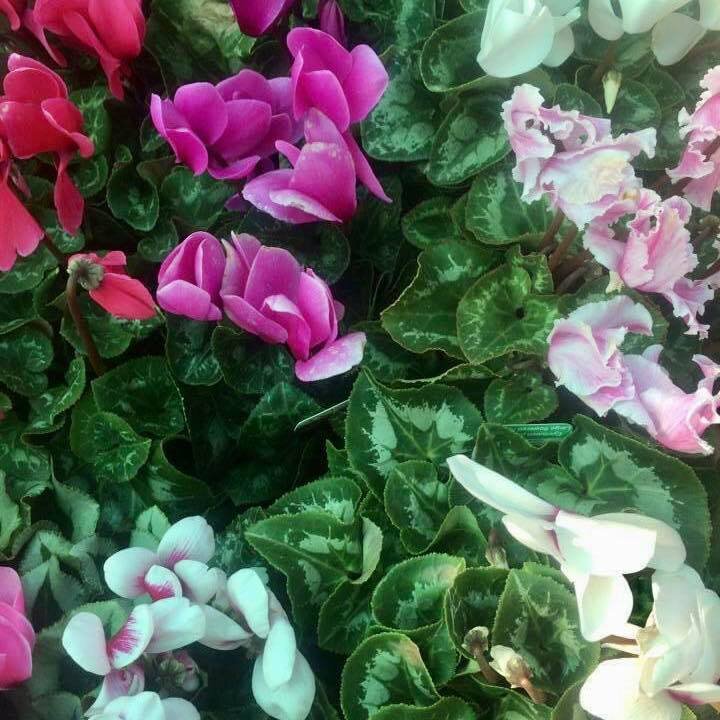
Cyclamen - best flower for indoors
A Cyclamen will warm your soul, even on the coldest morning. Whether you’re decorating your home, cheering up your work desk, or spreading a little love, don’t forget, a living gift like this blooms longer, lingers longer, and keeps on giving.

The Dirty Dozen
The Dirty Dozen, a list of the fruits and vegetables likely to contain the highest amounts of pesticide residue. You can plant many of these at home.
I'm getting a little gardening bored. It's still too early to be planting my winter vegetables and my vegetable patch is cleaned, composted, mulched and waiting. My few gardens are fertilised, trimmed and waiting for cooler weather to start planting out more. My lawns are fertilised, soil wetted and weed killed - just waiting on rain to green them up.
So what does one do when garden bored - they start dreaming big. I think I have about 40 seed packets of the things I'd like to grow this winter.
So I may have gotten a little over excited. So how do I narrow it down? How do I decide what to plant in my vegetable patch each season or what fruit trees to grow?
I came across an interesting article on the extremely high amounts of pesticide residue on frozen berries. The interesting thing was most of the residue found on the frozen berries were pesticides that are banned in Australia. This happens because most frozen berry companies get their berries from a variety of overseas sources.
The old mind clogs started turning over and after a bit more research I discovered the 'Dirty Dozen' and the 'Clean Fifteen'. These are two lists released by the Environmental Working Group (EWG) each year.
EWG, a nonprofit organization that cites its mission as being to help “people live healthier lives in a healthier environment,” started compiling a list of fruits and vegetables that contain the highest amounts of pesticides in the mid-1990s.
The Dirty Dozen, a list of the fruits and vegetables likely to contain the highest amounts of pesticide residue. The Clean 15 is a list of fruits and vegetables least likely to contain pesticides. The EWG take into account how people typically wash and prepare produce - for example, apples were washed and bananas peeled before testing.
While the EWG’s list is based on the U.S. Department of Agriculture’s Pesticide Data Program, I still find it a great help in determining what to plant and over the years I have used the Dirty Dozen as a guide to what to plant each year. Over the years the list hasn't change much. So I do try to keep track of previous years as it's not like the big farms suddenly stop using pesticides its more like something just contains more pesticides than previous years. One vegetable that continuously goes on and off the list is potatoes. So I always try to grow my own potatoes. Most of vegetables and fruits mentioned can be grown in Ipswich in our vegetable gardens and orchards.
2021 saw the EWG release a special report on citrus fruits, which aren't represented in the Dirty Dozen, but have caught the attention of the organization for trending upward in trace amounts of pesticide recorded.
EWG'S DIRTY DOZEN FOR 2021
(number one being the most highest in pesticide residue)
Strawberries
Spinach
Kale / Collard and Mustard Greens
Nectarines
Apples
Grapes
Cherries
Peaches
Pears
Bell and Hot Peppers
Celery
Tomatoes
EWG'S CLEAN FIFTEEN FOR 2021
Avocados
Sweet corn
Pineapple
Onions
Papaya
Sweet peas (frozen)
Eggplant
Asparagus
Broccoli
Cabbage
Kiwi
Cauliflower
Mushrooms
Honeydew melon
Cantaloupes
Don't get gardening bored, plan big and include the 'Dirty Dozen' in your backyard.