Find Us:
77 Fernvale Rd
Brassall QLD 4305
(07) 3201 8630
Open:
Tue-Sun 9am - 4pm

My Flowers bring all the Bees to the Yard
Here are a list of some of my favourite bee attracting plants. When I say bee I mean all bees. Some plants will attract European bees and some will attract native bees. I don’t discriminate, I love them all and want all of them visiting my garden! This list is not exhaustive it’s just a list to get you started.
Question
I would love some suggestions for bee attracting plants that will be happy in clay soil and Ipswich climate. We have plenty in flower at the moment (mostly bottle brush and lillipilli) but would love some suggestions for other times of the year. We do have some citrus which flower periodically too.
Trevallan’s Answer

Clay soils can be a problem for many plants. I do always suggest your cultivate your soil as much as possible with compost, Searles Soil Activator and/or Plant of Health’s Liquid Soil Microbes. Always use an organic mulch like sugarcane or tea tree as the more it breaks down the better the soil becomes. Always use organic fertilises like Organic Link or Pelletised Five In One.
Switch to organic pesticides.
There are some plants that just won’t grow for us in the ground and that’s ok. Use groups of large pots in the garden. I love placing pots around in my garden, it gives the garden another dimension and it allows me to have things I may not be able to grow if it was growing in garden soil. Hanging baskets are another great way to add a new dimension to your garden. You don’t have to hang hanging baskets on your patio .... use large tree branches and hang them in your garden.
Also it’s a great idea to have shallow water dishes around the garden so the bees can rehydrate. Yes, you have to fill them regularly in the heat but the little things we do for wildlife goes a long way and they will repay you by pollinating your vegetables and fruit!
Some of the mentioned plants are seasonal and some are forever. Some will grow better in part sun and some can handle all day sun. Some are trees, some are small. All will grow in Ipswich.
So here are a list of some of my favourite bee attracting plants. When I say bee I mean all bees. Some plants will attract European bees and some will attract native bees. I don’t discriminate, I love them all and want all of them visiting my garden! This list is not exhaustive it’s just a list to get you started.
Bacopa
Camellia Sasanqua
Grevilleas
Lavenders
Fruit trees
Salvia
Daisies
Buddleja
roses
Penstemon
sunflower
marigold
Dandelion
Calendula
Pentas
African Blue Basil
Most herbs left to flower
Alyssum
Murraya paniculata
Jasmine
Aster
cosmos
Lemon Balm (Melissa officinalis)
Borage
Native hibiscus (Alyogyne huegelii)
Guava
Macadamia
Backhousia citriodora
Eucalyptus
Strawberries
Blueberries
Any Syzygium but my favourite is Cascade
Leptospermum
Callistemon
Westringia fruticosa
Waterhousea floribunda
Buckinghamia celsissima
And this list can go on and on.
I also have Eden Seeds bee flower seed mix, which is mixture of flowering plants. Cultivate soil, throw out seeds and see what comes up.
HAVE FUN
“If the bee disappeared off the surface of the globe, then man would have only four years of life left. No more bees, no more pollination, no more plants, no more animals, no more man.” Albert Einstein

Aloe Aloe
Forget all you know about Aloes. Now imagine a beautiful structural plant with colourful flowers that make birds sing, bees buzz and nature do a happy dance.
About 12 months ago I was asked to visit an open garden featuring Aloes.
My first thoughts were “seriously, you want me to go and look at a garden full of aloe veras and succulents!” I found it very hard to go with an open mind.
The day arrived and quite simply my mind was blown.
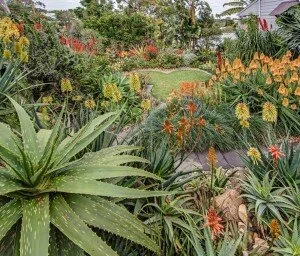
As I walked down the drive, colour and flowers burst from every space. Birds sang, bees buzzed and nature did a happy dance.
A few times I had to shake my head and remind myself I was in an aloe garden not a beautiful cottage garden.
Forget all that you know about aloe. For me that wasn’t hard as all I knew was the ugly looking aloe vera.
Now imagine a beautiful structural plant. Imagine a plant that is able to withstand the harsh Australian climate by storing water and food within swollen leaves and roots. Imagine a plant whose flowers can last weeks as well as being bird attracting. Imagine a plant that is not only easy to grow but resistant to disease and pests.
Imagine the beautiful new range of aloes named Aloe-Aloe!
These amazing plants are native to South Africa so they are used to harsh climatic conditions. It was not just the hardiness of the aloe-aloes that intrigued me and left me wanting more. It was their huge display of flowers with their differing colours, red, white, yellow, pink and all the colours in between. I think the only colour I couldn’t find was blue!
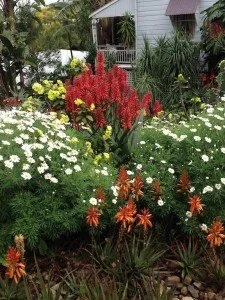
Some plants and flowers were tiny, only reaching 20cm high. Others reached meters into the sky. Click here for a quick reference chart on flowering times and heights of Aloe-Aloes.
The versatility of this plant is excellent. On its own in a pot it makes a fantastic feature. Planted out in a garden or pot amongst other flowering shrubs it also looked great. The garden I saw was mainly aloe-aloes but there were other shrubs intermingled amongst it and the garden looked amazing. Depending on where I looked and the other plants used, some areas of the display garden looked like a cottage garden, others were tropical and lush and some formal. The Aloe-Aloes worked in all genres.
How could you not want a range of plants in your garden that can flower from February to November. Grow well in a full sun position but can handle a little shade. They would rather have dry feet than wet.
We used a good quality potting mix when planting ours and fertilized with Organic Link and Triple Boost.
I honestly think these amazing plants would suit any garden. I am a true converted lover of Aloe-Aloe. Next time I am asked to go look at an Aloe garden I’ll be jumping up and down and packing my camera.

Bloomin' Fabulous
Potassium Sulphate or Sulphate of Potash is commonly called Potash. It is an essential element necessary to the lives of all plants.
A common question I am asked is "why didn't my fruit trees fruit profusely or if they did why was the fruit misshapen?" Or "why didn't my camellias and azaleas flower as well this year?" Or even "why are all my coloured foliaged plants like crotons and dracaenas losing their colour?"
The answer is usually quite simple - Your garden just needs some TLC and maybe a little Potash!
Potassium Sulphate or Sulphate of Potash is commonly called Potash. It is an essential element necessary to the lives of all plants.
It aids in disease resistance and frost protection by strengthening the plants cell walls. It helps in seed and root development. It encourages strong new growth and helps with the formation of flower buds and fruit.
Potash can improve the quality and the colour of flowers and enhances the formation of proteins and sugars in fruit. Potash can even help plants with slender stems and large flower heads such as Iceland poppies and gerberas hold their heads erect.
Potash defective cues can be seen in a number of ways in your plant. Your plants might be showing signs of overall weakness especially in its stem. It could have yellowing leaf margins and grow more slowly. It could also be disease prone and its fruit and flowers will be small and poorly coloured and sometimes tasteless.
Don't confuse a potash deficiency though with an unhealthy plant. Always make sure you have given your plant some complete slow release organic fertiliser like Organic Link and a Bio Trace first.
Complete fertilisers, whether they are chemical or organic, usually contain potash. Organic Link contains potash. An N:P:K ratio can usually be found on the fertiliser label. A very quick explanation of the N:P:K ratio is - N stands for Nitrogen (greening, growing), P Phosphorus (roots) and K Potassium (fruiting, flowering).
If you use mainly a manure based fertiliser like blood and bone or chicken manure you will need to add potash as these products don’t naturally contain it.
Potash also is available by itself in a liquid form and a granular form.
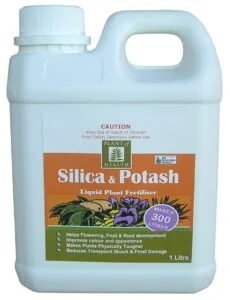
The liquid form is added to water and used as a foliar spray. Used like this it is quick acting but not long lasting and needs to be repeated on a fortnightly basis. This is best for promoting flowers especially on annuals. I use Plant of Health's Potash and Silica.
The granular form is added to the soil and watered in. The granular is slower acting but lasts a lot longer. This is best for correcting deficiencies, promoting fruit and stimulating coloured foliage. We use Searles' Potash.
This weekend I want you all to get some granular potash and go a little silly in your gardens.
The Perfect Plant
The perfect plant is called Pieris Japonica 'Temple Bells'. This beautiful plant can be used as a feature plant in a pot or as a low hedge in a garden. It is versatile, easy to maintain and looks good all year whether it’s hot or frosty cold.
I can find the beauty in most plants but like everyone else I am always on the hunt for the perfect plant.
You know the one – grows in full sun or part shade, does not require me to fight with my twisted and kinked hose every day to water it, looks good even when I forget to fertilise, flowers most of the year, doesn’t have a scent so I can’t drive the neighbours batty and doesn’t require me to trim it to make it look good! Oh, and I forgot to mention only grows about a metre so it looks good in a garden or in a pot and it doesn’t mind the cold or the heat!
You are all laughing now because you think the perfect plant doesn’t exist. Well I think it does.
Are you ready for it?
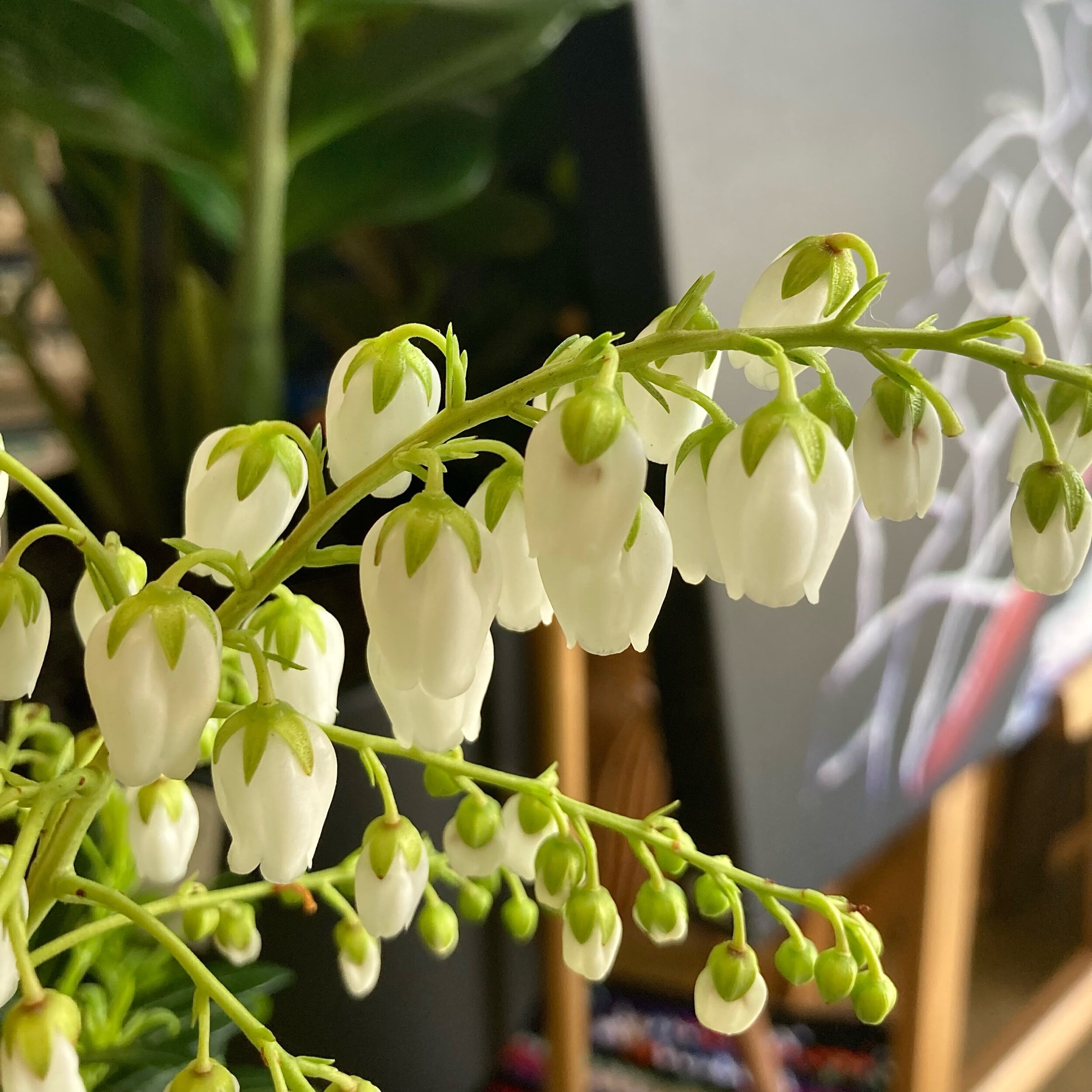
The perfect plant is called Pieris Japonica 'Temple Bells'.
Now when you all go rushing out to your local nursery to get the perfect plant, you must make sure you ask for Pieris japonica 'Temple Bells' as I don’t know any other Pieris that grows as well in Ipswich.
This highly ornamental plant has extremely dark green lush foliage that forms a dense mound. In the warmer months its new growth is a brilliant red that fades to copper then green. Though it is slow growing it still forms a nice shrub in a year or two.
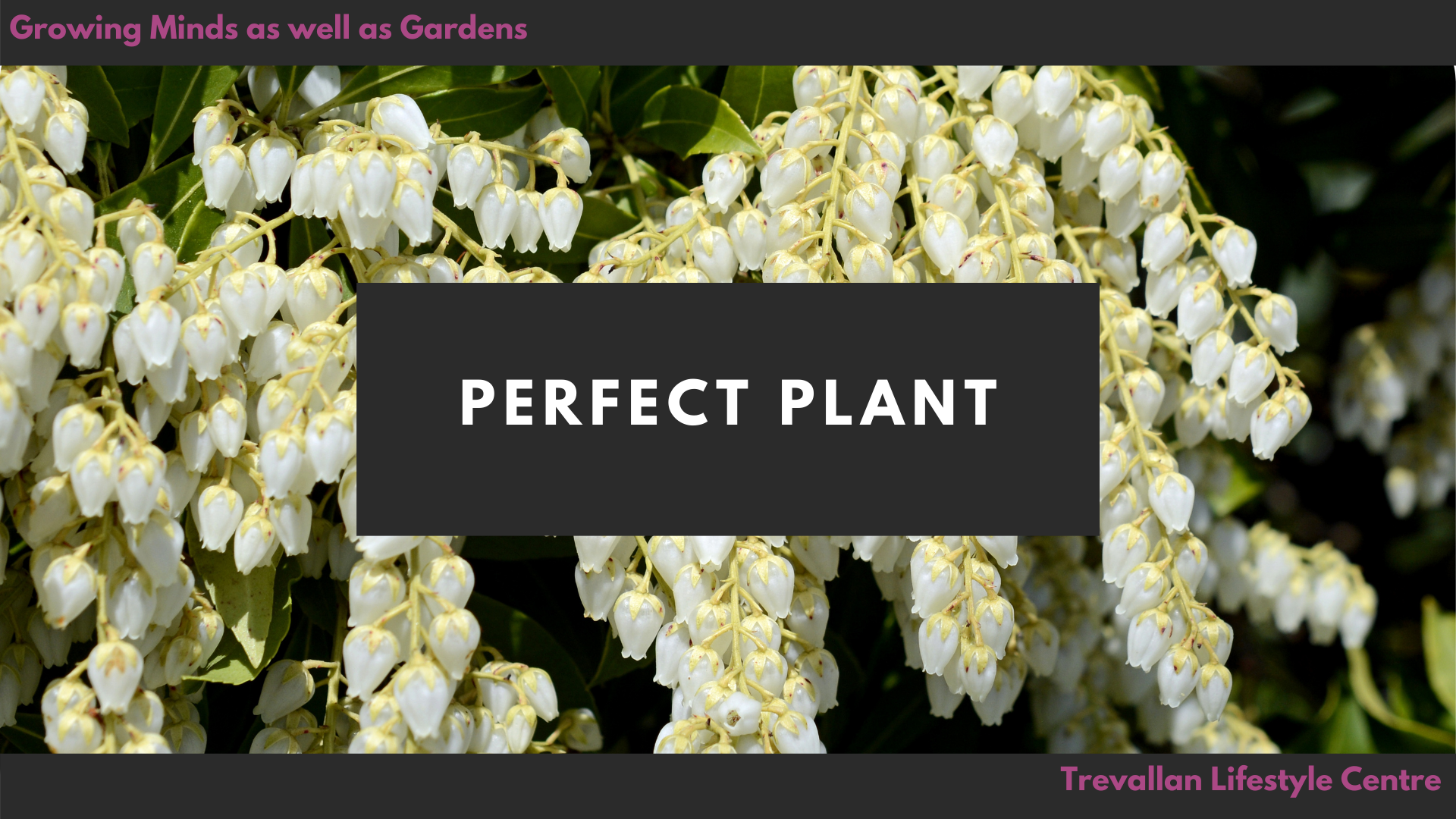
It’s the almost continuous flowering that makes this plant perfect. The flowers can start their show as early as March. The plant becomes covered with small lime green bell shaped buds that as the weather cools grow and open to form pure white bells that appear to be dripping off the plant. The flowers remind me of the lily of the valley flower. By the time the warmer weather kicks in, the white bells have dropped leaving the greenish ‘bell holders’ still on the bush for another month or so. It almost seems that the plant is in flower for more than half a year due to its three phase flowering process.
I have grown this plant in a pot in full sun for years now and it has always looked fabulous. It can thrive in some shade too. As Pieris Japonica 'Temple Bells' won’t win any medals for fastest growing plant but not the slowest growing plant either - you can expect it to reach around a metre in height.
Pieris 'Temple Bells' in Bloom
This beautiful plant can be used as a feature plant in a pot or as a low hedge in a garden. It is versatile, easy to maintain and looks good all year whether it’s hot or frosty cold.
Always use excellent quality potting mix (I use Searles' Platinum Potting Mix) or garden soil (I use Searles' Garden Soil) and try to fertilise every season with a complete organic slow release fertiliser like Plant of Health's Organic Link.
Pieris japonica 'Temple Bells' really is the perfect plant. Give your garden some TLC this weekend and get a Pieris. It will reward you all year.