Find Us:
77 Fernvale Rd
Brassall QLD 4305
(07) 3201 8630
Open:
Tue-Sun 9am - 4pm
Brix
Brix is a simple but powerful measure of how well a plant is functioning. Brix gives insight into photosynthesis, nutrient uptake and overall plant health. Higher Brix is achieved through healthy soil systems that support consistent root function, biology and balanced nutrition.
Refractometer
What is Brix and Why it Matters
Brix (°Brix) is a measurement of the concentration of dissolved solids in plant sap or juice, mostly sugars, but also organic acids, minerals, amino acids and other soluble compounds.
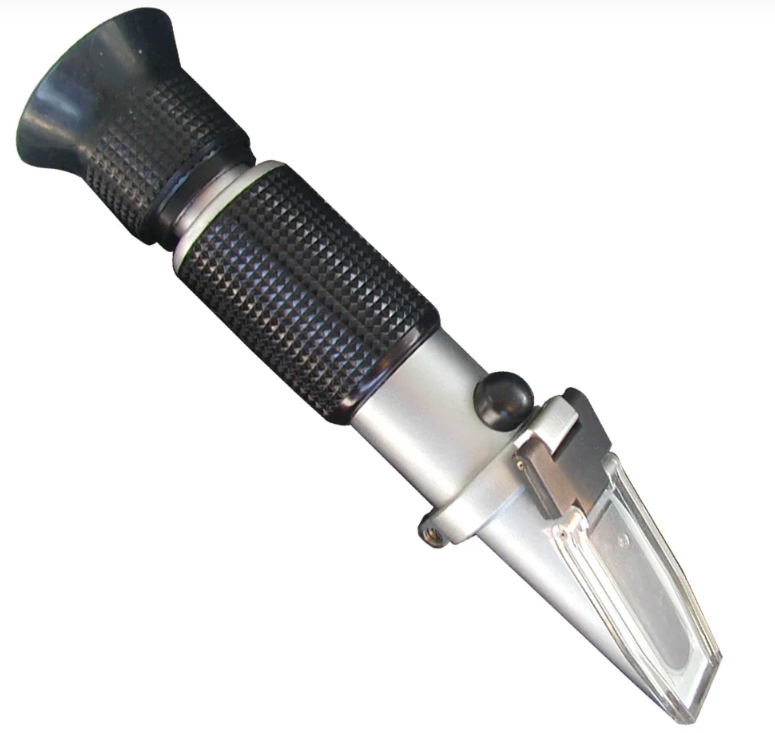
It’s measured using a refractometer, which reads how much light bends as it passes through a drop of plant juice, giving a percentage of dissolved solids by weight.
Brix matters because it reflects how effectively a plant is functioning. Higher Brix readings generally indicate stronger photosynthesis, better nutrient density and greater overall plant vigour. For this reason, Brix is widely used in agriculture as a quality and harvest index, particularly in crops such as wine grapes.
When measured over time, Brix provides insight into plant health and performance. Stable or rising readings suggest efficient energy production and nutrient uptake, while declining readings can indicate stress before visual symptoms appear. This is why many growers now use Brix as a monitoring tool for plant stress and nutrient response rather than relying solely on appearance.
Soil Health and Why its Important to Brix
Soil health underpins Brix because it supports the processes that allow plants to produce and store sugars. Active soil biology makes nutrients plant-available, stable soil structure supports consistent root function, balanced nutrition supports sugar production and transport, and organic matter helps regulate moisture and nutrient flow.
When these systems are working together, plants are capable of higher Brix. Sugars produced through photosynthesis are exuded into the soil, feeding microbes that in turn release nutrients back to the plant. The process is circular and self-reinforcing.
It’s important to remember that Brix doesn’t increase simply because fertiliser was applied. When soil health is addressed first, fertiliser becomes supportive rather than corrective and higher Brix follows.
Because Brix reflects how well this whole system is functioning, it can be a useful guide for home gardeners. A rising Brix reading suggests the soil is functioning well, allowing roots to access nutrients and water consistently. That consistency supports steady photosynthesis and steady sugar production.
In commercial agriculture, however, Brix is rarely used in isolation. Growers often pair Brix testing with plant tissue analysis: Brix shows overall system performance, while tissue testing identifies which nutrients may be limiting. Agronomic research shows that fertiliser timing, soil moisture and overall nutrient balance all influence soluble solids in crops.
What Brix numbers mean
Brix values vary by crop, climate and genetics, but the following ranges provide a useful general guide.
Leaf sap Brix (plant health indicator):
Below 6° — weak photosynthesis, high stress
6–9° — moderate health
9–12° — strong metabolic activity
Above 12° — excellent performance and nutrient density
Fruit Brix (flavour and quality indicator):
8–10° — average or standard quality
11–13° — good quality
14–16° — excellent
17+° — exceptional, often seen in well-managed soils
Just to remember, these aren’t hard thresholds. Brix varies with environment and crop type, which is why commercial growers don’t rely on Brix alone. For home gardeners, however, it provides a valuable reference point for understanding plant performance and soil function.

Is Molasses Good for the Garden?
Molasses can be a powerful soil tonic, when used in moderation. Packed with sugars and trace minerals, it feeds soil microbes, boosts plant health, and improves soil structure. This post explains when, where, and how to apply it for the best results, without harming your plants. A little sweet goes a long way!
Molasses in the soil? It’s not just a myth, it actually works.
But like most things in gardening, it’s all about balance.
Molasses is packed with natural sugars and trace minerals. When used properly, it feeds the beneficial microbes in your soil. These microbes help break down organic matter, unlock nutrients (especially potassium, calcium, and iron), improve soil structure and ultimately support stronger, healthier root systems
Think of it as a little energy drink for your soil, especially helpful after applying compost, worm castings, mulch, or during seasonal transitions.
Now healthy soil is great for everything but you’ll definitely notice a difference when you use it around native plants like grass trees and grevilleas (low nutrient lovers), veggies that thrive in biologically active soil, roses, citrus, perennials and lawns.
Like most things its not great if you overdo it. Too much leads to oxygen loss, mould, and nutrient tie-up. You also shouldn’t use if your soil is already heavy or waterlogged.
Always read the label.
Use plain molasses not sulphured molasses (the sulphur kills the very microbes you're trying to feed)
It is recommended that you
➤ Mix about 1 tablespoon of unsulphured molasses into a 9L watering can (that’s a 0.2–0.5% dilution)
➤ Pour around the base of your plants into the soil, not on the leaves
➤ Apply every 6 weeks if necessary
If you want to really boot your gardens, a follow up with seaweed tonic or worm juice to really get those microbes multiplying too.
Molasses when used wisely, can give your garden a biological edge, boosting resilience, root health, and overall soil vitality.
Just don’t treat it like maple syrup on pancakes and drown your plants.
A little sweet goes a long way

Planting Myths: Digging Deeper into Compost and Root Health
Planting myths often contain a seed of truth, but as any gardener knows, the real story is rarely so simple. In gardening, there’s rarely a one-size-fits-all rule. The key is understanding your soil, your plants, and what they need to thrive and being willing to look beyond the hole.
A Garden Myth that I needed to Dig a little Deeper on!
Recently, someone shared a quote from The Informed Gardener by Professor Linda Chalker-Scott, which argued that compost should be added only on top of the planting hole, not inside, and that planting holes should be as deep as the root ball but twice as wide.

I appreciate that this advice comes with good intentions, but as with most things in gardening, the truth is more nuanced.
Let’s break this down and explore what’s really going on below the surface.
How deep and wide should a planting hole be?
Linda Chalker-Scott recommends digging the hole only as deep as the root system and twice as wide.
This is generally good advice: planting too deep can cause settling and lead to burying the crown, which leads to rot. A wider hole encourages lateral root growth and helps roots establish in compacted or heavy soils.
When this works
In well-prepared soils or areas where compaction is minimal, this method encourages roots to spread into the native soil.
When this might fall short
In soils that are heavily compacted, hydrophobic, or of poor structure (like urban fill or degraded sites), simply making the hole wider without addressing the surrounding soil quality won’t necessarily help roots establish well.
Should you amend the planting hole at all?
The claim is that you should never amend the planting hole “in any way” and only backfill with native soil. The logic is to avoid creating a “pot effect” where roots stay in the nutrient-rich pocket and don’t venture into the surrounding soil.
There is truth here
If you fill the hole with soft, rich soil or lots of organic matter, especially in clay soils, roots can circle in the hole or fail to move into denser surrounding soils. Water can also perch at the boundary between two very different soil textures, leading to waterlogging at the root zone.
But context matters
In very poor soils, think subsoil, building rubble, or extremely sandy soils, some incorporation of well-aged compost or organic matter into the backfill can help create a healthier root zone. The key is blending the amendment with the native soil to avoid creating sharp boundaries.
Is compost in the planting hole always a bad idea?
The supporter’s comment suggested compost should only go on top as a mulch. While top-dressing with compost is great for feeding soil life and improving surface structure, a blanket ban on incorporating organic matter at planting doesn’t always hold up.
Top-dressing is fantastic
It feeds worms and microbes, protects soil from erosion, and slowly improves structure.
But moderate incorporation can be beneficial
Particularly in soils low in organic matter or with poor biological activity. It’s not about filling the hole with pure compost, but blending small amounts with native soil can jump-start root zone health.
Are we “spoiling” the plant with rich compost in the hole?
There’s a common belief that putting compost in the hole spoils the plant and encourages roots to stay put. But plants don’t get “lazy”, roots grow where water, air, and nutrients are available.
If surrounding soils are inhospitable, no amount of compost on top will change that. In these cases, improving the soil beyond the hole (via broad soil prep or blending amendments) is key.
Does this advice apply everywhere?
It’s important to note this recommendation came from Washington State, a climate with very different soils and conditions from, say, much of Australia. What works well in the Pacific Northwest may not directly translate to South East Queensland, where soils, rainfall, and temperatures differ.
The take-home message
There is no one-size-fits-all rule in gardening. The best planting method depends on your soil, plant type, and climate.
In the end, soil health and structure are what truly support thriving plants and that often means looking beyond the hole.
I’d also add that the organic matter you’re adding has a shelf life. It breaks down within a relatively short period of time, so ultimately you’re giving your plant a good start but that’s all. Long-term soil health comes from ongoing care, not just what you put in the hole at planting.
So next time you hear a planting rule, take a moment to look at your own soil, your climate, and your garden’s needs. Gardening myths often have a seed of truth but real success comes from understanding the full story.