Find Us:
77 Fernvale Rd
Brassall QLD 4305
(07) 3201 8630
Open:
Tue-Sun 9am - 4pm

Gardening Myths: The Stories We Tell Ourselves
Discover common gardening myths and the truth behind potting mix feeds, full sun labels and banana peels
Planting myths often contain a seed of truth, but as any gardener knows, the real story is rarely so simple. In gardening, there’s rarely a one-size-fits-all rule. What works in one garden, climate, or soil type might be a disaster in another.
Let’s talk horticultural myths and gardening “truths” that aren’t quite right…
What have you believed or done in the garden that turned out to be misunderstood, outdated, or just plain wrong? Here are a few confessions to get us started:
Myth
Potting mix feeds your plants for 18 months
When potting mix says “feeds for 18 months,” that’s from the date of manufacture, not the day you open the bag. And no… they don’t put the date of manufacture anywhere on the packaging.
That’s why we always recommend feeding when planting, using something like Organic Link so you know exactly when the last feed happened. If in doubt, reapply every three months or with the turn of each season to keep nutrients consistent.
Myth
Full sun means all-day blazing sun
When a plant label says “full sun,” it simply means the plant needs at least 6 hours of direct sunlight per day. But not all sun is created equal.
Ipswich sun in December is a whole lot fiercer than Melbourne sun in December. So generally, if a plant tag says “full sun,” aim for sun-up to midday in hot climates — that’s a safe six hours for most plants.
And here’s the kicker: some plants can handle 12+ hours of blazing sunlight a day and thrive in it. Unfortunately, they’re labelled exactly the same as more delicate “morning sun only” plants. No wonder it gets confusing!
This is exactly why plant labels aren’t your only resource. Chatting to your local garden centre and their qualified horticulturists is the best way to get location-specific advice based on real experience.
Myth
Banana peels are a great potassium fertiliser
Banana peels just don’t have enough potassium in the peel to make much difference when used directly on your garden.
Let’s break it down: banana peels contain about 78mg of potassium per 100g, while a proper potassium fertiliser contains thousands of milligrams per application, plus it’s in a form that plants can actually absorb.
So while it sounds lovely to tuck a banana peel under a plant, you’re better off adding it to your compost where it can break down with other organic matter and contribute to long-term soil health.
If your plant needs potassium? Reach for a specific potassium-based fertiliser like Sulphate of Potash or Silica and Potash, especially during flowering and fruiting seasons.
The takeaway?
Read the label. Read your climate. And talk to someone who’s been there, killed that, and figured it out the hard way!
Have a gardening myth you’ve fallen for — or one you’re not sure about? Pop in and see us at Trevallan, or drop a comment below. We’d love to help you sort fact from fiction.
I’ve recently covered a few more myths you might like to explore
Check them out and keep growing smarter!

Best Cut Flowers
Looking for a plant that flowers for months and makes the perfect winter gift? Cyclamen persicum is your go-to for cool-season colour and easy care.
I love the cooler weather. I know the days are still warm, but the nights have that glorious cool tinge and even better, all the plants I love to surround myself with are now in bloom, or coming into bloom.
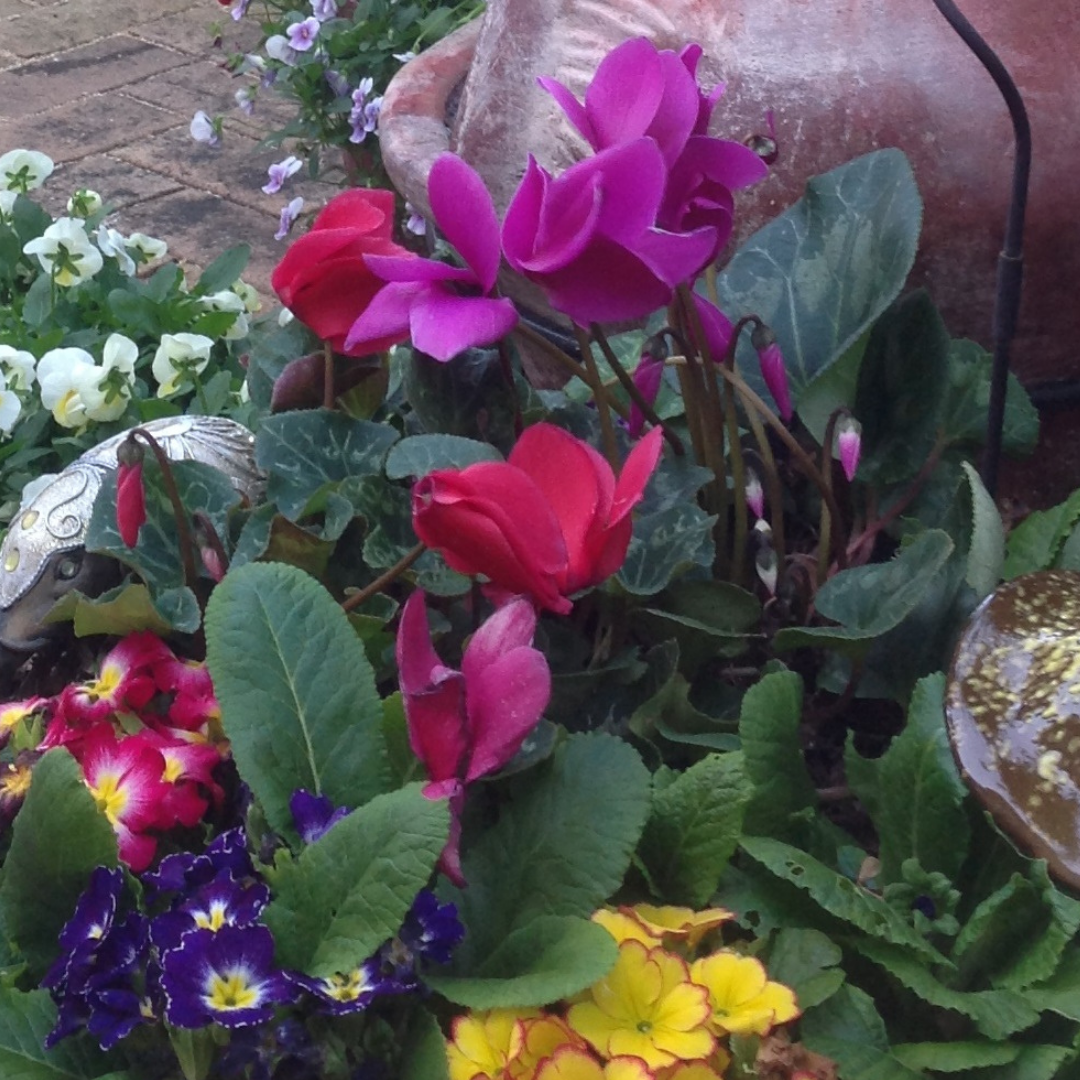
Cut Flowers that lasts for months inside or out!
I love gift giving at this time of year. I don’t do cut flowers, of course as I want my gifts to last a little longer, but I also know not everyone is a green thumb, so I also don’t want to cause any stress with my gift.
Which is why I always love giving Cyclamens.
Why Cyclamens?
Cyclamen persicum, native to the rocky slopes of the eastern Mediterranean, think Turkey, Syria, and Jordan is usually the Cycamen you will find at Trevallan. Despite their exotic origin, they’re remarkably well suited to life here in Ipswich during winter on patios or cool, bright indoor spaces.
They flower for months, from April right through to October, in a rich tapestry of colours, from snowy whites to rich reds, mauves, pinks, and bi-tones. This year a blue one was released for the first time. The foliage is also just as striking as the flowers — heart, kidney, or rounded leaves, patterned or marbled with silver.
A gift and a decoration in one.
Treat Them Cold, Keep Them Beautiful
Even though Cyclamens can grow well indoors, they love the cold. Cool air slows their respiration and preserves their blooms. I always say: cold mornings are their skincare routine!
At home, I water mine once a week, a good slow drench under a tap using icy cold water. Then, I pop them outside (in a shady spot) overnight. That cool, fresh air seems to give them a new lease on life. Indoors, they sit prettily in a bright room until it’s time for their next drink.
The trick is to let them dry out slightly between waterings. Cyclamens grow from a tuber, and those tubers are prone to rot if overwatered or if water collects in the crown. So always water the soil around the base, never directly into the middle of the plant. That centre is their weak spot.
Potting, Planters, and Fuss-Free Beauty
I prefer to keep mine in a decorative planter, not potted into a decorative pot with drainage. I simply place the Cyclamen, in its original black plastic pot, inside the planter. That way, I can take it out to water properly, let it drain, and then pop it back in. Just don’t let water sit in the base, soggy roots are sad roots.
Feeding Flowers, Not Foliage
Cyclamens are moderate feeders, and like many flowering plants, too much nitrogen means lots of leafy growth and very few flowers. To keep mine flowering and healthy, I feed fortnightly with Silica and Potash Liquid. This helps strengthen cell walls, increase flower production, and prolong bloom life. The result? Bloom after bloom, week after week.
Deadheading and Dormancy
Cyclamens don’t like being trimmed with scissors. To remove a tired flower or yellowing leaf, gently twist the stem at the base and pull it cleanly away from the tuber. This reduces the risk of rot or infection and helps the plant focus its energy on new growth.
Cyclamens grow from a tuber and tend to die down during our hot, humid summer. In our hot, humid climate, that’s perfectly normal. You can let the plant rest by placing the pot in a cool, dry, shady spot, reduce watering to almost nothing, and wait. If you’re lucky, it may re-sprout next autumn. If not? Well, you still got months of blooms for the price of a bunch of cut flowers and then some.
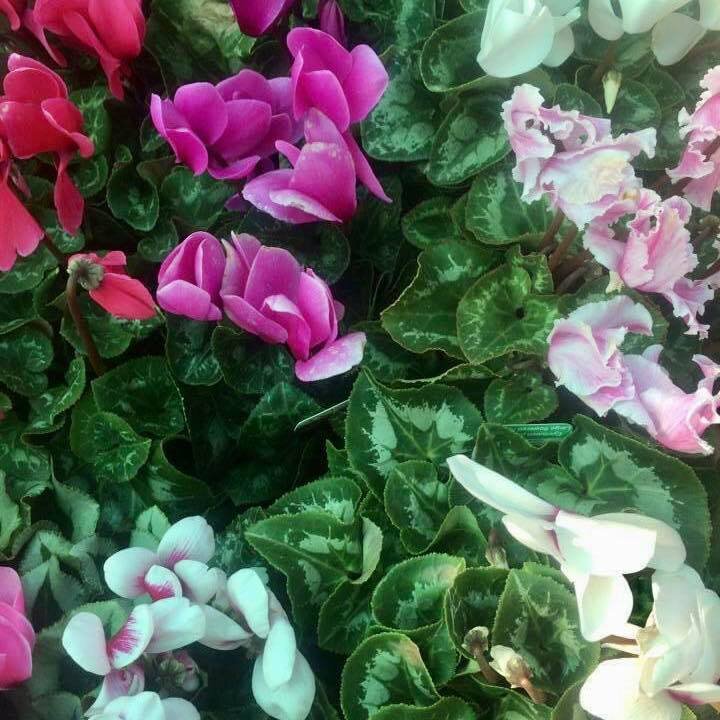
Cyclamen - best flower for indoors
A Cyclamen will warm your soul, even on the coldest morning. Whether you’re decorating your home, cheering up your work desk, or spreading a little love, don’t forget, a living gift like this blooms longer, lingers longer, and keeps on giving.

The Timber and the Truth: Kevin Ahearn’s Quiet Legacy
Kevin Ahearn is a timber craftsman, author, and historian who has spent over 50 years salvaging forgotten stories and wood across Queensland. From bush yarns to hand-carved masterpieces, his legacy honours the heart of the region’s pioneer past.

Tucked away in the folds of Pine Mountain, there’s a man whose life has been shaped not just by timber—but by the stories that live within it. Kevin Ahearn is more than a woodworker. He is a historian of hands and heart, a craftsman of memory, and a salvager of both timber and tales.
His story begins, in part, with a scent, probably why we both align!
"I was about nine years old when I first smelled fresh cut timber," Kevin recalls. "My grandfather was cutting ironbark fence posts at his farm in Rosevale." That smell—sharp, earthy, unforgettable—vanished from memory for decades until, during a clay modelling course in his 40s, the scent returned as others in the class carved wood. "Suddenly the memories came rushing back. That was it. I was hooked."
But his journey into timber wasn’t just born from nostalgia. It came from need. After a serious work injury, Kevin was searching for healing—physically and emotionally. Wood became therapy. Purpose. A way forward.
"I couldn’t afford cedar or beech," he laughs. "So I got a salvage licence and went into the ranges near Killarney in an old HQ ute." The land had been logged decades before, but what was left behind—the discarded, the overlooked—became Kevin’s treasure. Rose mahogany was his favourite: the colour, the grain, the scent.
It was on one of those drives, heading home over Spring Creek Mountain, that Kevin met Harold Godwin, a farmer cutting firewood. Kevin soon gained permission to salvage timber from the land—what followed was over 45 years of respectful, ethical collecting. Kevin never felled a living tree. Everything he’s made has come from what others left behind.
And it wasn’t long before the timber started speaking to him—not literally, but through the stories of the people who once worked it.
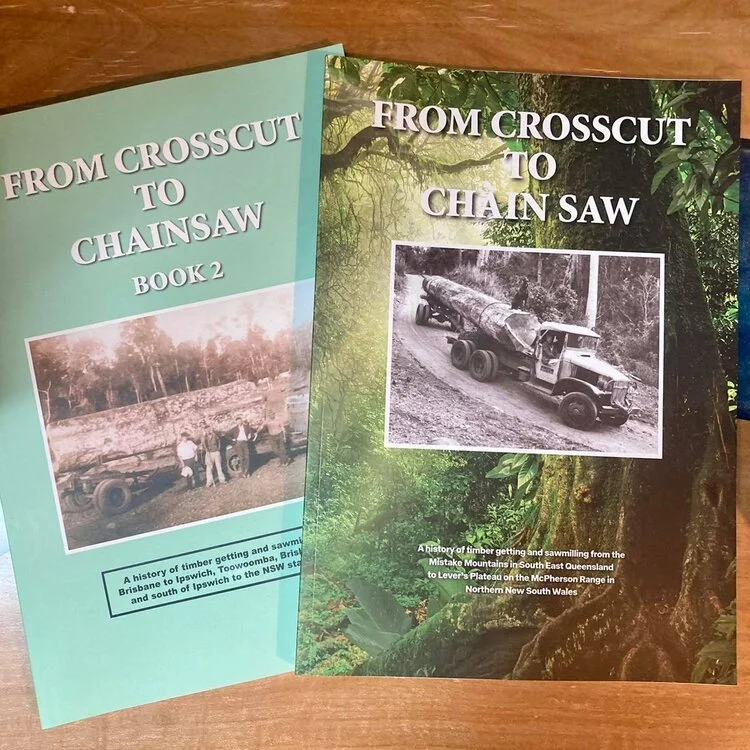
"I’d meet old timber getters—some of the last of their kind. Their stories were vanishing. I felt like someone had to write them down."
That decision led to a daunting project: hand-writing and self-publishing books about Queensland’s timber pioneers. With no computer skills, and while living with ADHD and dyslexia, Kevin threw himself into the work. Hours in the State Library, phone calls, letters, long road trips, and handwritten interviews became the foundation of his first book: From Crosscut to Chainsaw.
It took seven years.
"Once I start something, I can’t stop," he admits. "It’s part of my head. Good and bad."
Kevin has captured stories that would’ve been lost to time. Like Jack Hayes, who he interviewed in a hospital just before Jack passed away. "He was so happy someone took an interest in his life," Kevin says. Or Harold Godwin himself—who had migrated alone at age 15 and later fought behind enemy lines in WWII. Kevin also arranged for Ralph Affleck’s story to be told on national television. While Kevin never appeared himself, he was the reason Ralph's story became one of Landline’s most watched segments.
The humour in his stories is just as rich as the history:
George Sirret, a lifelong bullock driver like his father, once took his team to Holt’s paddock in Mt Crosby to give children from Brisbane a firsthand look at how things were done in the old days. The children learned a few unexpected words that day, but it was George’s dry wit that truly left a mark. When a curious child asked if he was married, George replied, "I was once." The child asked, "What happened to her?" Without missing a beat, George answered, "She told me to choose between her or the bullocks. I still got my bullocks!" Teachers scrambled to explain the remark, but the laughter lingered.
Norm Stimpson’s father, Joe, owned the first car in the Maidenwell district—but couldn’t drive. Determined to teach himself, he practised in their paddocks. One day, forgetting to brake, he drove straight through the back wall of the shed. His sons, recognising a pattern, began stacking hay bales at the end of the shed to soften future crashes. From then on, Joe would arrive home shouting "Whoa, whoa!" like his bullocks, but more often than not, he forgot to brake—and into the hay he went. The shed was patched up more times than they could count.

Once a Bullockies Dream - all carved from Timber
Kevin’s work isn’t just nostalgic—it’s tactile. His carvings are found in homes across the world, from London to America to Marburg. One lives in the Stockman’s Hall of Fame. Another—a saint—rests in a local church. One of his most surprising commissions came from nurses at St Andrew’s Hospital, who asked him to carve a range of Gynaecological tools in red cedar as a gift for a retiring obstetrician.
In recognition of his work, Kevin was awarded the prestigious Dame Mary Durack Outback Craft Award—a rare and fitting honour for someone who has given so much to preserve the spirit of regional Australia.
Today, Kevin remains humble. He hopes people find joy in his work. That maybe they’re inspired to create something themselves. And above all, that we don’t forget where we came from.
"There were families here before us," he says. "Kids like yours, living happily in their little worlds."

The Jaboticaba Tree
Looking for a fruit tree that’s a little out of the ordinary? Meet the Jaboticaba tree (Plinia cauliflora), a Brazilian gem that grows grape-like, deep purple fruit directly on its trunk—yes, the trunk! This quirky habit, called cauliflory, makes it look like nature’s bubble tea. The fruit is sweet, juicy, and slightly tangy, perfect for fresh eating, jams, or even wine. Slow-growing but worth the wait, it thrives in warm climates and even grows well in pots. If you want a beautiful, unique, and delicious tree, Jaboticaba is the one!

Picture Curtesy of Jim Madden
Looking for a fruit tree that’s a little out of the ordinary? One that will make your neighbours do a double take and ask, “What on earth is that?” Well, meet the Jaboticaba tree (Plinia cauliflora), a Brazilian beauty that’s as fascinating as it is delicious!
Unlike your standard fruit tree, the Jaboticaba likes to do things a little differently. Instead of growing fruit on branches like a respectable tree, it breaks all the rules, producing grape-like, deep purple fruit directly on its trunk. That’s right, the trunk! This quirky habit, known as cauliflory, makes the tree look like it’s been sprinkled with nature’s own bubble tea pearls.
And these little purple gems? They taste amazing, like a mix between a grape and a cherry, with a hint of tang. Eat them fresh (if you can beat the birds to them), turn them into jams, jellies, wine, or even liqueur. In Brazil, Jaboticaba wine is a thing, and honestly I think we are missing out not having it readily available here!
Beyond its delicious fruit, Jaboticaba is a bit of a show-off in the garden. Its lush, glossy green leaves give it a tropical feel, and when it flowers, the trunk is covered in tiny white blossoms, making it look like a tree out of a fairy tale. It’s slow-growing, and unless you’re a very patient gardener, you might not see it reach its full 10-metre potential in your lifetime but trust me, it’s worth the wait! Most people keep them at 3 metres to make harvesting easier and to keep their backyard jungle under control.

Picture Curtesy of Jim Madden
Jaboticabas love warm, humid climates, making them perfect for the Ipswich region. They enjoy rich, slightly acidic soil, regular watering, and a good feed of Organic Link fertiliser on the turn of every season to keep them thriving. They can handle a bit of dry weather, but if you want loads of juicy fruit, don’t slack on the watering!
Jaboticabas are low maintenance, but they do have a few enemies. Scale insects and aphids love them as much as we do! Keep an eye out for sticky leaves or sooty mould, which are signs of sap-sucking pests. A dose of eco-oil or neem oil will keep them in check. Birds and fruit fly can also be a problem which is why a lot of people keep their trees small so they can net them.
Don’t have space for a giant tree? No worries! Jaboticabas grow surprisingly well in pots—just make sure to pick a big one, use Searles Platinum Potting Mix, and give it plenty of love
Why You Need a Jaboticaba Tree
It’s a total conversation starter—guests will be amazed when they see fruit growing on the trunk!
The fruit is packed with antioxidants and traditionally used in Brazilian folk medicine for everything from digestion to respiratory health.
It makes your garden look like something from a fantasy novel when in bloom.
It’s low maintenance and happy in a pot, making it great for small gardens.
If you want a fruit tree that’s beautiful, unique, and delicious, Jaboticaba is the one! It might take a little patience (it’s a slow grower), but once it starts fruiting, you’ll be hooked. Get yourself one, and prepare for your backyard to become the envy of all who see it!

Not All Potting Mixes Are Created Equal
Not all potting mixes are created equal—and the potting mix you choose can make or break your plant’s success. After seeing the latest potting mix experiment gaining attention online, I wanted to share what most people aren’t told: age, storage, and the quality of ingredients all play a huge role.
Lately, there’s been a lot of conversation around potting mixes, thanks to Tim’s Garden Centre running a potting mix experiment. It’s a great conversation starter—but like many things in gardening, there’s more to the story than meets the eye.
What Tim’s Experiment Highlights
Tim’s trial uses 8 different Australian Standard Premium Potting Mixes, with dwarf Cos Lettuce planted directly into the bags. It’s simple and visual, and it highlights something really important—not all potting mixes perform the same, even if they meet the same standard.
In fact, some mixes that performed well in a previous trial are struggling this time around, and vice versa.
What does that tell us? The Australian Standard itself might not be enough.
What Tim Didn’t Mention
While the experiment raises valid concerns about consistency, it leaves out some critical context that gardeners deserve to know:
How long had each bag been sitting on the shelf before purchase? Age impacts nutrient levels, moisture retention, and overall performance. Cheaper mixes tend to sell faster, so they’re often fresher. Premium more expensive mixes, on the other hand, might sit longer, especially in big box stores where stock turnover may be slower for a more expensive range.
Where and how was the potting mix stored? Potting mixes stored outside in all weather conditions start to break down faster. This breakdown attracts fungus gnats, which thrive in moist, organic material.
We’ve even seen discontinued mixes on shelves years after they were removed from production. Old, compacted, and improperly stored potting mix isn’t a recipe for success.
Understanding the Australian Standard
This raises an important question—what do the Australian Standards for potting mixes actually cover? Most people assume they guarantee quality, but in reality, the standards primarily focus on:
Physical properties (drainage, air space, particle size)
Basic nutrient levels
pH balance
What they don’t cover in detail is storage conditions or maximum shelf life. That’s a major gap, because even the best potting mix can deteriorate if stored poorly or for too long.
So, What is Potting Mix, Really?
This is a perfect time to go back to basics:
Potting mix isn’t just dirt in a bag—it’s a specially formulated growing medium designed to support plant roots in containers. It’s lightweight, well-draining, and holds moisture without becoming waterlogged.
Garden soil, on the other hand, is heavy, compacted, and often poorly suited to containers. This is something I covered in my blog Going Potty, if you want to dive deeper.
Why I Stock Searles Platinum Potting Mix (and Not Searles Premium Potting Mix)
Tim’s trial uses Searles Premium Potting Mix, which is a high-quality potting mix containing a blend of organic compost, humus, trace elements, minerals, peat, coir, and Zeolite, along with 8 months of Robust® Controlled Release Fertiliser. It’s a solid mix that meets the Australian Premium Standard, but at Trevallan, I go a step further.
I choose to stock Searles Platinum Potting Mix®, the apex potting mix designed for long-term success. It’s professionally formulated using only the highest grade ingredients and advanced blending techniques, honed over decades of experience. Platinum doesn’t just meet the standard—it exceeds it.

Searles Platinum Potting Mix (Stocked at Trevallan)
18 Month Controlled Release Fertiliser
Contains Searles Flourish® Soluble Plant Food & Robust® Controlled Release Fertiliser
Double Strength Penetraide® Re-Wetting Granules and Water Crystals
Enriched with Potash, Fish, Seaweed, and Volcanic Rock Minerals
Enhanced with Zeolite, Trace Elements & Minerals
Suitable for indoor plants, ferns, potted colour, hanging baskets, shadehouse plants, and more
This is why not all potting mixes are created equal—and why choosing a higher-grade mix sets your plants up for success from day one.
The Real Takeaway
It’s easy to blame a plant for failing, but the real culprit might be the mix it’s growing in—or how that mix was handled before you even brought it home. This is why expert advice matters and why I’m always happy to explain the differences between products I stock.
This isn’t about saying one retailer is better than another, it’s about educating gardeners so they understand that not all potting mixes are created equal. If we want people to succeed in gardening (and keep gardening!), they need honest, clear information, something the industry as a whole needs to get better at providing.
If you want to know which potting mixes I recommend (and why), visit me at Trevallan. And if you missed my latest blog about the true cost of plants and why expert advice matters, you can find it here: True Cost of Greenlife
Gardening success starts with good soil—and that starts with knowing what’s in your potting mix.

Are You Really Watering Your Plants?
Many gardeners struggle with plant health issues that appear insect-related, like mealybugs or wilting foliage, but the real culprit is often hidden beneath the surface—hydrophobic soil. When soil becomes water-repellent, it prevents moisture and fertiliser from reaching plant roots, leaving them vulnerable to stress and pest infestations. Even the most diligent watering routine may not be enough. Soil wetters and re-wetting agents are essential tools to restore soil hydration, improve plant health, and prevent nutrient loss. In this guide, we explore how hydrophobic soil forms, the surprising role of ants in this problem, and the best solutions to keep your garden thriving.
The Hidden Issue Beneath the Soil
One of the biggest hurdles in sharing gardening knowledge is asking people to be truly honest about their soil. We might think we know the type of soil in our gardens, but how many of us can honestly say we've consistently enriched it with organic matter? How many of us regularly fertilise or replenish our soil every three months and apply liquid fertiliser every two weeks?
Sometimes, the difference between rarely and often is the key to unlocking our garden’s full potential. Even if you’re already doing this, how much of the water and fertiliser is really getting into your soil? More importantly, how much is actually reaching your plant’s roots?
The Silent Problem of Hydrophobic Soil
With the extreme heat and drying winds we’ve been experiencing, plants dry out far sooner than we realise. This harsh weather pulls moisture from both the soil and foliage, often leaving plants struggling. Over time, soil can become hydrophobic, it repels water instead of absorbing it. Hydrophobic soil leads to uneven water distribution, so even if you’re watering consistently, it might not be making a difference. You could be fertilising and caring for your plants, only to have all that effort go to waste. This issue affects gardens, lawns, and potted plants alike.
What’s worse, hydrophobic soil doesn’t just prevent water from soaking in, it also stops fertilisers from penetrating, leaving plants malnourished.
The Role of Ants in Hydrophobic Soil
A surprising but common cause of hydrophobic soil is ants nesting in plant roots. When ants build extensive tunnel systems in potting mix and garden beds, they create air pockets that prevent water from soaking in properly. Many gardeners notice mealybugs or scale insects on their plants and assume they have an insect problem. In reality, the root cause is often excessive ant activity. Ants farm these sap-sucking pests because they produce honeydew, a sugary substance that ants love to eat. The result? A weakened plant, compacted and dry soil, and a thriving ant colony.
If your soil dries out quickly, remains hard even after watering, or seems to have a persistent insect problem, ants may be the hidden culprits.
How to Fix Hydrophobic Soil
While adding compost and mulch is beneficial, I find the quickest and easiest way to rehydrate soil and improve absorption is by using a soil wetter.
I know I’ve talked about this before, but I keep seeing the same issue plants suffering because water isn’t reaching their roots. Soil wetters make a real difference, and I use them at Trevallan Lifestyle Centre and at home.
How Soil Wetters Work
Soil wetters reduce the surface tension of water, helping it penetrate rather than run off the soil surface. They restore soil hydration and ensure water and nutrients reach the root zone.
Granular vs. Liquid Soil Wetters
I prefer granular soil wetters because they break down slowly and improve moisture retention over time.
My mother and sister prefer liquid wetters because they work faster and are easier to apply.
Both work effectively, so it’s a matter of preference.
To get the best results:
Apply soil wetters to garden beds, pots, and lawns to rehydrate soil.
If your gardens have mulch, move mulch aside, apply soil wetters and add mulch back ontop
Use organic matter like compost to improve soil structure.
Address ant infestations by removing sap-sucking insects (like aphids and mealybugs) and using natural deterrents like neem oil or diatomaceous earth.
Monitor soil moisture to prevent hydrophobic conditions from returning.
Different Types of Soil Wetters Trevallan stocks
Soil Soaker™ Granular is a biodegradable wetting agent that improves water penetration in hydrophobic soils, ensuring moisture reaches plant roots effectively. It contains diatomaceous earth, which provides silica to strengthen plants and reduce heat, transpiration, and salt stress. Ideal for garden beds, potted plants, turf, and commercial landscapes, it helps prevent water runoff and dry spots. Safe for plants, non-burning, and easy to apply, it enhances soil hydration for healthier growth
Soil Soaker™ Wetting Agent Concentrate is an eco-friendly solution designed to address hydrophobic (water-repellent) soils and potting mediums that repel water under dry conditions. This 100% biodegradable surfactant enhances water penetration, ensuring moisture reaches plant roots effectively. Enriched with natural organic humates, it conditions the soil, nourishes beneficial microbes, and improves moisture retention, promoting healthier plant growth. Ideal for dry, sandy soils, gardens, and turf, Soil Soaker™ helps prevent water runoff and dry patches, making it a must-have for maintaining optimal soil hydration
Searles Penetraide® Re-Wetting Granules are designed to combat water-repellent soils, ensuring efficient water and nutrient delivery to plant roots. These easy-to-apply granules enhance soil moisture absorption, reduce runoff, and improve the effectiveness of fertilisers and pesticides. Suitable for pots, gardens, and lawns, a single application can last up to 12 months, promoting healthier and more resilient plants.
Searles Recharge Ultimate Fertiliser – Flower & Fruit is a premium, triple-action fertiliser specifically formulated to enhance flowering and fruiting in plants. It combines controlled-release nutrients that provide up to 12 months of feeding, instant-release fertilisers for immediate nutrient availability, and Penetraide® re-wetting granules to improve water penetration in dry soils. Enriched with trace elements, minerals, micronutrients, and zeolite, this fertiliser promotes lush foliage, vibrant blooms, and robust fruit development. Suitable for use in pots and gardens, including Australian native plants, it ensures sustained nourishment and improved soil moisture retention.
By understanding how water moves through your soil, recognising the signs of hydrophobic conditions, and using the right tools, you can dramatically improve plant health and stop wasting water and fertiliser.
Have you used soil wetters before? If not, it might be time to give them a try!

True Cost of Greenlife
Next time you pick up a plant, consider it more than just greenery—it's an investment in expertise, research, and the right conditions for success. Trial and error can be part of the fun, and sometimes bending the rules leads to incredible discoveries.
However, for the best results, expert guidance makes all the difference. With the right advice, gardening doesn’t have to be hard—it can be simple, effective, and deeply rewarding. Seek knowledge, value experience, and watch your plants truly thrive.
Why We Need to Rethink the Way We Value Plants
When a plant dies, what’s the first thing we blame?
The plant itself. It wasn’t strong enough. It wasn’t meant for this climate. It just wasn’t a ‘good’ plant.
But have we ever stopped to ask:
Was the soil right?
Was it planted correctly?
Did it get the nutrients it needed?
Was it given the right care at the right time?
In reality, when a plant doesn’t thrive, it’s rarely the plant’s fault. It can be just lack of knowledge that leads to failure.
This is where the real issue lies: we aren’t just undervaluing plants. We’re undervaluing the expertise required to care for them properly.
The Hidden Costs of Every Plant
Some people see a plant on a shelf and assume its journey started with a cutting and some water. In reality, getting that plant to you is an investment of time, money, and knowledge:
Plant Breeding & Trials
It can take years of research and thousands of dollars to develop a plant that is resilient, beautiful, and commercially viable. Many plants never make it past trials, meaning growers bear the cost of failure before success. This isn’t just true for new plant releases—many Australian natives are incredibly difficult to propagate, and it can take years before they are commercially viable. Some native species require highly specific conditions for germination, while others have low success rates in propagation, meaning extensive trial and error is required before they can be sold in nurseries. Growers invest in these plants long before they ever see a return, and often entire species are abandoned due to the cost and difficulty of making them viable for the market.
Patents, Breeding Rights & Labels
The legalities behind plants can cost thousands, yet this is rarely discussed. Ever wonder why some plants are more expensive? Because they have undergone rigorous testing, licensing, and production costs. There are even laws surrounding the reselling of them. Some plants can only be sold once they reach a certain size or with a specific label. Others are protected under strict propagation laws—meaning cuttings cannot legally be taken and resold. Additionally, some plant labels, particularly those for certified varieties, are expensive to produce and contribute to the overall cost of the plant.
Propagation & Growing Costs
Plants require specialised care, including the right soil blends, fertilisers, and controlled environments.
Transport & Logistics
Moving plants is complex. If done incorrectly, entire shipments can be lost, adding to the cost.
Retail & Maintenance
Even once a plant reaches a nursery, it still requires expert care until it finds a home.
And yet, when a plant is priced higher than expected, people balk. Why? Because the industry has done a poor job of educating consumers about the real value of plants.
Stop Googling, Start Trusting Experts
In an age where information is at our fingertips, many assume a quick Google search is enough to make them an expert in plant care. But the reality is, Google doesn’t know your specific soil conditions, your climate variations, or your personal garden environment—a local trained horticulturist should.
There are some plant retailers that sell plants as commodities, stripping away the value of professional advice. When people buy plants from these places, they often struggle, leading to disappointment and disillusionment with gardening altogether.
It’s Time to Shift the Conversation
Horticulture is a trade, not a hobby. Just like electricians, mechanics, and builders, horticulturists are trained professionals with years of knowledge and experience. Unfortunately, in Australia, over the last ten years, our training has started to lose its depth and rigor. However, there are still dedicated professionals within the trade who have a passion for continuous learning, always seeking to expand their expertise and update their skills.
Plants are an investment, not a disposable product. They require care, expertise, and the right conditions to thrive. Unfortunately, plants are often treated as an afterthought, especially in landscaping. Too often, we see million-dollar homes designed with meticulous attention to detail, only to have their landscapes thrown together with $10 worth of plants and no consideration for soil health, climate, or long-term growth. Plants are not just decorative accessories; they are living organisms that require proper planning, the right foundation, and ongoing care to truly enhance a space. Without investing in the right soil, appropriate plant selection, and expert advice, these rushed landscapes inevitably fail, leading to wasted money, frustration, and a cycle of replacing plants rather than cultivating a thriving, sustainable environment.
Education is key to success. Instead of relying on quick online answers, seek expert advice from those who truly understand plants and how they grow in your environment. If you’re reading this and thinking, ‘That sounds like too much effort,’ don’t worry—it’s not. With the right advice, gardening can be simple, effective, and even enjoyable. The key is to start with good information, tailored to your specific conditions, so you’re setting yourself up for success from the beginning. With expert guidance, growing and maintaining plants doesn’t have to be overwhelming; it can be a rewarding and effortless part of your daily life.
Next time you pick up a plant, consider it an investment, not just in your garden, but in the expertise and years of research behind it.
Trial and error can be a fun learning curve as sometimes pushing the boundaries can lead to exciting discoveries. One of my favourite sayings is, 'Prove me wrong'! I can give you all the advice, but if you manage to make something thrive in the 'wrong' place, that’s an achievement worth celebrating! However, for the best chance of success, seeking advice from trained professionals can save you time, effort, and frustration. We genuinely want to help you make the right choices so your plants thrive and bring you joy. So instead of always relying on trial and error, seek advice from trained professionals who genuinely want to help you succeed.
Plants aren’t "just plants." They are the result of knowledge, passion, and science. Let’s start treating them that way.

Grown not Flown
At Trevallan Lifestyle Centre, we source our cut flowers from local flower farms and our potted roses from local growers—supporting small businesses, reducing environmental impact, and ensuring fresh, high-quality blooms.
Valentine’s Day Flowers: The Beauty of Buying Local
Valentine’s Day is a time to express love and appreciation, often through the timeless gift of fresh flowers. At Trevallan Lifestyle Centre, we believe that every bouquet should not only bring joy but also support our community. That’s why we source our cut flowers from two local flower farms, ensuring that even on special days like this, our commitment to working closely with local suppliers remains strong.
But why does buying local matter?
Understanding Where Your Flowers Come From
When choosing flowers, it’s easy to get swept up in the beauty of imported roses and elaborate arrangements without considering their origins. Many cut flowers sold in supermarkets and larger retailers are imported from overseas, often traveling thousands of kilometers before reaching Australian shelves. This has significant consequences, including:
Environmental Impact: Imported flowers contribute to a high carbon footprint due to long-haul transport and refrigeration.
Chemical Treatments: To meet quarantine regulations, imported flowers are frequently treated with chemicals that may affect their freshness and longevity.
Economic Displacement: Relying on foreign growers can weaken the local flower industry, making it harder for Australian flower farms to compete.
A deep dive into the cut flower industry, such as the one highlighted in this article, reveals just how critical it is to be aware of these factors when making purchasing decisions.
The Power of Small, Simple Gestures
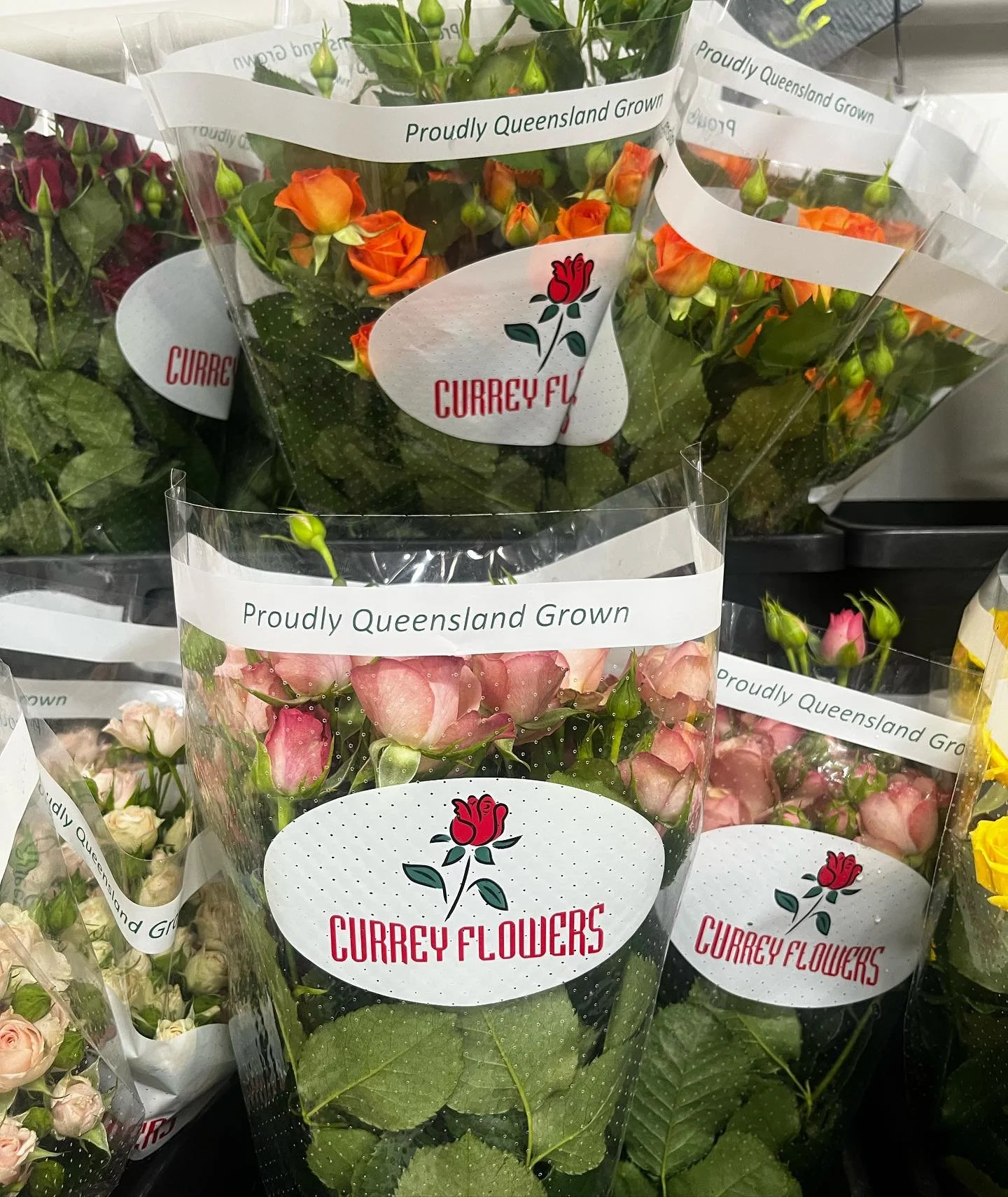
Choosing locally grown flowers isn’t just about sustainability—it’s about community. When you buy from a small business like Trevallan, you’re not just purchasing a bouquet. You’re supporting:
Local flower farmers who dedicate their time and expertise to growing beautiful, high-quality blooms.
Small business ecosystems where florists, nurseries, and local artisans thrive.
Ethical and sustainable practices that benefit both consumers and the environment.
Beyond cut flowers, we also source our potted roses and flowering plants from local growers, offering a more sustainable and lasting alternative to traditional bouquets. A potted rose or flowering plant can continue to bloom for seasons to come, serving as a long-lasting symbol of love and appreciation.
A Valentine’s Day with Heart
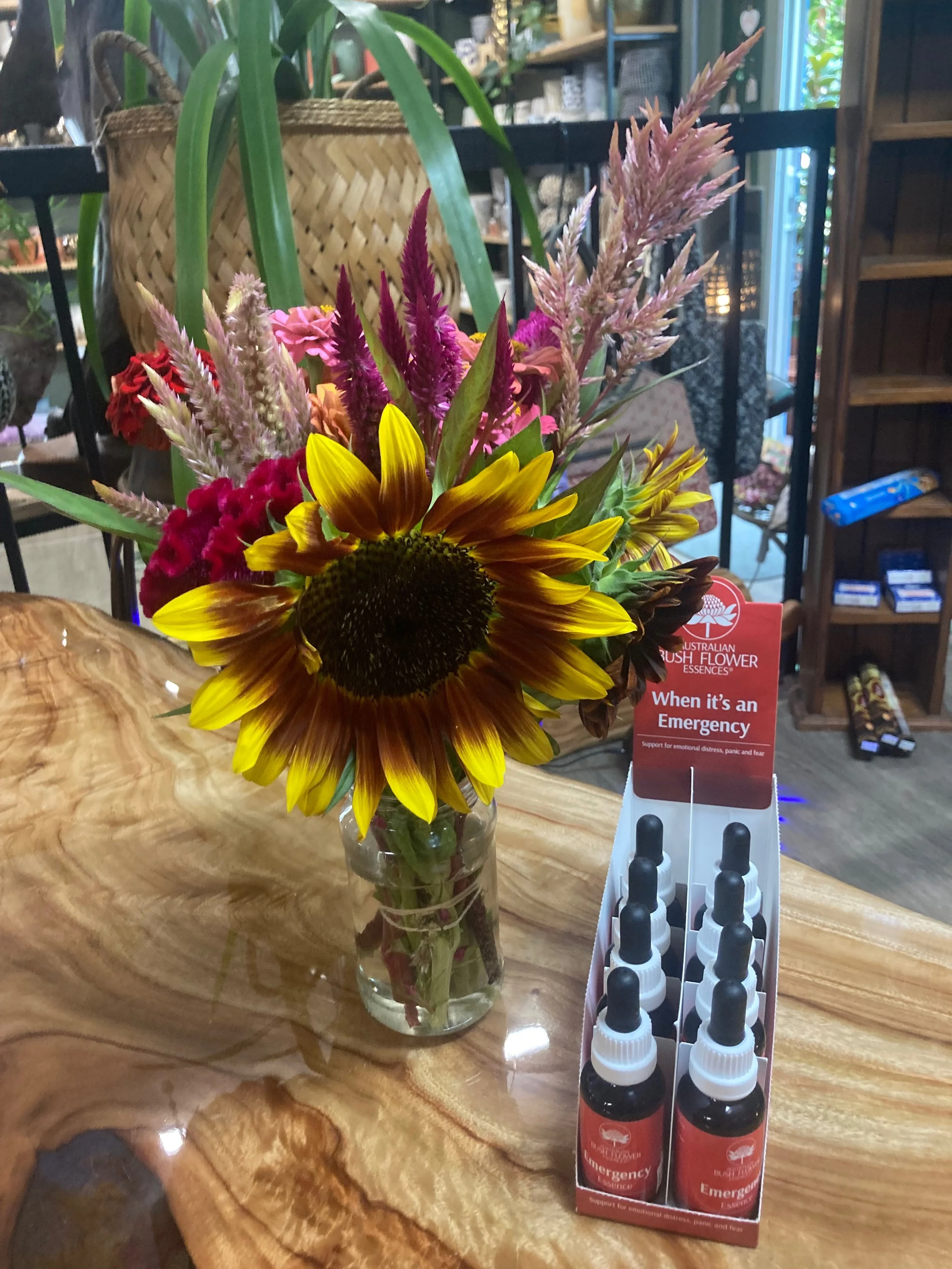
This Valentine’s Day, let’s make conscious choices. Whether you’re picking up a bouquet of locally grown flowers or gifting a potted rose, your decision has a ripple effect. By choosing small businesses that support other small businesses, you’re contributing to a cycle of sustainability, ethical consumerism, and local economic growth.
At Trevallan Lifestyle Centre, we stand by our ethos of working closely with local suppliers—not just for Valentine’s Day, but every day. When you give a gift that is grown, not flown, you’re giving something truly meaningful: love for your special someone, support for your community, and care for the environment.
Visit us this Valentine’s Day to find the perfect locally sourced floral gift that speaks from the heart.

Way to my Heart
Valentine's Day is a great day to remind ourselves how awesome and special our loved ones are. Sure many of us think it's a little over commercialized but honestly who wouldn't get a little tingle up their spine when their loved one arrived home with a flowering plant and champagne!
What is Valentine’s Day Really About?
There are many stories associated with how Valentine's Day came about.
There seems to be a few stories floating about about Saints name Valentine or Valentinus
Imagine living in the Roman Empire around 1st century AD. In this time Christians were persecuted, jailed, tortured and killed, and things like marriage was outlawed, after all young unmarried men make better soldiers!
It is believed there was a Priest or Priests called Valentine. These men defied the Roman Empire and performed marriages and other sacraments for Christians. Another story goes that a Priest named Valentine helped Christians escape persecution and my favourite story is that a priest fell in love with a jailer's daughter and sent her a message of affection, signed "From Your Valentine."
While what is written about Valentine is a little murky these stories illustrate his appeal as a sympathetic, heroic, and, romantic figure. Understandably by the Middle Ages, Valentine was one of the most popular saints.
But why did the Church decide the feast of St. Valentine would be on February 14?
Well one story goes that Bishop Valentine was imprisoned, tortured, and martyred on February 14, 269. In 496 Pope Gelasius I, declared The feast of St. Valentine would be held on February 14 in his honour.
Another theory links Valentine’s Day to the ancient Roman festival Lupercalia, celebrated on February 15. This pagan festival was meant to purify the city and promote health and fertility. Young women would place their names in an urn, and the city’s bachelors would draw a name, pairing up for the year, often leading to marriage! However, Pope Gelasius I later abolished Lupercalia around 496, deeming it un-Christian.
History is one of my favourite subjects. Studying all history reveals not just what happened, but why it happened, providing valuable insights into human behaviour and societal choices.
What remains clear is that Valentine’s Day is all about love, connection, and celebration.
Yes, over the years, it’s become a little commercialised, but honestly who wouldn’t get a little tingle up their spine when their loved one arrives home with a beautiful flowering plant and some liquid fertiliser? Now that’s a gift that keeps on giving!
And let’s not forget, Valentine’s Day isn’t just for those in relationships. Love and connection come in many forms. It’s a day to celebrate love in all its expressions romantic, platonic, and most importantly, the love we show ourselves. So whether you’re treating yourself to a quiet moment in the garden, catching up with a friend for coffee, or simply embracing a little extra self-care like buying yourself a new plant or garden ornament, Valentine’s Day is a perfect reminder to cherish all the ways love shows up in our lives.
So, what fun and love-filled things are you doing this Valentine’s Day ?

Traditionally, red roses are the first choice for Valentine’s Day as they universally mean “I Love You”.
However, did you know that the Agapanthus flower stands for secret love and Caladiums mean joy and delight? Gerberas, with their bright and cheerful blooms, symbolise happiness, positivity, and admiration. A white camellia says you are adorable and an Orchid represents love, beauty and charm.... my kind of flower!
Don’t forget that guys love presents too. Did you know that any camellia given to a man symbolises good luck.
Maybe this is your first Valentine’s day in your own home and you want to celebrate with something special? Why not plant a love tree or keep a love tree as a house plant? Maiden hair Ferns symbolise a bond of love and the orange tree flowers symbolise eternal love, marriage and fruitfulness. If you’re after something unique, Peperomia plants are a great choice as they symbolise resilience, prosperity, and a long-lasting relationship, making them a thoughtful gift for love that stands the test of time.
Want something a little extra special?


Trevallan has Beetle Bug Curious Art in store now. Did you know a Scorpion can represent passionate and intense love, while a Butterfly is all about new beginnings and starting afresh.
Beautiful, hand-carved soapstone sculptures from Zimbabwe make a meaningful gift. The “Lovers Entwined” sculpture represents never-ending love.
Perfect Potion has you covered with their Eros blend, a love potion of aphrodisiacal pure essential oils, designed to evoke passion, desire, and sensuality.
Of course, you can’t go wrong with crystals. Our Pink Amethyst crystal is known for its calming and protective properties, helping strengthen relationships while shielding the heart from negativity. Unlike flowers that fade, this beautiful crystal is a timeless keepsake, making it a meaningful gift for a partner, a friend, or even yourself
Maybe time is your love language? In a world that moves so fast, taking a moment to slow down can be the greatest act of love—whether it’s time spent with someone special or simply time for yourself. Why not pause for a coffee and a delicious Valentine’s Cookie or Cupcake?
After all, love isn’t just about grand gestures, it’s about the quiet moments of connection, the conversations over coffee, and even the small acts of self-care that remind us we are worthy of love too.
Whatever you do, don’t let this day pass you by. Remember, it’s all about love, connection, and celebration.
How are you celebrating today?

Beetle Bug Curious Art

I am beyond excited to introduce Beetle Bug Curious Art to Trevallan! Her breathtaking pieces have already found homes with so many of you, and I couldn’t be happier to have her work gracing our shelves.
Our journey together began in July 2023, when she first walked through Trevallan’s doors, bringing with her a collection of pieces that immediately captivated me. There was something special in her work—something that spoke not just to aesthetics, but to emotion, storytelling, and connection.
Beetle Bug Curious Art isn’t just about taxidermy—it’s about storytelling. She breathes life into her craft, transforming insects into exquisite works of art that go beyond being "just a butterfly in a frame." Each piece is a statement, a conversation starter, and a tribute to the intricate beauty of nature. When I first saw her work, I immediately understood its depth—it wasn’t just visually stunning, but emotionally evocative. Her art invites curiosity, wonder, and a newfound appreciation for the delicate balance of life, making each creation more than just décor—it’s a reflection of something deeper within us.
When you purchase one of her creations, you’re backing two small businesses—hers and ours. More than that, you’re bringing home something truly unique, something meaningful.
Which piece speaks to you?
You don’t have to be a collector to fall in love with art. Sometimes, you just know when a piece is meant for you.
Raspberries
Discover the joys of growing Heritage Raspberries! These self-pollinating, hardy perennials produce sweet, tangy fruit twice a year, perfect for Queensland gardens. Their flowers attract bees, while their resilient canes thrive in unpredictable weather. Learn how to grow, prune, and enjoy this nutritious superfood!

Raspberries are one of those fruits that make you fall in love at first taste. Bursting with flavour, their sweetness is balanced by just the right amount of tang. Unfortunately my bank account doesn’t agree with this love affair and I have found I need to either grow my own or heavily reduce my consumption.
The Beauty of the Raspberry Bush
Raspberry plants (Rubus idaeus) are hardy perennials that send up fresh canes each year, making them a productive and surprisingly low-maintenance choice for home gardeners. Raspberry ‘Heritage’, (Rubus idaeus x Rubus hybrids), is popular variety for Queensland gardens as it is well suited to our long hot summers and mild autumns. They also have the ability to bear fruit twice a year, once on first-year canes (primocanes) and again on second-year canes (floricanes). This dual fruiting potential is especially valuable in Ipswich, where the weather can be unpredictable. Some years reward us with two abundant harvests, others with just one, and occasionally, none at all. But with Heritage raspberries, there’s always the hope of at least one fruitful season.
Raspberries are self-pollinating, so a single plant is all you need for a plentiful harvest. Their delicate white flowers are a magnet for bees and other beneficial insects. So why isn’t everyone growing these amazing plants? One word: thorns. Raspberry canes are covered in small, prickly thorns that can make harvesting and maintenance a bit of a challenge. While the reward of fresh, juicy berries is worth the effort, it’s best to approach with gloves and a bit of caution to avoid the sting
A Nutritional Powerhouse
Raspberries aren’t just delicious—they’re incredibly nutritious. Packed with dietary fibre, they support digestion and can help maintain healthy cholesterol levels. They’re also rich in vitamins C and K, manganese, and antioxidants, which help combat free radicals and support overall well-being.
It’s no wonder raspberries are often called a superfood!
Who Can Grow Raspberries?
If you’re in Ipswich, good news: raspberries can thrive here with the right care. While they prefer a mild climate, Heritage raspberries are resilient and adapt well to our warmer weather. They grow best in a sunny position with some afternoon shade to protect them from the harsh summer heat.
Raspberry plants are perfect for smaller gardens, as they can be trained on trellises to save space. They’re also happy in pots, provided you use a large container with premium potting mix.
Planting and Pruning Tips
Raspberries are happiest in fertile, well-draining soil with a slightly acidic pH of 6.0–6.5. Prepare the garden with garden soil and/or compost before planting. If you’re planting in a pot, choose a high-quality mix like Searles Platinum Potting Mix.
Pruning is where raspberries truly shine. Heritage raspberries are incredibly forgiving:
After the autumn harvest, cut all canes that have fruited back to the base. This encourages fresh growth.
For a second summer harvest, leave the primocanes (first-year canes) intact after their autumn fruiting, as they’ll bear again next season.
Always remove weak, dead, or overcrowded canes to promote air circulation and reduce disease risks.
Sharp tools are a must when pruning, as raspberries can gum up pruners with their sap. Clean tools regularly to keep them in top condition.
Feeding and Caring for Raspberries
Raspberry bushes are heavy feeders, so they’ll thrive with regular fertilising. Apply Organic Link fertiliser every 2–3 months to keep plants strong and productive. During the growing season, a fortnightly liquid feed with Triple Boost or a potassium-rich fertiliser will encourage abundant fruiting.
Mulching is another key to success. Organic mulch like sugar cane keeps roots cool, conserves moisture, and suppresses weeds. Water deeply and consistently, especially in the warmer months, as raspberries have shallow roots and can dry out quickly.
Pests that affect Raspberries
Raspberries are a joy to grow, but pests can occasionally try to steal the spotlight. Common culprits include fruit fly, aphids, spider mites, caterpillars, beetles, and of course, birds.
To keep your raspberries thriving:
Spray neem oil regularly or use other organic sprays to deter pests.
Hang fruit fly traps near your plants to catch those troublesome invaders.
Protect with netting to keep birds and larger pests at bay.
With a little attention and care, you can enjoy your raspberries pest-free!
Diseases and Problems that affect Raspberries
While raspberries are generally hardy, they can occasionally face a range of diseases and problems when grown in South East Queensland. Here's how to identify and manage these issues:
Diseases
Powdery Mildew: Ensure good airflow around the plants and avoid overhead watering. Apply sulphur-based sprays or organic fungicides (like eco-fungicide) to manage outbreaks.
Botrytis (Grey Mould): Promptly remove affected fruit, thin canes to improve ventilation, and apply copper fungicide during periods of high humidity.
Cane Blight: Prune out damaged or diseased canes using clean, sharp tools to prevent the disease from spreading.
Root Rot: Plant in well-drained soil or raised beds, and avoid overwatering to reduce the risk of waterlogging.
Common Problems
Sunburn: Leaves and fruit may scorch in Ipswich's intense summer heat. Use shade cloth or strategic planting to provide afternoon shade during heatwaves.
Poor Fruit Set: Inadequate feeding or incorrect pruning can lead to fewer berries. Fertilise regularly with a balanced feed like Organic Link, Triple Boost and Silica and Potash and prune correctly to promote healthy growth.
Overcrowding: Dense canes restrict airflow, increasing the risk of disease. Thin out canes annually, retaining only the strongest to ensure good ventilation.
Dry Soil: Raspberries have shallow roots that struggle in dry periods. Water deeply and consistently, especially during hot or windy weather. Apply organic mulches, such as sugar cane, to retain soil moisture and reduce evaporation.
By staying proactive and providing the right care, you can minimise these challenges and enjoy a thriving raspberry crop in your garden!

Real Living Christmas Trees
Conifers are everyone’s first choice when it comes Christmas trees but if you want a different type of Christmas tree here’s a few hints.
Christmas Trees are the best and worst tradition. I don’t know about you, but for years I spent hours agonising over where every single bauble should go, what colour scheme to do, tinsel or no tinsel. Then after I’d finished I’d stand back, take stock and cry because after so many painful hours, it still didn’t look like a department store tree. Nowadays, I just let the kids go wild with it. If it doesn’t look perfect, I just think ‘Oh well, at least they had fun!’
While watching the kids decorate the tree, I began to wonder why we even have Christmas trees and why they are always depicted as Evergreens or Conifers. The answer is in the song.
O Christmas Tree! O Christmas Tree!
Thy leaves are so unchanging;
Not only green when summer's here,
But also when 'tis cold and drear.
Evergreens, or as we know them, conifers, are green all the time - that is, their leaves never change. Christmas in the northern hemisphere occurs during the bleakest days of the year, so evergreens present a vibrant contrast to the natural world outside - ‘Not only green when summer's here, But also when 'tis cold and drear’.
Because of this, people throughout history have regarded them as special symbols of eternal life or rebirth.
I’ve found many theories of why we decorate our trees at Christmas time, but my favourite was that the tree was decorated with apples (to represent the forbidden fruit) and wafers (to represent the Eucharist and redemption).
So I may not be able to decorate the tree perfectly, but how do I choose the perfect Christmas tree?
Christmas trees are different for everyone, however, in general, Pinus radiata and Picea glauca ‘Christmas Star’ are the most commonly used live Christmas trees.
Picea glauca ‘Christmas Star’ is a compact, slow growing evergreen with dark green foliage. It has a nice dense, conical habit, perfect for it to become your potted living Christmas tree. It is very slow growing so can live in a pot forever, can take up to 10 years to grow to 1.5 metres tall and 80cm wide.
Pinus radiata are faster growing and can get up to 20m tall so be prepared to only have this guy in a pot for a few years and then it will have to go out in your yard. This tree has dense green needle like foliage and beautiful pine cones. Can handle the pot life for a number of years and can be trimmed.
While these two trees are currently the most popular, I find they are not the best choice for us here in Ipswich or other areas of high humidity. Picea glauca ‘Christmas Star’ is native to central Alaska and Canada. It is very hardy plant in the right conditions but it does not like the warmer, humid climates where it may suffer fungal attacks.
Pinus radiata is native to the West Coast of North America. It was introduced to Australia in 1857 and is now considered a major general purpose timber in Australia. Unfortunately in some areas of Australia it has become a major weed invading open dry environments both in native remnant vegetation and forests. While it is not a problem here in Ipswich it could become one.
So what do we use instead of these popular choices?
Gymnostoma australianum, The Daintree Pine should be the first choice as a Christmas tree. I have no idea why over the years these trees have not become the preferred choice for living Christmas trees. These beautifully elegant plants are native to the the World Heritage Forests of Far North Queensland. Due to their rarity in the wild they have obtained the Qld government’s official conservation status of ‘vulnerable’ species. Soon the only place we may see these pines is in our own backyard. The Daintree Pine is like a living Christmas tree with its naturally beautiful conical shape, that requires little to no pruning. it has attractive soft dense, deep green foliage of slender jointed needles. These guys can grow forever in a pot or you can plant them in your garden. Once established it tolerates cold, heat, humidity and dry. It prefers to be planted in well composted, well drained soil or in platnium potting mix. Once established it needs little maintenance to survive. They will naturally reach about 4 - 6m.
However, if you wanted something really different here are some of my top recommendations:

Magnolia ‘Little Gem’
My ultimate living Christmas tree would be the Magnolia ‘Little Gem’. This evergreen magnolia thrives in pots and can be brought indoors for short periods. Its lush, dark green foliage with bronze undersides creates a festive look. The branches are strong enough to hold baubles, and its enormous, cream-coloured flowers have a delicate perfume - making it a stunning choice.
Trachelospermum Jasminoides
These beautiful evergreen climbers look great on a tripod (perfect Christmas tree shape) and you can easily hang lights and decorations on the stakes of the tripod. They will last forever in a pot and you can enjoy the scent of your living Christmas tree in late spring, early summer.
Thuja ‘Smaragd’ Conifer
Is a classic choice for a living Christmas tree. With its naturally conical shape and vibrant green, fine-textured foliage, it’s the perfect addition to any Christmas setting. This conifer grows slowly and stays compact, making it perfect for pots and small spaces. Its dense, upright growth makes it ideal for hanging ornaments, lights, and decorations. It thrives in full sun to part shade and is incredibly low-maintenance, tolerating a range of soil types and conditions, even our humidity.

Lygodium microphyllum
Lygodium microphyllum is a climbing fern. Native to Australia as well as tropical Africa and Southeast Asia. This delicate native fern features fine, lacy foliage that can be trained over a tripod (like I have here), forming a Christmas tree shape. Using the tripod as a structure you can hang fairy lights and small decorations, creating the perfect indoor Christmas tree. This fern thrives in warm, humid conditions and grows well in pots. If you have it in the garden it can climb through your trees very quickly especially in a wet humid summer like we are having now.
Syzygium 'Resilience'
Works as an ideal native Christmas tree. Its exceptional trimmability allows easy shaping into a classic Christmas tree form even from a young age. Thriving in our climate, it endures well indoors, making it a lasting festive centrepiece. It can grow in a pot for many years and if you are looking for a faster growing Christmas tree or even a Christmas tree to plant in the garden to add your own decorations over time, this is your plant.
Acmena smithii 'Allyns Magic'
This compact native is ideal for small spaces and works well in pots. Young plants make charming table centrepieces, while older ones look stunning on patios. Its bright red new growth contrasts beautifully with its dark green foliage. With trimming, it can take on a conical Christmas tree shape.
Casuarina glauca ‘Greenwave’.
This hardy evergreen native shrub forms a natural, ball-like shape with long, thin branches reminiscent of a conifer. It would require little trimming to turn it into the classic conical shape of a christmas tree. It can look fantastic in pots or gardens. Growing up to 2 metres, it loves full sun and makes a low-maintenance, festive statement.
Callitris rhomboidea
This uniquely Australian native can grow up to 12 metres in the wild but typically reaches about 6 metres in gardens. It’s an excellent feature tree, thriving in pots or the ground. Hardy and adaptable, it tolerates dry and cold conditions. With its soft, conifer-like foliage, it makes a striking Christmas tree alternative and doubles as a windbreak or loose screen in the garden.
This elegant native tree features masses of delicate pink flowers in spring, resembling fairy ballerina skirts, followed by blue edible fruits loved by wildlife (though not highly palatable for humans). Its foliage transitions through bronze, dusky green, and bright red as it matures. With a slender shape and sturdy branches, it’s perfect for hanging Christmas decorations. A low-maintenance tree, it grows up to 4 metres and withstands dry, hot, humid, and cold conditions.
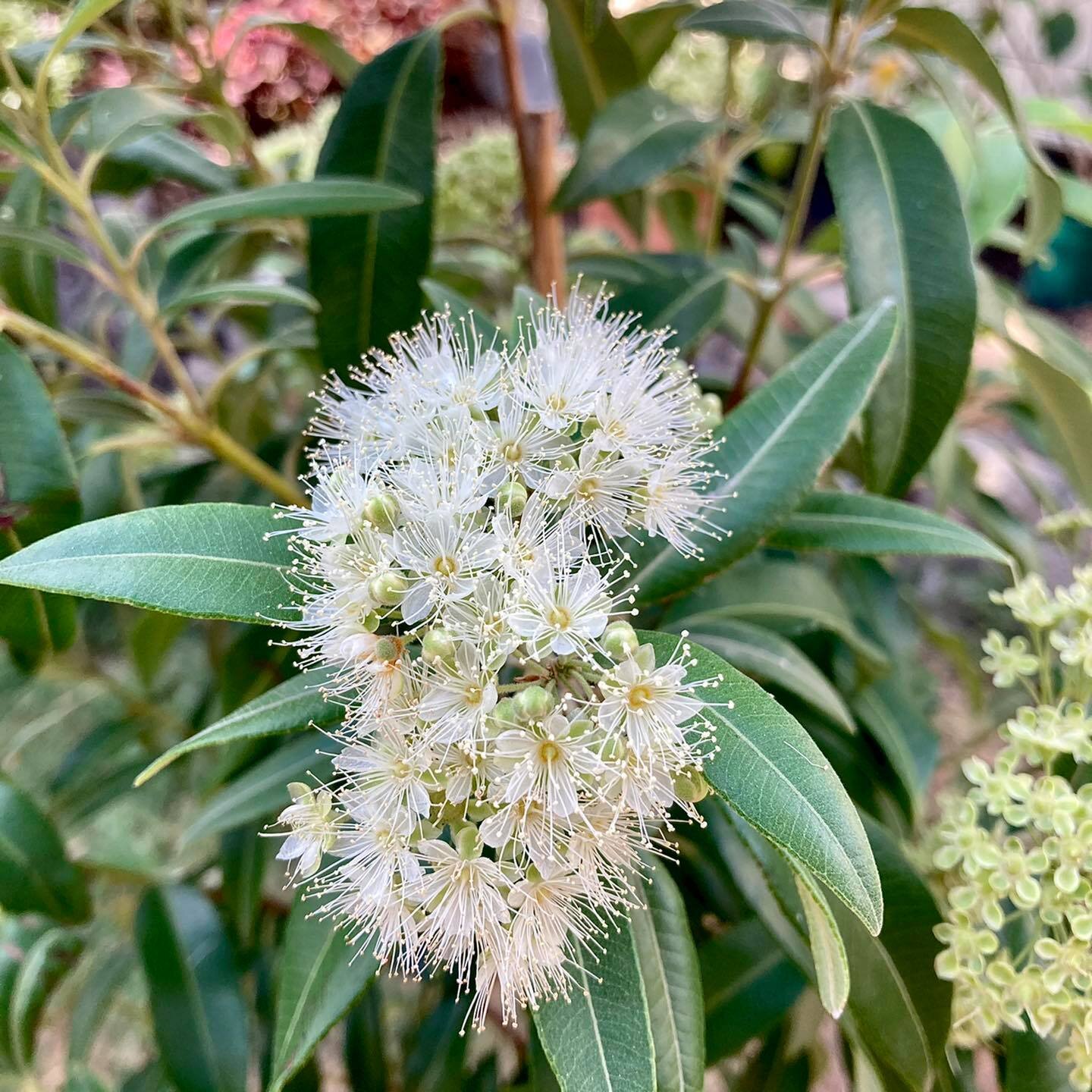
This tree comes “pre-decorated” with its showy flowers at this time of year. Even after flowering, the bracts remain stunning, adding a natural festive flair. Its vibrant appearance and low-maintenance nature make it a perfect Christmas tree option.
Phyllanthus cuscutiflorus
This dainty native features soft, delicate foliage and tassel-like flowers that resemble fairy lights hanging from its stems. It naturally forms a loose Christmas tree shape, though light trimming can enhance its density. Growing to about 3 metres, it thrives in various conditions, from full shade to full sun, and tolerates most soil types. While it prefers regular watering, it can handle some neglect once established. This charming plant is a delightful addition to any festive display.
Taking Care of Living Christmas Trees
Living Christmas trees add a beautiful, sustainable touch to your home during christmas, but they need a little extra care to thrive.
Here’s how to keep your tree healthy during and after the holidays:
Watering Is Key
The most common reason living Christmas trees fail is under-watering. This often happens because we worry about wetting the floors or presents. To avoid this, invest in an extra-large saucer or a planter (a pot without drainage holes designed to retain water). Check the soil regularly, and keep it moist but not waterlogged.
Limit Indoor Time
Don’t keep your tree inside for too long—living trees are best suited to outdoor conditions. A few weeks indoors is fine, but any longer can stress the plant. Once the holiday season ends, it’s time to transition your tree back outside.
Reintroducing Your Tree to the Outdoors
When returning your tree outdoors, it’s important to do so gradually:
Start in the Shade: Place the tree in a shady spot for two weeks to allow it to acclimatise.
Fertilise: Apply Organic Link slow-release organic fertiliser and fortnightly liquid feeds with Plant Care to encourage recovery and growth.
Transition to Sunlight: After the initial two weeks, move the tree to a part-shaded spot for another fortnight.
Full Sun: Finally, move it to a sunny position where it can thrive year-round.
Watering: Water according to the weather, one big drink every few days is better than lots of little drinks.
This year, why not buy a Living Christmas tree. Just remember to choose a plant that will bring you and your family years of joy and let the kids do the decorating, while you sit back and enjoy an egg nog (or three)!

Gardening is a Learning Curve
Rain and humidity can create havoc in the garden—think weeds, pests, yellowing plants, and fungus. This guide shares practical strategies to adapt to wet weather, from liquid fertilising weekly with adjusted ratios to managing pests with neem oil and controlling weeds organically. Embrace the unpredictability of gardening by evolving your plant choices, trimming, mulching, and learning to work with Mother Nature.
Sometimes gardening can be really enjoyable … who has been loving all this rain? Do your gardens look lush and vibrant?
Sometimes gardening can be really annoying… who has been cursing all this humidity? Do you some of your plants look a little wilted, yellowing off, die back, dropping dead, getting rust, inundated with caterpillars, snails, slugs, grubs in lawns……. The list goes on
Humid summers and deluges of rain can lead to any all or more
death or near death for many western Australian natives like Adenanthos sericeus (Woolly Bush).
Lavenders looking a little yellow on the inside
Daisy’s almost rotting away
Black spot on roses becoming so bad that it’s easier to just take off every leaf!
Fungus on gerberas, begonias and cucurbits
Having lush green lawn one day and nothing the next, due to lawn grubs
Having beautiful plants that were taking off due to the rain disappearing overnight due to large amounts of snails, caterpillars, slugs, mites, aphids or really any chewing, sucking insect.
Plants that were thick lush and green, now starting to yellow off
Weeds everywhere
leaf burn because its overcast and rainy one day and 40 degrees the next
the list goes on really
What to do
While there is so much rain around I tend not to granular feed with granular fertilisers like my Organic Link. Most of my garden is on a slight slope. If I granular feed and we get 100mls or rain most of it ends up down on the kerb… So I am saving the granular feed until the deluges of rain are over.
But I know my plants are struggling and need some get up and go.
So I have given everything a slight trim, added compost and organic mulch where possible and I have upped my Liquid Fertilising Game.
What’s Upping my Liquid Fertilising Game look like?
While there is so much rain about I am liquid fertilising weekly and alternating my products. So for instance one week I may use Triple Boost and Neem oil, the next I may use Plant Care and Neem Oil, the next I will use Potash and Silica. As I am fertilising weekly I have reduced the ratio of liquid fertiliser. For example if a brand says to use 10mls per lt I am using 5ml per lt. Once the rain becomes regular or slows down a little I will go back to liquid fertilising fortnightly. I find adding the neem helps with my insect infestation.
Everything gets liquid fertilised my gardens, my lawns, my indoor plants and my potted plants.

You can imagine my Birchy is getting a real workout at the moment; I’d be lost without it.
It seems kind of simple - no chemical sprays to kill bugs, no sprays to stop fungus and accepting what plants don’t like deluges of rain and high humidity.
With the weather the way it is I can not stop the force of Mother Nature. Plants will get grubs, plants will get fungus, and plants will and won’t survive. My job as caretaker is to keep my plants as healthy as I possibly can and reduce the chance of large infestations of fungus and insects.
I have a range of exotics and natives in my garden. I have tried to stay away from a lot of the dry inland land western Australian natives and most of my natives are South East Queensland dry rainforest plants.
Some of my plants are thriving and some are just getting by. Some days lately I feel the same! The ones just getting by I am making decisions about Economic Thresholds and whether I could choose something better or if I accepted it will look ugly for a little while.
With weeds I use my hands, Slasher (an organic weed spray) and boiling hot water. The trick is to keep on top of it. Every week I am out there looking for more weeds to kill. Once they go to flower I have to start the whole process again, so I stay on top of it as much as I can.
With my lawn I try to stay on top of it too. Crazily enough mowing once or twice a week takes me less time than mowing once every fortnight. I mow with a catcher to stop the spread of weed seeds. For more help with Lawns check out my Lawn Challenge
Weather Events can be unpredictable. What we experience this year, will probably be different to what we experience next year. Gardening is a learning curve and our gardens should be constantly evolving.
How do you garden in weather like this?

Get your Garden Party Ready!
Hosting Christmas at your place this year? Get your garden party-ready with this quick and practical guide. Start by decluttering and tidying your lawn for a neat appearance. Trim plants lightly, remove dead flowers, and mulch for a polished look. Add instant festive colour with ready-made flower pots or hanging baskets. With these simple steps, your garden will be ready to impress your guests!
So Christmas is at your place this year and your garden isn’t up to the Karen’s in your family standards?
Don’t worry it’s never too late to start!
Here’s my Quick Guide to Getting your Garden Party Ready!
Do a general clean up and Get rid of rubbish
Been putting off that dump run? Do it now. Have a good look around and get rid of the junk and clutter. No one wants your collection of black plastic pots or broken garden gnomes. Whatever annoys its time to get rid of it.
Tidy your lawn
Even if your lawn is patchy and weed infested a quick zip around with the mower and whipper snipper can make it look like a green bowling green! I find in this weather mowing regularly with a catcher on can help keep your lawn tidy and lush. If you need more information on keeping a healthy lawn check out my LAWN BLOG
Tidy up your plants and garden
As soon as you can, take a wander around the yard and trim anything that looks ‘yuk’.
If you have formal hedges or climbers give them a light trim to neaten them up. Now is not the time to give everything a heavy handed trim, save that for after the parties!
Remove dead flowers and yellow leaves. If a plant looks really bad, maybe now is time to make the big decision to pull it out. Economic threshold for plants is a real thing!
All those pots with half dead annuals, it’s time to get rid of them. If you don’t have anything to replant in them, empty the old soil out into your garden and store empty pots neatly out of sight. If a potted plant looks unhealthy but you want to keep it, move it out of eyesight, and give it a feed with Organic Link and Triple Boost!
Fertilising, composting and mulching would go a long way in helping your gardens look bloomin’ lovely for Christmas Day. Mulch covers up a multitude of sins in the garden and empty spaces always seem full after mulching. Sugar Cane and rainforest pines, are great choices. Both are great for the soil and mulching helps keeps plants moist and weed growth is slowed, which is very helpful in this weather.

Add Colour
Unless you’ve been planning this for months, there really isn’t any time to be planting seedlings. Plus it’s just too wet and humid to be planting out plants with small root systems. Forever plants full of flowers are the way to go. If you’ve got spaces in the garden, a way to fill them up quickly is with a nice decorative pot full of flowers.
To make it a little easier on you Trevallan has ready made pots and hanging baskets that are already overflowing with flowers.
While you may not feel like gardening is in your skill set, there are many plants that want to show off their skills at this time of year! If you come into Trevallan you’ll be surprised with all the colour available. Pentas, Celosia, Angeloina, Hibiscus, Begonias, Buddleja, Gardenias, Crepe Myrtles, Ixoras, Anthuriums, Gauras...
If you are a little overwhelmed with choices, try using a colour theme to really make a statement. Either use all same coloured pots and different plants or chose similar coloured flowers like all reds and whites.
Never one to miss an opportunity to buy more plants and pots, even my table decorations are living plants! I love caladiums as they have brilliant red and green foliage and the popular red poinsettia always looks good.
The day before your party, do a last-minute clean-up (trim dead flowers). Make sure all the plants are watered. The last thing you want to be doing on the Party morning is running around watering wilting plants before guests arrive.

Enjoy partying in style and showing off your amazing gardening skills!

National Tree Planting Day: A Superficial Solution to a Deep-Seated Problem
As National Tree Planting Day approaches, I grapple with a deep sense of frustration. While well-intentioned, planting trees feels hollow against the backdrop of ongoing destruction of cherished landscapes like Scott’s Farm in Ripley Valley. Despite the proven mental and physical health benefits of nature, urban sprawl continues to encroach on every green space. National Tree Day, established by Planet Ark in 1996, aims to foster environmental stewardship by encouraging Australians to plant and care for native trees. However, without concrete plans and sustained actions, these efforts risk becoming mere PR gestures. Proper tree management, selecting the right species, and ensuring aftercare are crucial. We need to shift the conversation to comprehensive green growth planning, creating urban jungles rather than concrete deserts, and fostering a genuine culture of environmental responsibility. Only then can we make a meaningful difference.
As National Tree Planting Day approaches, I find myself grappling with a deep sense of frustration. While the initiative to plant trees is undoubtedly well-intentioned, it feels like a hollow gesture when juxtaposed with the ongoing destruction of our natural landscapes and cherished places like Scott’s Farm in Ripley Valley.
Nature has an incredible ability to heal us, mentally, emotionally, and physically. Studies have shown that spending time in nature can relieve stress and anxiety, improve mood, and even boost the immune system. Practices like Japan’s "shinrin-yoku" or forest bathing have demonstrated profound benefits for mental health, including the reduction of depression and anxiety. Even the presence of plants in our indoor spaces can significantly improve our well-being.
Yet, despite these benefits, we continue to see a devastating trend: the destruction of our natural environments in favour of development. Scott’s Farm is a prime example, a 130-year-old farm at risk of being replaced by urban sprawl. How can we justify planting a few trees in designated areas when these very spaces are at constant risk of being obliterated by council or government decisions?
Where do we draw the line between progress and nature? At what point do we stop to appreciate and protect the natural beauty that we still have, rather than allowing it to be consumed by endless development? It's disheartening to see housing estates and urban sprawl encroaching on every available green space, with little regard for the ecological and historical value these places hold.
Our botanical gardens, once revered as spaces to understand and appreciate nature, are now often treated like parks. People have lost sight of their purpose, using them as playgrounds, rollerblading and playing football on the lawns instead of using them as sanctuaries of biodiversity and knowledge. My children grew up respecting these spaces but also enjoying them. Finding flowers, new pathways, insects, and animals, and understanding their importance. Now, it seems these values are being eroded.
We need to shift the conversation. It’s not enough to plant a few trees and pat ourselves on the back. We need comprehensive green growth planning for new communities, ensuring that our urban jungles don’t become concrete deserts. Small green spaces in new housing developments are often neglected, turning into paved areas devoid of life. We need to prioritise creating lush, vibrant environments that benefit both people and wildlife.
National Tree Day, established by Planet Ark in 1996, is Australia's largest community tree-planting and nature care event. It encourages Australians to contribute to their environment by planting and caring for native trees and shrubs to improve the natural habitat. The day serves as an educational opportunity, especially for children, to learn about environmental stewardship, the importance of native plants, and the role of trees in ecosystems. It fosters a sense of responsibility and connection to the natural world, promoting long-term environmental sustainability (National Tree Day)
Over the past decade, local councils across Australia, including Ipswich, have participated actively in National Tree Day, planting thousands of native trees to enhance the local environment. Through initiatives like the Habitat Connections Program, councils have planted significant numbers of native plants each year to improve waterway corridors and boost biodiversity (Ipswich City Council). However, where do we draw the line between a PR campaign with the community planting trees versus the councils doing their job in the first place to keep these important greenspaces alive? We can rely on the community to get together to help plant the trees, but who takes care of them after planting?
Specific data on the survival rate of these trees over the last ten years is not readily available. Studies on urban tree mortality suggest that the success of tree planting initiatives can be significantly influenced by factors such as funding, soil conditions, and maintenance practices. Elaine Cresswell, founder of ReShaped, highlights in her podcast "The Death and Life of City Trees" that an estimated 30% to 70% of city trees die within a year of planting due to these very issues. These problems often begin long before the trees are even planted, starting with the nursery conditions and extending through to planting and aftercare practices.
Not planting trees is not the answer. Instead, we must learn how to better manage and live with them. Trees are worth the trouble. Proper tree management, such as selecting the right species and ensuring they are planted and maintained correctly, can mitigate many of the risks associated with urban trees. For instance, removing all trees around a building can cause wind speeds to double, putting roofs, buildings, and lives at greater risk. Trees also stabilise land on slopes, reducing the risk of landslides, and keep us cooler during summer heatwaves.
We need trees. We need green urban jungles, not concrete ones. In a previous blog, I emphasised the necessity of plants and trees around our homes. They make us happier and healthier, improve our house values, make neighbourhoods safer, and can even reduce our bills. We need to change the conversation. We should be asking why people don’t have gardens and if their answer is lack of time, promoting the value of having a horticulturally trained gardener.
Gestures are just that, gestures, unless they are backed by concrete plans and sustained actions. We need to start implementing forward-thinking council plans for homeowners and public spaces. We need continuous education and engagement to create a future of green urban jungles, not concrete ones. Only then can we truly claim to be making a difference.

Winter Gardening Jobs
Winter in Ipswich brings cold nights and warm days, perfect for gardening. Mulch to maintain soil temperature, fertilise with Silica and Potash, and protect young plants from frost. Start a herb garden, plant seed potatoes, and enjoy winter blooms like camellias. Maintain your lawn, care for fruit trees, and focus on herbs and leafy greens in your vegetable patch. Keep your garden thriving all winter with these expert tips.
Winter in Ipswich brings a mix of cold nights and warm days. As a gardener, you might find yourself stripping off layers one minute and bundling up the next. Here's how you can make the most of this season in your garden:
Fertilise Gardens and Pots
At the turn of every season I also like to soil wet and fertilise my gardens and pots. I use Plant of Health’s granular Soil Soaker and Organic Link Fertiliser. Soil Soaker enables hydrophobic soils to become water penetrable and retain water. It also houses beneficial microbes, nutrients, silica and diatomaceous earth these make soil healthy which in turn improves root and shoot development and also reduces plant stress.
I will use Soil Soaker first then in a week or so give them all a good fertilise with Organic Link.
I also use Silica and Potash monthly to help plants naturally withstand cold damage. For young plants susceptible to frost, apply Envy frost protectant monthly.
While insects aren’t usually bad at this time of year if you do notice an attack a spray with neem oil is usually all you need.
Feed my winter flowering plants
Sometimes we just can’t get around to fertilising all our plants. At this time of year if I can’t fertilise everything I like to pay particular attention to my camellia sasanquas and japonicas, rondeletias, zygo cacti, azaleas and my poinsettias to keep them looking good and help promote flowers. I will also start to liquid fertilise these plants with Silica and Potash fortnightly to promote flowering.
Mulching
Mulching isn't just for summer; it's equally important in winter. It helps keep the ground temperature even, reducing cold stress on your plants.
Pruning
Late winter is a great time to prune most plants to ensure healthy spring growth.
Lawn Care
At the turn of every season I like to soil wet and fertilise my lawn. Even though I know winter isn’t a time for large growth, I find the heathy it is all year the better it looks and less attention I need to ultimately pay to it. I use Plant of Health’s granular Soil Soaker and Lawn and Turf Fertiliser.
I find lawn weeds don’t grow anywhere near as quickly in winter as they do in spring. I believe if I can get on top of them now I won’t be doing the bindii dance in summer! Normally at this time of year I can easily dig up any stray weeds and I always mow with the catcher on. If by chance I do need to spray I try to do it about three days after rain when the weeds are young but not in flower yet. I use Searles ‘Lawn Perfect’ as it kills most of the weeds coming up in my lawn. I don't worry too much about winter weed as I find out it dies out quickly as soon as the weather warms up.
Fruit Tree Care
Citrus trees can prone to Leaf Curl and Leaf Miner. Both these problems are mainly caused by insects. Normally when my plants are under attack I trim off affected growth and fertilise with Organic Link. At this time of year my citrus are usually in fruit or flower and I don’t want to stress the plants out and cause a flower or bud drop. So I will start a weekly spray for at least four weeks with Plant Care and Neem Oil, mixed together to give them an immediate boost.
After fruiting I will trim and fertilise.
While fruit fly isn’t meant to be active in winter I always change my fruit fly wick every three months or on the turn of the season, so beginning of Winter. Any fruit that is forming with get a spray with Eco-naturalure, an organic fruit fly spray to protect them from the odd pregnant female flying about! For more information on Fruit Fly click here.
What to plant
With the cool nights and warm days, it has become a vegetable gardeners paradise. There are so many vegetables that grow at this time of year beetroot, broccoli, snow peas, Asian greens, strawberries, onions, kale, leeks, cauliflower, spinach, rocket, coriander, cabbage, peas (though I don’t know why… Yuk!), just to name a few. Tomatoes and zucchini can also be planted now to get good growth before summer hits with fruit fly.
Winter is also a great time to start a herb garden. Herbs like basil thrive in the cooler months. Instead of paying high prices for fresh herbs, you can grow your own. Trevallan offers a variety of everyday herbs like chives, oregano, lemongrass and unique herbs like bergamot, chamomile, and chia. Now is also a good time to try seed potatoes, garlic and shallots.
Regularly fertilise with Triple Boost and Neem to enjoy a bountiful harvest of winter vegetables.
Jobs done … I can kick back relax read my Winter About the Garden Magazine and enjoy the sunshine!

The Native Garden: A Balanced Approach
Amid discussions about exotic species becoming problematic in Australia, it’s crucial to re-examine native plants' role in our gardens. While I cherish native plants, I also appreciate many exotic species and believe they can coexist harmoniously.
Recognise that native plants can become weeds, like the Cootamundra Wattle (Acacia baileyana), which can invade higher rainfall areas. Native gardens require effort, including soil cultivation, fertilising, and regular maintenance.
Genetic modification to meet consumer demands for constant flowering plants risks diluting native species' genetic integrity, weakening resilience and harming ecosystems.
By prioritising robust genetic traits and educating consumers, we can create sustainable gardens that celebrate both native and exotic species.
With the ongoing discussions about some exotic species becoming problematic in parts of Australia, I felt it was time to reveal that while I love native plants, I also have a deep appreciation for many exotic species and believe they can coexist harmoniously.
The Native Plant Misconception
It’s important to recognise that just because a plant is native doesn’t mean it won’t become a weed. Take the Cootamundra Wattle (Acacia baileyana) as an example. This beautiful, fast-growing acacia is naturally restricted to the South Western Slopes of New South Wales. When planted in higher rainfall areas, it can aggressively invade surrounding bushland, self-seed, and become a nuisance.
Another misconception about native plants is that they require little to no maintenance. A native garden, like any other garden, requires effort. This includes:
Soil Cultivation: Regularly improving soil with compost and organic mulch.
Fertilising: Using products like Organic Link at the start of each season and supplementing with regular liquid fertilising.
Maintenance: Trimming and replacing plants as weather conditions change.
Responsibility
People must start to take responsibility for our plants and gardens. For instance, Syngoniums, a popular houseplant, are classified as weeds. Do we stop cultivating this plant, or do we educate and ensure responsible care and correct disposal, if needed? As a professional horticulturalist, I explain the potential pitfalls and dangers of allowing such plants into the wild. I expect their new owners to trim and care for them to prevent them from becoming out of control. I expect people to allow themselves to be educated and take on that advice. You cannot buy a climber and then get upset when it climbs.
Choosing the Right Plants
Reputable Sources: I only purchase plants from reputable sellers. For example, seed-grown vinca (which I do not sell) can be a weed, but with modern horticultural advancements, sterilised vinca won’t usually last longer than 6-12 months (this is what I stock).
Local Availability: Many Southeast Queensland natives are not commercially available because they are hard to cultivate in large numbers or aren’t as visually appealing as their Western Australian counterparts. Thus, a native garden in Ipswich might consist of 20 Western Australian and South Australian natives and only a couple of Southeast Queensland natives.
Genetic Dilution in Local Australian Plants
Genetic dilution refers to the weakening or loss of genetic diversity in local native plant populations due to cross-breeding with introduced species from other areas or non-native species. This can lead to several ecological and evolutionary problems, including reduced adaptability to local conditions and the loss of unique genetic traits.
An example of this happening is with the Australian native Corymbia torelliana, commonly known as Cadaghi. It is native to northern Queensland, Australia, and has been widely planted outside its native range due to its fast growth, aesthetic appeal, and usefulness in timber production.
Corymbia torelliana can hybridise with closely related species, such as other Corymbia species and some Eucalyptus species. When this occurs, the genetic material of Corymbia torelliana mixes with that of the native species, resulting in hybrid offspring. These hybrid offspring may exhibit reduced fitness compared to pure native species, including traits such as lower resistance to local pests and diseases, or reduced adaptability to local soil and climate conditions.
The genetic dilution of native species can also lead to a reduction in biodiversity, potentially disrupting ecosystem functions such as nutrient cycling, water regulation, and habitat and food provision for other species.
Corymbia torelliana produces a large amount of pollen, which can be dispersed over long distances by wind or pollinators like bees. This increases the likelihood of cross-pollination with native species over longer distances. Just one tree can affect a very large area.
The Role of Exotic Plants
Native and European plants can be used together. Many fruit trees and vegetables aren't native, but that doesn't mean we should stop growing them. Many herbs, like garden mint, and comfrey, can become weeds, yet we don’t stop cultivating them. Instead, we focus on education and responsibility.
I have personally found Camellia sasanqua flowers and bacopa (both exotic) are a preferred flower for my native bees. Lemon Balm (Melissa officinalis) was traditionally used by the ancient bee keepers. They used to rub the crushed leaves on the beehives to encourage the domesticated bees to return to their hives. They also believed that the lemon balm would also bring new bees to the hive.
Creating a garden, whether it be native or a combination, requires thoughtful planning and effort, but the results are worth it. By understanding the specific needs of our environment and taking responsibility for our plant choices, we can create beautiful, sustainable gardens that celebrate both native and exotic species. Let’s continue to educate ourselves and others while embracing the diversity that makes our gardens thrive.

Native Cottage Garden
Want a beautiful cottage garden using only Australian native plants? This list should help you on your way with both natives for dry sandy soils and natives that can handle humidity, dry, frosts, clay soils
Recently a customer asked me to help her design a native cottage garden.
She had watched an episode of Gardening Australia where they had made a beautiful cottage garden using only Australian native plants.
The problem was this list, like many native plant lists, had native plants that grew better in dry sandy soils not natives that can handle humidity, drought, frosts, black heavy clay soils .... all the things Ipswich can throw at a plant, sometimes at once!
Accepting the challenge, I set out to create a new list of native plants that thrive in Ipswich's variable climate and soils. Special thanks to The Mountain Man for his extensive knowledge of native plants; his input was invaluable in compiling this list.
This list is meant to inspire and demonstrate that anything is possible. It is not exhaustive but serves as a guideline. If it were my garden, I’d incorporate a variety of plants including grasses, groundcovers, shrubs, and flowering annuals. I would also plant trees to provide shade and create spaces for epiphytic plants like orchids and air plants.
Soil improvement would be ongoing, with compost and organic mulch, and I would fertilise with Organic Link at the start of each season, supplemented by regular liquid fertilising. A maintenance program would be essential for trimming and replacing plants as weather conditions change. A native garden still requires care, including fertilising and maintenance.
Australia's diversity means that just because a plant is native doesn’t necessarily make it suitable for every garden, soil, or climate. It's crucial to select the right plants for your specific conditions.
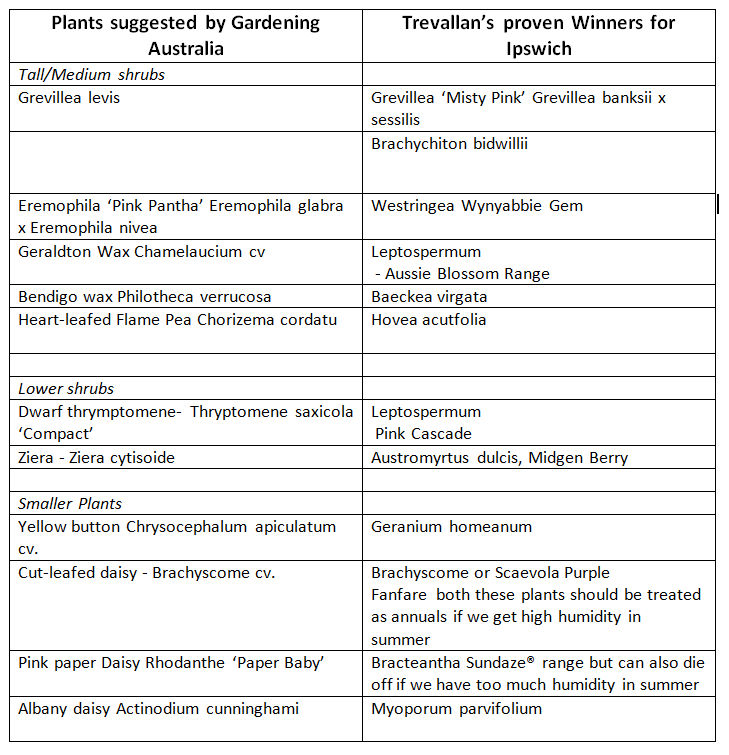
Cottage Garden using Australian Native Plants

Australian Native Kangaroo Paws
Kangaroo paws belong to the genus Anigozanthos, which are native to south western Western Australia. This area of Australia is dryer, slightly warmer and the soil is sandy...very sandy. A little different to Ipswich's climate and soil.
You know how as a kid you thought your mum was the vegie monster because she made you eat food like Brussel sprouts but as you get older the idea of Brussel sprouts for dinner grows on you till somehow you find yourself not only buying them and cooking them but also enjoying them.
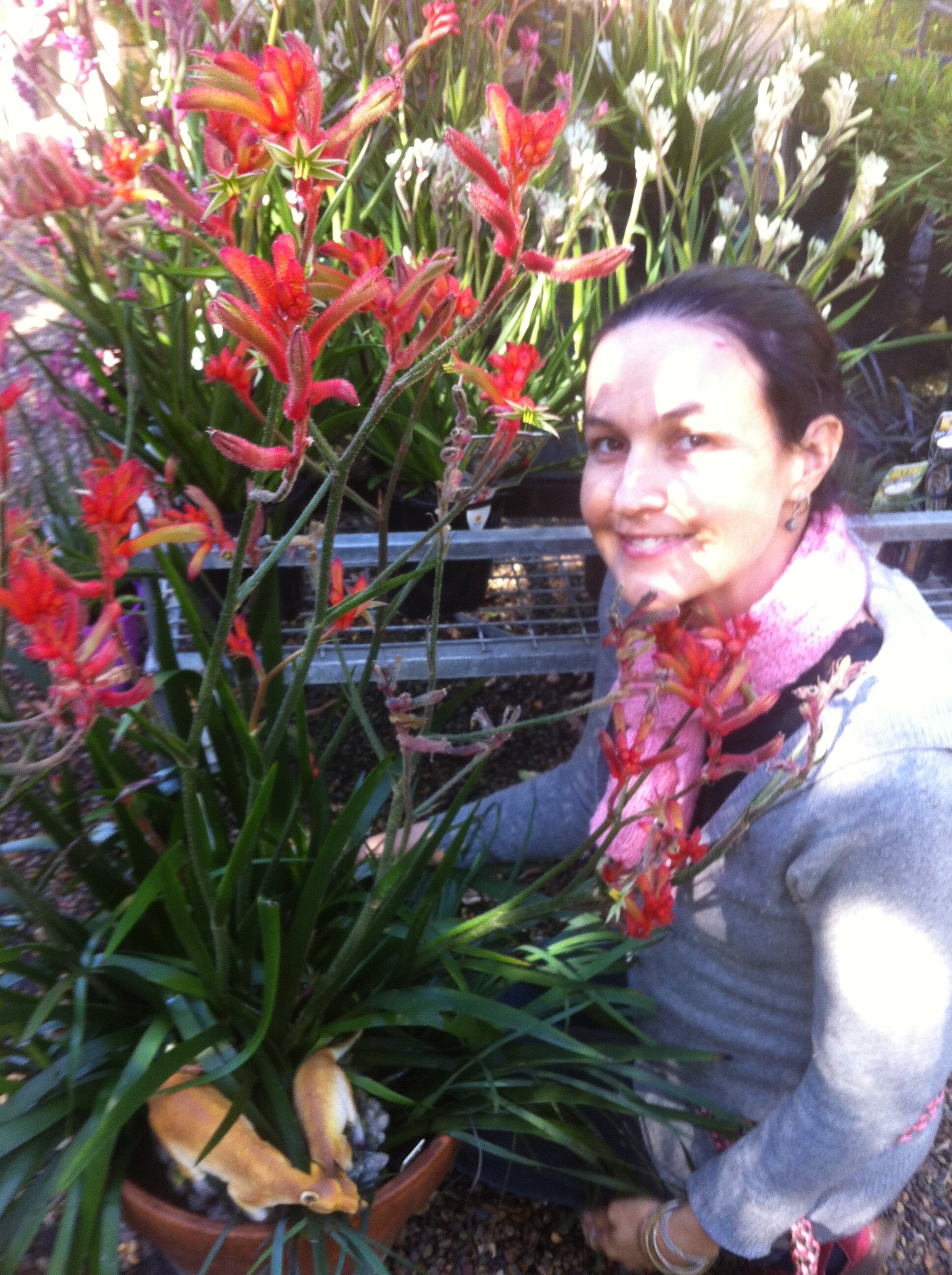
Kangaroo Paw, an Australian Native Plant
Kangaroo Paws are kind of like my Brussel sprout in the garden! For years I would almost double over in pain at the idea of growing one of these hideous plants. Why? I couldn’t come to terms with a plant that had gangly disease ridden leaves and long boring flowers.
I guess I just had never seen it used well in landscaping because now I am totally in love. Why? Strangely enough it was Ipswich City Council and the Riverheart parklands that caused me to start to fall in love with them because a few years ago they were planted en masse in the gardens and they looked fantastic most of the year.
Kangaroo Paws belong to the genus Anigozanthos, native to south-western Western Australia. A region that’s drier, hotter, and has very sandy soil. Quite different from Ipswich's heavier soils and sticky summer air.
And that’s where a lot of the trouble starts. One of the main reasons I disliked Kangaroo Paws was because of the dreaded ink spot, those black patches that ruin the leaves. It’s mostly caused by fungal diseases thanks to humidity, but frost damage and snails can also contribute. Parts of Ipswich can swing between high humidity and black frosts, basically, Kangaroo Paw hell.
Some newer cultivars, like the Celebration series, recommend growing in pots in a partially shaded spot and only in areas with less than 70% humidity (Ipswich averaged around 75% in summer 2024). So while Kangaroo Paws traditionally love full sun and excellent drainage, if you're in a more humid region like ours, pots in airy spaces with morning sun might be the better way to go. Terracotta pots are a great choice too, because they breathe. If you want to grow Kangaroo Paws out in the garden, try going for the older varieties like Anigozanthos flavidus or the red and yellow flowering forms in the Bush Gem series.
Most sprays or fertilisation will not prevent Ink spot. Thanks to Angus Stewart, the main cultivator of Kangaroo Paws, I now know the best and easiest way to deal with ink spot! Mow over them when the leaves start to become infected and fertilise with a complete organic slow release fertiliser like Organic Link! Secateurs would work just as well as a mower but nowhere near as fun!
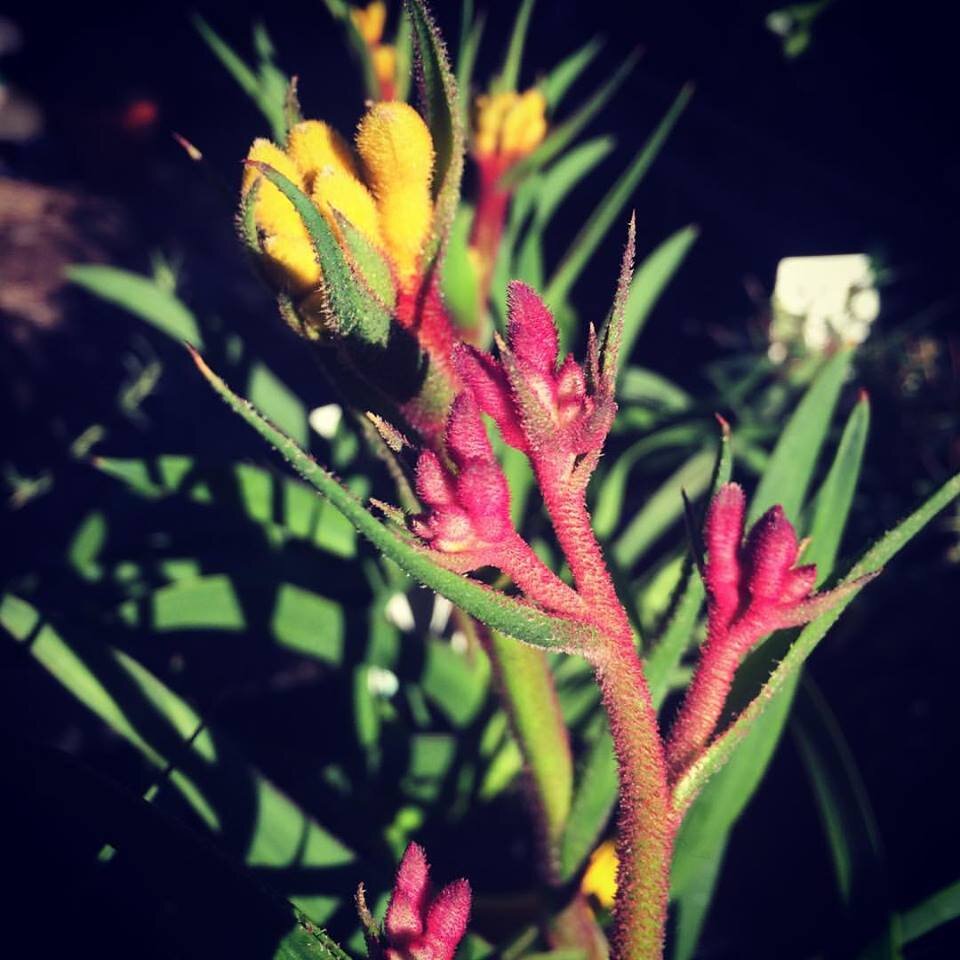
By cutting all that leaf off, you get get rid of Ink spot and encourage beautiful, fresh new leaf which gives the plant a really vigorous green appearance and promotes the flowers and the flowers are the best part.
Kangaroo Paw flowers have been described as one of Australia’s most striking and unusual flowers and with modern cultivation I think there is one available in in all the colours of the rainbow, hot pink, red and green and the black are my favourite.
These fabulous bird-attracting, drought tolerant plants grow to all different sizes too. From small boarder plants to large striking feature plants there is one suit all gardens. All they need is a dry well drained spot in full sun and easily accessible by mower (or Secateurs)!
I love using a mixture of flowering heights in pots too. They make an awesome feature in a hot area of your patio or garden. Just remember to remove the spent flowers and yucky leaves and this plant should reward you with vibrant colour most of the year.
This weekend eat some Brussel sprouts and plant an icon of the Australian garden at your house.

Change the Conversation
We need trees. We need green urban jungles not concrete ones.
Let’s change the conversation
As a long suffering greenspace lover I am constantly having the conversation around why we should be planting plants that grow higher than 1m
A lot of people believe that having any size tree on their property will lead to mass destruction especially when it rains.
Did you know that after a storm, councils typically see a spike in requests for tree removals – even for perfectly healthy trees.
Firstly we need to understand that trees falling over or losing limbs is an exception even during storms and high winds.
If trees do fall it is more likely due to improper tree management or wrong choice of tree originally. Basically it’s not the trees fault its ours. We need to start taking some responsibility and change the conversation.
I recently read an article on How to Prevent Trees Falling during storms.
The author of the article explains that removal of trees is not the answer as trees help us cope with storms and other extreme weather. “Removing all trees around a building can cause wind speeds to double, which puts roofs, buildings and lives at greater risk. Removing trees from steep slopes can cause the land to become unstable and more prone to landslides. And of course, trees keep us cooler during summer heatwaves.”
We need trees. We need green urban jungles not concrete ones.
In an blog I wrote a while ago I explained that we NEED plants and trees around our homes. You can read it here They makes us happier and healthier. They improve our house value. They make neighbourhoods safer. They can even reduce our bills ….
Not planting trees is not the answer. Instead, we must learn how to better manage and live with them. Trees are worth the trouble.
Get correct advice on what trees to plant. Google may have an answer for everything but it may not be correct for your situation. Follow LOCAL qualified horticulturists, visit LOCAL garden centres.
I understand trimming occasionally, fertilising, mulching and watering is a hassle for some. I get it. I hate cooking every night and then cleaning up afterwards. Gardening can be a chore for some, like cooking is a chore for me.
Outsource it.
Hire a QUALIFIED craft gardener.
We need to start changing the conversation.
We need to start asking
Why don’t you have a garden?
Who is your gardener?
What is that beautiful shade tree?