Find Us:
77 Fernvale Rd
Brassall QLD 4305
(07) 3201 8630
Open:
Tue-Sun 9am - 4pm
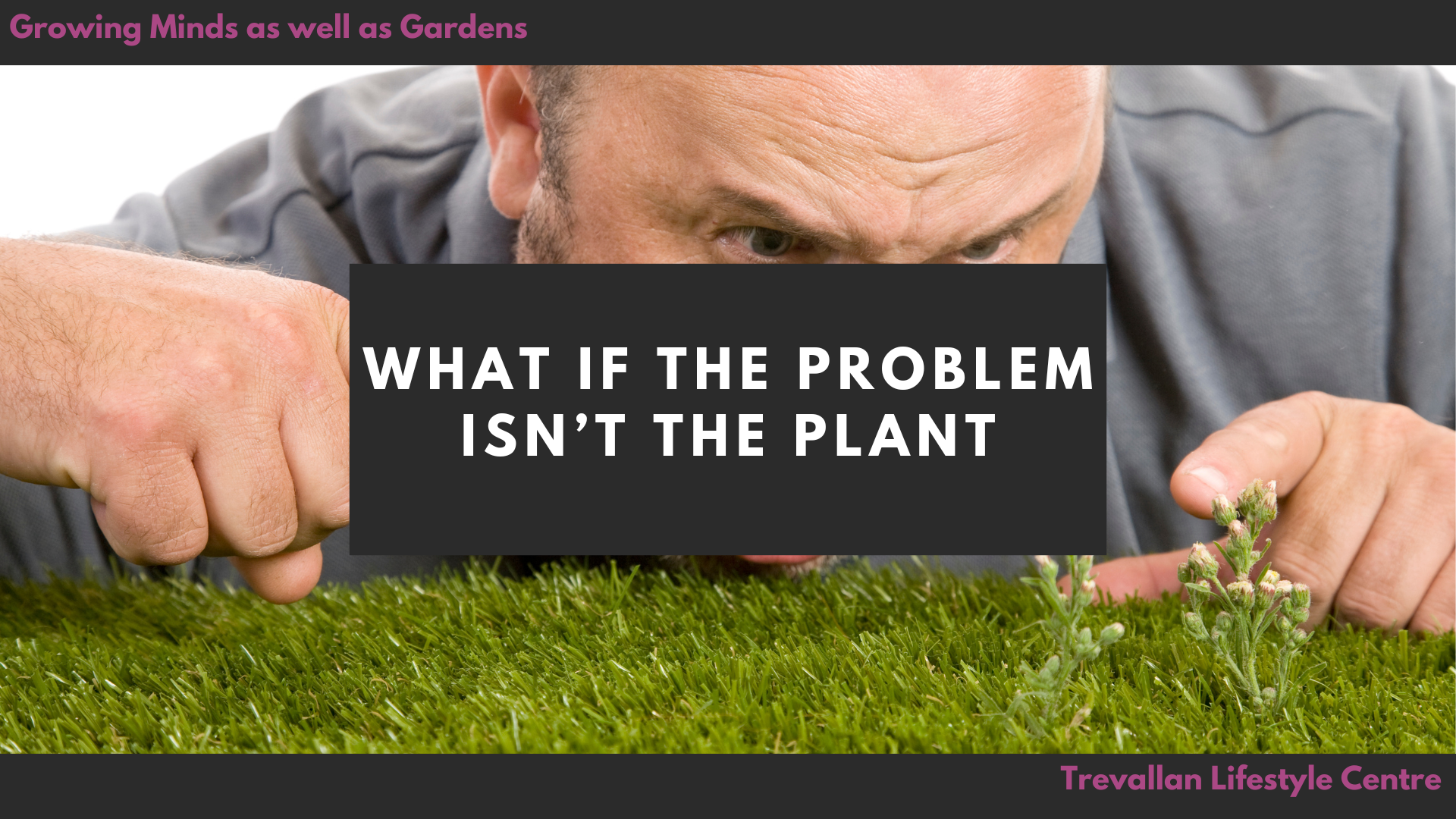
What if the Problem isn't the Plant
This post challenges the unfair blame placed on garden centres and professional growers for weed spread, calling for better education, recognition of horticulture as a trade, and stricter regulation of unqualified sellers. It urges decision-makers to include trained horticulturists in the conversation.
After watching this video, I feel compelled to raise some critical points that were completely overlooked.
Firstly, blanket blaming and banning isn’t the answer.
Let’s start with something simple: maintenance. Whether in home gardens, public spaces, or council plantings, it’s called maintenance for a reason. Thinning, deadheading, pruning, and soil checks are basic tasks. And yet we keep skipping this conversation. If you're planting anything, you need to know how to care for it. If you're in charge of a space, public or private, and you're not qualified, it's time to educate yourself. Ask questions. Learn from garden centres and/or trained professionals. Respect the plants you're working with. Let’s stop demonising plants due to neglect, laziness, or a lack of education.
Yes, there are plants that shouldn’t be sold, and many already aren’t. The idea that the entire nursery and garden industry is to blame, or that it’s completely unregulated, is not only unfair, it’s simply untrue. There are regulations, and many species are either banned or restricted depending on the region.
Most independent garden centres offer personalised advice and often warn customers about plant behaviour and risks. But it’s not their role to determine whether someone will neglect their plants, dump them in bushland, or pass them along irresponsibly through friends or online marketplaces. If we’re looking for accountability, maybe it’s time for a national register of repeat offenders. Those who consistently allow invasive spread, dump green waste illegally, or sell problematic plants through unregulated platforms.
Let’s be honest: we don’t ban fast fashion, even though it causes undeniable environmental damage. We don’t blacklist the companies or individuals perpetuating it. In fact, we rarely even call them out. Yet we’re quick to vilify growers and garden centres doing their best within a broken system.
And while we’re here, let’s talk about nationwide chain stores. They often make purchasing decisions at a national level with no consideration for regional climates or ecosystems. From now on, these chains must be required to consult locally trained and experienced horticulturists, professionals who actually understand what is suitable for that specific area. If they can’t offer that level of care or advice at a higher level, how can they offer that on the sales floor? Maybe they should be restricted from selling plants altogether.
And here’s the part that gets missed too often:
A plant that behaves invasively in one region may be perfectly well-behaved in another. Many so-called “weeds” are only classified that way in certain areas, while in others, they’re playing an important ecological role, providing soil coverage, reducing erosion, preventing more aggressive weeds from taking hold, and even offering habitat and food sources for wildlife.
Likewise, some native species can become weeds when planted outside their natural range. So the blanket call to “just plant natives” is not only simplistic, it’s often misleading and counterproductive. And even when we do want to use more appropriate native species, there’s a practical barrier: many simply aren’t grown commercially. Not because horticulturists are unwilling, but because the supply chain, propagation infrastructure, and commercial demand don’t currently support them.
After all this, we need to turn our attention to unregulated markets, where there are little to no rules in place. It’s not just about selling declared weeds. It’s about biosecurity.
Who knows what soil or conditions these plants have been grown in? Are sellers on platforms like Marketplace or eBay adhering to fire ant protocols? Myrtle rust controls? Do they know what diseases or pests they might be spreading?
Meanwhile, professional nurseries, growers, and garden centres operate under strict regulations, including quarantine laws, biosecurity protocols, weed control, and chemical use standards. Many go above and beyond to ensure their practices are safe, sustainable, and regionally appropriate. Yes, the industry is technically ‘self-regulated’, but let’s be clear, we’re the ones held legally accountable. We face thousands of dollars in fines, the threat of business closure, and even jail time if we breach those standards.
And yet, the blame still falls on us.
That’s not just inaccurate, it’s lazy.
Now, let’s talk about the most alarming part: The person interviewed about these so-called “problem plants”? They used a plant ID app to support their claims.
Let that sink in.
We are platforming voices to lead national conversations on horticulture while ignoring the trained professionals who actually understand plants, landscapes, ecology, and long-term impacts. You cannot make serious claims about weed risk or garden design based on a smartphone guess and walking through a public space.
Let’s stop the knee-jerk bans and broad-brush blame.
We need horticulturists at the table. People with real-world knowledge of propagation, ecology, biosecurity, and plant behaviour. Stop sidelining the people who live and breathe this work.
And we need education. Not a watered-down government scheme. Not a one-day course run by someone who’s never held secateurs properly. We need education led by trained, experienced professionals. The ones who’ve worked in the soil, in the nurseries, in the wild, and in our changing climate. Education that considers regional needs, long-term impact, and plant-human-environment relationships. Education that empowers gardeners, landscapers, and councils alike.
Horticulture is not a hobby. It’s a trade. A science. A profession. And it’s time we started treating it like one.
Who am I?
Some of you may not know the face behind Trevallan's web presence.
So here I am!
I believe I have developed a great personal rapport with all of Trevallan's customers, both in person and online. In fact, sometimes I forget I am actually just a business on a computer screen and as a result, some of you may not know the face behind Trevallan's web presence….So here I am!

I come from a family of gardeners. My knowledge is part book based, but mostly comes from being surrounded by it all my life. It's amazing what you can learn just by listening and being made to do something as a chore !
My grandparents were gardeners. Their vegetable patch sustained the family, so, apart from meat, there was no store-bought food. My grandfather also loved fiddling with plants and taught himself to cross breed, graft and do cuttings. However, his true love lay with camellias and azaleas, he was also a lawn fanatic. One of my fondest memories is getting in trouble as I didn’t mow straight enough on his ‘bowling green’ lawns.
Before going into retail, my parents ran a successful landscaping business 'Trevallan Landscapes' that would have been in operation for about 40 odd years today had my father not died in 2000. Trevallan Landscapes was high in demand and I remember my father travelling all over Queensland doing landscaping work - private and commercial. Working for him throughout my childhood was also a great way for me to earn pocket money.
In 1999, I finished my business degree and although I wanted to travel the world, I decided to postpone travel to help my mother at the centre after my father's unexpected death.
Since then, my pieces of paper have increased - I have a Certificate III in Horticulture, am chemcert qualified, have been a national finalist for Young Horticulturalist of year and have also been a HAL emerging leader, as well as being a member of the Queensland Horticultural Media Association.
However, as quickly as my pieces of paper increase, so does my workload. I have written for local papers and gardening magazines. I write all the information found on this website, manage Trevallan's workshops and social media - Facebook and Instagram, plus physically work at Trevallan. I also love giving gardening related talks to social and gardening clubs.
While I've been paper collecting so has Trevallan - over the years Trevallan has won a few awards, one I am most proud of is Best Small Garden Centre in Qld in 2010. We have also just joined Tourism Queensland, as we were recognised as a place of attraction to visitors outside of Ipswich.
As many of us know, knowledge isn't gained from just reading a few books. Knowledge consists of a lifetime of asking questions and determining what you believe is right answer.

I attend a plethora of industry events, run my own events here at Trevallan and read as much as I can, to stay informed in regards to all things plants. I also try to take the time to listen to my customers, my growers and my suppliers, as I find they've tried and tested many things I wouldn't get a chance to do in my lifetime.
My aim at Trevallan has always been to grow people’s minds, allowing them to experience gardening in their own style, but also educating them and giving them the tools for success. I want gardening to be for everyone, so I try to make it easy and simple. For me, Trevallan is a place that grows people’s minds, not just gardens.
But horticulture isn't my only love - aromatherapy is another passion. In between all my paper accumulating for horticulture, I also completed - Certificate Four Massage Therapy, attended many Aromatherapy Masterclasses and am also a qualified Aromatic Kinesiologist and run my own Energetic Healing Practice, Potionatrix .
In October 2012, I won a world wide competition to create my own essential oil blend. This blend 'wisdom' was produced, until recently (2019) by internationally renowned aromatherapy company, Perfect Potion and sold at Trevallan, as well as world-wide, via Perfect potion stores and online trading.
However, life isn't just about fertilising and sweet smells as on top of all of the above, I'm nurturing a young family with three children.
So that's me.
The woman behind the computer screen.

Bloomin' Fabulous
Potassium Sulphate or Sulphate of Potash is commonly called Potash. It is an essential element necessary to the lives of all plants.
A common question I am asked is "why didn't my fruit trees fruit profusely or if they did why was the fruit misshapen?" Or "why didn't my camellias and azaleas flower as well this year?" Or even "why are all my coloured foliaged plants like crotons and dracaenas losing their colour?"
The answer is usually quite simple - Your garden just needs some TLC and maybe a little Potash!
Potassium Sulphate or Sulphate of Potash is commonly called Potash. It is an essential element necessary to the lives of all plants.
It aids in disease resistance and frost protection by strengthening the plants cell walls. It helps in seed and root development. It encourages strong new growth and helps with the formation of flower buds and fruit.
Potash can improve the quality and the colour of flowers and enhances the formation of proteins and sugars in fruit. Potash can even help plants with slender stems and large flower heads such as Iceland poppies and gerberas hold their heads erect.
Potash defective cues can be seen in a number of ways in your plant. Your plants might be showing signs of overall weakness especially in its stem. It could have yellowing leaf margins and grow more slowly. It could also be disease prone and its fruit and flowers will be small and poorly coloured and sometimes tasteless.
Don't confuse a potash deficiency though with an unhealthy plant. Always make sure you have given your plant some complete slow release organic fertiliser like Organic Link and a Bio Trace first.
Complete fertilisers, whether they are chemical or organic, usually contain potash. Organic Link contains potash. An N:P:K ratio can usually be found on the fertiliser label. A very quick explanation of the N:P:K ratio is - N stands for Nitrogen (greening, growing), P Phosphorus (roots) and K Potassium (fruiting, flowering).
If you use mainly a manure based fertiliser like blood and bone or chicken manure you will need to add potash as these products don’t naturally contain it.
Potash also is available by itself in a liquid form and a granular form.
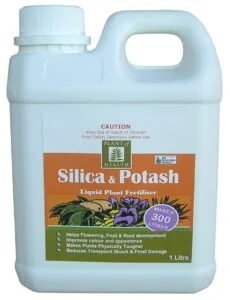
The liquid form is added to water and used as a foliar spray. Used like this it is quick acting but not long lasting and needs to be repeated on a fortnightly basis. This is best for promoting flowers especially on annuals. I use Plant of Health's Potash and Silica.
The granular form is added to the soil and watered in. The granular is slower acting but lasts a lot longer. This is best for correcting deficiencies, promoting fruit and stimulating coloured foliage. We use Searles' Potash.
This weekend I want you all to get some granular potash and go a little silly in your gardens.