Find Us:
77 Fernvale Rd
Brassall QLD 4305
(07) 3201 8630
Open:
Tue-Sun 9am - 4pm

Planting Sweet Peas
Sweet Peas are a fragrant spring flowering annual, native to Italy. They have one of the most enchanting flowers, delicate and fragrant, perfect in garden or admired in a vase. Learn how to grow Sweet Peas in Ipswich.
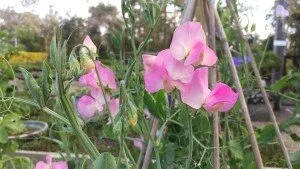
Sweet pea flowers from The Mountain Man
Sweet Peas are a fragrant spring flowering annual, native to Italy. They have one of the most enchanting flowers, delicate and fragrant, perfect in garden or admired in a vase.
Tradition dictates that March 17th (St Patrick's day) is the time to plant Sweet pea seeds. Have you ever wondered why?
Planting PEA seeds on St Patrick's Day is an old American tradition. As you will need the 'luck of the Irish' to get plants to grow while there is still snow on the ground!!!
For us here in Australia, we still follow this tradition because lets be honest here in Ipswich we need the 'luck of the Irish' to get sweet peas flowering and looking good. Normally, March is still too warm to start our winter gardens here in SE QLD.
Instead I use time as a reminder to prepare my soil.
Noel Burdette used to live here in the Ipswich region. Years ago he offered me this great advice about preparing the soil for Sweet Peas. This information is for sweet peas but can be applied to any peas.
Noel's Sweet Pea Advice
Sweet peas like a full sun position in the garden with plenty of airflow to minimise any fungal concerns.
They also enjoy a slightly higher level of pH in the soil, somewhere between 7.5 - 8.5. You can adjust your pH by applying a generous amount of Dolomite (provide much needed Magnesium) or a light dusting of Lime (as the calcium content is important).
They love well composted soil. We use Searles Compost but a little well aged sheep, cow or chicken manure worked into the soil would also help to encourage good drainage, yet adequate moisture retention.
Usually around mid April is a good time to plant out your seeds or the first quarter moon after St Patricks Day. Noel recommends to soak them overnight in a little water with a small amount of Condi's crystals (usually get this at a chemist) as this will encourage a higher percentage of germination.
After planting the seeds in the ground, water them in once and don't water again until they are "up and out "of the ground.
Pinch out any lateral growth in the early stages as what you're looking for are strong, upright plants that will then branch out as they get older and provide long lasting, fragrant blooms from late winter and into spring.
Fertilise your Sweet Peas with Organic Link when first growth appears and then alternating fortnightly between Triple Boost and Silica and Potash Liquid fertiliser.
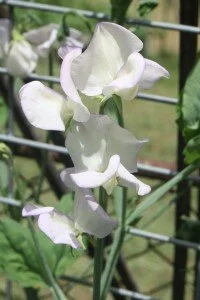
Sweet Pea Fragrant spring flowering annual, used as cut flower, native to Italy
All sweet peas are climbing. Some are dwarf climbers (only grow to about 50cm) and others can grow to over 2m.
With all types of sweet peas, ensure they have somewhere to stretch their tendrils (fences or tepees) or maybe try them in a hanging basket and let the tendrils hang down.
Trevallan stocks Eden Seeds (non-hybrid open pollinated old fashioned seeds) Sweet Peas and Pohlmans Sweet Pea Seedlings. This year we have two choices in the seeds and the seedlings. The seedlings aren't usually available until April.
Bijou, Dwarf (seeds and seedlings)
Early Gigantea, mixed colours to 3m high, early flowering (seedlings only)
Spencer Choice Mix, The classic English sweetpea, 1902 release developed from Earl of Spencer's garden, climbing (seeds only)
Come into Trevallan and we can help you on your Pea Journey. Good Luck.

Fennel
Fennel (Foeniculum vulgare) is actually part of the carrot family. It has yellow flowers and light green feathery foliage (just like a carrot). The whole plant can be eaten. It is native to The Mediterranean but it grows easily all over the world.
You know what I love roasted?
Fennel bulbs... oh my goodness yum.
So I thought today since I'm feeling a bit peckish, I'd talk about this Amazing Herb. After a bit of research I found out it has a varied history before it got to my roasting pan.

Positive Vibes Essential Oil Blend contains Fennel essential Oil
Did you know the medicinal properties of this herb were well used as far back as the ancient Greeks. They used to chew the seed to help them control their weight during training for the Olympics. It was also believed that it conveyed longevity and gave a person strength and courage.
Romans ate the seeds on long marches when they did not have time to stop and cook and devout Christian's would chew the seeds to satisfy hunger cravings during fast.
Then in the Middle Ages fennel was associated with witchcraft. It was hung inside houses and churches to protect people from evil!
Fennel seems to be used for a lot in traditional medicine from coughs to constipation to kidney stones.
Fennel essential oil is wonderful when you feel attacked or uncertain. It helps you stand your ground and speak your truth with calm assurance. It encourages honest communication and brings lightness to situations that feel heavy. Beyond this, fennel’s sweetness reminds us to finish what we’ve started and to release anything that keeps us from moving forward. It’s an oil of completion and quiet focus, helping us stay dedicated to our goals and approach them with clarity and confidence. When you wear fennel oil, it supports your inner strength and allows you to move through endings and new beginnings with grace.

Fennel Flower
Plus fennel is an amazing Beneficial insect attractor. Jerry Coleby-Williams writes that fennel flowers "acting as nurseries for aphid-eating hoverfly and ladybird larvae. That's handy since aphids also find them attractive."
Seems like such an amazing herb so let's find out how we can all grow it!
Fennel (Foeniculum vulgare) is actually part of the carrot family. It has yellow flowers and light green feathery foliage (just like a carrot). The whole plant can be eaten.
It is native to The Mediterranean but it grows easily all over the world.
Fennel loves the full sun and doesn't require much water once established. The original fennel can grow quite tall so it's best as mid bedding in your garden. I love letting my fennel go to seed and collecting some seeds but letting the rest self seed through out the garden. I love seeing the feathery leaves blowing in the breeze.
For something really classy there is the bronze fennel which grows to only about 40cm and has an amazing shimmery bronze foliage. Now this plant should be used in more ornamental gardens as a feature plant. Bronze foliage isn't common and looks stunning against a green backdrop.
Florence fennel, the one with the bulb that I love roasted, is named Foeniculum vulgare Azoricum Group. It is a cultivar group (fancy horticultural term that helps distinguish a group of plants with similar characteristics) with an inflated leaf base which form my yummy bulbs.
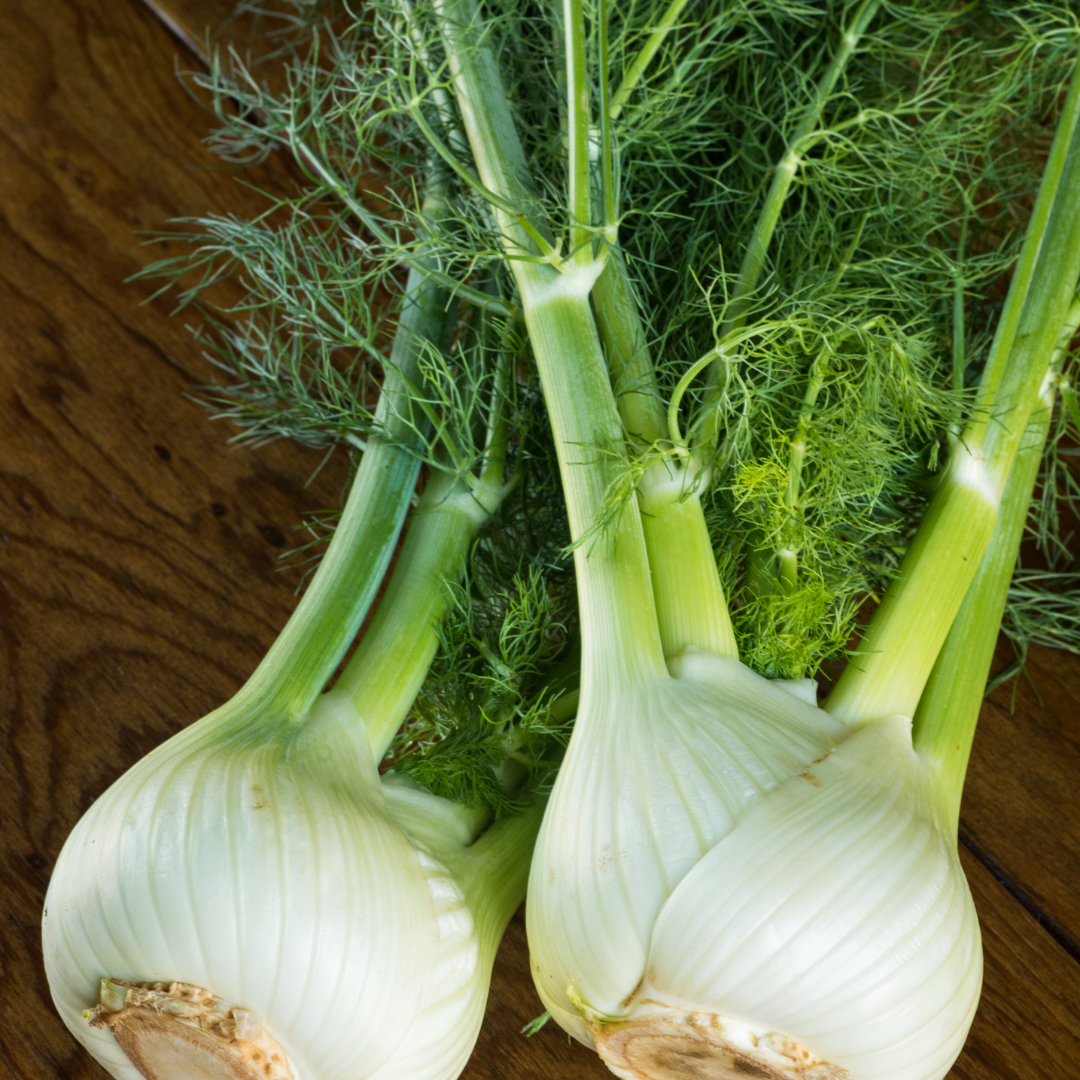
Foeniculum vulgare Azoricum Group
While I do fertilise mine with Organic link when I plant them I find they are extremely hardy and because I let mine self seed through the garden they come up of their own accord when they are ready and this makes them strong and healthy. After reading Jerry's post I believe you can keep cutting and letting the fennel Florence grow.
I love how this whole plant has a scent from the seeds to the leaves and the bulb. I think the best description is a light aniseed scent. When we have it at Trevallan I just love running my fingers through the foliage and the scent is released into the air and my hands come back smelling like lollies.
Can you imagine this plant near a window and on a hot windy day, the scent of aniseed would be just permeating through the house .... ohhhh yummy!
I love how scented plants have so many uses.
Get some fennel today, you will thank me!