Find Us:
77 Fernvale Rd
Brassall QLD 4305
(07) 3201 8630
Open:
Tue-Sun 9am - 4pm

Australian Native Kangaroo Paws
Kangaroo paws belong to the genus Anigozanthos, which are native to south western Western Australia. This area of Australia is dryer, slightly warmer and the soil is sandy...very sandy. A little different to Ipswich's climate and soil.
You know how as a kid you thought your mum was the vegie monster because she made you eat food like Brussel sprouts but as you get older the idea of Brussel sprouts for dinner grows on you till somehow you find yourself not only buying them and cooking them but also enjoying them.
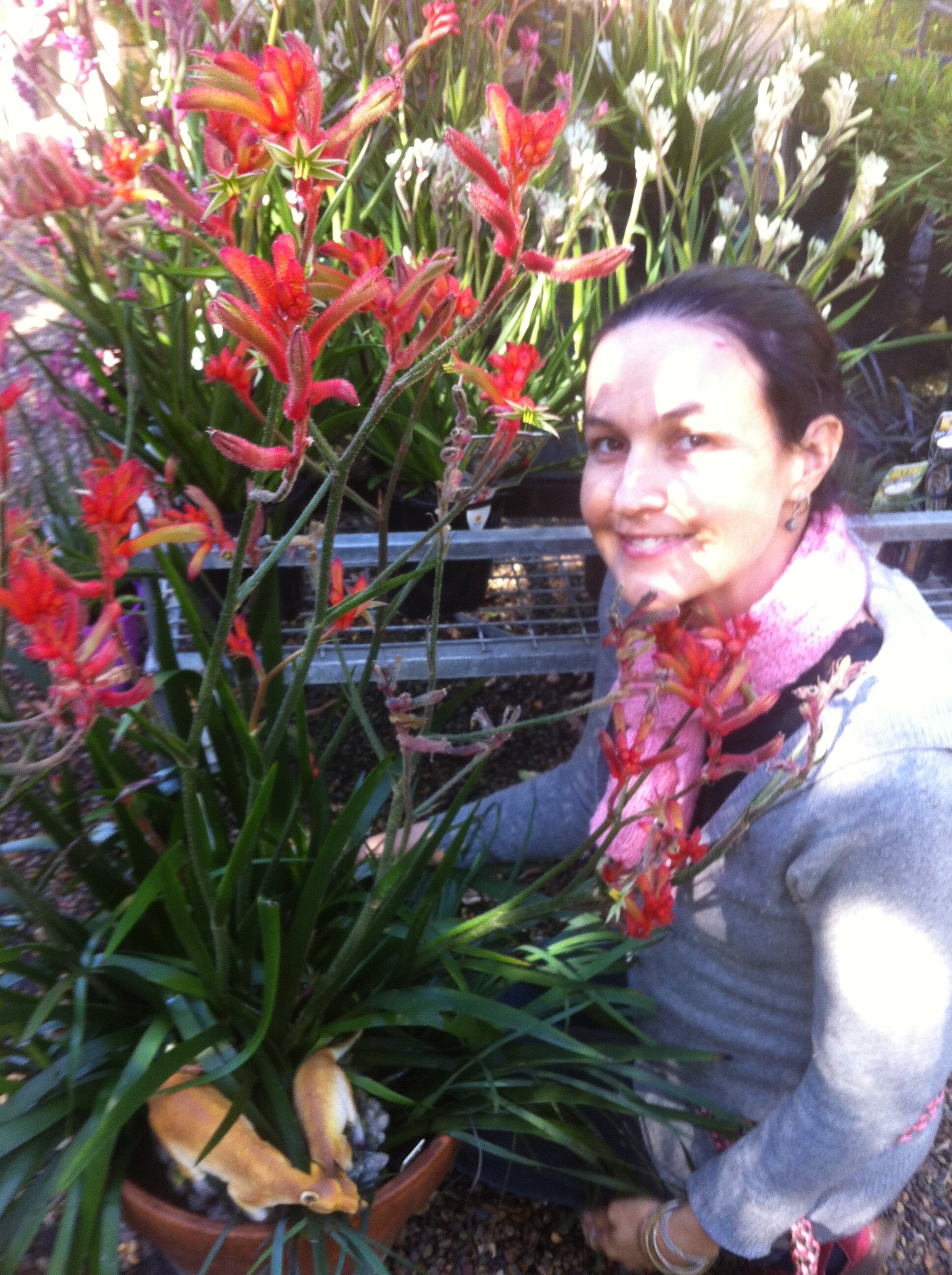
Kangaroo Paw, an Australian Native Plant
Kangaroo Paws are kind of like my Brussel sprout in the garden! For years I would almost double over in pain at the idea of growing one of these hideous plants. Why? I couldn’t come to terms with a plant that had gangly disease ridden leaves and long boring flowers.
I guess I just had never seen it used well in landscaping because now I am totally in love. Why? Strangely enough it was Ipswich City Council and the Riverheart parklands that caused me to start to fall in love with them because a few years ago they were planted en masse in the gardens and they looked fantastic most of the year.
Kangaroo Paws belong to the genus Anigozanthos, native to south-western Western Australia. A region that’s drier, hotter, and has very sandy soil. Quite different from Ipswich's heavier soils and sticky summer air.
And that’s where a lot of the trouble starts. One of the main reasons I disliked Kangaroo Paws was because of the dreaded ink spot, those black patches that ruin the leaves. It’s mostly caused by fungal diseases thanks to humidity, but frost damage and snails can also contribute. Parts of Ipswich can swing between high humidity and black frosts, basically, Kangaroo Paw hell.
Some newer cultivars, like the Celebration series, recommend growing in pots in a partially shaded spot and only in areas with less than 70% humidity (Ipswich averaged around 75% in summer 2024). So while Kangaroo Paws traditionally love full sun and excellent drainage, if you're in a more humid region like ours, pots in airy spaces with morning sun might be the better way to go. Terracotta pots are a great choice too, because they breathe. If you want to grow Kangaroo Paws out in the garden, try going for the older varieties like Anigozanthos flavidus or the red and yellow flowering forms in the Bush Gem series.
Most sprays or fertilisation will not prevent Ink spot. Thanks to Angus Stewart, the main cultivator of Kangaroo Paws, I now know the best and easiest way to deal with ink spot! Mow over them when the leaves start to become infected and fertilise with a complete organic slow release fertiliser like Organic Link! Secateurs would work just as well as a mower but nowhere near as fun!
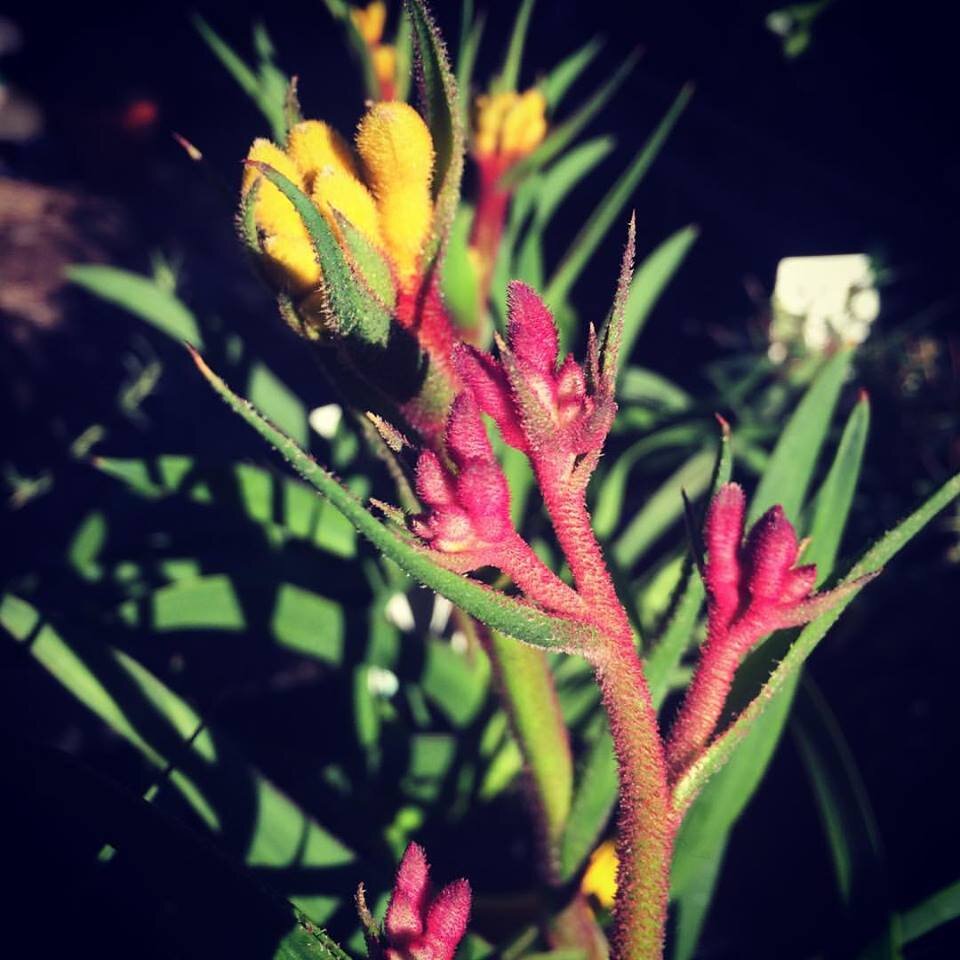
By cutting all that leaf off, you get get rid of Ink spot and encourage beautiful, fresh new leaf which gives the plant a really vigorous green appearance and promotes the flowers and the flowers are the best part.
Kangaroo Paw flowers have been described as one of Australia’s most striking and unusual flowers and with modern cultivation I think there is one available in in all the colours of the rainbow, hot pink, red and green and the black are my favourite.
These fabulous bird-attracting, drought tolerant plants grow to all different sizes too. From small boarder plants to large striking feature plants there is one suit all gardens. All they need is a dry well drained spot in full sun and easily accessible by mower (or Secateurs)!
I love using a mixture of flowering heights in pots too. They make an awesome feature in a hot area of your patio or garden. Just remember to remove the spent flowers and yucky leaves and this plant should reward you with vibrant colour most of the year.
This weekend eat some Brussel sprouts and plant an icon of the Australian garden at your house.

Dirty Clothes can lead to Healthy Garden
So it's no surprise my laundry and home cleaning is garden orientated. Laundry, Cleaning... Garden? How does this even happen.
Strangely enough I’ve found that gardening infiltrates itself into nearly all aspects of my life.
My job is gardening, one of my many interests is gardening, some of my food comes from the garden, many of my outfits and shoes are gardening friendly, even my morning relax time with a coffee gets extended sometimes with weed pulling and tomato gathering.
So it's no surprise my laundry and home cleaning is garden orientated.
Laundry, Cleaning... Garden? How does this even happen.
It all started with the water restrictions years ago, 2007. I had a baby in cloth nappies, a yard that needed watering and severe skin reactions to the main product on market that was used to soak cloth nappies.
So the hunt began for a product that could:
Keep my nappies white and clothes clean
Be used in a front loader with cold water
Not lead to skin reactions
Cost effective
Wouldn’t damage my washing machine and
Most importantly the water from the washing machine could be used in my garden, grey water
Finally after much confusion, have you seen the laundry powder aisle in the grocery store? Research, or as I fondly refer to it, trial and error.
I found a solution and a lot of information.
What I discovered was that not all laundry powders dissolve totally in the water. Go on go and get your laundry powder, mix it in cold water, leave it for twenty mins and see what the water looks like. I bet there is undissolved particles in it, well there was for me with most of the detergents I tried. These undissolved particles are called fillers. These fillers can not only affect your washing, they can corrode your machine and even affect our health. These fillers can also affect your septic tanks and cause problems with your grey water.

Chelsea using Euca in her laundry
Many laundry detergents also contain salt (sodium sulphate) that can cause major environmental problems in our gardens and waterways.
For me I found that most laundry detergents contained chlorine and synthetic perfumes that are used to sanitise and make our clothes smell pretty. The ones that didn’t contain them didn’t get my clothes clean and didn’t smell as nice. Unfortunately it was the chlorine and synthetic perfumes that were causing my skin problems. For some the chlorine and synthetic perfumes can even trigger bronchial sensitivities.
Finally I found a product that exceeded all my expectations. I fell in love with it so much Trevallan Lifestyle Centre now stocks it and their range of cleaning products.
The product I discovered is the Euca Laundry Detergent Range. The range has a laundry powder, laundry liquid, a prewash stain remover and a fabric conditioner.
The range is based entirely on Australian Eucalyptus oil. The Eucalyptus oil helps deodorise and sanitise without the need for harsh chemicals, so no more skin or bronchial sensitivities.
Euca has no fillers and on average 35 times less sodium sulphate (salt) than other brands of laundry powder. So the waterways, gardens and septic systems are safe.
It can be used in front and top loaders with warm or cold water, it’s cost effective and most importantly my clothes are clean, look clean and smell clean.
It's not just us that think Euca is special, Euca Laundry Powder won People's Choice Award Best Laundry Detergents on Product Review.com
As Euca laundry powder is great for removing soap scum and general grime, I use Euca to clean my shower and mop the floors so all my dirty water can be reused out in my garden.
Never again can I complain about the washing as it’s all going to a good cause – My Garden!
Trevallan stocks a great range of Euca Products, all are septic safe.
Euca Laundry Range
Euca Dishwashing powder for Dishwashers
Euca Dishwashing Liquid —- Click here for my quick Review
Euca Smell Expell – 4 in One Air Freshener, Disinfectant, Deodoriser & Cleaner —- Click here for my quick Review
Euca Multi Concentrate – Super Strong Multipurpose Cleaner
Euca Toilet Cleaner

Brilliant Australian Native Plant
Summer Red Eucalyptus would have to be the best flowering Australian Native gum tree for suburbia.
Photo by Brian Walters from the Australian Native Plants Society
Summer Red Eucalyptus would have to be the best flowering Australian Native gum tree for suburbia.
Before this range was released if you wanted a flowering gum tree you had to just go out and buy one and hope for the best. Sometimes the flowers turned out red and other times pink, but quite often it was an insipid white which you didn’t really want anyway. Plus the plant was straggly and had to be kept heavily trimmed to look nice.
The good news is that it’s now possible to buy flowering gums with predictable flower colours. Specially bred for the home garden, the new plants are hybrids between Eucalyptus ficifolia and Eucalyptus ptychocarpa, grafted on to Eucalyptus intermedia rootstock.
Eucalyptus ‘Summer Red’ produces masses of mid-pink to red flowers in summer and grows quickly to around 5 metres. It has large glossy green leaves and the new foliage is an attractive bronze colour. The trees should do well in most areas of Australia and will tolerate light frosts and drought.
Eucalyptus ‘Summer Red’ would be my ideal gum tree for the home garden. It is the perfect shade tree, with a height and spread of around 5m. It can be kept easily pruned and is even suitable for large pots.
Make a bird happy today and plant a Eucalyptus ‘Summer Red’!
It can be trimmed after flowering and I find its best to fertilise them at least three times a year with Organic Link.
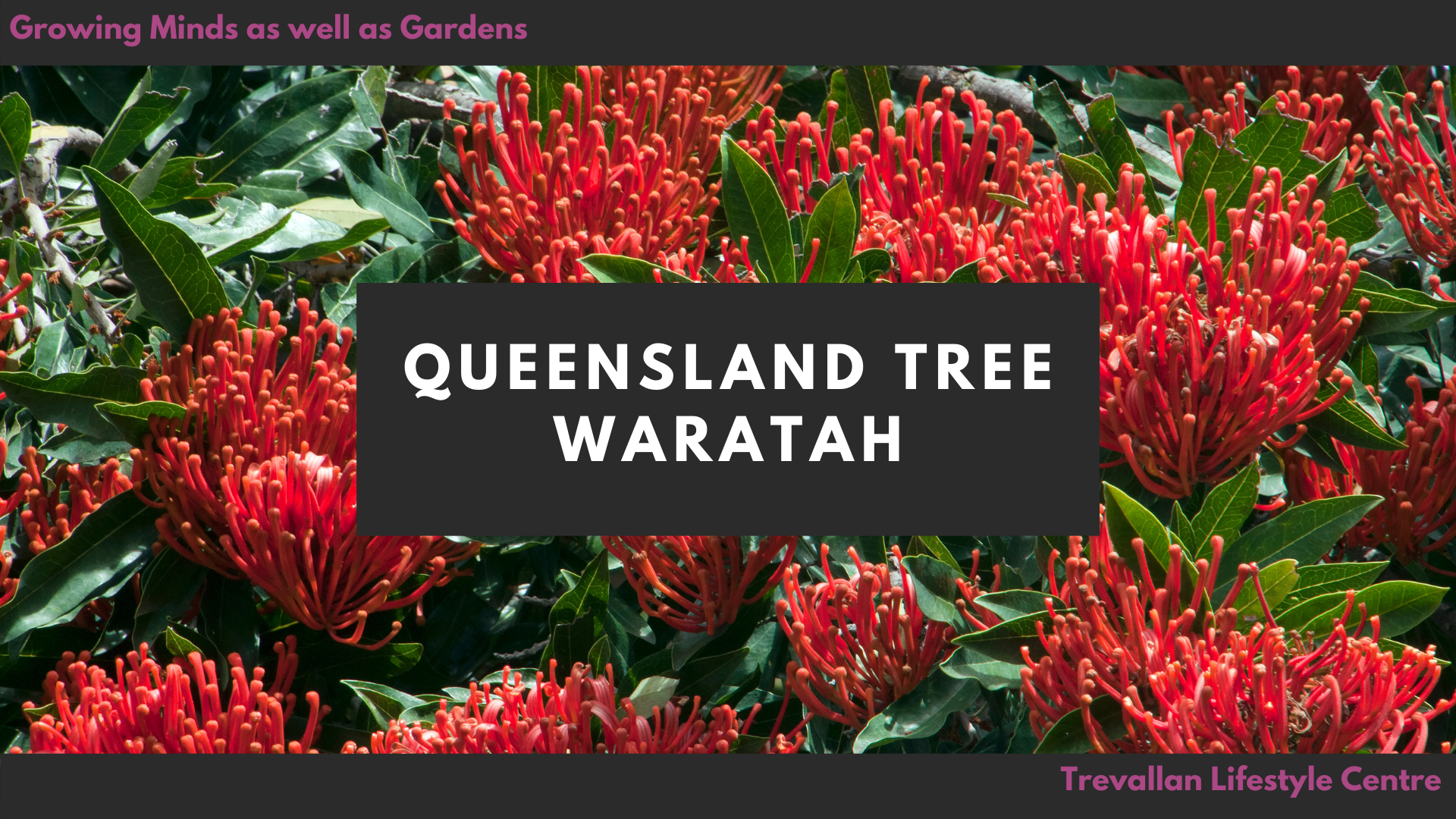
A Stunning Australian Native Plant
The Alloxylon flammeum, Queensland tree waratah, would have to be one of our favourite Australian native plants.

Photo by Brian Walters from the Australian Native Plants Society
The Alloxylon flammeum, Queensland tree waratah, would have to be boss lady's favourite Australian native plant.
This tree is widely known as one of the most stunning rainforest trees (endemic to North Queensland Rainforest) with a spectacular flowering display in spring. Despite its tropical origin, the tree waratah can be grown in cooler districts at least as far south as Sydney where the plant flowers reliably.
Alloxylon is from the Greek allo, strange or different and xylon, wood, referring to the unique wood anatomy of the genus - oak-like grain with very broad medullary rays. Flammeum is Latin, meaning flame-coloured or fiery red.
It is listed as 'Vulnerable' under the EPBC Act* (ie. facing a high risk of extinction in the wild in the medium-term future, as determined in accordance with prescribed criteria). Which means if you have the space get one of these beauties in your garden!
It has shiny green elliptical leaves up to 18 cm long, and prominent orange-red inflorescences (An inflorescence is a group or cluster of flowers arranged on a stem that is composed of a main branch or a complicated arrangement of branches) that appear from August to October, followed by rectangular woody seed pods that ripen in February and March. Juvenile plants have large (up to 25 cm long) deeply lobed pinnate leaves.
It will flower most prolifically if grown in full sun in deep rich soil with extra water given in periods of hot dry weather. In its native habitat it can grow to around 25m tall. In a normal garden it will get to around 10m tall and I find it to be the perfect shade tree.
You can trim after flowering but it has a natural beautiful shape that does not require trimming. It will need a good fertilise every three months. I use Organic Link on all my natives.

Mites
MITES may be invisible to the naked eye but the damage they can cause to plants and lawns isn't so unobvious.
MITES
These pesky bugs are everywhere at the moment, even in lawns. I have found out there are about a gazillion different types of mites (well maybe not a gazillion but quite a few).
Unfortunately mites are invisible to the naked eye. The damage isn't so unobvious.
Some signs of mites
leaves take on a brown, felt-like appearance
distorted, knobbly new growth
the leaves may have yellow blotches on them
distortion, deformation, wilting, spotting, streaking or discoloration on the surface of the leaves
Flowers may not open or become distorted
spiderwebbing on the undersides of the leaves or up stems
With all insect infestations I treat the problem at hand but I also look at why the plant or lawn is being attacked. Is the plant/lawn stressed or unhealthy, too dry or too wet. I always follow the advice I was once given by an organic farmer - A healthy plant doesn’t suffer from an insect attack! So if my plants are suffering from an insect attack I deal with the insect but then look at how to make the plant/lawn healthy again.
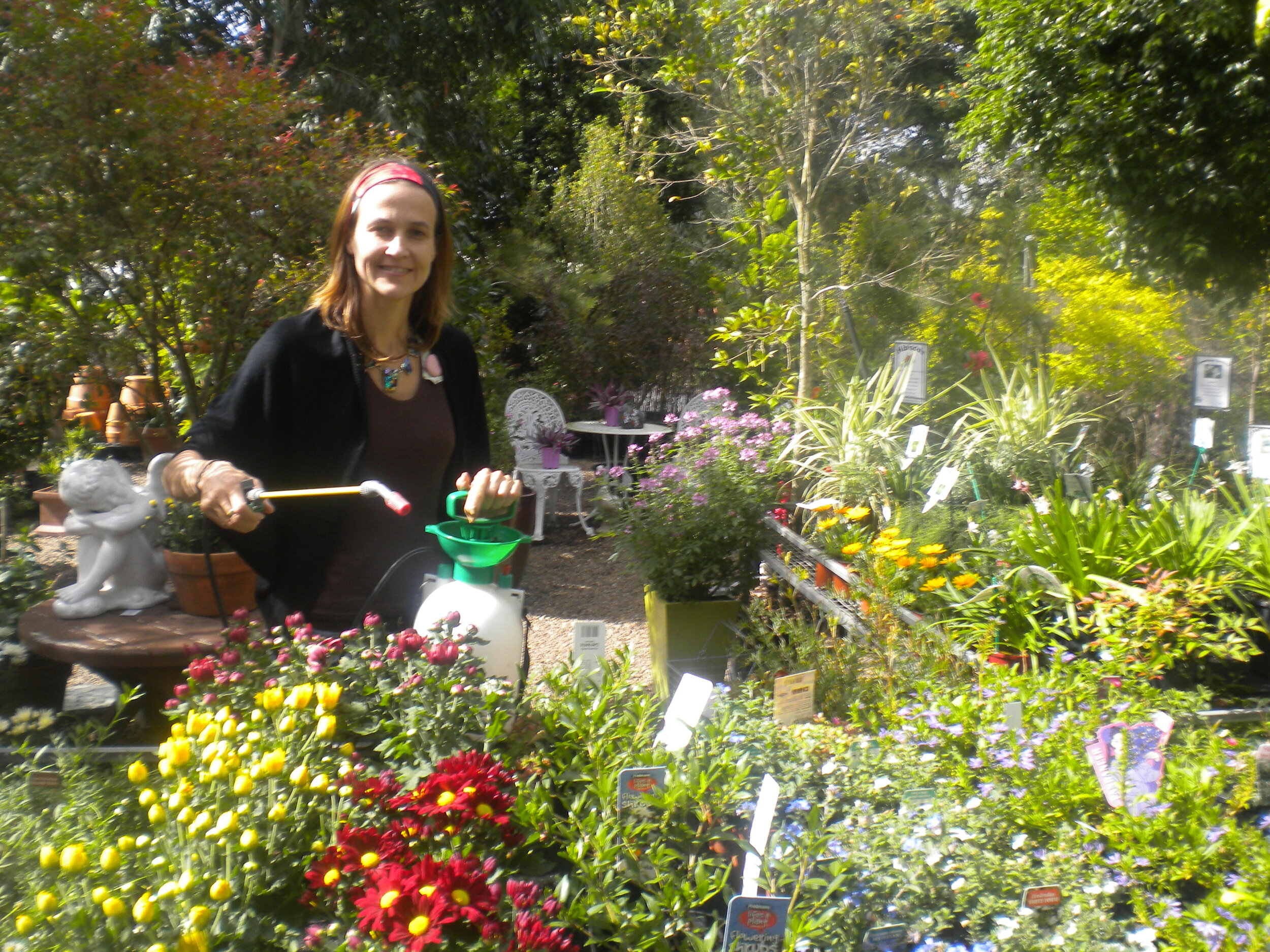
Our method of controlling most pests here at Trevallan is a simple one. Trim and fertilise. Sometimes though a fertilise with Organic Link and Triple Boost just doesn't cut it.
When I asked Des from Plant of Health (the team that make our wonderful organic fertilisers) what to use when i need to ‘spray’ to deal with an insect attack he recommended a weekly spray for at least four weeks with Plant Care and Neem Oil, mixed together. This can be used on lawns too.
Why Neem Oil and Plant Care?
Neem Oil is derived from the Azadirachta indica tree. When applied to insects and the plants they are eating, neem oil causes many insects to feed less, grow more slowly, molt less, and lose interest in laying eggs. Neem also suppresses the hatching of pest insects from their eggs.
Plant Care is like a vitamin pill for plants or when they’re sick or stressed. Plant Care contains natural liquid fish proteins, amino acids, liquid vermicast, fulvic acid, natural growth stimulants as well as a special blend of selected herbs and botanical extracts. Plant Care is a natural, non toxic foliar spray and can be used regularly on all plants, vegetables and lawns without the fear of NPK overload or plant damage.
So when mites or any other insects attack take Des' advice ‘a four week intensive care program’. You will see the difference in all your plants as you say goodbye to mites and any other nasty insects that want to destroy your garden.
Good Luck Mite Hunters.

Uncoordinated Wins Again
I’m not what you’d call a sportswoman. I’m a little uncoordinated. At school I was the child the sports’ teachers would shake their heads at when they saw me coming. I’m sure they were thinking there is no hope for this one. Apart from winning most improved player for about three years in a row for basketball, I don’t have that many awards from childhood.
I’m sure making up for it now.

The Queensland winner of the Heather Ramsey Young Leader Award goes to – Chelsea Allan”
Last Friday night (2013), I attended the Nursery and Garden Industry Queensland Award Ceremony. During the night I had one of those “this is your life moments”. The presenter started to read a story about a girl who seemed to have accidentally fallen into horticulture while looking for her dream job. 15 years on that girl discovers she is working her dream job.
As the presenter was reading this story I got thinking, this girl sounds a lot like me.
He then announced “The Queensland winner of the Heather Ramsey Young Leader Award goes to – Chelsea Allan”
It took a moment, hang on that’s me. Wow.
I WON.
But what does this mean?
The Heather Ramsey Young Leader Award recognizes and rewards the outstanding achievements of individuals in the Australian nursery and garden industry, who display exceptional commitment and passion towards their business, the industry and industry leadership potential.
That’s me. I’m young (this is my last year of being young though), I’m committed to this industry (long days and sometimes longer nights) and gardening is my passion.
But it’s not just the physical aspect of gardening. It’s the sharing component I love. I love enabling others to enjoy gardening with my few simple tips. I love going to clubs and talking gardening. I love writing Trevallan’s gardening blogs that you can read on here and using Trevallan’s Facebook page to keep you updated and informed. I don’t get paid to write my gardening column that appear newspapers and magazines across Queensland, I do it because I want to share with you all this wondrous thing called gardening.
It was an amazing experience to be recognised and awarded this award by my industry peers. I couldn’t have won this award without you.
It is because of my customers, my family and my mentors that this award was possible.
The other day a gentleman came into Trevallan Lifestyle Centre to tell me he hated mowing. He read my lawn challenge article and thought I was crazy saying I loved to mow. He followed my simple steps and now he loves to mow. His granddaughter loves coming over and running barefoot on his lawn. He mows twice a week and loves sitting back to admire his handiwork.
It’s because of happy customers and family who are gardening enthusiasts that my passion has grown. It’s because of you I want to achieve more so I can give you more.
I am so proud to win this award. Thank you for helping me turn my passion turn into an award. I hope we can continue to share this passion for many years enabling us all to have amazing gardens.

The Secret to Great Looking Plants
If you've fertilised, watered well, even checked the pH level, what could possibly be wrong with your plants? Trace elements.
I have discovered the secret to great looking plants.
Trace Elements.
Trace Elements isn’t some brand spanking new fertiliser on the block. It’s an essential item to healthy soils.
Most gardeners are going ‘pfft’ - I so knew that.
Well you might know it but how many of you use a complete trace element mix on your gardens at least once a year? What about your pots, at least twice a year?
It seems everyone fertilises and expects to see results. What happens when you do all the right things but you don’t see the results you want?
A common question is – “I’ve given my plants all the TLC they can handle, I’ve fertilised, watered well, even checked the pH level and it's perfect. What could possibly be wrong with my plants?

Most of us are aware that plants require mineral nutrients for their growth and development. Nitrogen, phosphorus and potassium, the macro elements, the names that usually appear on fertilizer packages, whether you use organic or chemical fertilizers. It is sometimes assumed that they are the "important" nutrients. These macro elements are just consumed by the plants in large quantities. Trace elements, micro nutrients can often be forgotten about as they are required in minuscule quantities.
When it comes to macro elements being the most important nutrients, nothing could be further from the truth. Trace elements like Manganese, Iron, Zinc, and Copper, are every bit as vital to the plants metabolism as nitrogen, potassium and phosphorous. They have essential functions and so a deficiency in even one element will adversely affect the healthy growth of the plant. Strangely enough some trace elements when present in excessive concentrations are actually poisonous for plants.
Common gardening practices (such as liming acid soils) can contribute to widespread occurrence of micronutrient deficiencies in plants by decreasing the availability of the micronutrients present in the soil. Also, extensive use of glyphosate (most common weed killer) is increasingly suspected to impair micronutrient uptake by plants, especially with regard to manganese, iron and zinc.

So how do we pinpoint the problems in our soil? We can get a leaf or soil analysis. Yeah right! I couldn’t be bothered with all that.
So what do I do?
I use Plant of Health’s Bio Trace. It has a blend of the key micronutrients (e.g. iron, cobalt and manganese) supported by macro elements. It is also contains fulvic acid to further enhance growth and health.
The best thing about Plant of Health’s Bio Trace, you mix some up in a watering can and pour it over the plants foliage or as a soil drench. Done. Couldn’t have been easier.
Go on breathe some life into your garden and use Plant of Health’s Bio Trace.
Careful though, when you see the difference it makes you’ll be buying it in bulk like I do now!

Creating a Sacred Space
I was lucky to have one of my secret dreams realised and to be able to share it with others.
It started with a graduation present.
Perfect Potion was a little shop in the Elizabeth Arcade in Brisbane. For my year 12 graduation present my mother bought me a box of essential oils and a candle oil burner. A few years later I upgraded to an electric oil vaporizer. It was ugly yellow; there wasn’t much choice back then! Now I have a classy black aroma diffuser.
No matter where I lived I always had my oils. Slowly as my interest grew, so did my library and my aromatherapy classes. I enjoyed infusing my home with the scents I created. I loved it when friends visited and they’d say ‘your house always smells so good’. When I lived in an apartment the girls upstairs used to tell me how much they enjoyed walking past my door as there was always beautiful scents wafting out.
Lucky for me as my interest grew Perfect Potion flourished. More and more stores opened, more oils were released, more blends were available, more products. Unfortunately it didn't quench my scent thirst, it only fuelled it.
There was nothing more I enjoyed than spending an afternoon in a Perfect Potion Store.
One day the opportunity arose to stock Perfect Potion at Trevallan Lifestyle Centre. We have never looked back. It has been an amazing journey being a part of a company that seems to only take huge steps forward.
Then in 2012 something strange happened - Perfect Potion ran a competition, a competition unlike any other. A competition open to all Australian and Japanese residents. The competition was to create your own essential oil blend to be sold under the Perfect Potion banner. They had never offered this before; all the blends sold by Perfect Potion are Perfect Potion’s creations.
The competition wasn’t just about choosing some essential oils. You had to work out the perfect combination of oils and then how much of each oil. Plus the scent you were trying to create was to embody your scared space.
Hang on I live in a small house with kids, animals – what scared space?
My books! It always comes back to books. Books are my scared space. Books are my escape. At the time of the competition my little library was being built. So now I had a sacred space but no scent.
Then a few days before close of competition inspiration struck. The oils just worked, the combination, the amounts. It worked. I still hesitated to enter and then late one night, almost competition end time, I finally got enough guts to enter. And swoosh like that the email was sent, the competition closed and I promptly forgot all about it.
You see I had a baby on the way. Number three to be exact. The day the winners of Perfect Potion’s competition was announced I was a little busy. I was in labour.
When I finally got my head out of new born clouds I read an email “Firstly, a massive CONGRATULATIONS for being the winner of the Create Your Own Sacred Space Blend Competition”.
I thought “what’s going on. Who won the competition? They aren’t telling me the names”. I thought it was a generic email sent to everyone who entered informing them of the winner.
Silly me.
Tears may have flowed when it set in.
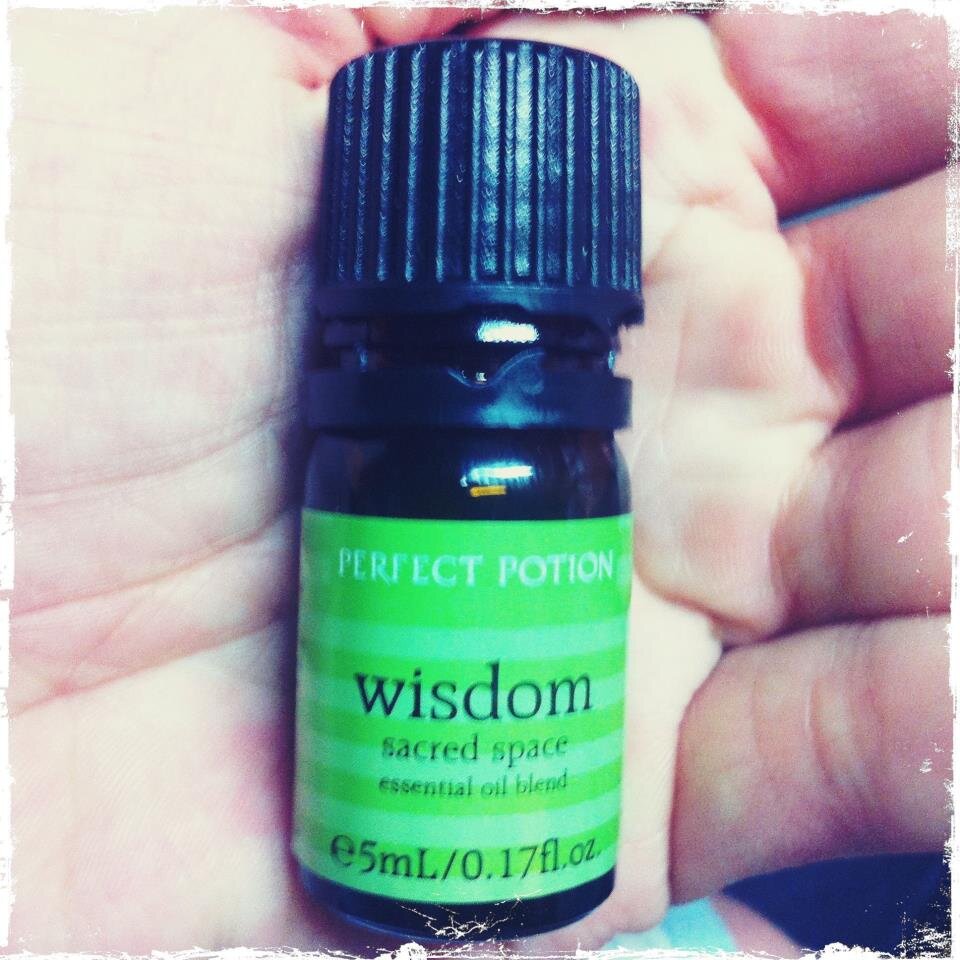
My Creation - Widsom
Something I loved, something that is so important and a part of me just became real.
The day that I received that little bottle adeptly named ‘Wisdom’, my heart skipped a beat. Just thinking about it now makes me well up with tears.
It wasn’t just that I won it was the recognition I also got from the creator of Perfect Potion Sal Battaglia. A man who I admire for all that he and his team have achieved over the years.
Sal wrote ‘Choosing the sacred space blend has been so difficult for me as there were so many wonderful ideas and beautiful blends…. I was so impressed with the depth and complexity of the blend. It is such a simple formula…..I absolutely loved the blend …
Unfortunately after 8 years this blend is no longer a part of Perfect Potion's range. I will always be eternally grateful to Sal and the Perfect Potion Team for giving me this opportunity. I was lucky to have one of my secret dreams realised and to be able to share it with others.