Find Us:
77 Fernvale Rd
Brassall QLD 4305
(07) 3201 8630
Open:
Tue-Sun 9am - 4pm

Camellia Japonica
Do yourself and your garden a favour and treat yourself to a Camellia Japonica. These glorious plants are sometimes called the Rose of Winter.
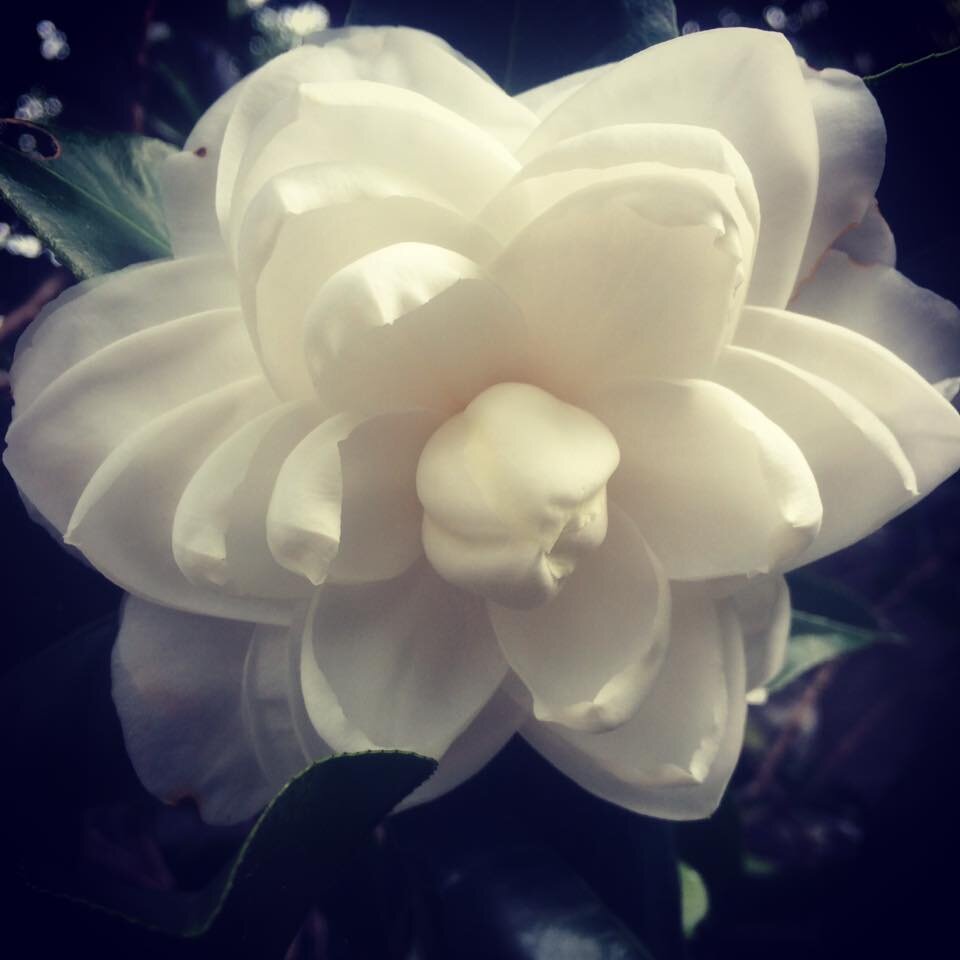
Over the years my grandfather has tried to teach me a lot. He tried to teach me to fish but I could never stand still long enough to catch anything! He tried to teach me to cylinder mow but I could never get the hang of mowing in a straight line. He even tried to teach me to be a little quieter and we all know that didn’t work! The one thing he did teach me well though was how perfect Camellia Japonicas are.
Do yourself and your garden a favour and treat yourself to a Camellia Japonica.
These glorious plants are sometimes called the Rose of Winter. I think they should be called the Jewel of Winter because they put on a fabulous flower display in the cooler months of the year when the rest of the garden often looks dull and bare.
Japonica flowers are what make this plant so perfect.
I get such joy in seeing the buds open to these so flawless and diverse flowers. I have found over ten different descriptions of Japonica flowers. The most common are single, double, peony and formal double. The shade of the flowers are just as diverse and can vary from red to pink to white and sometimes have multi-coloured stripes or specks. The flowers are not small either with many flowers being at least 15cm in diameter. What is even better is these plants flower in abundance and the flowers last for ages. A childhood memory is of water bowls all over our house filled with japonica flowers.
Camellia Japonicas have the darkest green glossiest foliage. The leaves are quite broad, thick and smooth making the plant look lush and dense. Japonicas will grow superbly in full shade or part shade. In climates where deciduous trees are popular japonicas are usually planted underneath so they are protected from the hot summer sun but are free to shine while they are in flower and the tree is naked.
Japonicas don’t mind if they are planted in the ground or in a pot. They don’t like wet feet though so make sure your soil is well drained and slightly acidic, around pH6. They are quite hardy once established. I find they do best if they are mulched well and are given a good fertilise about every three months with a slow release complete organic fertiliser like Organic Link. I also like to give my japonicas a granular dose of sulphate of potash around April/May to help promote flowers. During their flowering season I liquid Plant Care them on a regular basis to keep them healthy while in bloom.
About once a year usually around the end of August I add a little bit of Dolomite to the soil around my camellias. Camellias can be prone to calcium deficiency and I find adding a little bit of Dolomite helps with this. If I can’t add Dolomite (or I forget) I try to Liquid Bio Trace my Camellias at least twice a year.
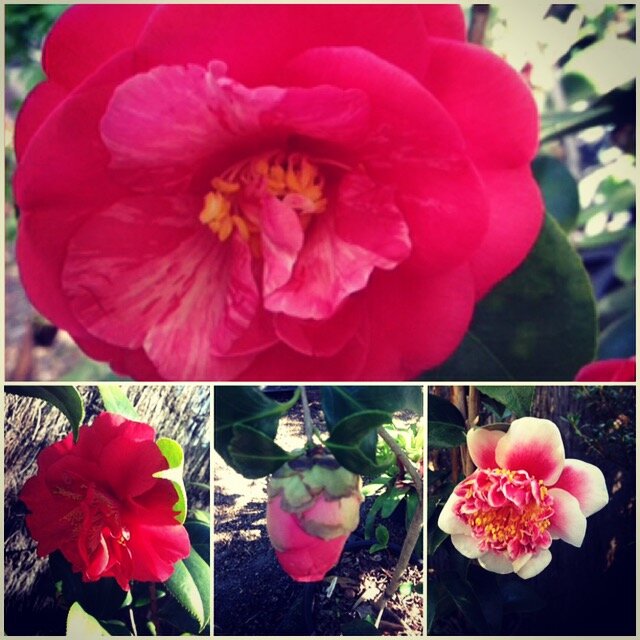
Camellia Japonica Flowers
Why doesn’t everyone have one of these glorious plants?
Over the years they have gotten a bad reputation because they are slow growing and some varieties can take years to flower or suffered Bud Drop.
Beautiful plants do not grow overnight and it is nice to have a plant that does not need constant trimming.
Bud Drop is the loss or decay of buds. This can be caused by over watering (we sometimes get wet winters), high temperatures (we sometimes have hotter than expected winters), pot bound roots and incorrect positioning.
Some Japonicas can take years to flower and some don't flower that well in our climate. I remember my mother waiting years for our 'Waterlilly' japonica to flower. It was well worth it but seriously!!! I have found in Ipswich's unpredictable winter climate the formal doubles struggle to flower spectacularly every year, the others flower very easily.
There are many japonicas that are perfectly suited to flower and grow in Ipswich. Don't ever forget that even one Camellia japonica in a pot on a veranda is the perfect way to give your dull winter life some TLC and bring some happiness back into your garden!

Camellia Sasanqua
Camellias are amongst the world's best flowering plants. They are hardy and disease resistant

Autumn is my favourite season. Cool crisp nights and fresh sunshine days. The days are shorter but seemed to be filled with achievable goals (maybe because we aren’t sweating by 9am!). Autumn is also a glorious time of year because one of my favourite plants starts to flower – Camellias.
Don Burke said it best way back in 2002 “Camellias are amongst the world's best flowering plants. They are hardy and disease resistant, most varieties have attractive, glossy green foliage, and they put on their fabulous flower display in the cooler months of the year when the rest of the garden often looks dull and bare”.
Originally from China camellias have taken well to their Australian home. I have four favourite types of camellias - sasanquas, japonicas, reticulates and hybrids.
Sasanquas are the TLC my autumn garden needs. They seem to burst into life, brightening up sun and shade spots alike with their elegant sometimes fragrant blooms. Of course these plants are still handsome at other times of the year, with their deep green, glossy leaves, and graceful habit. Sasanquas are a versatile shrub with a variety of uses. They are great as a hedge, look fantastic espaliered against a fence, perfect as a statement in a pot or garden and can even be used as bonsai.

Camellia Sasanqua Flower
Camellia sasanquas flower in abundance from March through August with much of the shrub being covered with their striking coloured flowers. These flowers are mostly singles or semi-doubles and range in colour from white through to deep pinks and reds. All the flowers have brilliant yellow stamens that the Australian native bees find delicious!
Some of the sasanquas even have a delightful fragrance that gently wafts through the air tickling your senses and leaves you wanting more. To promote this profusion of flowers and good growth, fertilising with Organic Link should be done at least twice a year, just before flowering and just after. I also like to give my Camellia sasanquas a granular dose of sulphate of potash around February to help promote flowers. If you find you are a little late this year you can just start liquid fertilising with Silica and Potash, every fortnight to help promote blooms. During their flowering season I liquid Plant Care them on a regular basis to keep them healthy while in bloom. About once a year usually around the end of February I add a little bit of Dolomite to the soil around my camellias. Camellias can be prone to calcium deficiency and I find adding a little bit of Dolomite helps with this. If I can’t add Dolomite (or I forget) I try to Liquid Bio Trace my Camellias at least twice a year.
Sasanquas also possesses the distinct advantage of tolerating both full sun and partial shade. These are the perfect plant for your south facing garden or patio. As long as they are planted into good quality potting mix or garden soil and mulched correctly sasanquas are one of the most robust drought tolerant plants around.

Camellias in Ipswich are considered to be relatively slow growing; as a result they are quite happy to stay in a pot.
This is also why they make an excellent hedge – with little effort they can easily be trained to grow thick and neat, they really only need to be pruned once a year after flowering.
There are over 1000 named varieties of Camellia sasanquas, so this diverse group of flowering shrubs should fulfil a range of needs and colour schemes in everyone’s garden. Give your shady or sunny garden spots some TLC this weekend with the hardy Camellia sasanqua.