Find Us:
77 Fernvale Rd
Brassall QLD 4305
(07) 3201 8630
Open:
Tue-Sun 9am - 4pm

Winter Gardening Jobs
Winter in Ipswich brings cold nights and warm days, perfect for gardening. Mulch to maintain soil temperature, fertilise with Silica and Potash, and protect young plants from frost. Start a herb garden, plant seed potatoes, and enjoy winter blooms like camellias. Maintain your lawn, care for fruit trees, and focus on herbs and leafy greens in your vegetable patch. Keep your garden thriving all winter with these expert tips.
Winter in Ipswich brings a mix of cold nights and warm days. As a gardener, you might find yourself stripping off layers one minute and bundling up the next. Here's how you can make the most of this season in your garden:
Fertilise Gardens and Pots
At the turn of every season I also like to soil wet and fertilise my gardens and pots. I use Plant of Health’s granular Soil Soaker and Organic Link Fertiliser. Soil Soaker enables hydrophobic soils to become water penetrable and retain water. It also houses beneficial microbes, nutrients, silica and diatomaceous earth these make soil healthy which in turn improves root and shoot development and also reduces plant stress.
I will use Soil Soaker first then in a week or so give them all a good fertilise with Organic Link.
I also use Silica and Potash monthly to help plants naturally withstand cold damage. For young plants susceptible to frost, apply Envy frost protectant monthly.
While insects aren’t usually bad at this time of year if you do notice an attack a spray with neem oil is usually all you need.
Feed my winter flowering plants
Sometimes we just can’t get around to fertilising all our plants. At this time of year if I can’t fertilise everything I like to pay particular attention to my camellia sasanquas and japonicas, rondeletias, zygo cacti, azaleas and my poinsettias to keep them looking good and help promote flowers. I will also start to liquid fertilise these plants with Silica and Potash fortnightly to promote flowering.
Mulching
Mulching isn't just for summer; it's equally important in winter. It helps keep the ground temperature even, reducing cold stress on your plants.
Pruning
Late winter is a great time to prune most plants to ensure healthy spring growth.
Lawn Care
At the turn of every season I like to soil wet and fertilise my lawn. Even though I know winter isn’t a time for large growth, I find the heathy it is all year the better it looks and less attention I need to ultimately pay to it. I use Plant of Health’s granular Soil Soaker and Lawn and Turf Fertiliser.
I find lawn weeds don’t grow anywhere near as quickly in winter as they do in spring. I believe if I can get on top of them now I won’t be doing the bindii dance in summer! Normally at this time of year I can easily dig up any stray weeds and I always mow with the catcher on. If by chance I do need to spray I try to do it about three days after rain when the weeds are young but not in flower yet. I use Searles ‘Lawn Perfect’ as it kills most of the weeds coming up in my lawn. I don't worry too much about winter weed as I find out it dies out quickly as soon as the weather warms up.
Fruit Tree Care
Citrus trees can prone to Leaf Curl and Leaf Miner. Both these problems are mainly caused by insects. Normally when my plants are under attack I trim off affected growth and fertilise with Organic Link. At this time of year my citrus are usually in fruit or flower and I don’t want to stress the plants out and cause a flower or bud drop. So I will start a weekly spray for at least four weeks with Plant Care and Neem Oil, mixed together to give them an immediate boost.
After fruiting I will trim and fertilise.
While fruit fly isn’t meant to be active in winter I always change my fruit fly wick every three months or on the turn of the season, so beginning of Winter. Any fruit that is forming with get a spray with Eco-naturalure, an organic fruit fly spray to protect them from the odd pregnant female flying about! For more information on Fruit Fly click here.
What to plant
With the cool nights and warm days, it has become a vegetable gardeners paradise. There are so many vegetables that grow at this time of year beetroot, broccoli, snow peas, Asian greens, strawberries, onions, kale, leeks, cauliflower, spinach, rocket, coriander, cabbage, peas (though I don’t know why… Yuk!), just to name a few. Tomatoes and zucchini can also be planted now to get good growth before summer hits with fruit fly.
Winter is also a great time to start a herb garden. Herbs like basil thrive in the cooler months. Instead of paying high prices for fresh herbs, you can grow your own. Trevallan offers a variety of everyday herbs like chives, oregano, lemongrass and unique herbs like bergamot, chamomile, and chia. Now is also a good time to try seed potatoes, garlic and shallots.
Regularly fertilise with Triple Boost and Neem to enjoy a bountiful harvest of winter vegetables.
Jobs done … I can kick back relax read my Winter About the Garden Magazine and enjoy the sunshine!

The Winter Lawn
Transform your patchy lawn into a lush green paradise with these expert lawn care tips. Learn how to aerate, use soil wetting agents, fertilize, and control weeds organically. Say goodbye to unwanted invaders and welcome a healthy, vibrant lawn just in time for Christmas. Get ready for backyard cricket and envy-inducing lawns with our comprehensive lawn care guide.
Who has recently taken a good look at their lawn?
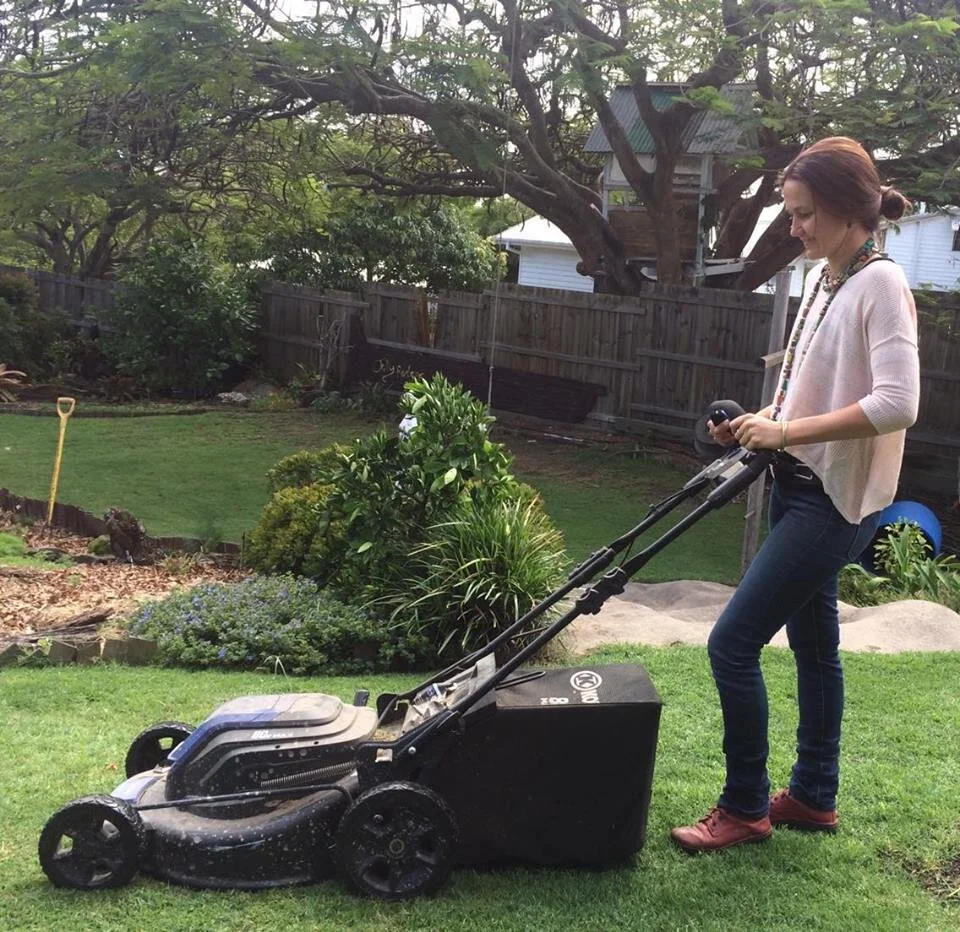
Does it look lush and green? Take a closer look, is that lush greenness coming from the lawn or all the weeds that have recently taken hold due to the rain.
At the moment my lawn isn't looking as good as it should - it is looking a bit patchy and the weeds like bindi, clover and Mullumbimby couch are coming through.
Sound like your lawn? Why not set yourself a simple lawn challenge so that by Christmas your lawn will be looking glorious and everyone will be coming to your house to play backyard cricket.
Sometimes with constant use most lawns become very hard and compacted and slightly hydrophobic (water-repellent).
So the first thing you need to do is aerate your lawn. Aerating your lawn means that the soil is opened up to allow air, water and nutrients to penetrate the grass roots. Aeration helps the roots grow deeply and produce a stronger, more vigorous lawn. Small lawns can be aerated with a sturdy garden fork. Simply insert the fork into the lawn and wriggle it back and forth to fracture the soil profile. If this doesn’t work and larger lawns may need a lawn aerator and/or lawn corer.
Once I have aerated my lawn I like to use a soil wetting agent. I prefer to use Plant of Health’s granular Soil Soaker, my sister loves putting the liquid Soak Soaker into Birchy and spraying it all over her lawn. To really up my lawn game I will put some liquid microbes into Birchy and do it all at the same time.
Hydrophobic lawns do not soak up water leading to overly dry or overly wet spots and can also stop the soil from being able to uptake nutrients (fertilisers). Soil wetting agents can help fix these problems.
A week or so after you've soil wetted you can fertilise.
I know it is winter and people say there is no need to fertilise in winter but I always like to give mine a little feed because the lawn still grows, just a bit slower. I also like to give it a liquid fertilise with Triple Boost about once a month.
I use a complete organic fertiliser by Plant of Health called Organic Link. It is pelletised and does not work in those special lawn fertiliser contraptions. I put mine in a bucket and break up the pellets a little bit and then use my hands and just throw it out over the lawns. The same company does offer an organic based slow release lawn fertiliser called Lawn and Turf Food.
I love the Plant of Health range as it makes my lawn grow thick and lush, not long and sparse, so less mowing and less weed problems. Most weeds occur in lawns that are sparse and unhealthy. The Plant of Health Range also makes my lawn roots grow strong and deep, so my lawn is more resistant to lawn grub and becomes more drought tolerant.
Dave Horton from Horton Turf Farm uses the Plant of Heath fertiliser range and has not used grub kill on his turf farm for over 10 years....if a turf farm doesn't need to spray for lawn grubs why do you?
So, hopefully by now my soil wetter and lawn fertiliser have started to work and most of my weedy areas are slowly being consumed by healthy lawn!
If this isn't the case I'll give my lawn a spray with Jerry Colby-Williams Iron Sulphate trick (see video) before I will resort to chemical weedkillers. I am not a huge fan of using chemicals on my lawns. I try to hand weed and keep the turf healthy before I resort to weed killers.
Did you know there is even the best time to mow and weed according to the moon calendar as growth will be slower?
Sometimes, if your lawn is so infected with weeds, you may need to use a spray. I try to minimise my use of these by spraying well before the weed has flowered. Usually three or four days after rain is when our lawn weeds are growing but not flowering. I have found this is a great time to spray.
When I do spray I like to use Searles’ Ultraweed. If you have Mullumbimby couch you will need Searles’ Lawn Weeder. These products are fine to use on all couch lawns.
The trick with killing weeds in the lawn is to be consistent. Think of it this way - once you see the weeds it usually means that they have already re-seeded. You may need to spray twice or even three times a fortnight apart, until the weeds have disappeared.
During this time you'll be happily mowing away, with a catcher on, of course, so you don't spread any stray lawn weed seeds. Don’t forget to set your mower a little higher too so you can shade out the lawn weeds.
If you are unlucky enough to lawn pests like lawn grub or army worm, you can try a Neem Oil (organic) drench every two weeks or spray with Dipel (organic). Again I don’t like using heavy chemicals on my lawns but if you needed to you can use Searles’ Dead Grub. Just know that this can harm the good bugs as well as the bad bugs in your lawn. So after you have used a product like Dead Grub always follow it up with a liquid feed of Microbes.
By Christmas you should have the best lawn on the street, unless someone else on your street also took up my lawn challenge!