Find Us:
77 Fernvale Rd
Brassall QLD 4305
(07) 3201 8630
Open:
Tue-Sun 9am - 4pm

Fungus Gnats
Fungus gnats, those pesky flying insects hovering around indoor plants, pose a threat to plant health in humid Australian climates. A blend of prevention and management keeps these pests at bay, preserving a healthy indoor garden.
Gnats is a general term used to describe a variety of small, flying insects within the Dipteran family.
Fungus gnats, in particular, are named for their affinity for fungi and their larvae often being found in damp or decaying organic matter, including soil where they can cause problems for plants. They are a common type of gnat that can be found in and around plants, especially in overly moist conditions.
Fungus gnats, can be problematic for plants. They lay their eggs in the soil, and the larvae feed on organic matter and plant roots. This can lead to several issues for plants, including:
Root Damage: The gnat larvae feed on the roots, causing root damage. This can lead to poor nutrient uptake and weakened plants.
Stunted Growth: As the roots are damaged, plants may experience stunted growth, yellowing leaves, and overall poor health.
Reduced Vigour: Gnats can stress plants, making them more susceptible to other pests and diseases.
Wilting: Severely affected plants may wilt or die if the root damage is extensive.
Prevent and Manage Fungus Gnat Infestations
Prevent
Avoid Overpotting: Overpotting, or using a container significantly larger than the plant needs, can lead to excess moisture retention in the soil. Fungus gnats thrive in damp environments, so using appropriately sized pots for your plants can help maintain the right moisture levels.
Understanding Plant Water Needs: Different plants have varying water requirements. Understanding the specific needs of your indoor plants is crucial. Some plants prefer to dry out slightly between waterings, and overwatering can create a conducive environment for fungus gnats.
Watering Techniques: Water the plants thoroughly but ensure that excess water can drain freely from the bottom of the pot. Watering from the top and allowing the excess water to drain helps flush out any accumulated salts or stagnant water that can attract gnats. It's important not to let the plant sit in water for too long.
Monitor Moisture Levels: Use a moisture meter, correctly, to gauge the soil's moisture content. This can help you determine when it's appropriate to water and prevent overwatering. Adjust your watering schedule based on the meter's readings.
Proper Soil Mix: Choose a well-draining soil mix that doesn't retain excess moisture. Aeration and good drainage are crucial to discourage fungus gnats and promote healthy root growth.
Cleanliness and Plant Hygiene: Regularly remove any fallen leaves, debris, or excess organic matter from the soil surface. Keeping the area around your plants clean reduces potential breeding sites for gnats.
Quarantine New Plants: When bringing in new plants, quarantine them for a few weeks to ensure they aren't carrying any pests. Check the soil and plant carefully for signs of fungus gnats before introducing them to your other plants.
Manage
Introduce Natural Pest Control: Introducing natural predators like beneficial nematodes or predatory mites into the soil is an eco-friendly way to control fungus gnat populations. These predators feed on the larvae of gnats, reducing their numbers and preventing infestations.
Neem Drench: Neem oil, has insecticidal properties and can be effective against gnats. Creating a neem drench by mixing neem oil with water and thoroughly saturating the soil helps deter gnats and disrupt their life cycle. Allowing the plant to drain completely after the drench is crucial.
Gnat Off and Similar Products: Products like Gnat Off and similar insecticides specifically designed to target fungus gnats can be effective in controlling infestations. Follow the manufacturer's instructions for application and usage.
Tanlin Drops: Tanlin Drops are a non-toxic and inert option for managing fungus gnats. They don't harm beneficial microorganisms in the soil while effectively deterring gnats. Follow the instructions for application and dosage provided with the product.
Maintain Cleanliness: Regularly remove fallen leaves, debris, and organic matter from the surface of the soil to eliminate potential breeding sites for gnats. A clean environment discourages infestations.
Isolate Infested Plants: If you notice an infestation, isolate the affected plant to prevent the spread of gnats to other plants. Treat the infested plant using appropriate measures, such as neem drench or commercial products, to control the gnats.
Monitor and Repeat Treatment: Keep a close eye on your plants and monitor for signs of gnats. If needed, repeat the treatment with neem drench or other products to maintain control and prevent reinfestation.
It's important to choose a management method that works for you and your plants.
Combining several of these preventive and management strategies can effectively reduce if not stop fungus gnat infestations in your indoor plants.
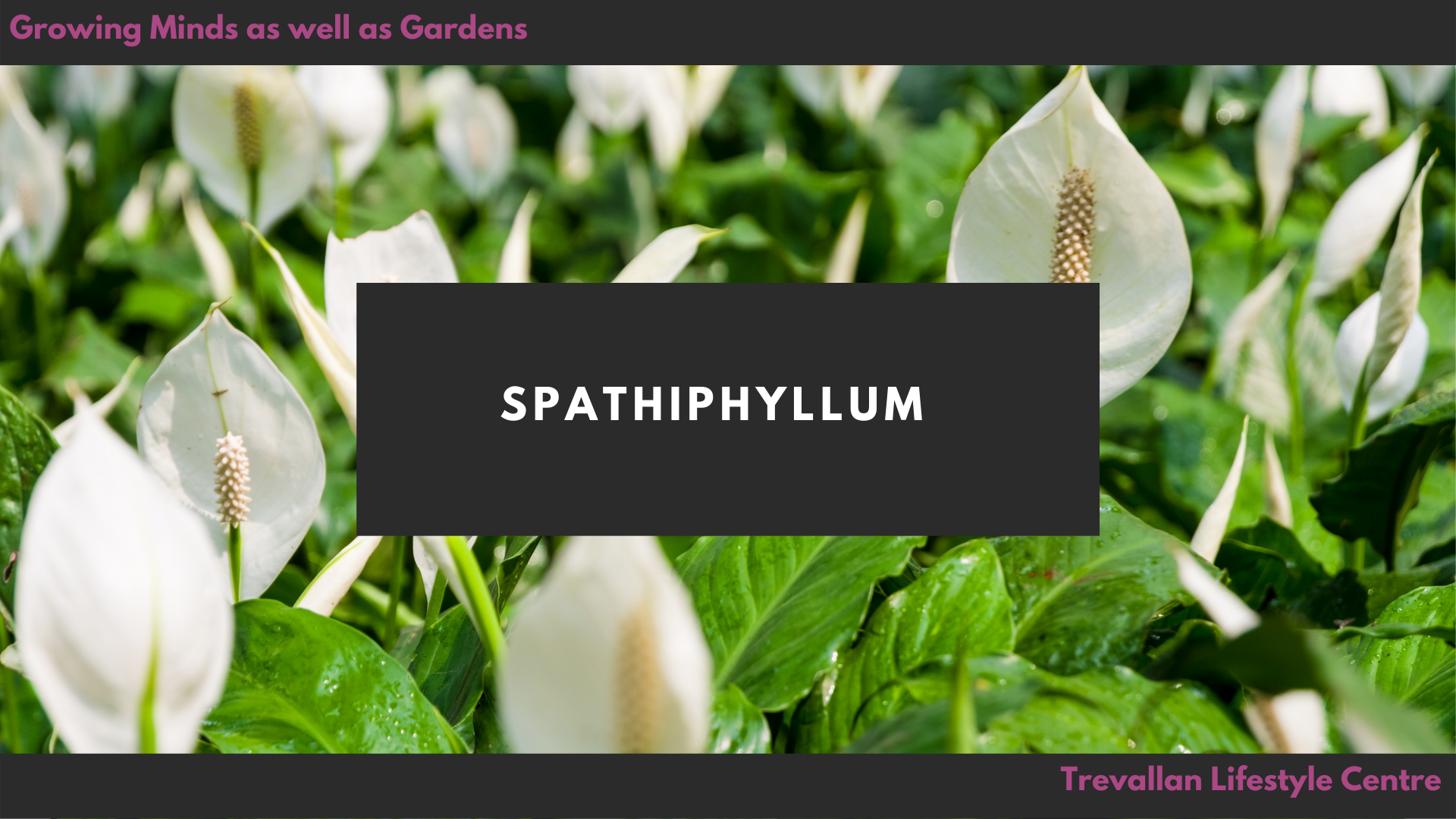
Spathiphyllum
Perfect Indoor Plant, this plant is an understory plant of the rainforest and basically requires very little light (hence its common name 'Dungeon Plant') and very low water. Which is probably why it was so popular.
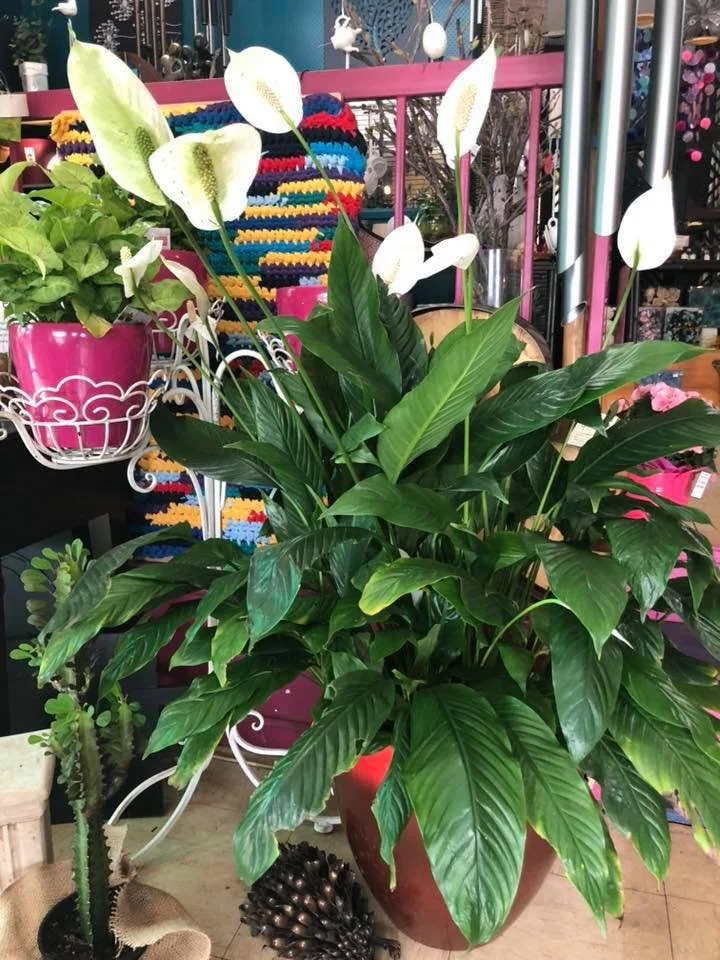
Spathiphyllum, spath, Peace Lilly, dungeon plant!
It's the original 70s house plant. In recent times it has become popular with the emergence of the variegated foliage forms.
Why is this plant so popular?
Lush green foliage, flowers consistently through warmer months, easy to take care of, works inside or shade gardens!
There are so many forms of Spathiphyllums, you can’t get bored!. Short and fat lush green leaves, long and skinny lush green leaves, big and fat lush green leaves and Giganotosaurus lush green leaves. There is also a form that has crinkly green and white variegated leaves and just a flat glossy variegated leaf. There is also a silver leafed form.
All have beautiful white flowers. Some flowers sit high out of the foliage and some sit in amongst the foliage. Some are big and some are little.
This plant is an understory plant of the rainforest and basically requires very little light (hence its common name 'Dungeon Plant') and very low water. Which is probably why it was so popular.
The NASA Clean Air Study has also found that Spathiphyllum cleans indoor air of certain environmental contaminants, including benzene and formaldehyde.
Seriously how could one not want this indoors....
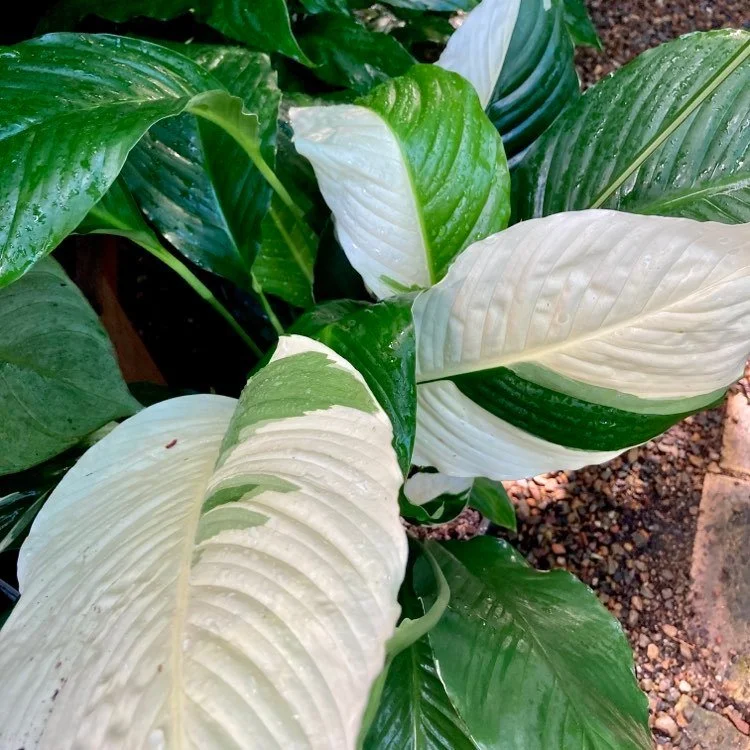
Spathiphyllum Picasso
Oh well here we go .....
We worked out the flower wasn't good for our kids or animals to eat, so it slowly got banned from the homes of plant eating animal and children.
Then the tips of the leaves started turning brown and yellow making the plant look ugly and not Insta worthy.
Now that's because we all became afraid to give our plants a good drink. Spathiphyllums don't like it when you consistently give them little bits of water (shallow watering). I know you don't want to ruin Aunt Frans antique table with water running every where, so invest in a planter or take your Spathiphyllum to the sink to water it.
Spathiphyllums like a good long drink where water flows through the soil and out the bottom. Once a week is usually fine. If it doesn't last that long you need to reassess what your Spathiphyllum is planted in.
Spathiphyllums should be planted in a fantastic quality potting mix, remember they are understory plants living and surviving in decaying matter! The better the quality of potting soil, the less watering you'll need to do. I always use Platinum potting mix.
If you don’t want to repot your Spathiphyllum try using Searles Recharge. Recharge does what it says recharges old potting mix. I love this product and use it about once a year on all my indoor plants.
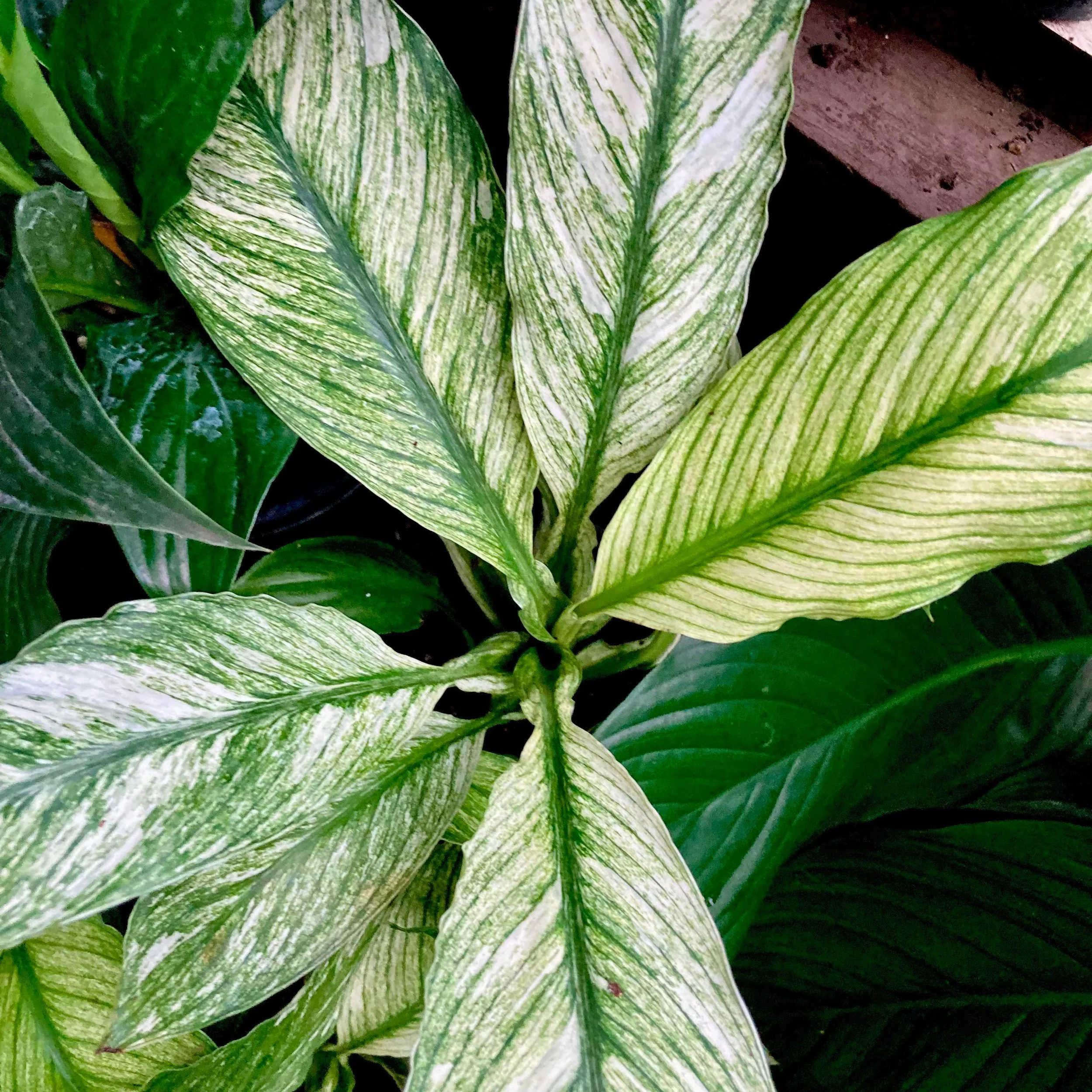
Spathiphyllum Sensation variegated
Spathiphyllums also don't like sitting in wet muddy yucky potting mix either. So make sure your soil is free draining.
Now the most annoying reason Spathiphyllums got a bad rap is the flowers turning green ... why they do that?
Well it is believed it's due to two major issues. From my research they are unsure which is main reason. I have started a few experiments at Trevallan.
Firstly Spathiphyllums prefer low light (remember understory plant) too much light makes the chemicals in the plants brain go all funny and it produces the green flower.
Secondly Spathiphyllums like certain nutrients. Green flowers can be caused by a chemical imbalance caused by under or over fertilisation. Too much or too little of what they are still unsure. When you do get green flowers why not try Bio Trace, a complete trace element liquid feed, to help the plant adjust and hopefully start producing white flowers again.
At the end of August I always give my Spathiphyllums a handful of granular sulphate of potash. I have found the use of potash at this time of year gives me great white flowers at Christmas.
I truly love this easy to care for plant

How do I care for my Indoor Plants
There is so much information available and a lot of it is conflicting ... so what’s the real answer.
I find the best way to treat my indoor plants is how I treat gardening in general ... simplicity is key.
I adore my plants but I’m a simple girl at heart.
Although we all love indoor plants immensely, how do we take care of them?
There is so much information available and a lot of it is conflicting ... so what’s the real answer.

I find the best way to treat my indoor plants is how I treat gardening in general ... simplicity is key.
I adore my plants, but I’m a simple girl at heart.
There is always going to be that indoor plant person that makes their own potting mixes and mixes their homemade fertilisers, has humidifiers and growing lamps… and then there is me!
Let’s look at how I treat my indoor plants as the starting point and then you can always work up to grow lamps!
My house is exceptionally dark, apart from one window area. I have learnt that the plant I want isn’t always going to be the plant that thrives.
I’d rather have a house full of thriving plants, instead of the newest release that’s barely surviving. Therefore, I’ve learnt that if I want a certain plant I need a twin. For example, I really love Calatheas, but my house is too dark for them to thrive, so I have two and swap them out fortnightly. This way, I get what I want inside and the plant continues to thrive.
My watering skills are haphazard and I know some plants that can handle this, so I tend to choose these plants over ones that I need to watch the watering. As my house is usually cool and dark, I find watering once a fortnight to once a month is enough for most plants -you just need to find your groove.
I have also learnt that Planters (cover pots) are the best thing for my indoor plants. Planters are pots without holes that literally cover the black plastic pot that your plant comes in. I place my plant inside these (I never usually pot into a planter, there is always an exception) I find planters enable me to swap plants around easily, protect my furniture, as I can give things a good drink without water going everywhere and I can also easily tip out water if the plant gets too much.

Occasionally, I may pot into a planter. If I do, I treat the planter and my potting method the same as I would a terrarium. I use a lot of Sphagnum moss and very little soil, and carefully select what kind of plant I will use.
I treat my plants to a spa day about once every two months. I take all my plants outside to a shady area, I give them some Organic Link slow release fertiliser, wash their foliage and give them a Liquid fertilise with Triple Boost and Neem oil. I usually leave them outside for the evening and bring them back in the next day. The fertiliser I use is same I use in my garden and all my other pots. Remember I keep things simple.
If a plant looks sick, it usually is. Imagine being cooped up inside all day. The best way to tackle a sick plant is to treat it as soon as possible - take it outside to a shady spot for a week or so. Give it a fertilise and a good drink and leave it be. I find most indoor plant deaths come from over love! Also weigh up how much you spent on it vs how much you will need to spend on it to bring it back to vigorous health. Sometimes it is worthwhile to accept a loss and get a new healthy plant, instead of spending months agonising over it.
If I find a plant is always suffering from insect attack inside, I know it’s not meant to be inside. Instead of constantly battling an insect problem, the plant gets treated with neem oil, trimmed and placed in a shady spot outside to live, where I know it’ll be happy.
What works for others may not work for me. This has been the hardest thing to learn. Just because someone is growing a particular plant well, does not mean I will be successful, therefore, I need to make my own rules in my own house.
The best thing I have learned is to not overthink it. Try a new plant, see if you like it, or more importantly, if it likes you. Move it around, buy a pot that suits that particular corner and more often than not, the plant will follow. Just remember to have fun.
Although I don’t always have all the answers, I am happy to help you on your indoor plant journey so pop down to Trevallan today.