Find Us:
77 Fernvale Rd
Brassall QLD 4305
(07) 3201 8630
Open:
Tue-Sun 9am - 4pm

Winter Vegetables
Autumn, Warm Days, cool nights. Perfect for vegetable planting.
Autumn. Warm Days, cool nights. Perfect for vegetable planting.
By now your vegetable patch has been freshly composted and manured. It’s just waiting for you to plant out. If you are having trouble with how to start off your vegetable patch, check out my Vegetable Patch Checklist
The basic cool season vegetables that I find grow well in most areas are – broccoli, beetroot (my favourite), cabbage, cauliflower, leek, onions, shallots, silverbeet, spinach, snow peas, strawberries (my other favourite), peas, kale and rhubarb.
If you don’t get a frost or you can cover your vegetables - beans, lettuce, capsicum and tomatoes can also be grown.
If you get really cold you can give brussels sprouts a go.
This is the basic vegetable range; there are so many different variations on these classic cooler weather vegetables.

In seedlings alone you can get about four different versions of broccoli.
If you start using old fashioned open pollinated seeds, the list can be endless.
If your vegetable patch consists of a variety of different sized pots don’t worry, there is a large range of dwarf vegetables available in seedlings and seeds.
Leek, lettuce, capsicums, shallots, silverbeet, spinach, snow peas, strawberries, peas and rhubarb all grow well in pots without needing dwarf varieties.
The secret to growing any vegetables in pots follows the same principles as growing in the ground.
Start with the best quality soil or potting mix, mulch with an organic material (I like organic sugar cane mulch that is free from weeds), fertilise with a complete organic slow release fertiliser and liquid fertilise fortnightly with a complete organic liquid fertiliser.
I like using the Plant of Health range of fertilisers – Organic Link and Triple Boost and Searles' range of garden soil for gardens and potting mix - Platinum Potting Mix for pots
I find the cooler months are the best time for growing herbs. Nearly all the herbs are available now. Herbs grow well in the garden or in pots and most herbs can be grouped together in pots to make mini herb gardens.
The best thing about growing cool season vegetables is that it’s usually too cold for the pests to be out and about. If you do get a few pests a pyrethrum based spray or one of the new organic sprays like eco oil or eco fend work well. Mildew and mould is a common problem during wet winters - copper spray (some are considered organic) can be the best solution.
I have heard that having pretend white butterflies in your vegetable patch not only looks pretty but helps deter moths. Jerry Coleby-Williams has also mentioned that Land Cress is a confirmed biocontrol. We stock Land cress in seeds and in plants.
Remember though the healthier the soil, the healthier the plants and the less likely you are to get problems. Now get outside and get dirty!

Coriander actually has a purpose!
WHAT? Coriander actually has a purpose?
Coriander actually has two purposes, making your tastebuds zing, I’m team coriander and attracting beneficial insects to our garden.
WHAT? Coriander actually has a purpose?

Coriander actually has two purposes, making your tastebuds zing, I’m team coriander and attracting beneficial insects to our garden.
Did you know that coriander flowers actually attract things like PARASITIC WASPS. Yes, you do want these wasps in your garden. They are stingless and so small that most of the time we don't even know they are there!
But they utilise caterpillars, beetles, flies, scale and other insects even aphids to house and feed their developing young.
So the bad bugs actually turn into a maternity ward for the good bugs. Which, in theory, decreases the bad bugs you have.
What else can coriander flowers do? Attract hover flies!
Adult Hover flies feed on the nectar as they pollinate flowers. The female lays her eggs near aphid colonies. When the eggs hatch the larvae begin feeding on the aphids. After spending several days eating aphids, the hover fly larvae attach themselves to a stem and build a cocoon. After ten or so days adult emerges and cycle begins again.
Coriander can also help protect potatoes, eggplant and capsicums from Colorado potato beetles.
Planting coriander around tomatoes can not only protect the tomatoes from pests but also improve their flavour.
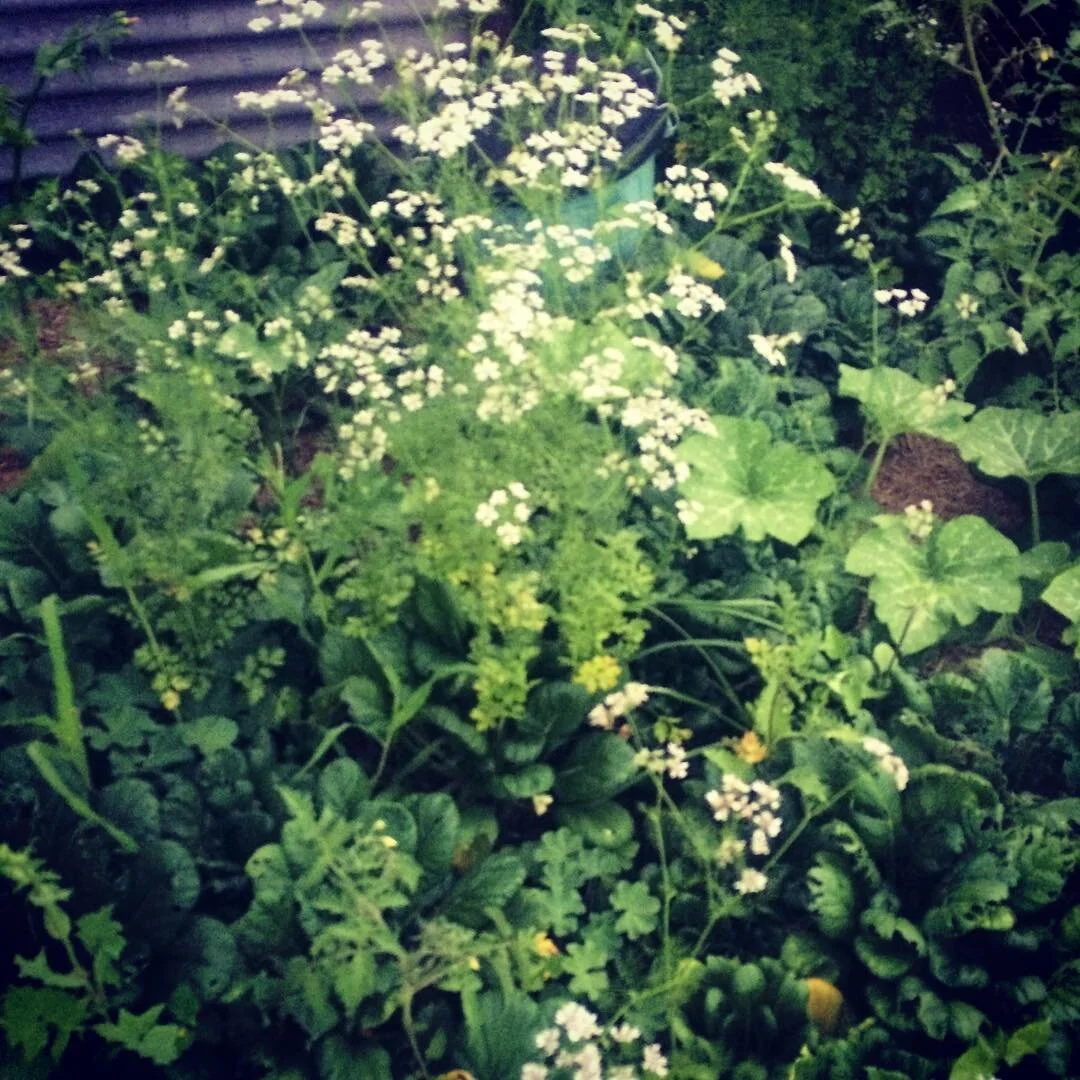
Just because you can’t eat it doesn’t mean it doesn’t have a huge impact in the garden. Start creating a mini eco system in your garden and discover the new beneficial insects!
But how do you successfully grow coriander?Plant your coriander in cooler months, plant a few plants. You can never have too much coriander !
Use as much coriander as you can in cooler months. It grows really well at this time. Now as the weather heats up all this plant wants to do is bolt and flower. Perfect. This is exactly what you want one plant to do straight away.
Let one plant flower and self seed everywhere. Don’t forget coriander flowers attract good bugs.
Water the area surrounding your self seeded coriander and wait for lots and lots of little baby coriander to appear. There should be lots. So use as needed. Let some grow up big and strong so you can repeat the process and use others while they are small and delicious.
With your other plants that you didn’t let go to flower. Keep trimming the flower stalk out for as long as you can (coriander starts to taste a little funny) at that point your baby coriander should have sprouted and you can let these ones go to seed.
Now coriander hate humidity. So don’t over water your coriander and if you plant your coriander in winter it should be well established by summer not to easily wilt with a little sun.
Most common cause of death is steaming to death. Meaning, we over water them and they boil to death in the ground.
I find coriander grows well in large terracotta pots too. The terracotta helps the soil breathe.
Just remember coriander is annual that just wants to flower and have lots of babies in summer. We can try and slow down nature but we can’t change what a plant intrinsically wants to do. We can try to tame Mother Nature but we will never have full control.
I hope this helps and we can have a long enjoyable coriander season with enough flowers to create a mini eco system.