Find Us:
77 Fernvale Rd
Brassall QLD 4305
(07) 3201 8630
Open:
Tue-Sun 9am - 4pm
Why Did We Start Oversimplifying Horticulture?
I recently read an article encouraging people to grow herbs and vegetables on an indoor windowsill and it frustrated me. The frustration had nothing to do with lettuce on a windowsill. It was simply another example of something I have been noticing for years.
Our desire to simplify horticulture to the point where we almost strip away the science, skill and professionalism that sit behind it.
The article wasn’t necessarily wrong.
Could you grow a small pot of parsley or chives on a bright windowsill?
Of course.
But should we really be promoting indoor windowsills as the answer to growing food?
Or should we be having a more honest conversation?
Most edible plants need far more light, airflow, space and seasonal cues than the average indoor environment can provide. Wouldn’t it be better to ask:
Do you have a sunny patio?
A courtyard?
A bright outdoor position?
Because that is where most people are far more likely to succeed, and that, for me, is the problem.
Somewhere along the way, we stopped educating people and started pandering to them, replacing nuanced horticultural advice with simple slogans that sound good but often fail to tell the whole story.
“Grow food indoors.”
“Just plant a native. You don’t need to water it.”
There is often a small grain of truth in these slogans, but they are so oversimplified that they stop being helpful. In fact, they can become damaging.
Horticulture is a science, a trade
Plants are living organisms responding to an incredible number of variables:
Light
Temperature
Soil structure
Soil biology
Water
Nutrition
Humidity
Seasonal changes
Microclimates
Two gardens in the same suburb can perform completely differently. A plant that thrives in one backyard may struggle next door. A herb grown in full sun can taste entirely different to the same herb grown in shade. A native plant from coastal Western Australia will have very different requirements from a rainforest species from South East Queensland.
Yet we continue to package gardening into neat little slogans because they are easy to communicate.
The problem is that nature doesn’t work in slogans.
And accessibility and oversimplification are not the same thing.
We don’t do this with other professions
We don’t tell people that electrical work is simply connecting a few wires together. We don’t tell people that building a house is simply stacking bricks. Yet horticulture is often portrayed as something anyone can master with a thirty-second video and an old container from the recycling bin.
As horticulturists, we spend years studying plant physiology, soils, pests, diseases, nutrition and environmental conditions because growing plants well is knowledge, not luck.
Why are we afraid to say that gardening costs money?
Horticulture also seems to be one of the few professions where we expect everything to be cheap. We don’t question paying a tradesperson for their expertise. We understand that quality ingredients make better food and that good tools make a job easier. Yet in horticulture, we’ve somehow created the expectation that a few dollars, an old container and a packet of old seed should produce the same results as years of experience, carefully developed potting mixes, quality fertilisers and generations of growing knowledge.
Then we wonder why people become disappointed when their results don’t match the promise.
Good plants, good soil, good nutrition and good advice all have value, and there is nothing wrong with saying so.
Growing food costs money. Growing plants costs money. Good potting mix costs money. Quality fertilisers cost money. Water costs money. Knowledge and years of experience are valuable.
Understanding this doesn’t make gardening exclusive. It makes it honest. There is absolutely nothing wrong with telling someone: “Yes, you can grow vegetables at home, and here are the tools and information that will help you do it successfully.” That’s education. That’s empowering. That’s setting people up to succeed.
The irony of oversimplification
The irony is that oversimplifying gardening often creates the very barriers we’re trying to remove. When people are told gardening is easy, and their plant fails, they often assume they are bad gardeners or have a black thumb. They think gardening is too difficult, or in the worst case, they blame the plant itself.
In reality, they were simply given incomplete information. Plants fail for many reasons, and understanding those reasons is where horticulture becomes both an art and a science. Good education gives people realistic expectations, the confidence to ask questions and the knowledge to try again.
Gardening should be accessible, but it should also be accurate
I want people living in apartments to grow herbs. I want children planting seeds. I want people who have never gardened before to discover the joy of watching something grow. But accessibility should never come at the expense of education. And it should never come at the expense of respecting horticulture as both a science and a profession. I believe people are hungry for more. They want to understand why their plants succeed and fail. They want to know how nature works. Our industry should be encouraging that curiosity, not reducing it to catchy one-liners.
Because horticulture isn’t simply putting a seed in a tin.
It’s science, an observation, an experience, a skill. It’s a TRADE!
And it’s time we started treating it that way again.
The Face of Horticulture
Explores the growing shift in horticultural retail toward self-service tools such as QR codes, quick videos and online advice, while highlighting the continued importance of qualified, personalised horticultural support.
Why Qualified Horticultural Advice Still Matters
I’ve noticed a growing trend in the retail side of horticulture.
More and more, personalised, qualified help is being replaced by QR codes, quick how-to videos, plant labels, and a fast Google search. Customers can learn a lot before they even walk through the door, and honestly, I love that those tools exist.
I use them too.
There is so much information available now, and that can be incredibly empowering. People can research plants, look up care tips, watch tutorials, compare varieties, and arrive at a much better idea of what they might like to grow.
But I never want anyone to feel like they can’t ask.
Because plants are not one-size-fits-all.
A 30-second video cannot see your aspect, your microclimate, your soil type, your drainage, your watering habits, or the fact that your neighbour’s garden gets two extra hours of sun and behaves completely differently. Even next door can be a completely different growing world.
This is something we see every day in store. Two people can buy the same plant, follow the same basic care instructions, and end up with very different results.
One garden might have heavy clay soil, while another might be sandy and free-draining. One courtyard might trap heat, while another gets reflected afternoon sun from a fence, wall, or concrete path. One person might water lightly every day, while another gives a deep soak once a week.
On paper, the plant is the same.
In real life, the growing conditions are not.
That is where qualified horticultural advice matters. It is not about making gardening more complicated. It is about helping people understand the conditions they actually have, rather than the ideal conditions printed on a label or shown in a quick video.
Somewhere along the way, we have also over-simplified the message.
Plants are often marketed as “easy”, “hardy”, “low maintenance”, or “almost impossible to kill”. And while I understand why those words are used, they can also set people up to feel like they have failed when something struggles.
But most of the time, it is not a “bad plant”.
It is a mismatch.
Wrong position. Wrong soil. Wrong timing. Wrong watering. Wrong expectation. Or simply the wrong care for your conditions.
A plant can be easy in the right place and difficult in the wrong one. Full sun in Ipswich is not the same as full sun in a cooler climate. A shade plant in a humid rainforest-style garden is not always going to behave the same way in dry shade under an eucalypt. A plant that thrives in the ground may sulk in a pot. A plant that loves free drainage may slowly decline in heavy soil.
This is why I never want Trevallan to become a self-service garden centre.
I love questions.
I love it when someone brings in photos of their garden, their soil, their struggling plant, or the empty space they are trying to fill. I love helping people work out what will actually suit their home, not just what looks good on a bench. And I also love it when someone stumps me, because then I get to research properly.
That is the joy and the responsibility of this side of our industry.
Most independent garden centres, especially here around Ipswich, have well-trained staff who live and breathe horticulture. We are not just scanning barcodes and pointing people towards a sign. We are listening, asking questions, drawing on experience, and trying to help customers succeed long-term.
And if we do not know the answer immediately, we go and find out.
That knowledge matters.
It matters because gardening confidence is not built by being told something is easy. It is built by understanding why something works, why something failed, and what to try next.
It makes me wonder why we are pushing the horticultural retail sector to move further towards self-service, rather than investing in inspired, trained horticulturists.
Why do so many campaigns push “easy plants” and QR code links, instead of promoting why it matters to ask qualified people?
Why aren’t we proudly elevating horticulture as a profession and backing the expertise that helps customers succeed long-term?
Technology has its place. Plant labels have their place. Videos, websites, and QR codes can all be useful tools. But they should support horticultural knowledge, not replace it.
Because the more we hand the baton entirely to the consumer, the more we risk losing something really valuable: the role and recognition of trained horticultural professionals. And with that, we risk losing the lived experience, practical knowledge, and confidence that comes from being guided by someone who understands both plants and people.
So if you are visiting an independent garden centre, bring your questions.
Bring photos of the space. Bring a picture of the plant that is struggling. Tell us whether the area gets morning sun, afternoon sun, filtered light, wind, heat, shade, wet feet, or neglect. Tell us what you have already tried. Tell us what you want the space to feel like.
That information matters.
A good garden centre does not just sell you a plant.
It helps you choose the right plant for the right place, and gives you the confidence to care for it properly once you get it home.
Importance of Horticultural Shows
Why entering plants in the Ipswich Show horticultural section matters. Trevallan explores the history, value of judging, grower feedback, prestige, community and why agricultural shows still help preserve horticultural skill.
For years, Trevallan Lifestyle Centre has proudly sponsored the horticultural section at the Ipswich Show and honestly, I think sometimes people forget just how important these sections really are.
The Ipswich Show Society actually began life as the Ipswich Agricultural and Horticultural Society back on 14 March 1866. Later becoming known as the Queensland Pastoral and Agricultural Society in 1872. The first show itself was held in Churchill along the Bremer River in 1873 before eventually moving to the Warwick Road grounds in 1877.
That means people in Ipswich have been competitively growing and displaying plants for over 150 years.
Years ago, agricultural and horticultural shows were not just sideshow alley and show bags! They were how knowledge travelled. Before gardening shows on television, before Facebook groups and before you could Google why your camellia looked terrible, growers learnt from each other at shows.
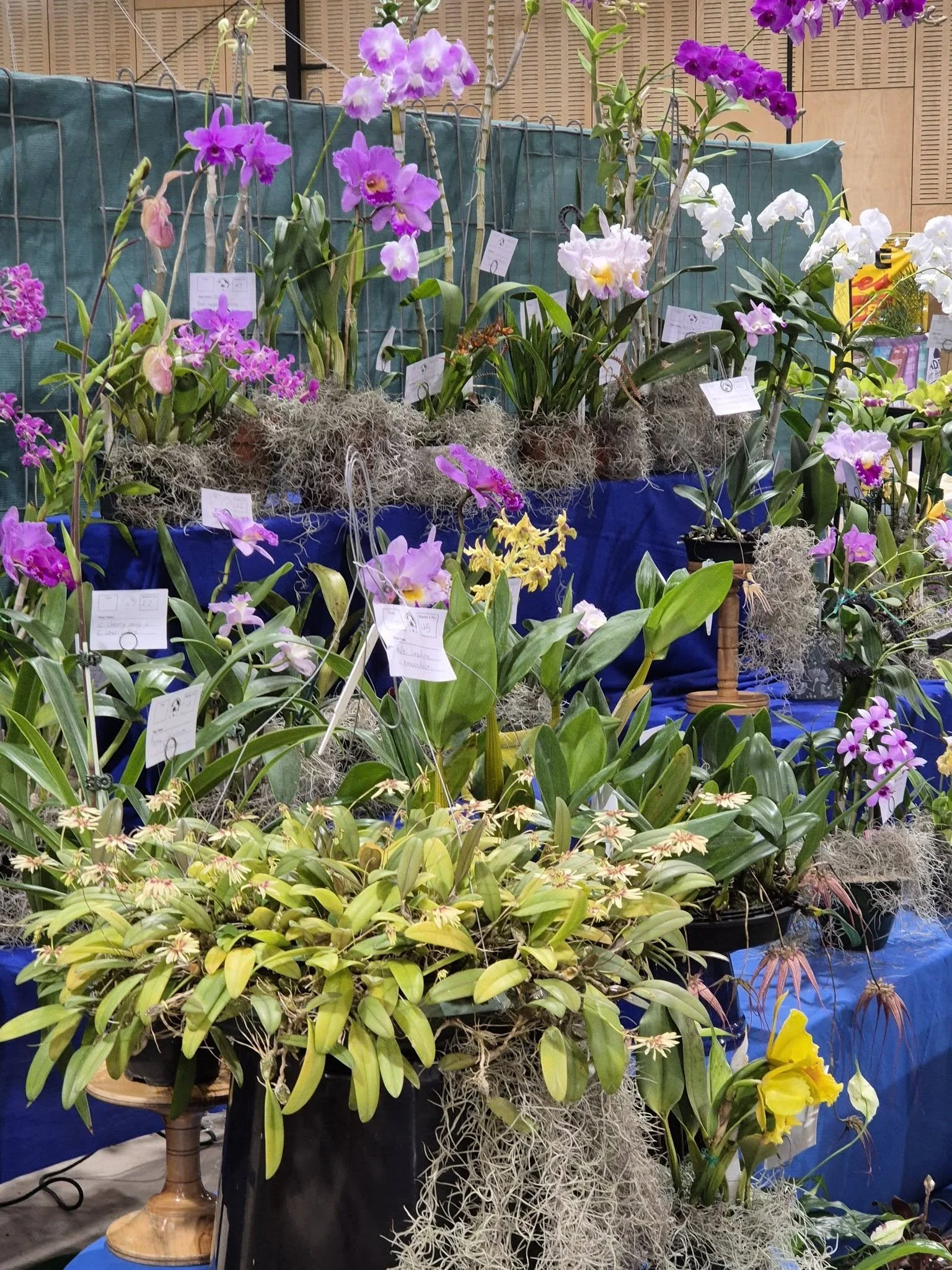
People brought along their best orchids, begonias, chrysanthemums, ferns, vegetables, fruit and flowers to show what could actually be grown in the local climate. You could see new varieties, better growing techniques, different pruning methods, unusual species and honestly probably stalk the person who always managed to grow the best dahlias in the district.
That side of shows still matters but I think many have forgotten why.
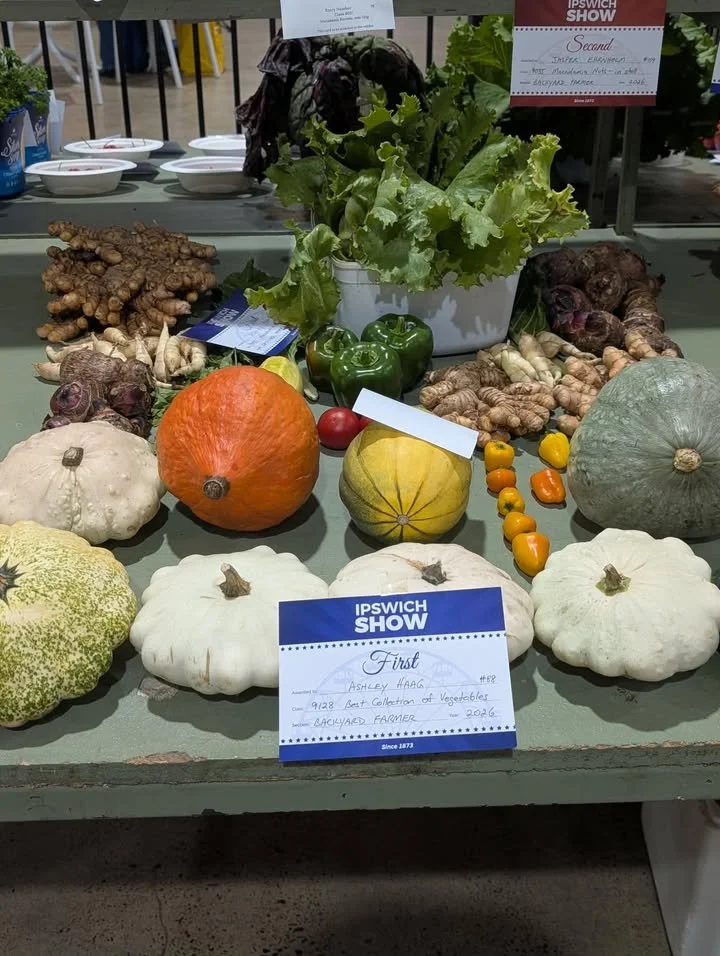
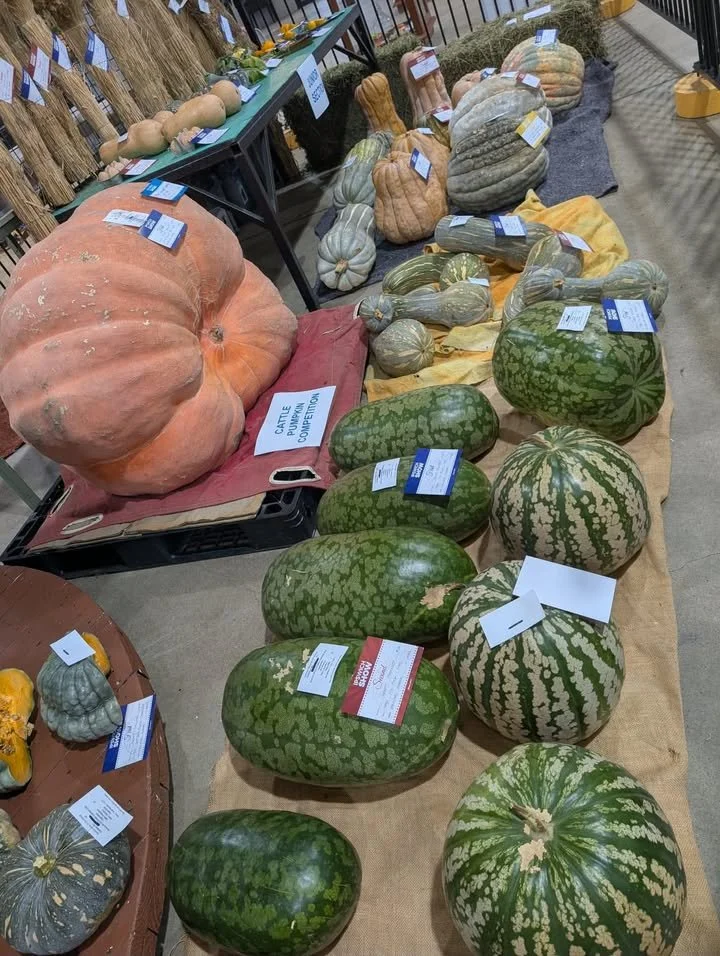
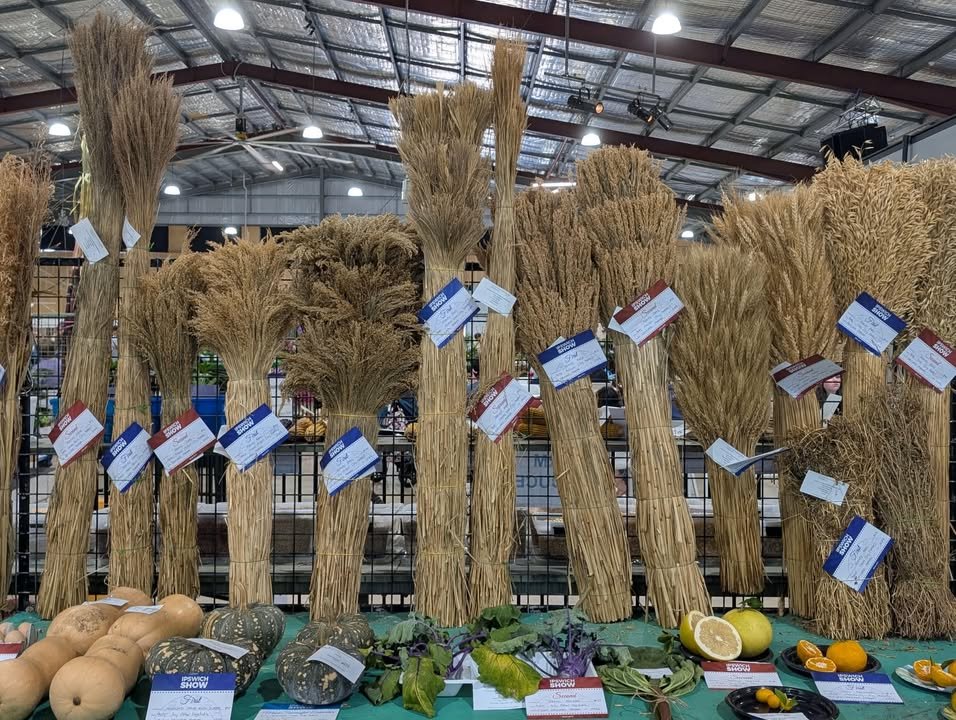
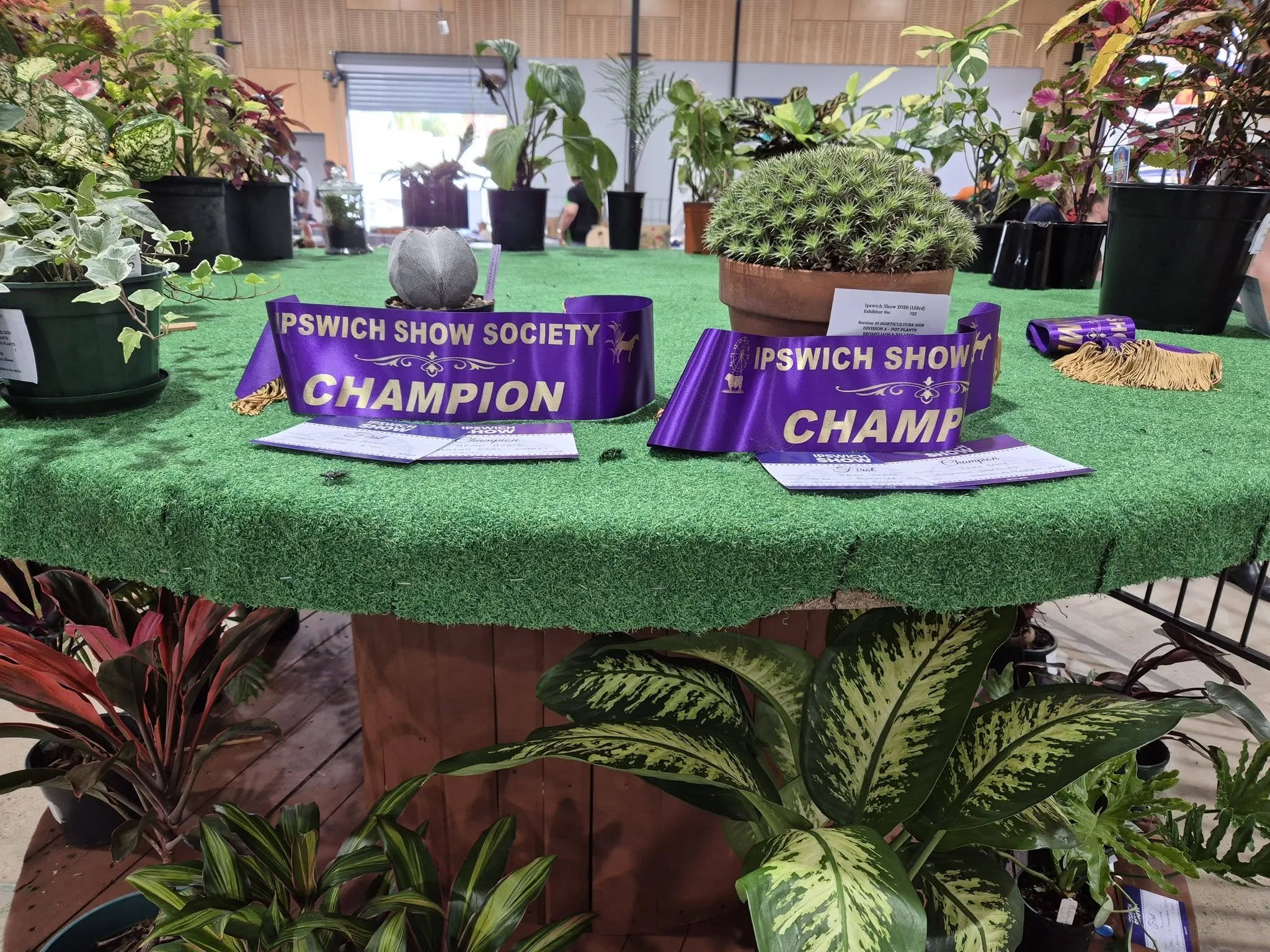
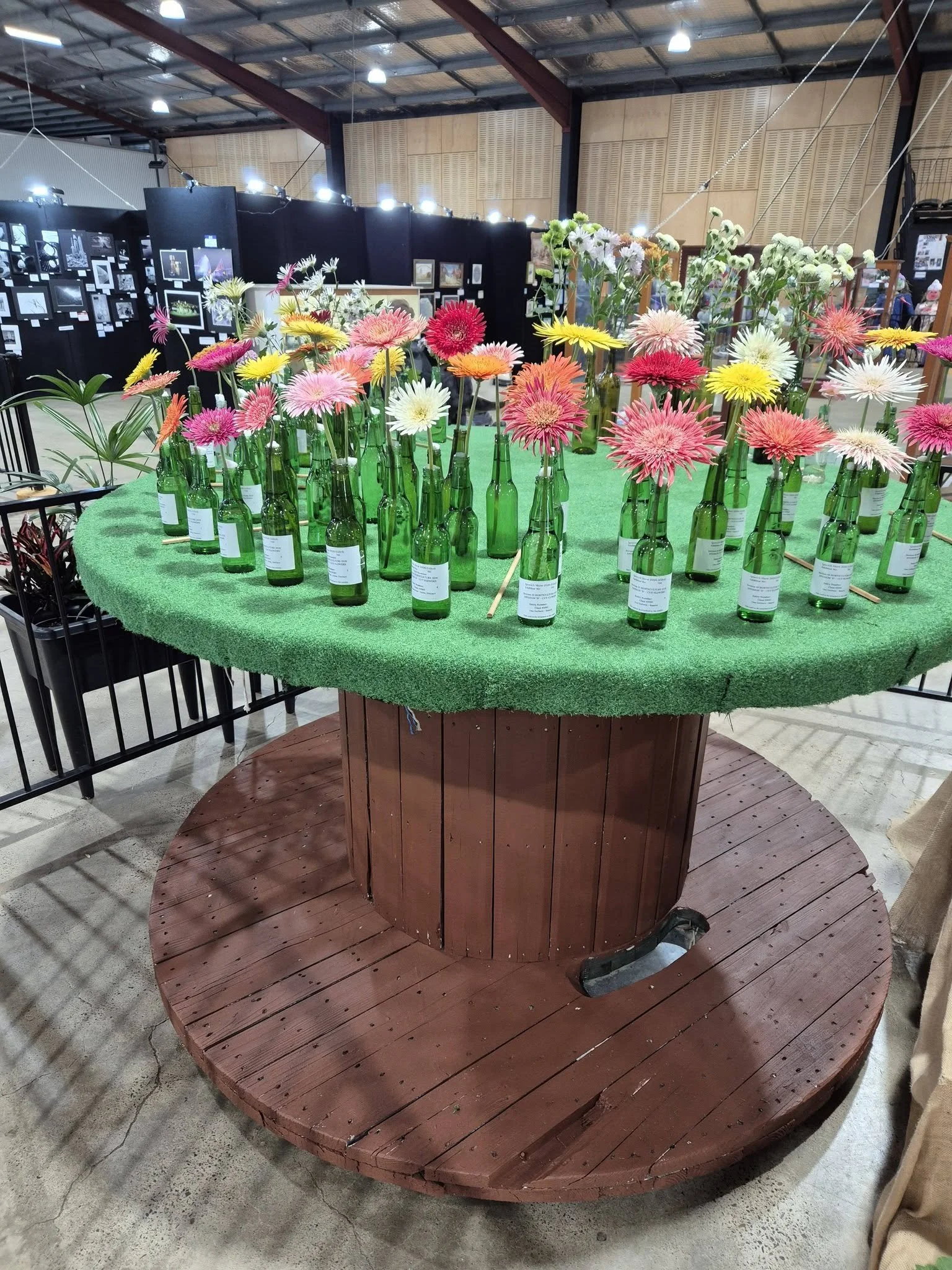
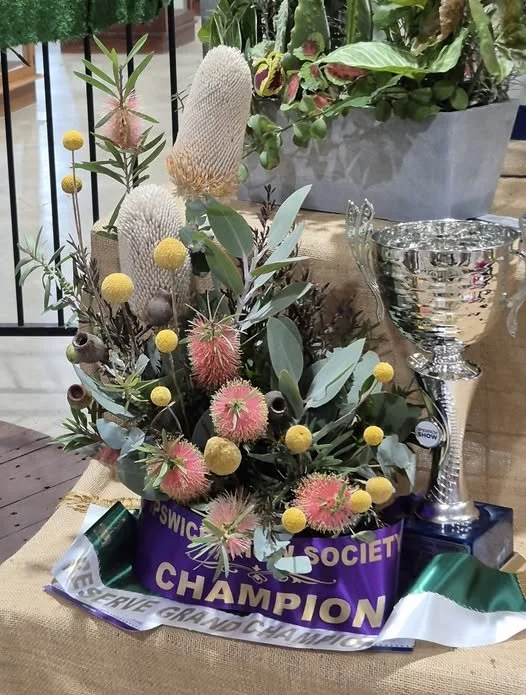
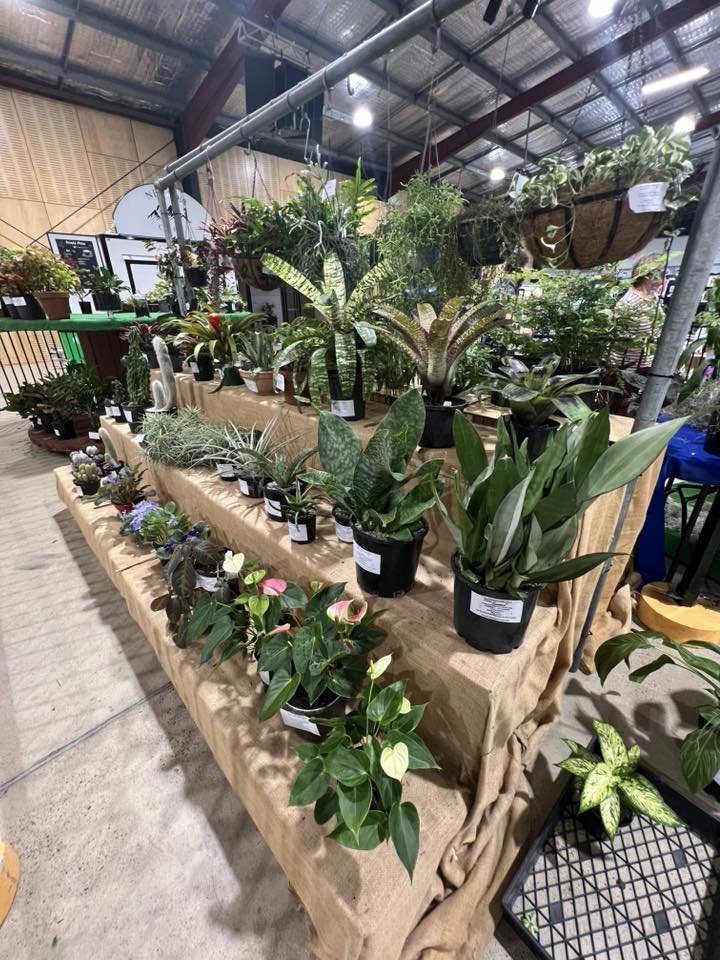
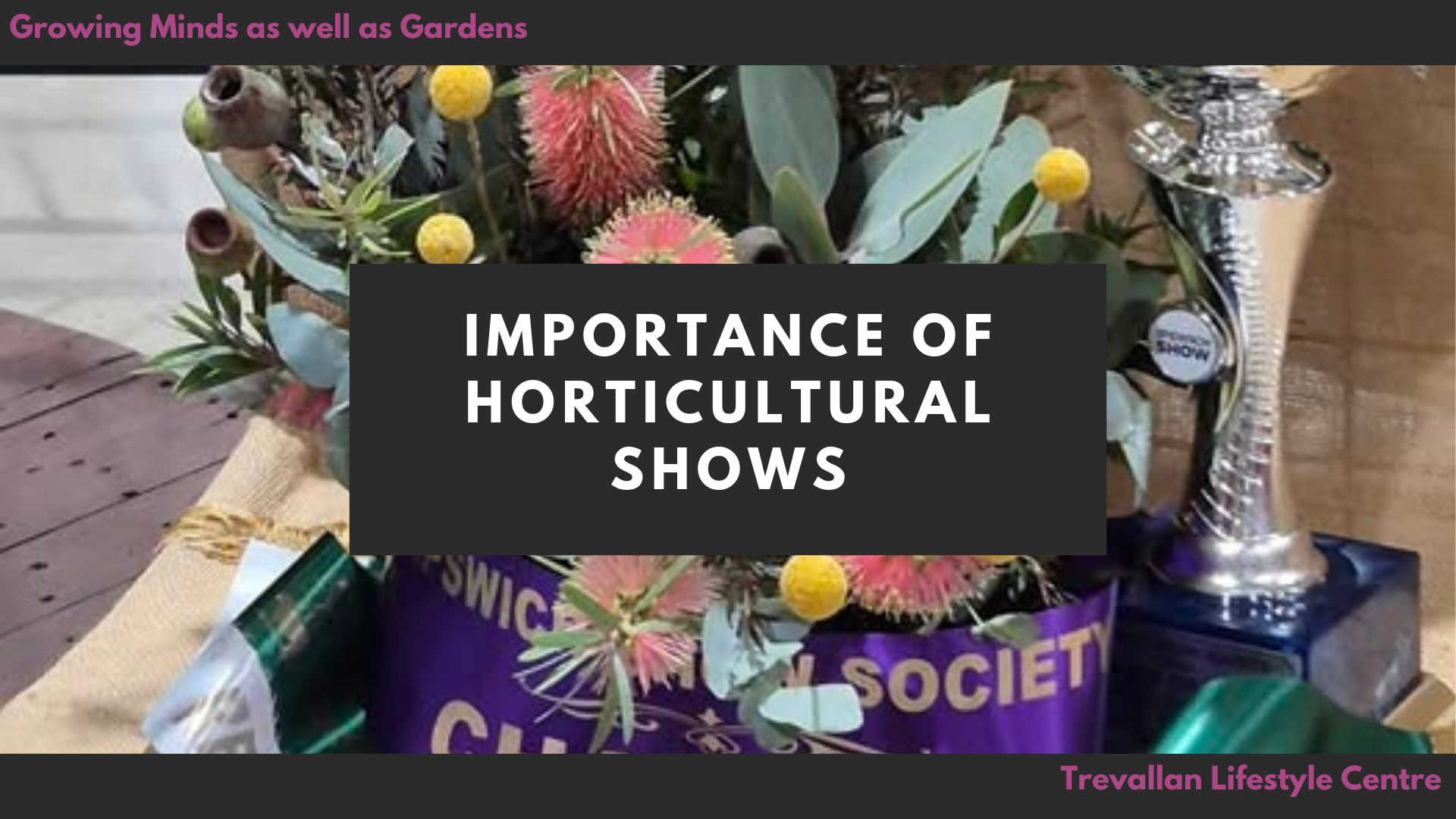
To me the horticultural section at the Ipswich Show remains one of the most eye-catching parts of the event. Competition classes include Potted Plants, Hanging Baskets, Cut Flowers, Floral Work and more, with everyone from individual backyard growers through to clubs and community groups contributing to the displays.
While ribbons and cash prizes are lovely (like really lovely), entering plants is actually about far more than trying to win a prize.
Preparing a plant for display teaches you things and also offers valuable feedback from judges about where you could be doing better.
Sometimes your plant wins. Sometimes you discover it was immature, poorly balanced, overfed, pest damaged or simply up against a grower who has been specialising in that particular group of plants for thirty years. That is not failure, that is horticultural education you won’t find in a classroom.
The fun part, there is absolutely a level of prestige attached to it too.
Being able to say you are a champion grower of begonias or orchids changes the way people view your plants and your knowledge. If someone says their pumpkin seeds came from an award-winning specimen, people immediately understand there is skill and quality behind it.
Historically, horticulture has always had that side to it. Long before social media, people built reputations through agricultural shows, plant societies and exhibitions. You became known because you consistently grew exceptional plants.
Honestly though, one of the loveliest parts about exhibiting is that it rarely stops with the plant entry itself.
You enter one plant and suddenly you are talking to the person benching beside you about fertiliser ratios or where they sourced a particular species twenty years ago. Someone tells you about a local garden club. Before long you realise there is an entire community of wonderfully plant-obsessed people quietly existing around you and somewhere along the way, it becomes less of a hobby and more of a lifestyle.
The ribbons are lovely, but it often the real reward is finding your people.
In a time where horticultural knowledge is slowly disappearing, independent growers are under pressure and everything seems to move faster each year, these show sections still matter enormously. They preserve skills, encourage excellence and they remind people that growing plants well is actually something worth valuing.