Find Us:
77 Fernvale Rd
Brassall QLD 4305
(07) 3201 8630
Open:
Tue-Sun 9am - 4pm

Stephanotis floribunda
Want a plant that is classy, lush green, tropical looking and has a heavenly scent. Stephanotis floribunda is the plant for you.
Want a plant that is classy, lush green, tropical looking and has a heavenly scent.
Stephanotis floribunda is the plant for you.
For what ever reason this beautiful climber isn’t widely grown anymore. This makes it even more special as not everyone has one.
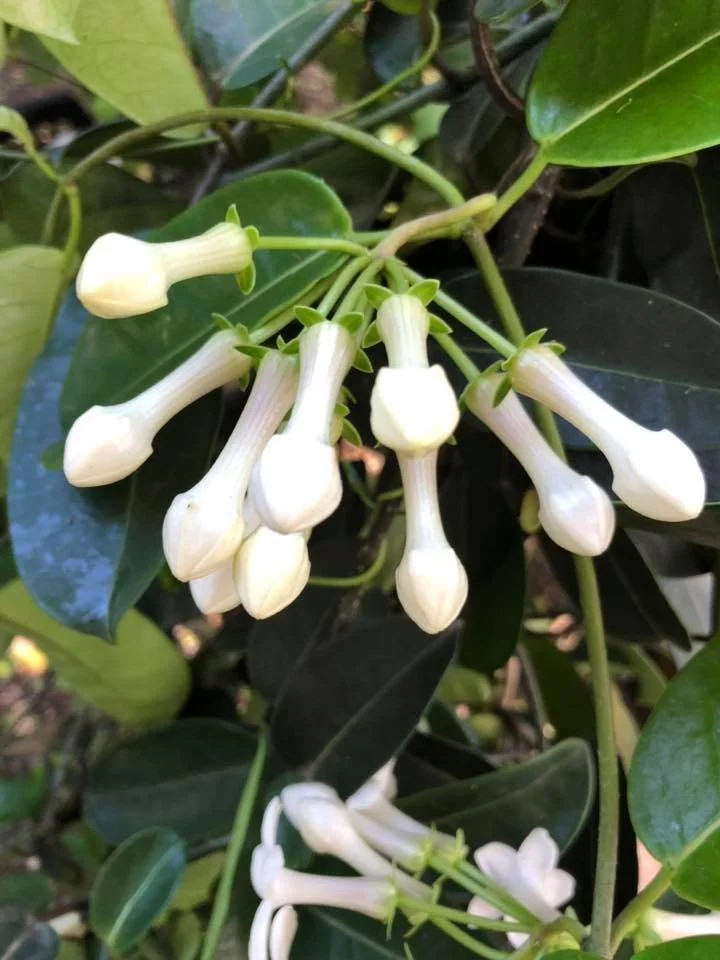
Stephanotis, or Madagascan jasmine has the most wonderful bunches of large starry white blooms and an absolutely delicious perfume. Mine just has one bunch of flowers open and I can catch that whiff of something special as I walk past. I can’t wait till all the bunches are open.
For years I’ve seen it used in floral bouquets especially for wedding parties, years ago it used to be called the Wedding Flower!
This luscious plant is a vigorous climber that's native to parts of Africa, Madagascar and Asia.
Stephanotis can be grown throughout most of Queensland, although the plant doesn't thrive in the cold and is frost tender. I have seen very old large ones in colder climates. I think they must of been protected while they were young.
It likes a warm, sunny position and can be grown either in pots or against a warm wall, which will retain the heat. It likes a rich, well drained soil and can grow up to 5 metres high, so it needs support with a trellis. But remember full sun can sometimes burn the flowers, so try giving it a little shade.
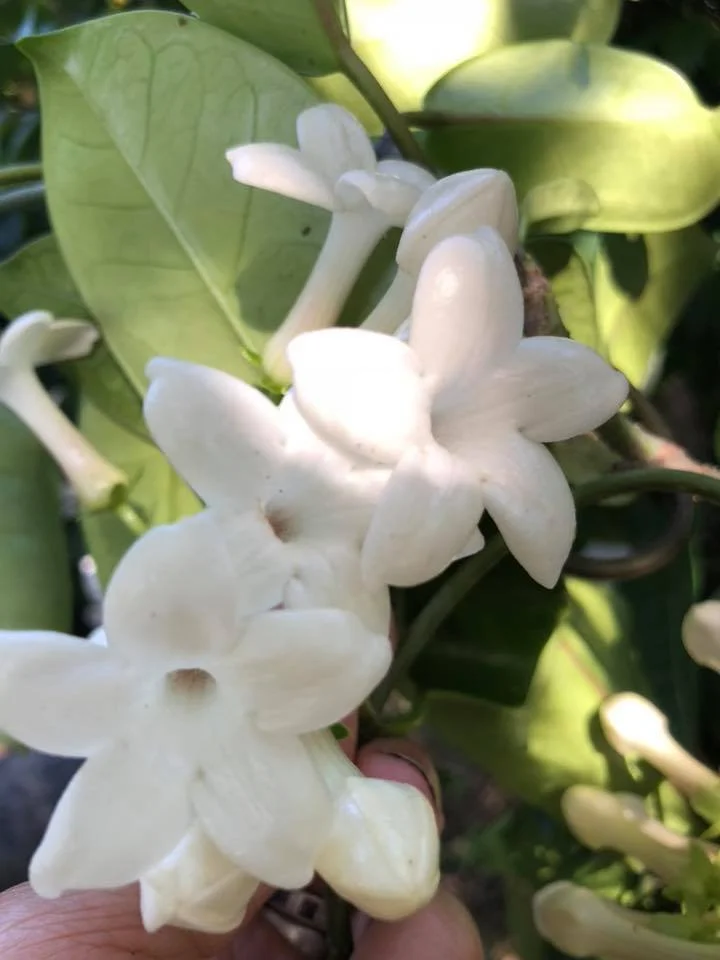
Stephanotis, when fully grown, is a great plant for covering large spaces, and is also useful for screening unsightly areas. Think of a star jasmine but with bigger leaves in its growth.
The dark green leathery leaves are very handsome even when they don't have any flowers. Stephanotis is great for adding a sense of presence and scent to the garden.
If you need to have a climber try Stephanotis and be that little bit different. Not everyone has one and I think you’ll enjoy the scent even more knowing you have an uncommon classy plant.
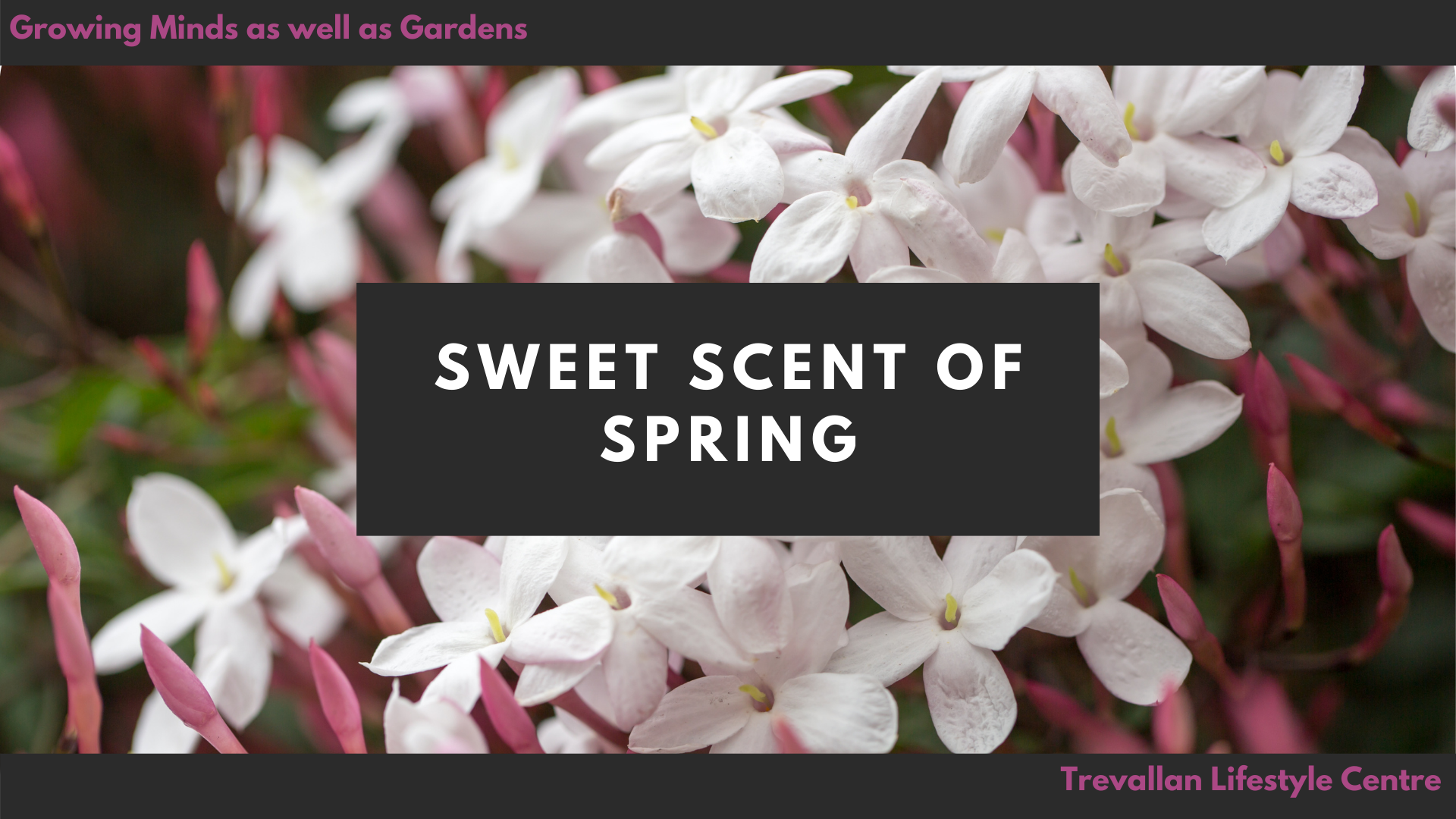
My Dirty Little Secret
I love the scent wafting in the air, just a hint of spring. I love getting up close and breathing deeply letting the fragrance fill me. I love how it captures me and makes me want more. Oh how glorious it would be to be surrounded by Jasmine polyanthums.
Every year around this time my secret love affair starts.
It starts off slow with only a hint of the love and pure joy that will come as the days turn into weeks and finally months.
Then it’s gone. All the happiness and pleasure gone and I come crashing back down to earth.
Jasmine Polyanthum in full bloom. I love this scent.
I have to keep my love a secret as so many people disagree with me plus this love is just so, so, so common!
But I’ll let you in on my dirty little secret…. I love Jasmine polyanthum. They give my end of winter start of the westerly winds blues the TLC I need to continue. I know spring will be here soon.
I love nearly everything about this plant.
I love the soft feather like foliage, the deep green lushness of its leaves.
I love the way it soft stems intertwine themselves and fall gracefully down.
I love how the pink buds form at the end of winter, letting me know the end of this cold is close.
I love watching the deep pink buds open to the purest white flower.
But most of all I love the scent.
I love the scent wafting in the air, just a hint of spring. I love getting up close and breathing deeply letting the fragrance fill me. I love how it captures me and makes me want more. Oh how glorious it would be to be surrounded by Jasmine polyanthums.

Every year I forget what their scent does to me. Then I start to notice them everywhere. This beautiful dense climber with pink buds and then they buds open and I’m in love all over again.
While Jasmine polyanthums are beautiful at this time of year reality hits around autumn and winter when they have a tendency to look a little shabby. I have found that a good fertilise with Organic Link Fertiliser and trim after flowering (November) and just before flowering (June) helps keep them looking neat and beautiful.
Jasmine polyanthums love the full sun but can grow in some shade. They are a very vigorous climber and can cover an area quite quickly.
If you don’t have anywhere for them to climb don’t worry they look glorious in hanging baskets or trailing over the edges of retaining walls.
I have even seen some Jasmine polyanthums climbing on chain link fence and they were so highly trimmed it looked like a box hedge.
These plants are hardy – they don’t mind a little bit of dry weather or a little bit of wet weather. They seem to handle the cold and the heat and once established can handle most soil types.
Jasmine flowers are also commonly used as aphrodisiacs so make sure you like your neighbours before you use it on your fencing!
Also for many people the scent can be very overpowering and even a bit sickly so do be mindful of where you plant it.
This weekend give your love life some TLC and bring a Jasmine polyanthum home, it can even stay inside for a few days too, so you can enjoy the scent 24/7.
The Perfect Plant
The perfect plant is called Pieris Japonica 'Temple Bells'. This beautiful plant can be used as a feature plant in a pot or as a low hedge in a garden. It is versatile, easy to maintain and looks good all year whether it’s hot or frosty cold.
I can find the beauty in most plants but like everyone else I am always on the hunt for the perfect plant.
You know the one – grows in full sun or part shade, does not require me to fight with my twisted and kinked hose every day to water it, looks good even when I forget to fertilise, flowers most of the year, doesn’t have a scent so I can’t drive the neighbours batty and doesn’t require me to trim it to make it look good! Oh, and I forgot to mention only grows about a metre so it looks good in a garden or in a pot and it doesn’t mind the cold or the heat!
You are all laughing now because you think the perfect plant doesn’t exist. Well I think it does.
Are you ready for it?
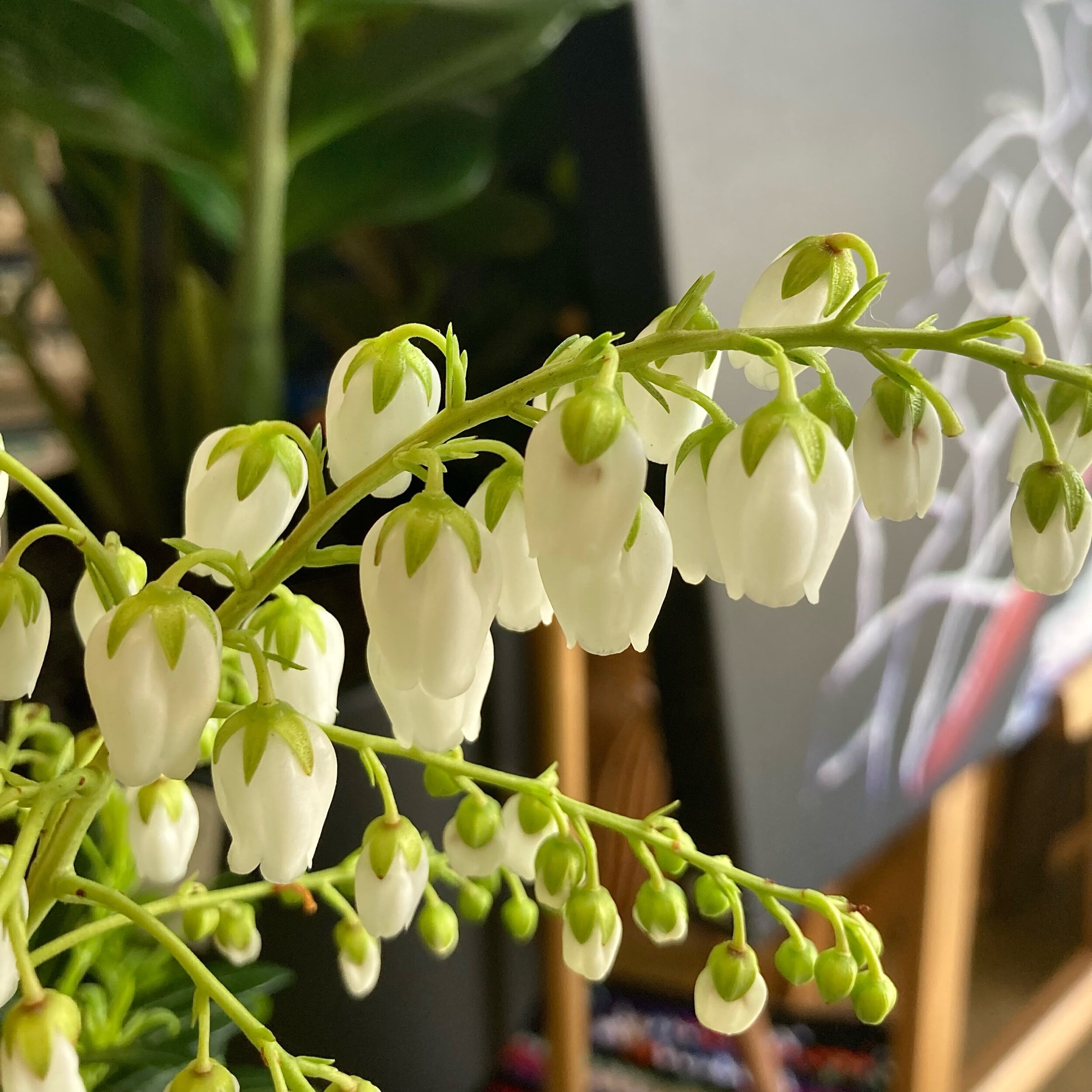
The perfect plant is called Pieris Japonica 'Temple Bells'.
Now when you all go rushing out to your local nursery to get the perfect plant, you must make sure you ask for Pieris japonica 'Temple Bells' as I don’t know any other Pieris that grows as well in Ipswich.
This highly ornamental plant has extremely dark green lush foliage that forms a dense mound. In the warmer months its new growth is a brilliant red that fades to copper then green. Though it is slow growing it still forms a nice shrub in a year or two.
It’s the almost continuous flowering that makes this plant perfect. The flowers can start their show as early as March. The plant becomes covered with small lime green bell shaped buds that as the weather cools grow and open to form pure white bells that appear to be dripping off the plant. The flowers remind me of the lily of the valley flower. By the time the warmer weather kicks in, the white bells have dropped leaving the greenish ‘bell holders’ still on the bush for another month or so. It almost seems that the plant is in flower for more than half a year due to its three phase flowering process.
I have grown this plant in a pot in full sun for years now and it has always looked fabulous. It can thrive in some shade too. As Pieris Japonica 'Temple Bells' won’t win any medals for fastest growing plant but not the slowest growing plant either - you can expect it to reach around a metre in height.
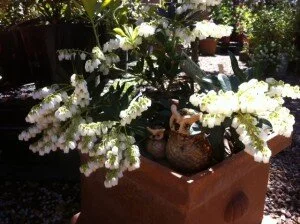
Pieris 'Temple Bells' in Bloom
This beautiful plant can be used as a feature plant in a pot or as a low hedge in a garden. It is versatile, easy to maintain and looks good all year whether it’s hot or frosty cold.
Always use excellent quality potting mix (I use Searles' Platinum Potting Mix) or garden soil (I use Searles' Garden Soil) and try to fertilise every season with a complete organic slow release fertiliser like Plant of Health's Organic Link.
Pieris japonica 'Temple Bells' really is the perfect plant. Give your garden some TLC this weekend and get a Pieris. It will reward you all year.

Vintage Garden Plants - Hydrangeas
Hydrangeas are a beautiful old fashioned plant. These wonderful, hardy shrubs would certainly have to be included on the list of the best flowering plants in the world.

I like plants. You’ve probably already guessed that but what I mean is I love the diversity plants offer us in our lives. I love how the same plant can be used in a formal garden or a cottage garden and still look fantastic. I love how the popularity of certain plants is cyclic just like our fashion industry.
I adore old fashion plants or vintage styled plants (vintage makes me sound more fashionable!). I think there was a reason our grandmother’s gardens were full of certain plants. It was because they didn’t require much TLC to look fantastic all year.
Hydrangeas are one such plant. These wonderful, hardy shrubs would certainly have to be included on the list of the best flowering plants in the world.
Hydrangea flowers are absolutely stunning and with over 500 different cultivars there is sure to be one to suit everyone.
There are two main groups of flowers these cultivars are split between – Mopheads and Lacecaps.
Mophead flowers are large round flower heads resembling as the name implies the head of a mop. In contrast, lacecap flowers bear round flat flower heads with a centre of subdued, fertile flowers surrounded by outer rings of showy, sterile flowers.
Hydrangea flowers usually appear from early spring through to late summer.
It is the colours of the hydrangea flower that I find most amazing. The colours range from white through to red, pink, purple, and blue but the amazing part is I can change the colour of my flower!
The acidity of your soil determines the colour of the flowers. If the soil is acidic the flowers will be blue, electric blue or even peacock blue but if the soil is more Alkaline the flowers will be pink through to red, neutral is purple of course.
The white cultivars remain white regardless of the soil pH. To make sure you get the colour you want you must change the soil pH before flower buds form. I would always check your soil's pH before starting any treatments.
Even though the hydrangea flower is impressive, the foliage too can be quite remarkable. Most hydrangeas have large lush dark green oval leaves, often with serrated edges but some have variegated green and white leaves.
I find hydrangeas to be very hardy ONCE established. The trick is to preserve to get them established. They are best grown in part shade but I have seen some beautiful plants grown in full sun. I find the flowers on these full sun bushes tend to burn off too quickly though in our hot summer sun.
Many of the cultivars available today are compact growing. I find many people believe they aren't good hydrangea growers as their plants are always so small! So make sure you check how big your actual hydrangea grows before you start to feel bad. Due to the compactness I find they do well in both pots and gardens.
I tend to fertilise with a carbon based organic fertiliser, Organic Link, every three months. I also like to liquid fertilise once a fortnight. I alternate fortnights between Triple Boost and Silica and Potash. I find a small prune in late Autumn will help promote next seasons growth and flowers.
If you have struggled with hydrangeas in the past, try growing them again but stick with them. I find pots work well for people who don't have great soil.
About 18months ago I put some hydrangeas into my garden. It was a warm shade spot that received warmth but no sun in winter and morning sun in summer. The soil was loose and well composted (pretty perfect, even if I do say so myself!). They were well watered but not over watered (they may have dried out a few times ... oops). There was many occasions I almost gave up on them. This spring though they have finally gotten their roots in and are taking off. I feel proud to say I am a Hydrangea mumma!
If you feel Hydrangeas and you aren't meant to be, that's ok. Think of them as a really long lasting bunch of cut flowers. Enjoy them all spring and summer in a pot and when it looks sick it's time to part ways. Plants are meant to be enjoyed not stressed over!
Hydrangeas are one of my vintage must haves for your garden as they require not much TLC once established. Plus the anticipation of wondering what colour will it flower this year is a cheap but wonderful thrill all gardeners experience.