Find Us:
77 Fernvale Rd
Brassall QLD 4305
(07) 3201 8630
Open:
Tue-Sun 9am - 4pm

Fennel
Fennel (Foeniculum vulgare) is actually part of the carrot family. It has yellow flowers and light green feathery foliage (just like a carrot). The whole plant can be eaten. It is native to The Mediterranean but it grows easily all over the world.
You know what I love roasted?
Fennel bulbs... oh my goodness yum.
So I thought today since I'm feeling a bit peckish, I'd talk about this Amazing Herb. After a bit of research I found out it has a varied history before it got to my roasting pan.

Positive Vibes Essential Oil Blend contains Fennel essential Oil
Did you know the medicinal properties of this herb were well used as far back as the ancient Greeks. They used to chew the seed to help them control their weight during training for the Olympics. It was also believed that it conveyed longevity and gave a person strength and courage.
Romans ate the seeds on long marches when they did not have time to stop and cook and devout Christian's would chew the seeds to satisfy hunger cravings during fast.
Then in the Middle Ages fennel was associated with witchcraft. It was hung inside houses and churches to protect people from evil!
Fennel seems to be used for a lot in traditional medicine from coughs to constipation to kidney stones.
Fennel essential oil is wonderful when you feel attacked or uncertain. It helps you stand your ground and speak your truth with calm assurance. It encourages honest communication and brings lightness to situations that feel heavy. Beyond this, fennel’s sweetness reminds us to finish what we’ve started and to release anything that keeps us from moving forward. It’s an oil of completion and quiet focus, helping us stay dedicated to our goals and approach them with clarity and confidence. When you wear fennel oil, it supports your inner strength and allows you to move through endings and new beginnings with grace.

Fennel Flower
Plus fennel is an amazing Beneficial insect attractor. Jerry Coleby-Williams writes that fennel flowers "acting as nurseries for aphid-eating hoverfly and ladybird larvae. That's handy since aphids also find them attractive."
Seems like such an amazing herb so let's find out how we can all grow it!
Fennel (Foeniculum vulgare) is actually part of the carrot family. It has yellow flowers and light green feathery foliage (just like a carrot). The whole plant can be eaten.
It is native to The Mediterranean but it grows easily all over the world.
Fennel loves the full sun and doesn't require much water once established. The original fennel can grow quite tall so it's best as mid bedding in your garden. I love letting my fennel go to seed and collecting some seeds but letting the rest self seed through out the garden. I love seeing the feathery leaves blowing in the breeze.
For something really classy there is the bronze fennel which grows to only about 40cm and has an amazing shimmery bronze foliage. Now this plant should be used in more ornamental gardens as a feature plant. Bronze foliage isn't common and looks stunning against a green backdrop.
Florence fennel, the one with the bulb that I love roasted, is named Foeniculum vulgare Azoricum Group. It is a cultivar group (fancy horticultural term that helps distinguish a group of plants with similar characteristics) with an inflated leaf base which form my yummy bulbs.
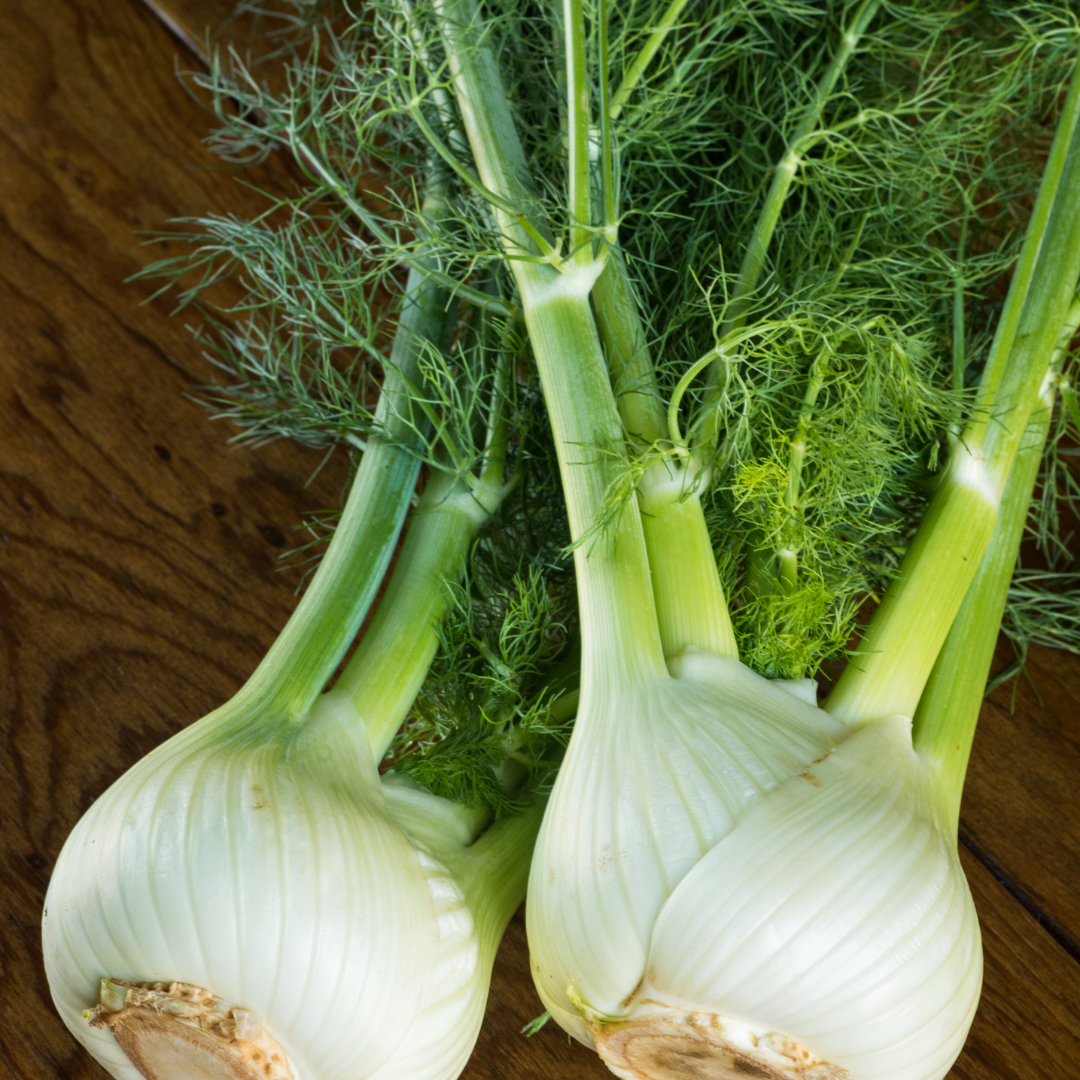
Foeniculum vulgare Azoricum Group
While I do fertilise mine with Organic link when I plant them I find they are extremely hardy and because I let mine self seed through the garden they come up of their own accord when they are ready and this makes them strong and healthy. After reading Jerry's post I believe you can keep cutting and letting the fennel Florence grow.
I love how this whole plant has a scent from the seeds to the leaves and the bulb. I think the best description is a light aniseed scent. When we have it at Trevallan I just love running my fingers through the foliage and the scent is released into the air and my hands come back smelling like lollies.
Can you imagine this plant near a window and on a hot windy day, the scent of aniseed would be just permeating through the house .... ohhhh yummy!
I love how scented plants have so many uses.
Get some fennel today, you will thank me!

The Autumn Vegetable Patch
Some us can get gardening bored by beginning of March. We want to play but know it's to early. There are a number of things you can be doing to get your vegetable patch up to scratch so when the ‘autumn' weather starts you’ll be ready.
The beginning of March is traditionally the time to plant our winter crops.
Sometimes this is not the case in SE QLD, Ipswich in particular! Every year is different but most years we can get March day time temperatures exceeding 35 degrees. In weather like this I wonder how anyone could seriously be thinking about planting cabbages!
We do get vegetable garden bored. We want to play yet we know it's to early.
There are a number of things you can be doing to get your vegetable patch up to scratch so when the ‘autumn' (cooler) weather starts you’ll be ready.
Most winter vegetables will grow better if the soil’s pH reading is quite high around 6.5. Your soil’s pH is a measure of its alkalinity or acidity and different plants thrive at different pH levels.
Before you add anything though, you should always measure your soil’s pH with a testing kit. Adding lime will increase your pH reading - making your soil more alkaline. Attempting to make your soil more acidic - a lower pH reading - is a lot more difficult.

Eden Seeds
If you need to add lime to your soil it might be too late for granulated lime to work. It can take months to break down. Eco-flo lime is a liquid concentrated form of lime and is very effective. Enriched with seaweed eco-flo lime is perfect for rapidly correcting acidic soils and boosting calcium levels in your soil. It is also registered organic.
Another thing to note is if your soil’s pH is great you may still want to add some Dolomite. Dolomite helps add calcium and magnesium back into your soil. These two trace elements are water soluble so are easily leeched out of your soil. Especailly after a lot of rain. Lack of calcium is the number one cause of blossom end rot, so even if your garden’s pH is around 6.5 I would still add some Dolomite.
Next make sure your vegetable garden is free of weeds and if you need to add more compost (we use Searles organic compost) or manure now is time to do it.
While it may be too hot or wet to be planting seedlings into the ground, it's a great time to be raising seeds. Seeds are a great way to try different vegetables. The seed range is so extensive at Trevallan we have a “seed wall”. An added bonus of using seeds is you can stagger your crops so everything doesn't ripen at once.
Trevallan stocks Eden Seeds. Eden Seeds distributes old traditional open pollinated varieties of seeds, preferably old Australian varieties and organically or bio-dynamically grown where possible.
It is believed that these types of seeds grow plants that are more nutritious and better tasting, hardier and easier to grow for the home gardener. These older varieties also produce over an extended period of time.
When growing seeds it is best to use a seed raising mix. Some seeds require pre planting preparation, beetroot supposedly germinates quicker if soaked overnight. Some people also do the first water with a weak solution of liquid fertilizer.
As for what to plant your seeds into, there are a myriad of choices - plastic pots, folded up toilet rolls, egg cartons, old seedling trays.

Home Grown Eggplants and Capsicum
I find the trick to seeds is keeping them in part shade and a really LIGHT watering every day to every second day in hot weather. You want to keep them moist but not wet. Once the plant starts to grow I add a little Triple Boost Liquid fertiliser to my watering.
Once the weather cools down continuously it will be time to plant out all those seeds into your garden beds.
If you don't get the chance to raise your own seeds Trevallan stocks a great range of vegetables in seedlings. These seedlings won’t start arriving until about April as it’s still just too hot to plant. Some of your choices could be beetroot, broccoli, snow peas, strawberries, Asian greens, onions, leeks, cauliflower, spinach, rocket, coriander, kale and cabbage. Some people may also like to plant out peas, though I don’t know why… Yuk!
Don't forget we are now proud stockist's of VEGEPOD. Vegepods are an easy to manage contained raised gardening bed that has self-watering technology by using a wicking system. Plants can last weeks without watering in our Vegepods. They also have a Protective Cover that protects crops from UV and pests. We have two set up in the garden centre and for the first time in years we had a tomato crop in summer without fruit fly stings!
Once everything is planted out in your garden don't forget to give it some Organic Link and fortnightly applications of Triple Boost and Neem.
Happy gardening.

Vegetable Garden Checklist
Quick guide to creating your own vegetable garden and growing your own food
✔ Choose a position that receives 5-6 hours sun per day.
✔ Remove the existing grass, plants, rubble.
✔ Add Organic Matter, water in well.
Organic Matter is compost, soil activator, animal manure, fertiliser manure pellets, blood and bone. If you have very clay soil add some liquid gypsum
✔Make sure ground is well tilled to at least 30cm, preferably 60cm.
✔ Choose vegetable seedlings that are appropriate for the season and Plant (roots side down 😉)!
Plant a diversity of flowers, herbs and vegetables so your garden attracts beneficial insects. Here is a great list of Cool Season Vegetables
✔After planting Water all in well with Triple Boost as this helps reduce transplant shock.
✔ Mulch with an organic mulch like sugarcane or lucerne. Water again.
Mulch helps to conserve soil moisture, suppress weeds, keep the soil an even temperature and stop erosion. If directly sowing seeds only use a very fine layer of mulch so as to not impede seed germination.
✔ Water regularly
✔ Fertilise with a combination of Triple Boost Fruit and Vegetable and Neem Liquid Fertiliser fortnightly .... Enjoy!