Find Us:
77 Fernvale Rd
Brassall QLD 4305
(07) 3201 8630
Open:
Tue-Sun 9am - 4pm
My Dirty Little Secret
I love the scent wafting in the air, just a hint of spring. I love getting up close and breathing deeply letting the fragrance fill me. I love how it captures me and makes me want more. Oh how glorious it would be to be surrounded by Jasmine polyanthums.
Every year around this time my secret love affair starts.
It starts off slow with only a hint of the love and pure joy that will come as the days turn into weeks and finally months.
Then it’s gone. All the happiness and pleasure gone and I come crashing back down to earth.
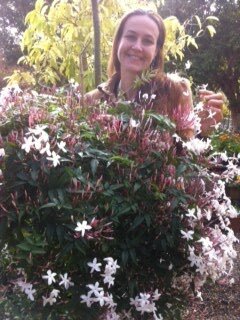
Jasmine Polyanthum in full bloom. I love this scent.
I have to keep my love a secret as so many people disagree with me plus this love is just so, so, so common!
But I’ll let you in on my dirty little secret…. I love Jasmine polyanthum. They give my end of winter start of the westerly winds blues the TLC I need to continue. I know spring will be here soon.
I love nearly everything about this plant.
I love the soft feather like foliage, the deep green lushness of its leaves.
I love the way it soft stems intertwine themselves and fall gracefully down.
I love how the pink buds form at the end of winter, letting me know the end of this cold is close.
I love watching the deep pink buds open to the purest white flower.
But most of all I love the scent.
I love the scent wafting in the air, just a hint of spring. I love getting up close and breathing deeply letting the fragrance fill me. I love how it captures me and makes me want more. Oh how glorious it would be to be surrounded by Jasmine polyanthums.

Every year I forget what their scent does to me. Then I start to notice them everywhere. This beautiful dense climber with pink buds and then they buds open and I’m in love all over again.
While Jasmine polyanthums are beautiful at this time of year reality hits around autumn and winter when they have a tendency to look a little shabby. I have found that a good fertilise with Organic Link Fertiliser and trim after flowering (November) and just before flowering (June) helps keep them looking neat and beautiful.
Jasmine polyanthums love the full sun but can grow in some shade. They are a very vigorous climber and can cover an area quite quickly.
If you don’t have anywhere for them to climb don’t worry they look glorious in hanging baskets or trailing over the edges of retaining walls.
I have even seen some Jasmine polyanthums climbing on chain link fence and they were so highly trimmed it looked like a box hedge.
These plants are hardy – they don’t mind a little bit of dry weather or a little bit of wet weather. They seem to handle the cold and the heat and once established can handle most soil types.
Jasmine flowers are also commonly used as aphrodisiacs so make sure you like your neighbours before you use it on your fencing!
Also for many people the scent can be very overpowering and even a bit sickly so do be mindful of where you plant it.
This weekend give your love life some TLC and bring a Jasmine polyanthum home, it can even stay inside for a few days too, so you can enjoy the scent 24/7.

Growing Spring Flowering Bulbs in South East Queensland
Spring Flowering Bulbs in South East Queensland seem like a waste of time, don’t despair though we can still plant some beautiful bulbs, corms, and tubers, we just need to change what we plant!

Ranunculus flowers almost look too good to be real. These are an easy to grow Spring Bulb
Bulbs, corms and tubers are all sometimes erroneously referred to as bulbs. The technical term for plants that form underground storage organs is geophyte. All these types of plants cycle through vegetative and reproductive growth stages; the bulb grows to flowering size during the vegetative stage and the plant flowers during the reproductive stage.
These plants need certain conditions to trigger the transition from one stage to the next, such as the shift from a cold winter to warm spring.
Due to the bulb, corm or tuber being a storage device, these plants can also survive adverse conditions such as cold, excessive heat, lack of light or drought.
The foliage of these plants absorb nutrients from the soil and energy from the sun for setting flowers for the next year. After the foliage period is complete, bulbs can be dug up for replanting elsewhere.
I just love the idea of my garden bursting with colour and scent in the Spring, like they do down south or overseas, but sadly, Spring flowering bulbs in South East Queensland just don’t really live up to the expectation.

Hippeastrum reticulatum var. striatifolium
Don’t despair though, we can still plant some beautiful bulbs, corms, and tubers, we just have to accept that our choices are different to the southern states. We can still grow tulips, hyacinths, daffodils, ranunculus and anemone here in South East Queensland. It's just they will never grow like they do down south or in Europe. They usually only flower for just one season and we treat them the same as other flowering annuals such as marigolds, pansies or petunias.
If you want bulbs that will naturalise and come up year after year in your garden and pots, you can happily choose bulbs such as Freesias, Ixia, Sparaxis, Jonquils, Babiana, Tritonia, Leucojum aestivum, Eucharis, Sprekelia, Zephyranthes, Rex Begionas or Proiphys cunninghamii (Brisbane Lily). Don't forget we also have some great summer bulbs/corms/tubers like Hippeastrums, Scadoxus, Haemanthus, Caladiums and ornamental Gingers. We are slowly building up our bulb collection here at Trevallan… SHOP BULBS HERE
When I am looking for new bulbs to plant out, I like to look for flowering bulbs native to South Africa, as I find these do a lot better in South East Queensland.
In my quest to achieve a garden that comes alive with flowering bulbs, I asked Claire Bickle from Gardening for the GoodLife to give me a few tips on how to achieve this daunting task!
Claire Bickle's Tips for Growing Bulbs
Place larger bulbs, such as jonquils, hyacinths, daffodils and tulips in a paper bag in the crisper drawer of the fridge for 4-6 weeks before planting. This gives them the chill down they would not otherwise receive in our mild autumns.
Ranunculus corms are best spread out on a thick wad of wet newspaper and covered with another reasonably damp wad overnight before planting the next day. This helps the corms to swell and get ready for shooting once planted.
If growing in pots, use a good quality potting mix and ensure the pots have good drainage. Shallow pots work quite well too and remember some bulbs can be planted closely together.
You can fertilise the soil with Organic Link when planting, but there is no need to start fertilising with liquid fertiliser until they have some growth. Then I alternate fortnightly feeds between Triple Boost and Potash and Silica.
When the bulbs have finished flowering, don’t be tempted to cut all the foliage off. Leave it to die down naturally, as this is how the bulb draws back in all it’s nutrients to store away until the next season.

A range of spring flowering bulbs
I am very excited, the bulb garden of my dreams may just be achievable if I change the way I view my end goal. This year I've bought myself a mixture of bulbs like Gladiolus, Iris, Jonquils and Ranunculus and I have interplanted them amongst my annuals like poppies, pansies and lobelia. I can't wait to try out Claire's tips and see what comes up this and hopefully, next year. One thing about gardening which is for sure though is that it's never the same!