Find Us:
77 Fernvale Rd
Brassall QLD 4305
(07) 3201 8630
Open:
Tue-Sun 9am - 4pm

Stephanotis floribunda
Want a plant that is classy, lush green, tropical looking and has a heavenly scent. Stephanotis floribunda is the plant for you.
Want a plant that is classy, lush green, tropical looking and has a heavenly scent.
Stephanotis floribunda is the plant for you.
For what ever reason this beautiful climber isn’t widely grown anymore. This makes it even more special as not everyone has one.
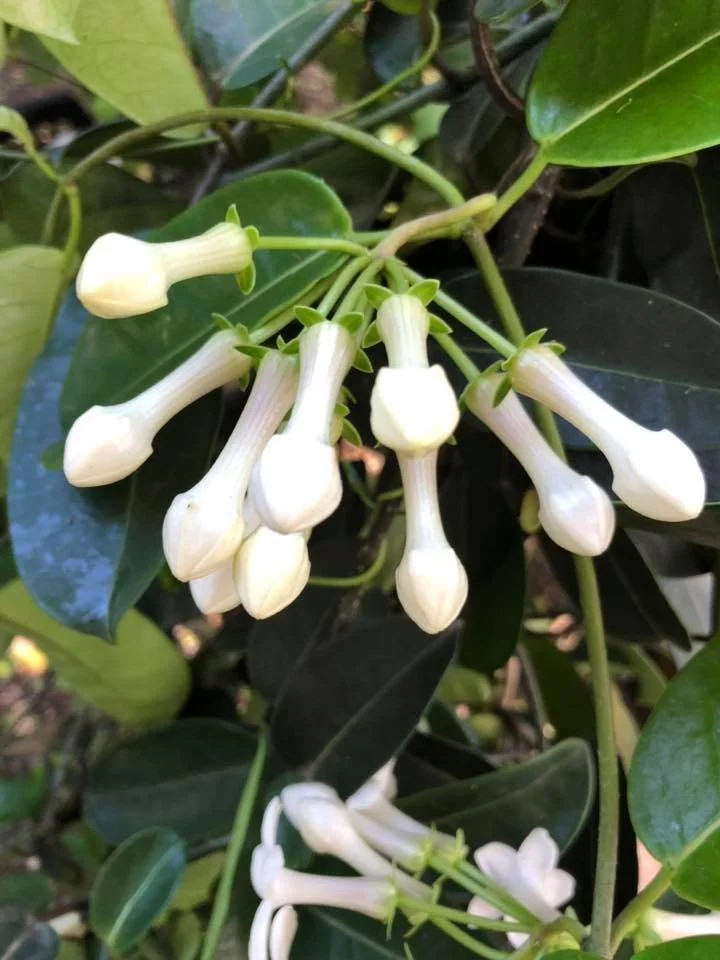
Stephanotis, or Madagascan jasmine has the most wonderful bunches of large starry white blooms and an absolutely delicious perfume. Mine just has one bunch of flowers open and I can catch that whiff of something special as I walk past. I can’t wait till all the bunches are open.
For years I’ve seen it used in floral bouquets especially for wedding parties, years ago it used to be called the Wedding Flower!
This luscious plant is a vigorous climber that's native to parts of Africa, Madagascar and Asia.
Stephanotis can be grown throughout most of Queensland, although the plant doesn't thrive in the cold and is frost tender. I have seen very old large ones in colder climates. I think they must of been protected while they were young.
It likes a warm, sunny position and can be grown either in pots or against a warm wall, which will retain the heat. It likes a rich, well drained soil and can grow up to 5 metres high, so it needs support with a trellis. But remember full sun can sometimes burn the flowers, so try giving it a little shade.
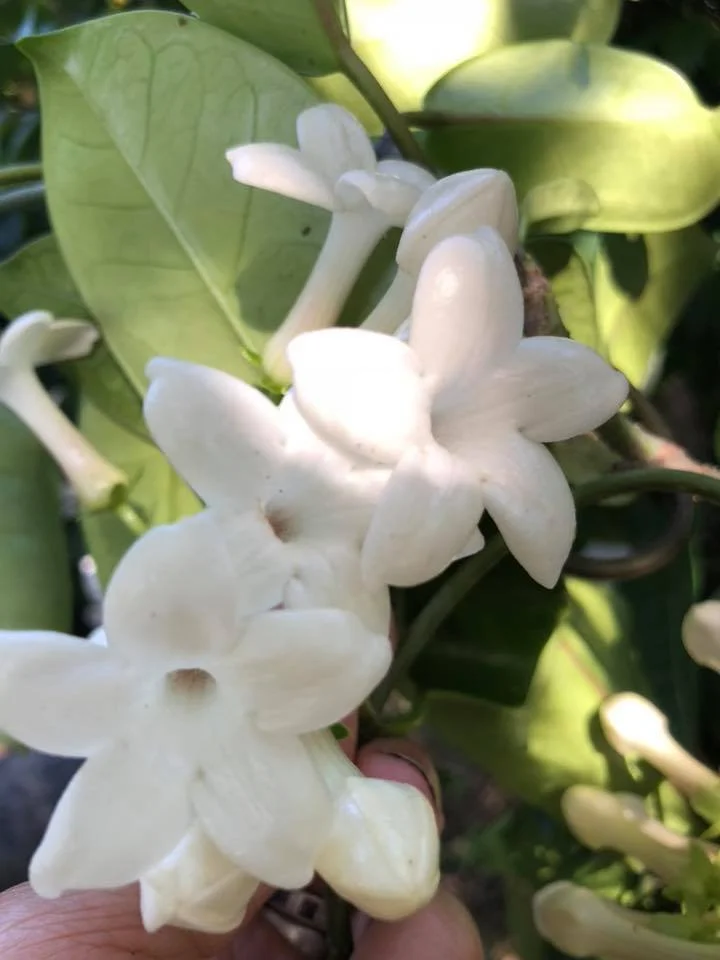
Stephanotis, when fully grown, is a great plant for covering large spaces, and is also useful for screening unsightly areas. Think of a star jasmine but with bigger leaves in its growth.
The dark green leathery leaves are very handsome even when they don't have any flowers. Stephanotis is great for adding a sense of presence and scent to the garden.
If you need to have a climber try Stephanotis and be that little bit different. Not everyone has one and I think you’ll enjoy the scent even more knowing you have an uncommon classy plant.

Patchouli
Patchouli is a bushy herb with dark green leaves and small, slightly fragrant pale pink-white flowers. It can get to around 1m in height. It loves a warm part sunny position and dislikes cold winters (protect from frost).

Patchouli growing in my friends garden
Scented plant that has no scent....
What the, she's gone crazy!
Pogostemon cablin or Patchouli as we know it.
Patchouli is a bushy herb with dark green leaves and small, slightly fragrant pale pink-white flowers. It can get to around 1m in height. It loves a warm part sunny position and dislikes cold winters (protect from frost).
While it's flowers do have a slight scent it's the dried leaves that are the most potent. The fresh leaves have no real scent.
My history lesson has always been that dried patchouli leaves were put into the fabric to deter moths... It was so used widely by India’s fabric manufacturers in the 19th century to protect their products from damage while in transit, that it became the signature scent of clothing and fabric exported from India. This unknown scent was believed to have captivated many European women and then became a guarantee of authenticity. For so many the source of the exotic fragrance was a mystery, so fraudulent fabrics were easy to spot because they didn’t have the signature patchouli scent. Now days this scent is associated with the hippie movement of the 60's as it's an ingredient in many incense that became popular in that time.
Did you know that patchouli was also an ingredient in coke and according to Wikipedia In 1985 Mattel used patchouli oil in the plastic used to produce the action figure Stinkor in the Masters of the Universe line of toys!
Patchouli is one of the most common essential oils of today. It is a strong, slightly sweet, intoxicating scent. It described as having a dark, musky-earthy aroma. It is one of my favourite essential oils. Robbi Zeck writes that patchouli "....awakens within the soul, a deep yearning for the comforting presence of peace, bringing spiritual insights to all realms. Patchouli's slow peacefulness brings about a state of mind and wholehearted feeling where unification occurs with the soul on all levels. When the fragments of your spirit have been scattered far and wide, call the peacemaker of your soul to you." How beautiful is this explanation of what a scent can do to your psyche.

Harvested Patchouli, ready for drying
I have a lovely friend who lives in Ipswich that grows amazing patchouli plants. So big she can easily harvest a large amount of leaves each year to dry and hang in her cupboards.
Patchouli grows well in pots or the garden. It does love to be fed. I sprinkle Organic Link every three months over the soil and I liquid feed every fortnight with Triple Boost. Patchouli do not like wet feet, so try not to over water it and if you have clay soil you may be better growing your patchouli in a pot.
Patchouli flowers in summer. If you want to harvest the leaves it is best to do it on a dry morning before the plant comes into bloom.
Maybe it's time we all relived the ☮️ of the 60's and full our homes with this delightful scent.

My Favourite Scentous Month
I find the best way to give my life some TLC especially during one of the coldest months of the year is to have a Rogiera amoena.

I love July. It has to be my favourite month. Not only is it my birthday month but my favourite plant is starting to flower. I first discovered this plant when I was a little girl climbing trees in my parent’s garden. At the time I thought that my mother and father had especially planted this tree for me so I had flowers on my birthday. I just could never work out why they planted it under my sister’s window and not mine! Even when I smell the flowers today I get transported back to their garden and a time of simple existence.
I find the best way to give my life some TLC especially during one of the coldest months of the year is to have a Rogiera amoena. Many of you would know it by it’s old botanical name Rondeletia amoena. Whether it be in the garden or a pot this plant is a must for all gardeners. Some may class it as old fashioned, for me it’s timeless!
Previously the genus name, Rondeletia, commemorates Guillaume Rondelet, a 16th century French naturalist. The species name, amoena, is from the Latin meaning 'lovely' and lovely it is.
Rogiera amoena is an evergreen shrub or small tree to around 3m tall. It has dense green foliage making the perfect tree for hedging or as a feature. Energex even thinks it’s a wonderful plant and recommends it for planting under power lines.
By July Rogiera amoena are just beginning to produce their clusters of deep pink buds which will slowly open to salmon-pink, perfumed flowers. They will flower from July until the end of spring. These deliciously scented flowers do not have an overpowering scent. If you are anything like me though you’ll want to sit all day in the garden and breathe in this divine scent.

Rogiera amoena’s are a versatile plant that can be grown in full sun or part shade. It is a very tough, drought-tolerant plant for any style of garden from tropical to formal. These plants are hardly bothered by pests or disease and they even attract butterflies!
Whether you have a green-thumb or slightly brown tinged one Rogiera amoena are for you.
A light prune after flowering and a seasonal fertilise with an organic slow release fertiliser, I use Organic Link, will promote a denser form and more beautiful plant.
This weekend spoil yourself and take a trip back to your childhood. Rogiera amoena are the best and easiest way to give yourself and garden some TLC during the cold month of July.

Can you Grow your own Curry?
Curry isn't just one herb, it is a complex seasoning that varies from region to region and even from family to family throughout Southeast Asia. If you thought you could buy a Curry plant, think again!
Curry isn't just one herb, it is a complex seasoning that varies from region to region and even from family to family throughout Southeast Asia. Curry seasonings can even be vastly different depending on the season. During summer months, the seasoning is mixed with spices that cool the body and in winter, a different blend helps keep the body warm.
So what are the plants commonly called 'Curry Plants'? Are they even used in Curries?
Curry Leaf Tree or Sweet Neem (Murraya koenigi)
The Murraya koenigi leaves are the primary seasoning in the South Indian dosa, a crispy, thin, rolled pancake-like bread but it is also used in pickles, egg dishes, chutneys and many other Asian and Indian dishes and is known as “sweet neem” in India.
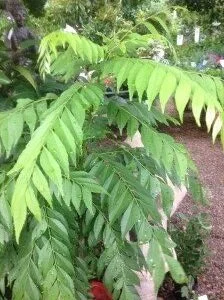
Curry Leaf Tree or Sweet Neem (Murraya koenigi)
Murraya koenigi is native to India and Sri Lanka. The leaf is the only part of the tree used in cooking and the raw, fresh curry leaf won’t really remind you of curry, but once the leaves are roasted in oil, the aroma and flavour can change remarkably, and the flavour is pleasant and delicious.
Even if you don't cook the Murraya koenigi is still a highly prized plant as its purely ornamental small, white flowers are highly fragrant.
It is a beautiful evergreen small tree that can be grown throughout Australia. Trees can grow up to 4m tall, in the warmer weather but it is advisable to prune back to a desired height of 1.5-2m. Pruning also encourages new growth and hence new leaves for harvesting throughout the year.
It requires full sun or semi shade position protected from heavy frosts. Ideal on warm northern side of buildings in cold climates.
The Curry Leaf tree requires reasonable drainage and regular fertilising. I use Organic Link every three months and Triple Boost regularly.
Curry Plant (Helichrysum italicum )
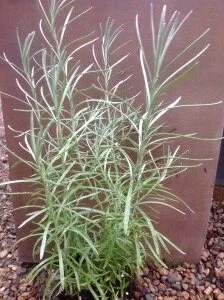
Curry Plant (Helichrysum italicum )
Although called the "curry plant" and smelling like the commercial curry powders, Helichrysum italicum has nothing whatsoever to do with this mixture of spices, nor with the actual curry tree (Murraya koenigii), and is not used as masala for curry dishes.
Helichrysum italicum grows naturally on dry, rocky or sandy ground around the Mediterranean. When growing at home try to make sure your plant is in free draining soil and full sun.
The leaves are grey with clusters of yellow flowers in Summer. These flowers are commonly used in dried flower arrangements.
The shrub can reach about 60 cm in height and can grow in pots or a garden bed. Like all herbs a good tip prune keeps the shrub looking neat and tidy. I usually fertilise at the turn of the season with Organic Link and Triple Boost regularly.
In the Mediterranean the young shoots and leaves of the Helichrysum italicum are used to flavour meat, fish or vegetable dishes. These shoots are then removed before serving. Many people don't like the actual taste of the plant as it has a resinous, somewhat bitter taste reminiscent of sage.
Do you have a Curry Plant or Tree?