Find Us:
77 Fernvale Rd
Brassall QLD 4305
(07) 3201 8630
Open:
Tue-Sun 9am - 4pm

Yesterday, Today and Tomorrow
The true beauty of Brunfelsia latifolia is in its flowers. Sweetly perfumed, they appear from September to late November. When they first open they are a violet colour, fading to lavender blue and then white, with the three colours present on the bush at the same time. How extraordinary that a plant can be covered in three different coloured flowers at once!
I’m noticing this plant in flower everywhere at the moment - Brunfelsia latifolia, Yesterday, Today, Tomorrow. It’s been a great season for them and I think all of them are stepping out of the shadows to scream ‘Look at me’.
I like to refer to this plant as a vintage plant as there is no such thing as old fashioned in gardening.
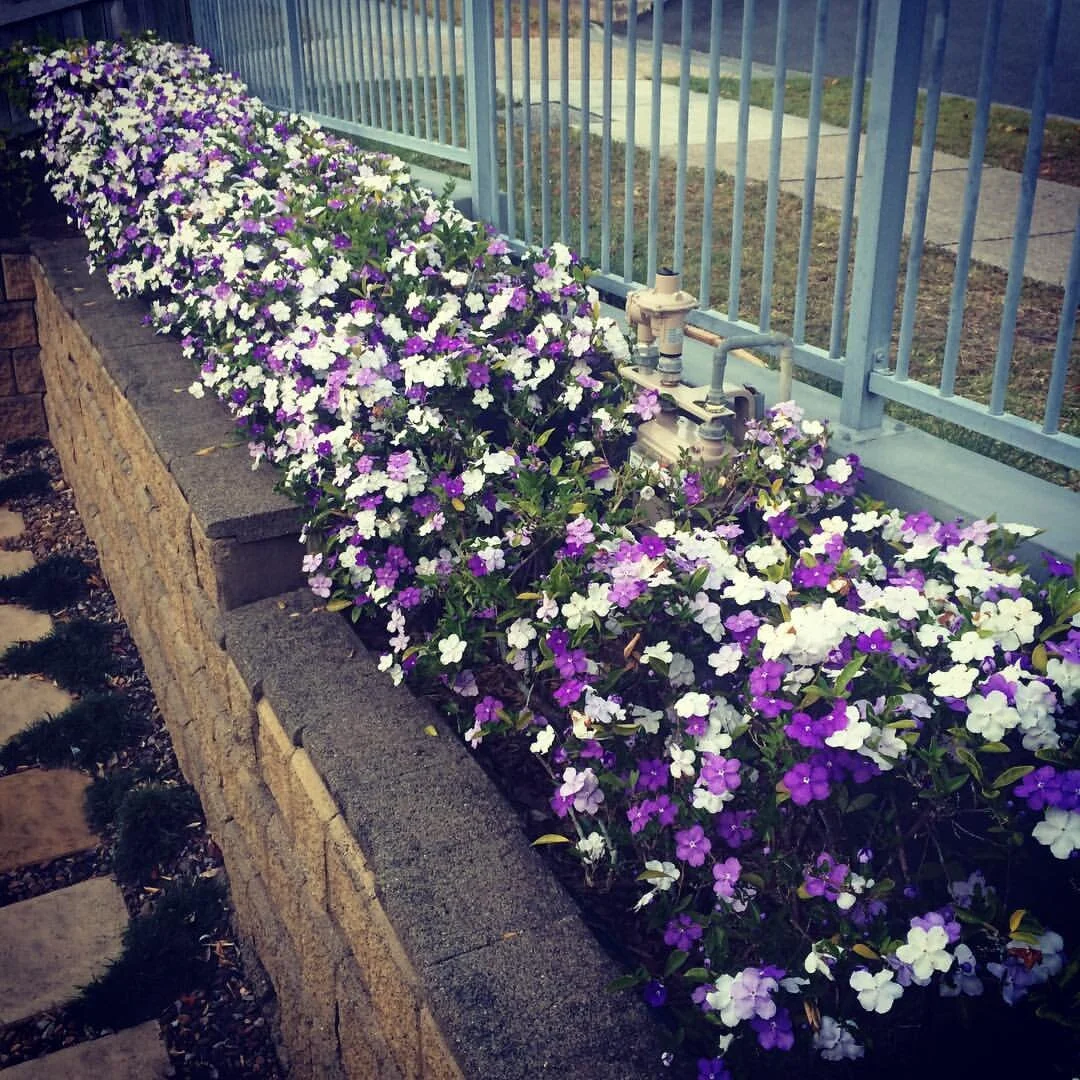
This evergreen shrub grows slowly to around 2-4m tall and 2m wide. Most people tend to keep theirs at around the 1.5m mark. The foliage is dense and a smoky green colour. The new leaves can go purplish in cool weather.
The true beauty of Brunfelsia latifolia is in its flowers. Sweetly perfumed, they appear from September to late November. When they first open they are a violet colour, fading to lavender blue and then white, with the three colours present on the bush at the same time. How extraordinary that a plant can be covered in three different coloured flowers at once!
Brunfelsia latifolia enjoys full sun or partial shade. It enjoys a trim but does not need to be trimmed to look thick and lush.
I find all Brunfelsias can be hungry plants. I like to feed them with Organic Link four times a year and I give them liquid bio trace (mix of trace elements by Plant of Health) at least three times a year.
The great thing about this plant is, once established, it doesn’t seem to mind if it’s a little dry or a little wet; it likes the summer heat and can handle the winter chills. It’s not keen on heavy frosts, though.
I find they grow better in the ground but I have seen some nice ones in pots. I would just recommend feeding it more.
Years ago, a dwarf brunfelsia latifolia was released that only grows to around a metre. It is perfect for borders or small gardens. Be aware that this plant can be slower to flower.
The only downside to brunfelsia latifolia is that they are highly toxic to animals and humans if eaten, so if you have an animal, especially a goat or a friend that is a vegan that likes to eat the plants in your garden, please take precautions.
Indulge all of your senses by planting a brunfelsia latifolia this weekend!

Aloe Aloe
Forget all you know about Aloes. Now imagine a beautiful structural plant with colourful flowers that make birds sing, bees buzz and nature do a happy dance.
About 12 months ago I was asked to visit an open garden featuring Aloes.
My first thoughts were “seriously, you want me to go and look at a garden full of aloe veras and succulents!” I found it very hard to go with an open mind.
The day arrived and quite simply my mind was blown.
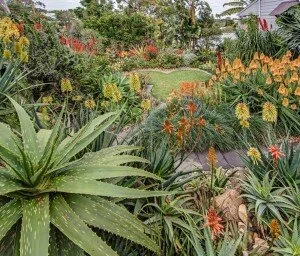
As I walked down the drive, colour and flowers burst from every space. Birds sang, bees buzzed and nature did a happy dance.
A few times I had to shake my head and remind myself I was in an aloe garden not a beautiful cottage garden.
Forget all that you know about aloe. For me that wasn’t hard as all I knew was the ugly looking aloe vera.
Now imagine a beautiful structural plant. Imagine a plant that is able to withstand the harsh Australian climate by storing water and food within swollen leaves and roots. Imagine a plant whose flowers can last weeks as well as being bird attracting. Imagine a plant that is not only easy to grow but resistant to disease and pests.
Imagine the beautiful new range of aloes named Aloe-Aloe!
These amazing plants are native to South Africa so they are used to harsh climatic conditions. It was not just the hardiness of the aloe-aloes that intrigued me and left me wanting more. It was their huge display of flowers with their differing colours, red, white, yellow, pink and all the colours in between. I think the only colour I couldn’t find was blue!
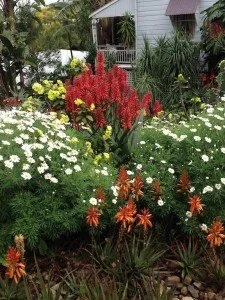
Some plants and flowers were tiny, only reaching 20cm high. Others reached meters into the sky. Click here for a quick reference chart on flowering times and heights of Aloe-Aloes.
The versatility of this plant is excellent. On its own in a pot it makes a fantastic feature. Planted out in a garden or pot amongst other flowering shrubs it also looked great. The garden I saw was mainly aloe-aloes but there were other shrubs intermingled amongst it and the garden looked amazing. Depending on where I looked and the other plants used, some areas of the display garden looked like a cottage garden, others were tropical and lush and some formal. The Aloe-Aloes worked in all genres.
How could you not want a range of plants in your garden that can flower from February to November. Grow well in a full sun position but can handle a little shade. They would rather have dry feet than wet.
We used a good quality potting mix when planting ours and fertilized with Organic Link and Triple Boost.
I honestly think these amazing plants would suit any garden. I am a true converted lover of Aloe-Aloe. Next time I am asked to go look at an Aloe garden I’ll be jumping up and down and packing my camera.