Find Us:
77 Fernvale Rd
Brassall QLD 4305
(07) 3201 8630
Open:
Tue-Sun 9am - 4pm

Australian Native Kangaroo Paws
Kangaroo paws belong to the genus Anigozanthos, which are native to south western Western Australia. This area of Australia is dryer, slightly warmer and the soil is sandy...very sandy. A little different to Ipswich's climate and soil.
You know how as a kid you thought your mum was the vegie monster because she made you eat food like Brussel sprouts but as you get older the idea of Brussel sprouts for dinner grows on you till somehow you find yourself not only buying them and cooking them but also enjoying them.
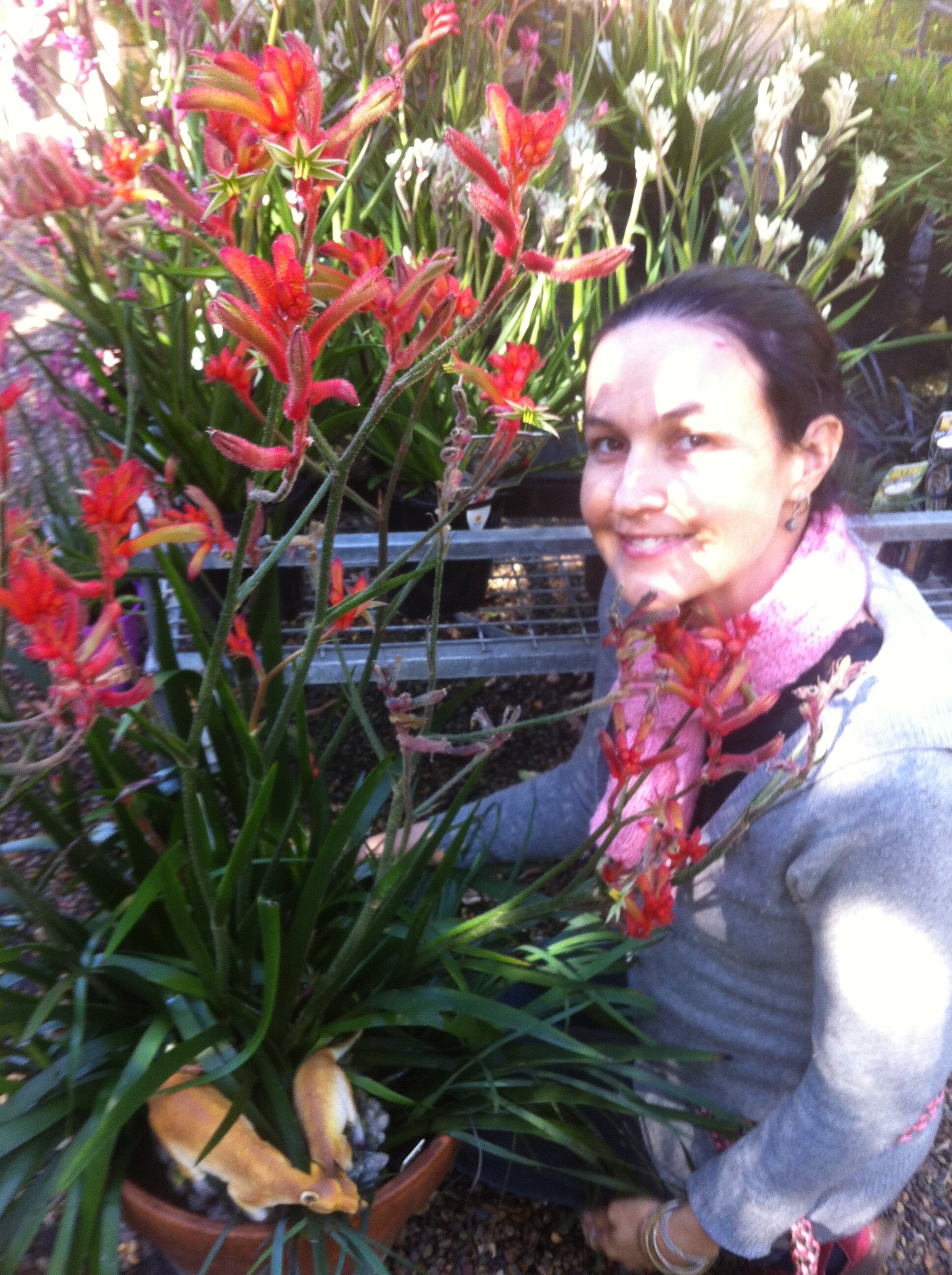
Kangaroo Paw, an Australian Native Plant
Kangaroo Paws are kind of like my Brussel sprout in the garden! For years I would almost double over in pain at the idea of growing one of these hideous plants. Why? I couldn’t come to terms with a plant that had gangly disease ridden leaves and long boring flowers.
I guess I just had never seen it used well in landscaping because now I am totally in love. Why? Strangely enough it was Ipswich City Council and the Riverheart parklands that caused me to start to fall in love with them because a few years ago they were planted en masse in the gardens and they looked fantastic most of the year.
Kangaroo Paws belong to the genus Anigozanthos, native to south-western Western Australia. A region that’s drier, hotter, and has very sandy soil. Quite different from Ipswich's heavier soils and sticky summer air.
And that’s where a lot of the trouble starts. One of the main reasons I disliked Kangaroo Paws was because of the dreaded ink spot, those black patches that ruin the leaves. It’s mostly caused by fungal diseases thanks to humidity, but frost damage and snails can also contribute. Parts of Ipswich can swing between high humidity and black frosts, basically, Kangaroo Paw hell.
Some newer cultivars, like the Celebration series, recommend growing in pots in a partially shaded spot and only in areas with less than 70% humidity (Ipswich averaged around 75% in summer 2024). So while Kangaroo Paws traditionally love full sun and excellent drainage, if you're in a more humid region like ours, pots in airy spaces with morning sun might be the better way to go. Terracotta pots are a great choice too, because they breathe. If you want to grow Kangaroo Paws out in the garden, try going for the older varieties like Anigozanthos flavidus or the red and yellow flowering forms in the Bush Gem series.
Most sprays or fertilisation will not prevent Ink spot. Thanks to Angus Stewart, the main cultivator of Kangaroo Paws, I now know the best and easiest way to deal with ink spot! Mow over them when the leaves start to become infected and fertilise with a complete organic slow release fertiliser like Organic Link! Secateurs would work just as well as a mower but nowhere near as fun!
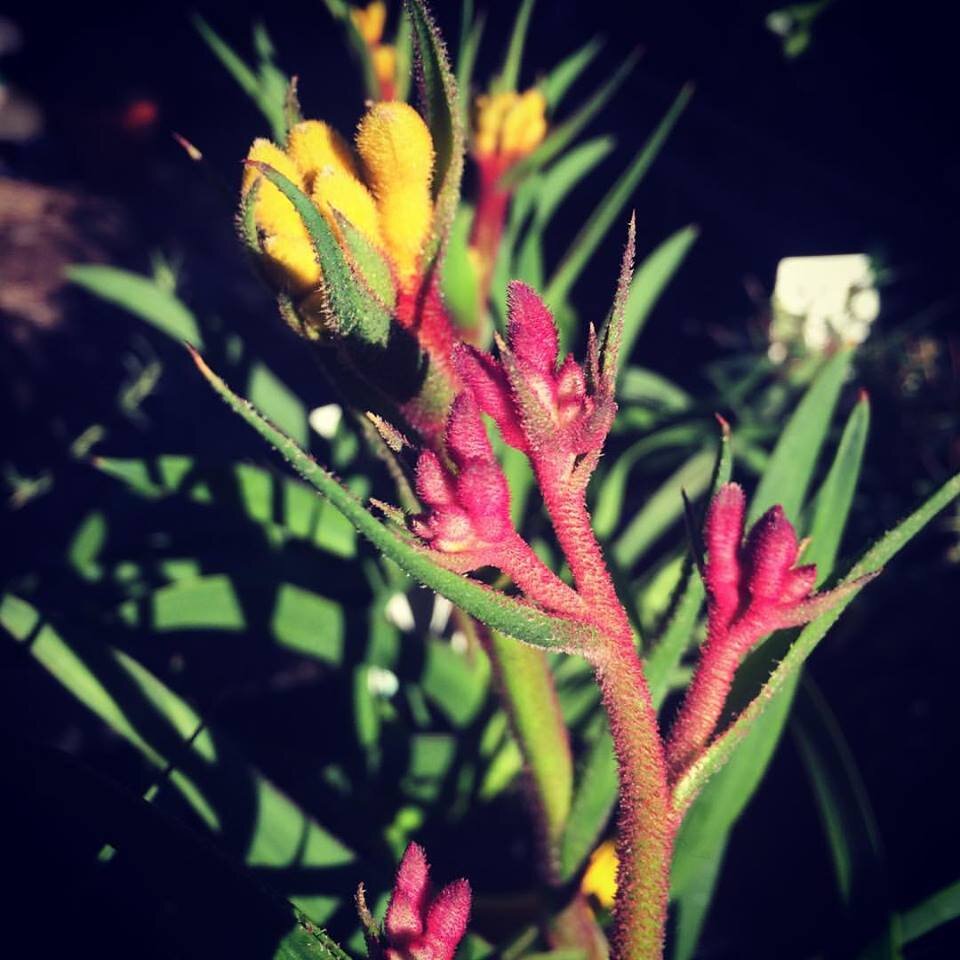
By cutting all that leaf off, you get get rid of Ink spot and encourage beautiful, fresh new leaf which gives the plant a really vigorous green appearance and promotes the flowers and the flowers are the best part.
Kangaroo Paw flowers have been described as one of Australia’s most striking and unusual flowers and with modern cultivation I think there is one available in in all the colours of the rainbow, hot pink, red and green and the black are my favourite.
These fabulous bird-attracting, drought tolerant plants grow to all different sizes too. From small boarder plants to large striking feature plants there is one suit all gardens. All they need is a dry well drained spot in full sun and easily accessible by mower (or Secateurs)!
I love using a mixture of flowering heights in pots too. They make an awesome feature in a hot area of your patio or garden. Just remember to remove the spent flowers and yucky leaves and this plant should reward you with vibrant colour most of the year.
This weekend eat some Brussel sprouts and plant an icon of the Australian garden at your house.

Brilliant Australian Native Plant
Summer Red Eucalyptus would have to be the best flowering Australian Native gum tree for suburbia.
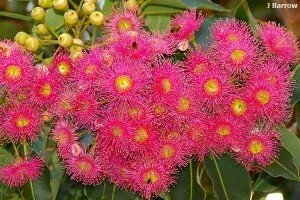
Photo by Brian Walters from the Australian Native Plants Society
Summer Red Eucalyptus would have to be the best flowering Australian Native gum tree for suburbia.
Before this range was released if you wanted a flowering gum tree you had to just go out and buy one and hope for the best. Sometimes the flowers turned out red and other times pink, but quite often it was an insipid white which you didn’t really want anyway. Plus the plant was straggly and had to be kept heavily trimmed to look nice.
The good news is that it’s now possible to buy flowering gums with predictable flower colours. Specially bred for the home garden, the new plants are hybrids between Eucalyptus ficifolia and Eucalyptus ptychocarpa, grafted on to Eucalyptus intermedia rootstock.
Eucalyptus ‘Summer Red’ produces masses of mid-pink to red flowers in summer and grows quickly to around 5 metres. It has large glossy green leaves and the new foliage is an attractive bronze colour. The trees should do well in most areas of Australia and will tolerate light frosts and drought.
Eucalyptus ‘Summer Red’ would be my ideal gum tree for the home garden. It is the perfect shade tree, with a height and spread of around 5m. It can be kept easily pruned and is even suitable for large pots.
Make a bird happy today and plant a Eucalyptus ‘Summer Red’!
It can be trimmed after flowering and I find its best to fertilise them at least three times a year with Organic Link.
A Stunning Australian Native Plant
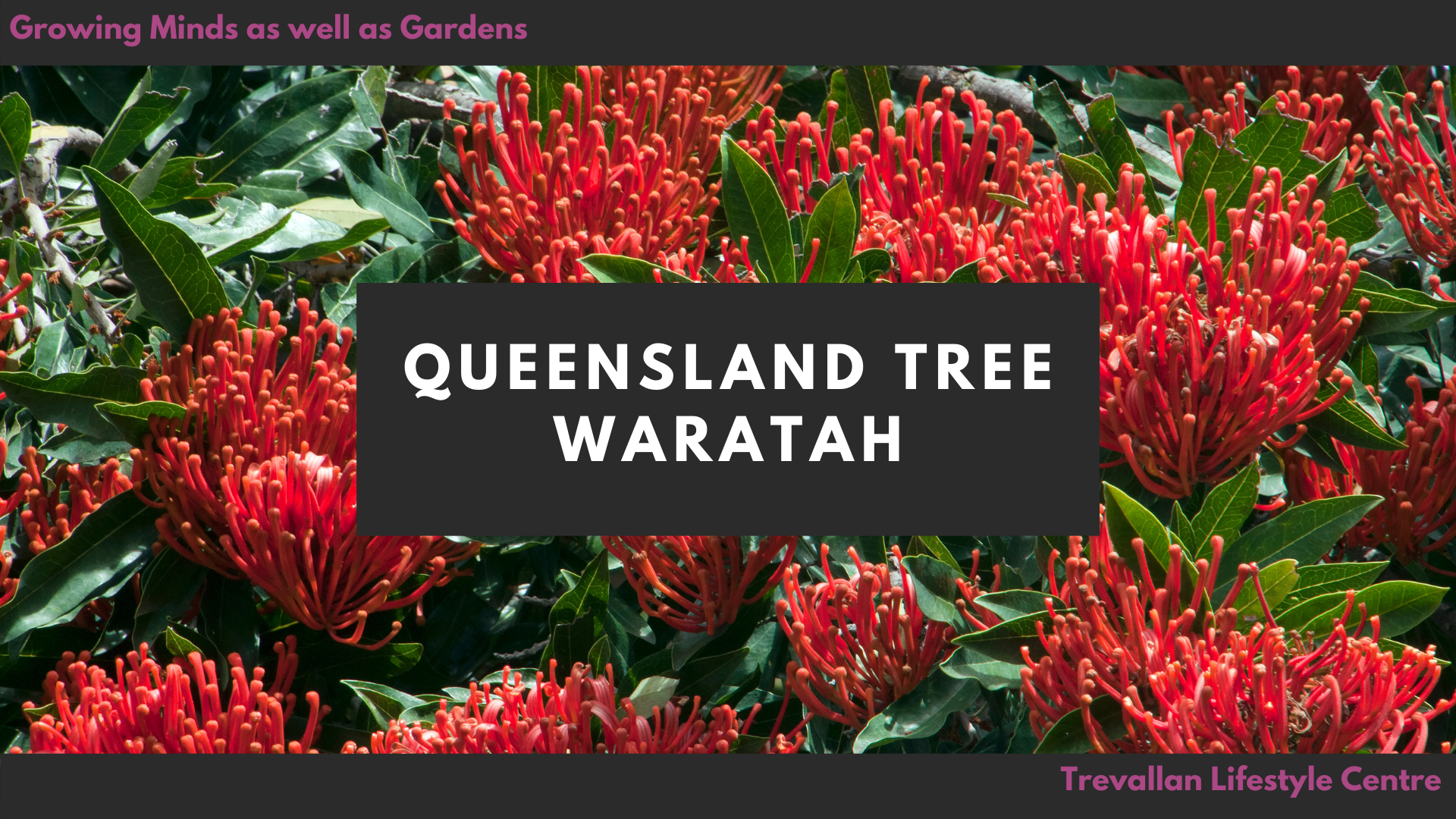
The Alloxylon flammeum, Queensland tree waratah, would have to be one of our favourite Australian native plants.

Photo by Brian Walters from the Australian Native Plants Society
The Alloxylon flammeum, Queensland tree waratah, would have to be boss lady's favourite Australian native plant.
This tree is widely known as one of the most stunning rainforest trees (endemic to North Queensland Rainforest) with a spectacular flowering display in spring. Despite its tropical origin, the tree waratah can be grown in cooler districts at least as far south as Sydney where the plant flowers reliably.
Alloxylon is from the Greek allo, strange or different and xylon, wood, referring to the unique wood anatomy of the genus - oak-like grain with very broad medullary rays. Flammeum is Latin, meaning flame-coloured or fiery red.
It is listed as 'Vulnerable' under the EPBC Act* (ie. facing a high risk of extinction in the wild in the medium-term future, as determined in accordance with prescribed criteria). Which means if you have the space get one of these beauties in your garden!
It has shiny green elliptical leaves up to 18 cm long, and prominent orange-red inflorescences (An inflorescence is a group or cluster of flowers arranged on a stem that is composed of a main branch or a complicated arrangement of branches) that appear from August to October, followed by rectangular woody seed pods that ripen in February and March. Juvenile plants have large (up to 25 cm long) deeply lobed pinnate leaves.
It will flower most prolifically if grown in full sun in deep rich soil with extra water given in periods of hot dry weather. In its native habitat it can grow to around 25m tall. In a normal garden it will get to around 10m tall and I find it to be the perfect shade tree.
You can trim after flowering but it has a natural beautiful shape that does not require trimming. It will need a good fertilise every three months. I use Organic Link on all my natives.

Got Milk
Your local garden centre’s staff are the gardening experts – they should be able to listen to your needs and recommend the right product.
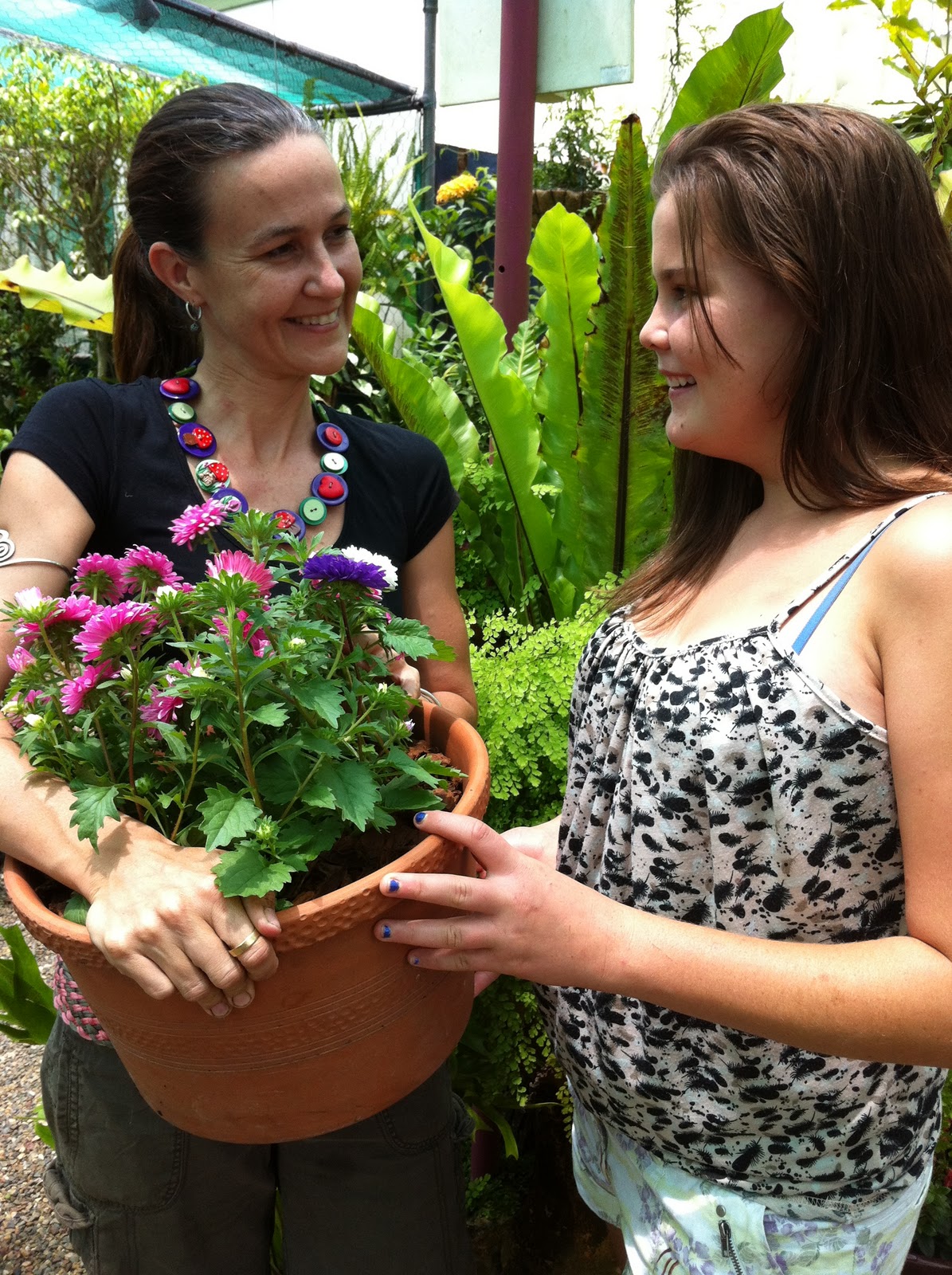
Why is it so hard just to buy milk? You all know the advertisements on TV with the guy who just wants milk, but the shop assistant rattles off about twenty different choices. All he wants is milk that tastes like milk! In the end the relief on his face when the shop assistant just gives him what he wants is priceless.
I’m not a huge fan of being overloaded on choice. Electronic equipment, like computers and their programs, is one area where I’d prefer there to be just the one option! I’m not a person that likes to spend hours trolling the internet and magazines looking for the best computer program for my needs. I appreciate going to a specialist computer shop, talking to an expert and let them recommend me the best program for my needs.
I feel the same about gardening. Gardening shouldn’t be hard – back breaking maybe, but not hard. Getting good gardening advice shouldn’t be confusing either. If you have a problem with your plants, need some general gardening advice or even just need to buy a living gift, I recommend you go to a specialist garden centre, as they have expert staff on hand at all times and are alway willing and ready to help.

Have you ever been confused and overloaded by the choice of gardening products on the market? I know I am sometimes. I often wonder just how many versions of trace element mix can there be and it feels like every gardening magazine, lifestyle show and the guy next door, all have their favourite gardening tips.
If confusion and not very ‘good tips and helpful hints’ have prevented you from enjoying the great outdoors, it’s time to take control and visit an expert – your local garden centre, like Trevallan Lifestyle Centre.
Local garden centre staff are gardening experts – they listen to your needs and recommend the right product, without the need to sell a plethora of brands. You don’t need to know that there are ten products on the market that kill slugs, but are safe for dogs. You just need one and one that works. So a garden centre and their expert staff need only stock the one brand that they perceive is the best. However, in some cases, a small range of similar products (for example potting mixes), are necessary as people’s needs are different. In this case, the garden centre experts should then be able to inform you of the differences and recommend the best one suited to your needs.

Your local garden centre is not only staffed by local experts, who have all suffered the same gardening problems that you are currently suffering. Garden centre staff enjoy helping you through your gardening problems, removing any confusion and reinvigorating your joy of gardening.
So next time you decide to improve your plant life balance and give your garden some TLC, make sure you visit the gardening experts - Trevallan Lifestyle Centre - your local garden centre.