Find Us:
77 Fernvale Rd
Brassall QLD 4305
(07) 3201 8630
Open:
Tue-Sun 9am - 4pm
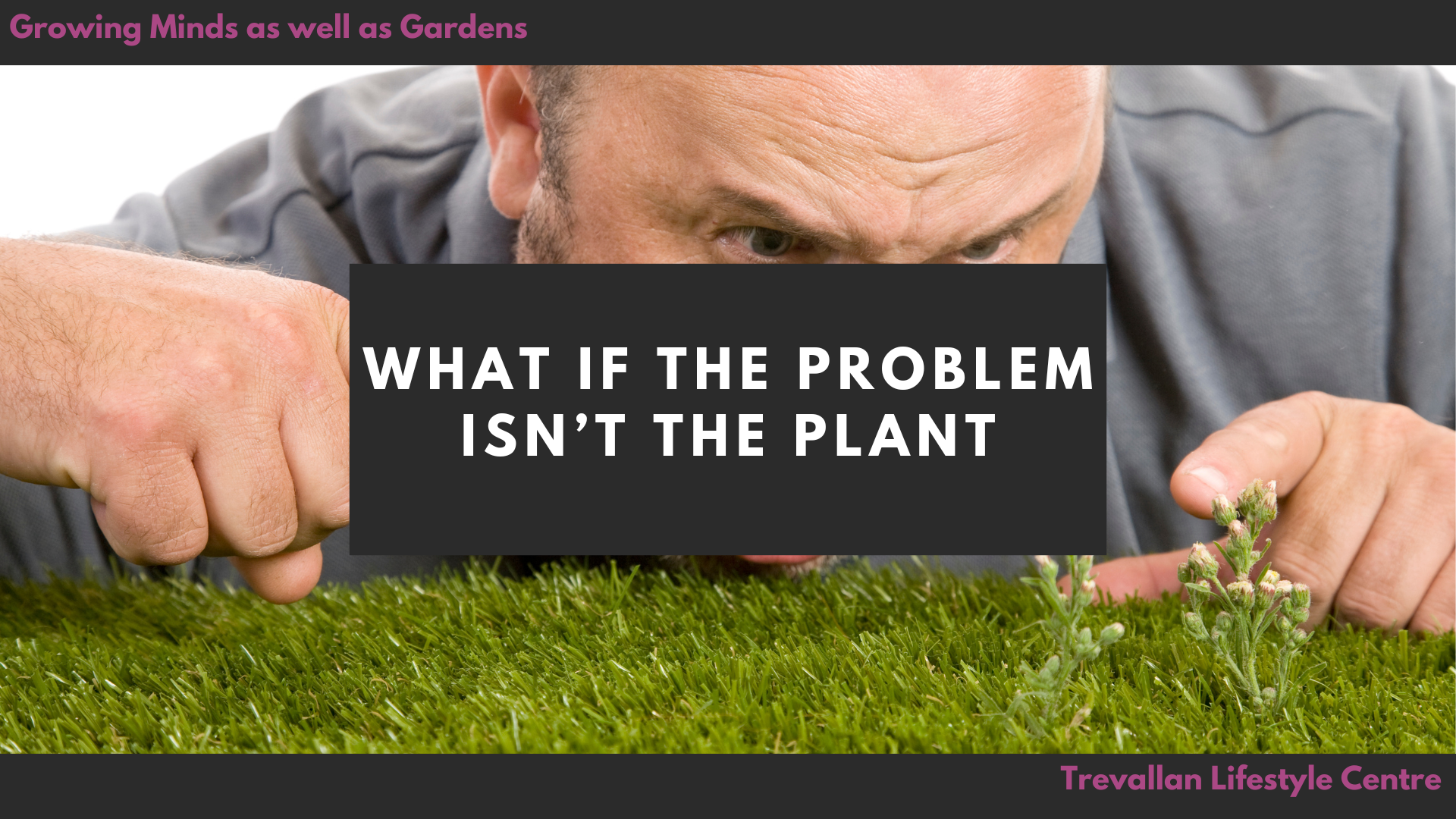
What if the Problem isn't the Plant
This post challenges the unfair blame placed on garden centres and professional growers for weed spread, calling for better education, recognition of horticulture as a trade, and stricter regulation of unqualified sellers. It urges decision-makers to include trained horticulturists in the conversation.
After watching this video, I feel compelled to raise some critical points that were completely overlooked.
Firstly, blanket blaming and banning isn’t the answer.
Let’s start with something simple: maintenance. Whether in home gardens, public spaces, or council plantings, it’s called maintenance for a reason. Thinning, deadheading, pruning, and soil checks are basic tasks. And yet we keep skipping this conversation. If you're planting anything, you need to know how to care for it. If you're in charge of a space, public or private, and you're not qualified, it's time to educate yourself. Ask questions. Learn from garden centres and/or trained professionals. Respect the plants you're working with. Let’s stop demonising plants due to neglect, laziness, or a lack of education.
Yes, there are plants that shouldn’t be sold, and many already aren’t. The idea that the entire nursery and garden industry is to blame, or that it’s completely unregulated, is not only unfair, it’s simply untrue. There are regulations, and many species are either banned or restricted depending on the region.
Most independent garden centres offer personalised advice and often warn customers about plant behaviour and risks. But it’s not their role to determine whether someone will neglect their plants, dump them in bushland, or pass them along irresponsibly through friends or online marketplaces. If we’re looking for accountability, maybe it’s time for a national register of repeat offenders. Those who consistently allow invasive spread, dump green waste illegally, or sell problematic plants through unregulated platforms.
Let’s be honest: we don’t ban fast fashion, even though it causes undeniable environmental damage. We don’t blacklist the companies or individuals perpetuating it. In fact, we rarely even call them out. Yet we’re quick to vilify growers and garden centres doing their best within a broken system.
And while we’re here, let’s talk about nationwide chain stores. They often make purchasing decisions at a national level with no consideration for regional climates or ecosystems. From now on, these chains must be required to consult locally trained and experienced horticulturists, professionals who actually understand what is suitable for that specific area. If they can’t offer that level of care or advice at a higher level, how can they offer that on the sales floor? Maybe they should be restricted from selling plants altogether.
And here’s the part that gets missed too often:
A plant that behaves invasively in one region may be perfectly well-behaved in another. Many so-called “weeds” are only classified that way in certain areas, while in others, they’re playing an important ecological role, providing soil coverage, reducing erosion, preventing more aggressive weeds from taking hold, and even offering habitat and food sources for wildlife.
Likewise, some native species can become weeds when planted outside their natural range. So the blanket call to “just plant natives” is not only simplistic, it’s often misleading and counterproductive. And even when we do want to use more appropriate native species, there’s a practical barrier: many simply aren’t grown commercially. Not because horticulturists are unwilling, but because the supply chain, propagation infrastructure, and commercial demand don’t currently support them.
After all this, we need to turn our attention to unregulated markets, where there are little to no rules in place. It’s not just about selling declared weeds. It’s about biosecurity.
Who knows what soil or conditions these plants have been grown in? Are sellers on platforms like Marketplace or eBay adhering to fire ant protocols? Myrtle rust controls? Do they know what diseases or pests they might be spreading?
Meanwhile, professional nurseries, growers, and garden centres operate under strict regulations, including quarantine laws, biosecurity protocols, weed control, and chemical use standards. Many go above and beyond to ensure their practices are safe, sustainable, and regionally appropriate. Yes, the industry is technically ‘self-regulated’, but let’s be clear, we’re the ones held legally accountable. We face thousands of dollars in fines, the threat of business closure, and even jail time if we breach those standards.
And yet, the blame still falls on us.
That’s not just inaccurate, it’s lazy.
Now, let’s talk about the most alarming part: The person interviewed about these so-called “problem plants”? They used a plant ID app to support their claims.
Let that sink in.
We are platforming voices to lead national conversations on horticulture while ignoring the trained professionals who actually understand plants, landscapes, ecology, and long-term impacts. You cannot make serious claims about weed risk or garden design based on a smartphone guess and walking through a public space.
Let’s stop the knee-jerk bans and broad-brush blame.
We need horticulturists at the table. People with real-world knowledge of propagation, ecology, biosecurity, and plant behaviour. Stop sidelining the people who live and breathe this work.
And we need education. Not a watered-down government scheme. Not a one-day course run by someone who’s never held secateurs properly. We need education led by trained, experienced professionals. The ones who’ve worked in the soil, in the nurseries, in the wild, and in our changing climate. Education that considers regional needs, long-term impact, and plant-human-environment relationships. Education that empowers gardeners, landscapers, and councils alike.
Horticulture is not a hobby. It’s a trade. A science. A profession. And it’s time we started treating it like one.

Sapping the Life from your Trees
As a way to help combat Lantana an evasive weed, a Bio-control called Aconophora compressa (Lantana Treehopper) was introduced in 1995 throughout Queensland and New South Wales.
To me every plant has its place.
Just because I think its place is in the bin doesn’t necessarily mean you should feel the same.
Every garden should be as diverse as its owner.
Take pride in expressing your individuality in your garden. Just because Jamie Durie likes it doesn’t mean you have to.
Some plants though do not deserve anyone’s TLC.
These plants make up Australia’s Most Wanted Weed List or Weeds of National Significance. Lantana would have to be number one. This plant has successfully taken over nearly every rainforest and bushland along the east coast of Australia as well as some areas in West Australia and Northern Territory.
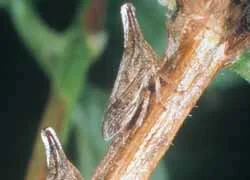
Aconophora compressa
As a way to help combat this evasive weed a Bio-control called Aconophora compressa (Lantana Treehopper) was introduced in 1995 throughout Queensland and New South Wales.
Bio-control is importing a natural enemy to combat pests. It has been very successful in controlling a range of introduced plants that are pests to agriculture, the environment, and human health. Bio-control methods also help reduce the need for pesticide use. The decision to use a Bio-control is not gone into lightly. The lantana treehopper was screened as a bio-control agent from 1990 to 1994 and its release was unanimously supported by 22 state and federal agencies.
The Aconophora compressa camouflages itself very well against the bark of the tree. The insects are brown in colour and can grow up to 8mm long. It has a horned body so it makes the plant look like it has thorns. It sucks the sap out of the host plant and exudes large amounts of honeydew, a sugary solution in which black sooty moulds can grow. The treehopper can cause die back, stunted growth and flowering, unhealthy leaves and eventually death of the plant.
Unfortunately, as with many bio-controls, the Aconophora compressa hopped onto some of our common ornamental shrubs and trees.
This bio-control can be controlled through spraying with an insecticide and trimming or removal of affected plants. The two most viscously attacked plants are Fiddlewoods and Duranta but it has been seen on other ornamentals as well such as Jacarandas and Pandoreas and just recently Annette McFarlane mentioned they were on her Lemon Verbena.
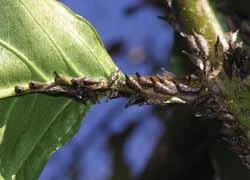
Aconophora compressa
When it comes to the Fiddlewood we aren’t too worried as Fiddlewoods are a West Indian native, considered as an undesirable introduced tree as their roots are very invasive. The Department of Primary Industry (DPI) recommends removing the affected Fiddlewoods and replacing them with a desirable native tree.
Duranta – Sheenas Gold or Geshia Girl can also be affected by the Aconophora compressa. These plants are so extremely fast growing and resilient that a severe trim (putting all affected cuttings into black plastic bags before dumping) and a fertilise with Organic Link (a good quality organic slow release fertiliser) is all they need.
If they are on a plant you can not trim a spray with an oil based insecticide like Eco oil or neem oil. I have heard that Pyremuythum based sprays are effective as well. When spraying for an insect like this you need to be consistent and make sure the plant gets an effective drenching.
This weekend give your life some TLC by getting dirty and making sure you have no nasty critters hiding in amongst your flowers.