Find Us:
77 Fernvale Rd
Brassall QLD 4305
(07) 3201 8630
Open:
Tue-Sun 9am - 4pm

Diospyros australis
What’s not to love about a beautiful native tree that work wonderfully as a feature tree or slow growing hedge that also produces edible fruit?
Diospyros australis, commonly known as Black Plum or Native Persimmon, is a small native rainforest tree found from south-east NSW up to tropical Queensland.
What’s not to love about a beautiful native tree that work wonderfully as a feature tree or slow growing hedge that also produces edible fruit?
Diospyros australis, commonly known as Black Plum or Native Persimmon, is a small native rainforest tree found from south-east NSW up to tropical Queensland.
During the cooler months Diospyros australis, produces plum-like berries. Berries are about 10mm in size, starting out yellow and turning black as they ripen. They are most edible when black and soft with a sweetness that makes them perfect for jellies, chutneys and jams.
Small cream/yellow flowers appear enmasse from October, and will self-pollinate. However it is sometimes advised to plant two or more trees to improve your chances of fruiting.
The fruit isn’t the only reason to grow one. I love the beautiful green glossy foliage. The leaves tend to have a yellow/green underside with a prominent yellow mid-vein. I would be using Diospyros australis instead of Syzigum australe for my hedge plantings.
Being a native rainforest tree, Diospyros australis prefers moist well composted soils. It performs best with protection from both wind and afternoon sun.
These trees can grow anywhere between 4 to 10 metres in the garden, but as they are slowish growing can easily be kept as a small bushy shrub or even in a large pot, trimmed to be a feature plant! I also found out they are known for their fire retardant properties, making them a worthwhile inclusion in your garden especially if you live in a bush fire zone.
The fruit and leaves of the Diospyros australis is said to have many medical properties. One property is helping to convert starch into energy and keep blood sugar levels in check, perfect for Diabetics. The fruit is said to also said to help relieve stomach pain, anti-scorbutic (high amounts of vitamin C) and diuretic. If you make your own vinegar from the fruit you can drink it to help reduce enlargement of spleen, diarrhoea, and those have urine retention problems.
This beautiful native tree, commonly called Burrpurr (Yolngu) by the First Nations, will become a must have in your garden.

Native Large Leaf Tamarind - Edible
Diploglottis australis, this beautiful native plant is commonly called Native Large Leaf Tamarind.
Diploglottis australis.
I love saying this Australian Native’s botanical name. It has such flow and yet the weirdest set of letters together.
Say it slowly the first time helps
Dip..lo..glot..tis Aus..tral..is
This beautiful plant is commonly called Native Large Leaf Tamarind.
In its natural habitat, along east coast of Australia anywhere from Proserpine (QLD) to Brogo (NSW), it can grow to over 35m tall. In cultivation, our backyards, it’s mainly used as a large shade tree. In best conditions it will usually grow to about 10m high and 3-5m wide.
There are so many things to love about this tree but honestly the thing I love the most is it’s leaves. I love trees with large leaves and this one has these large leaves that are covered in velvety golden brown hairs. Adding a bronzing effect to the overall greenness of the tree. Added to that the leaf veins are easy to see and the midrib is slightly raised. It’s truly a visual and textural leaf.
Not only does it have these amazing leaves it also has the coolest fruit!
The flowers are like hairy creamy white puffs that form in the Spring. Then from about January fruit starts to drop to ground when ripe. The berries, are two or three-lobed and are roughly about the size of a small fig fruit. They have a brown hairy outer casing and contain juicy, orange/red, edible pulp around a large brown seed.
The fruit is often sour to taste, but like the Asian Tamarind, may be enjoyed raw or processed into jams, jellies, sauces and drinks. It’s a great native food.
Diploglottis australis can be grown in full sun or part shade. It doesn’t like frosts or windy positions. It does prefer to have moist fertile soil but beggars can’t be choosers and can grow in a wide range of soils and conditions.
A good feed with a complete slow release organic fertiliser, like Organic Link, every three months would be greatly appreciated.
Diploglottis australis is a beautiful small native tree that would be an added bonus to any garden.

Native Basil
Coleus graveolens is commonly called Bush Basil or the Five Spice Herb! This plant is native from Cape York all way down to NSW.
Today I have one you all probably know but maybe you are a bit like me and didn’t know it was a native!
Coleus graveolens, synonym Plectranthus graveolens
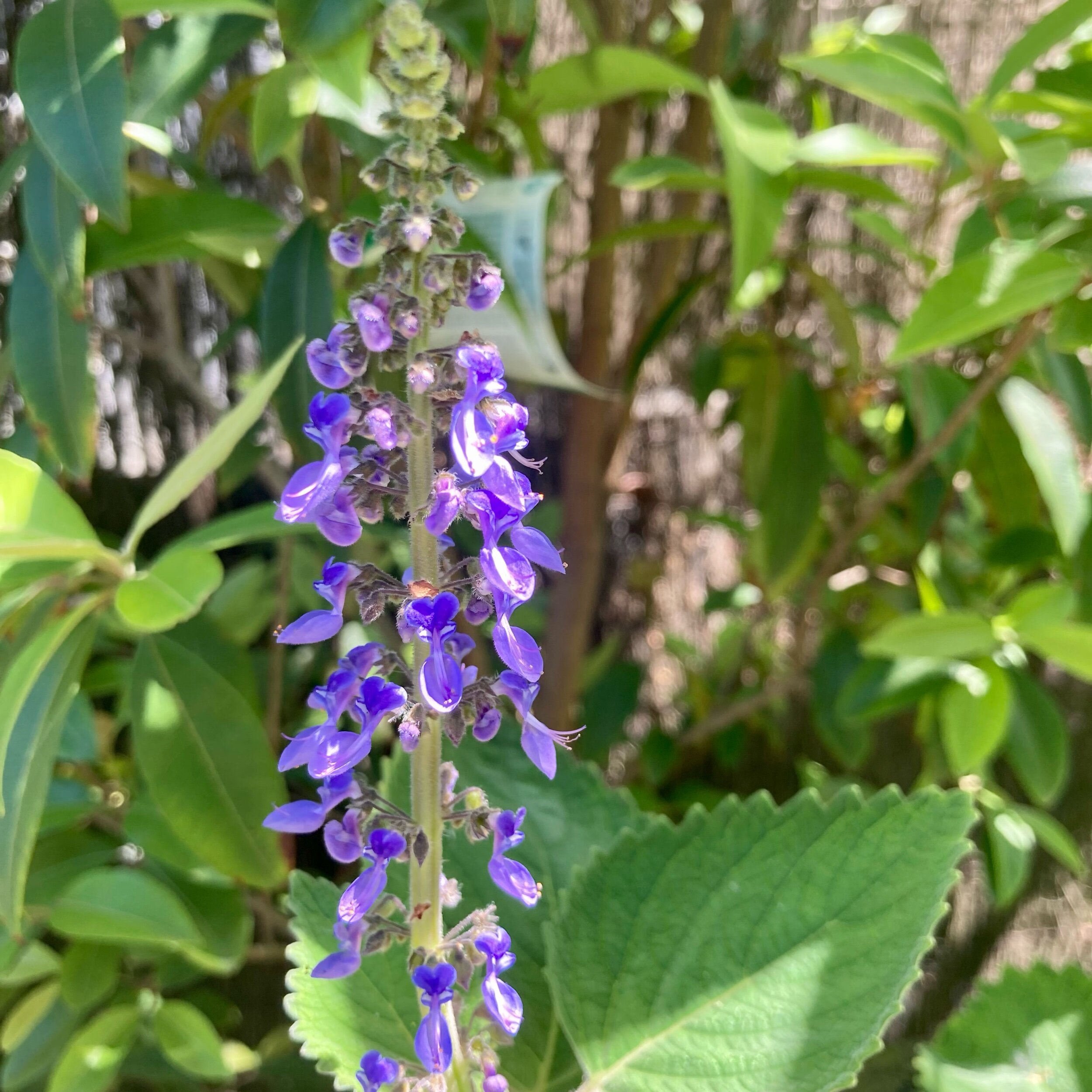
Commonly called Bush Basil or the Five Spice Herb!
This plant is native from Cape York all way down to NSW.
Bush Basil is a very strong herb and is said best to use with Mediterranean flavours like tomato and garlic. You could use fresh leaves on a pizza or blend for a pesto.
It also has many medicinal qualities and can be steeped into a tea to help with coughs and colds.
It’s a vigorous growing herb and can handle full sun or shade and will grow in pots or the garden. It doesn’t mind the heat, dry or cold once established.
It gets covered in pretty mauve flower stalks in the warmer months. These are great as cut flowers and if you cut the leaves off with the flowers it will work as an aromatic bunch of flowers. Scenting the house nicely. The flowers also attract all different types of beneficial insects.
It can get to about 1.5m tall if let go but I find it’s best to trim after flowering otherwise it can get rather scraggly.
As with all my natives I would be fertilising my bush Basil with an organic complete slow release fertiliser like Organic Link every three months.